
Larmors Theorem LL 2 Section 45 System of
- Slides: 13
Larmor’s Theorem LL 2 Section 45
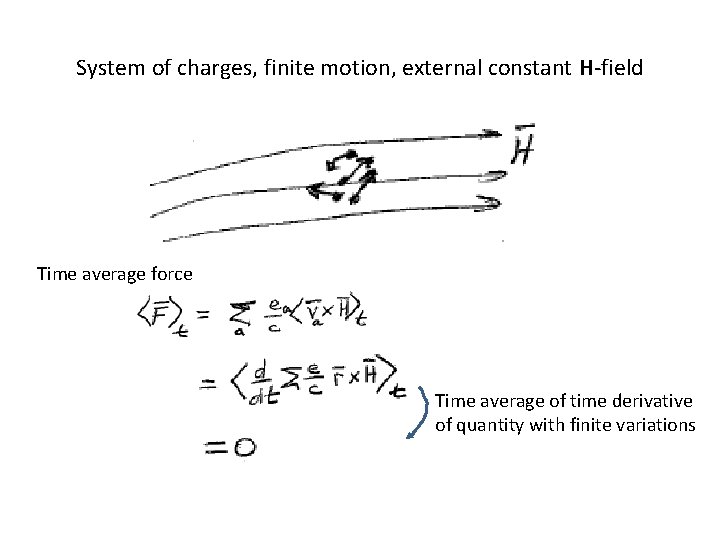
System of charges, finite motion, external constant H-field Time average force Time average of time derivative of quantity with finite variations
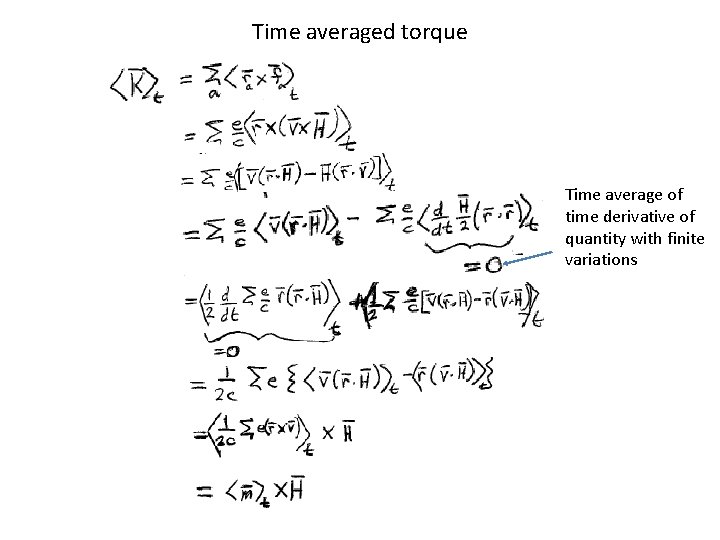
Time averaged torque Time average of time derivative of quantity with finite variations
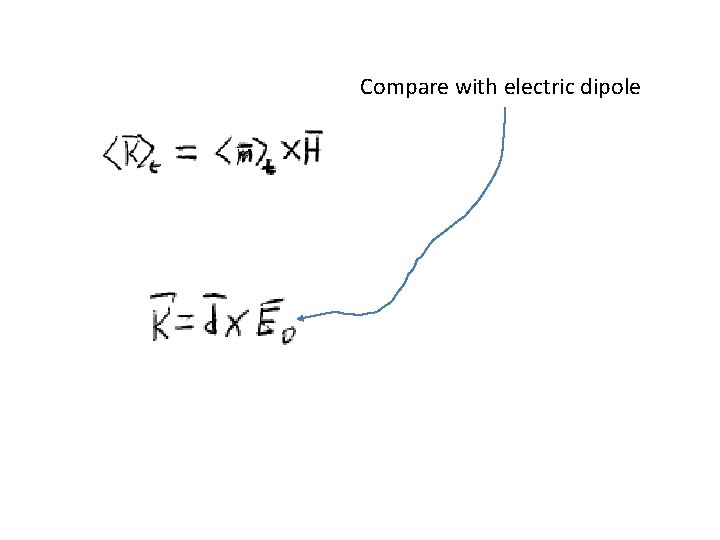
Compare with electric dipole
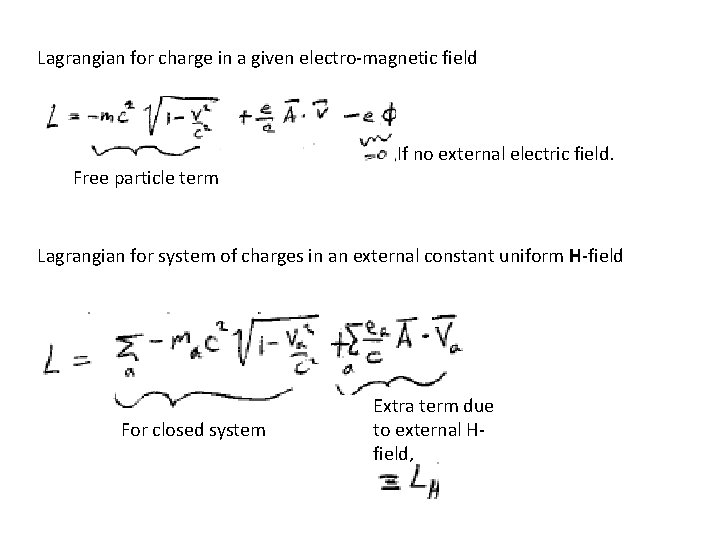
Lagrangian for charge in a given electro-magnetic field Free particle term If no external electric field. Lagrangian for system of charges in an external constant uniform H-field For closed system Extra term due to external Hfield,
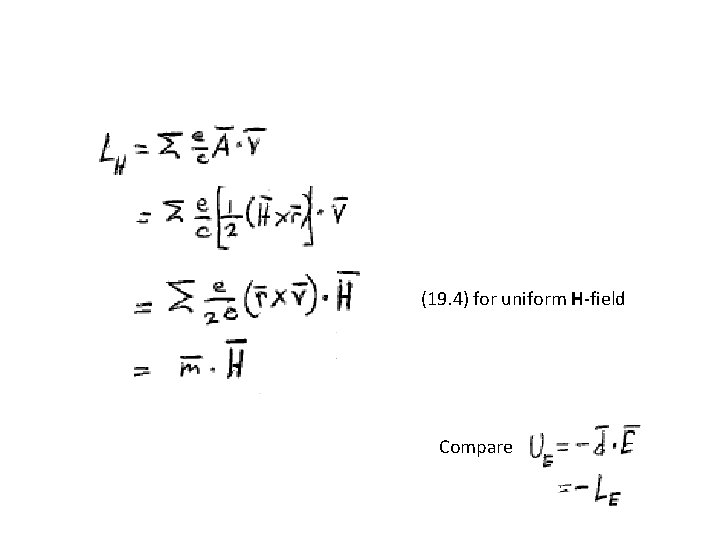
(19. 4) for uniform H-field Compare
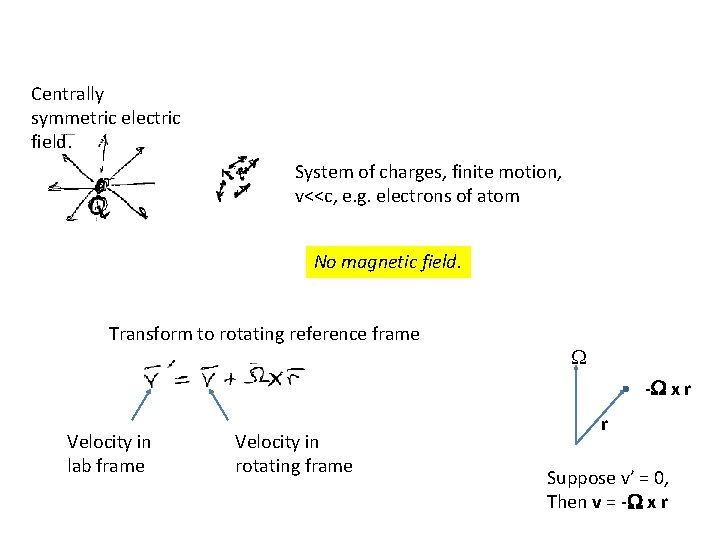
Centrally symmetric electric field. System of charges, finite motion, v<<c, e. g. electrons of atom No magnetic field. Transform to rotating reference frame W -W x r Velocity in lab frame Velocity in rotating frame r Suppose v’ = 0, Then v = -W x r
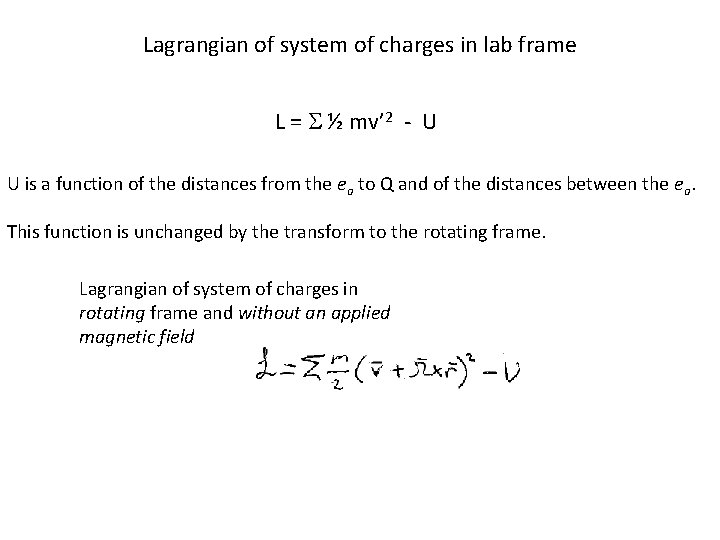
Lagrangian of system of charges in lab frame L = S ½ mv’ 2 - U U is a function of the distances from the ea to Q and of the distances between the ea. This function is unchanged by the transform to the rotating frame. Lagrangian of system of charges in rotating frame and without an applied magnetic field
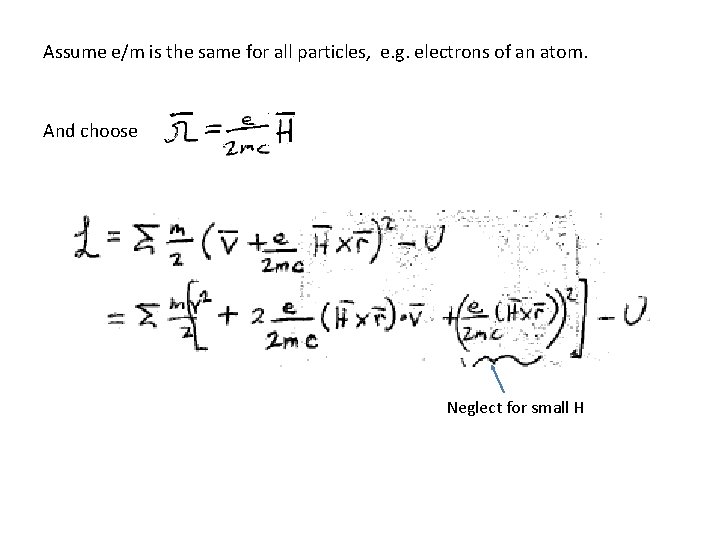
Assume e/m is the same for all particles, e. g. electrons of an atom. And choose Neglect for small H
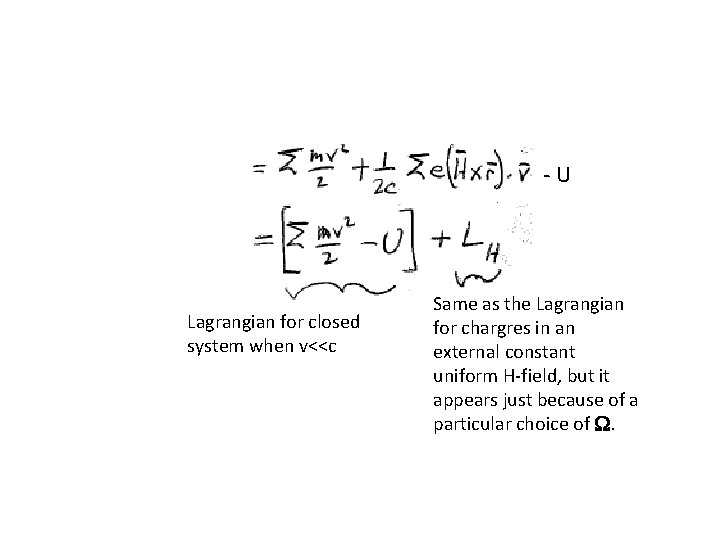
-U Lagrangian for closed system when v<<c Same as the Lagrangian for chargres in an external constant uniform H-field, but it appears just because of a particular choice of W.
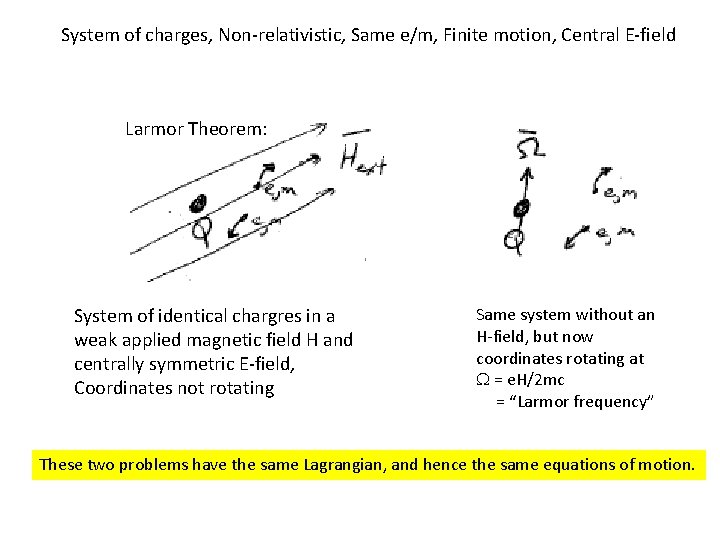
System of charges, Non-relativistic, Same e/m, Finite motion, Central E-field Larmor Theorem: System of identical chargres in a weak applied magnetic field H and centrally symmetric E-field, Coordinates not rotating Same system without an H-field, but now coordinates rotating at W = e. H/2 mc = “Larmor frequency” These two problems have the same Lagrangian, and hence the same equations of motion.
• For sufficiently weak H, W = e. H/2 mc is much smaller than the frequencies of finite motion for the charges. • Then, average quantities describing the system over times t << 2 p/W = Larmor period • Averaged quantities will vary slowly with time at frequency W.
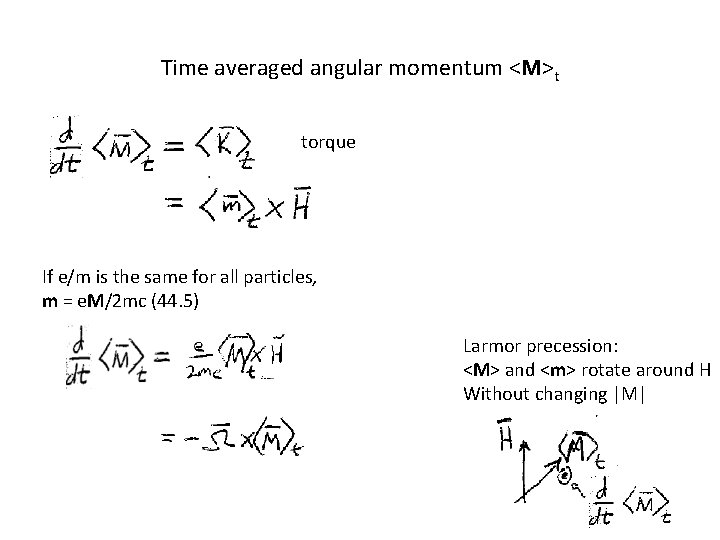
Time averaged angular momentum <M>t torque If e/m is the same for all particles, m = e. M/2 mc (44. 5) Larmor precession: <M> and <m> rotate around H Without changing |M|