
Largescale sh RNA screens to identify novel combination
Large-scale sh. RNA screens to identify novel combination therapies for the treatment of cancer BIOS 6660 Mark A. Gregory, Ph. D Research Instructor De. Gregori Lab
BIOS 6660 Lecture: sh. RNA synthetic lethal screening Overview: 1) Biological problem: Chronic Myeloid Leukemia (CML) -finding the right genes to target to improve CML therapy 2) Approach: large-scale sh. RNA synthetic lethal screening 3) How sh. RNA screen data can be translated into a therapy 4) New biological problem: Acute Myeloid Leukemia (AML) -finding the right genes to target to improve AML therapy
Chronic Myeloid Leukemia (CML) • Chronic myeloid leukemia (CML) is a myeloproliferative disorder of hematopoietic stem cell origin that is characterized by the t(9; 22) translocation, which gives rise to a shortened chromosome 22, the “Philadelphia chromosome” (Ph). • This results in a novel fusion protein, p 210 Bcr-Abl, that has constitutive tyrosine kinase activity and is causative in the disease. • CML is a triphasic disease, beginning with a relatively stable chronic phase that lasts on average 4 -5 years, progressing into an accelerated phase (6 -18 months), and terminating in fatal blast crisis (~6 months). • Imatinib mesylate (Gleevec�� is a small-molecule Bcr-Abl kinase inhibitor that has revolutionized the treatment of CML.

Mechanism of action of imatinib Effector Bcr-Abl ATP substrate PPP Y substrate P Y proliferation survival Effector Bcr-Abl Imatinib substrate Y growth arrest apoptosis
Imatinib is an effective treatment for Bcr-Abl+ leukemia, but it is not a cure n Imatinib induces remarkable hematological and cytogenetic responses in chronic phase CML patients n However, imatinib fails to completely eradicate Bcr-Abl+ leukemic cells (Bcr-Abl remains detectable in >95% of responding patients) n CML patients often develop resistance to imatinib through mutation or amplification of Bcr-Abl n Advanced phase CML (blast crisis) and Bcr-Abl+ acute lymphoblastic leukemia (ALL) are poorly responsive to imatinib therapy n A second generation of more potent Bcr-Abl inhibitors has been developed (nilotinib, dasatinib) but they do not solve these problems
Our problem: Bcr-Abl inhibition alone is insufficient to effectively eleminate leukemic cells in CML and in Bcr. Abl+ ALL Our hypothesis: Targeting an additional gene product may potentiate the efficacy of Bcr-Abl inhibitors in eliminating Bcr-Abl+ cells and lead to complete eradication of the disease How do we find such genes? Our approach: Design and perform unbiased largescale loss-of-function screen (synthetic lethal) utilizing an sh. RNA library to identify gene targets that, when inhibited, potentiate the efficacy of imatinib in killing CML cells
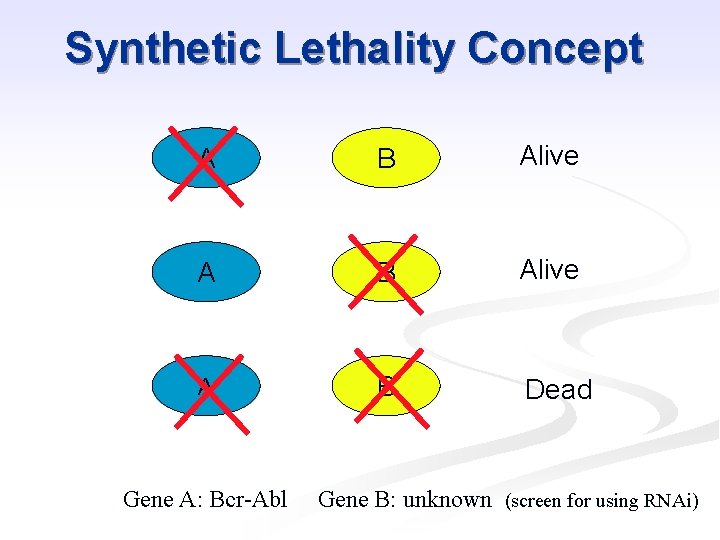
Synthetic Lethality Concept A B Alive A B Dead Gene A: Bcr-Abl Gene B: unknown (screen for using RNAi)
SYNTHETIC LETHAL SCREENING n Harnessing the power of RNAi
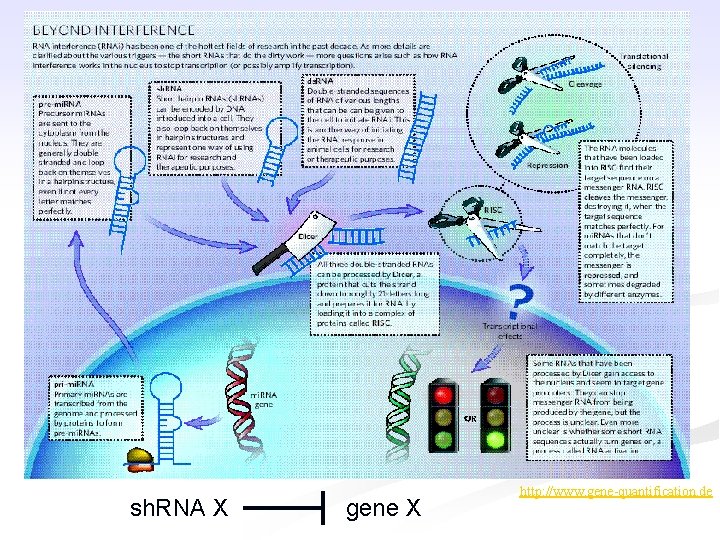
sh. RNA X gene X http: //www. gene-quantification. de
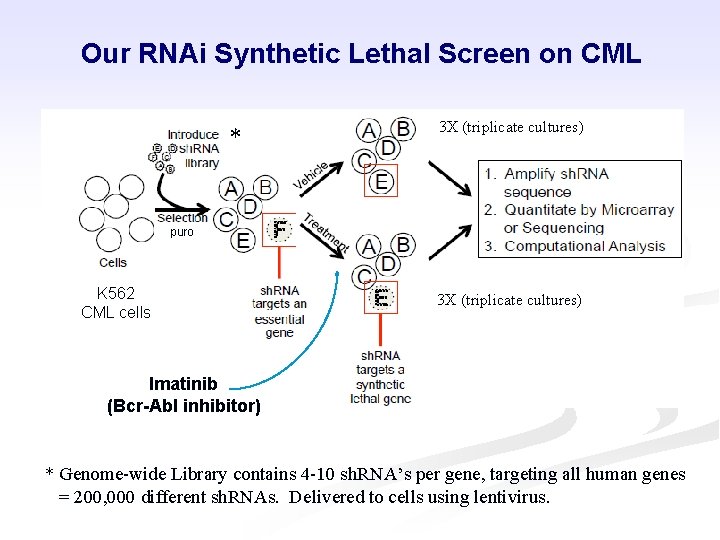
Our RNAi Synthetic Lethal Screen on CML * 3 X (triplicate cultures) puro K 562 CML cells 3 X (triplicate cultures) Imatinib (Bcr-Abl inhibitor) * Genome-wide Library contains 4 -10 sh. RNA’s per gene, targeting all human genes = 200, 000 different sh. RNAs. Delivered to cells using lentivirus.
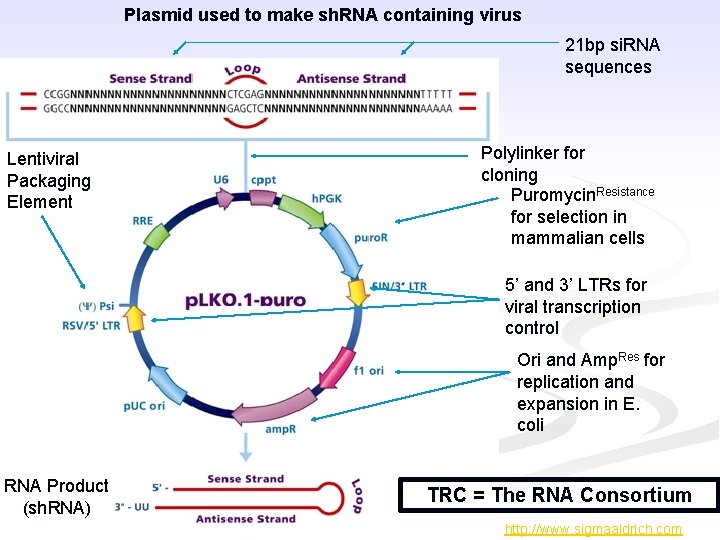
Plasmid used to make sh. RNA containing virus 21 bp si. RNA sequences Lentiviral Packaging Element Polylinker for cloning Puromycin. Resistance for selection in mammalian cells 5’ and 3’ LTRs for viral transcription control Ori and Amp. Res for replication and expansion in E. coli RNA Product (sh. RNA) TRC = The RNA Consortium http: //www. sigmaaldrich. com
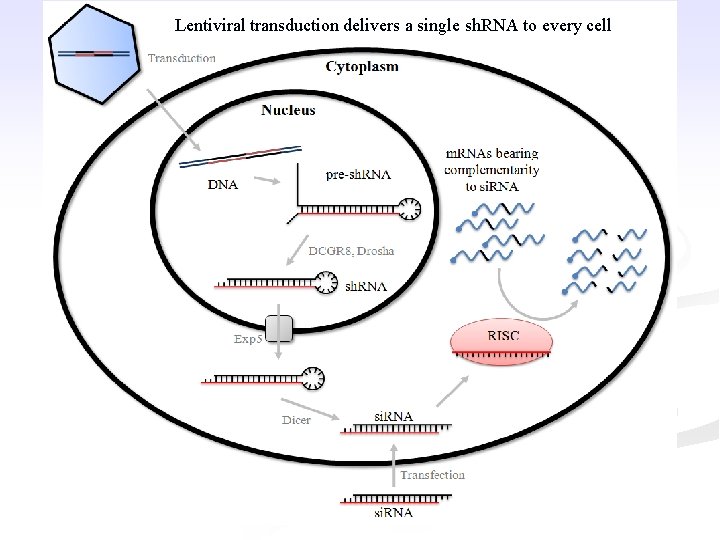
Lentiviral transduction delivers a single sh. RNA to every cell
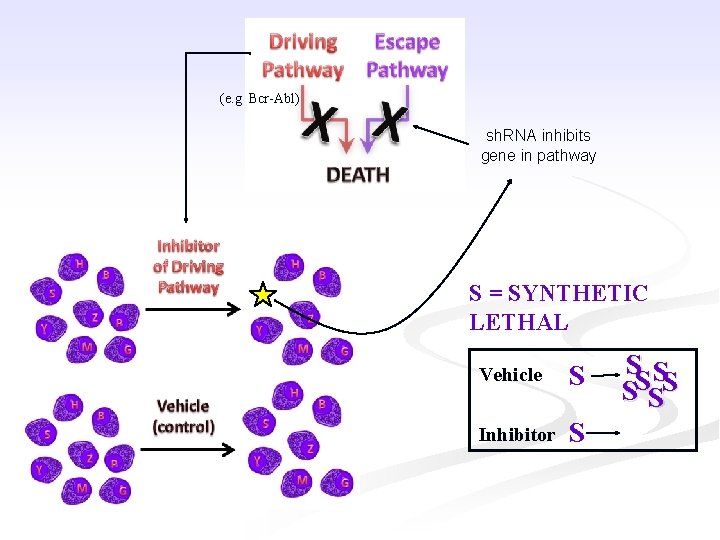
(e. g Bcr-Abl) sh. RNA inhibits gene in pathway S = SYNTHETIC LETHAL Vehicle S Inhibitor S SSSS
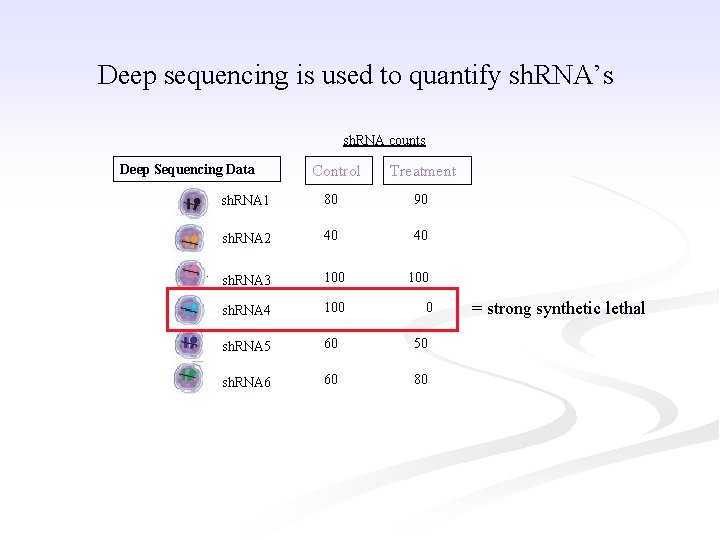
Deep sequencing is used to quantify sh. RNA’s sh. RNA counts Deep Sequencing Data Control Treatment sh. RNA 1 80 90 sh. RNA 2 40 40 sh. RNA 3 100 sh. RNA 4 100 0 sh. RNA 5 60 50 sh. RNA 6 60 80 = strong synthetic lethal
What did we find in CML screen? identified sh. RNA’s targeting 146 genes as under-represented >16 -fold (confidence interval > 99. 5%) in imatinib-treated vs. untreated cells ie. these sh. RNA’s cooperated with imatinib in CML cell killing. The genes these sh. RNA’s target = SLIM’s : Synthetic Lethal with Imatinib Mesylate
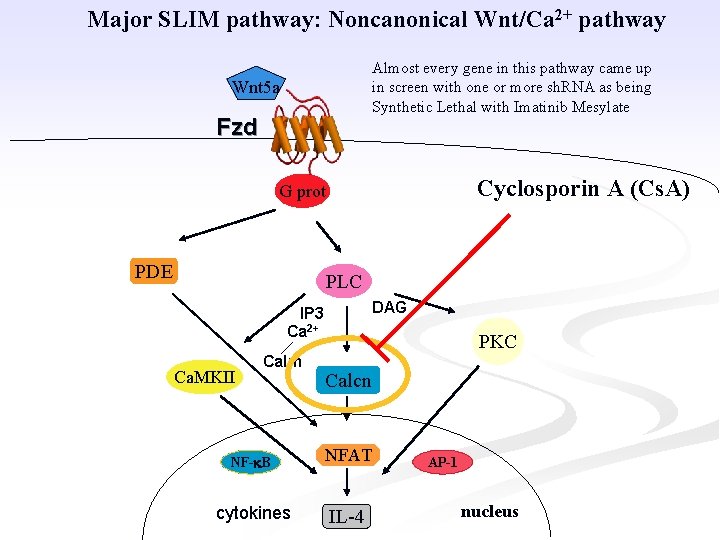
Major SLIM pathway: Noncanonical Wnt/Ca 2+ pathway Almost every gene in this pathway came up in screen with one or more sh. RNA as being Synthetic Lethal with Imatinib Mesylate Wnt 5 a Fzd Cyclosporin A (Cs. A) G prot PDE PLC DAG IP 3 Ca 2+ Ca. MKII Calm PKC Calcn NF-k. B NFAT cytokines IL-4 AP-1 nucleus
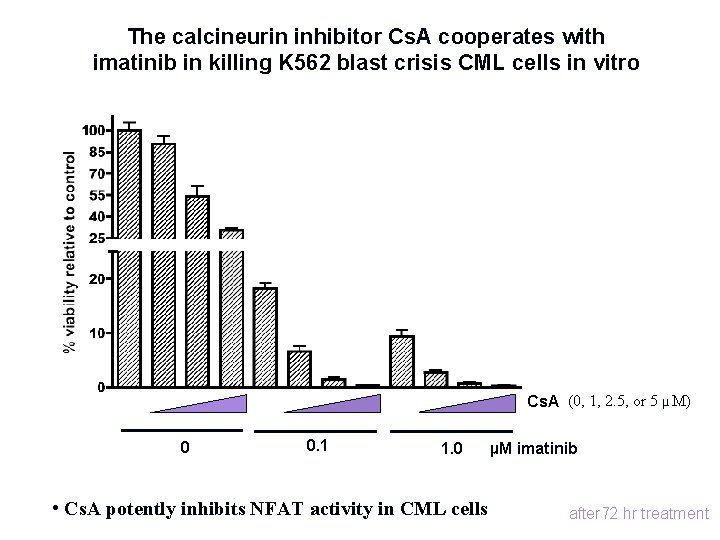
The calcineurin inhibitor Cs. A cooperates with imatinib in killing K 562 blast crisis CML cells in vitro Cs. A (0, 1, 2. 5, or 5 µM) 0 0. 1 1. 0 • Cs. A potently inhibits NFAT activity in CML cells µM imatinib after 72 hr treatment
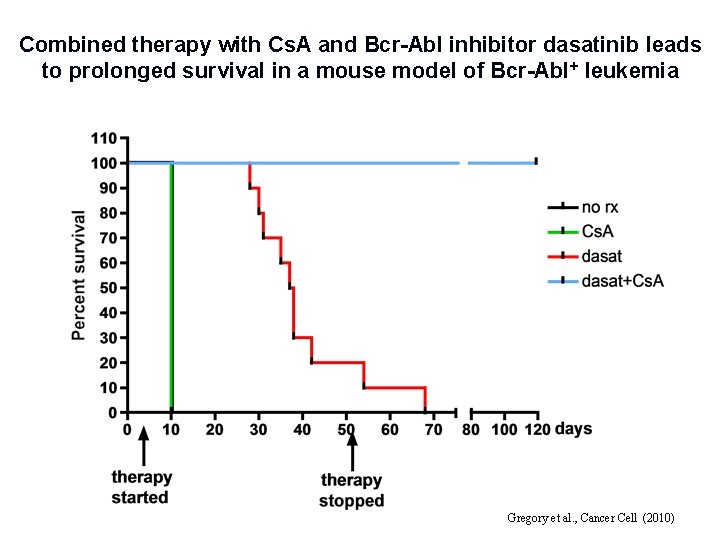
Combined therapy with Cs. A and Bcr-Abl inhibitor dasatinib leads to prolonged survival in a mouse model of Bcr-Abl+ leukemia Gregory et al. , Cancer Cell (2010)
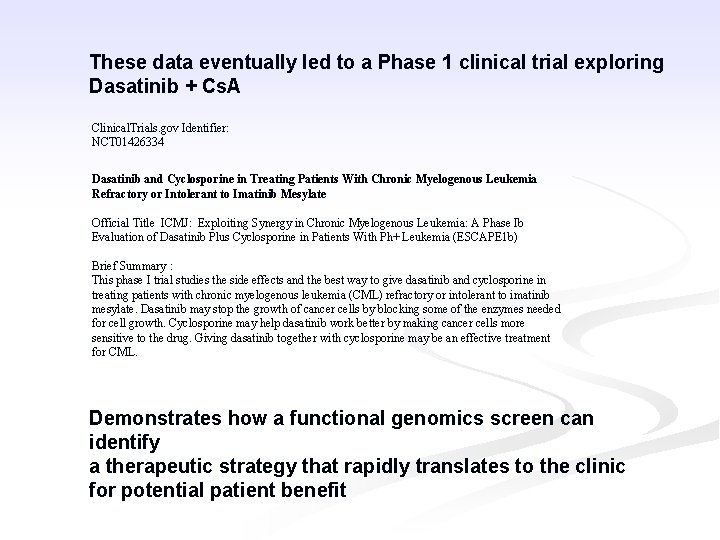
These data eventually led to a Phase 1 clinical trial exploring Dasatinib + Cs. A Clinical. Trials. gov Identifier: NCT 01426334 Dasatinib and Cyclosporine in Treating Patients With Chronic Myelogenous Leukemia Refractory or Intolerant to Imatinib Mesylate Official Title ICMJ: Exploiting Synergy in Chronic Myelogenous Leukemia: A Phase Ib Evaluation of Dasatinib Plus Cyclosporine in Patients With Ph+ Leukemia (ESCAPE 1 b) Brief Summary : This phase I trial studies the side effects and the best way to give dasatinib and cyclosporine in treating patients with chronic myelogenous leukemia (CML) refractory or intolerant to imatinib mesylate. Dasatinib may stop the growth of cancer cells by blocking some of the enzymes needed for cell growth. Cyclosporine may help dasatinib work better by making cancer cells more sensitive to the drug. Giving dasatinib together with cyclosporine may be an effective treatment for CML. Demonstrates how a functional genomics screen can identify a therapeutic strategy that rapidly translates to the clinic for potential patient benefit
New biological problem: Acute Myeloid Leukemia n Acute myeloid leukemia is a heterogeneous disease characterized by the uncontrolled proliferation of hematopoietic progenitor cells n An estimated 13, 780 new cases of AML were diagnosed in U. S. in 2011 and there were >10, 000 estimated deaths from AML n Response to chemotherapy is poor and most patients will die of their disease (only 40% of patients <60 yo and only 10% of older patients will remain in remission >5 years) n We are desparate for better therapies
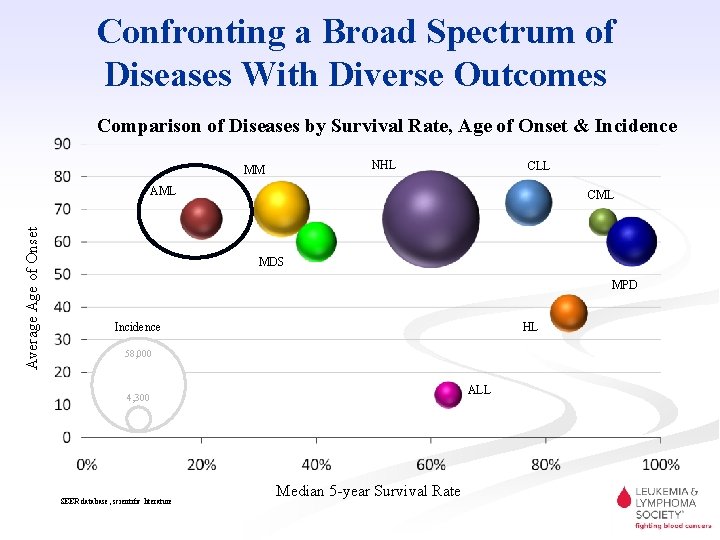
Confronting a Broad Spectrum of Diseases With Diverse Outcomes Comparison of Diseases by Survival Rate, Age of Onset & Incidence NHL MM CLL Average Age of Onset AML CML MDS MPD Incidence HL 58, 000 ALL 4, 300 SEER database, scientific literature Median 5 -year Survival Rate
Targeting AML: FLT 3 n FLT 3 (fms-like tyrosine kinase 3) is receptor tyrosine kinase expressed on hematopoietic progenitor cells n Activating mutations of FLT 3 (ITD and TK domain) are present in 30 -40% of AMLs and are associated with aggressive disease and poor prognosis n FLT 3 is a potentially promising therapeutic target for treatment of AML
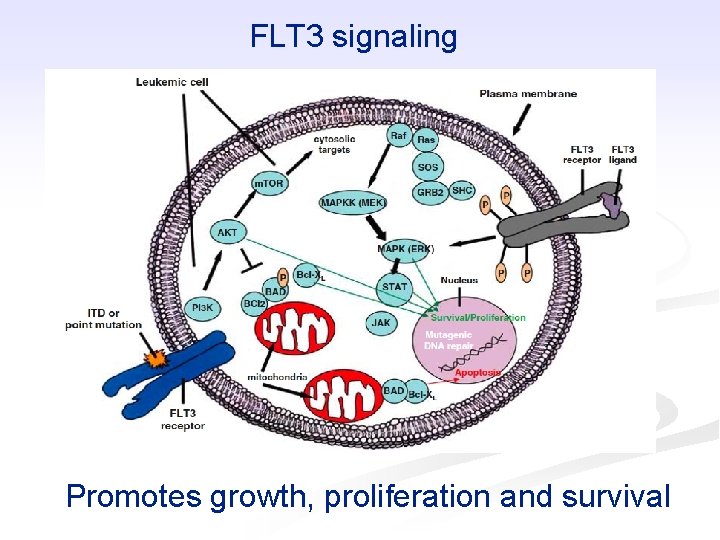
FLT 3 signaling Promotes growth, proliferation and survival
FLT 3 inhibitors fail to achieve durable remissions in AML n In clinical trials, FLT 3 inhibitors (e. g. CEP-701, AC 220) show significant anti-leukemic activity in FLT 3 mutated (FLT 3 MT) AML n However, most of the responses consisted of a clearance of peripheral leukemic blasts and major reductions in bone marrow blasts were not typically achieved n Responses were transient with patients blasts returning within a few weeks to a few months
Problem: FLT 3 inhibition alone is insufficient to effectively eleminate leukemic cells in FLT 3 MT AML Our hypothesis: Targeting additional genes may potentiate the efficacy of FLT 3 inhibitors in eliminating FLT 3 leukemic cells and lead to complete eradication of the disease Our approach: Large-scale sh. RNA synthetic lethal screen
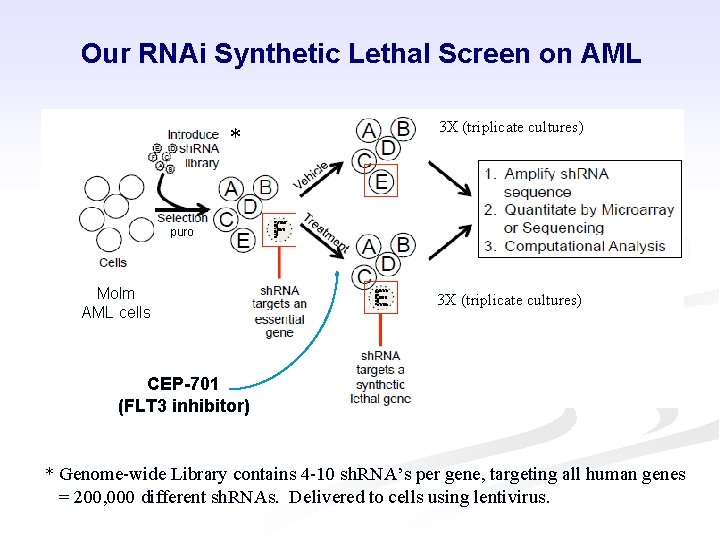
Our RNAi Synthetic Lethal Screen on AML * 3 X (triplicate cultures) puro Molm AML cells 3 X (triplicate cultures) CEP-701 (FLT 3 inhibitor) * Genome-wide Library contains 4 -10 sh. RNA’s per gene, targeting all human genes = 200, 000 different sh. RNAs. Delivered to cells using lentivirus.
Give sequencing datasets to BIOS 6660 students for Bioinformatics Analysis. Ask them to identify genes that are “SLAMs” – Synthetic Lethal in Acute Myeloid Leukemia.
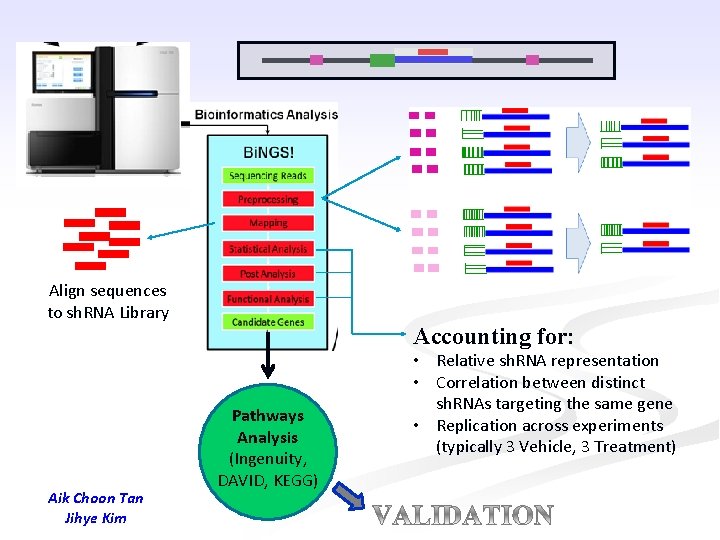
Align sequences to sh. RNA Library Aik Choon Tan Jihye Kim Accounting for: Pathways Analysis (Ingenuity, DAVID, KEGG) • Relative sh. RNA representation • Correlation between distinct sh. RNAs targeting the same gene • Replication across experiments (typically 3 Vehicle, 3 Treatment)
What are we looking for in the final analysis? 1) A list of the top genes identified as SLAMs 2) A list of the top SLAM pathways 3) An idea for a potentially promising combination therapy, i. e. FLT 3 inhibitor + drug X that will more effectively treat or cure AML.
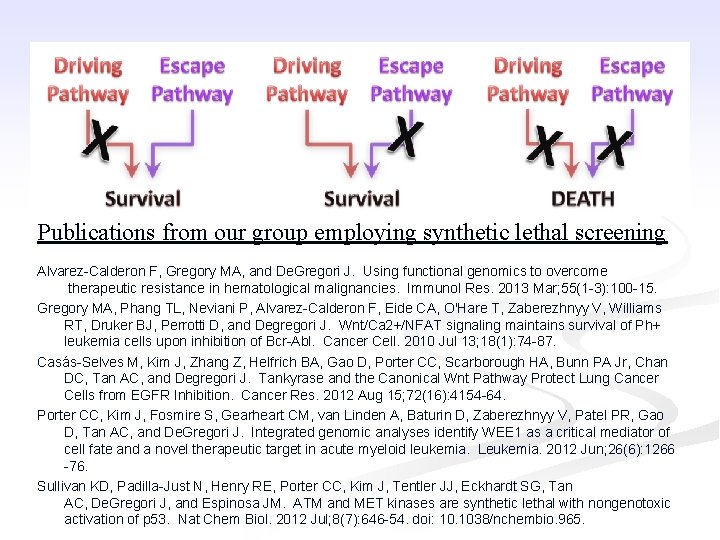
Publications from our group employing synthetic lethal screening Alvarez-Calderon F, Gregory MA, and De. Gregori J. Using functional genomics to overcome therapeutic resistance in hematological malignancies. Immunol Res. 2013 Mar; 55(1 -3): 100 -15. Gregory MA, Phang TL, Neviani P, Alvarez-Calderon F, Eide CA, O'Hare T, Zaberezhnyy V, Williams RT, Druker BJ, Perrotti D, and Degregori J. Wnt/Ca 2+/NFAT signaling maintains survival of Ph+ leukemia cells upon inhibition of Bcr-Abl. Cancer Cell. 2010 Jul 13; 18(1): 74 -87. Casás-Selves M, Kim J, Zhang Z, Helfrich BA, Gao D, Porter CC, Scarborough HA, Bunn PA Jr, Chan DC, Tan AC, and Degregori J. Tankyrase and the Canonical Wnt Pathway Protect Lung Cancer Cells from EGFR Inhibition. Cancer Res. 2012 Aug 15; 72(16): 4154 -64. Porter CC, Kim J, Fosmire S, Gearheart CM, van Linden A, Baturin D, Zaberezhnyy V, Patel PR, Gao D, Tan AC, and De. Gregori J. Integrated genomic analyses identify WEE 1 as a critical mediator of cell fate and a novel therapeutic target in acute myeloid leukemia. Leukemia. 2012 Jun; 26(6): 1266 -76. Sullivan KD, Padilla-Just N, Henry RE, Porter CC, Kim J, Tentler JJ, Eckhardt SG, Tan AC, De. Gregori J, and Espinosa JM. ATM and MET kinases are synthetic lethal with nongenotoxic activation of p 53. Nat Chem Biol. 2012 Jul; 8(7): 646 -54. doi: 10. 1038/nchembio. 965.
- Slides: 30