
Largescale distributed computing in the Netherlands NIKHEF Dutch
Large-scale distributed computing in the Netherlands NIKHEF Dutch National Institute for Nuclear and High-Energy Physics
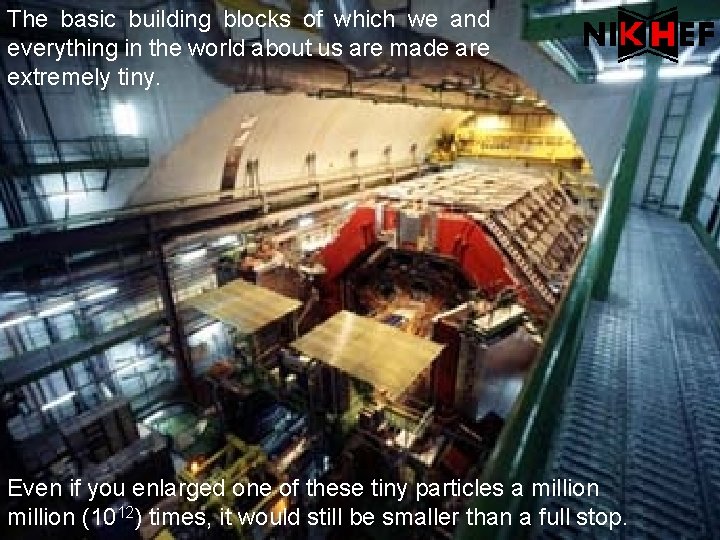
The basic building blocks of which we and everything in the world about us are made are extremely tiny. Even if you enlarged one of these tiny particles a million (1012) times, it would still be smaller than a full stop.
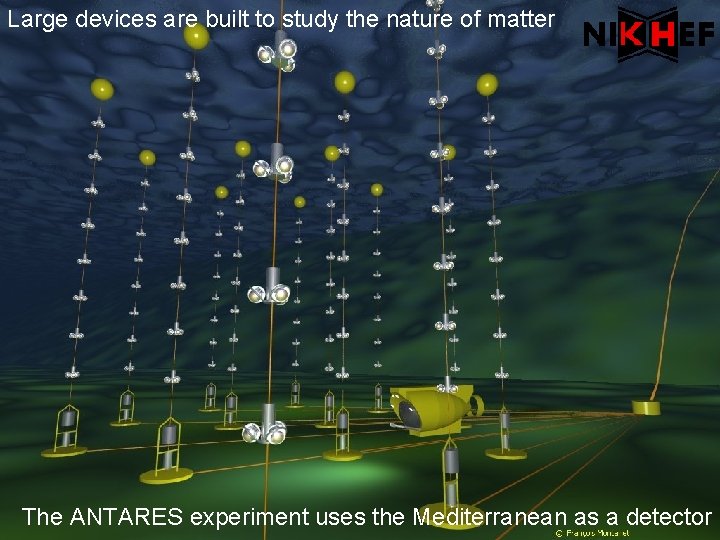
Large devices are built to study the nature of matter The ANTARES experiment uses the Mediterranean as a detector
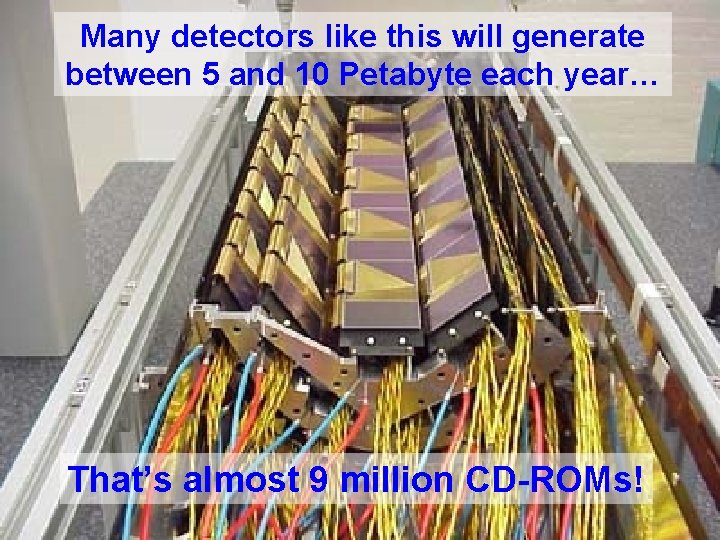
Many detectors like this will generate between 5 and 10 Petabyte each year… That’s almost 9 million CD-ROMs!
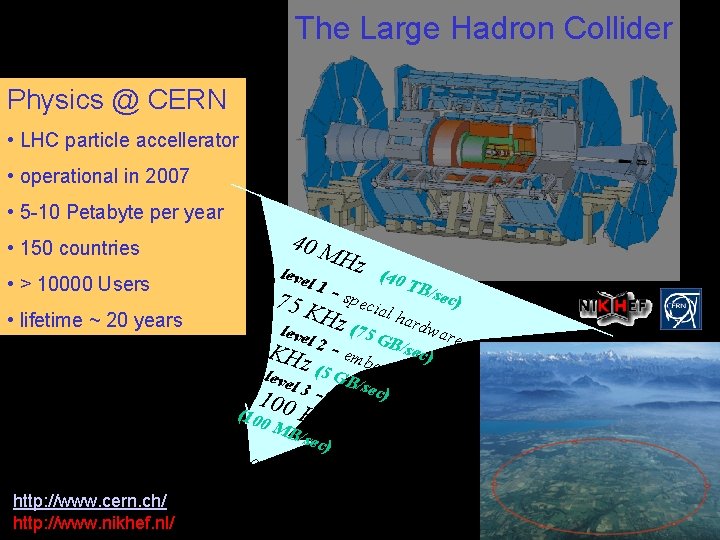
The Large Hadron Collider Physics @ CERN • LHC particle accellerator • operational in 2007 • 5 -10 Petabyte per year • 150 countries • > 10000 Users • lifetime ~ 20 years http: //www. cern. ch/ http: //www. nikhef. nl/ 40 M leve l 1 Hz (40 TB/ sec) s 75 K pecial ha Hz ( leve 75 G rdware 5 KH l 2 - em B/sec) bed z ( 5 leve GB/ ded l 3 sec) PC 10 (100 0 Hz s M B/se data c) r e c offli o ne a rding & naly sis
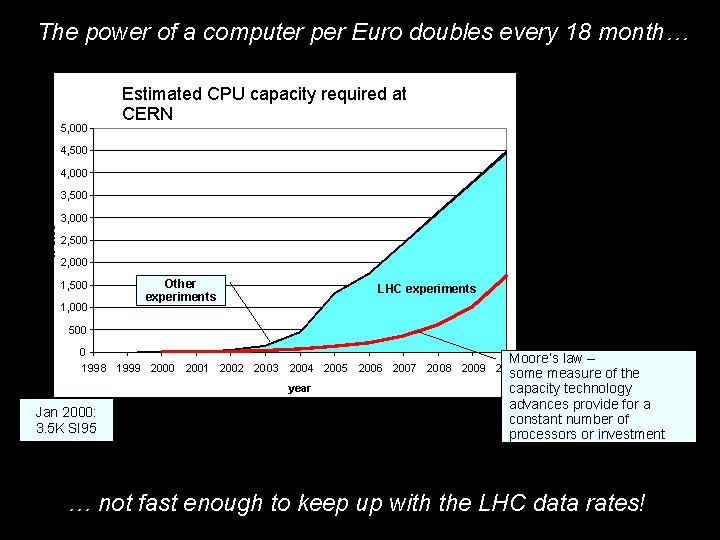
The power of a computer per Euro doubles every 18 month… 5, 000 Estimated CPU Capacity at CERNat Estimated CPU capacity required CERN 4, 500 4, 000 K SI 95 3, 500 3, 000 2, 500 2, 000 1, 500 1, 000 Other experiments LHC experiments 500 0 Moore’s 1998 1999 2000 2001 2002 2003 2004 2005 2006 2007 2008 2009 2010 year Jan 2000: 3. 5 K SI 95 law – some measure of the capacity technology advances provide for a constant number of processors or investment … not fast enough to keep up with the LHC data rates!
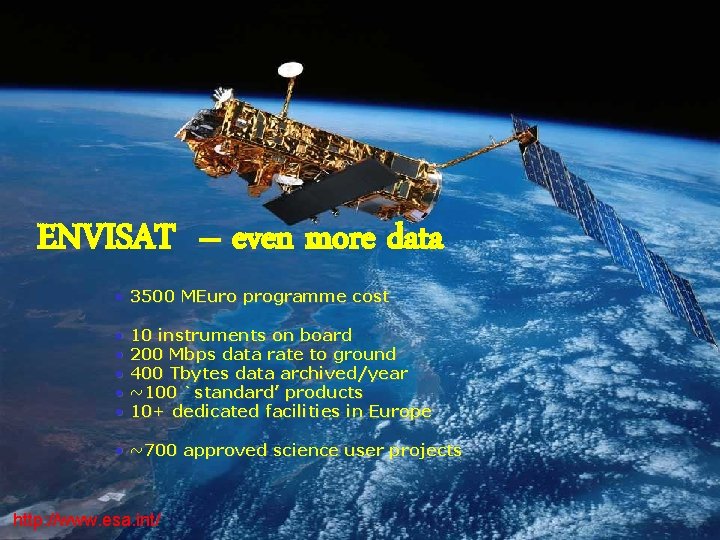
ENVISAT – even more data • 3500 MEuro programme cost • 10 instruments on board • 200 Mbps data rate to ground • 400 Tbytes data archived/year • ~100 `standard’ products • 10+ dedicated facilities in Europe • ~700 approved science user projects http: //www. esa. int/
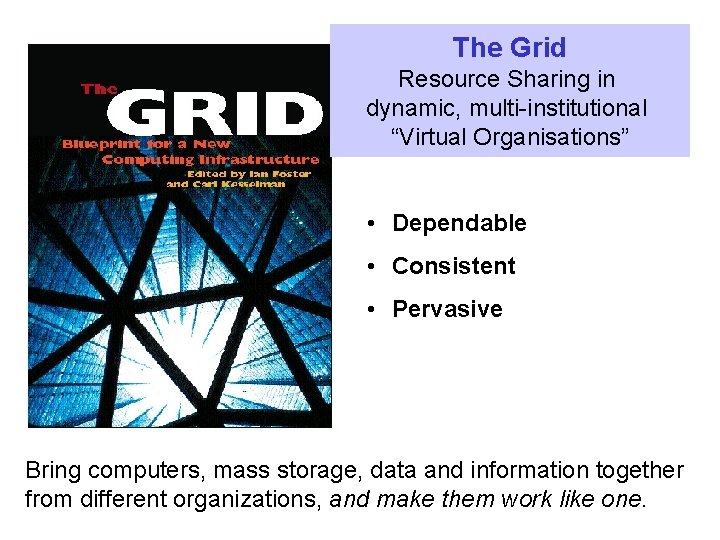
The Grid Resource Sharing in dynamic, multi-institutional “Virtual Organisations” • Dependable • Consistent • Pervasive Bring computers, mass storage, data and information together from different organizations, and make them work like one.
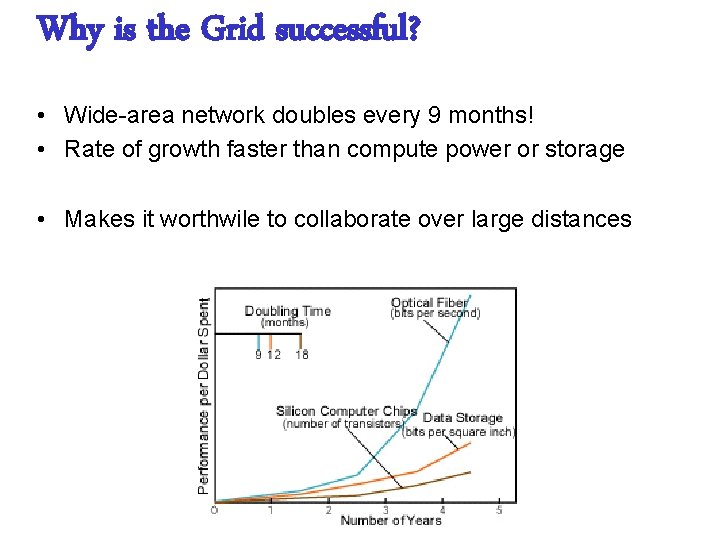
Why is the Grid successful? • Wide-area network doubles every 9 months! • Rate of growth faster than compute power or storage • Makes it worthwile to collaborate over large distances
The Origins of the GRID
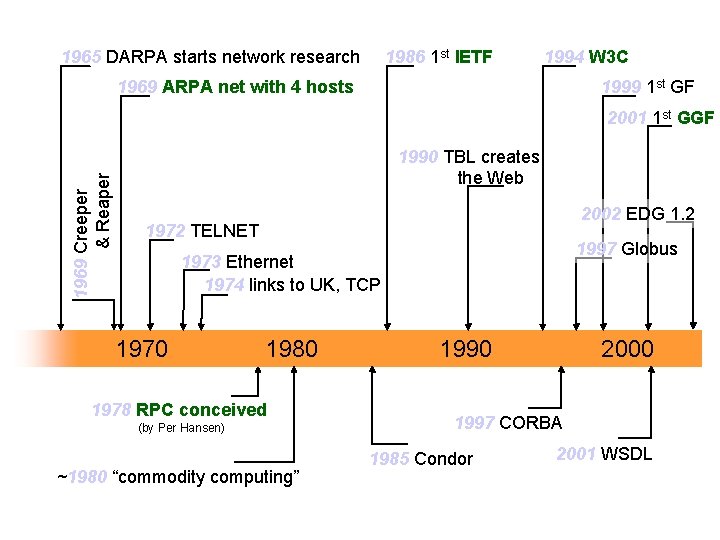
1965 DARPA starts network research 1986 1 st IETF 1994 W 3 C 1969 ARPA net with 4 hosts 1999 1 st GF 1969 Creeper & Reaper 2001 1 st GGF 1990 TBL creates the Web 2002 EDG 1. 2 1972 TELNET 1997 Globus 1973 Ethernet 1974 links to UK, TCP 1970 1980 1978 RPC conceived (by Per Hansen) ~1980 “commodity computing” 1990 2000 1997 CORBA 1985 Condor 2001 WSDL
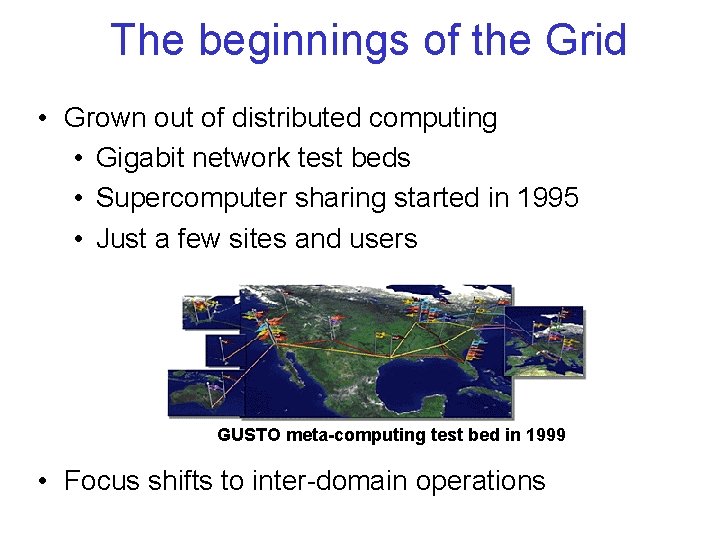
The beginnings of the Grid • Grown out of distributed computing • Gigabit network test beds • Supercomputer sharing started in 1995 • Just a few sites and users GUSTO meta-computing test bed in 1999 • Focus shifts to inter-domain operations
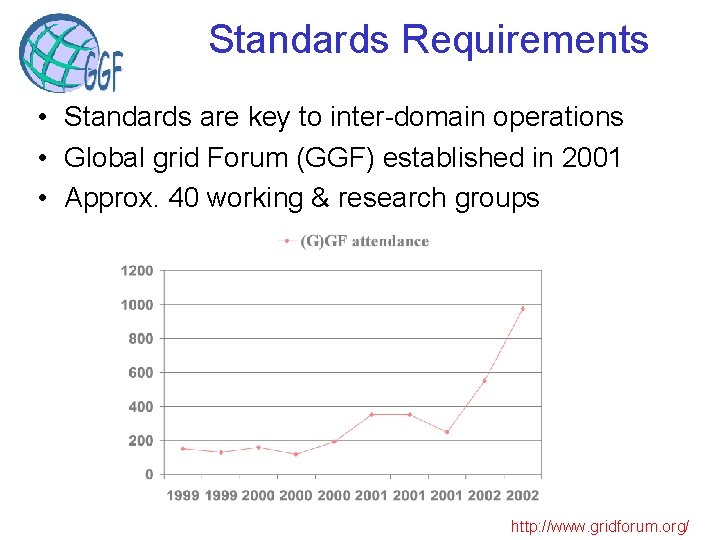
Standards Requirements • Standards are key to inter-domain operations • Global grid Forum (GGF) established in 2001 • Approx. 40 working & research groups http: //www. gridforum. org/
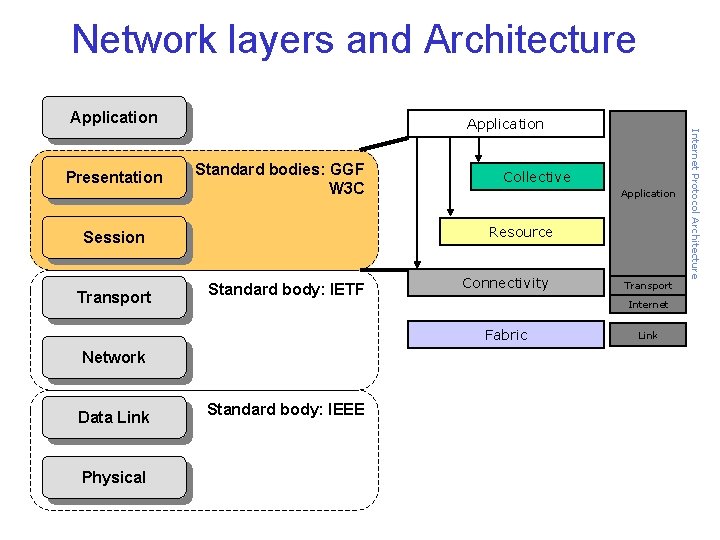
Network layers and Architecture Application Standard bodies: GGF W 3 C Application Resource Session Transport Collective Standard body: IETF Connectivity Internet Fabric Network Data Link Physical Standard body: IEEE Transport Link Internet Protocol Architecture Presentation Application
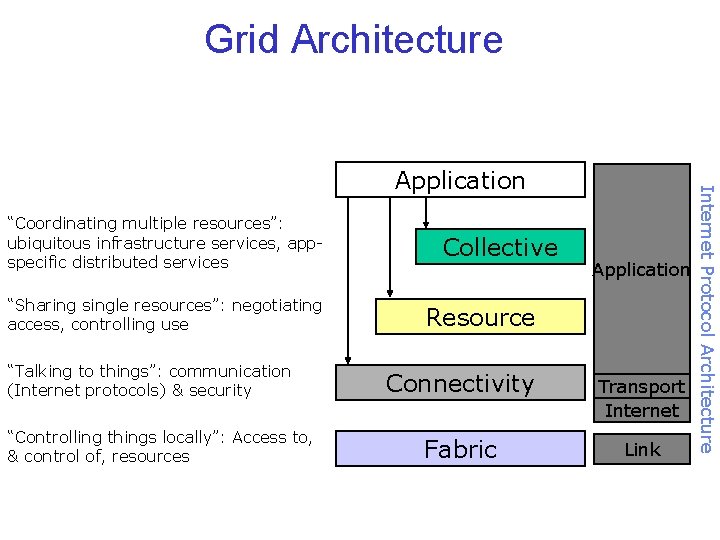
Grid Architecture “Coordinating multiple resources”: ubiquitous infrastructure services, appspecific distributed services “Sharing single resources”: negotiating access, controlling use “Talking to things”: communication (Internet protocols) & security “Controlling things locally”: Access to, & control of, resources Collective Application Resource Connectivity Transport Internet Fabric Link Internet Protocol Architecture Application
Grid Software and Middleware • • Globus Project started 1997 Current de-facto standard Reference implementation of Global Grid Forum standards Toolkit `bag-of-services' approach http: //www. globus. org/ • Several middleware projects: – EU Data. Grid – Cross. Grid, Data. TAG, PPDG, Gri. Phy. N – In NL: ICES/KIS Virtual Lab, VL-E
• Scavenging cycles off idle work stations • Leading themes: – Make a job feel `at home’ – Don’t ever bother the resource owner! • Bypass redirect data to process • Class. Ads matchmaking concept • DAGman dependent jobs • Kangaroo file staging & hopping • Ne. ST allocated `storage lots’ • PFS Pluggable File System • Condor-G reliable job control for the Grid http: //www. cs. wisc. edu/condor/
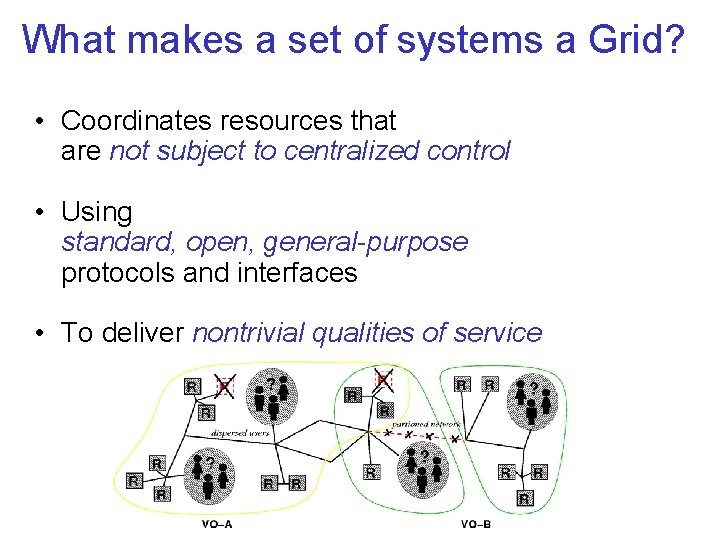
What makes a set of systems a Grid? • Coordinates resources that are not subject to centralized control • Using standard, open, general-purpose protocols and interfaces • To deliver nontrivial qualities of service
Grid Standards Today • Based on the popular protocols on the ’Net • Use common Grid Security Infrastructure: – Extensions to TLS for delegation (single sign-on) – Uses GSS-API standard where possible • GRAM (resource allocation): attrib/value pairs over HTTP • Grid. FTP (bulk file transfer): FTP with GSI and high-throughput extras (striping) • MDS (monitoring and discovery service): LDAP + schemas • ……
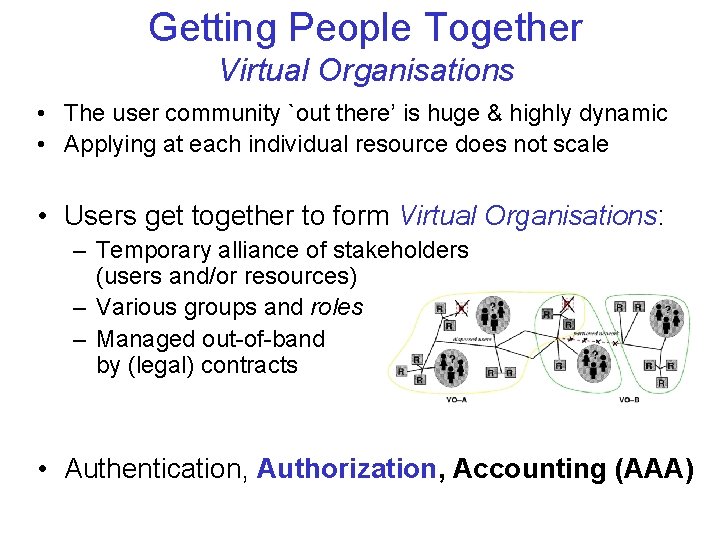
Getting People Together Virtual Organisations • The user community `out there’ is huge & highly dynamic • Applying at each individual resource does not scale • Users get together to form Virtual Organisations: – Temporary alliance of stakeholders (users and/or resources) – Various groups and roles – Managed out-of-band by (legal) contracts • Authentication, Authorization, Accounting (AAA)
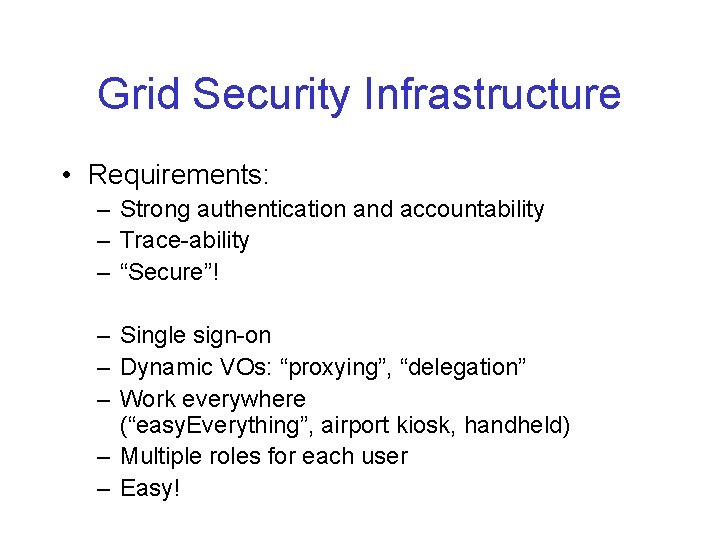
Grid Security Infrastructure • Requirements: – Strong authentication and accountability – Trace-ability – “Secure”! – Single sign-on – Dynamic VOs: “proxying”, “delegation” – Work everywhere (“easy. Everything”, airport kiosk, handheld) – Multiple roles for each user – Easy!
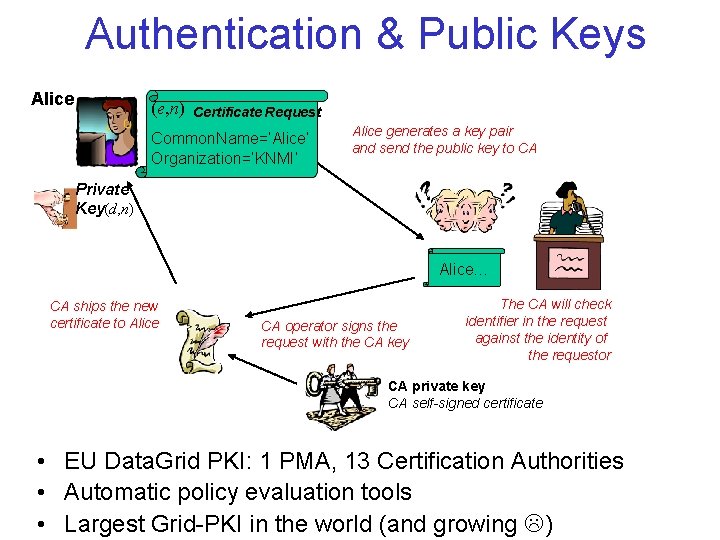
Authentication & Public Keys Alice (e, n) Certificate Request Common. Name=‘Alice’ Organization=‘KNMI’ Alice generates a key pair and send the public key to CA Private Key(d, n) Alice… CA ships the new certificate to Alice CA operator signs the request with the CA key The CA will check identifier in the request against the identity of the requestor CA private key CA self-signed certificate • EU Data. Grid PKI: 1 PMA, 13 Certification Authorities • Automatic policy evaluation tools • Largest Grid-PKI in the world (and growing )
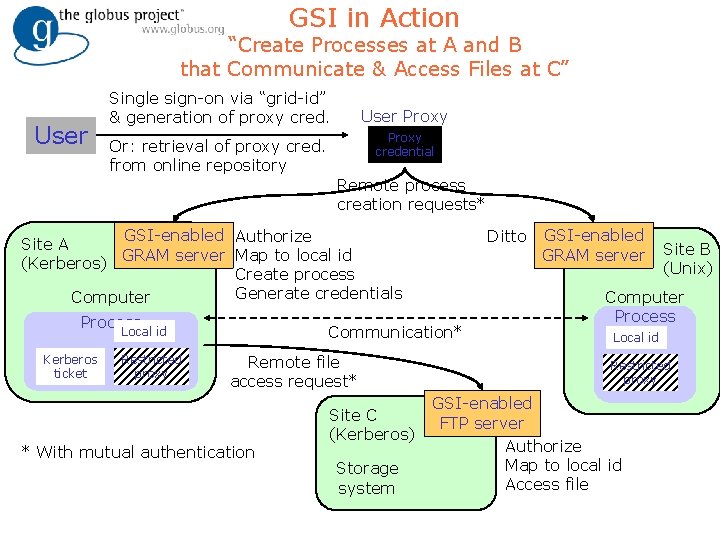
GSI in Action “Create Processes at A and B that Communicate & Access Files at C” User Single sign-on via “grid-id” & generation of proxy cred. User Proxy credential Or: retrieval of proxy cred. from online repository Remote process creation requests* GSI-enabled Authorize Site A GRAM server Map to local id (Kerberos) Create process Generate credentials Computer Process Local id Kerberos ticket Restricted proxy Ditto Communication* Remote file access request* * With mutual authentication Site C (Kerberos) Storage system GSI-enabled GRAM server Site B (Unix) Computer Process Local id Restricted proxy GSI-enabled FTP server Authorize Map to local id Access file
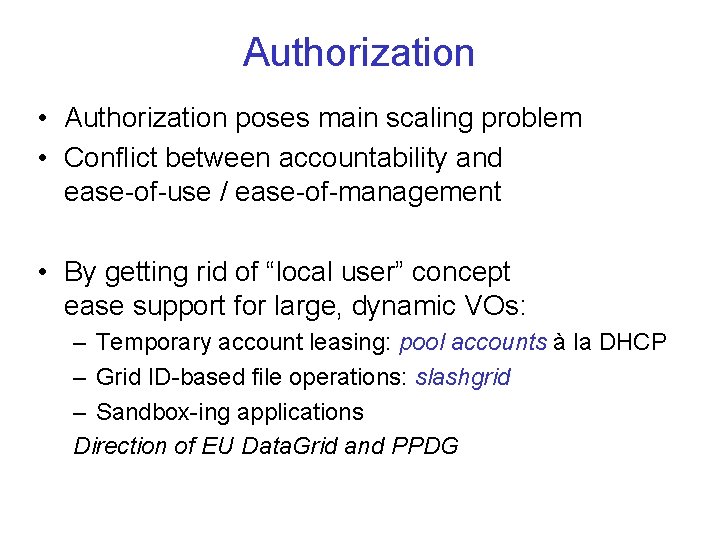
Authorization • Authorization poses main scaling problem • Conflict between accountability and ease-of-use / ease-of-management • By getting rid of “local user” concept ease support for large, dynamic VOs: – Temporary account leasing: pool accounts à la DHCP – Grid ID-based file operations: slashgrid – Sandbox-ing applications Direction of EU Data. Grid and PPDG
Locating a Data Set Replica • Grid Data Mirror Package • Designed for Terabyte data • Moves data across sites • Replicates both files and individual objects • Resource Broker uses catalogue information to schedule your job • Read-only copies “owner” by the Replica Manager. http: //cmsdoc. cern. ch/cms/grid
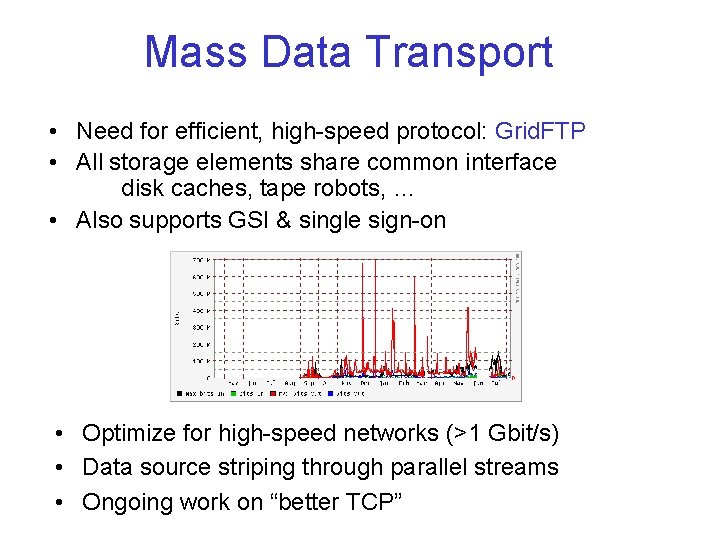
Mass Data Transport • Need for efficient, high-speed protocol: Grid. FTP • All storage elements share common interface disk caches, tape robots, … • Also supports GSI & single sign-on • Optimize for high-speed networks (>1 Gbit/s) • Data source striping through parallel streams • Ongoing work on “better TCP”
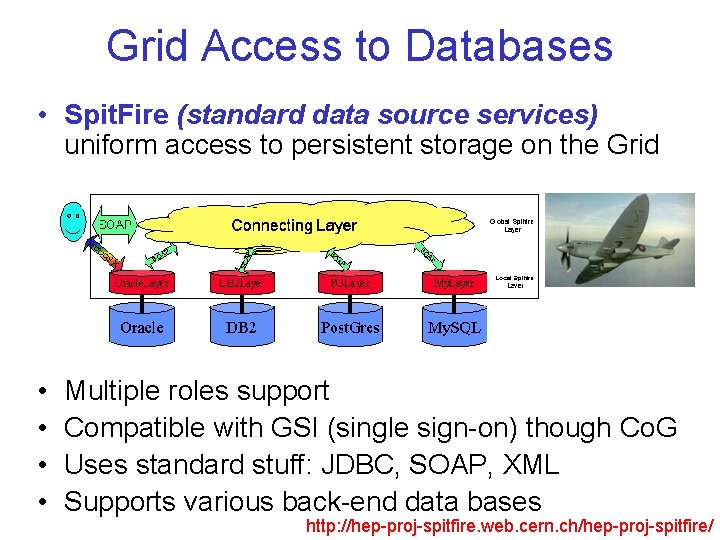
Grid Access to Databases • Spit. Fire (standard data source services) uniform access to persistent storage on the Grid • • Multiple roles support Compatible with GSI (single sign-on) though Co. G Uses standard stuff: JDBC, SOAP, XML Supports various back-end data bases http: //hep-proj-spitfire. web. cern. ch/hep-proj-spitfire/
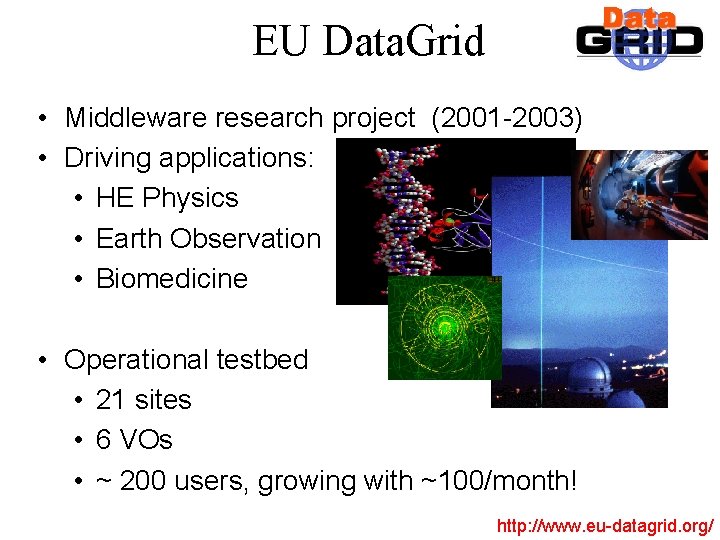
EU Data. Grid • Middleware research project (2001 -2003) • Driving applications: • HE Physics • Earth Observation • Biomedicine • Operational testbed • 21 sites • 6 VOs • ~ 200 users, growing with ~100/month! http: //www. eu-datagrid. org/
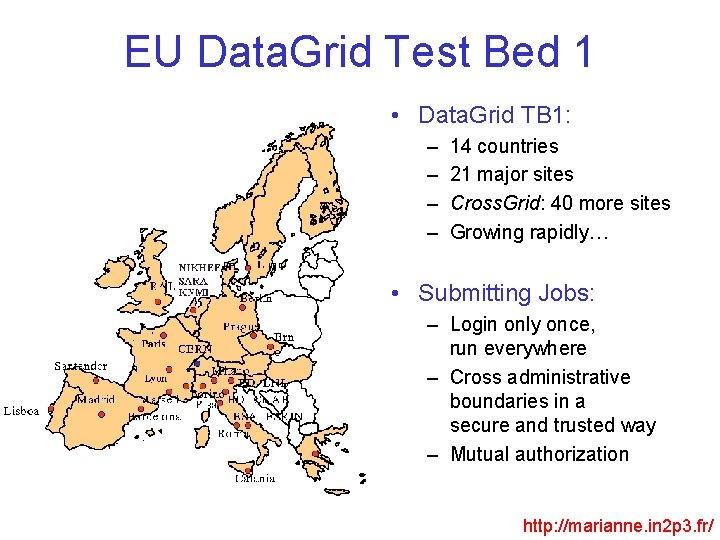
EU Data. Grid Test Bed 1 • Data. Grid TB 1: – – 14 countries 21 major sites Cross. Grid: 40 more sites Growing rapidly… • Submitting Jobs: – Login only once, run everywhere – Cross administrative boundaries in a secure and trusted way – Mutual authorization http: //marianne. in 2 p 3. fr/
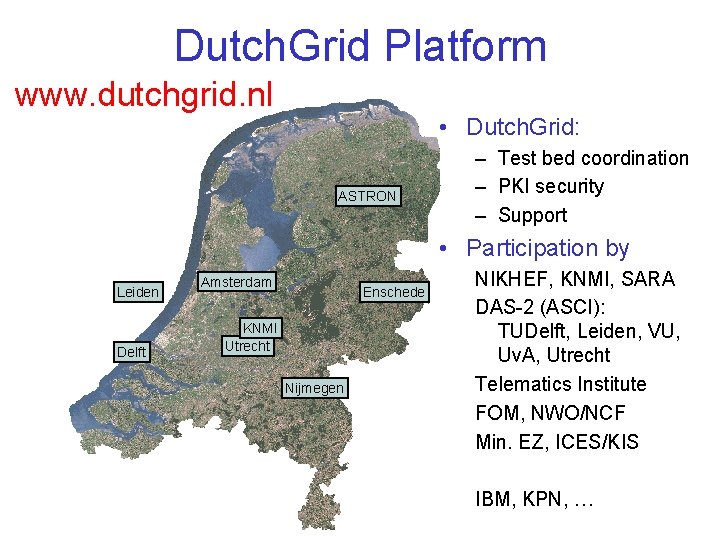
Dutch. Grid Platform www. dutchgrid. nl • Dutch. Grid: ASTRON – Test bed coordination – PKI security – Support • Participation by Leiden Delft Amsterdam Enschede KNMI Utrecht Nijmegen NIKHEF, KNMI, SARA DAS-2 (ASCI): TUDelft, Leiden, VU, Uv. A, Utrecht Telematics Institute FOM, NWO/NCF Min. EZ, ICES/KIS IBM, KPN, …

A Bright Future for Grid! You could plug your computer into the wall and have direct access to huge computing resources almost immediately (with a little help from toolkits and portals) … It may still be science – although not fiction – but we are about to make this into reality!
- Slides: 31