
Large scale networked system simulation using MLDesigner Horst

- Slides: 24
Large scale networked system simulation using MLDesigner Horst Salzwedel, MLDesign Technologies, Inc. 2130 Hanover, Palo Alto CA 94303, http: //www. mldesigner. com ¾Why MLDesigner uses Ptolemy Technology ¾What are large scale networked systems (LSNS)? ¾Challenges and solutions in designing LSNS ¾Challenges and solutions in simulating LSNS ¾Summary HORST SALZWEDEL, PTOLEMY/KEPLER CONFERENCE MAY 12 th, 2005 1
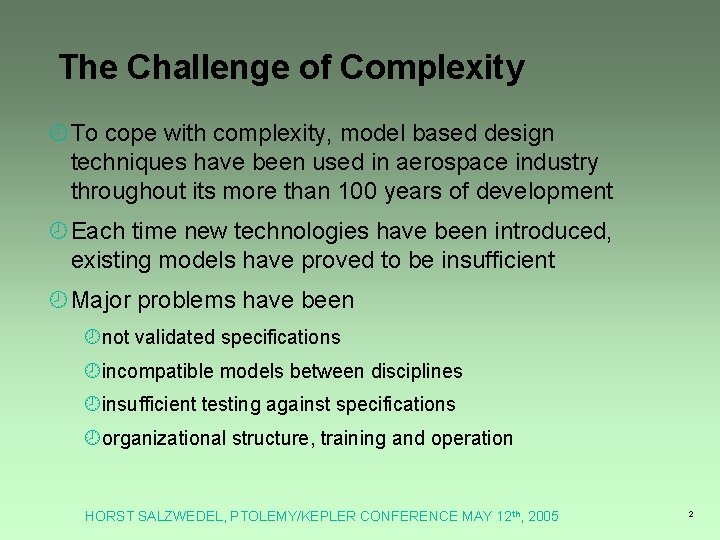
The Challenge of Complexity ¾To cope with complexity, model based design techniques have been used in aerospace industry throughout its more than 100 years of development ¾Each time new technologies have been introduced, existing models have proved to be insufficient ¾Major problems have been ¾not validated specifications ¾incompatible models between disciplines ¾insufficient testing against specifications ¾organizational structure, training and operation HORST SALZWEDEL, PTOLEMY/KEPLER CONFERENCE MAY 12 th, 2005 2
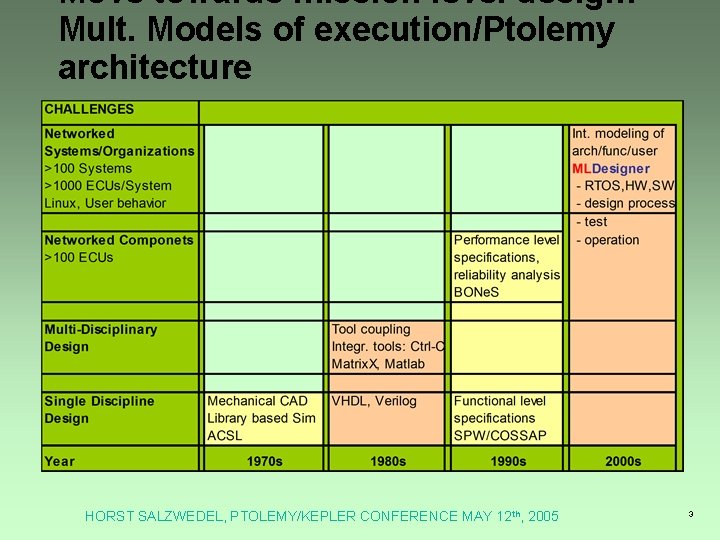
Move towards mission level design: Mult. Models of execution/Ptolemy architecture HORST SALZWEDEL, PTOLEMY/KEPLER CONFERENCE MAY 12 th, 2005 3
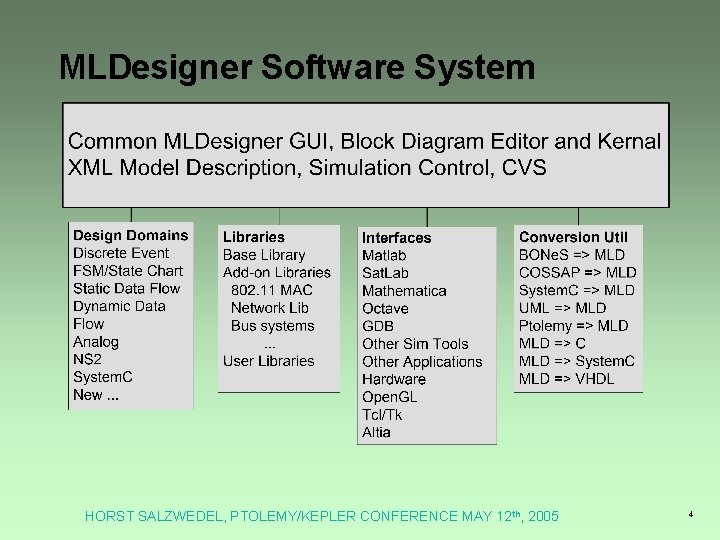
MLDesigner Software System HORST SALZWEDEL, PTOLEMY/KEPLER CONFERENCE MAY 12 th, 2005 4
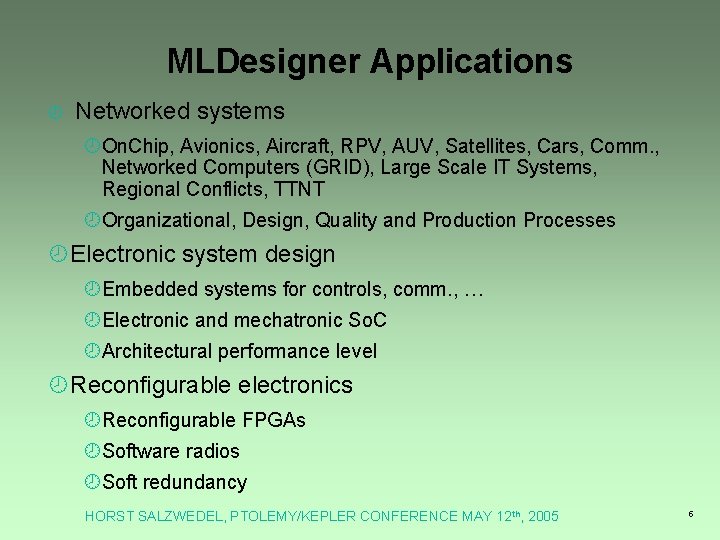
MLDesigner Applications ¾ Networked systems ¾On. Chip, Avionics, Aircraft, RPV, AUV, Satellites, Cars, Comm. , Networked Computers (GRID), Large Scale IT Systems, Regional Conflicts, TTNT ¾Organizational, Design, Quality and Production Processes ¾Electronic system design ¾Embedded systems for controls, comm. , … ¾Electronic and mechatronic So. C ¾Architectural performance level ¾Reconfigurable electronics ¾Reconfigurable FPGAs ¾Software radios ¾Soft redundancy HORST SALZWEDEL, PTOLEMY/KEPLER CONFERENCE MAY 12 th, 2005 5
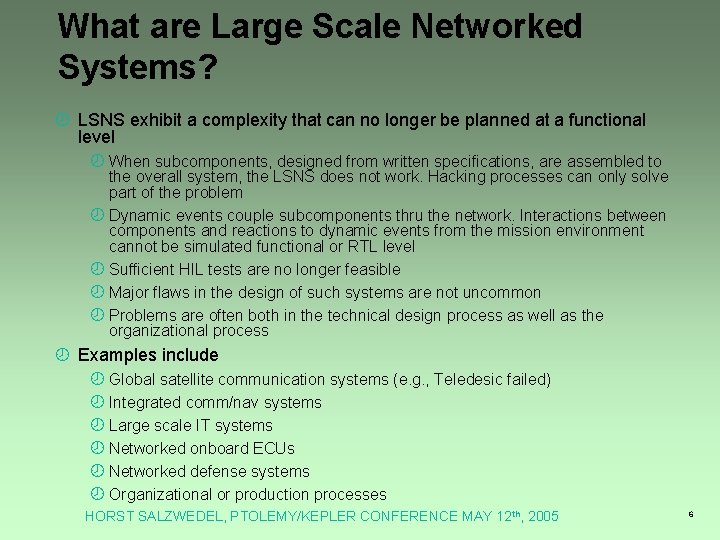
What are Large Scale Networked Systems? ¾ LSNS exhibit a complexity that can no longer be planned at a functional level ¾ When subcomponents, designed from written specifications, are assembled to the overall system, the LSNS does not work. Hacking processes can only solve part of the problem ¾ Dynamic events couple subcomponents thru the network. Interactions between components and reactions to dynamic events from the mission environment cannot be simulated functional or RTL level ¾ Sufficient HIL tests are no longer feasible ¾ Major flaws in the design of such systems are not uncommon ¾ Problems are often both in the technical design process as well as the organizational process ¾ Examples include ¾ Global satellite communication systems (e. g. , Teledesic failed) ¾ Integrated comm/nav systems ¾ Large scale IT systems ¾ Networked onboard ECUs ¾ Networked defense systems ¾ Organizational or production processes HORST SALZWEDEL, PTOLEMY/KEPLER CONFERENCE MAY 12 th, 2005 6
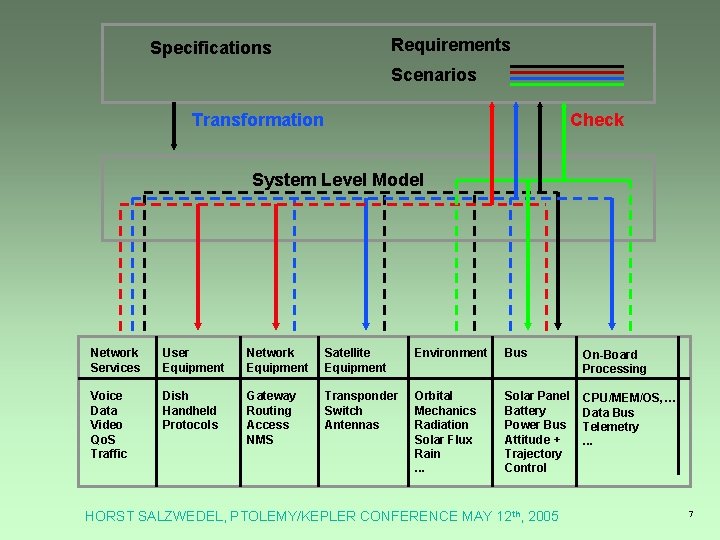
Requirements Specifications Scenarios Transformation Check System Level Model Network Services User Equipment Network Equipment Satellite Equipment Environment Bus On-Board Processing Voice Data Video Qo. S Traffic Dish Handheld Protocols Gateway Routing Access NMS Transponder Switch Antennas Orbital Mechanics Radiation Solar Flux Rain. . . Solar Panel Battery Power Bus Attitude + Trajectory Control CPU/MEM/OS, … Data Bus Telemetry. . . HORST SALZWEDEL, PTOLEMY/KEPLER CONFERENCE MAY 12 th, 2005 7
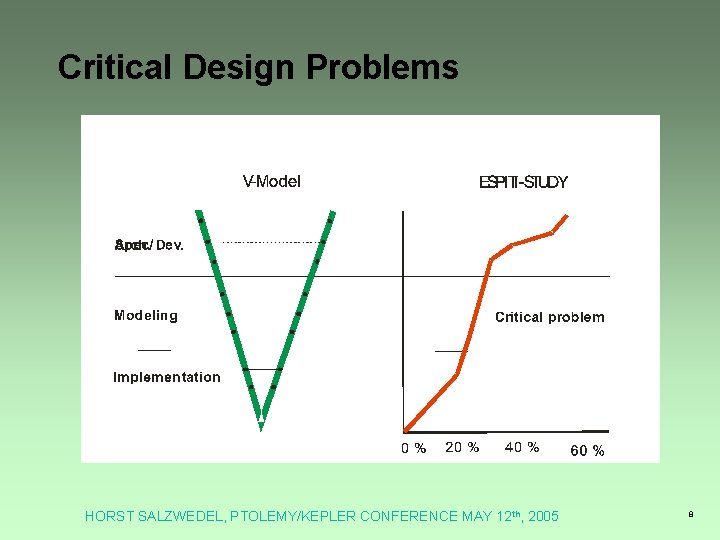
Critical Design Problems HORST SALZWEDEL, PTOLEMY/KEPLER CONFERENCE MAY 12 th, 2005 8
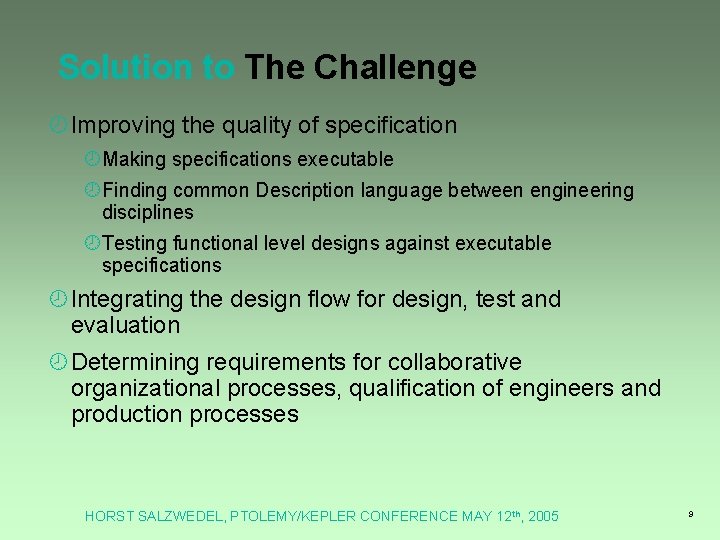
Solution to The Challenge ¾Improving the quality of specification ¾Making specifications executable ¾Finding common Description language between engineering disciplines ¾Testing functional level designs against executable specifications ¾Integrating the design flow for design, test and evaluation ¾Determining requirements for collaborative organizational processes, qualification of engineers and production processes HORST SALZWEDEL, PTOLEMY/KEPLER CONFERENCE MAY 12 th, 2005 9
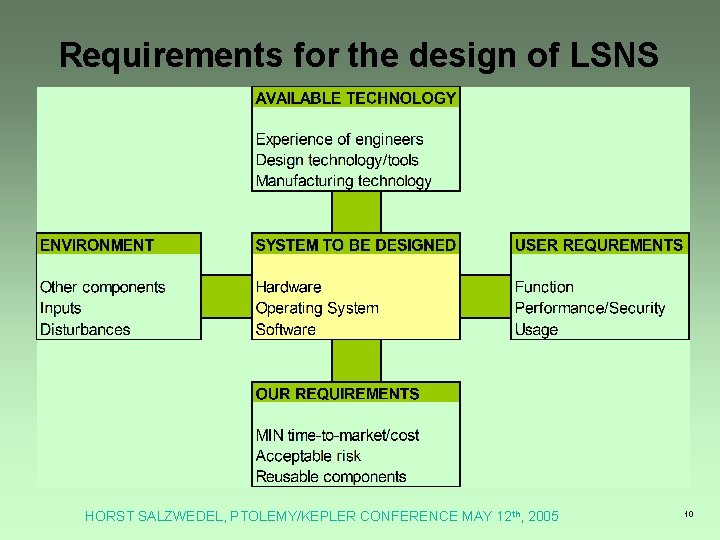
Requirements for the design of LSNS HORST SALZWEDEL, PTOLEMY/KEPLER CONFERENCE MAY 12 th, 2005 10
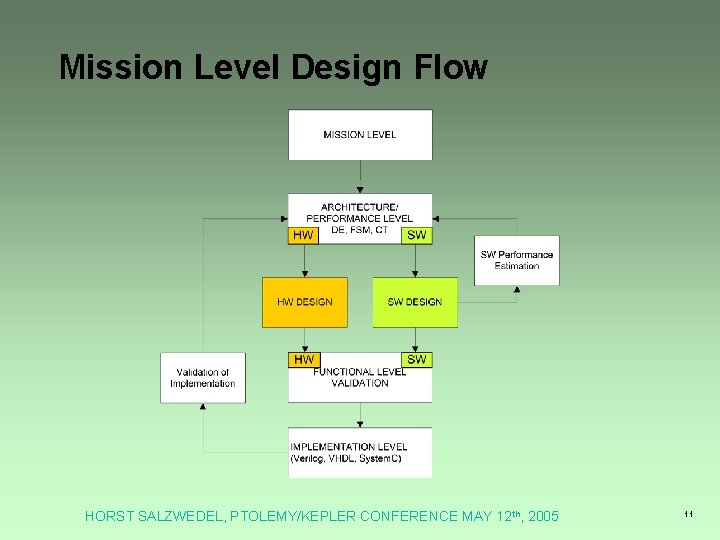
Mission Level Design Flow HORST SALZWEDEL, PTOLEMY/KEPLER CONFERENCE MAY 12 th, 2005 11
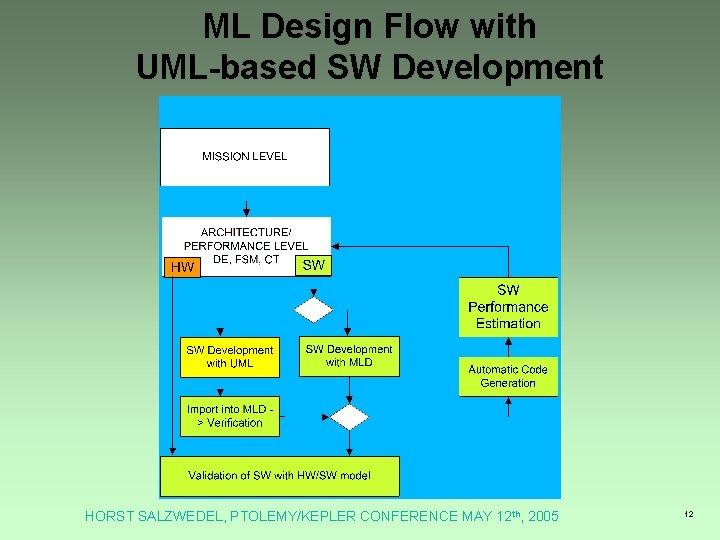
ML Design Flow with UML-based SW Development HORST SALZWEDEL, PTOLEMY/KEPLER CONFERENCE MAY 12 th, 2005 12
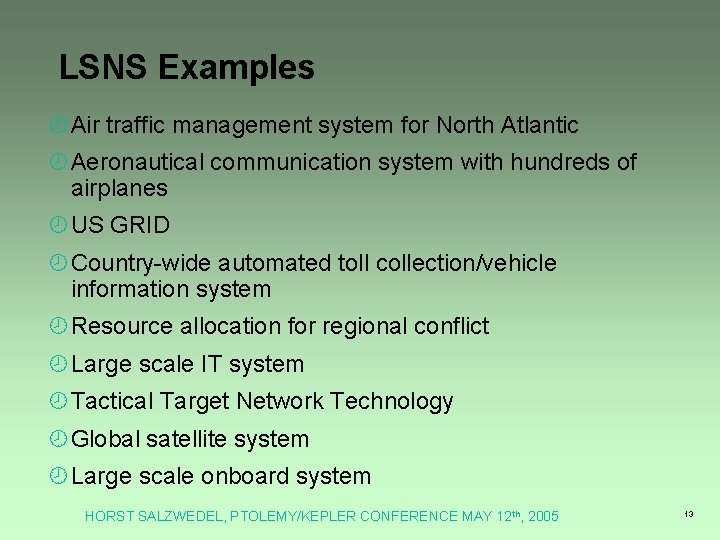
LSNS Examples ¾Air traffic management system for North Atlantic ¾Aeronautical communication system with hundreds of airplanes ¾US GRID ¾Country-wide automated toll collection/vehicle information system ¾Resource allocation for regional conflict ¾Large scale IT system ¾Tactical Target Network Technology ¾Global satellite system ¾Large scale onboard system HORST SALZWEDEL, PTOLEMY/KEPLER CONFERENCE MAY 12 th, 2005 13
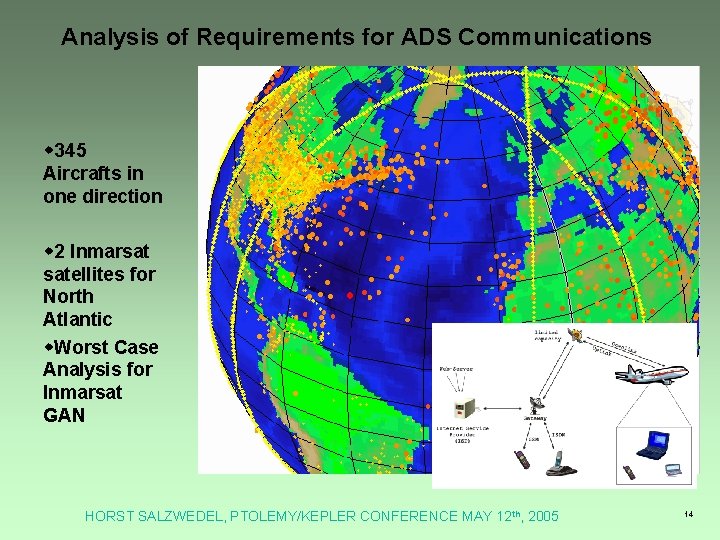
Analysis of Requirements for ADS Communications w 345 Aircrafts in one direction w 2 Inmarsat satellites for North Atlantic w. Worst Case Analysis for Inmarsat GAN HORST SALZWEDEL, PTOLEMY/KEPLER CONFERENCE MAY 12 th, 2005 14
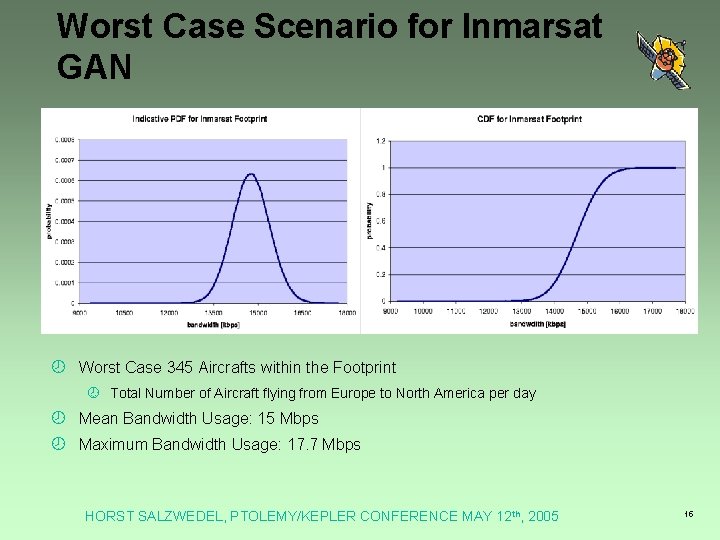
Worst Case Scenario for Inmarsat GAN ¾ Worst Case 345 Aircrafts within the Footprint ¾ Total Number of Aircraft flying from Europe to North America per day ¾ Mean Bandwidth Usage: 15 Mbps ¾ Maximum Bandwidth Usage: 17. 7 Mbps HORST SALZWEDEL, PTOLEMY/KEPLER CONFERENCE MAY 12 th, 2005 15
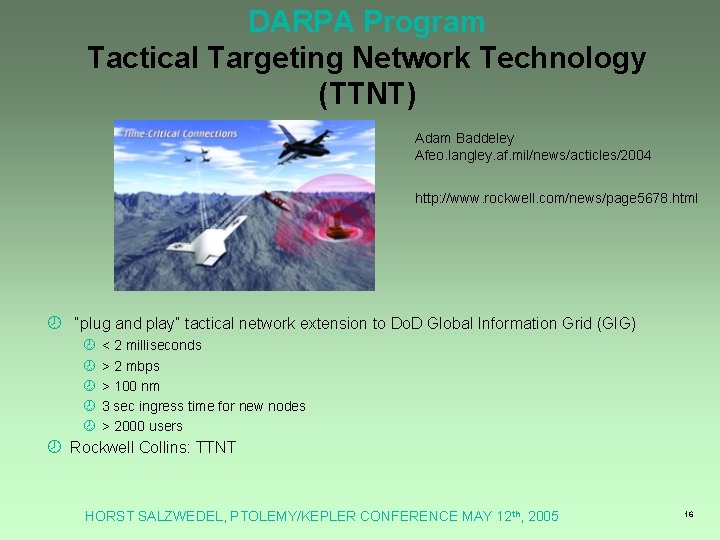
DARPA Program Tactical Targeting Network Technology (TTNT) Adam Baddeley Afeo. langley. af. mil/news/acticles/2004 http: //www. rockwell. com/news/page 5678. html ¾ “plug and play” tactical network extension to Do. D Global Information Grid (GIG) ¾ ¾ ¾ < 2 milliseconds > 2 mbps > 100 nm 3 sec ingress time for new nodes > 2000 users ¾ Rockwell Collins: TTNT HORST SALZWEDEL, PTOLEMY/KEPLER CONFERENCE MAY 12 th, 2005 16
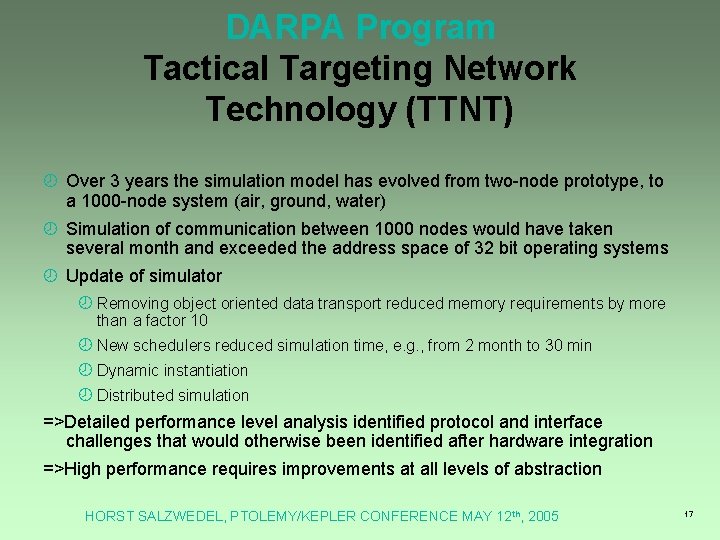
DARPA Program Tactical Targeting Network Technology (TTNT) ¾ Over 3 years the simulation model has evolved from two-node prototype, to a 1000 -node system (air, ground, water) ¾ Simulation of communication between 1000 nodes would have taken several month and exceeded the address space of 32 bit operating systems ¾ Update of simulator ¾ Removing object oriented data transport reduced memory requirements by more than a factor 10 ¾ New schedulers reduced simulation time, e. g. , from 2 month to 30 min ¾ Dynamic instantiation ¾ Distributed simulation =>Detailed performance level analysis identified protocol and interface challenges that would otherwise been identified after hardware integration =>High performance requires improvements at all levels of abstraction HORST SALZWEDEL, PTOLEMY/KEPLER CONFERENCE MAY 12 th, 2005 17
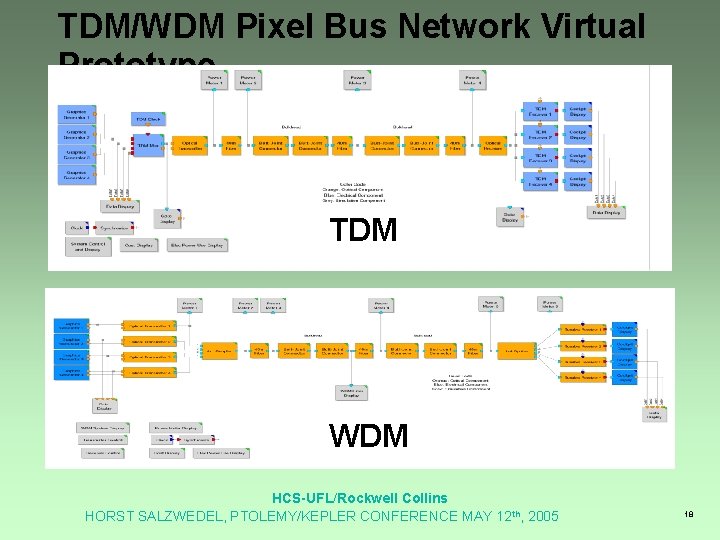
TDM/WDM Pixel Bus Network Virtual Prototype TDM WDM HCS-UFL/Rockwell Collins HORST SALZWEDEL, PTOLEMY/KEPLER CONFERENCE MAY 12 th, 2005 18
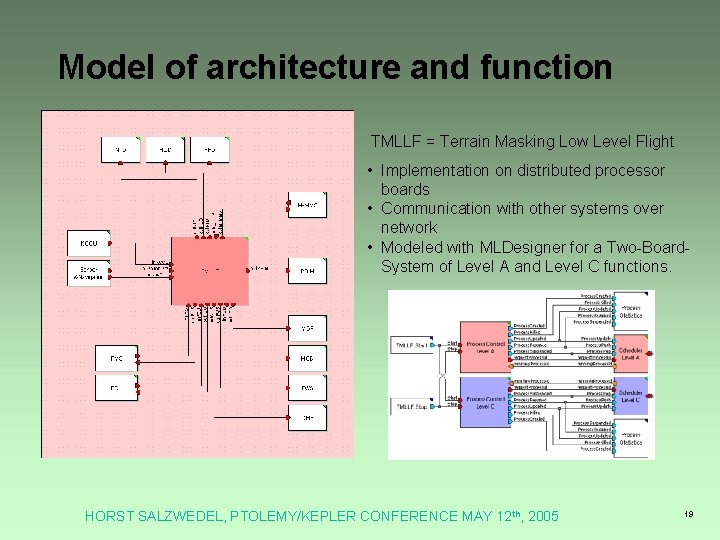
Model of architecture and function TMLLF = Terrain Masking Low Level Flight • Implementation on distributed processor boards • Communication with other systems over network • Modeled with MLDesigner for a Two-Board. System of Level A and Level C functions. HORST SALZWEDEL, PTOLEMY/KEPLER CONFERENCE MAY 12 th, 2005 19
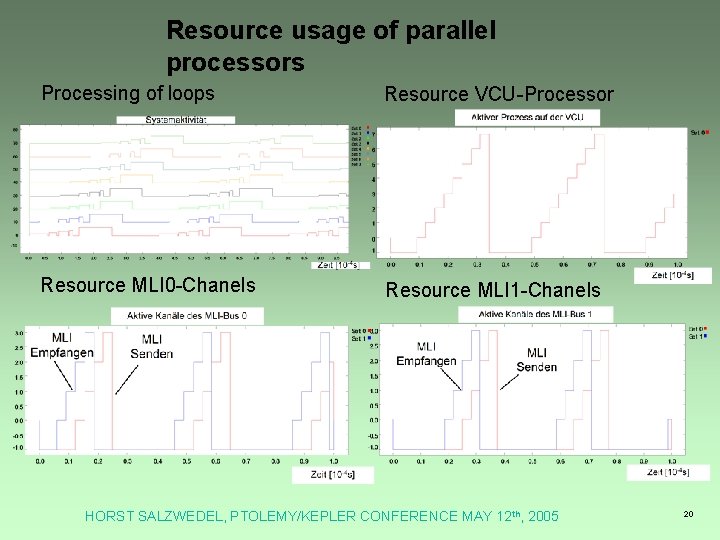
Resource usage of parallel processors Processing of loops Resource VCU-Processor Resource MLI 0 -Chanels Resource MLI 1 -Chanels HORST SALZWEDEL, PTOLEMY/KEPLER CONFERENCE MAY 12 th, 2005 20
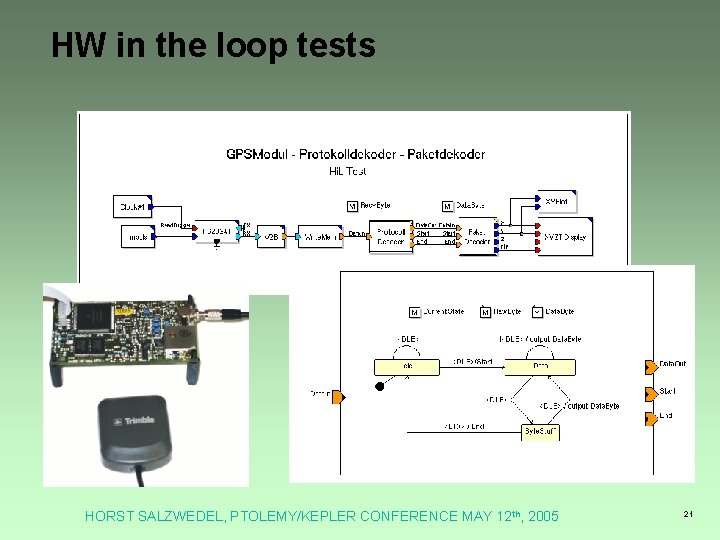
HW in the loop tests HORST SALZWEDEL, PTOLEMY/KEPLER CONFERENCE MAY 12 th, 2005 21
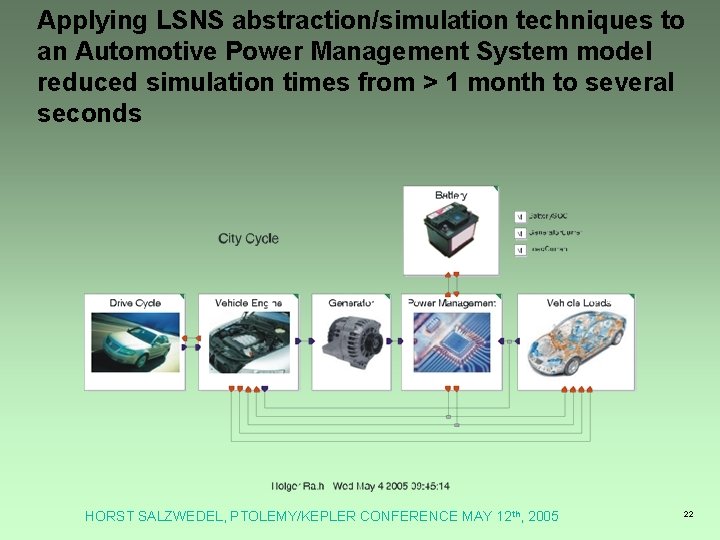
Applying LSNS abstraction/simulation techniques to an Automotive Power Management System model reduced simulation times from > 1 month to several seconds HORST SALZWEDEL, PTOLEMY/KEPLER CONFERENCE MAY 12 th, 2005 22
Summary ¾For simulating high performance LSNS the simulation technology had to be significantly improved in memory usage, speed and robustness of schedulers and parallel execution. Models had to be moved to higher levels of abstraction ¾Main experience with integrating design flow for LSNS from application/mission to implementation ¾Reduced risk in design of complex systems because of validated specifications ¾Reduced number of iterations in design ¾Project completion in time ¾Speedup of design/development of up to 10 x and more HORST SALZWEDEL, PTOLEMY/KEPLER CONFERENCE MAY 12 th, 2005 23
Questions? http: //www. mldesigner. com HORST SALZWEDEL, PTOLEMY/KEPLER CONFERENCE MAY 12 th, 2005 24