
Large organic biomolecules 4 types Carbohydrates Lipids Proteins
§ Large, organic, biomolecules § 4 types: § Carbohydrates § Lipids § Proteins § Nucleic acids § Polymers groups of smaller molecules called monomers Many single
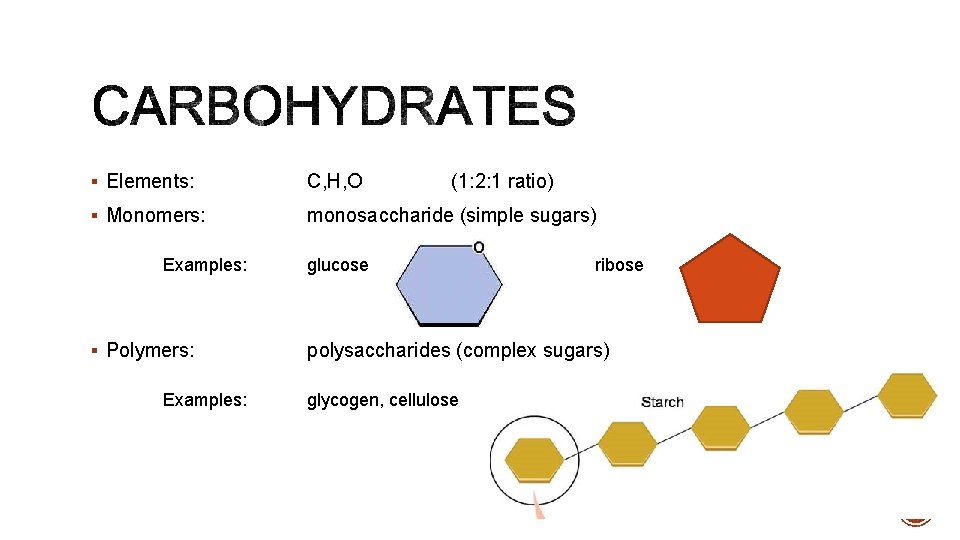
§ Elements: C, H, O § Monomers: monosaccharide (simple sugars) Examples: § Polymers: Examples: (1: 2: 1 ratio) glucose ribose polysaccharides (complex sugars) glycogen, cellulose
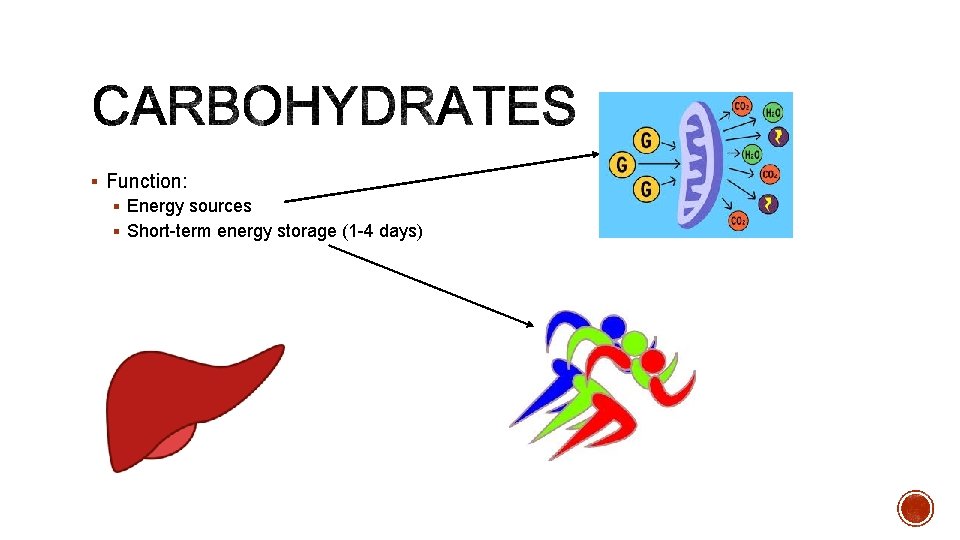
§ Function: § Energy sources § Short-term energy storage (1 -4 days)
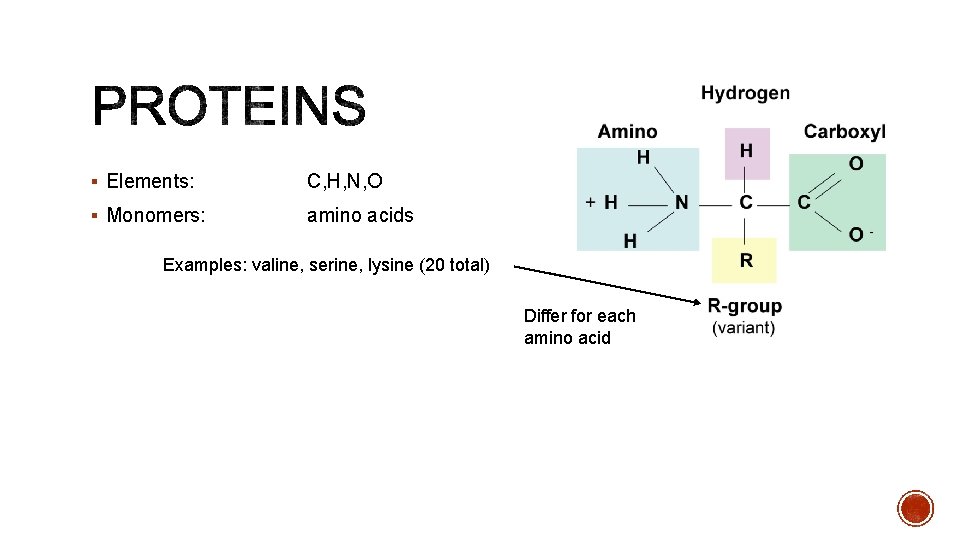
§ Elements: C, H, N, O § Monomers: amino acids Examples: valine, serine, lysine (20 total) Differ for each amino acid
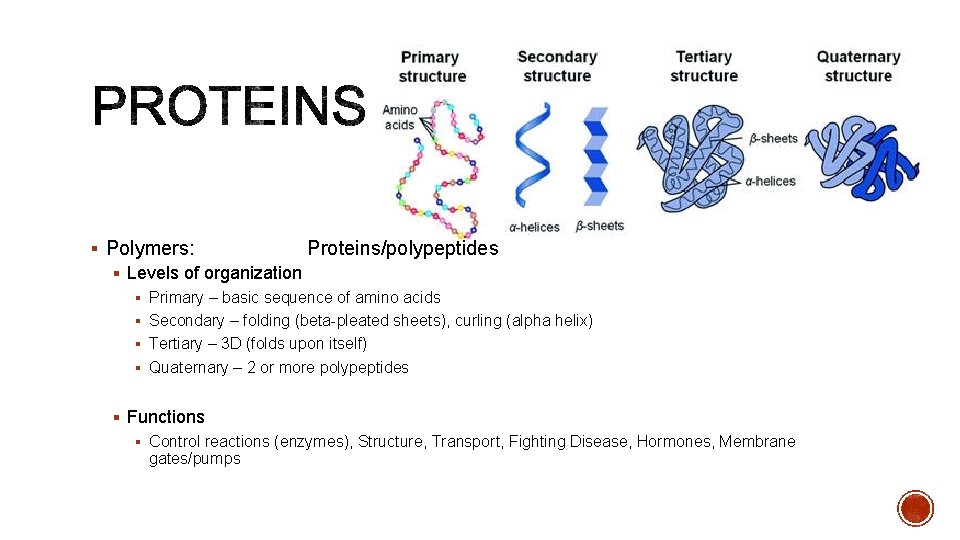
§ Polymers: Proteins/polypeptides § Levels of organization § Primary – basic sequence of amino acids § Secondary – folding (beta-pleated sheets), curling (alpha helix) § Tertiary – 3 D (folds upon itself) § Quaternary – 2 or more polypeptides § Functions § Control reactions (enzymes), Structure, Transport, Fighting Disease, Hormones, Membrane gates/pumps
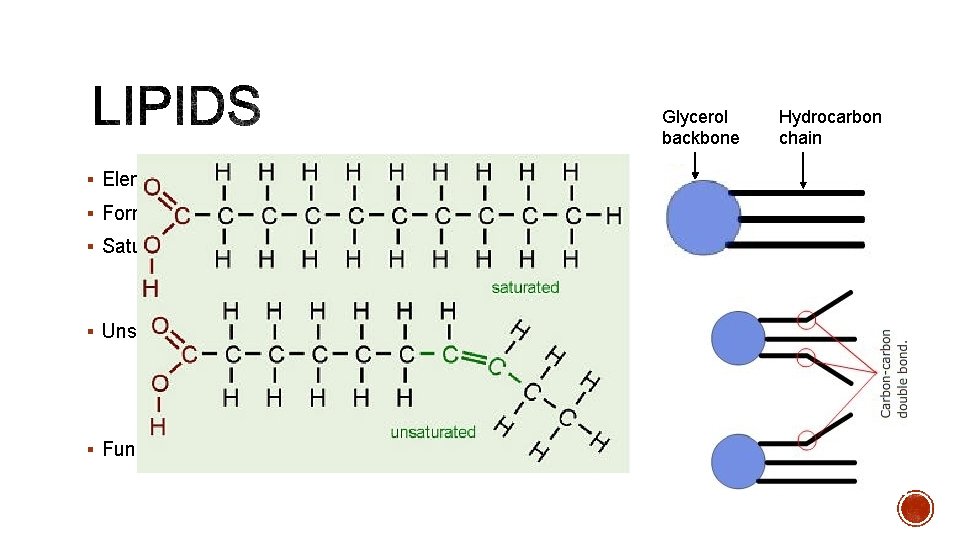
Glycerol backbone § Elements: C, H, O § Forms: fats, waxes, oils, triglycerides § Saturated: all single bonds in chains pack tightly together § Unsaturated: one or more double bonds in chains causes kinks in chain – cannot pack tightly § Functions: long-term energy storage Hydrocarbon chain
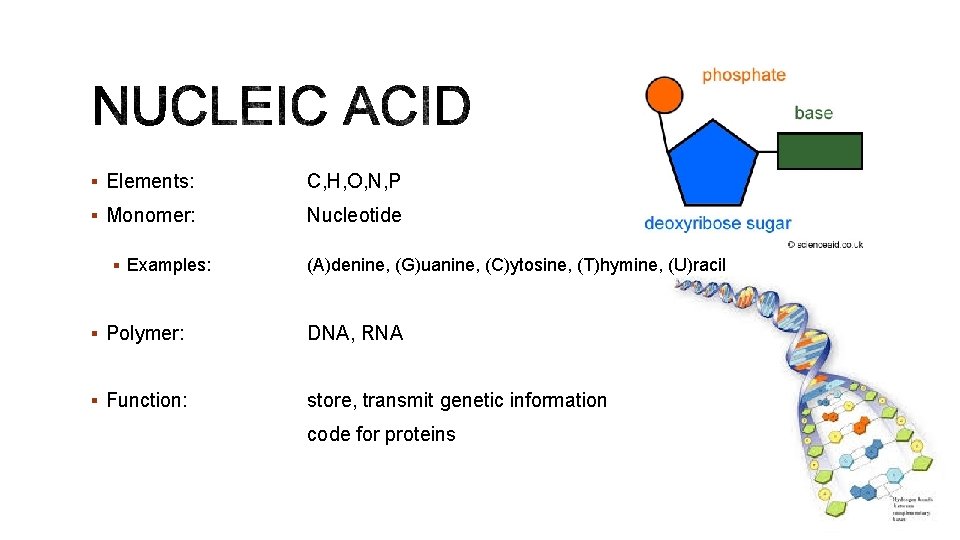
§ Elements: C, H, O, N, P § Monomer: Nucleotide § Examples: (A)denine, (G)uanine, (C)ytosine, (T)hymine, (U)racil § Polymer: DNA, RNA § Function: store, transmit genetic information code for proteins
- Slides: 8