
Large moons of the solar system Titan Titan

- Slides: 68
Large moons of the solar system: Titan • Titan is the only moon in the solar system which has an atmosphere. • The atmosphere is mostly nitrogen and thicker than even Earth’s atmosphere. • The pressure near the surface is not too different from the pressure in this room on Earth, but the temperature is just slightly above the boiling point of liquid nitrogen. • It is so cold, however, that methane and ethane in the atmosphere can form liquid droplets and form rain. • Titan is the only moon in the Solar System that has rivers and lakes. They are not full of water, but of methane and ethane liquids, probably with dissolved organic material.
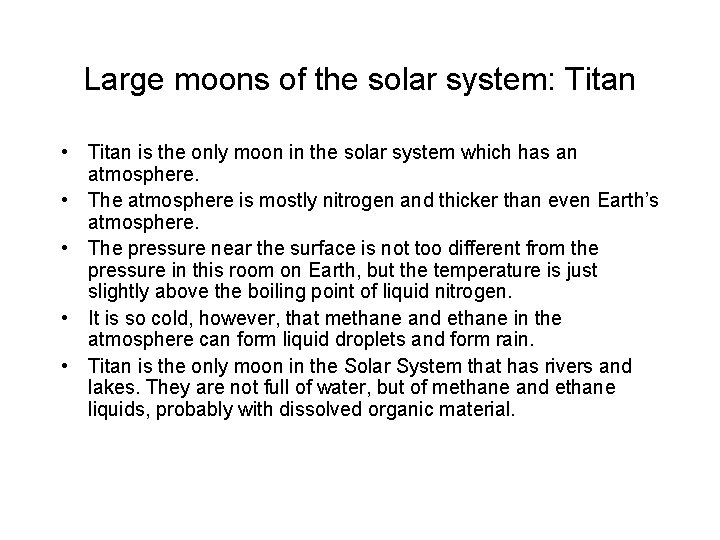
Titan, as seen by the Cassini spacecraft false color on the left, infrared on the right
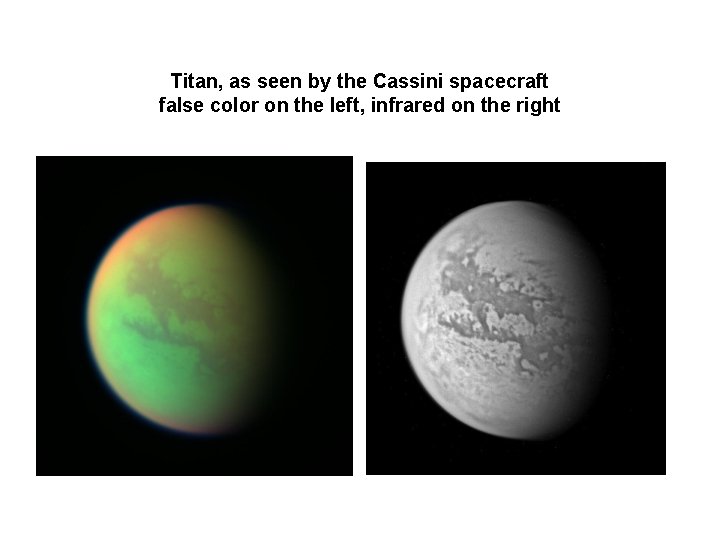
Rivers were seen on the surface of Titan as the probe “Huygens” descended to the surface. It landed and took pictures of the surface of a streambed (right).
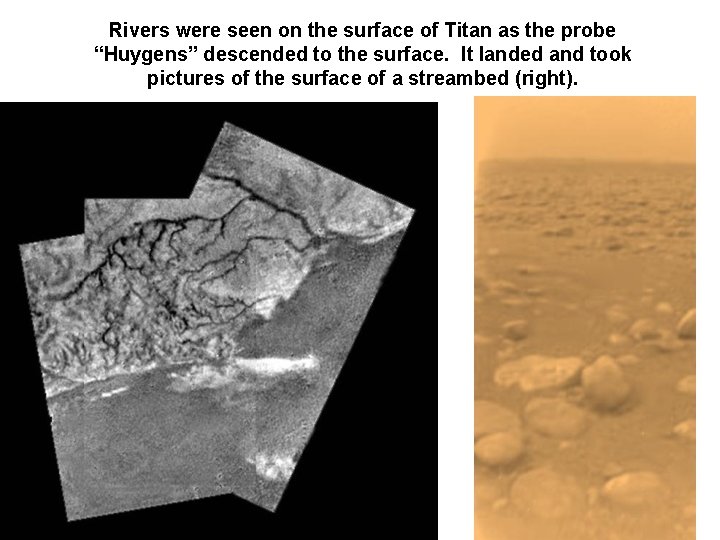
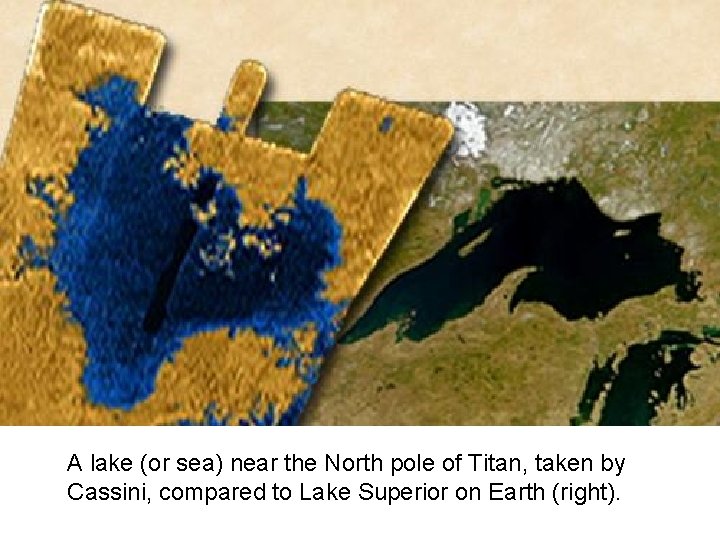
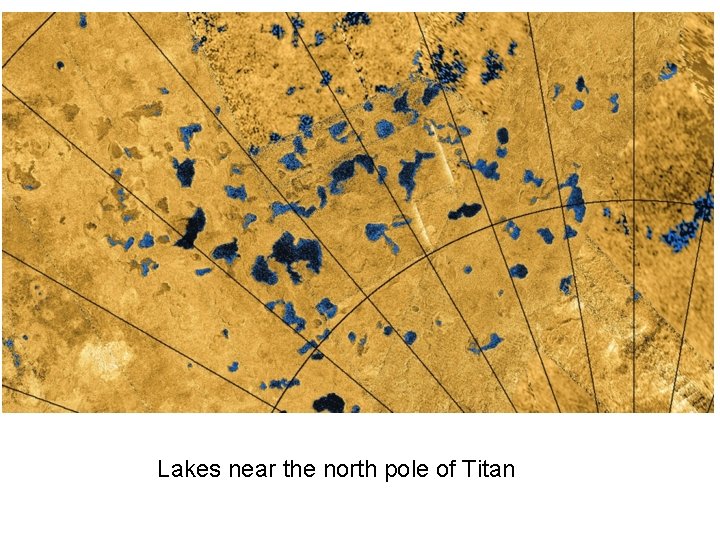
Radar sweeps of the North pole of Titan, taken by the Cassini spacecraft, showing lakes of methane and ethane. Flat areas in radar images are probably liquid surfaces, and are colored blue to resemble features on Earth. The radar image has no color in reality. (late 2007)
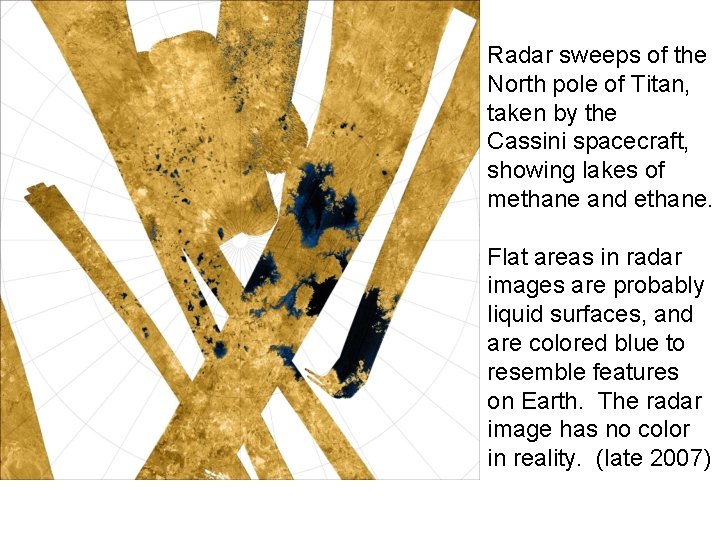
A lake (or sea) near the North pole of Titan, taken by Cassini, compared to Lake Superior on Earth (right).
Lakes near the north pole of Titan
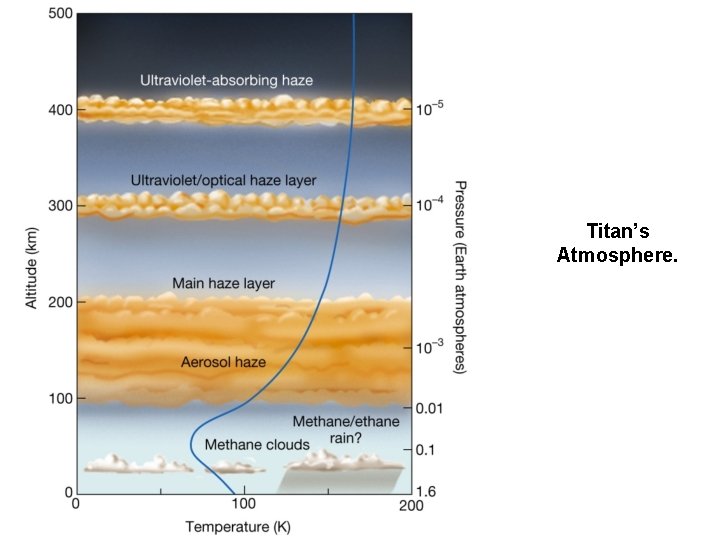
Titan’s Atmosphere.
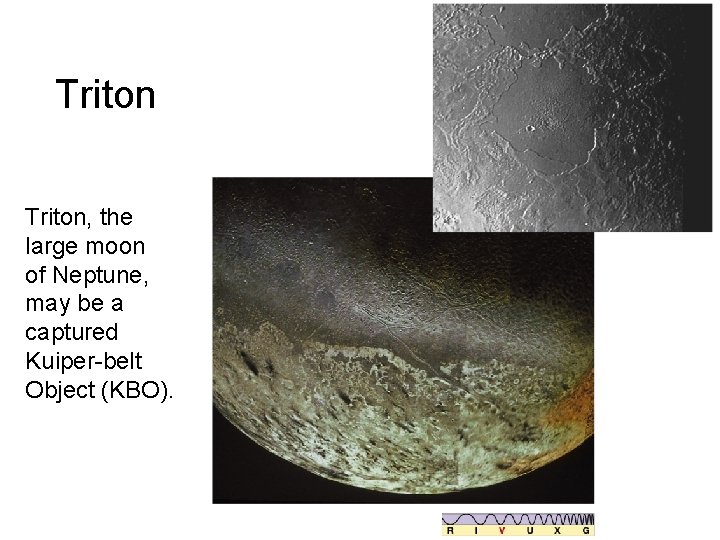
Triton, the large moon of Neptune, may be a captured Kuiper-belt Object (KBO).
Medium-sized moons of the solar system • There are 12 medium-sized moons of the solar system, mostly around Saturn and Uranus. • These have a variety of features, and some are truly strange because they are some kind of aggregate object.
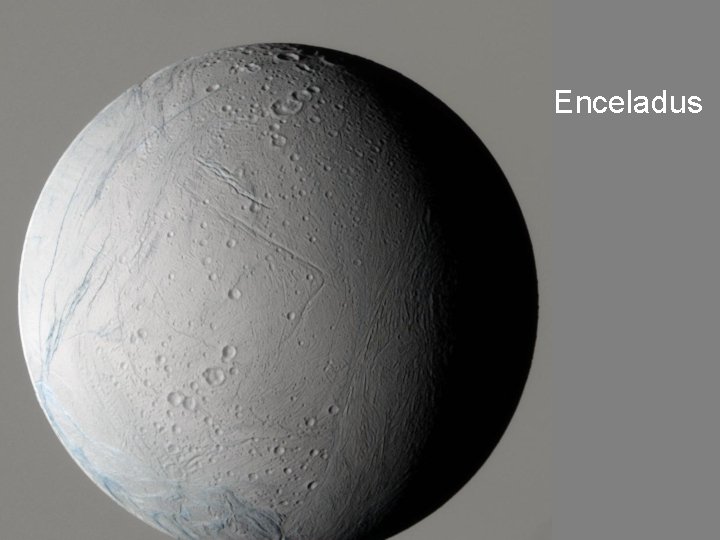
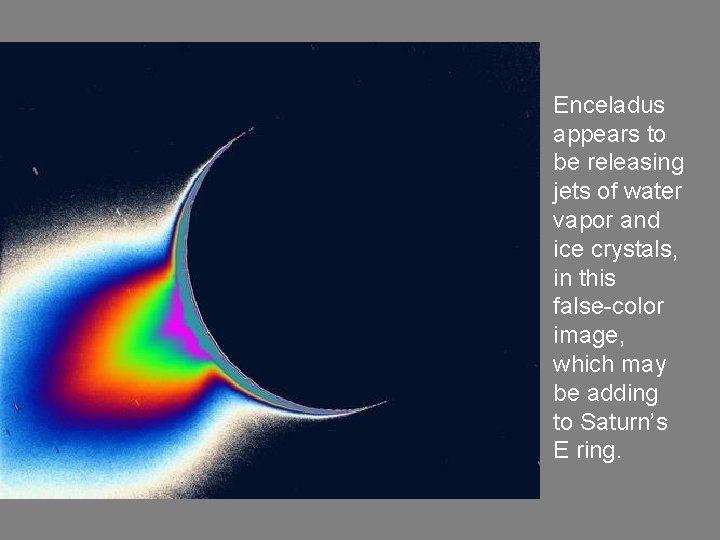
The Cassini spacecraft has returned detailed pictures of many of these smaller moons of Saturn. • We will just look at some in alphabetical order. • Notice that most of these are icy objects but are large enough to be round and have lots of craters. • In addition, some of them show cracking like the moon Europa of Jupiter. • Enceladus seems to be producing ice and water vapor and this contributes to the “E” ring of Saturn.
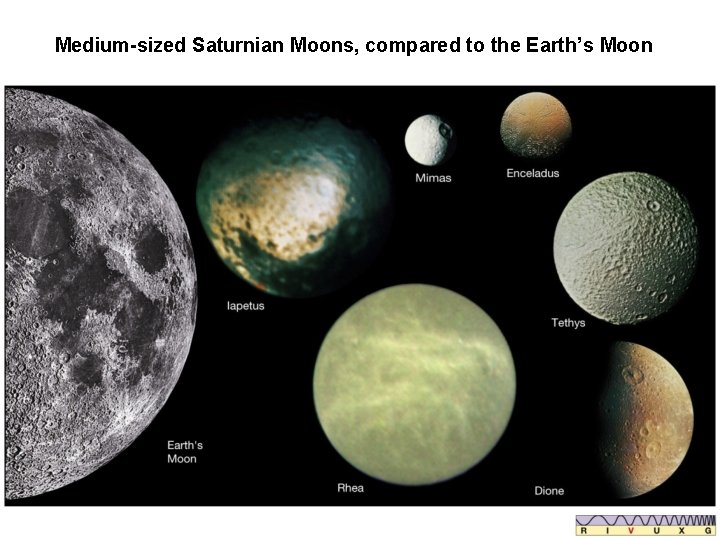
Medium-sized Saturnian Moons, compared to the Earth’s Moon
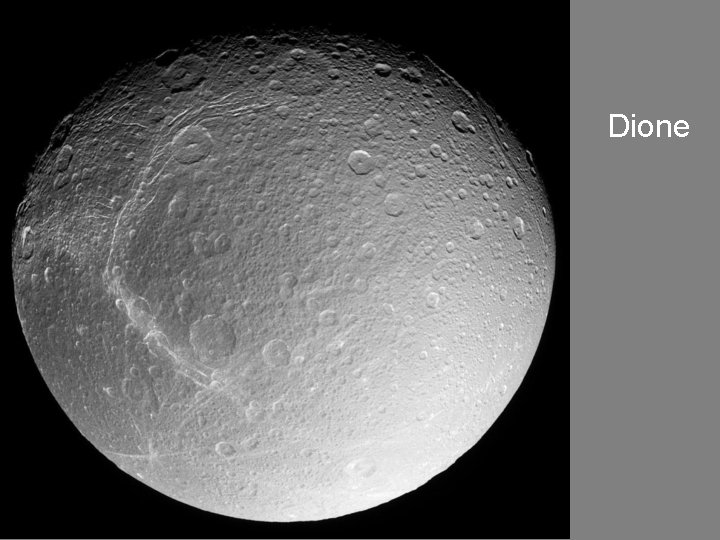
Dione
Enceladus
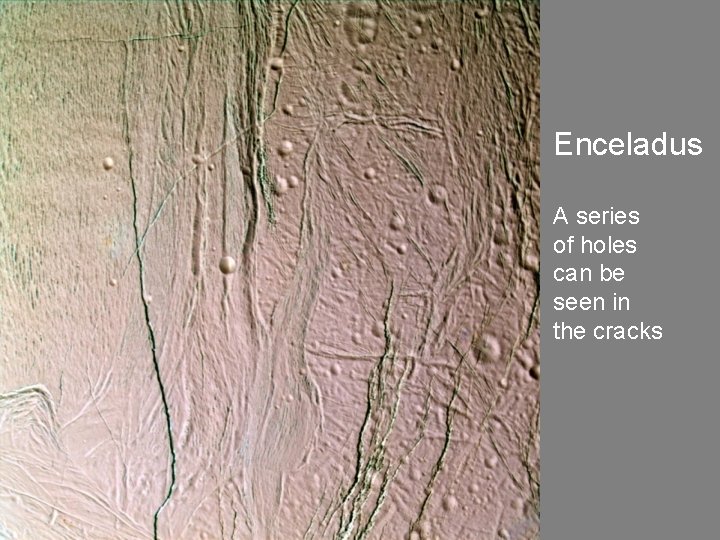
Enceladus A series of holes can be seen in the cracks
Enceladus appears to be releasing jets of water vapor and ice crystals, in this false-color image, which may be adding to Saturn’s E ring.
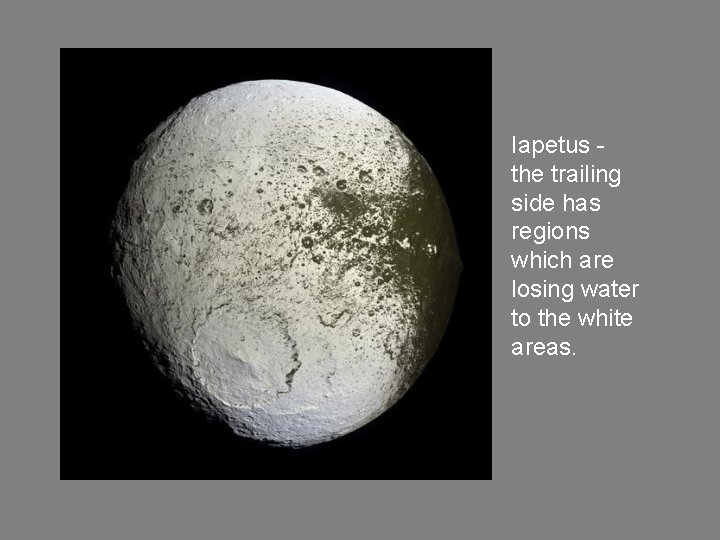
Iapetus the trailing side has regions which are losing water to the white areas.
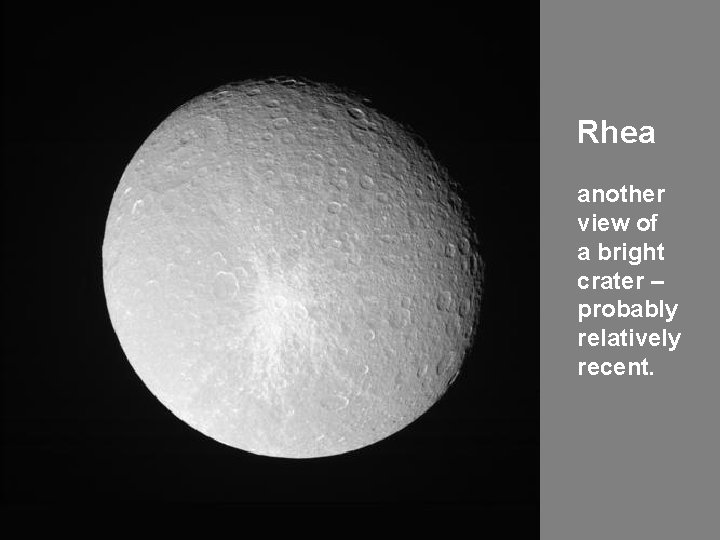
Rhea another view of a bright crater – probably relatively recent.
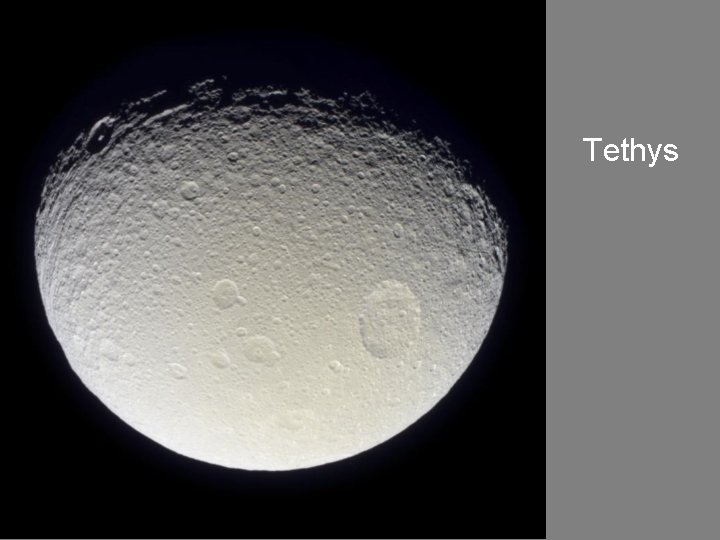
Tethys
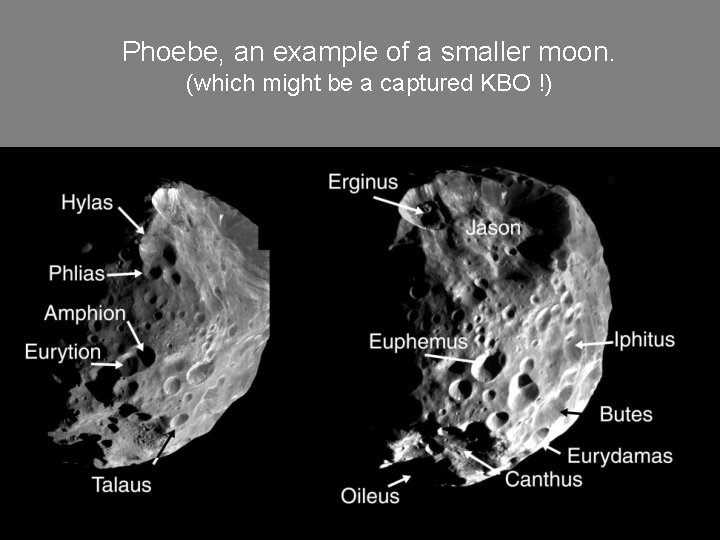
Phoebe, an example of a smaller moon. (which might be a captured KBO !)
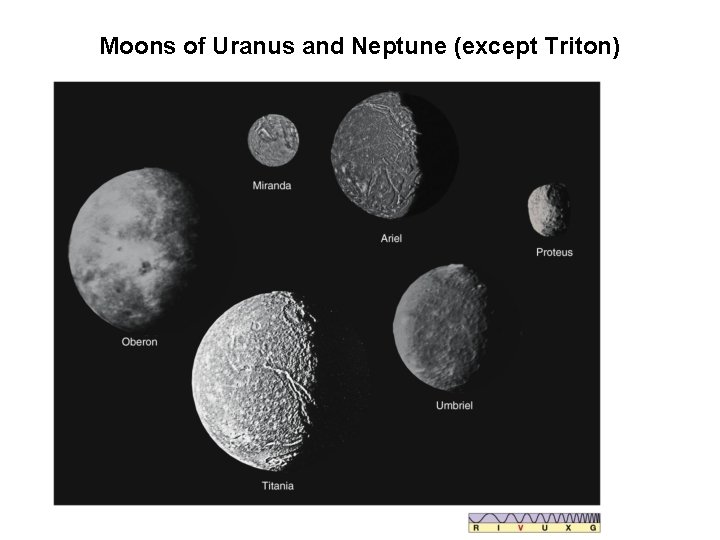
Moons of Uranus and Neptune (except Triton)
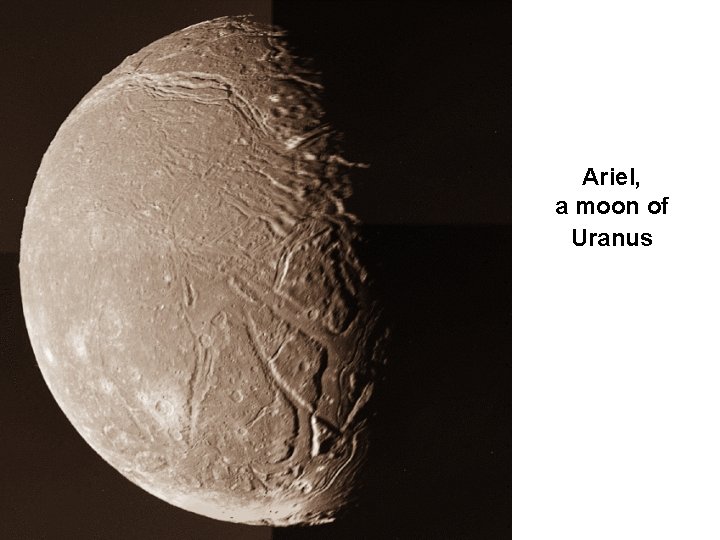
Ariel, a moon of Uranus
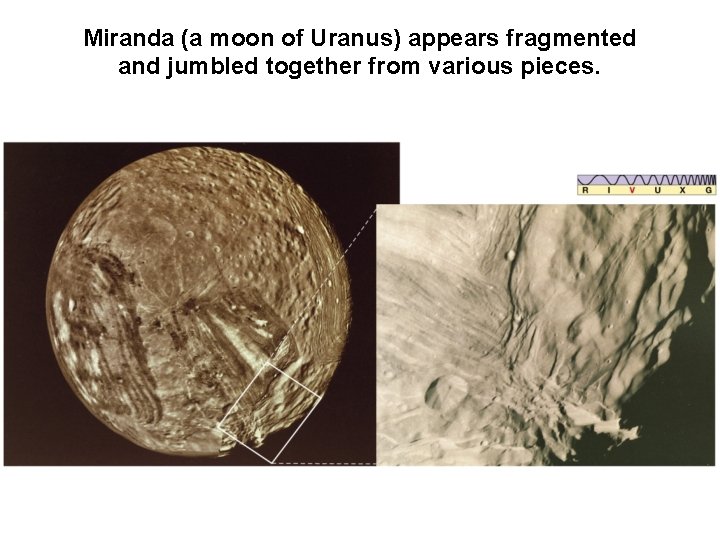
Miranda (a moon of Uranus) appears fragmented and jumbled together from various pieces.
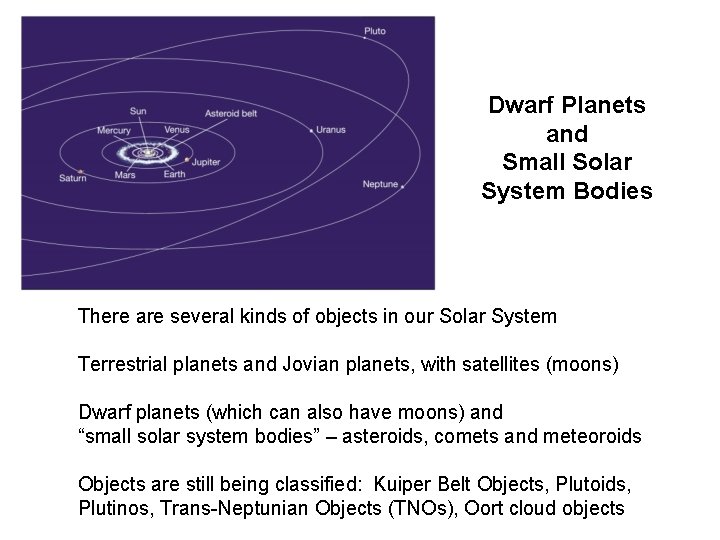
Dwarf Planets and Small Solar System Bodies There are several kinds of objects in our Solar System Terrestrial planets and Jovian planets, with satellites (moons) Dwarf planets (which can also have moons) and “small solar system bodies” – asteroids, comets and meteoroids Objects are still being classified: Kuiper Belt Objects, Plutoids, Plutinos, Trans-Neptunian Objects (TNOs), Oort cloud objects
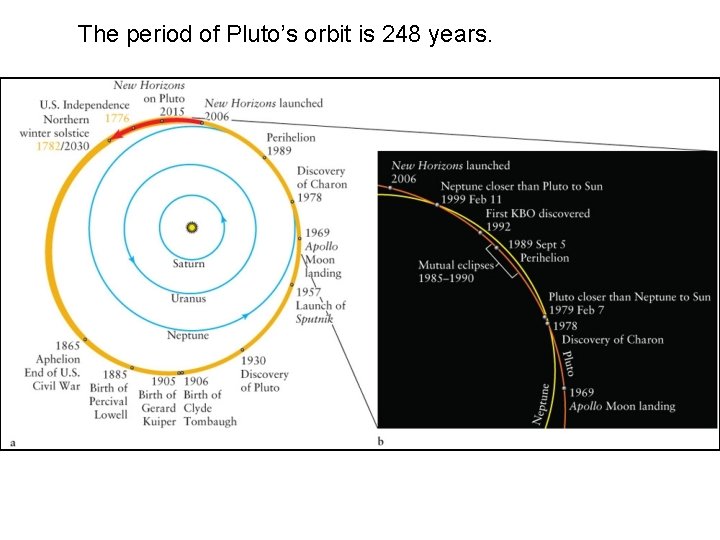
The period of Pluto’s orbit is 248 years.
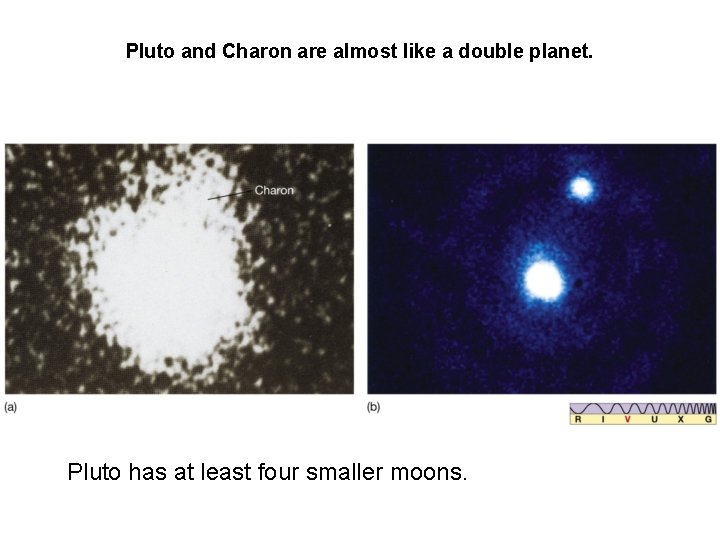
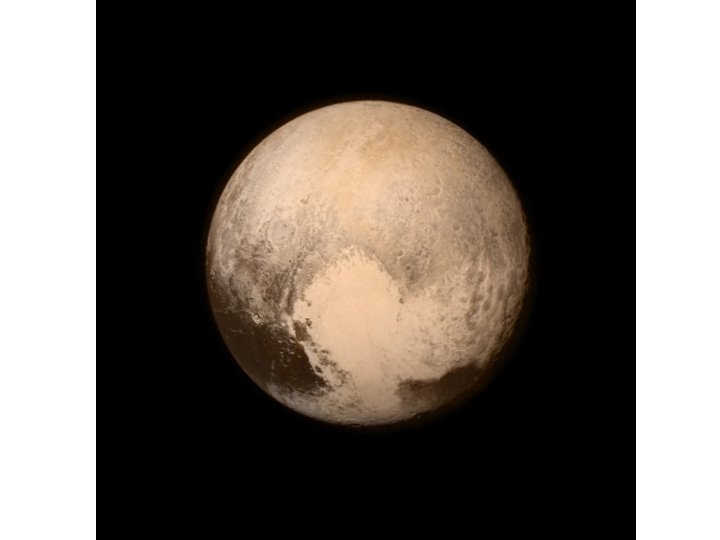
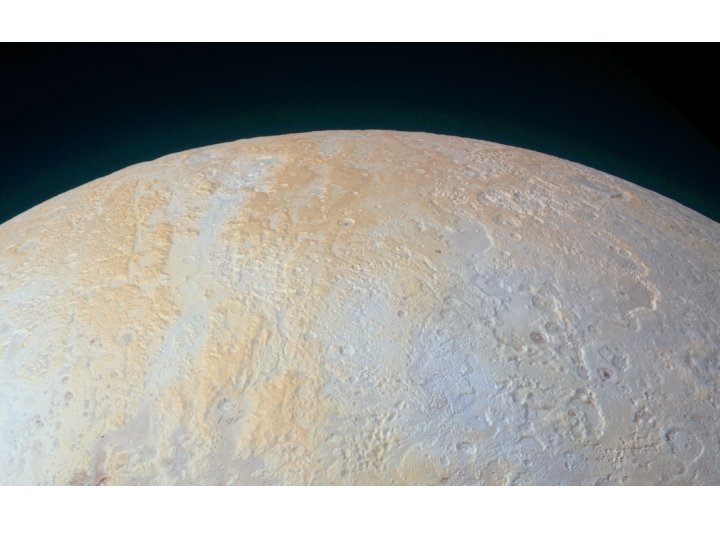
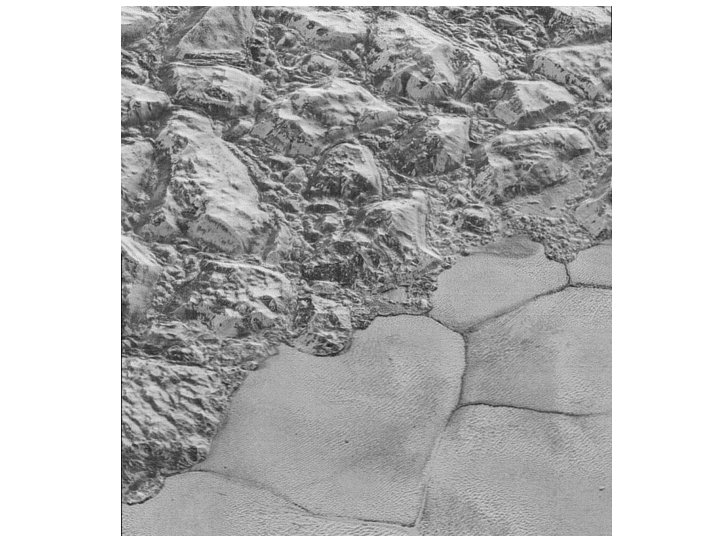
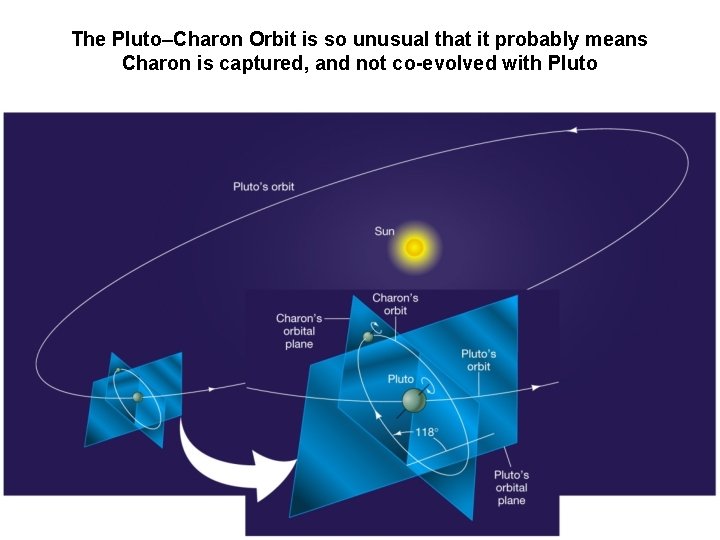
Pluto and Charon are almost like a double planet. Pluto has at least four smaller moons.
The Pluto–Charon Orbit is so unusual that it probably means Charon is captured, and not co-evolved with Pluto
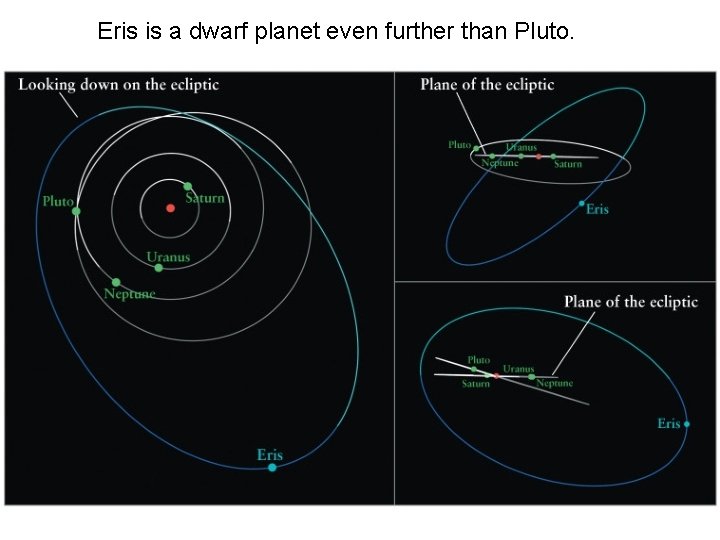
Eris is a dwarf planet even further than Pluto.
Asteroids: three major groups The Asteroid belt Trojan Asteroids Near-Earth Objects (NEOs)
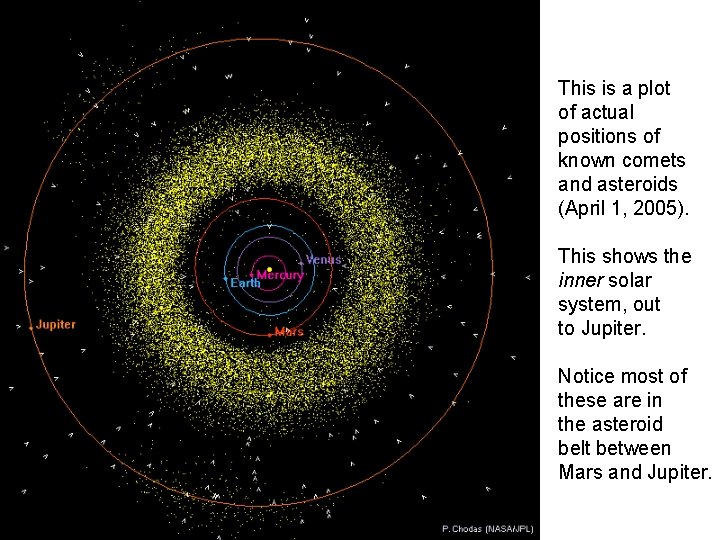
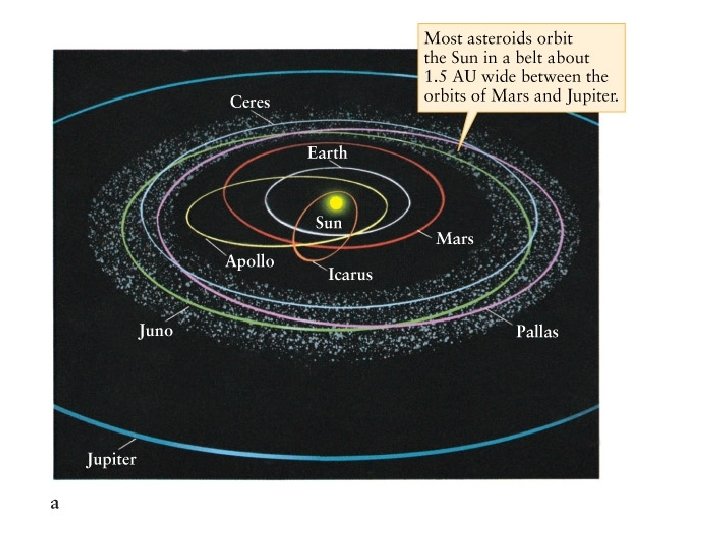
This is a plot of actual positions of known comets and asteroids (April 1, 2005). This shows the inner solar system, out to Jupiter. Notice most of these are in the asteroid belt between Mars and Jupiter.
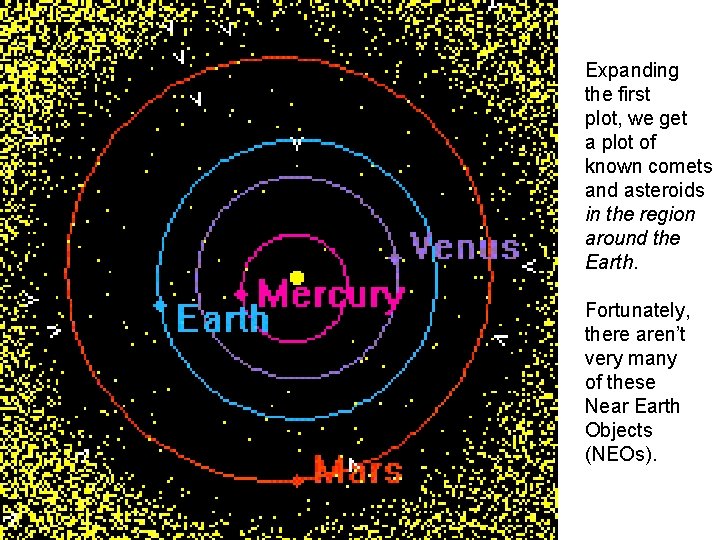
Expanding the first plot, we get a plot of known comets and asteroids in the region around the Earth. Fortunately, there aren’t very many of these Near Earth Objects (NEOs).
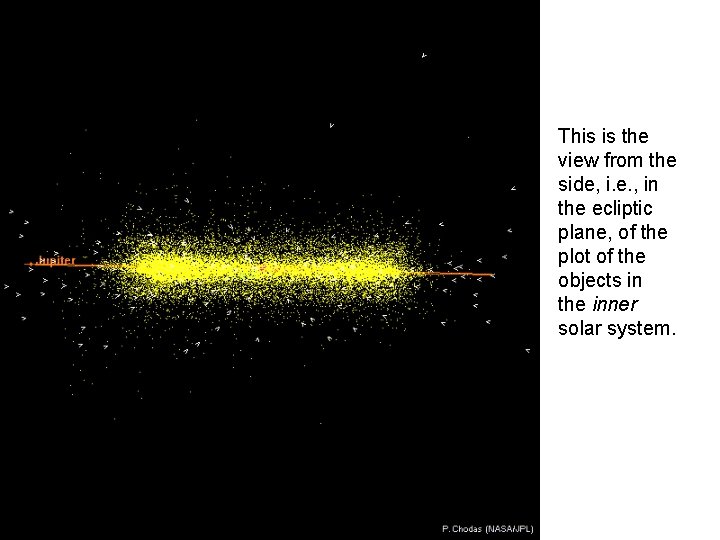
This is the view from the side, i. e. , in the ecliptic plane, of the plot of the objects in the inner solar system.
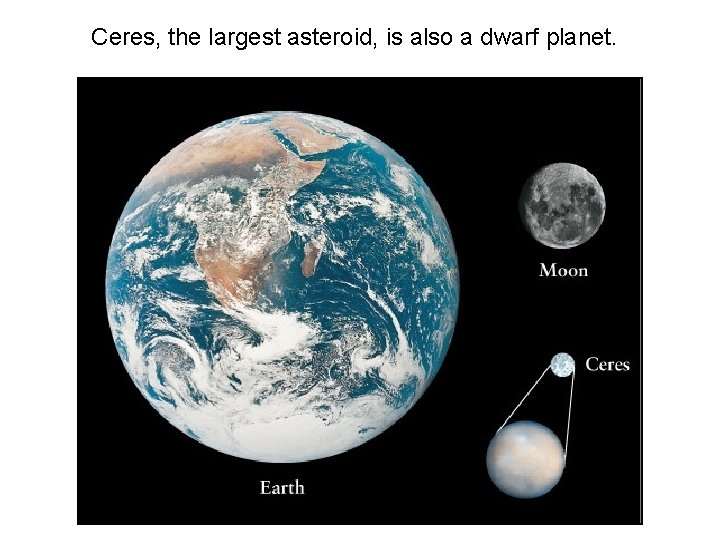
Ceres, the largest asteroid, is also a dwarf planet.
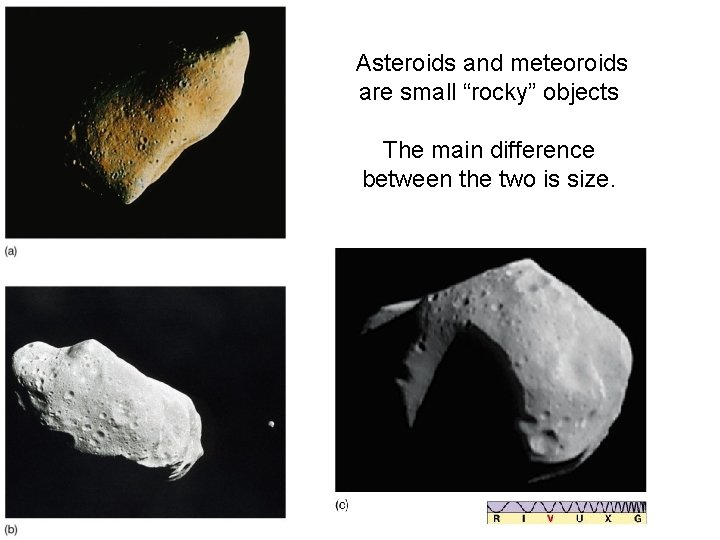
Asteroids and meteoroids are small “rocky” objects The main difference between the two is size.
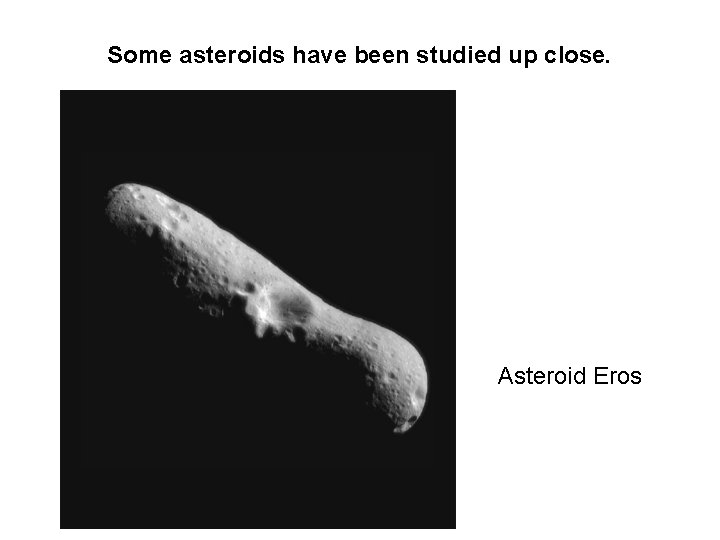
Some asteroids have been studied up close. Asteroid Eros
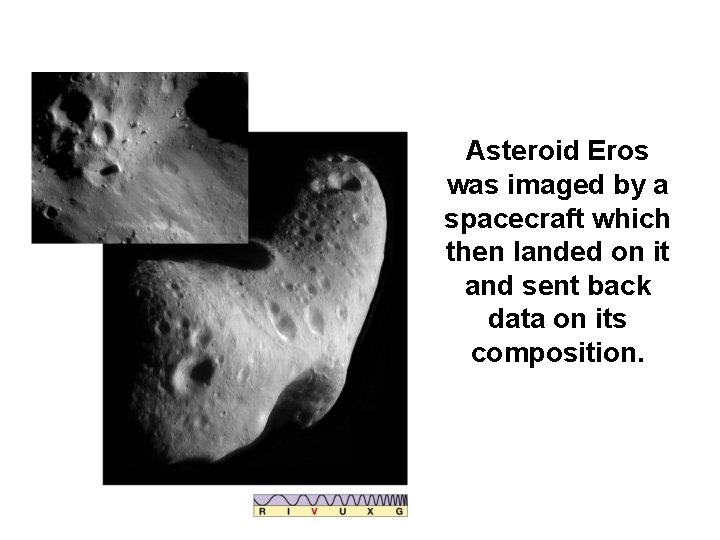
Asteroid Eros was imaged by a spacecraft which then landed on it and sent back data on its composition.
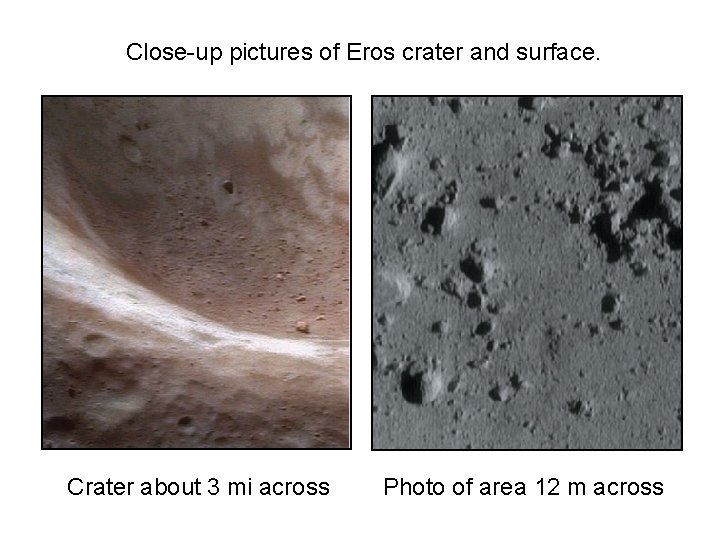
Close-up pictures of Eros crater and surface. Crater about 3 mi across Photo of area 12 m across
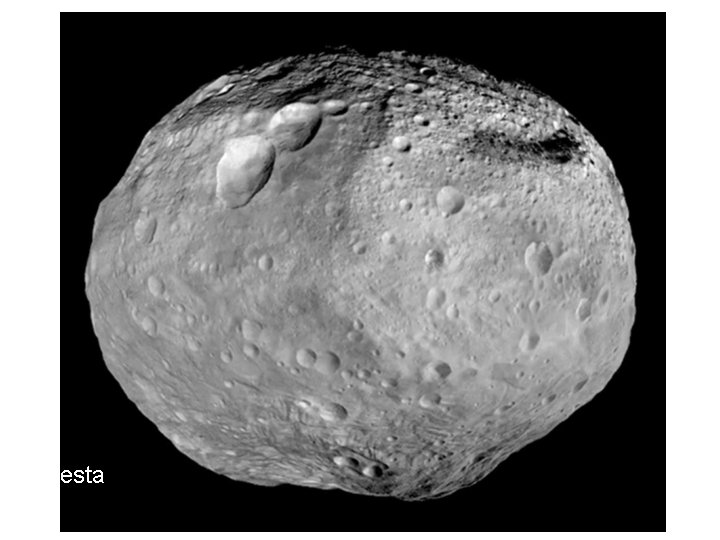
The DAWN spacecraft was in orbit around Vesta, the second-largest of the asteroids in the Asteroid Belt, for almost a year. DAWN is now in orbit around Ceres, the largest asteroid (and also the only dwarf planet in the asteroid belt). http: //www. nasa. gov/mission_pages/dawn/main/index. html http: //dawn. jpl. nasa. gov/ http: //en. wikipedia. org/wiki/4_Vesta http: //dawn. jpl. nasa. gov/mission/dawn_fact_sheet. pdf
Vesta
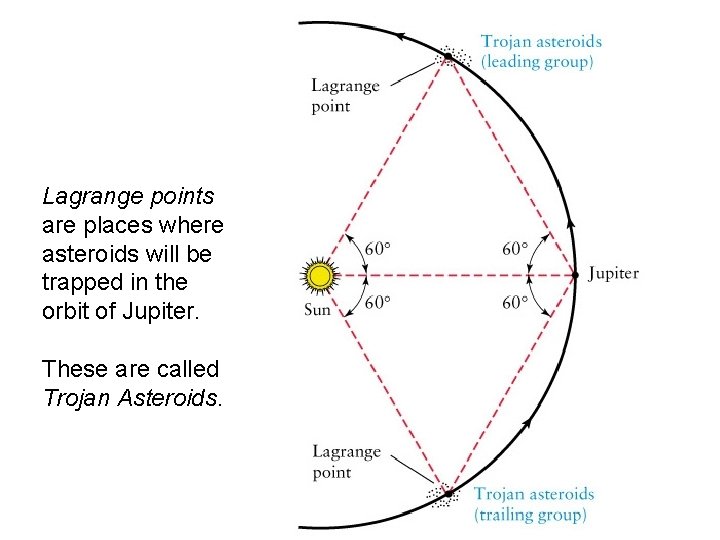
Lagrange points are places where asteroids will be trapped in the orbit of Jupiter. These are called Trojan Asteroids.
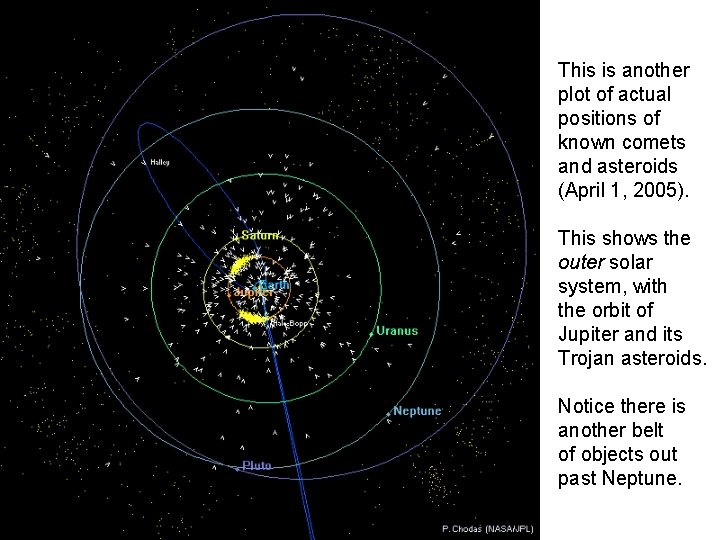
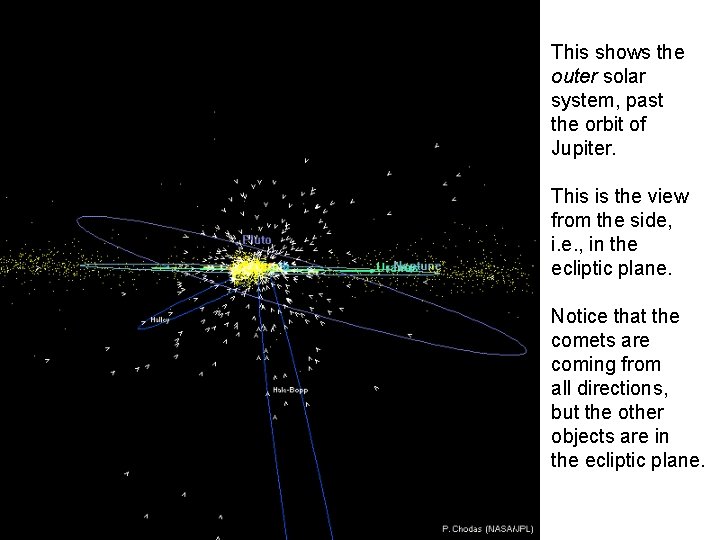
This is another plot of actual positions of known comets and asteroids (April 1, 2005). This shows the outer solar system, with the orbit of Jupiter and its Trojan asteroids. Notice there is another belt of objects out past Neptune.
This shows the outer solar system, past the orbit of Jupiter. This is the view from the side, i. e. , in the ecliptic plane. Notice that the comets are coming from all directions, but the other objects are in the ecliptic plane.
Dwarf Planets and Small Solar-System Bodies • In 2006 three objects—Pluto, Ceres, and Eris—were classified as dwarf planets. Later, we added Haumea and Makemake to the list, so there are 5 at present. • Pluto is classified as a Kuiper Belt Object (KBO) and is also a dwarf planet. • Other objects orbit the Sun beyond Neptune. For example, at least 1277 KBO’s have been observed. A few potential Oort cloud objects have also been identified. • http: //solarsystem. nasa. gov/planets/index. cfm
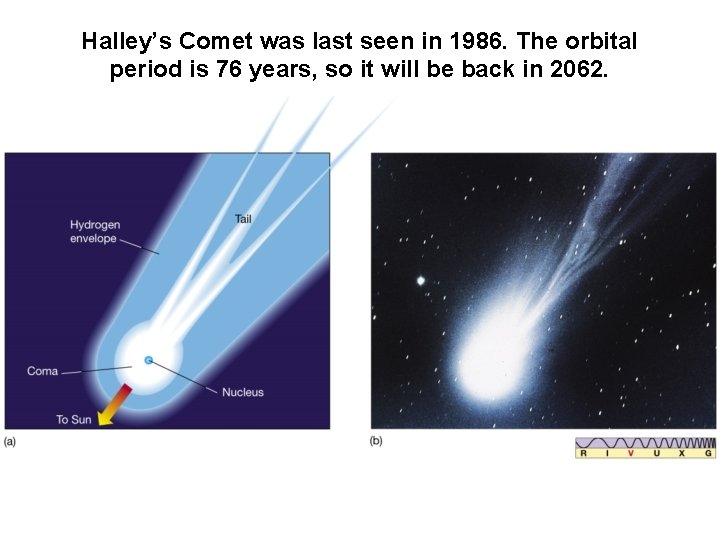
Halley’s Comet was last seen in 1986. The orbital period is 76 years, so it will be back in 2062.
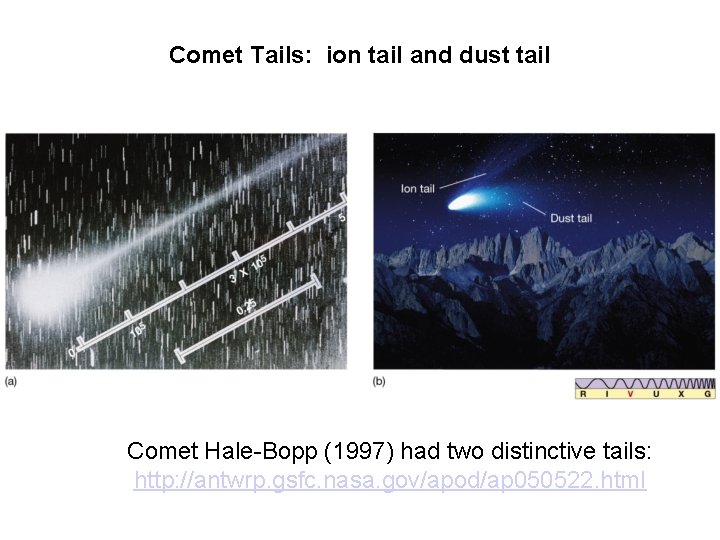
Comet Tails: ion tail and dust tail Comet Hale-Bopp (1997) had two distinctive tails: http: //antwrp. gsfc. nasa. gov/apod/ap 050522. html
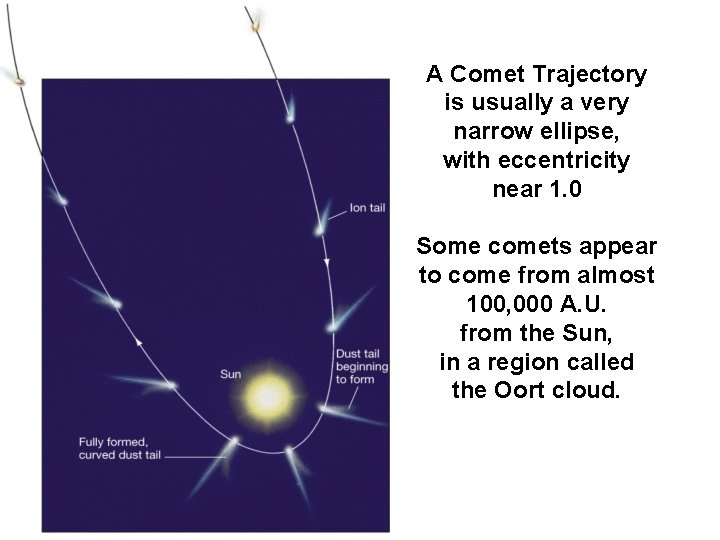
A Comet Trajectory is usually a very narrow ellipse, with eccentricity near 1. 0 Some comets appear to come from almost 100, 000 A. U. from the Sun, in a region called the Oort cloud.
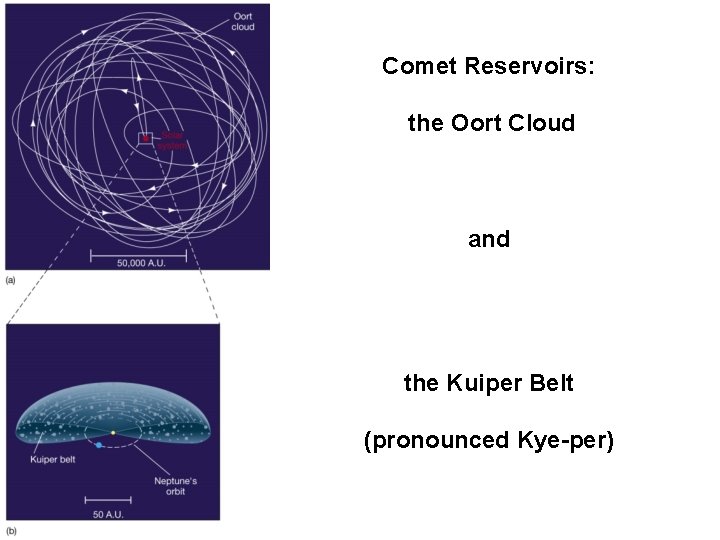
Comet Reservoirs: the Oort Cloud and the Kuiper Belt (pronounced Kye-per)
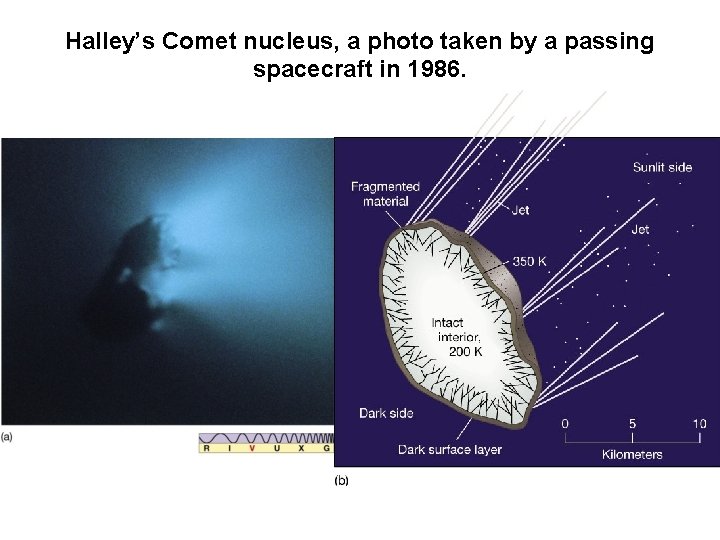
Halley’s Comet nucleus, a photo taken by a passing spacecraft in 1986.
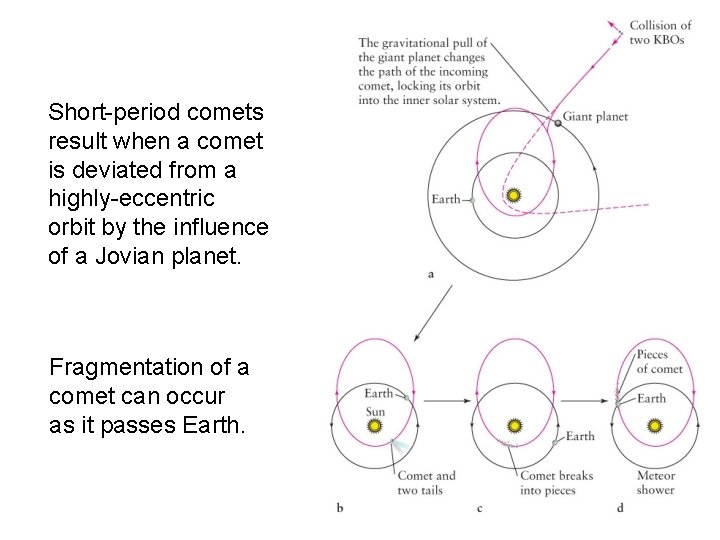
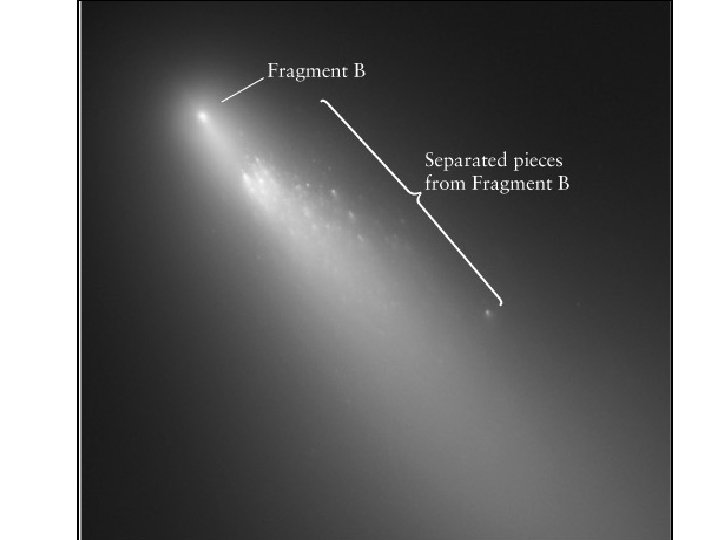
Short-period comets result when a comet is deviated from a highly-eccentric orbit by the influence of a Jovian planet. Fragmentation of a comet can occur as it passes Earth.
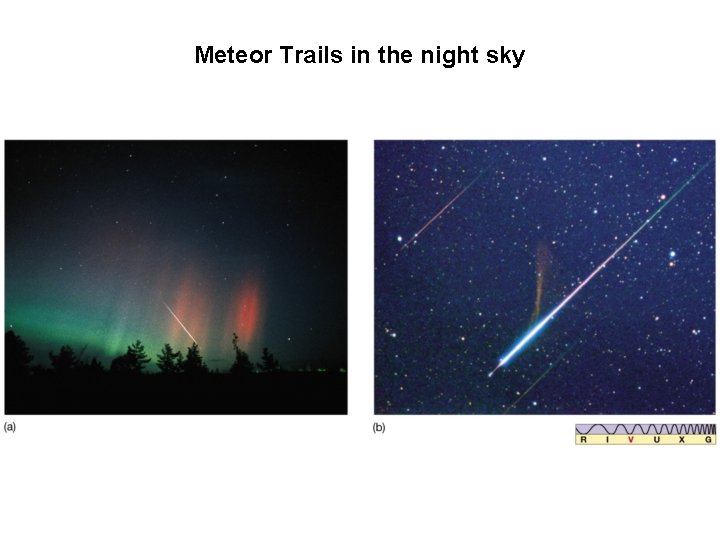
Meteor Trails in the night sky
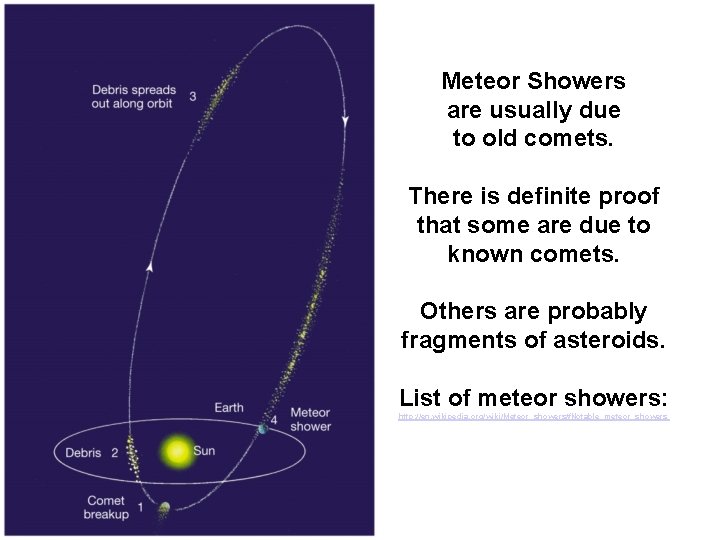
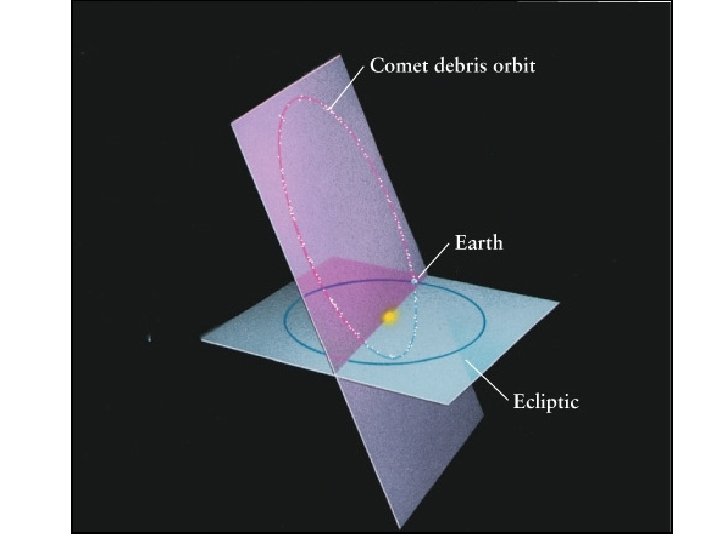
Meteor Showers are usually due to old comets. There is definite proof that some are due to known comets. Others are probably fragments of asteroids. List of meteor showers: http: //en. wikipedia. org/wiki/Meteor_showers#Notable_meteor_showers
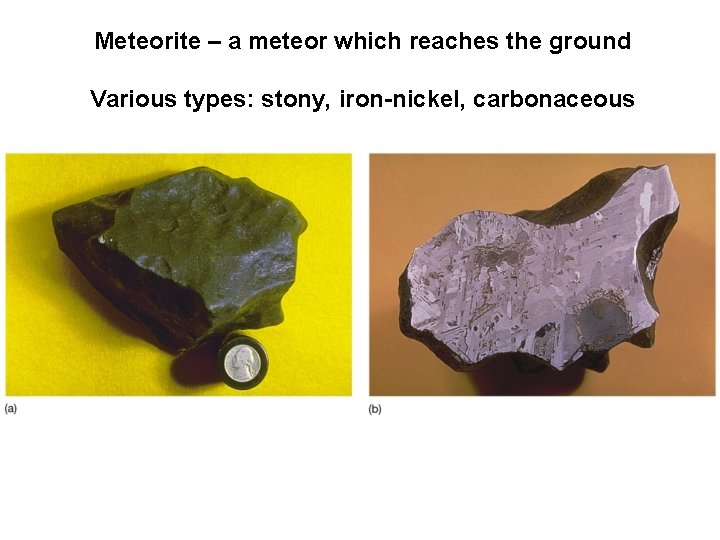
Meteorite – a meteor which reaches the ground Various types: stony, iron-nickel, carbonaceous
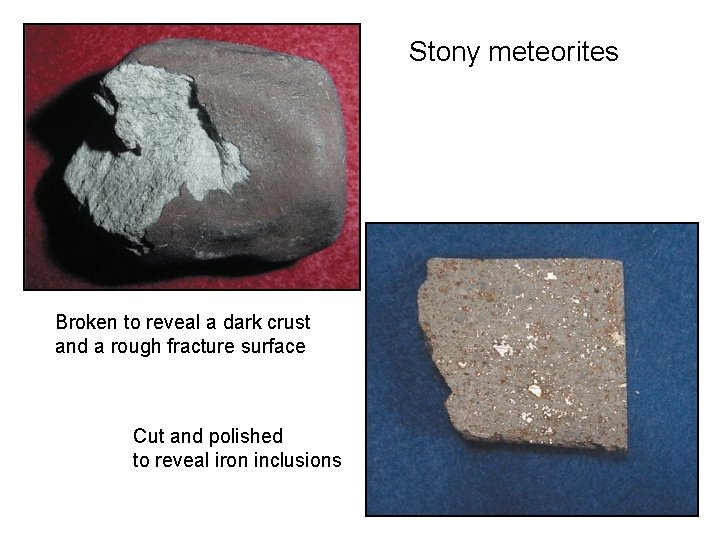
Stony meteorites Broken to reveal a dark crust and a rough fracture surface Cut and polished to reveal iron inclusions
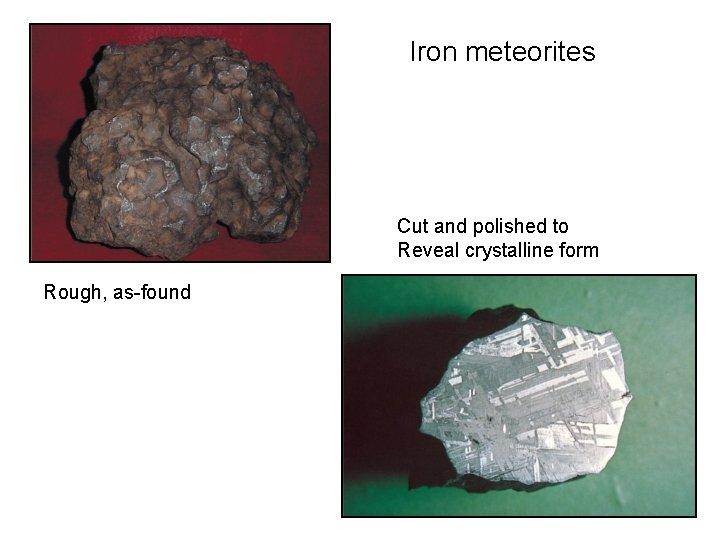
Iron meteorites Cut and polished to Reveal crystalline form Rough, as-found
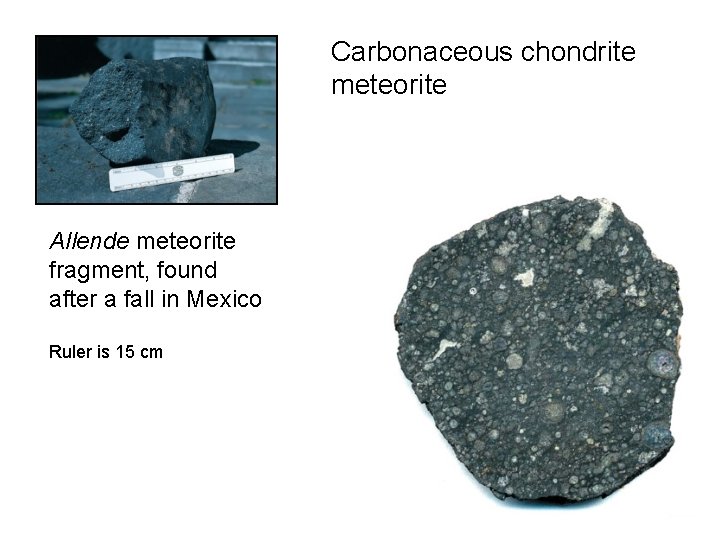
Carbonaceous chondrite meteorite Allende meteorite fragment, found after a fall in Mexico Ruler is 15 cm
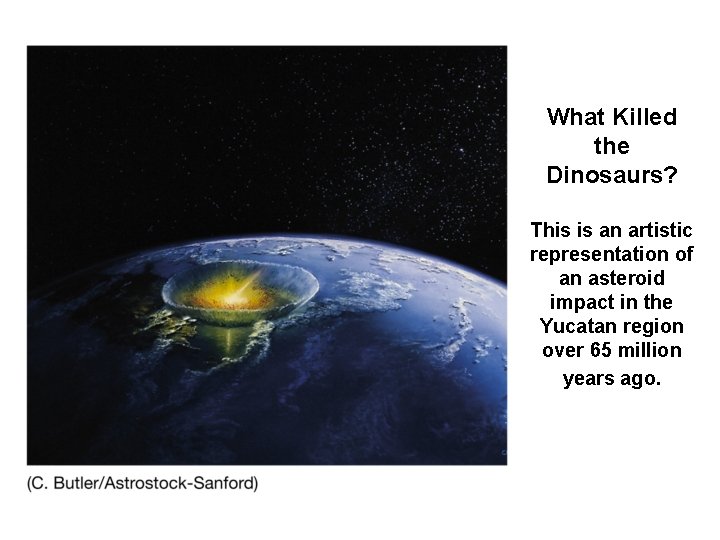
What Killed the Dinosaurs? This is an artistic representation of an asteroid impact in the Yucatan region over 65 million years ago.
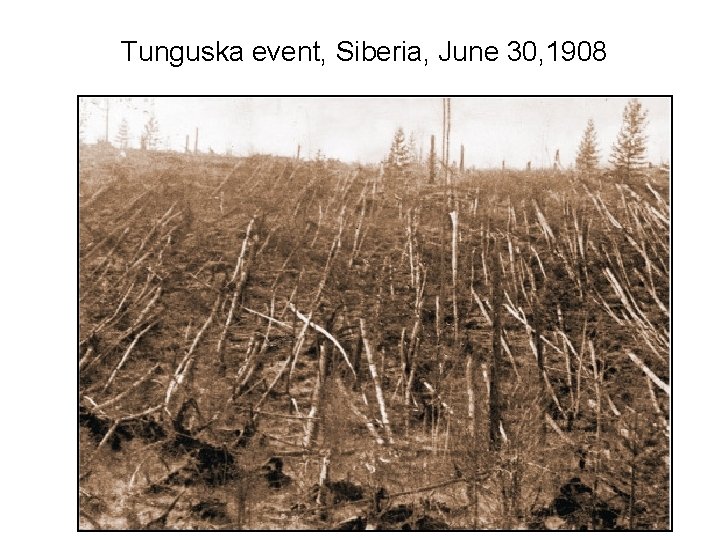
Tunguska event, Siberia, June 30, 1908
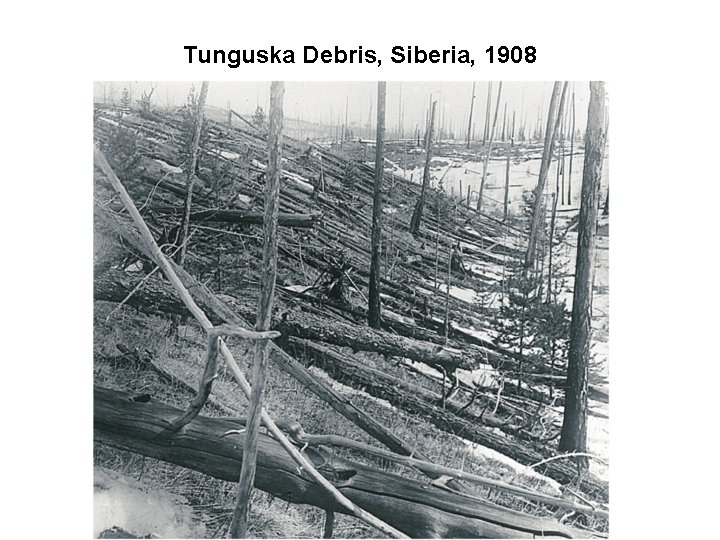
Tunguska Debris, Siberia, 1908
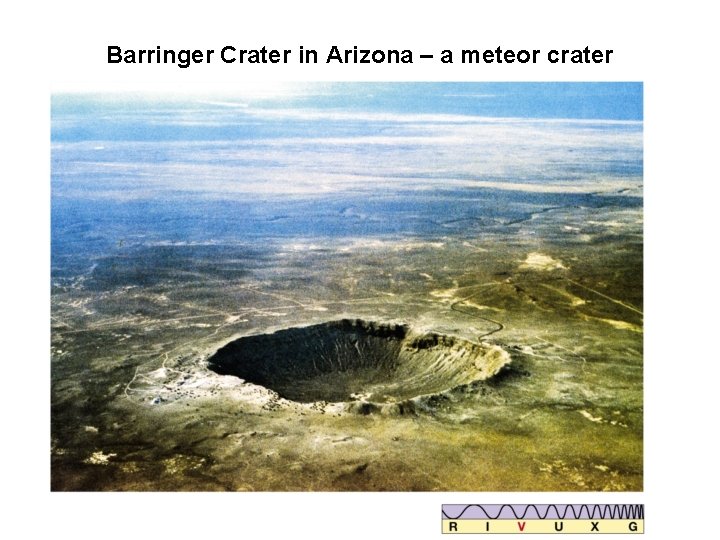
Barringer Crater in Arizona – a meteor crater
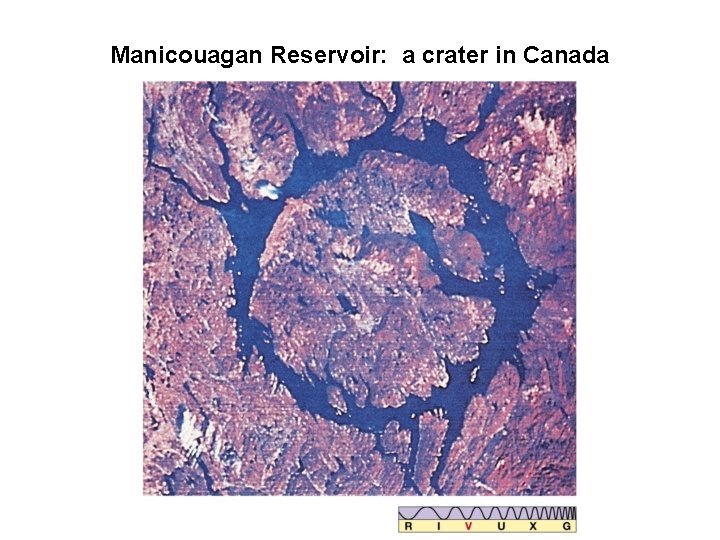
Manicouagan Reservoir: a crater in Canada
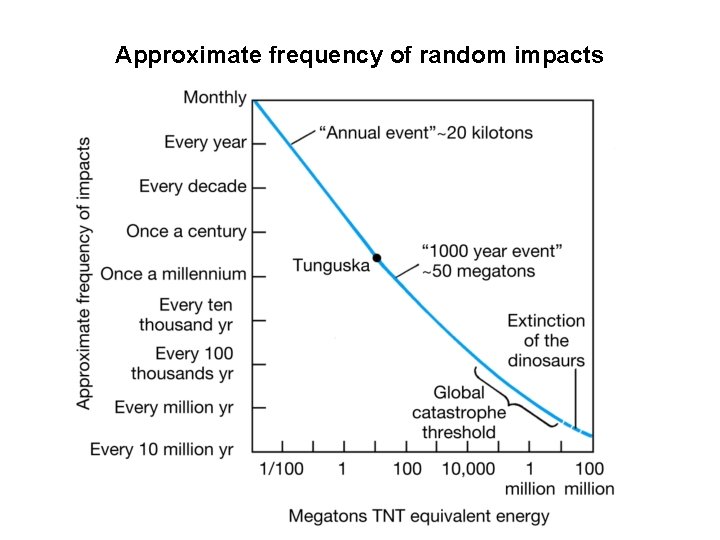
Approximate frequency of random impacts
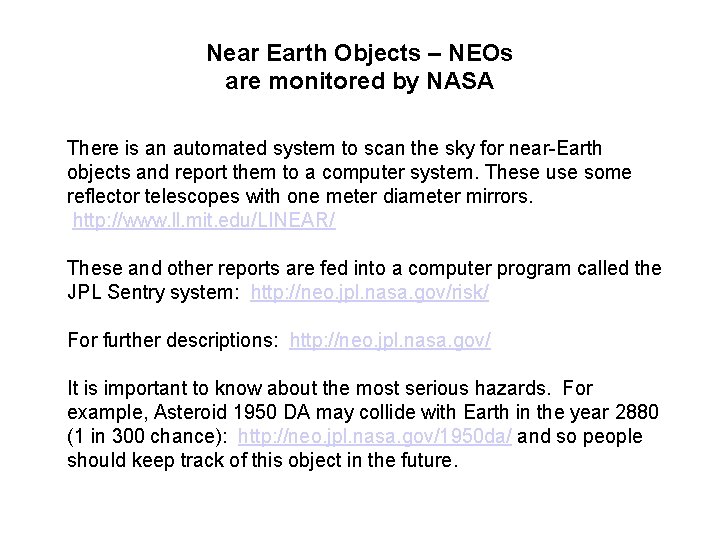
Near Earth Objects – NEOs are monitored by NASA There is an automated system to scan the sky for near-Earth objects and report them to a computer system. These use some reflector telescopes with one meter diameter mirrors. http: //www. ll. mit. edu/LINEAR/ These and other reports are fed into a computer program called the JPL Sentry system: http: //neo. jpl. nasa. gov/risk/ For further descriptions: http: //neo. jpl. nasa. gov/ It is important to know about the most serious hazards. For example, Asteroid 1950 DA may collide with Earth in the year 2880 (1 in 300 chance): http: //neo. jpl. nasa. gov/1950 da/ and so people should keep track of this object in the future.