
Large moons of the solar system Titan This
- Slides: 28
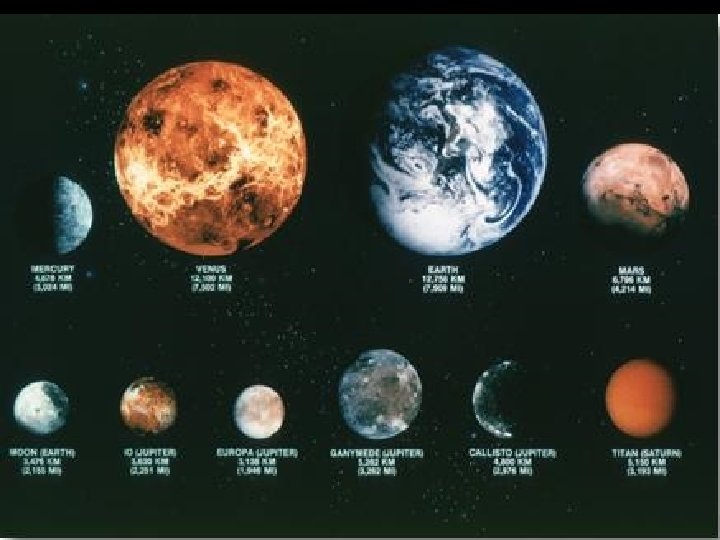
Large moons of the solar system: Titan • This next slide compares the terrestrial planets with the Earth’s Moon, the four Galilean moons of Jupiter, and Titan, the largest moon of Saturn. • Titan is the only moon in the solar system which has an atmosphere. • The atmosphere is mostly nitrogen and thicker than even Earth’s atmosphere.
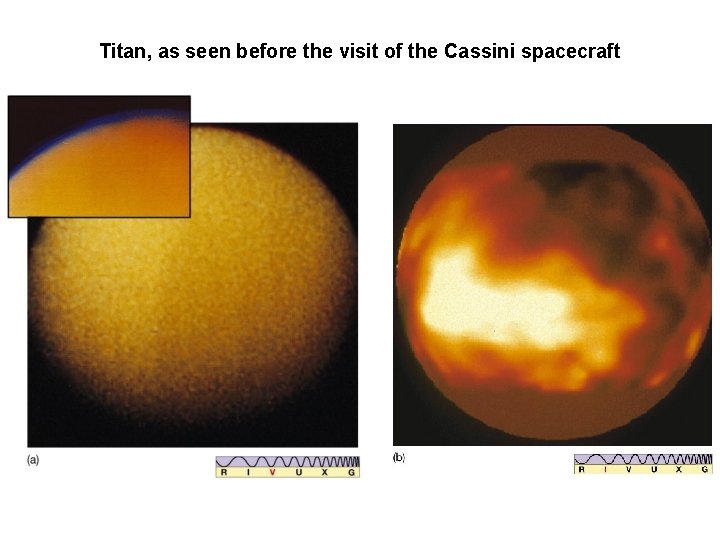
Titan, as seen before the visit of the Cassini spacecraft
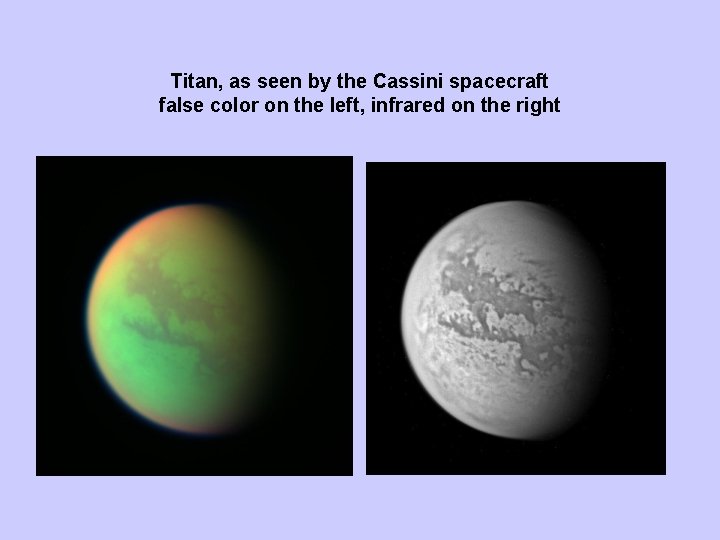
Titan, as seen by the Cassini spacecraft false color on the left, infrared on the right
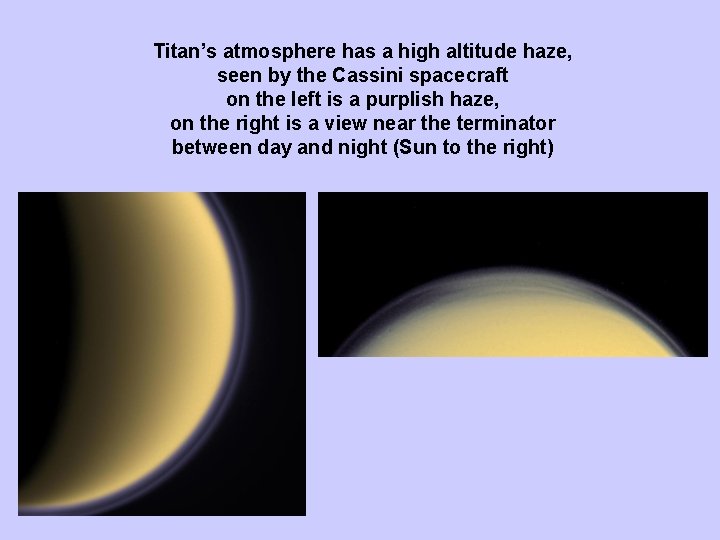
Titan’s atmosphere has a high altitude haze, seen by the Cassini spacecraft on the left is a purplish haze, on the right is a view near the terminator between day and night (Sun to the right)
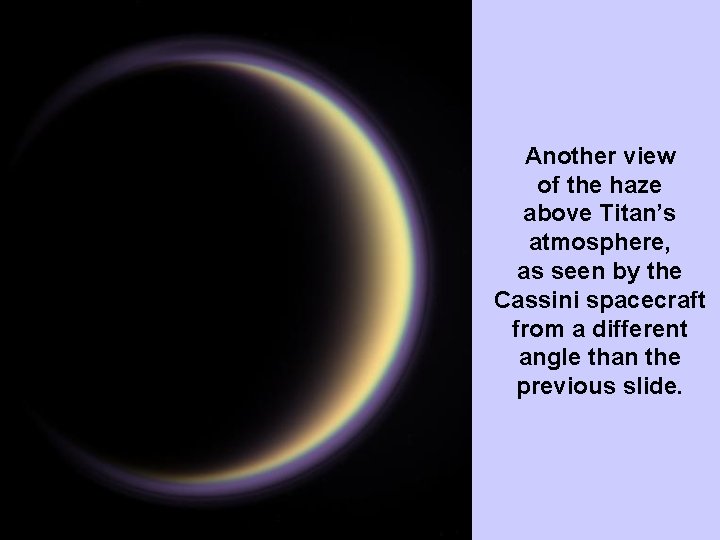
Another view of the haze above Titan’s atmosphere, as seen by the Cassini spacecraft from a different angle than the previous slide.
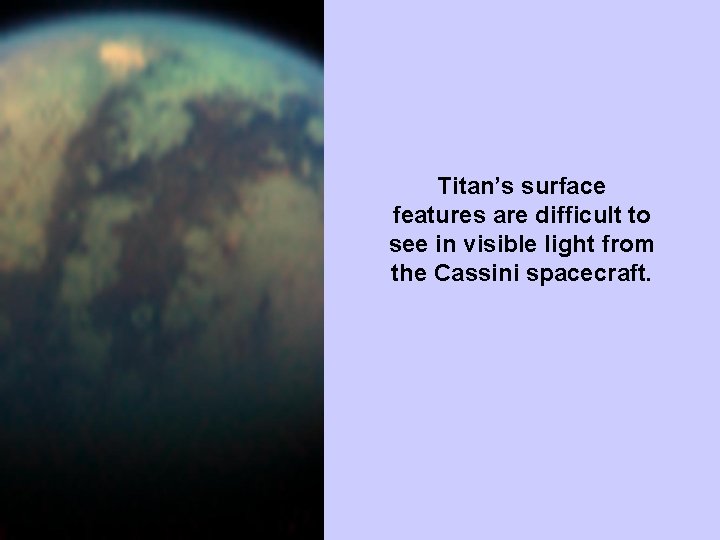
Titan’s surface features are difficult to see in visible light from the Cassini spacecraft.
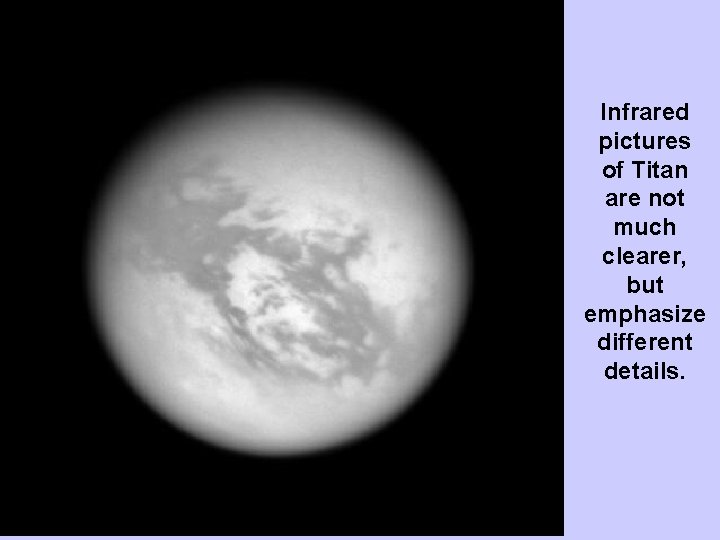
Infrared pictures of Titan are not much clearer, but emphasize different details.
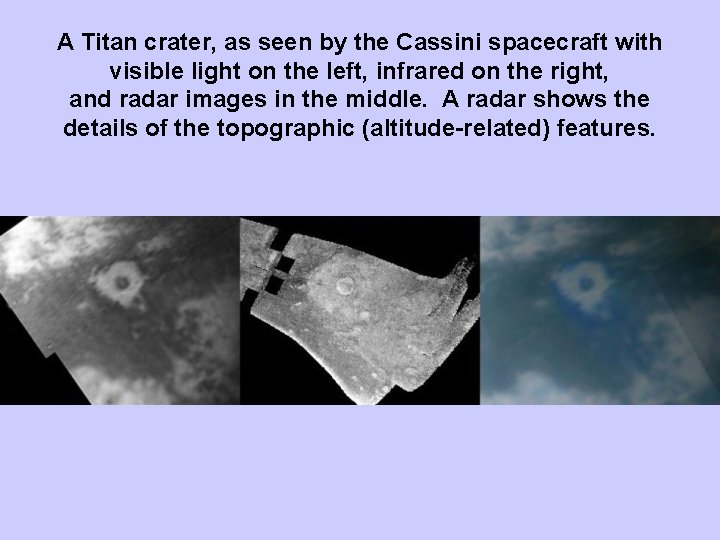
A Titan crater, as seen by the Cassini spacecraft with visible light on the left, infrared on the right, and radar images in the middle. A radar shows the details of the topographic (altitude-related) features.
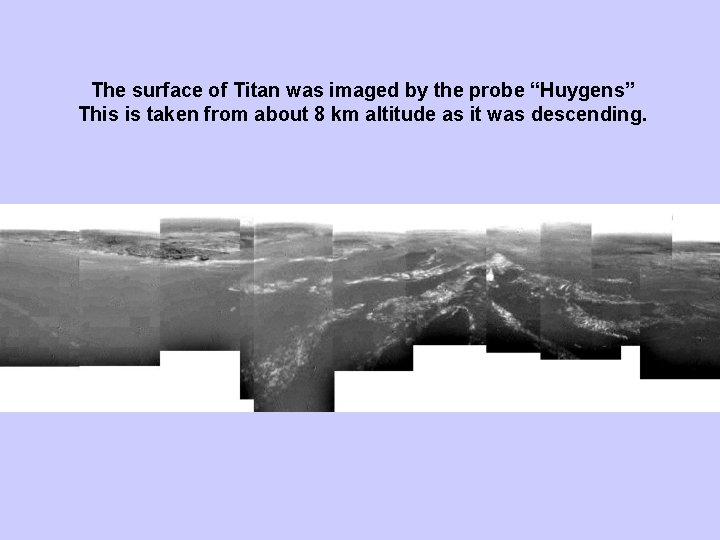
The surface of Titan was imaged by the probe “Huygens” This is taken from about 8 km altitude as it was descending.
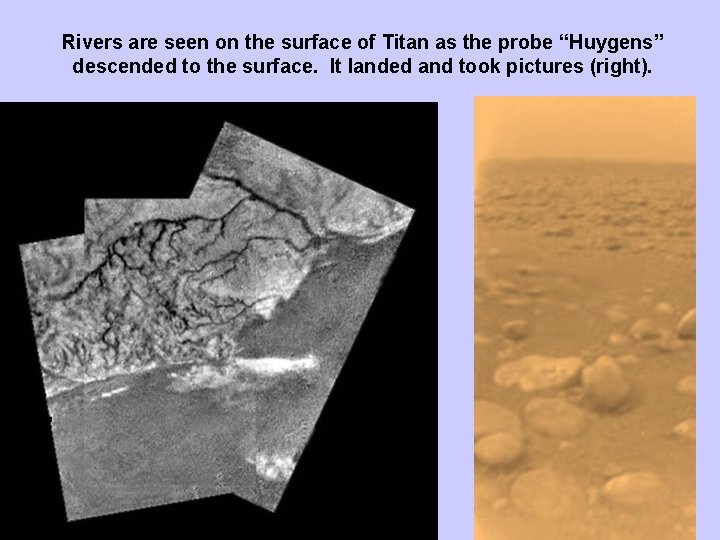
Rivers are seen on the surface of Titan as the probe “Huygens” descended to the surface. It landed and took pictures (right).
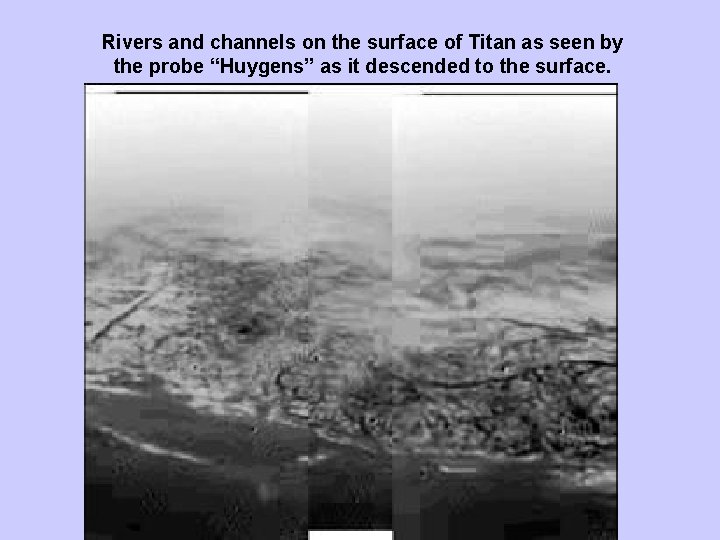
Rivers and channels on the surface of Titan as seen by the probe “Huygens” as it descended to the surface.
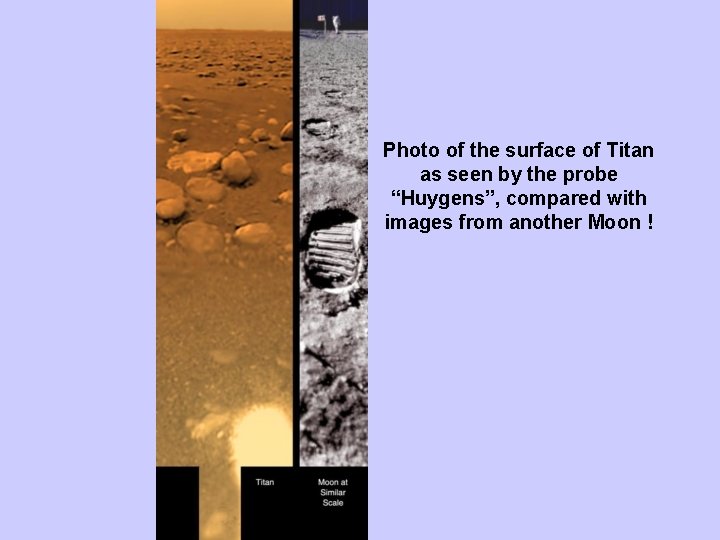
Photo of the surface of Titan as seen by the probe “Huygens”, compared with images from another Moon !
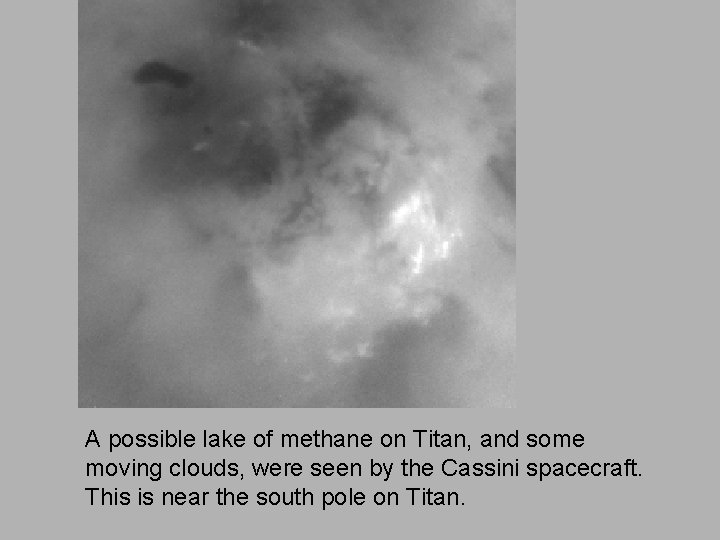
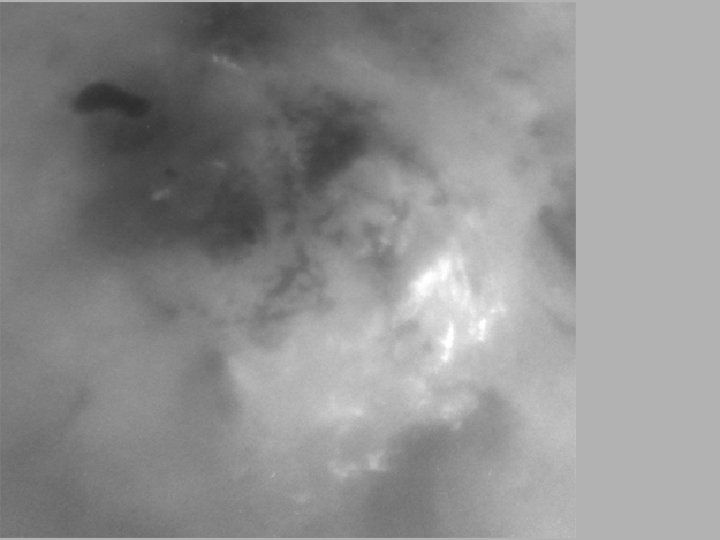
A possible lake of methane on Titan, and some moving clouds, were seen by the Cassini spacecraft. This is near the south pole on Titan.
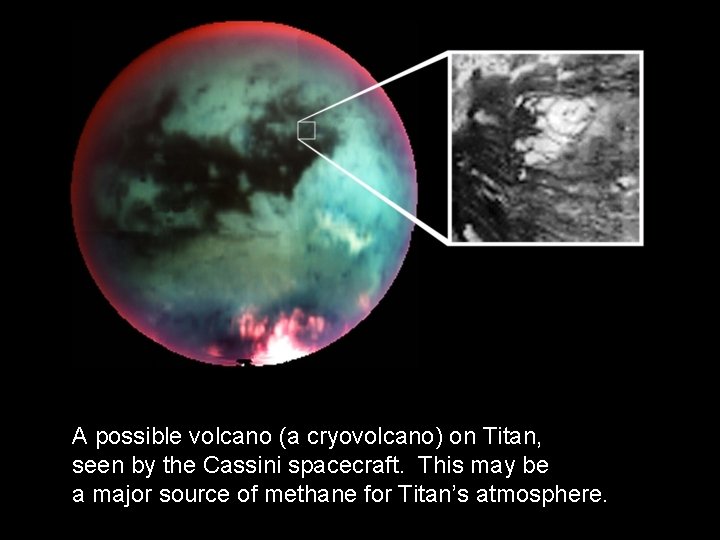
A possible volcano (a cryovolcano) on Titan, seen by the Cassini spacecraft. This may be a major source of methane for Titan’s atmosphere.
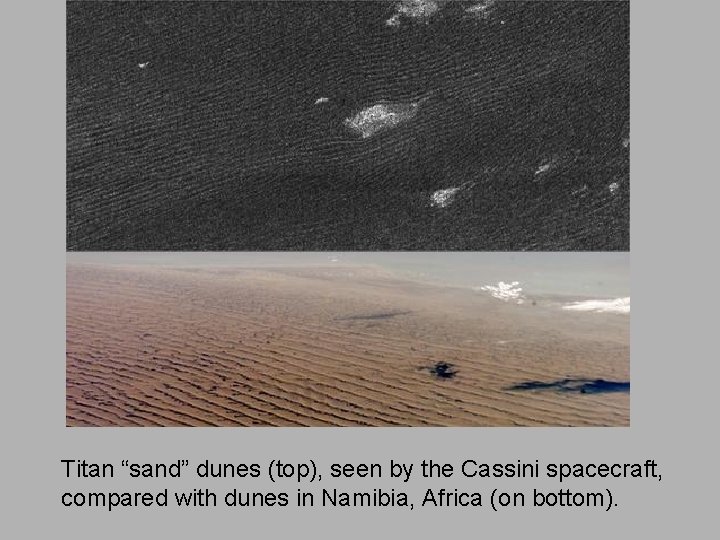
Titan “sand” dunes (top), seen by the Cassini spacecraft, compared with dunes in Namibia, Africa (on bottom).
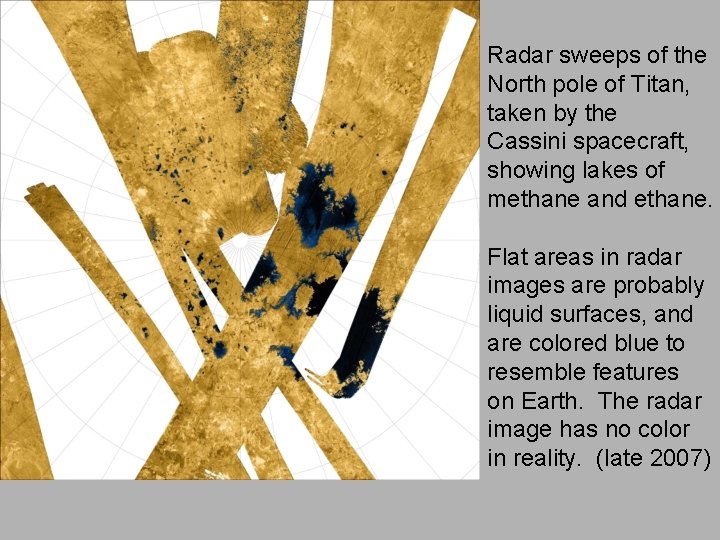
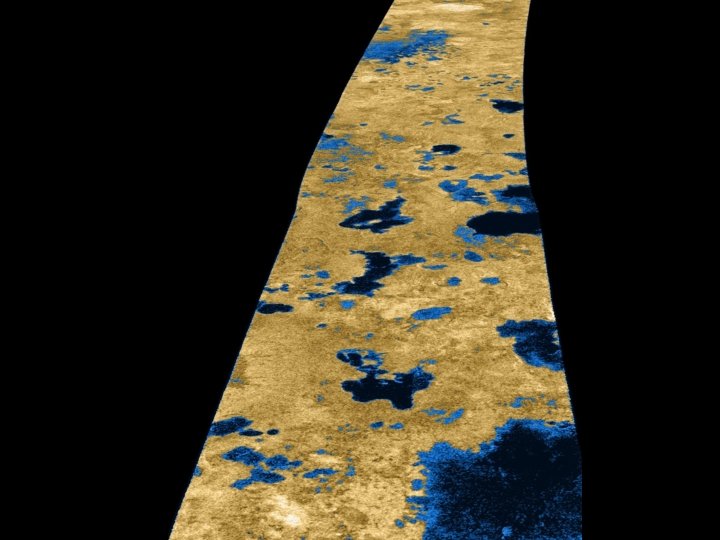
Radar sweeps of the North pole of Titan, taken by the Cassini spacecraft, showing lakes of methane and ethane. Flat areas in radar images are probably liquid surfaces, and are colored blue to resemble features on Earth. The radar image has no color in reality. (late 2007)
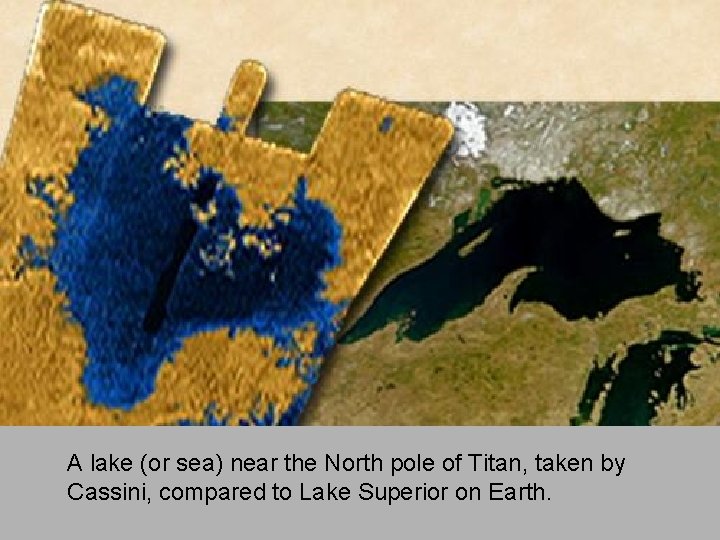
A lake (or sea) near the North pole of Titan, taken by Cassini, compared to Lake Superior on Earth.
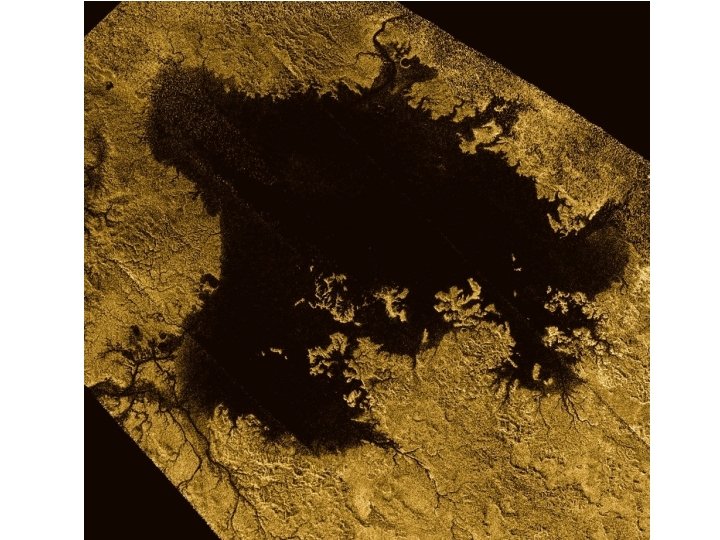
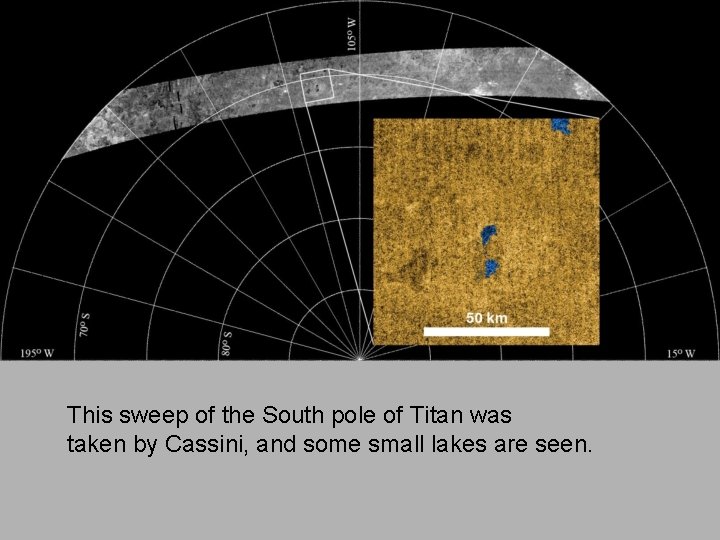
This sweep of the South pole of Titan was taken by Cassini, and some small lakes are seen.
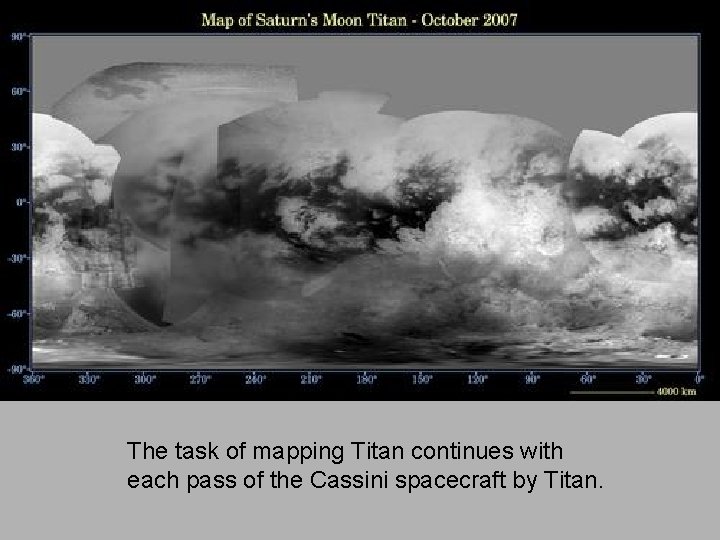
The task of mapping Titan continues with each pass of the Cassini spacecraft by Titan.
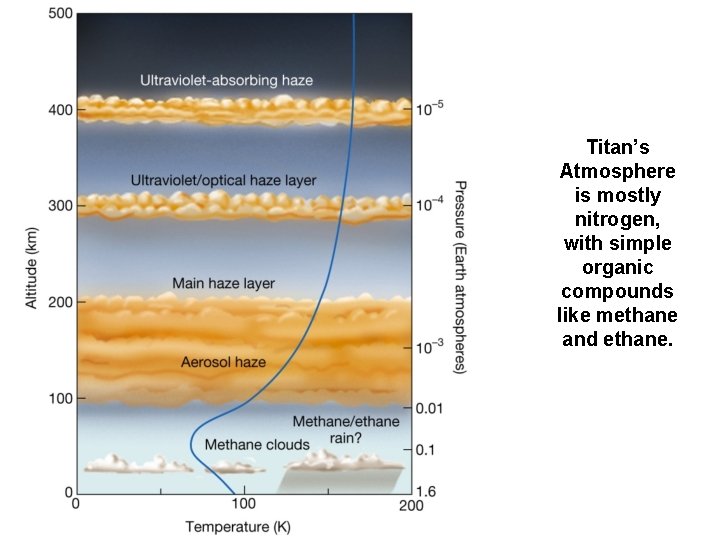
Titan’s Atmosphere is mostly nitrogen, with simple organic compounds like methane and ethane.
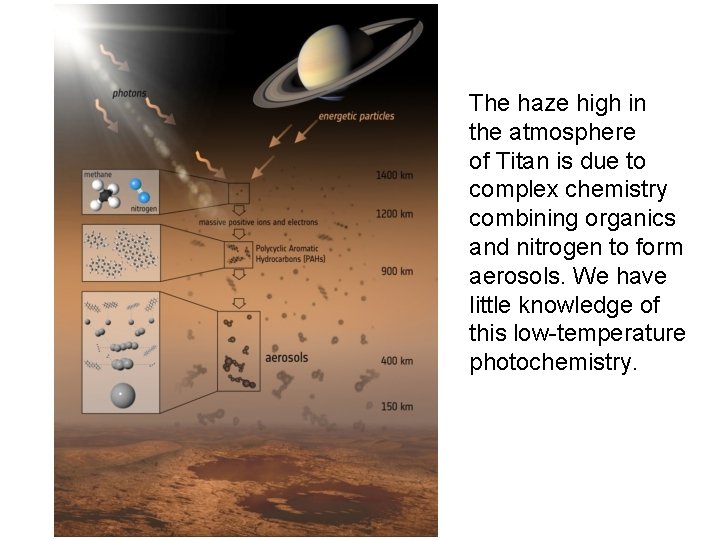
The haze high in the atmosphere of Titan is due to complex chemistry combining organics and nitrogen to form aerosols. We have little knowledge of this low-temperature photochemistry.
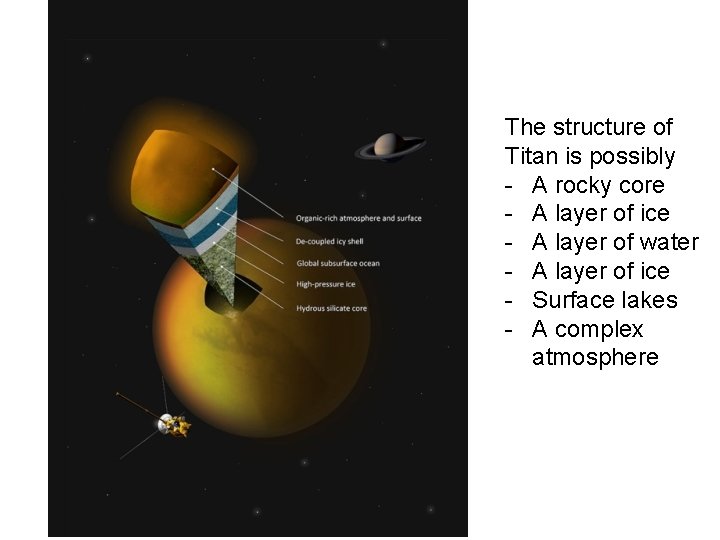
The structure of Titan is possibly - A rocky core - A layer of ice - A layer of water - A layer of ice - Surface lakes - A complex atmosphere
A selection of online videos about Titan • • A new version of imagery during the Huygens descent: https: //www. youtube. com/watch? v=9 L 471 ct 7 YDo 4: 41 • • Another video shows a zoom to the landing site: Approaching Titan a Billion Times Closer https: //www. youtube. com/watch? v=TMx. L 3 Zh. O 8 A 8 3: 23 • • Soaring Over Titan: Extraterrestrial Land of Lakes 1: 27 https: //www. youtube. com/watch? v=Rr. GPt. Cd. It. Bw&feature=player_embedded • • The Canyon Country (fly-thru of some karst topography) 1: 17 https: //www. youtube. com/watch? v=YX 7 qb. HOXx. OA&list=PLTiv_XWHn. OZp. KPa. DTVy 36 z 0 U 8 Gxoi. Ik. Za&index=23 • • Cassini: Four Years of Discovery (Aug 2008 tribute video) 2: 18 https: //www. youtube. com/watch? v=6 X 0 c. Cn. OZej 8&index=18&list=PLTiv_XWHn. OZp. KPa. DTVy 36 z 0 U 8 Gxoi. Ik. Za • • Cassini: 15 Years of Exploration (Nov. 2012 tribute video) 2: 29 https: //www. youtube. com/watch? v=6 JHv 4 FX 0 RP 4&index=16&list=PLTiv_XWHn. OZp. KPa. DTVy 36 z 0 U 8 Gxoi. Ik. Za • • Titan Touchdown (overview of Huygens landing with big titles) 2: 27 https: //www. youtube. com/watch? v=msi. LWx. Dayu. A&list=PLTiv_XWHn. OZp. KPa. DTVy 36 z 0 U 8 Gxoi. Ik. Za&index=2
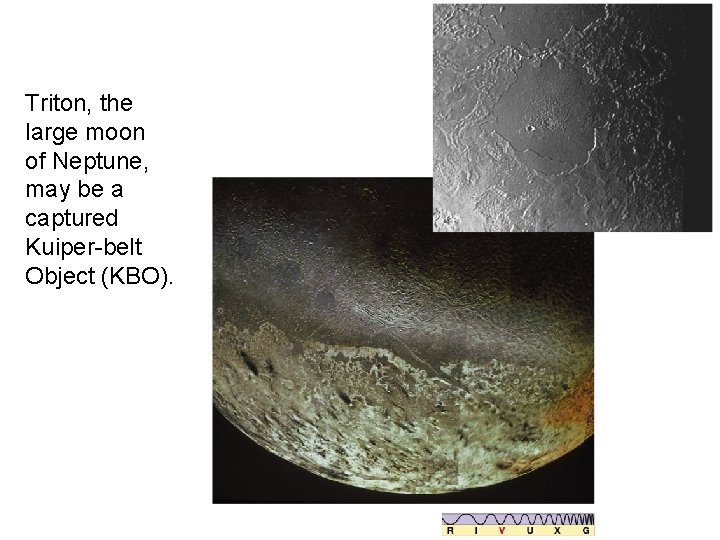
Triton, the large moon of Neptune, may be a captured Kuiper-belt Object (KBO).