
Large MoleculeSmall Molecule Interactions DNA Proteins Targeting DNA
















- Slides: 49
Large Molecule-Small Molecule Interactions DNA Proteins
Targeting DNA or RNA i) Alter regulation of replication, transcription or translation ii) Kill cells, not alter regulation General problems i) Poor tissue specificity, leading to side effects and high toxicity ii) Mutagenic, teratogenic and carcinogenic properties
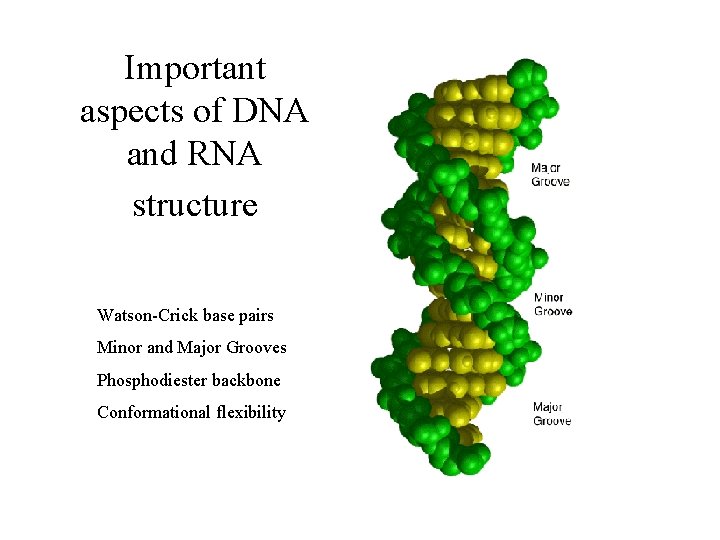
Important aspects of DNA and RNA structure Watson-Crick base pairs Minor and Major Grooves Phosphodiester backbone Conformational flexibility
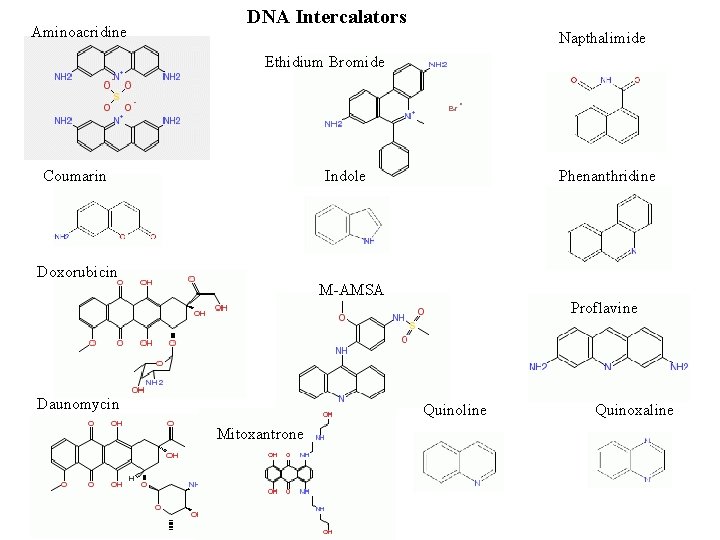
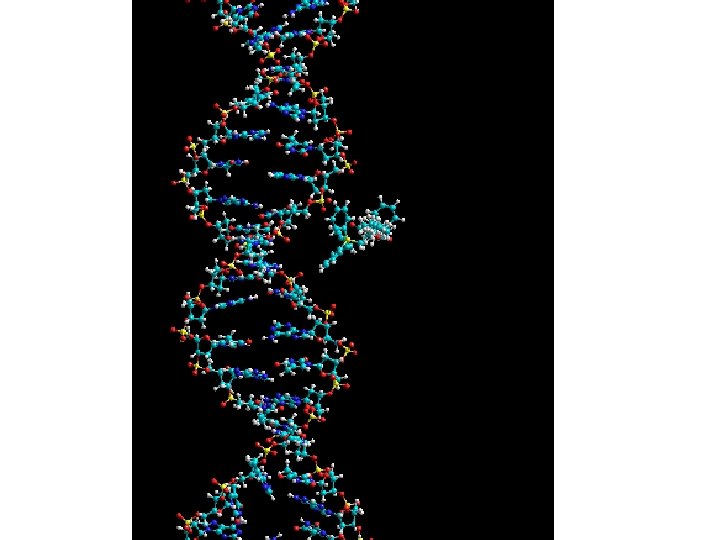
DNA intercalators
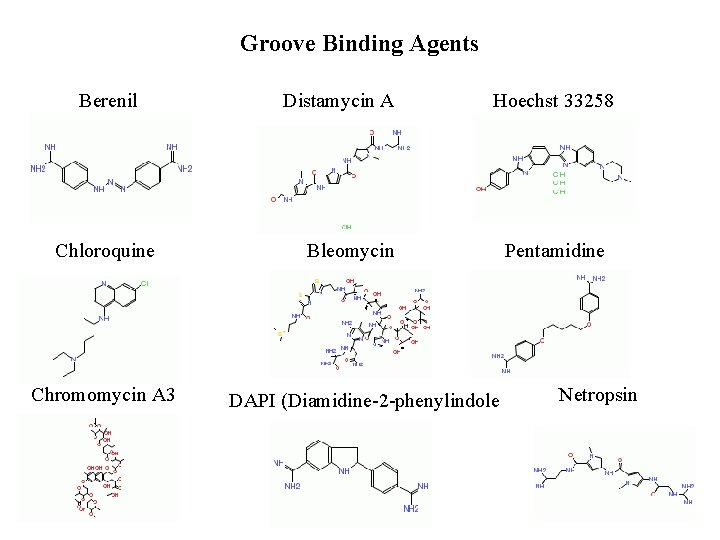
DNA minor groove binders
Structure of Distamycin A bound to DNA
Combine intercalation with minor groove binding
Toxicogenomics: Overview and potential applications for the study of non-covalent DNA interacting chemicals Heng-Hong Li, Jiri Aubrecht, Albert J. Fornace Jr. Department of Biochemistry and Molecular and Cellular Biology and the Lombardi Comprehensive Cancer Center, Georgetown University, Washington, DC 20007, USA Pfizer Global Research and Development, Groton, CT 06340, USA.
What is Toxicogenomics? • Toxicogenomics is a form of analysis by which the activity of a particular toxin or chemical substance on living tissue can be identified based upon a profiling of its known effects on genetic material. Once viable, the technique should serve for toxicology and toxin-determination a role analogous to DNA-testing in the forensic identification of individuals. • A field that utilizes gene responses to define expression profiling signatures for various types of drugs and toxicants, and to provide mechanistic insight into their cellular effects. • Basically, toxicogenomics measures some sort of cellular activity in response to a drug in order to determine what effect that drug has on the DNA. • THIS PROJECT: measures some sort of response (melting shift, electrophoresis mobility) of DNA to a small molecule (e. g. a drug) that may indicate cellular activity of that small molecule.
Why? CANCER RESEARCH!! Covalent chemical interactions Non-Covalent interactions Direct damage to DNA by forming adducts or strand breaks. Perturb DNA and chromatin. BOTH Lead to genetic changes that can contribute to cancer development.
New Testing Techniques Needed Former Technique: Problems Today: Low specificity for predicting carcinogenicity in vitro mutation and chromosome damage assays. Genotoxicity testing battery Since 1970’s effectively assured genetic safety of consumer chemicals and drugs. Sensitive, simple, fast and economical. False Positives Positive drug genotoxicity results and negative carcinogenicity results tested positive for in vitro and damage assays. SO The interpretation of these findings presents a major challenge to industry and regulatory agencies.
Why new techniques? Threshold Response Agents that do not directly interact with the DNA exhibit a threshold dose response and should not be assessed based on linear extrapolation approaches that are used for agents that directly interact with the DNA. Differentiating a true threshold dose from reaching an assay detection limit. Need an understanding of the underlying genotoxic mechanisms. This is a challenge because it takes a lot of time, work, and the outcomes are uncertain. The results are delays in drug developments. Therefore, new techniques for the advancement of alternative experimental approaches capable of evaluating a whole range of genotoxic mechanisms is important.
Structure = Function! (Basic Organic still reigns supreme) Covalent Non-Covalent Irreversible interaction Reversible interaction Unrepaired base damage: Van der waals, hydrogen bonding, hydrophobic, charge transfer forces. Mutagenic and lethal consequences, such as mismatch repair or production of apurinic/apyrimidinic sites. DNA backbone distortion affecting transcription and replication Groove binders: Crescent shaped, not toxic. Intercalators: Planar aromatic, DNA backbone distortion, frameshift mutations during replication, change of torsional strain in cellular DNA.
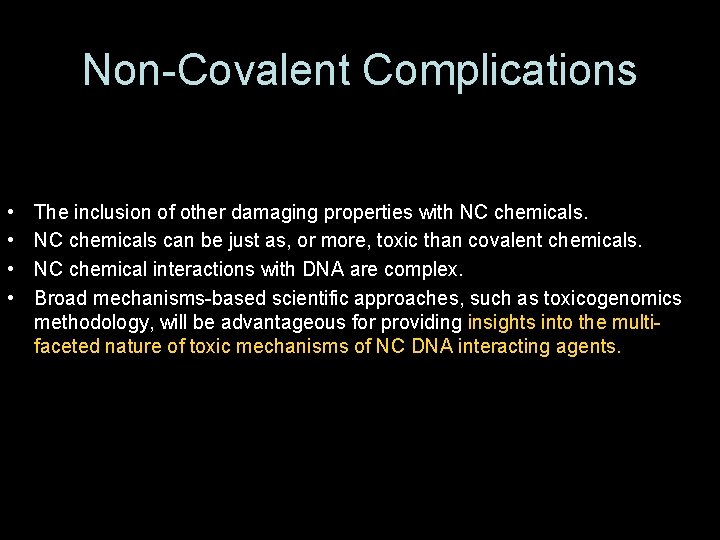
Non-Covalent Complications • • The inclusion of other damaging properties with NC chemicals can be just as, or more, toxic than covalent chemicals. NC chemical interactions with DNA are complex. Broad mechanisms-based scientific approaches, such as toxicogenomics methodology, will be advantageous for providing insights into the multifaceted nature of toxic mechanisms of NC DNA interacting agents.
Groove Binding Agents Berenil Chloroquine Chromomycin A 3 Distamycin A Hoechst 33258 Bleomycin DAPI (Diamidine-2 -phenylindole Pentamidine Netropsin
Aminoacridine DNA Intercalators Napthalimide Ethidium Bromide Coumarin Indole Phenanthridine Doxorubicin M-AMSA Proflavine Daunomycin Quinoline Quinoxaline Mitoxantrone
Covalent DNA Interaction Molecules Busulfan Nitrogen Mustard Camptothecin Nitrosourea Chlorambucil CCNU Cis-platinum PCNU
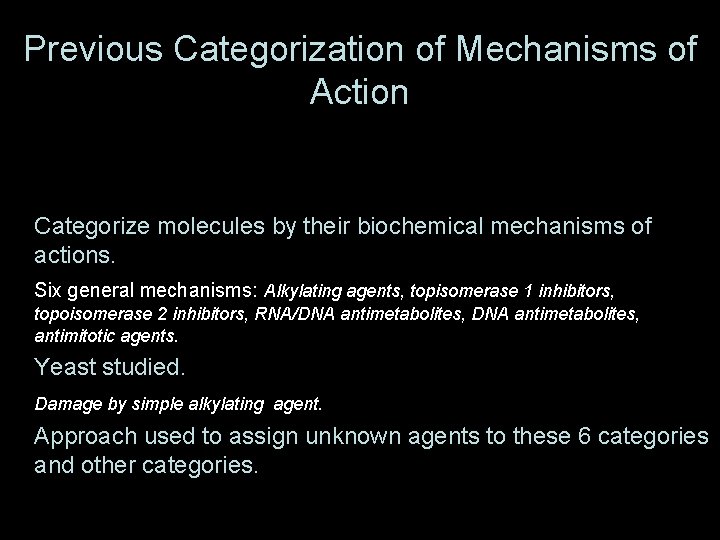
Previous Categorization of Mechanisms of Action Categorize molecules by their biochemical mechanisms of actions. Six general mechanisms: Alkylating agents, topisomerase 1 inhibitors, topoisomerase 2 inhibitors, RNA/DNA antimetabolites, antimitotic agents. Yeast studied. Damage by simple alkylating agent. Approach used to assign unknown agents to these 6 categories and other categories.
New Categorization of Mechanisms of Action Genotoxic stress responses now being used in research, particularly transcriptional stress responses. p 53 transcriptional response is a common stress response measurement. p 53, also known as protein 53 (TP 53), is a transcription factor that regulates the cell cycle and hence functions as a tumor suppressor. It is important in multicellular organisms as it helps to suppress cancer. p 53 has been described as "the guardian of the genome", "the guardian angel gene", or the "master watchman", referring to its role in conserving stability by preventing genome mutation.
Intercalators and Groove Binders: How they affect transcriptional responses • The capability of disrupting interaction between transcription factors and DNA varies among the non-covalent agents depending on the compound structure, side chain, sequence preference, and affinity to DNA. • Intercalating agents, such as Ethidium bromide, can also affect mitochondrial DNA and function. • Previous studies imply that recruitment of transcriptional factors to promoters may be affected by DNA torsional strain from the effect of non-covalent agents.
Future Research • Studies on non-covalent interacting agents need to be run. The results for current and past studies are limited. • Non-covalent interacting chemicals have relatively low cytotoxicity and consideration must be taken when interpreting results where a particular agent may have additional mechanisms of action. • Must evaluate more subtle effects from NC agents for changes in DNA torsional tension and chromatin structure. • Reliable results in large data sets will be needed to define signatures for different types of NC DNA interacting agents.
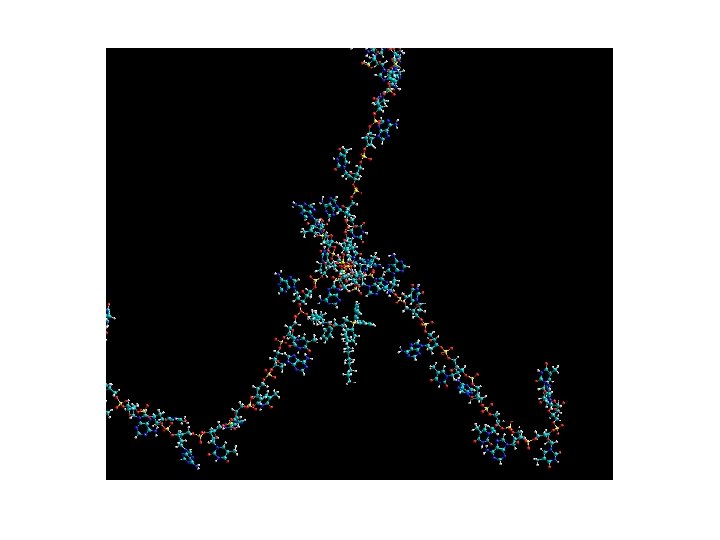
DNA Melting Simulations by Molecular Dynamics (AT)n ds. DNA + APS 10 ps to 300 K
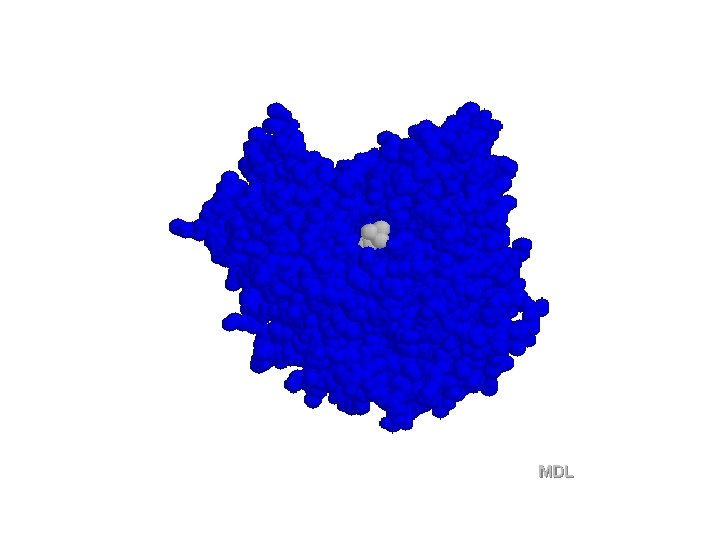
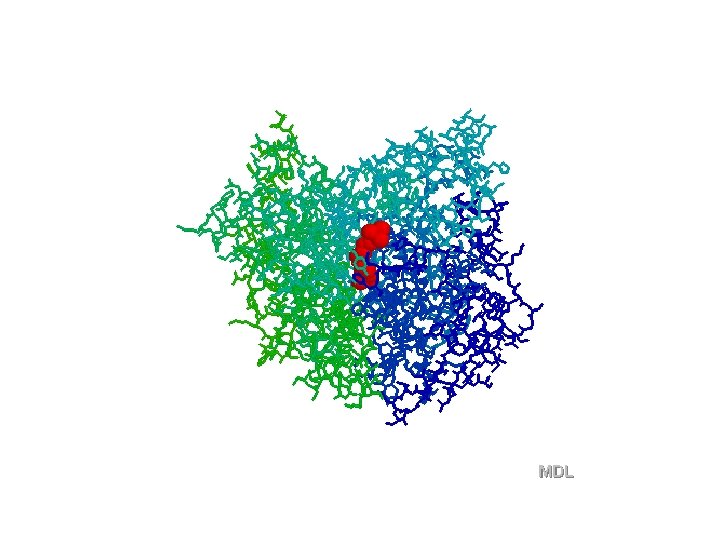
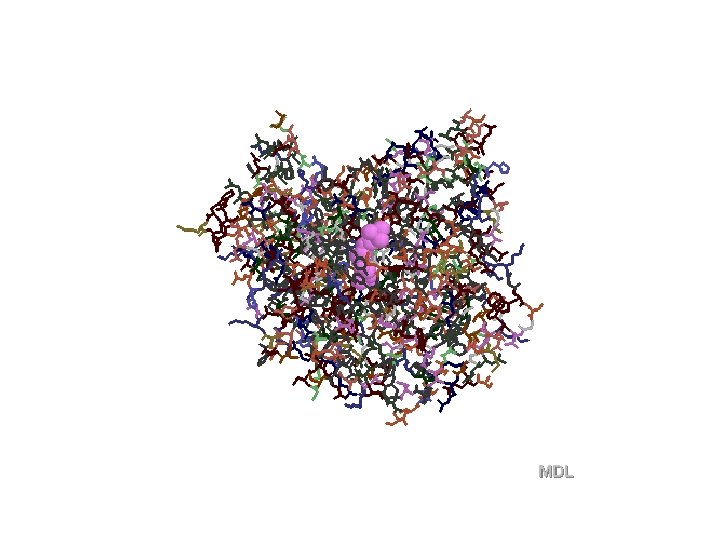
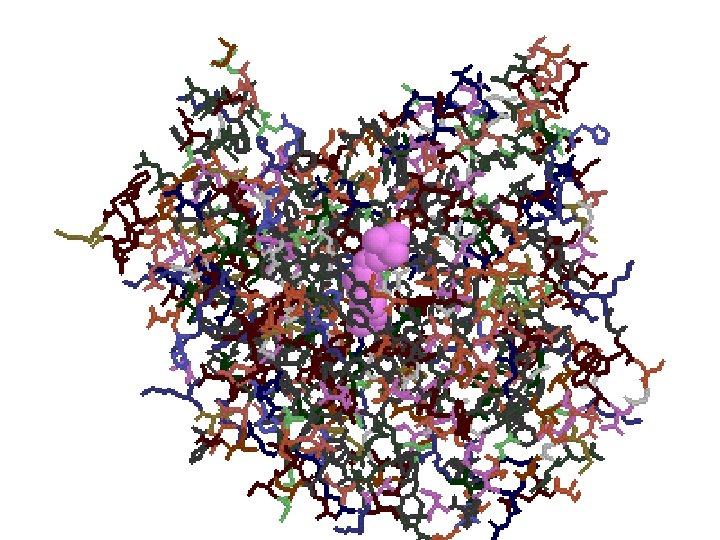
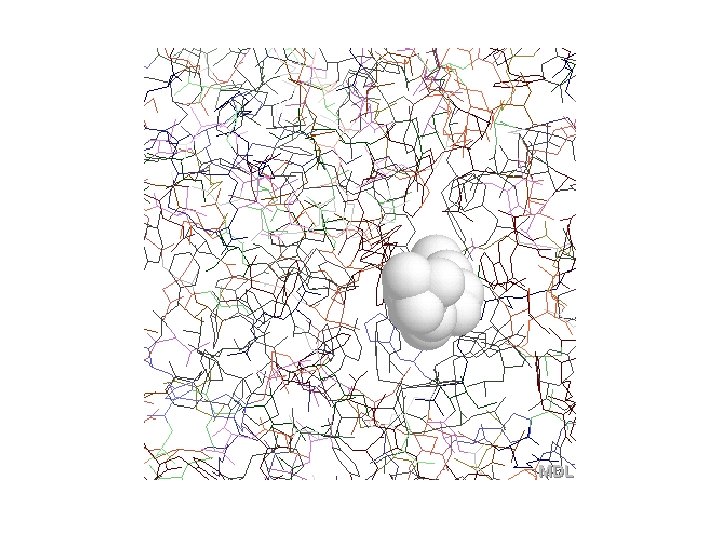
The Other Big Molecules: Proteins Acetylcholinesterase [The following slides are of Ach. E taken from the Protein Data Bank. The ligand is a competitive inhibitor]
EVIDENCE OF INHIBITION