
Large Blood Vessels of the Gut THE COELIAC
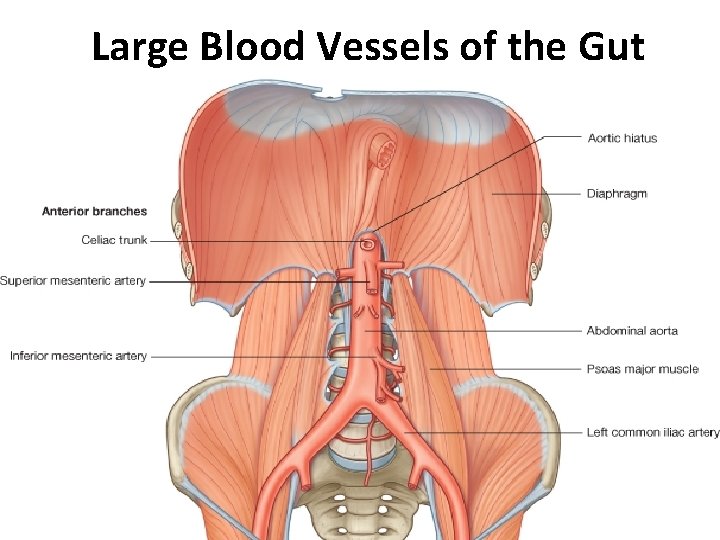
Large Blood Vessels of the Gut
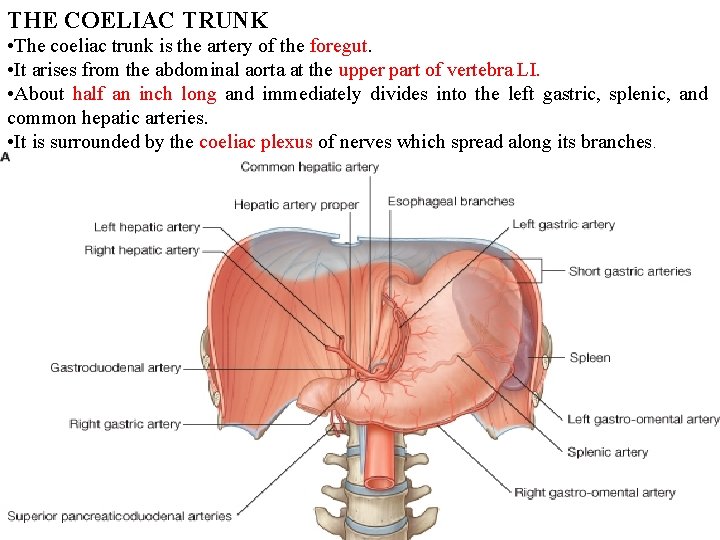
THE COELIAC TRUNK • The coeliac trunk is the artery of the foregut. • It arises from the abdominal aorta at the upper part of vertebra LI. • About half an inch long and immediately divides into the left gastric, splenic, and common hepatic arteries. • It is surrounded by the coeliac plexus of nerves which spread along its branches.
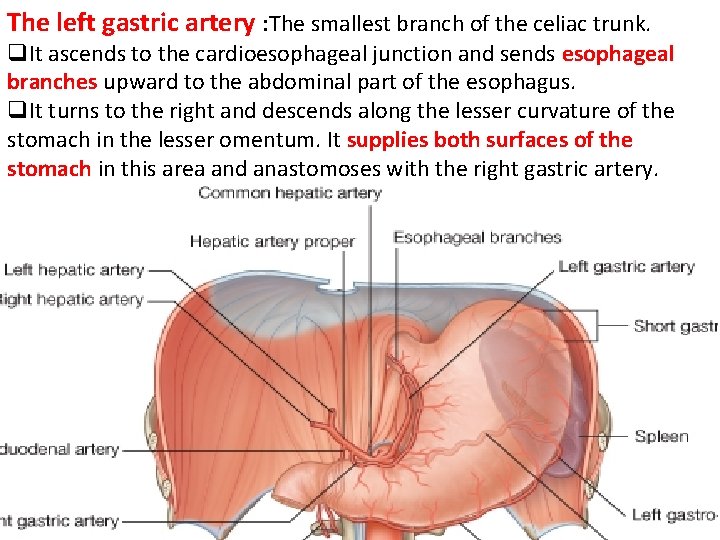
The left gastric artery : The smallest branch of the celiac trunk. q. It ascends to the cardioesophageal junction and sends esophageal branches upward to the abdominal part of the esophagus. q. It turns to the right and descends along the lesser curvature of the stomach in the lesser omentum. It supplies both surfaces of the stomach in this area and anastomoses with the right gastric artery.
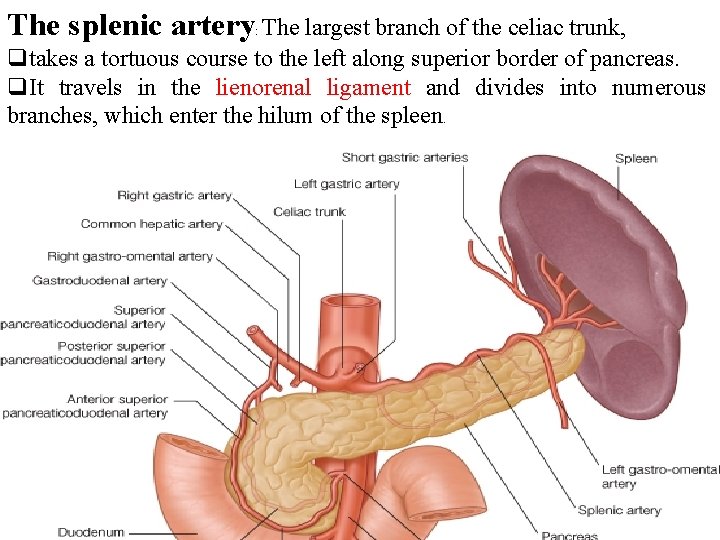
The splenic artery The largest branch of the celiac trunk, : qtakes a tortuous course to the left along superior border of pancreas. q. It travels in the lienorenal ligament and divides into numerous branches, which enter the hilum of the spleen.
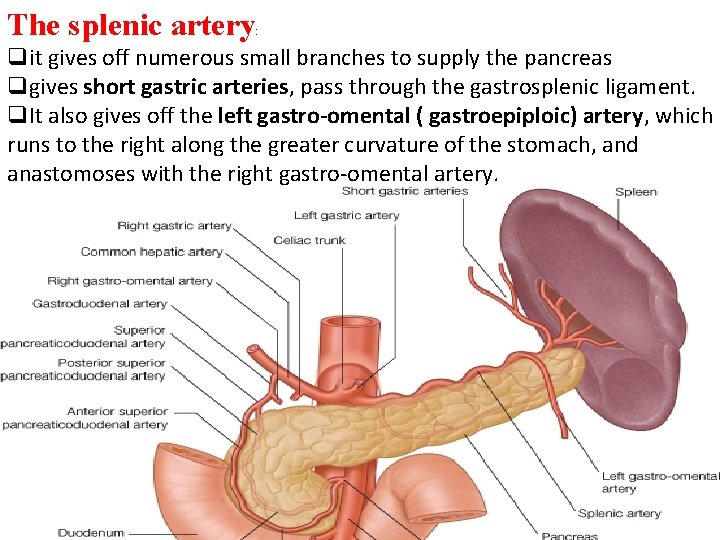
The splenic artery : qit gives off numerous small branches to supply the pancreas qgives short gastric arteries, pass through the gastrosplenic ligament. q. It also gives off the left gastro-omental ( gastroepiploic) artery, which runs to the right along the greater curvature of the stomach, and anastomoses with the right gastro-omental artery.

The common hepatic artery runs to the right and divides into its two terminal branches, the hepatic artery proper and the gastroduodenal artery The right gastric artery is a small branch which arises from the common hepatic artery close to the gastroduodenal artery. It runs to the left along the lesser curvature and ends by anastomosing with the left gastric artery.
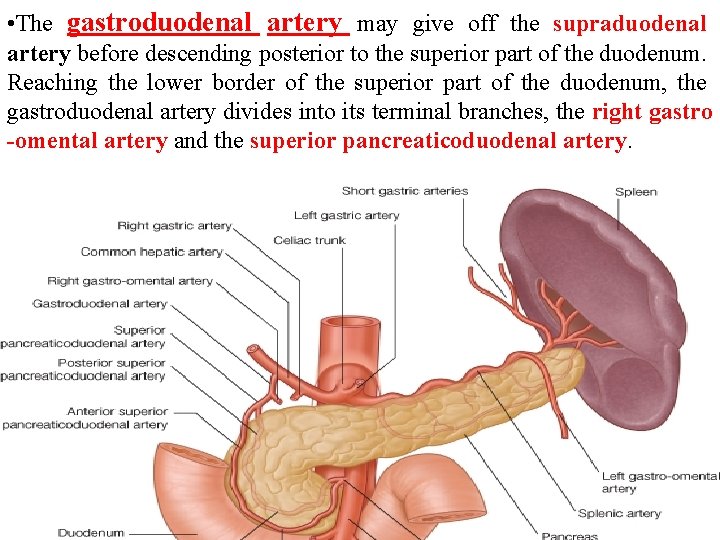
• The gastroduodenal artery may give off the supraduodenal artery before descending posterior to the superior part of the duodenum. Reaching the lower border of the superior part of the duodenum, the gastroduodenal artery divides into its terminal branches, the right gastro -omental artery and the superior pancreaticoduodenal artery.
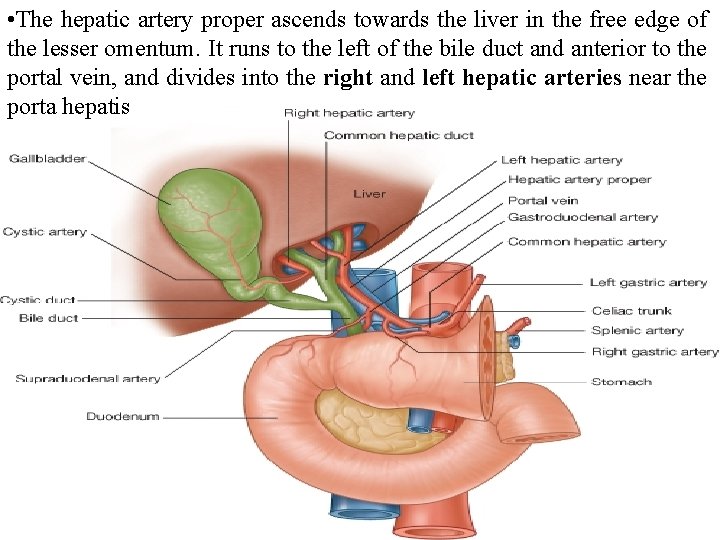
• The hepatic artery proper ascends towards the liver in the free edge of the lesser omentum. It runs to the left of the bile duct and anterior to the portal vein, and divides into the right and left hepatic arteries near the porta hepatis
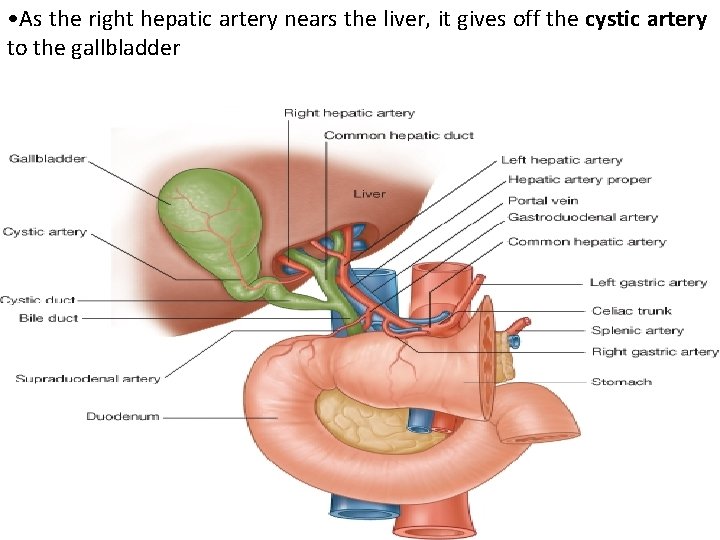
• As the right hepatic artery nears the liver, it gives off the cystic artery to the gallbladder
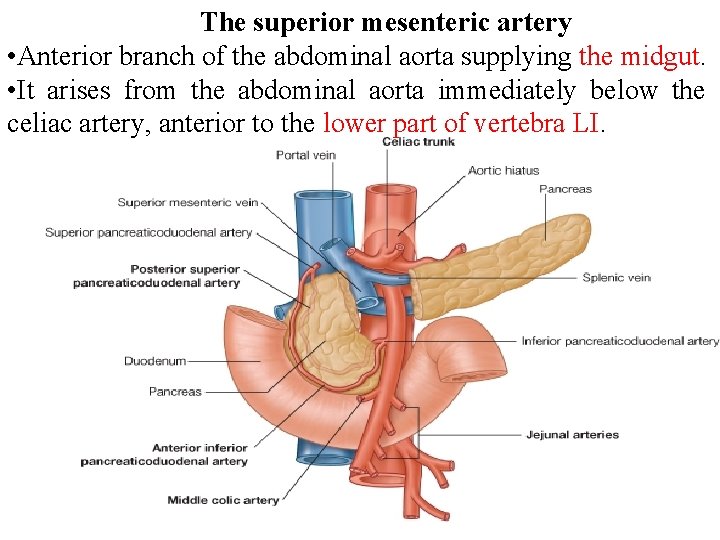
The superior mesenteric artery • Anterior branch of the abdominal aorta supplying the midgut. • It arises from the abdominal aorta immediately below the celiac artery, anterior to the lower part of vertebra LI.
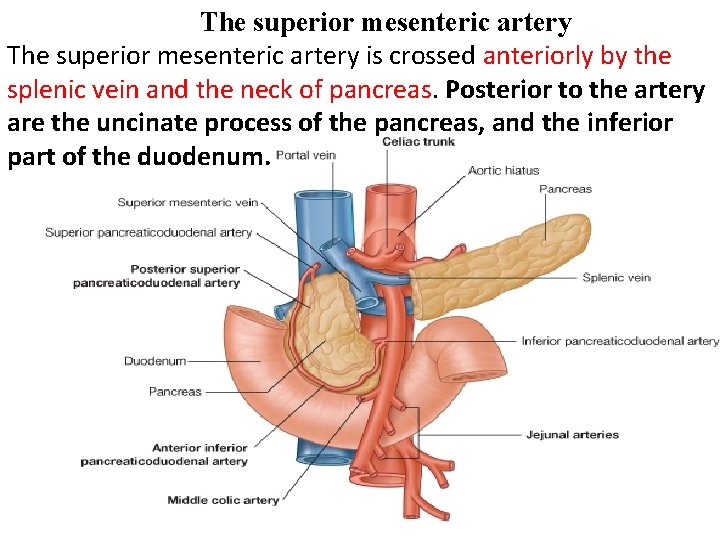
The superior mesenteric artery is crossed anteriorly by the splenic vein and the neck of pancreas. Posterior to the artery are the uncinate process of the pancreas, and the inferior part of the duodenum.
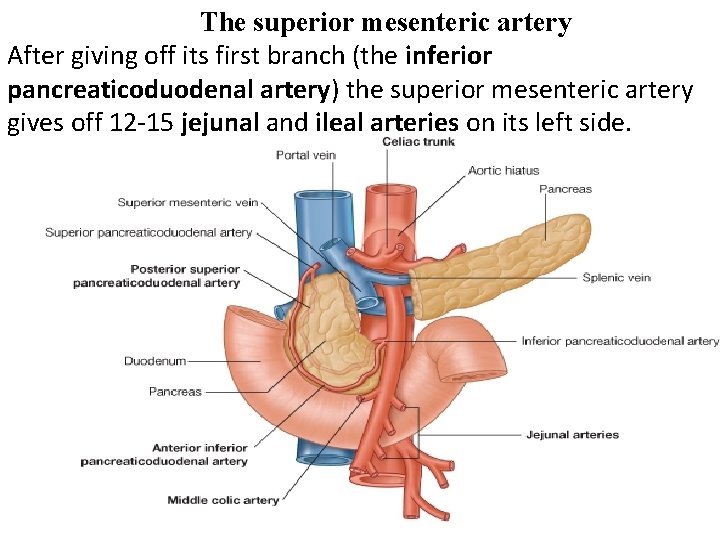
The superior mesenteric artery After giving off its first branch (the inferior pancreaticoduodenal artery) the superior mesenteric artery gives off 12 -15 jejunal and ileal arteries on its left side.
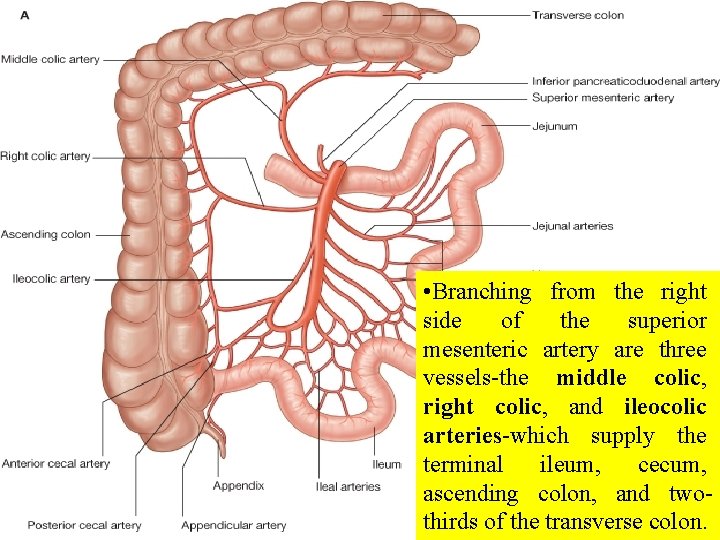
• Branching from the right side of the superior mesenteric artery are three vessels-the middle colic, right colic, and ileocolic arteries-which supply the terminal ileum, cecum, ascending colon, and twothirds of the transverse colon.
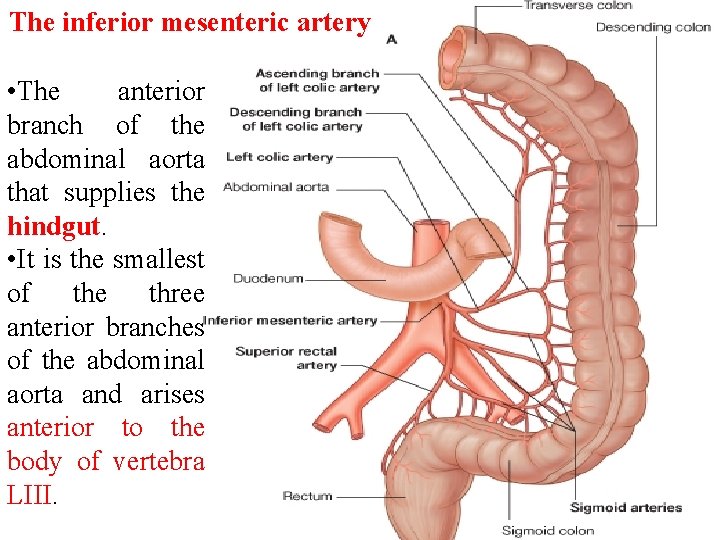
The inferior mesenteric artery • The anterior branch of the abdominal aorta that supplies the hindgut. • It is the smallest of the three anterior branches of the abdominal aorta and arises anterior to the body of vertebra LIII.
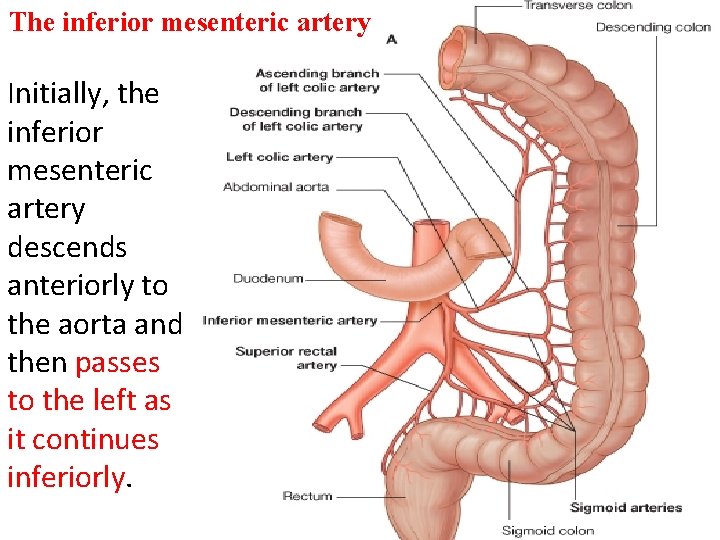
The inferior mesenteric artery Initially, the inferior mesenteric artery descends anteriorly to the aorta and then passes to the left as it continues inferiorly.
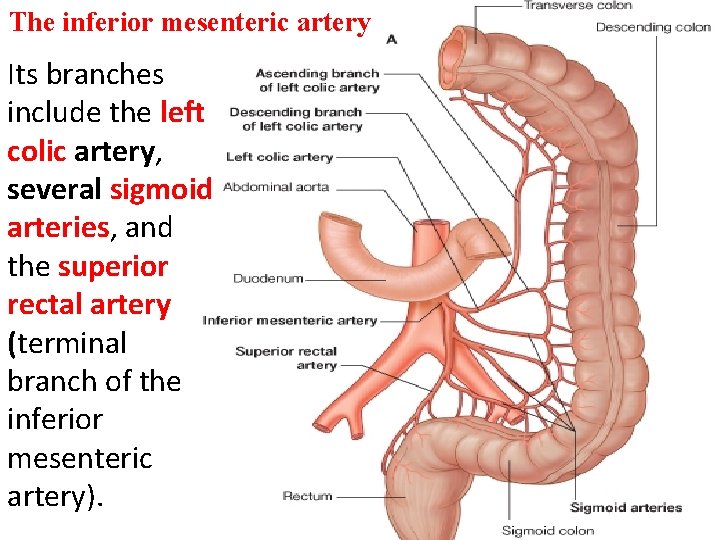
The inferior mesenteric artery Its branches include the left colic artery, several sigmoid arteries, and the superior rectal artery (terminal branch of the inferior mesenteric artery).
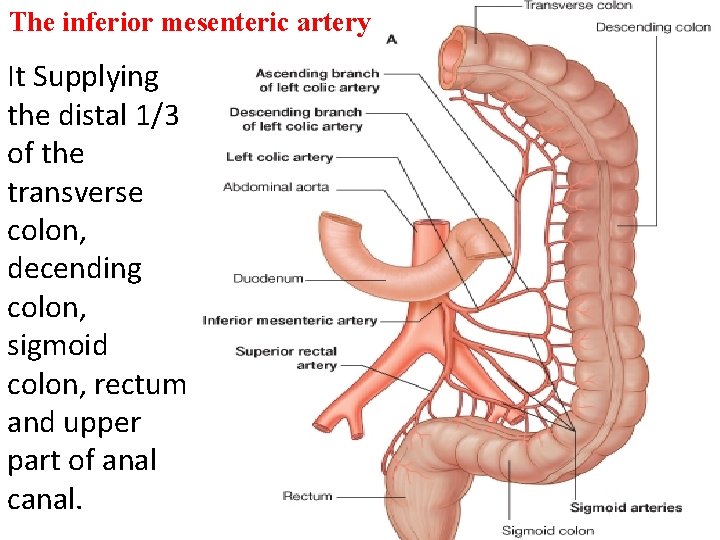
The inferior mesenteric artery It Supplying the distal 1/3 of the transverse colon, decending colon, sigmoid colon, rectum and upper part of anal canal.

Portal vein • Formed by the union of the splenic vein and the superior mesenteric vein posterior to the neck of the pancreas at the level of vertebra LII.

• Deliver blood from these structures to the liver. • Drain spleen, pancreas, gallbladder, and the abdominal part of the gastrointestinal tract, except for the inferior part of the rectum

Portal vein Ascending towards the liver, the portal vein passes posterior to the superior part of the duodenum and enters the free margin the lesser omentum, anterior to the epiploic foramen
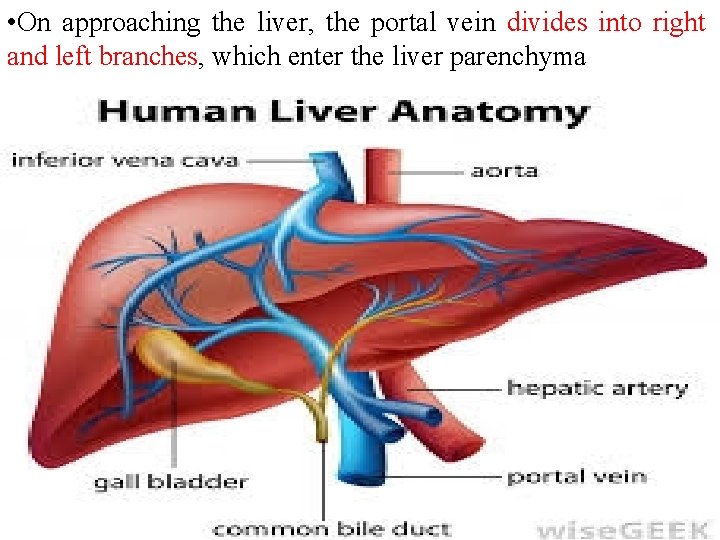
• On approaching the liver, the portal vein divides into right and left branches, which enter the liver parenchyma

• Once blood passes through the hepatic sinusoids, it passes through progressively larger veins until it enters the hepatic veins, which return the venous blood to the inferior vena cava just inferior to the diaphragm.
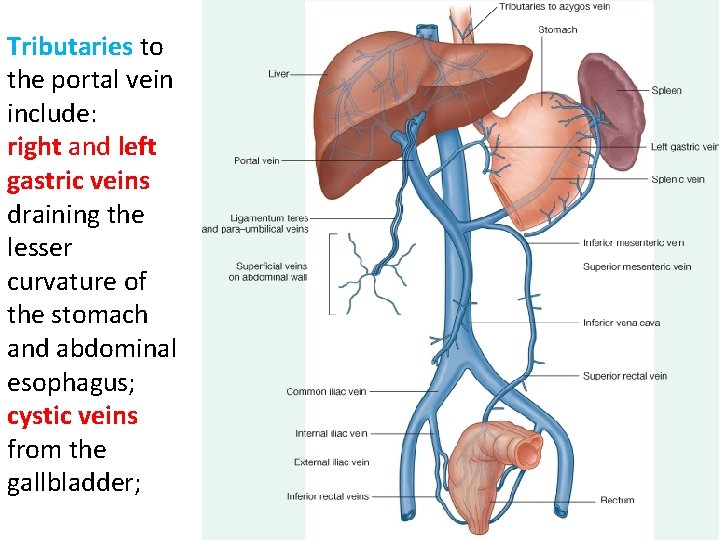
Tributaries to the portal vein include: right and left gastric veins draining the lesser curvature of the stomach and abdominal esophagus; cystic veins from the gallbladder;
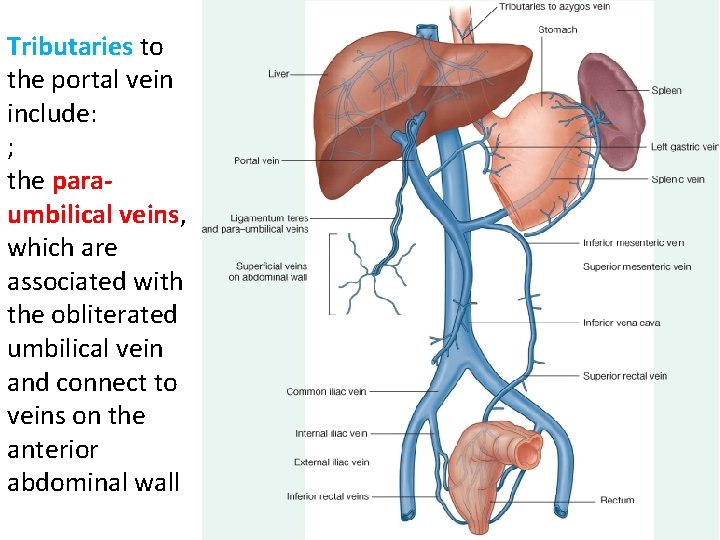
Tributaries to the portal vein include: ; the paraumbilical veins, which are associated with the obliterated umbilical vein and connect to veins on the anterior abdominal wall
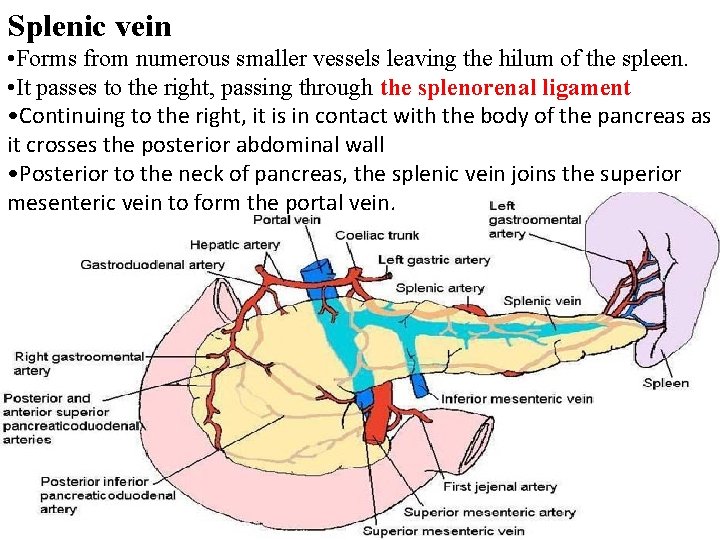
Splenic vein • Forms from numerous smaller vessels leaving the hilum of the spleen. • It passes to the right, passing through the splenorenal ligament • Continuing to the right, it is in contact with the body of the pancreas as it crosses the posterior abdominal wall • Posterior to the neck of pancreas, the splenic vein joins the superior mesenteric vein to form the portal vein.
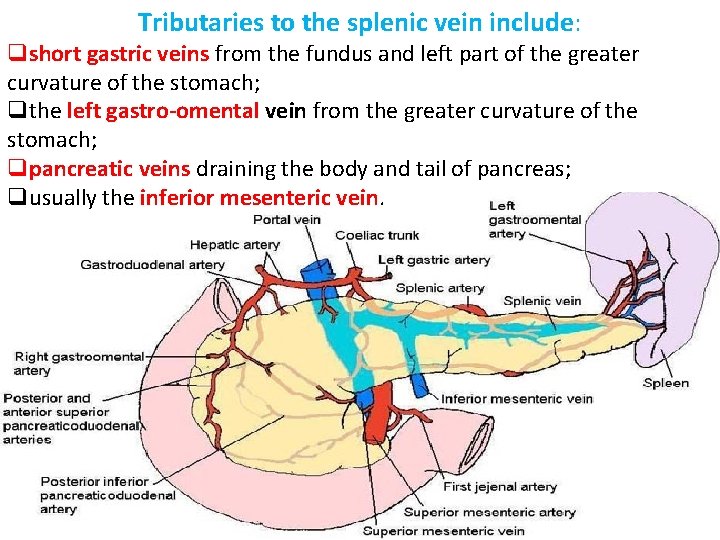
Tributaries to the splenic vein include: qshort gastric veins from the fundus and left part of the greater curvature of the stomach; qthe left gastro-omental vein from the greater curvature of the stomach; qpancreatic veins draining the body and tail of pancreas; qusually the inferior mesenteric vein.
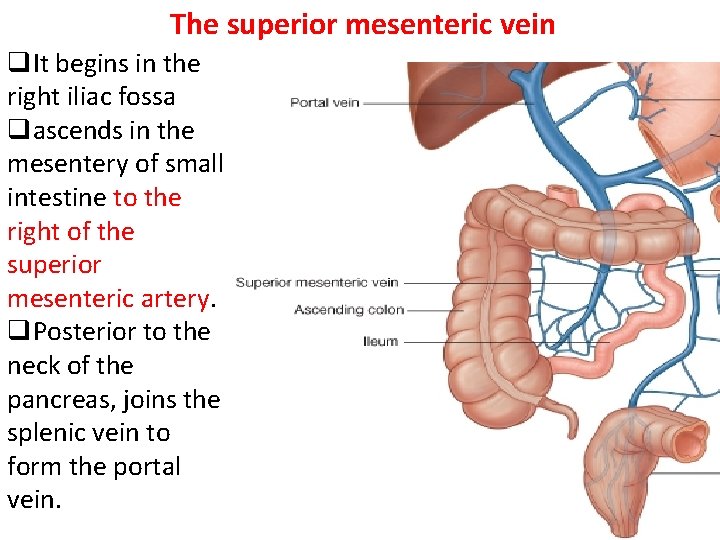
The superior mesenteric vein q. It begins in the right iliac fossa qascends in the mesentery of small intestine to the right of the superior mesenteric artery. q. Posterior to the neck of the pancreas, joins the splenic vein to form the portal vein.
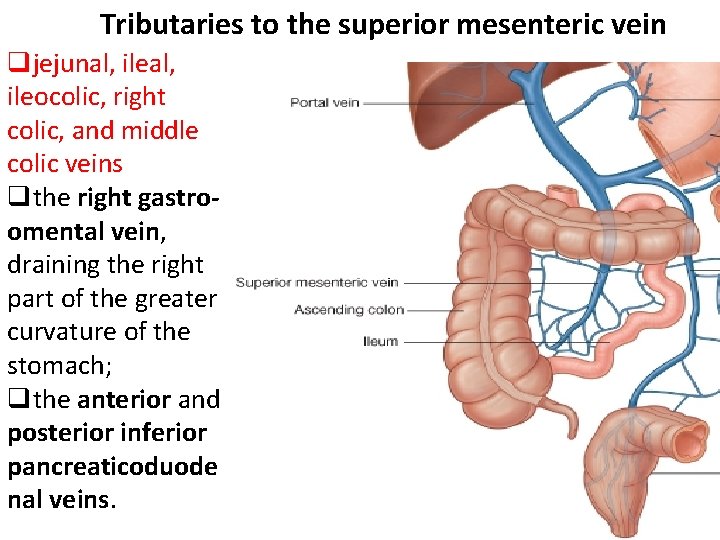
Tributaries to the superior mesenteric vein qjejunal, ileocolic, right colic, and middle colic veins qthe right gastroomental vein, draining the right part of the greater curvature of the stomach; qthe anterior and posterior inferior pancreaticoduode nal veins.

The inferior mesenteric vein q. It begins as the superior rectal vein and ascends, receiving tributaries from the sigmoid veins and the left colic vein. q. Drains blood from the rectum, sigmoid colon, descending colon, and splenic flexure.
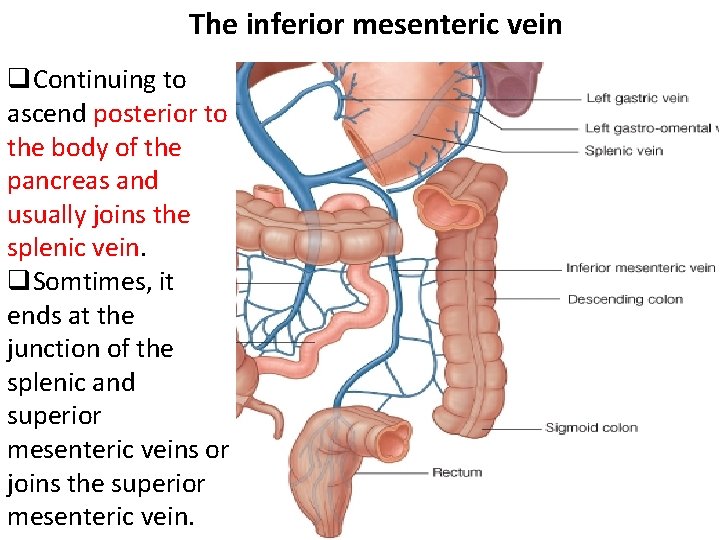
The inferior mesenteric vein q. Continuing to ascend posterior to the body of the pancreas and usually joins the splenic vein. q. Somtimes, it ends at the junction of the splenic and superior mesenteric veins or joins the superior mesenteric vein.
- Slides: 30