
Lapse Rate Poisson equation d Lapse Rate For
- Slides: 31
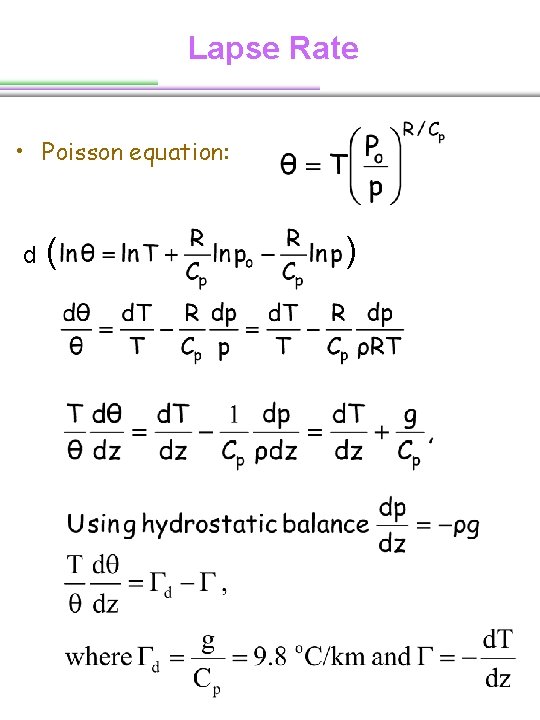
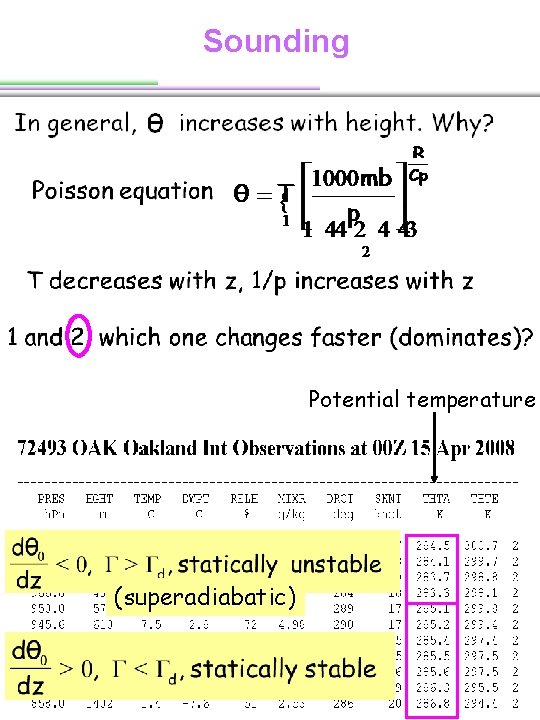
Lapse Rate • Poisson equation: d ( )
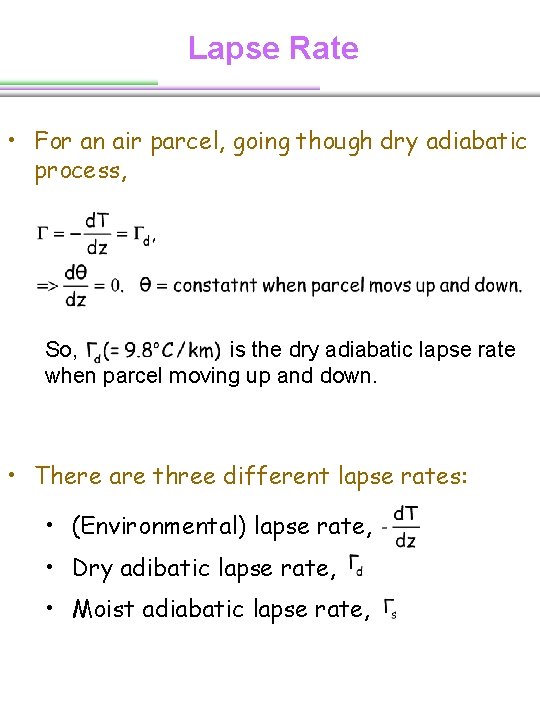
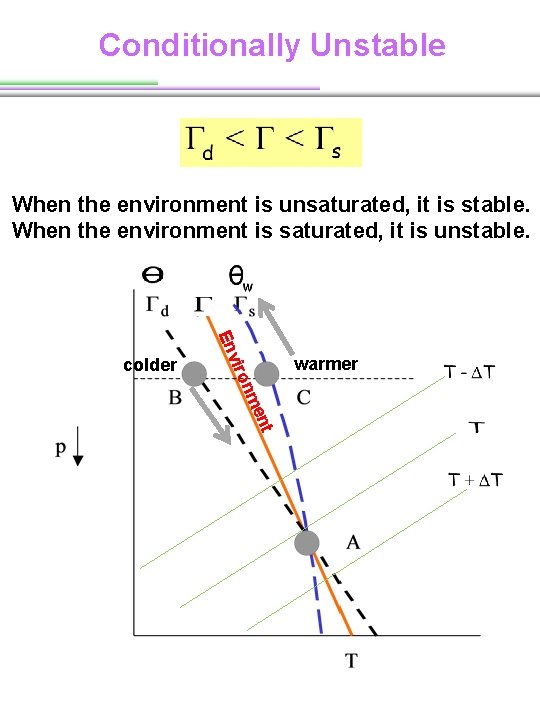
Lapse Rate • For an air parcel, going though dry adiabatic process, So, is the dry adiabatic lapse rate when parcel moving up and down. • There are three different lapse rates: • (Environmental) lapse rate, • Dry adibatic lapse rate, • Moist adiabatic lapse rate,
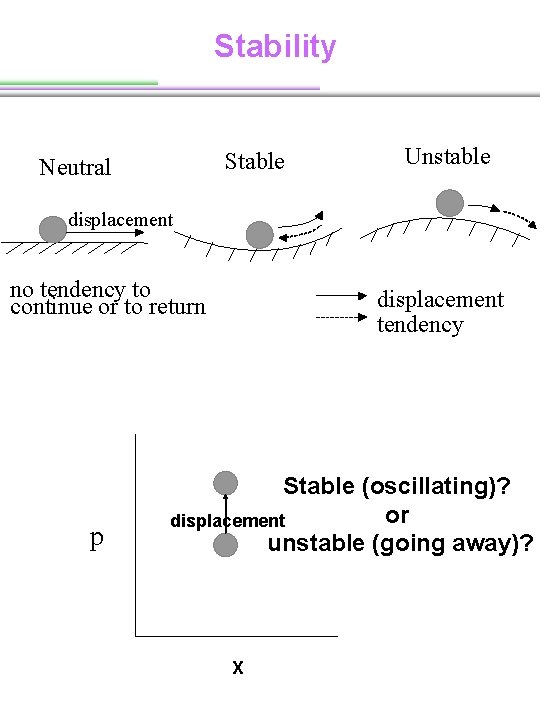
Stability Stable Neutral Unstable displacement no tendency to continue or to return p displacement tendency Stable (oscillating)? or displacement unstable (going away)? X
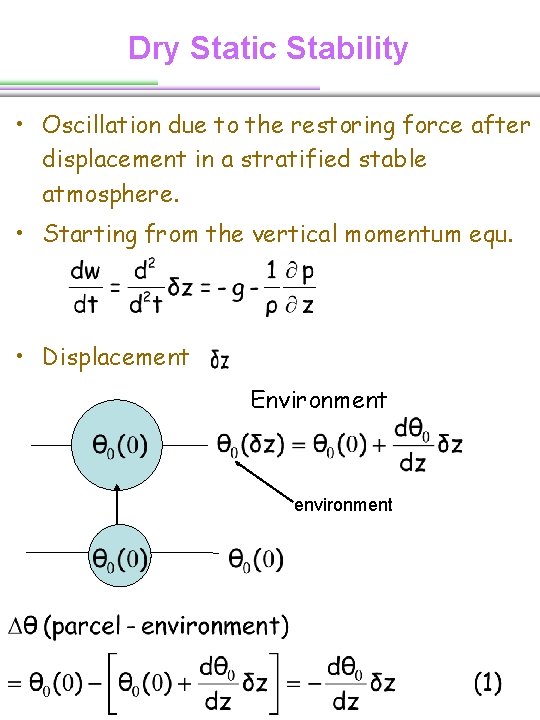
Dry Static Stability • Oscillation due to the restoring force after displacement in a stratified stable atmosphere. • Starting from the vertical momentum equ. • Displacement Environment environment
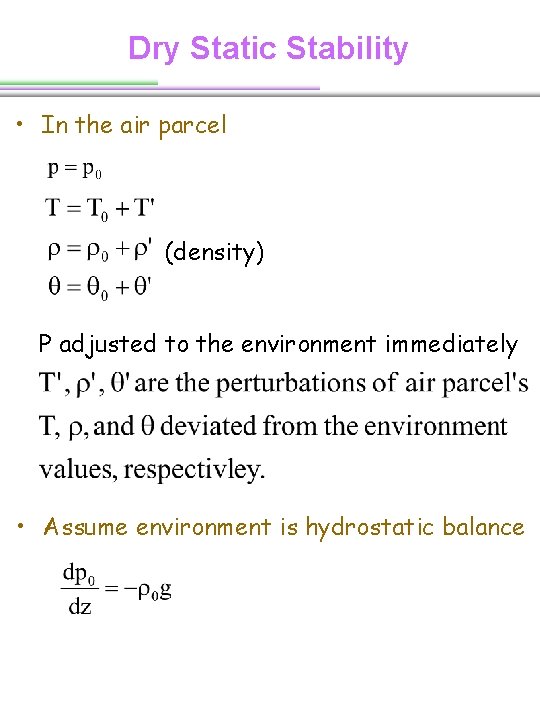
Dry Static Stability • In the air parcel (density) P adjusted to the environment immediately • Assume environment is hydrostatic balance
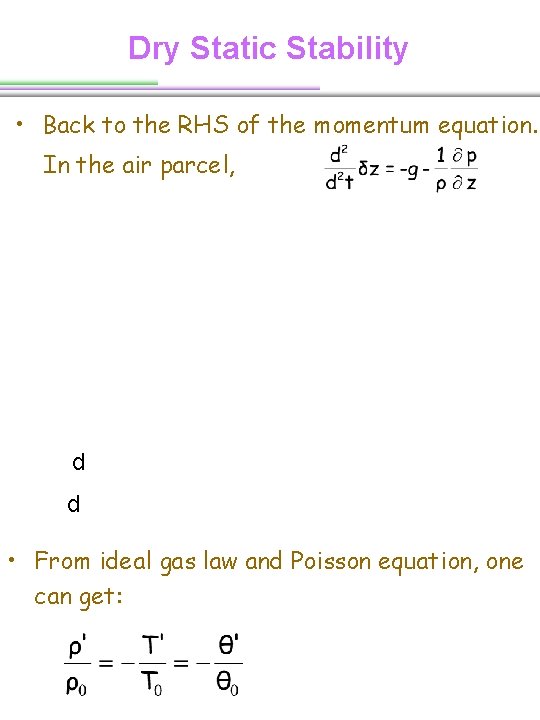
Dry Static Stability • Back to the RHS of the momentum equation. In the air parcel, d d • From ideal gas law and Poisson equation, one can get:
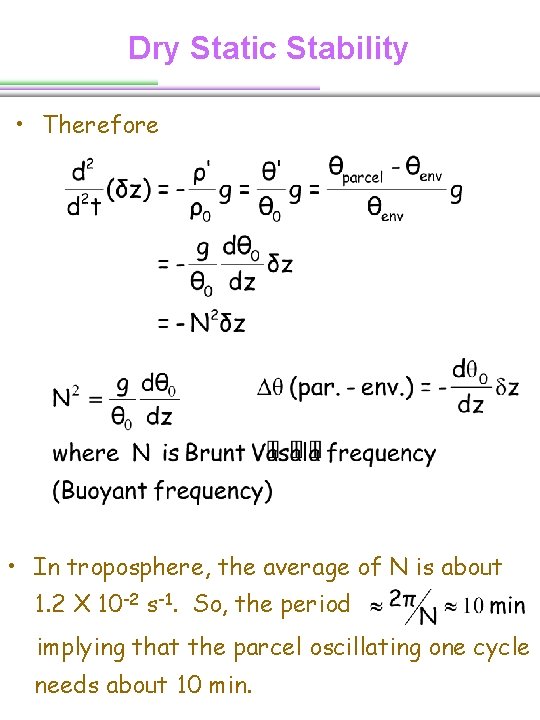
Dry Static Stability • Therefore • In troposphere, the average of N is about 1. 2 X 10 -2 s-1. So, the period implying that the parcel oscillating one cycle needs about 10 min.
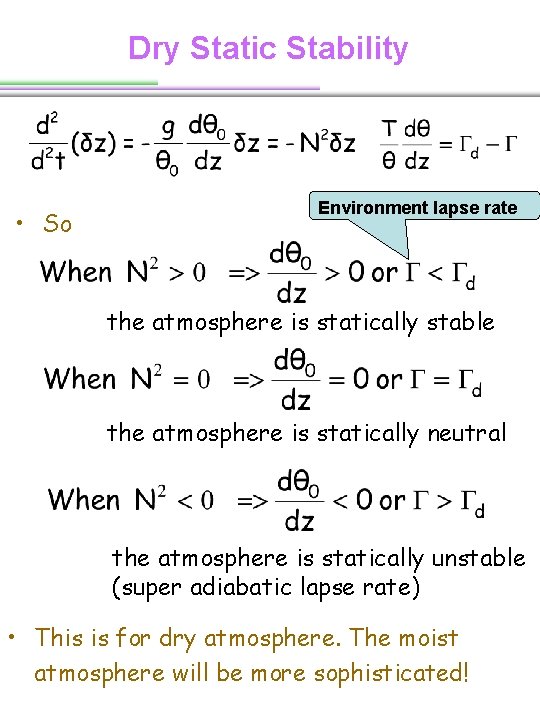
Dry Static Stability • So Environment lapse rate the atmosphere is statically stable the atmosphere is statically neutral the atmosphere is statically unstable (super adiabatic lapse rate) • This is for dry atmosphere. The moist atmosphere will be more sophisticated!
Sounding Potential temperature (superadiabatic)
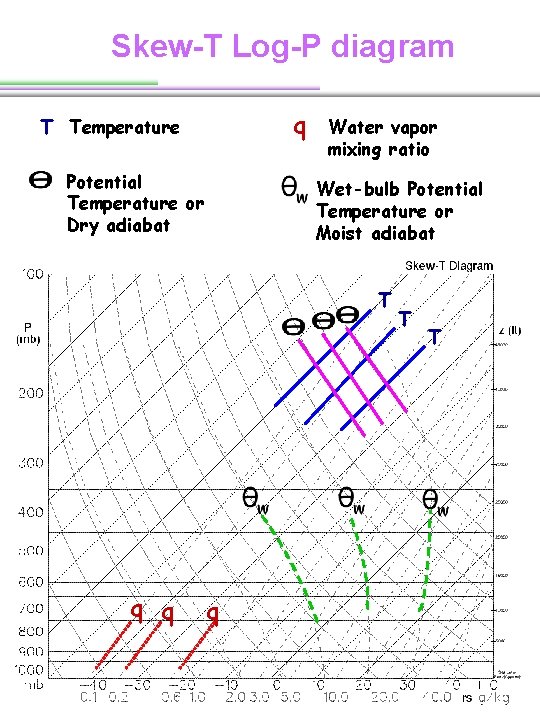
Skew-T Log-P diagram q T Temperature Potential Temperature or Dry adiabat Water vapor mixing ratio Wet-bulb Potential Temperature or Moist adiabat T q q q T T
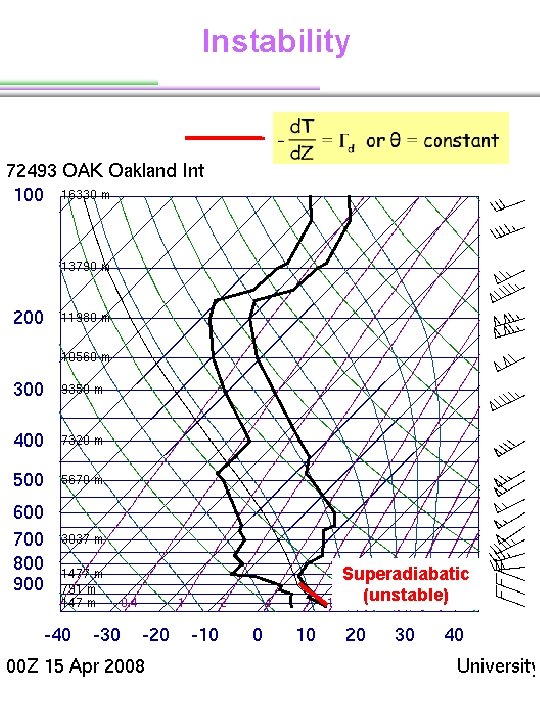
Instability Superadiabatic (unstable)
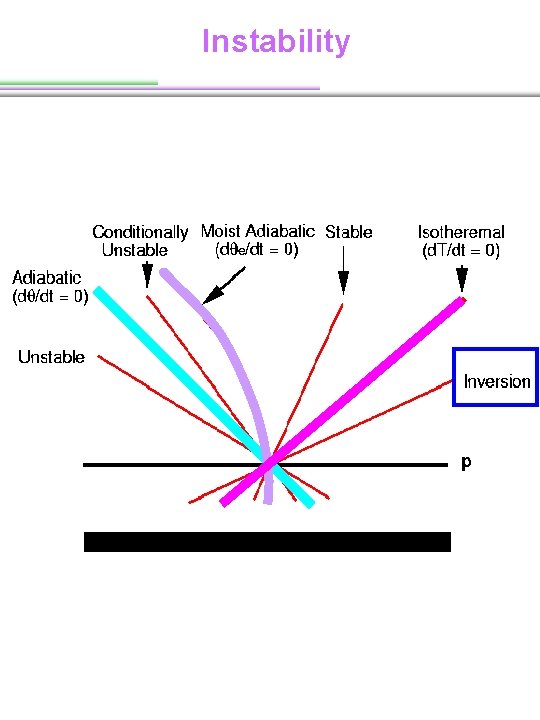
Instability
Conditionally Unstable When the environment is unsaturated, it is stable. When the environment is saturated, it is unstable. viro En colder warmer nm ent
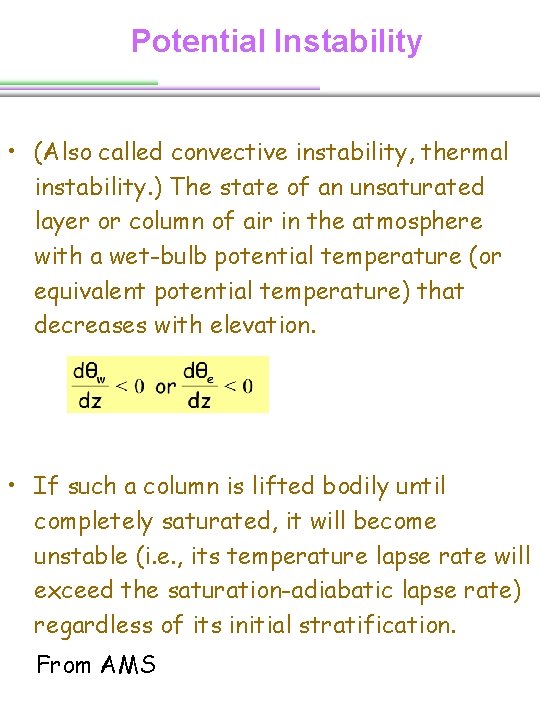
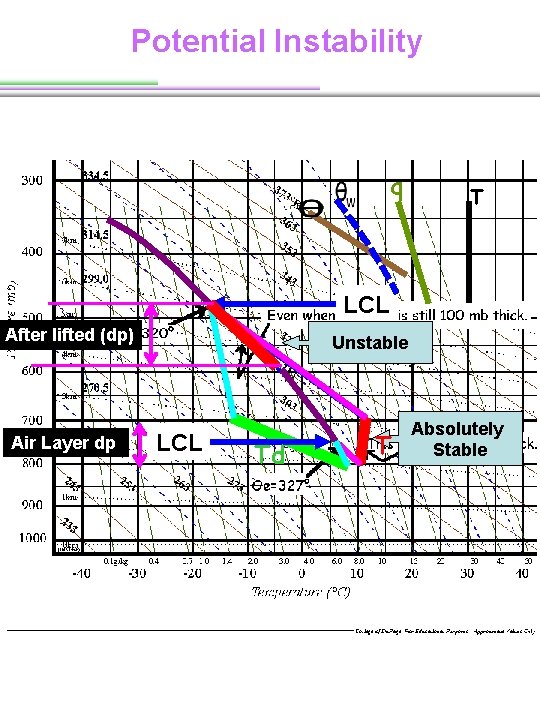
Potential Instability • (Also called convective instability, thermal instability. ) The state of an unsaturated layer or column of air in the atmosphere with a wet-bulb potential temperature (or equivalent potential temperature) that decreases with elevation. • If such a column is lifted bodily until completely saturated, it will become unstable (i. e. , its temperature lapse rate will exceed the saturation-adiabatic lapse rate) regardless of its initial stratification. From AMS
Potential Instability q T LCL After lifted (dp) Air Layer dp Unstable LCL Td T Absolutely Stable
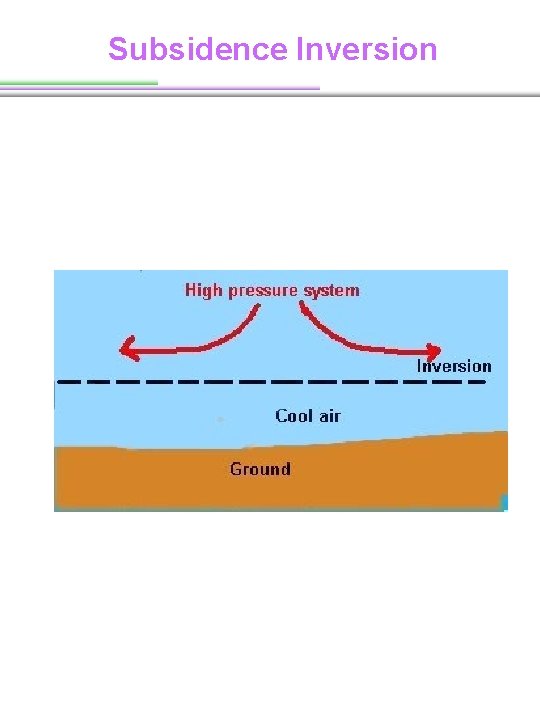
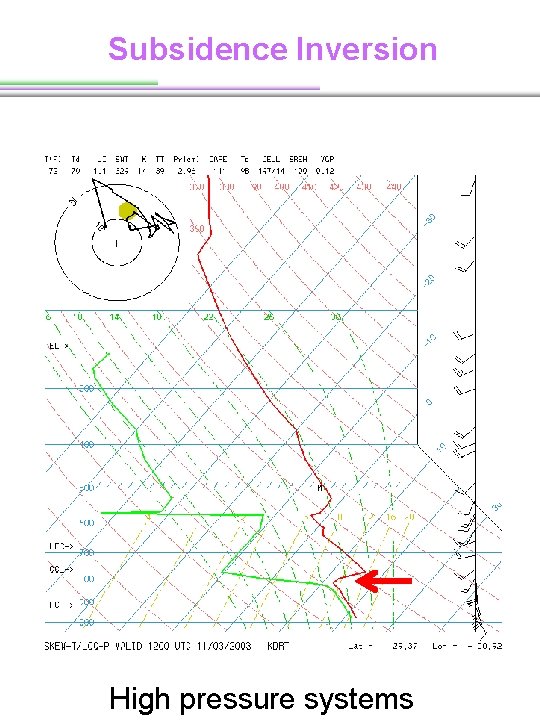
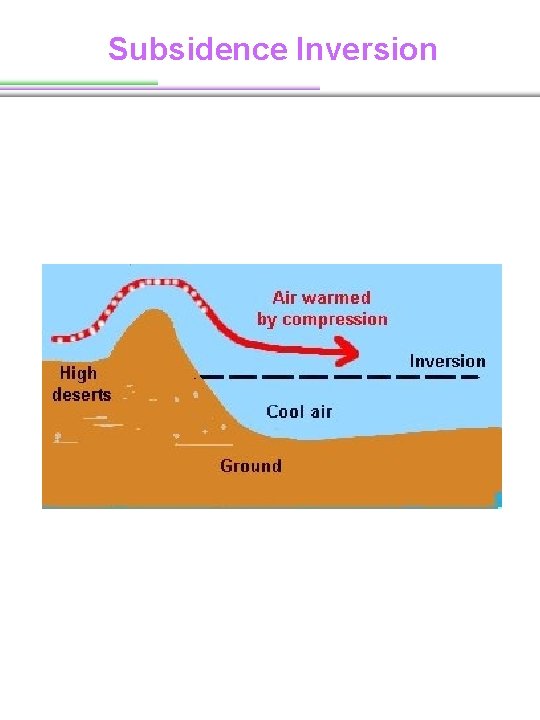
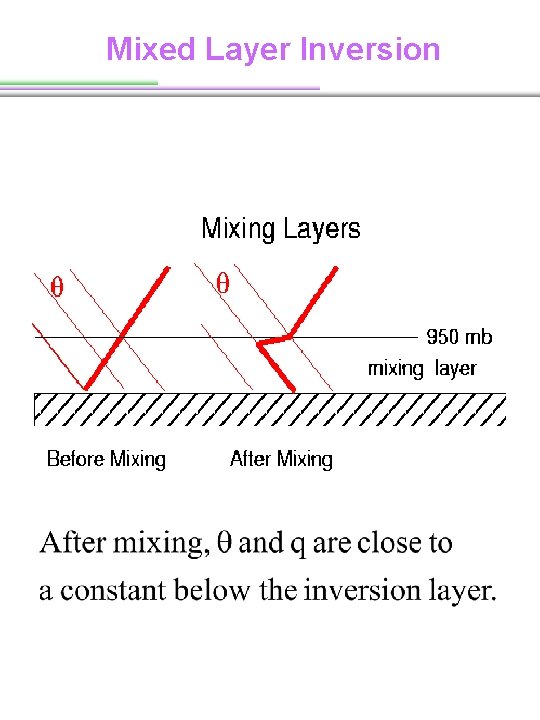
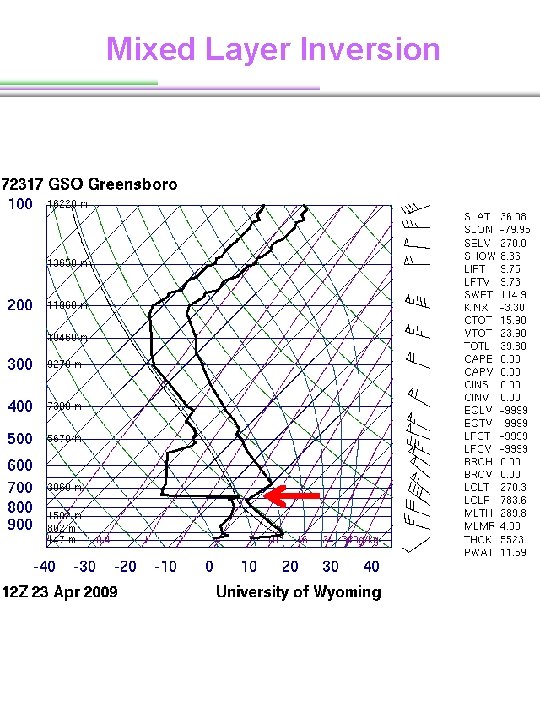
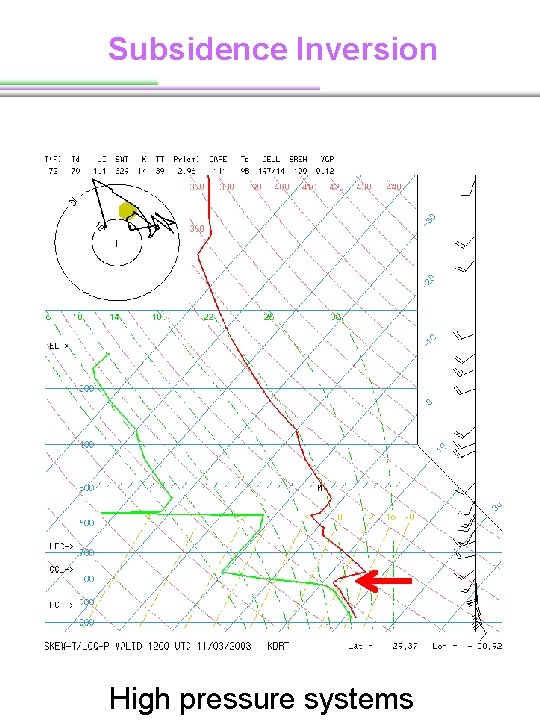
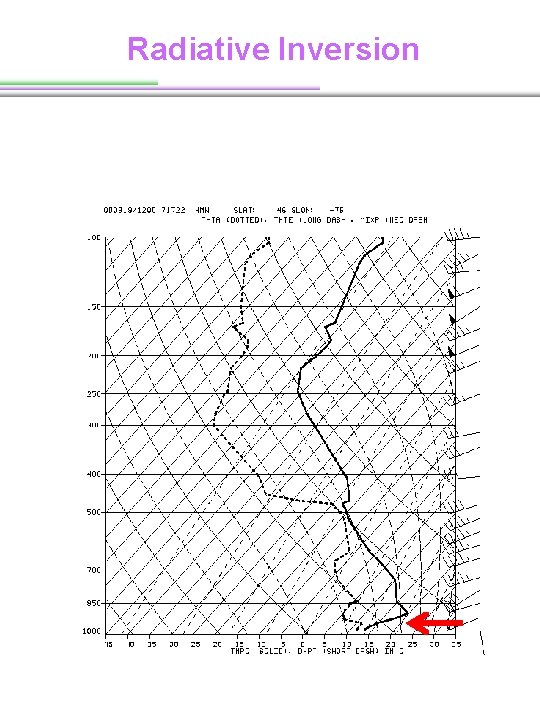
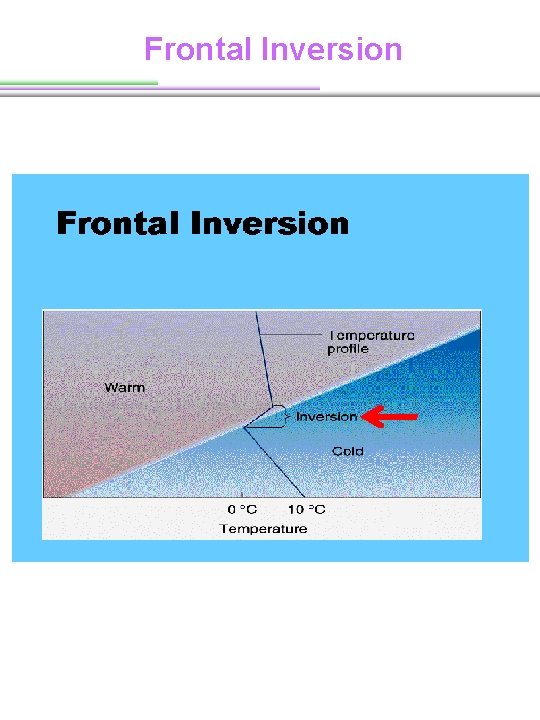
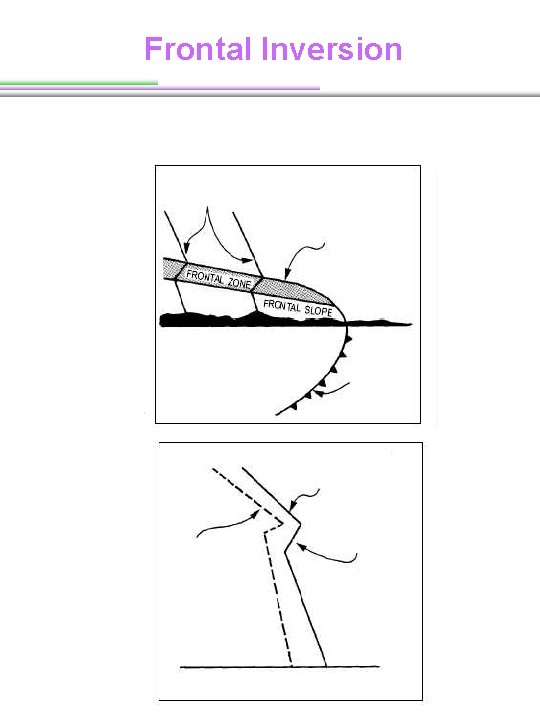
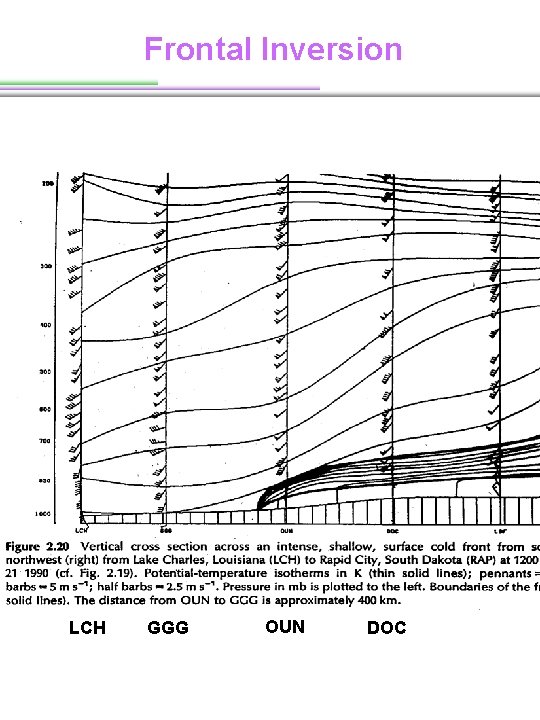
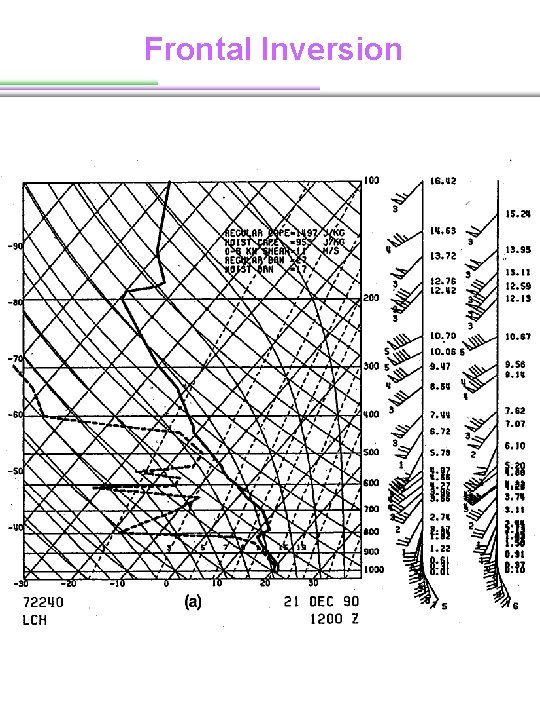
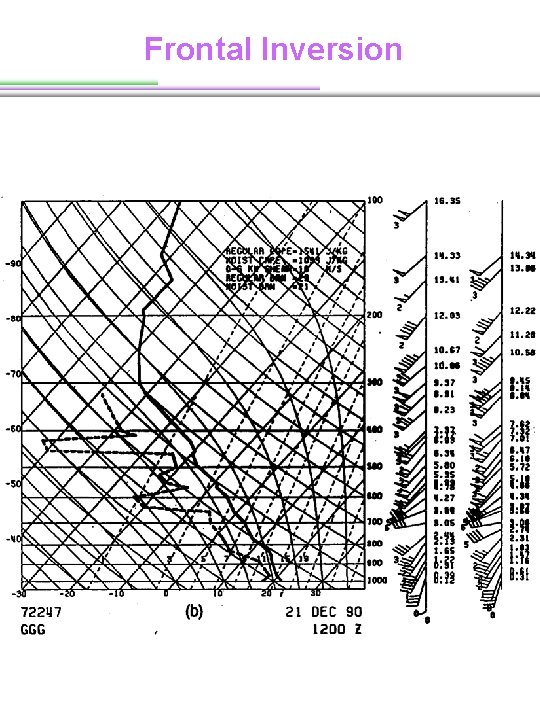
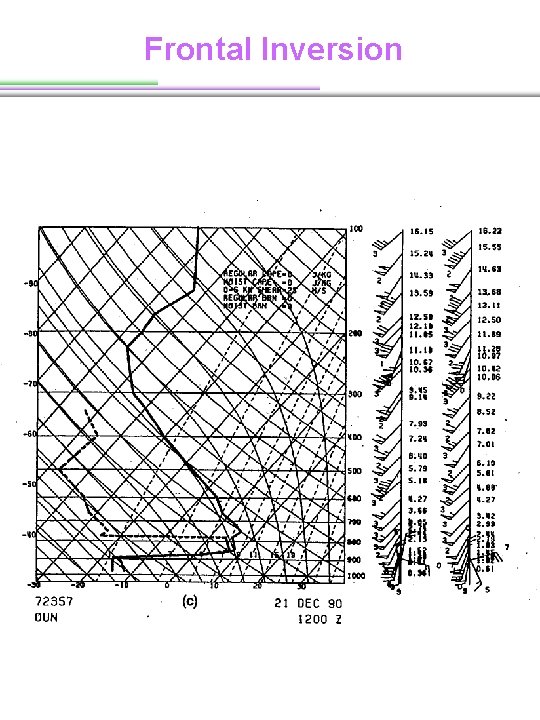
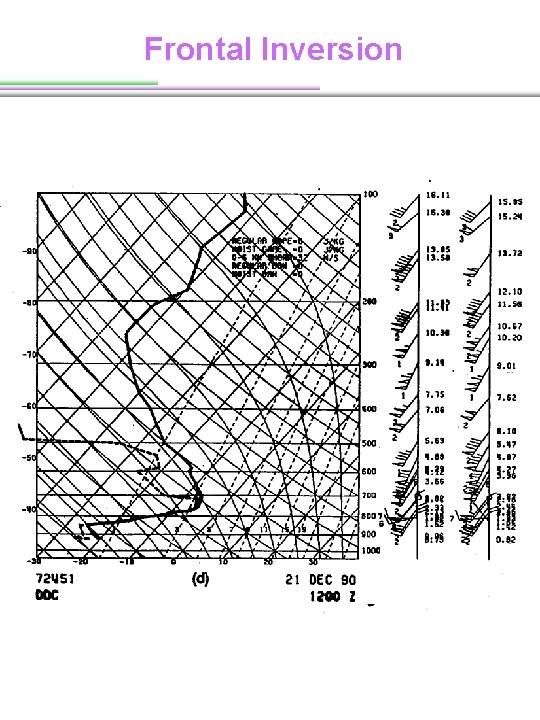
Inversion • Subsidence inversion • Radiative inversion • Mixed layer inversion • Frontal inversion
Subsidence Inversion
Subsidence Inversion High pressure systems
Subsidence Inversion
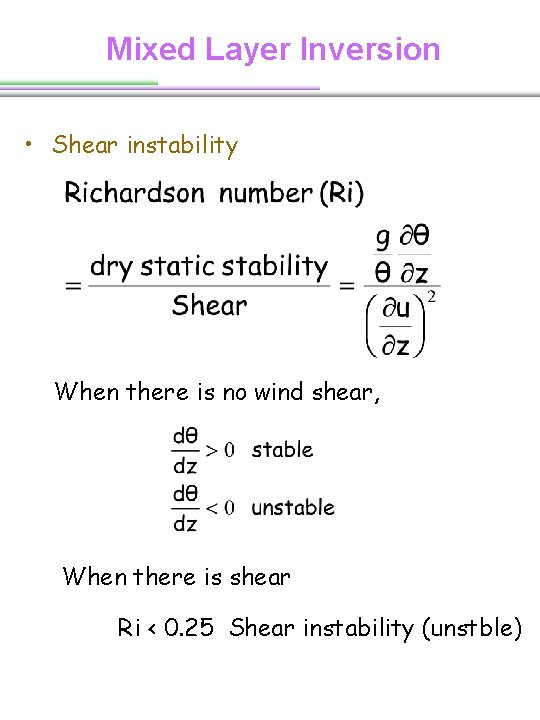
Mixed Layer Inversion • Shear instability When there is no wind shear, When there is shear Ri < 0. 25 Shear instability (unstble)
Mixed Layer Inversion
Mixed Layer Inversion
Subsidence Inversion High pressure systems
Radiative Inversion
Frontal Inversion
Frontal Inversion
Frontal Inversion LCH GGG OUN DOC
Frontal Inversion
Frontal Inversion
Frontal Inversion
Frontal Inversion