
Laparoscopic cornuotomy using temporary tourniquet suture in Interstitial

- Slides: 18
Laparoscopic cornuotomy using temporary tourniquet suture in Interstitial pregnancy. Young-Sam Choi M. D. Kwang-Sik Shin M. D. Jin Choi M. D. Dae-Sook Eun M. D. Dept. of Obstetrics & Gynecology, Eun Hospital Kwang-Ju, South Korea
Introduction Interstitial pregnancy very rare form of ectopic pregnancy can bring about catastrophic events Catastrophic events life-threatening hemorrhage uterine rupture in subsequent pregnancy
History Conventional managements ● Hysterectomy ● Cornual wedge resection with / without ipsilateral salpingectomy through a laparotomy perfect method for terminating the pregnancy but they were invasive and not desirable in patients who wish to preserve their fertility
History Introduction of conservative managements ● Medical approach Tanaka et al. in 1982 ● Laparoscopic approach Reich et al. in 1988 ● Hysteroscopic approach Meyer et al. in 1989
Medical managements Methotrexate (systemic or local) KCl Hypertonic dextrose Prostaglandins Actinomycin D Advantage: non-invasive Disadvantage: need for prolonged, close follow-up some patients require adjuvant treatment and it has some adverse effects
Laparoscopic approach Hemostatic techniques Diluted vasopressin injection Electrocauterization Fibrin glue Ultrasonic cutting and coagulating device Ascending uterine artery ligation Advantage: minimal invasive Disadvantage: not always sufficient to control hemorrhage
Laparoscopic approach Suture techniques Encircling suture or endoloop ligation Square suture Automatic stapler Advantages: more effective more reliable at hemostasis Disadvantage sacrifice the tube and cornu
Laparoscopic Cornuotomy Not cornuostomy But Cornuotomy Schema of Technical tip 1 st Diluted vasopressin injection 2 nd Tourniquet suture apply (Cornual Island) 3 rd Additional vasopressin injection These resulted in a “Cornual region from the blood supply. Island” that isolated the
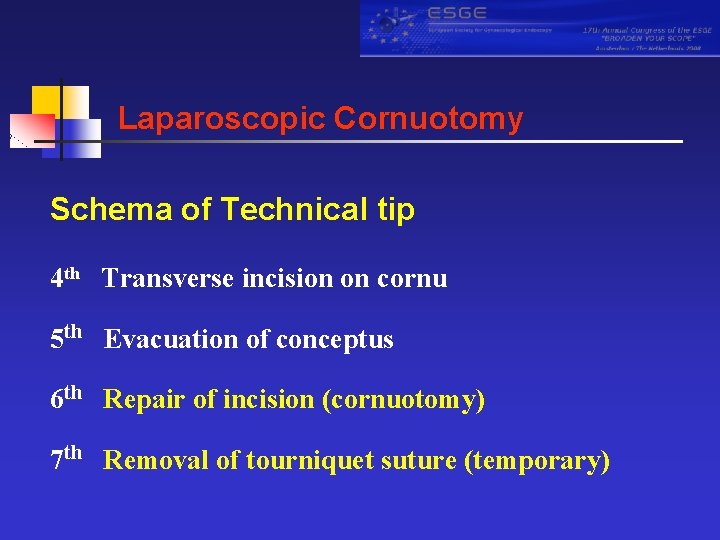
Laparoscopic Cornuotomy Schema of Technical tip 4 th Transverse incision on cornu 5 th Evacuation of conceptus 6 th Repair of incision (cornuotomy) 7 th Removal of tourniquet suture (temporary)
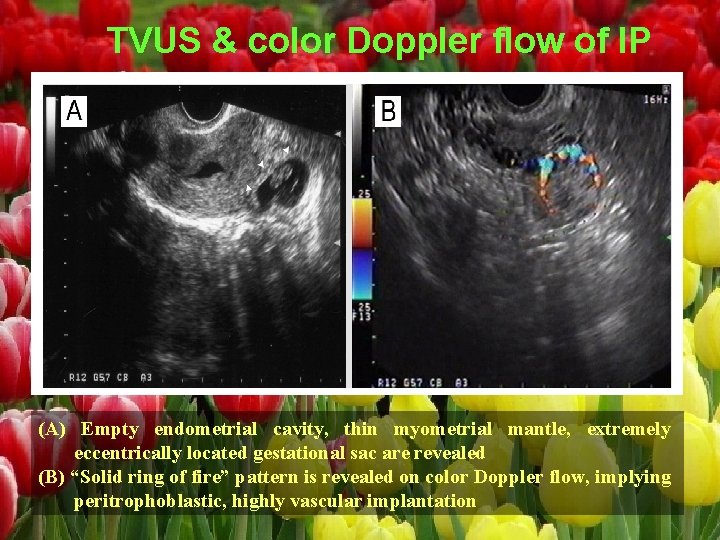
TVUS & color Doppler flow of IP (A) Empty endometrial cavity, thin myometrial mantle, extremely eccentrically located gestational sac are revealed (B) “Solid ring of fire” pattern is revealed on color Doppler flow, implying peritrophoblastic, highly vascular implantation
Laparoscopic Cornuotomy
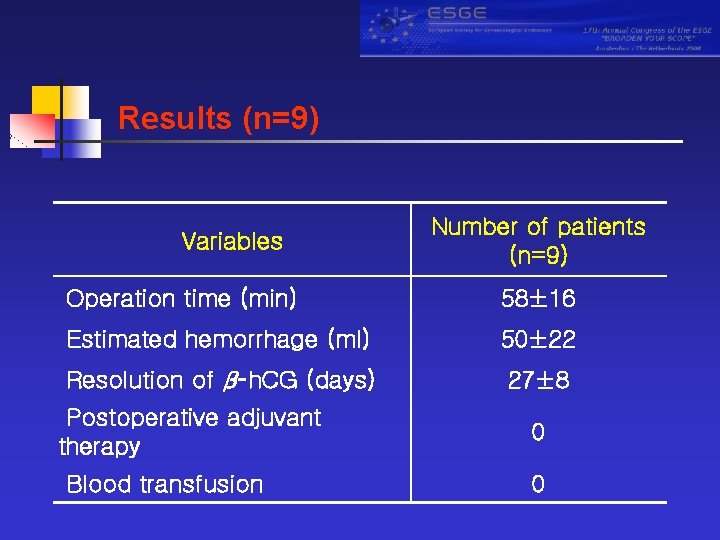
Results (n=9) Variables Number of patients (n=9) Operation time (min) 58± 16 Estimated hemorrhage (ml) 50± 22 Resolution of β‑h. CG (days) 27± 8 Postoperative adjuvant therapy Blood transfusion 0 0
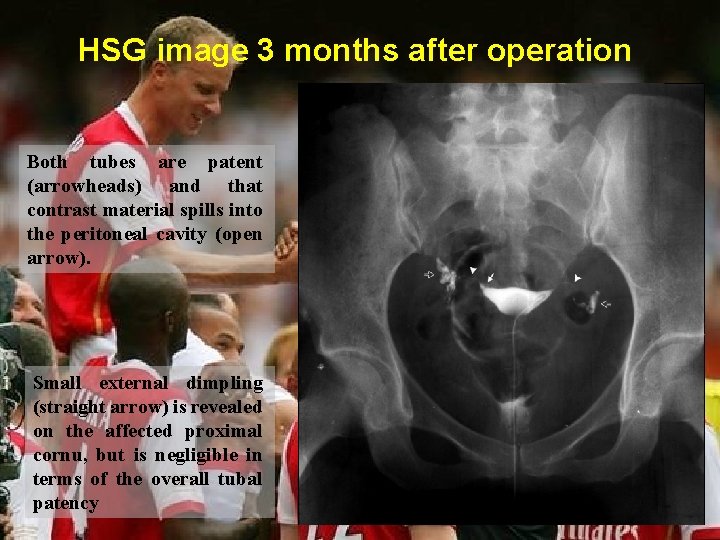
HSG image 3 months after operation Both tubes are patent (arrowheads) and that contrast material spills into the peritoneal cavity (open arrow). Small external dimpling (straight arrow) is revealed on the affected proximal cornu, but is negligible in terms of the overall tubal patency
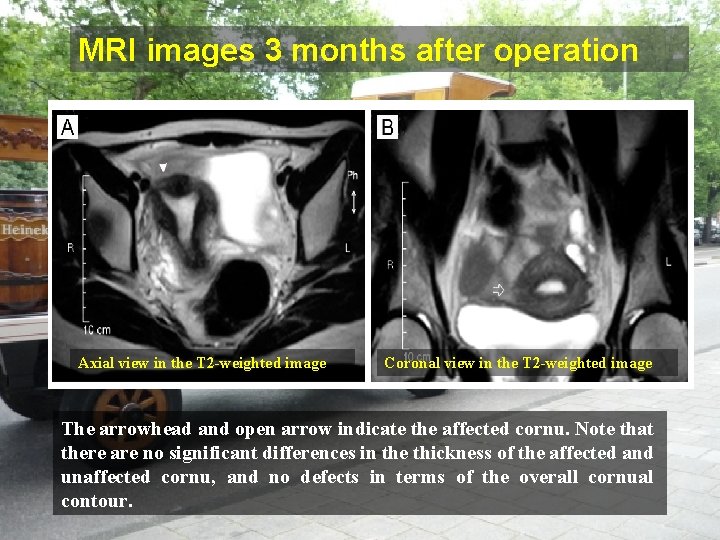
MRI images 3 months after operation Axial view in the T 2 -weighted image Coronal view in the T 2 -weighted image The arrowhead and open arrow indicate the affected cornu. Note that there are no significant differences in the thickness of the affected and unaffected cornu, and no defects in terms of the overall cornual contour.
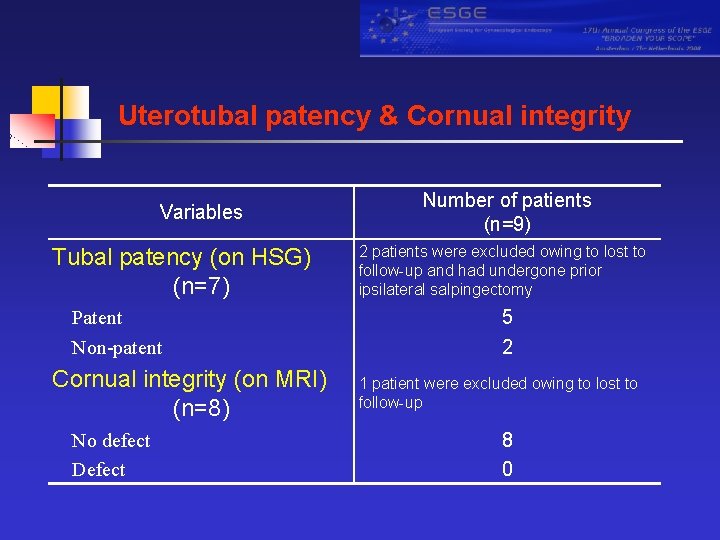
Uterotubal patency & Cornual integrity Variables Tubal patency (on HSG) (n=7) Patent Non-patent Cornual integrity (on MRI) (n=8) No defect Defect Number of patients (n=9) 2 patients were excluded owing to lost to follow-up and had undergone prior ipsilateral salpingectomy 5 2 1 patient were excluded owing to lost to follow-up 8 0
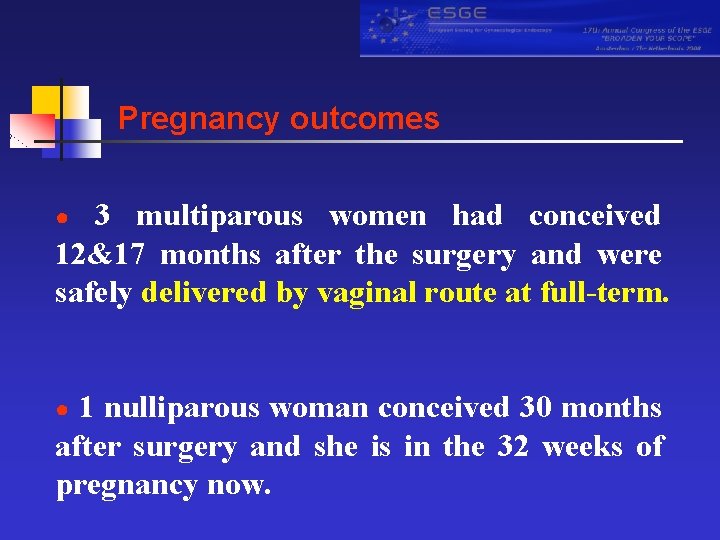
Pregnancy outcomes 3 multiparous women had conceived 12&17 months after the surgery and were safely delivered by vaginal route at full-term. ● 1 nulliparous woman conceived 30 months after surgery and she is in the 32 weeks of pregnancy now. ●
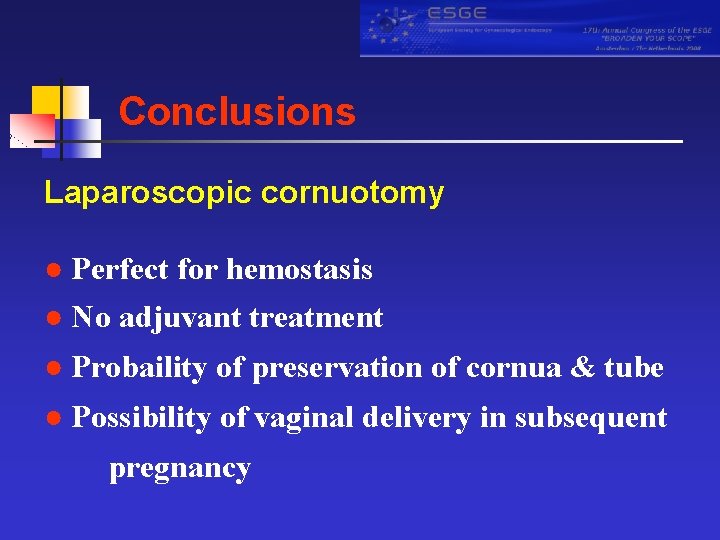
Conclusions Laparoscopic cornuotomy ● Perfect for hemostasis ● No adjuvant treatment ● Probaility of preservation of cornua & tube ● Possibility of vaginal delivery in subsequent pregnancy
Thank you very much for your attention. yschoimd@yahoo. co. kr If you have any questions, please contact me by E-mail.