
LAP FORMATION IN BLOWROOM Scutcher forms a lap
LAP FORMATION IN BLOWROOM Scutcher forms a lap for supplying material to the cards. Previously, most of these machines were double scutchers; they had two beater positions and two pairs of perforated drums. Machines delivered in recent years have been almost exclusively single scutchers: they have only one beater position (Kirschner beater) and only one pair of perforated drums or even a single drum.
LAP WEIGHNING • A lap-weighing device connected with the lap apparatus detects any deviation of lap weight from a set value. The result is registered on the output strip from a printer. Simultaneously, the deviation is indicated as a signal. When the deviation exceeds a preset value, the weighing device sends a pulse to a servomotor of a variable speed transmission, which regulates the weight per unit length of the lap.
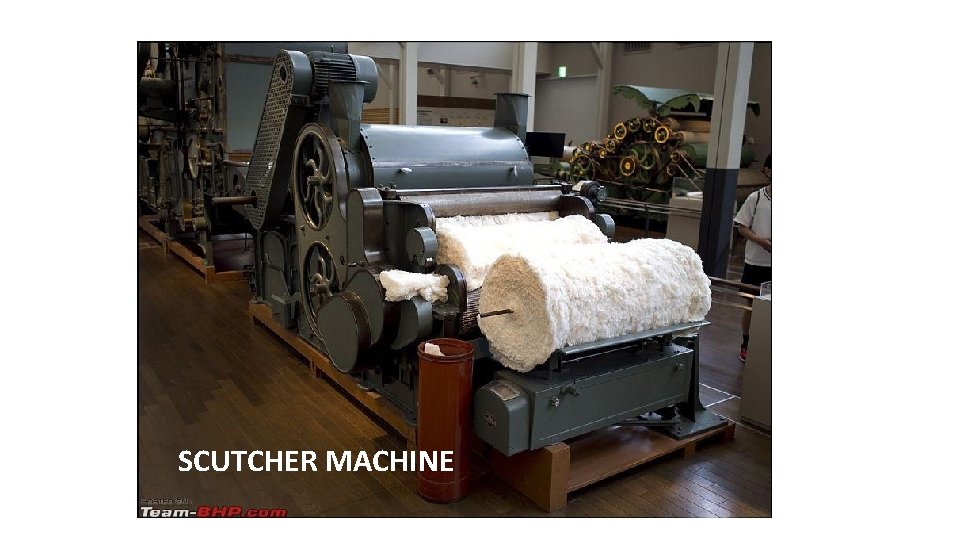
SCUTCHER MACHINE
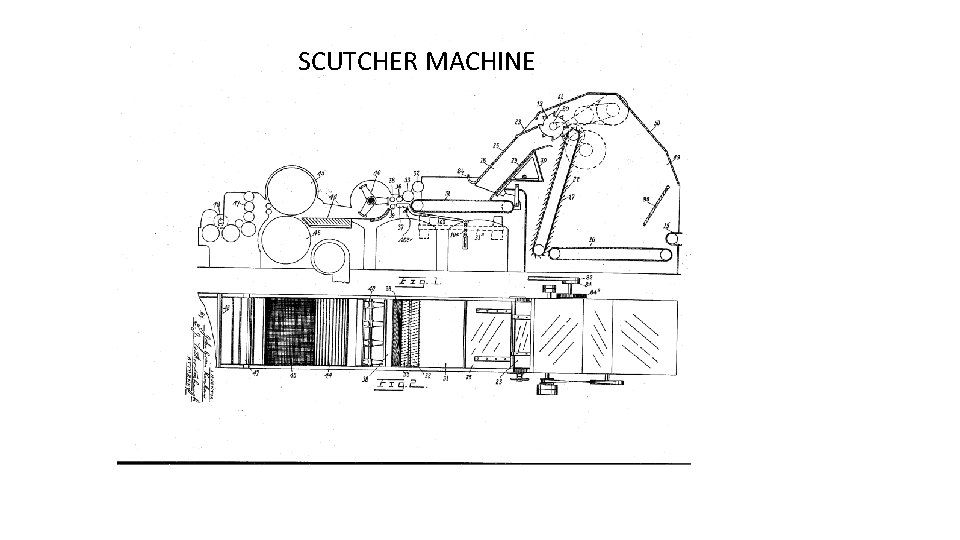
SCUTCHER MACHINE
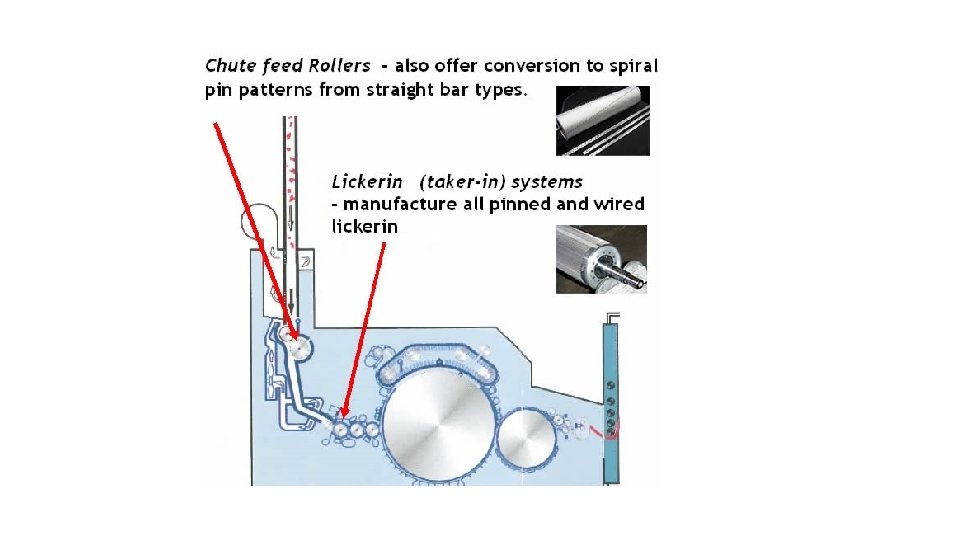
CHUTE FEED OR AERO FEED SYSTEM – How It Works Chute feed is a system of feeding small tufts of cotton fibres directly from blow room to a series of cards, arranged in a circuit through pneumatic pipe. A condenser in the pneumatic pipe sucks the material from blow room and delivers it to the flock feeder through pneumatic pipe by way of the filling trunk. Photo electric cell in the filling trunk regulates the supply of material from blow room. From here, the material is fed to the kirschner beater by way of two ridged roller and two feed rollers. Krischner beater opens the cotton into desired size tufts. A fan blows the tufts from the kirschner beater into horizontal c closed circuit loop situated above the cards.
The return trunk has the duty of returning the surplus material(after the supply to last card) to the beater that also of uniting well opened material with supply of fresh material thus delivering it directly to the horizontal duct again. The separating head arranged in the horizontal closed circuit loop divert the part of tufts from air current into vertical feed chutes above the card inlets. Vertical feed chute ensures a uniform supply of material over the full working width of the card. Uniform separation of the tufts from the air current is achieved by adjusting the nose in the separating head. Raising the leading edge produces more separation and vice versa.
Advantages of flock feeding or chute feed system: · The automatic continuous feed directly linked to the blow room eliminates the lap formation. This increases the working efficiency of the blow room. · The main power requirement in doffing the lap, weighing, transportation to card and feeding at the card is eliminated. · The processing of rejected laps in the blow room is avoided. · The fibres are fed to the card in loose sheet form as against compressed form so that trash particles can be easily extracted from fibres by the carding action. · Excessive sliver irregularities due to the lap licking during high humidity, double lap feeding, lap splitting, lap piecing etc. , are eliminated. · When compared to lap fed, there is a reduction of 1 % CV flock feeding card sliver. · Crushing of foreign materials seed bits and other trash particles during calendaring and difficulty of removing a subsequent process is reduced.
Disadvantages or limitations of chute feed system: · Blow room should run the same number of hours per week as the cards do. · The card production must be kept excessive to assure continuous feed to draw frame at the time of stoppages at blow room due to maintenance and other unavoidable problems · Chute feed system control short term variation but not the medium and long term variations. · A reliable check on the nominal count can be established in lap forming system by controlling total lap weight and C. V. value of the weight per unit length. There is no such control in the chute feeding system. · Change of mixing will result in more waste in chute feed.
- Slides: 9