
LAP 2 Thesis Statement Parallel Structure Introduction Conclusion



- Slides: 18
LAP 2 Thesis Statement & Parallel Structure Introduction Conclusion
Thesis Statement & Parallel Structure • Sentences-especially items in a series – should be parallel in structure, that is, to be of the same grammatical structure. • When items in a series (or sentences) are not parallel, it is known as faulty parallelism. • This error is most commonly found in thesis statements - in particular, the “support” part of thesis statements. – Topic + Main Idea + Support) – Support= items in a series OR 3 points
Introduction & Conclusion The Expository Essay
Introduction
Introduction • The introduction should illustrate or give an example of your thesis statement. • Generally, for the length of essay that will be written, 5 -7 sentences are sufficient (75 -100 word count). • The thesis is the main idea you are developing in your essay. • The thesis statement is the last sentence in the introduction.
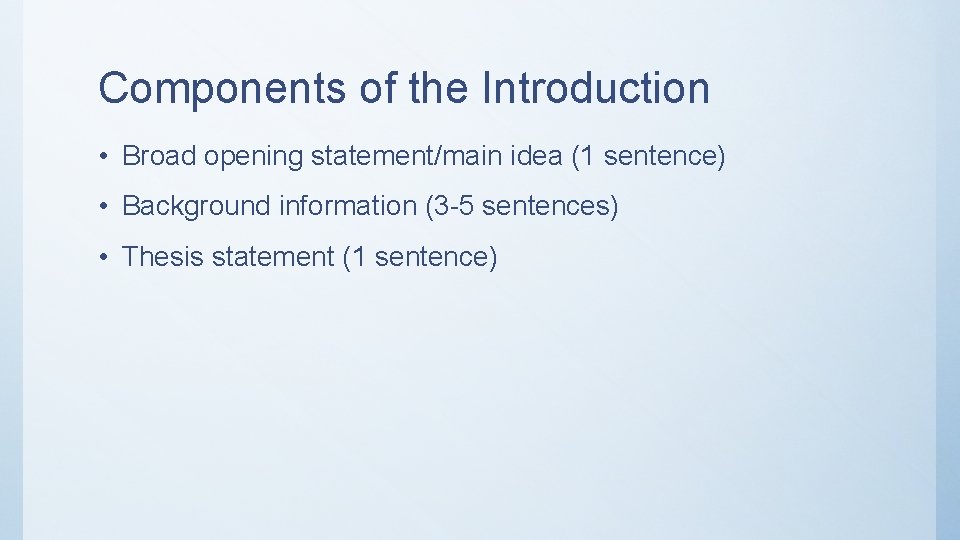
Components of the Introduction • Broad opening statement/main idea (1 sentence) • Background information (3 -5 sentences) • Thesis statement (1 sentence)
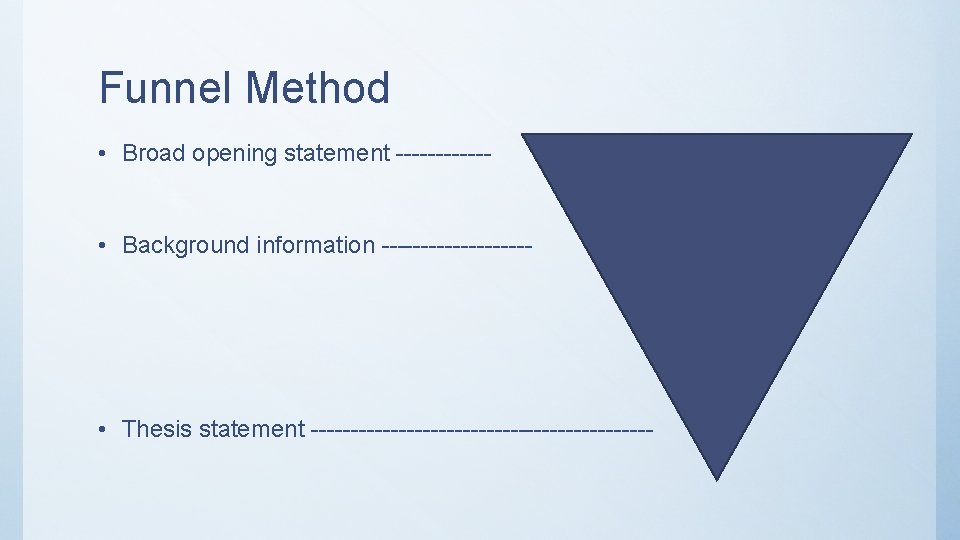
Funnel Method • Broad opening statement ------ • Background information ---------- • Thesis statement ----------------------
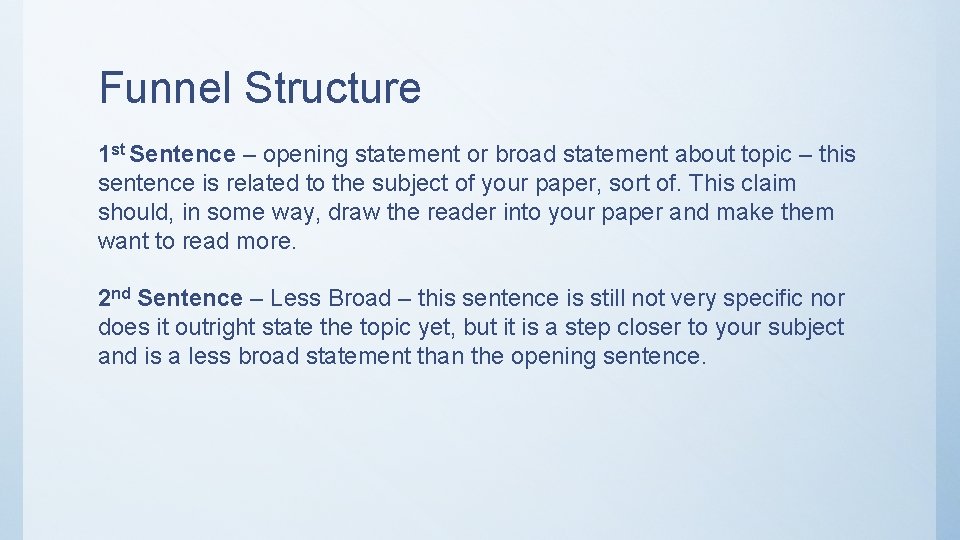
Funnel Structure 1 st Sentence – opening statement or broad statement about topic – this sentence is related to the subject of your paper, sort of. This claim should, in some way, draw the reader into your paper and make them want to read more. 2 nd Sentence – Less Broad – this sentence is still not very specific nor does it outright state the topic yet, but it is a step closer to your subject and is a less broad statement than the opening sentence.
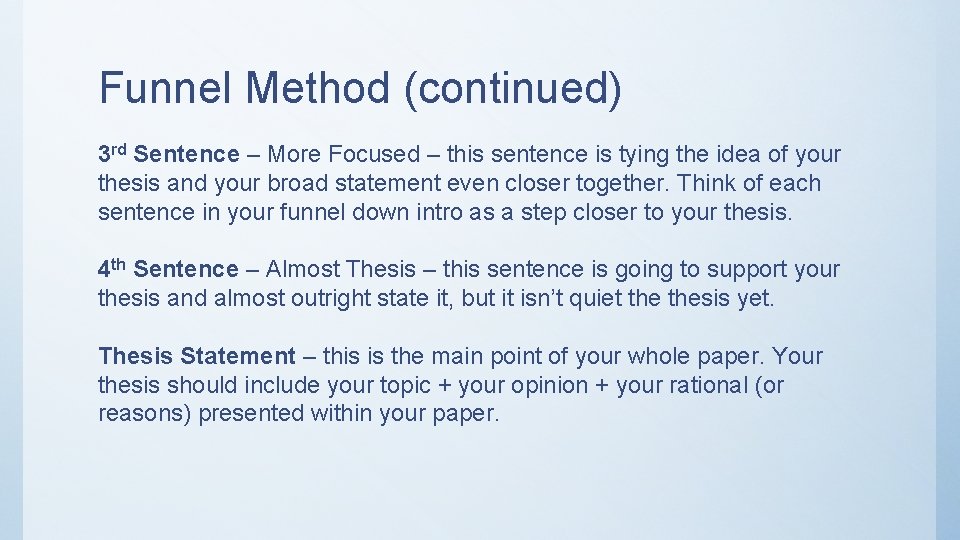
Funnel Method (continued) 3 rd Sentence – More Focused – this sentence is tying the idea of your thesis and your broad statement even closer together. Think of each sentence in your funnel down intro as a step closer to your thesis. 4 th Sentence – Almost Thesis – this sentence is going to support your thesis and almost outright state it, but it isn’t quiet thesis yet. Thesis Statement – this is the main point of your whole paper. Your thesis should include your topic + your opinion + your rational (or reasons) presented within your paper.
Conclusion
IF YOU CAN DODGE A WRENCH, YOU CAN DODGE A BALL.
Dodge a ball- write a conclusion • https: //www. youtube. com/watch? v=S 1 me. NEIv_Ac
Dodge a ball- write a conclusion • Why did I show you this clip? • What do I mean by this analogy?
IF YOU CAN WRITE AN INTRODUCTION, YOU CAN WRITE A CONCLUSION.
Conclusion • The conclusion is the opposite of the introduction. • Generally, for the length of essay that will be written, 3 -5 sentences are sufficient (50 - 75 word count). • The first sentence of the conclusion is thesis statement reworded and rephrased.
Components of the Conclusion • Restated thesis statement (1 sentence) • Narrow to broad focus of supporting sentences (1 -3 sentences) • Broad closing statement— leaving your audience intrigued by your essay (1 sentence)
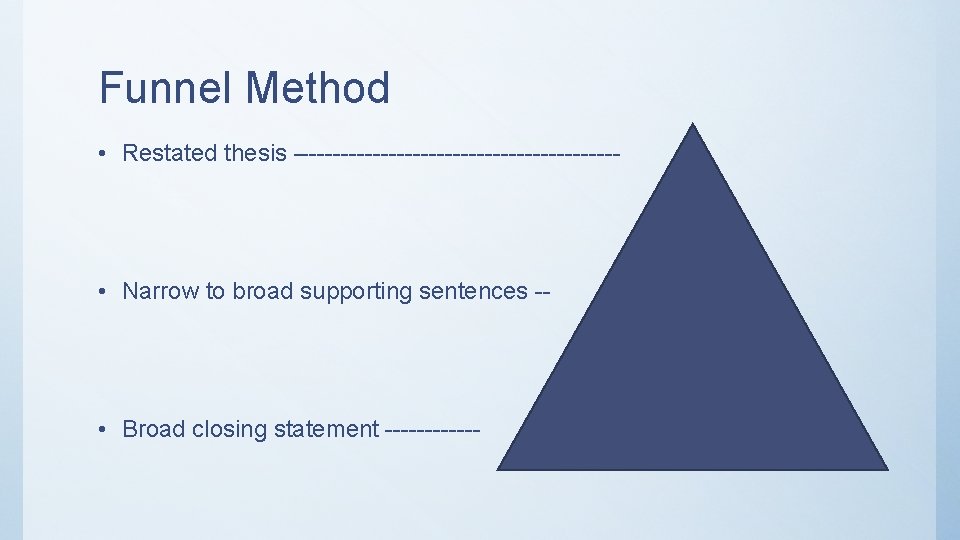
Funnel Method • Restated thesis --------------------- • Narrow to broad supporting sentences -- • Broad closing statement ------
Questions…