
LANGUAGES of the WORLD Jazyki mira A longitudinal



- Slides: 39
“LANGUAGES of the WORLD” (Jazyki mira): A longitudinal project Paris, February 29, 2012 Andrej A. Kibrik Yuri B. Koryakov (Institute of Linguistics, RAN) aakibrik@gmail. com
“Languages of the World”: basic information § Founded in mid-1970 s by Viktoria N. Yartseva § Motive: fragmented character of individual language descriptions, due to: § actual linguistic differences § various linguistic traditions § personal preferences § Goal: produce commensurable descriptions of as § § many human languages as possible Format: encyclopedia Languaqe: Russian 2
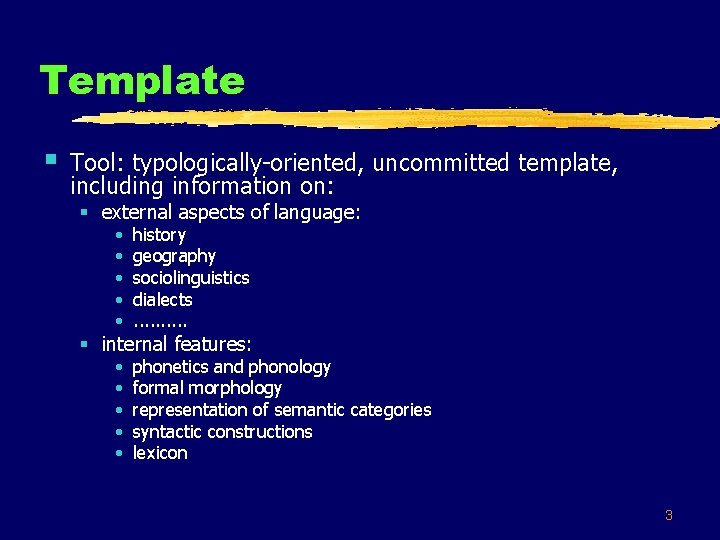
Template § Tool: typologically-oriented, uncommitted template, including information on: § external aspects of language: • • • history geography sociolinguistics dialects. . • • • phonetics and phonology formal morphology representation of semantic categories syntactic constructions lexicon § internal features: 3
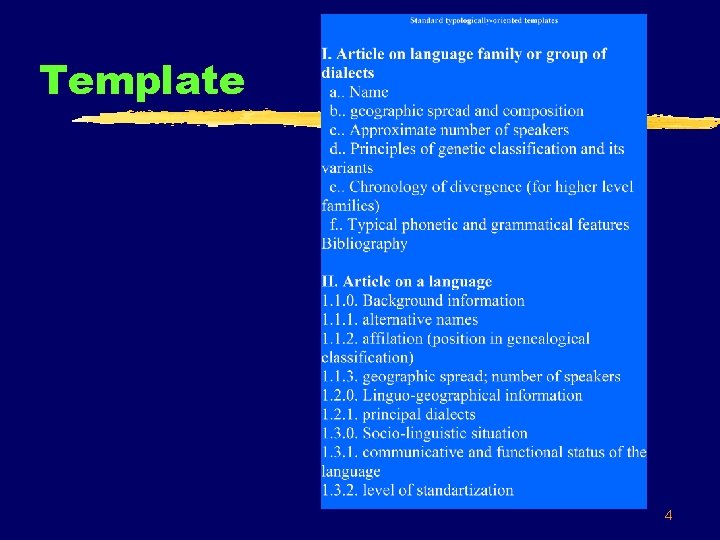
Template 4
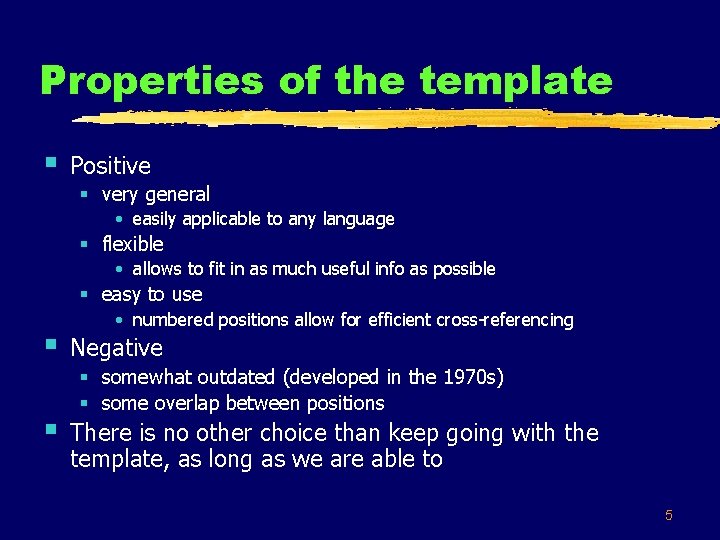
Properties of the template § Positive § very general • easily applicable to any language § flexible • allows to fit in as much useful info as possible § easy to use • numbered positions allow for efficient cross-referencing § Negative § There is no other choice than keep going with the template, as long as we are able to § somewhat outdated (developed in the 1970 s) § some overlap between positions 5
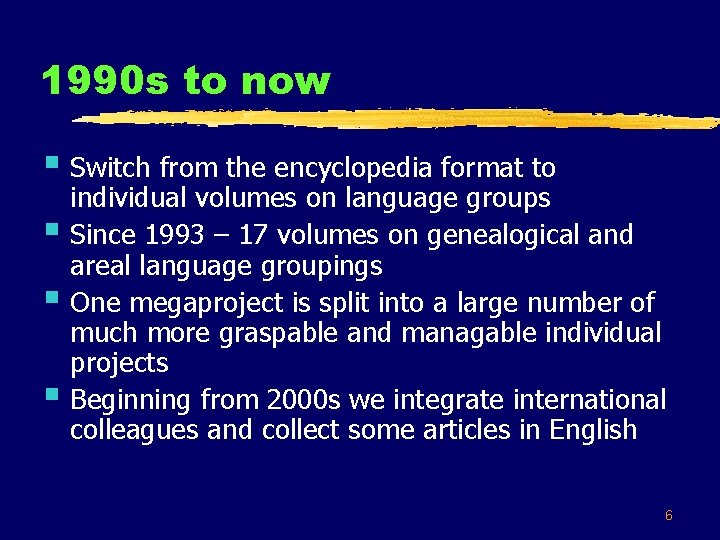
1990 s to now § Switch from the encyclopedia format to § § § individual volumes on language groups Since 1993 – 17 volumes on genealogical and areal language groupings One megaproject is split into a large number of much more graspable and managable individual projects Beginning from 2000 s we integrate international colleagues and collect some articles in English 6
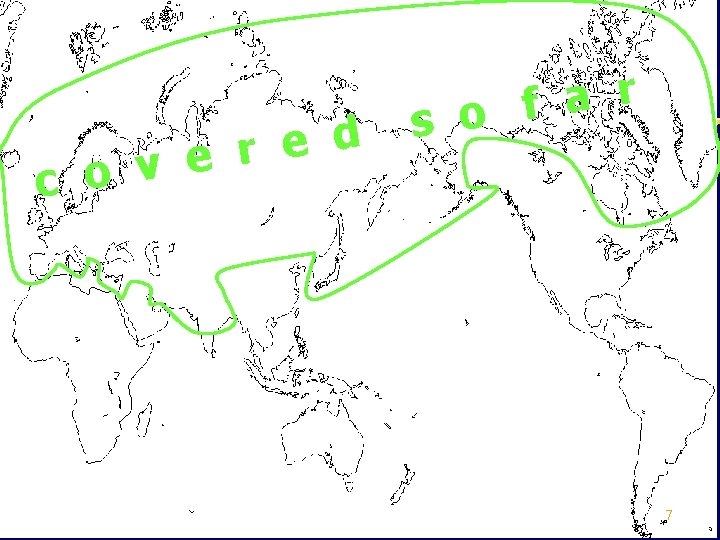
d e r e v o c r a f s o 7
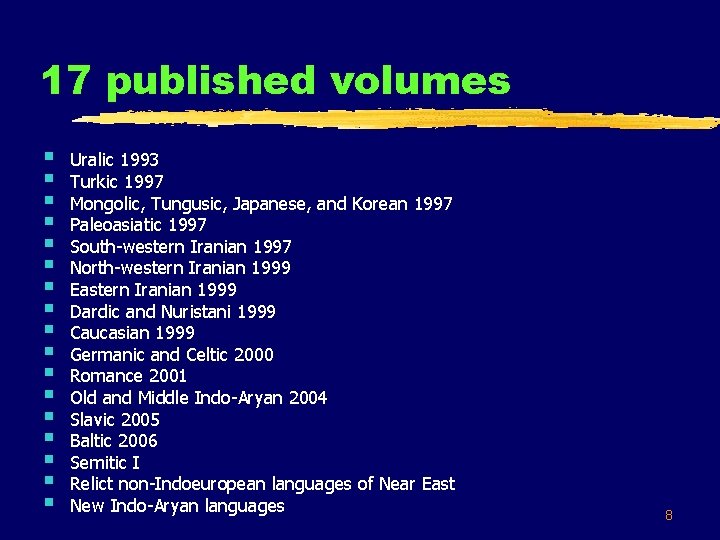
17 published volumes § § § § § Uralic 1993 Turkic 1997 Mongolic, Tungusic, Japanese, and Korean 1997 Paleoasiatic 1997 South-western Iranian 1997 North-western Iranian 1999 Eastern Iranian 1999 Dardic and Nuristani 1999 Caucasian 1999 Germanic and Celtic 2000 Romance 2001 Old and Middle Indo-Aryan 2004 Slavic 2005 Baltic 2006 Semitic I Relict non-Indoeuropean languages of Near East New Indo-Aryan languages 8
Management § Editorial group “Languages of the World” § Constituent of the Institute of Linguistics, Russian Academy of Sciences § 6 coworkers in the group § Each project is managed by: § Supervisor from the group “LW” § “Genealogical editor(s)” § Group of authors 9
Not yet published projects § I. Near completion § II. In the making § III. Incipient stage § IV. Projected 10
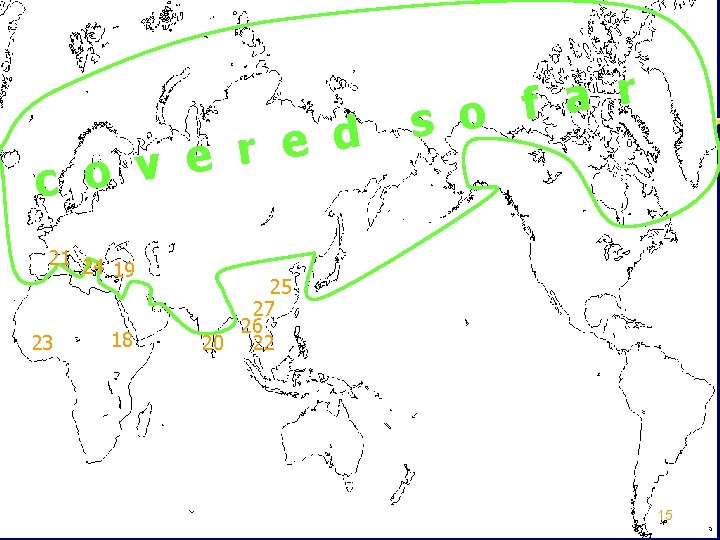
I. Near completion 18. Semitic II: Ethio-Semitic 19. Relict Indoeuropean languages of western and central Asia 20. Dravidian 21. Relict non-Indoeuropean languages of Europe 11
II. In the making 22. Austroasiatic and Andamanese 23. Mande 12
III. Incipient stage 24. Relict Indoeuropean languages of Europe 25. Sino-Tibetan 13
IV. Projected 26. Tai-Kadai 27. Miao-Yao 14
d e r e v o c 21 24 19 23 18 r a f s o 25 27 26 20 22 15
In toto § 10 forthcoming volumes § or more? 16
Applications § Reference tool § Educational instrument § Tool for quantitative research 17
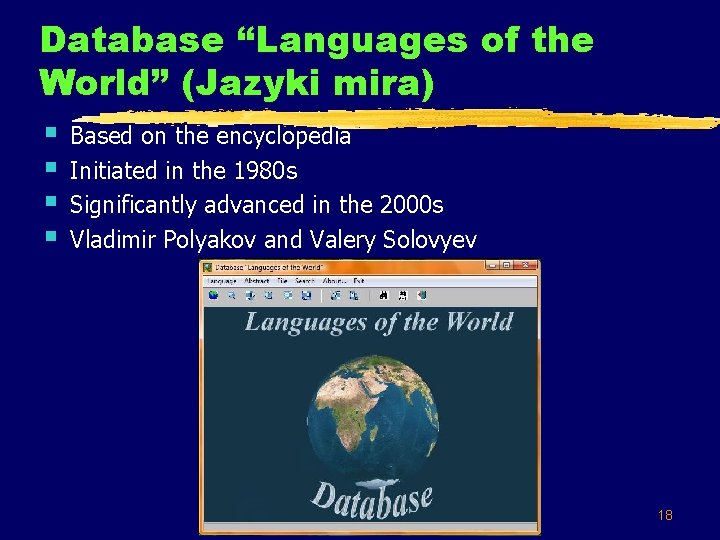
Database “Languages of the World” (Jazyki mira) § § Based on the encyclopedia Initiated in the 1980 s Significantly advanced in the 2000 s Vladimir Polyakov and Valery Solovyev 18
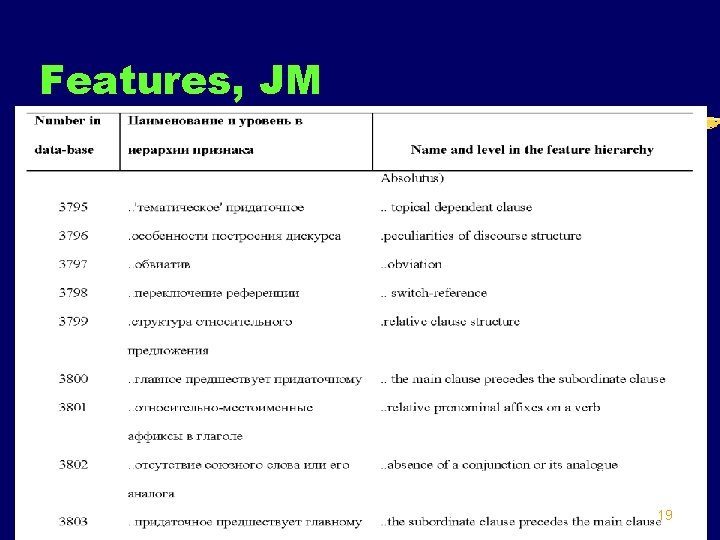
Features, JM § p. 41 19
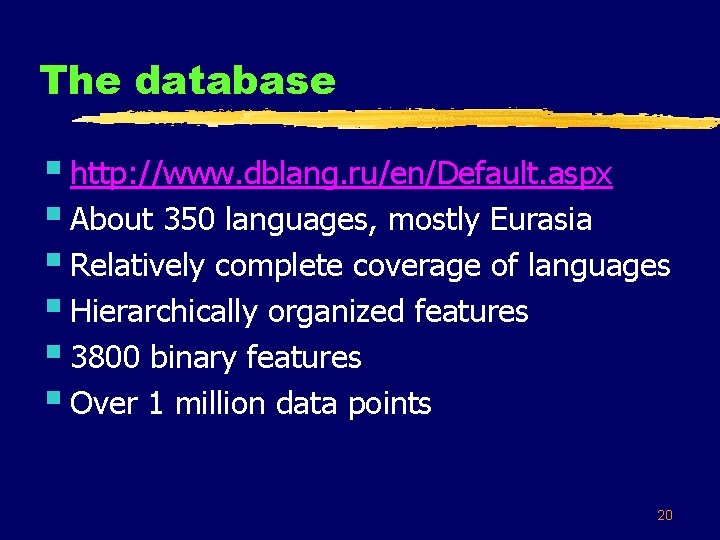
The database § http: //www. dblang. ru/en/Default. aspx § About 350 languages, mostly Eurasia § Relatively complete coverage of languages § Hierarchically organized features § 3800 binary features § Over 1 million data points 20
Applications of the DB “Jazyki mira” § typological studies § areal-typological studies § genealogical classifications of less-studied families § shift from purely lexical basis for classification to the inclusion of grammatical properties § contribution of areal and genealogical factors § diachronic studies: language evolution and language prehistory 21
DB “Jazyki mira” and WALS § Polyakov V. , Solovyev V. , Wichmann S. , Belyaev O. Using WALS and Jazyki mira. Linguistic Typology. V. 13. 2009. P. 135– 165. 22
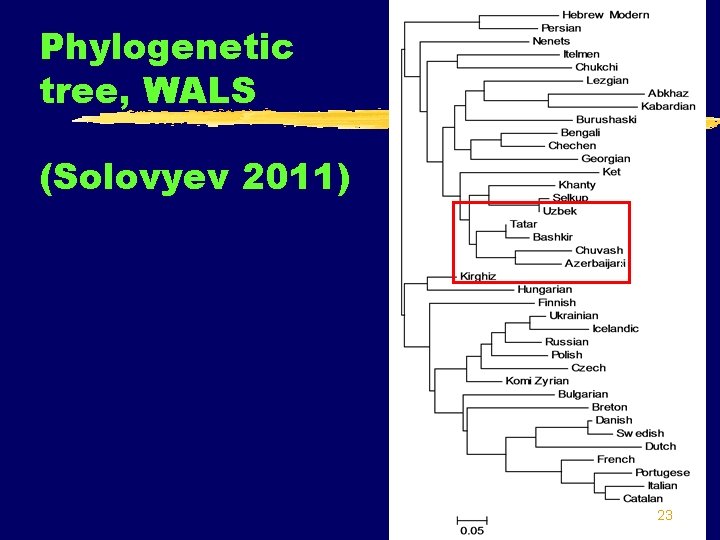
Phylogenetic tree, WALS (Solovyev 2011) 23
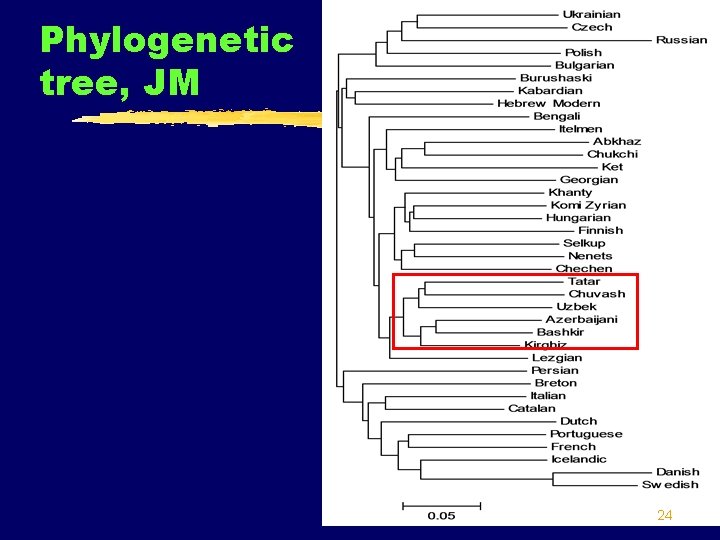
Phylogenetic tree, JM 24
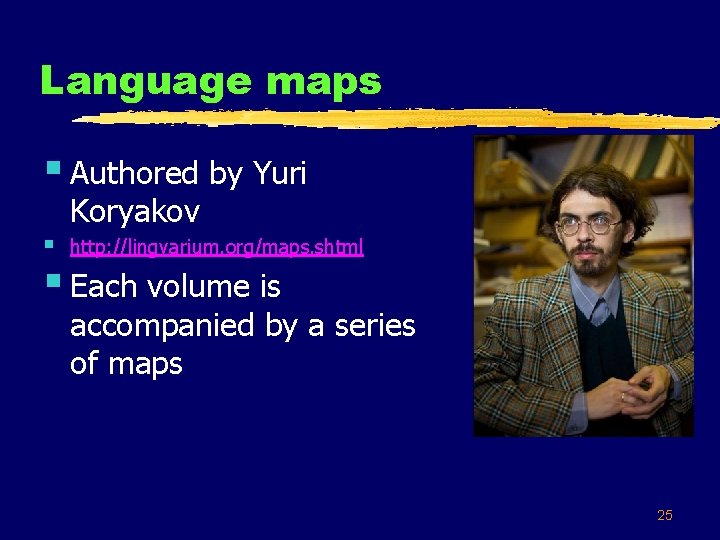
Language maps § Authored by Yuri § Koryakov http: //lingvarium. org/maps. shtml § Each volume is accompanied by a series of maps 25
Language maps vs. Linguistic maps § § § Language maps demonstrate the spread of languages, or of their dialects, unified by: common territory (Language Atlas of China. S. A. Wurm et al. (eds). 1987) common genealogical affiliation (Коряков Ю. Б. Атлас кавказских языков) another common characteristic (Atlas of Languages of Intercultural Communication in the Pacific, Asia, and the Americas, 1996). § § § Linguistic maps demonstrate the spread of linguistic phenomena, by means of dots, isoglosses, or areas within one language (e. g. on dialectological maps) in one region (e. g. Общеславянский лингвистический атлас 1965– 2011, Atlas Linguarum Europae 1975– 2002) world-wide (WALS 2005/2008) 26
Some language maps are quite general, such as this map of Tibeto-Burman 27
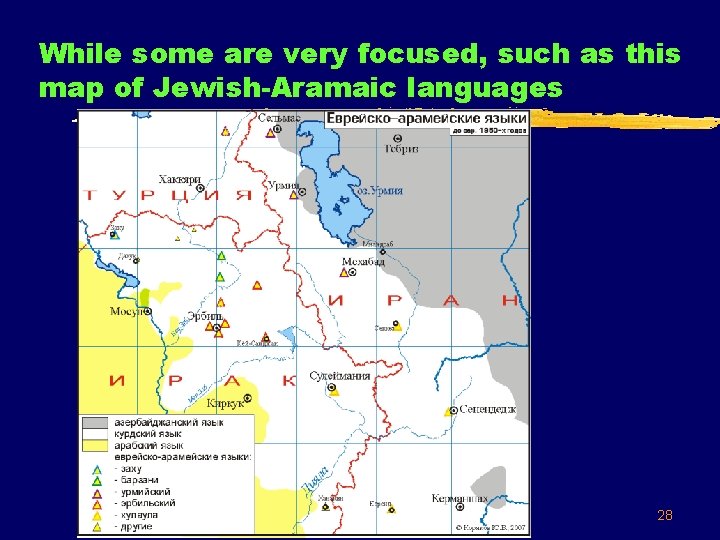
While some are very focused, such as this map of Jewish-Aramaic languages 28
Applications of language maps § They serve as a visualization accompanying language description § Particularly useful in the studies in linguistic geography, areal typology, dialectology § The very process of mapping encourages linguists to pay close attention to many specific aspects of language description 29
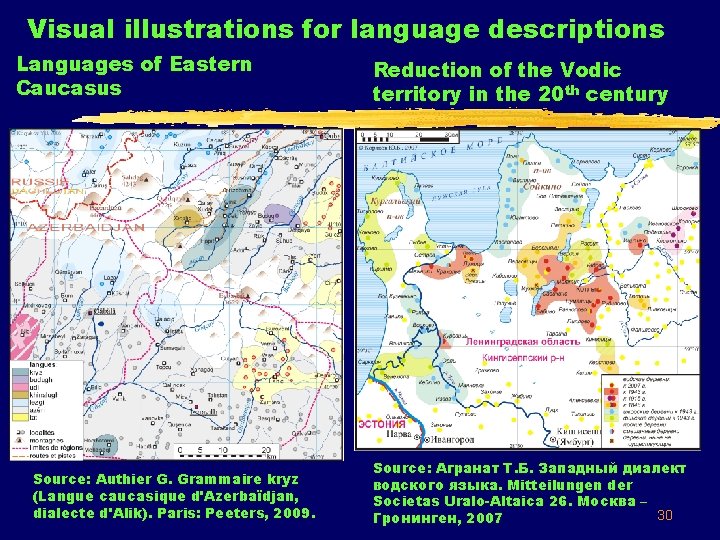
Visual illustrations for language descriptions Languages of Eastern Caucasus Source: Authier G. Grammaire kryz (Langue caucasique d'Azerbaïdjan, dialecte d'Alik). Paris: Peeters, 2009. Reduction of the Vodic territory in the 20 th century Source: Агранат Т. Б. Западный диалект водского языка. Mitteilungen der Societas Uralo-Altaica 26. Москва – 30 Гронинген, 2007
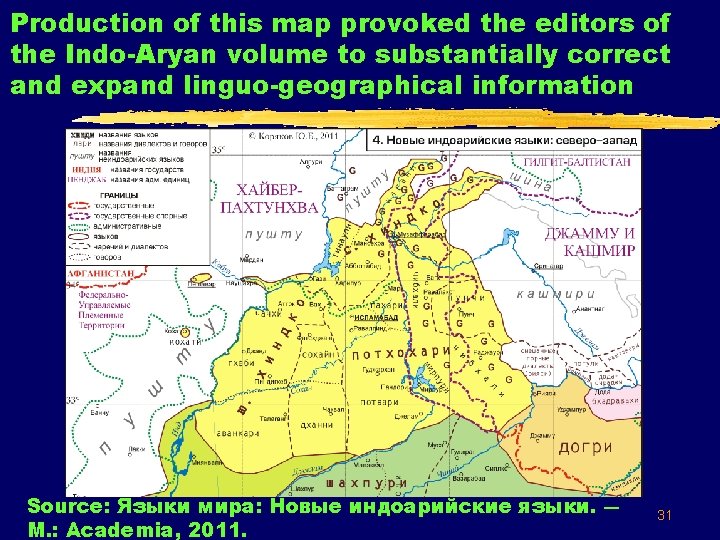
Production of this map provoked the editors of the Indo-Aryan volume to substantially correct and expand linguo-geographical information Source: Языки мира: Новые индоарийские языки. ― М. : Academia, 2011. 31
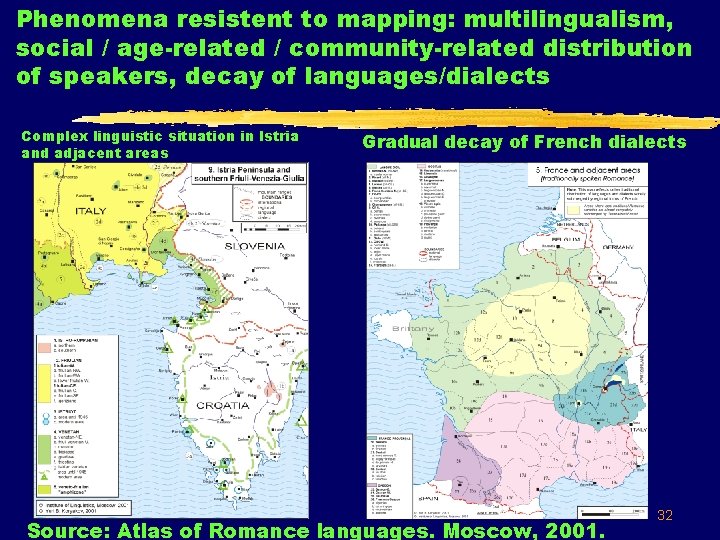
Phenomena resistent to mapping: multilingualism, social / age-related / community-related distribution of speakers, decay of languages/dialects Complex linguistic situation in Istria and adjacent areas Gradual decay of French dialects Source: Atlas of Romance languages. Moscow, 2001. 32
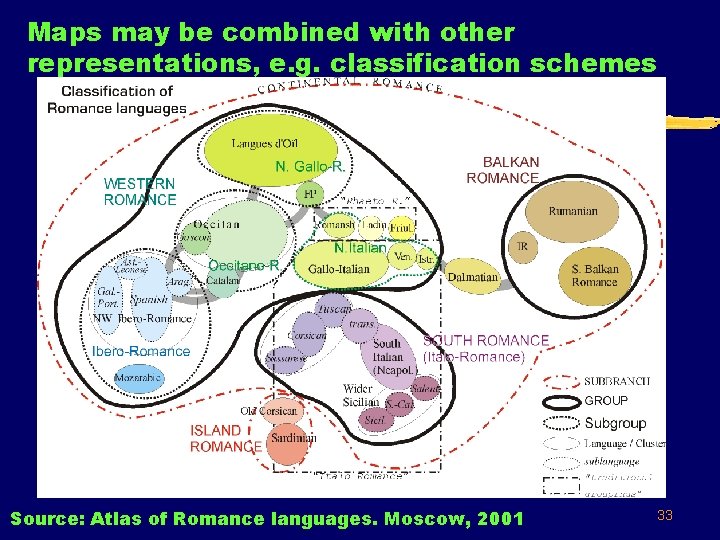
Maps may be combined with other representations, e. g. classification schemes Source: Atlas of Romance languages. Moscow, 2001 33
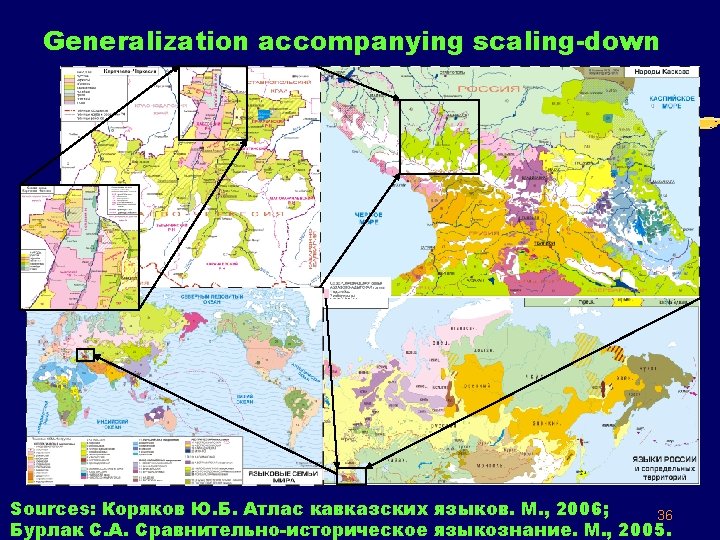
Creation of language maps § When creating language maps, a variety of sources is used, including textual and cartographic § There are several techniques used in the creation of language maps 34
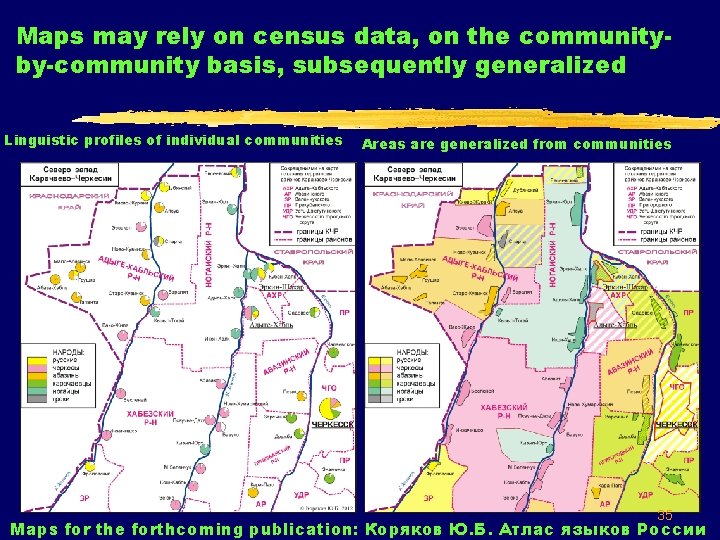
Maps may rely on census data, on the communityby-community basis, subsequently generalized Linguistic profiles of individual communities Areas are generalized from communities 35 Maps for the forthcoming publication: Коряков Ю. Б. Атлас языков России
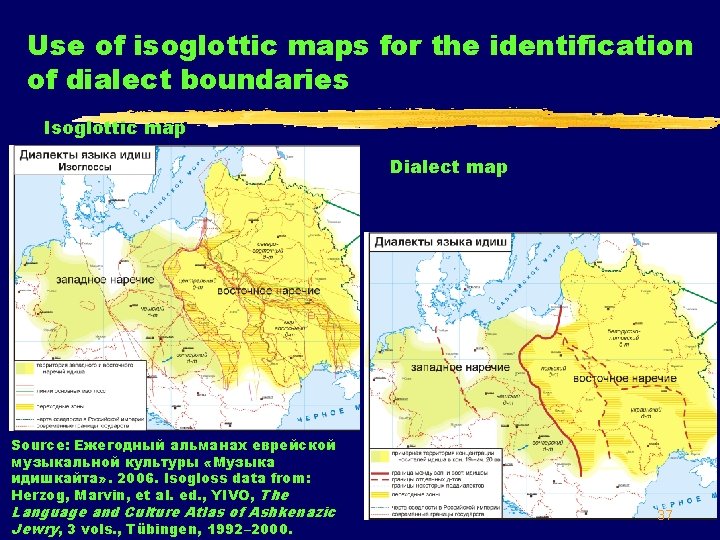
Use of isoglottic maps for the identification of dialect boundaries Isoglottic map Dialect map Source: Ежегодный альманах еврейской музыкальной культуры «Музыка идишкайта» . 2006. Isogloss data from: Herzog, Marvin, et al. ed. , YIVO, The Language and Culture Atlas of Ashkenazic Jewry, 3 vols. , Tübingen, 1992– 2000. 37
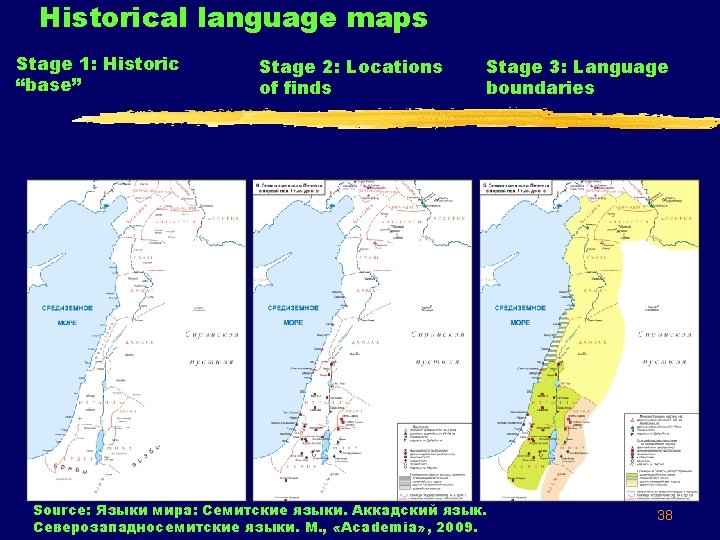
Historical language maps Stage 1: Historic “base” Stage 2: Locations of finds Stage 3: Language boundaries Source: Языки мира: Семитские языки. Аккадский язык. Северозападносемитские языки. М. , «Academia» , 2009. 38
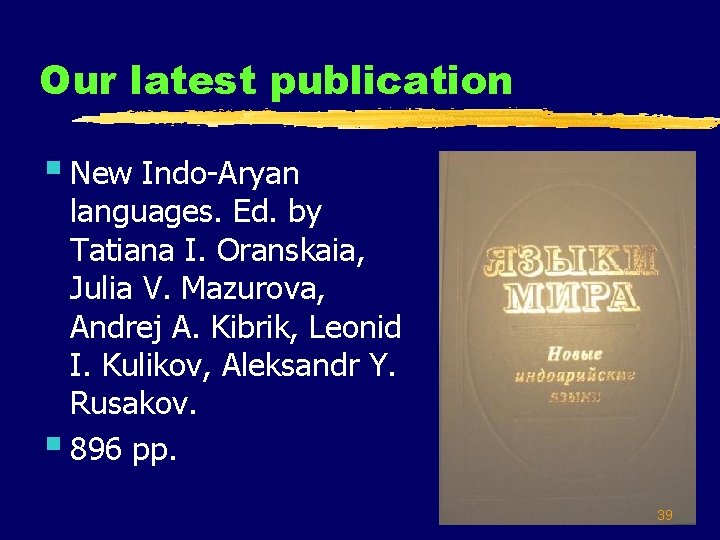
Our latest publication § New Indo-Aryan languages. Ed. by Tatiana I. Oranskaia, Julia V. Mazurova, Andrej A. Kibrik, Leonid I. Kulikov, Aleksandr Y. Rusakov. § 896 pp. 39