
Languages and Language Diversity Listening Reading and Vocabulary
Languages and Language Diversity Listening, Reading and Vocabulary
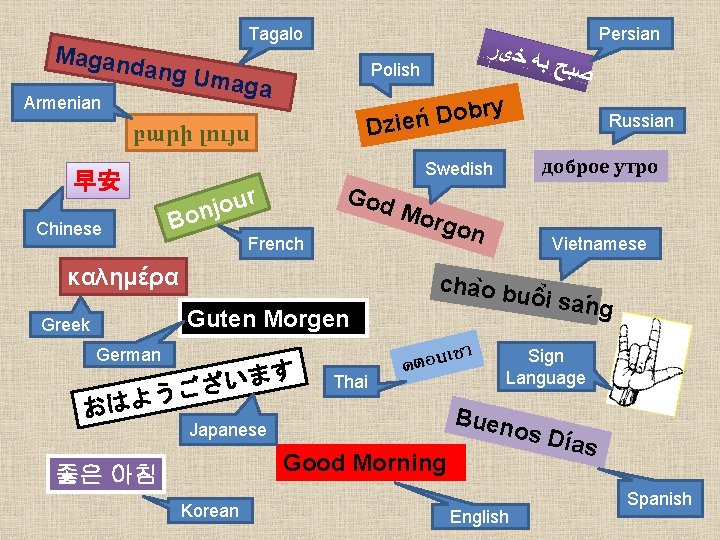
Tagalo Magan dang U Polish maga Armenian y br o D ń e i Dz բարի լույս Russian доброе утро Swedish 早安 God r u o j on B Chinese French καλημέρα Guten Morgen Greek German おはよ ﻪ ﺧیﺮ ﺻﺒﺢ ﺑ す いま ざ ご う Thai Mor gon Vietnamese cha o bu ô i sa ng ชา เ น อ ต ด Sign Language Buen Japanese os Dí Good Morning 좋은 아침 Korean Persian English as Spanish
Warm Up 1. How many languages do you think there are in the world? 2. Do you think languages change? 3. Do you think English will replace other languages? 4. What other language would you like to learn? 5. What language do you think it would be difficult for you to learn? Why?
system (n) • a technique, method, procedure practice Every person has a system for learning a foreign language.
characters (n) • a single letter or mark used in writing Do you know how many characters are in the Chinese language?
form (v) • to create, make, shape, construct The children formed a circle and played a game.
meaningful (adj. ) • significant, with meaning, with sense Kathy writes meaningful poems which deals with social issues.
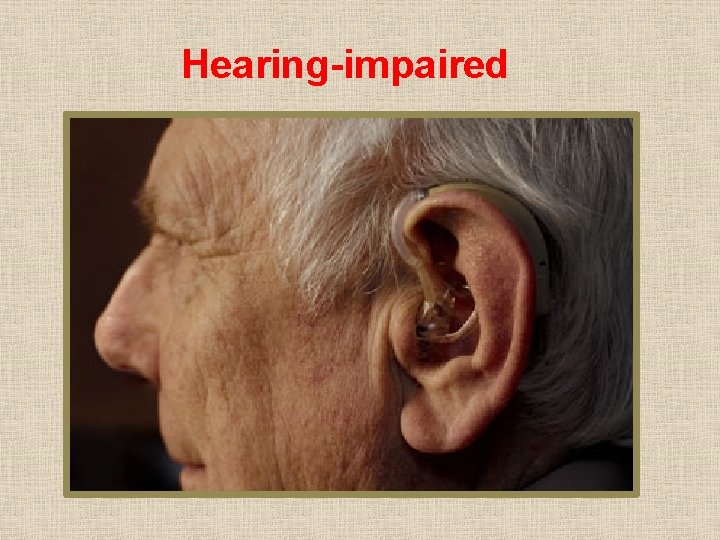
Hearing-impaired
hearing-impaired (adj. ) • having a reduced or poor ability to hear Hearing aids are used by some hearing-impaired senior citizens.
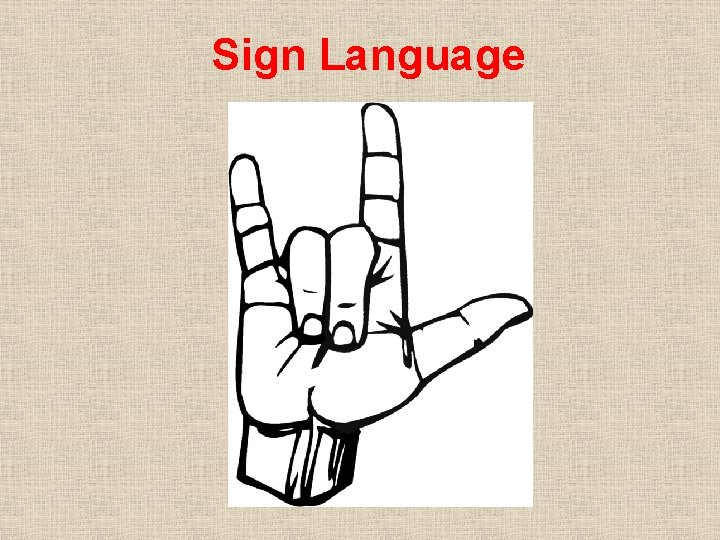
Sign Language
sign language (n) • a system of communicating with gestures Peter learned sign language in order to communicate with his deaf parents.
borrow (v) • to copy or take words from another language English has borrowed words from French; for example, cinema souvenir, and petite.
specialist (n) • a person who is an expert on something Brian’s general doctor sent him to see a heart specialist
refer to (v) • stand for, suggest, signify, mean Poultry refers to the meat from animals that have feathers.
divide (v) • split into parts, separate The Mississippi river divides the west of Louisiana from the east.
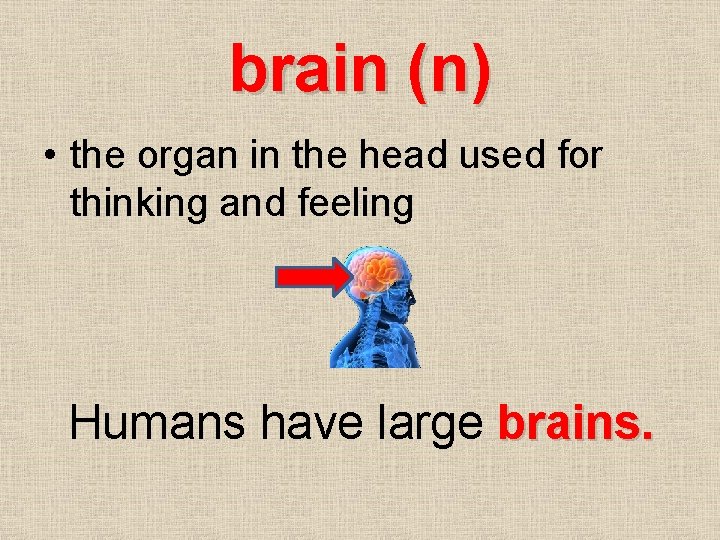
brain (n) • the organ in the head used for thinking and feeling Humans have large brains.
bilingual (adj. ) • speaking two languages Steve is bilingual. He speaks Italian and English.
past (n) • the time before the present, everything that happened previously Rosie has a mysterious past. Nobody knows about her background.
rate (n) • speed or pace in which something moves, the cost of something Slaves were forced to work at a rapid rate in the cotton fields. The rate for the trip on that bus is $2. 50.
estimate (v) (n) • to calculate something The government estimates that it would take years before the economy recovers.
linguist (n) • a person who knows several languages and their structure Molly wrote a book on the origin of the English language. She is a well-known linguist
Pronunciation • • system character form meaningful hearing-impaired sign language borrow specialist • • refer to divide brain bilingual rate estimate linguists
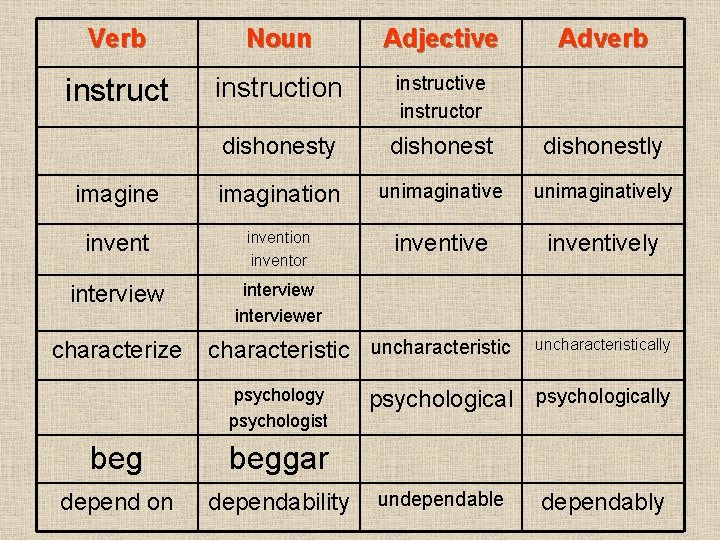
Verb Noun Adjective instruction instructive instructor dishonesty dishonestly imagine imagination unimaginatively invention inventor inventively interviewer characterize characteristic uncharacteristic psychology psychologist beggar depend on dependability Adverb uncharacteristically psychologically undependable dependably
- Slides: 23