
LANGUAGE LITERACY LEARNING Session 1 CA ELD Standards



- Slides: 32
LANGUAGE LITERACY LEARNING Session 1: CA ELD Standards
Chalk Talk: CA ELD Standards Read the Appendix D quotes on the perimeter of the room silently. Respond to the quote by either: �Adding your comment, reflection, or idea �Responding to someone else’s comment
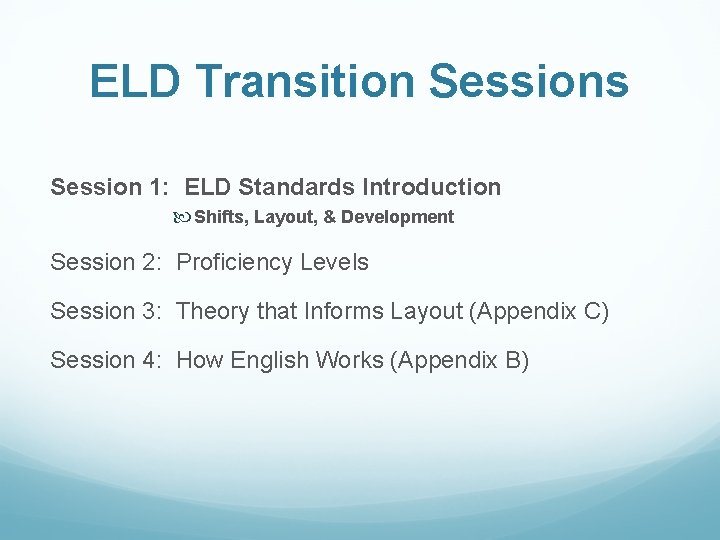
ELD Transition Sessions Session 1: ELD Standards Introduction Shifts, Layout, & Development Session 2: Proficiency Levels Session 3: Theory that Informs Layout (Appendix C) Session 4: How English Works (Appendix B)
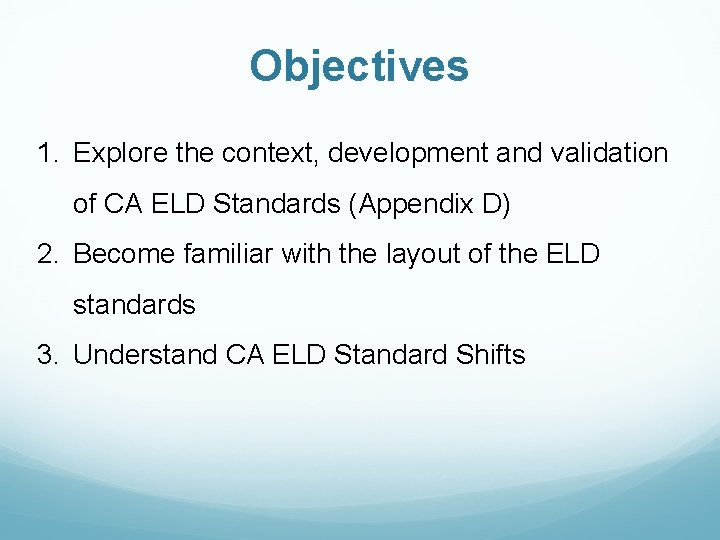
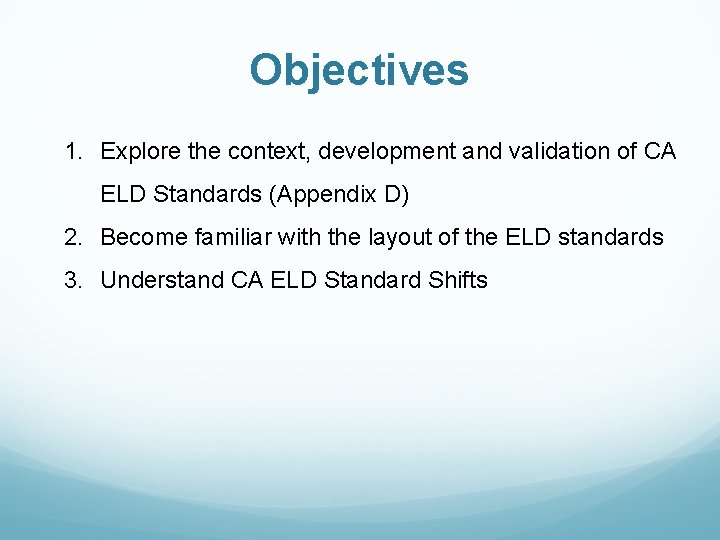
Objectives 1. Explore the context, development and validation of CA ELD Standards (Appendix D) 2. Become familiar with the layout of the ELD standards 3. Understand CA ELD Standard Shifts
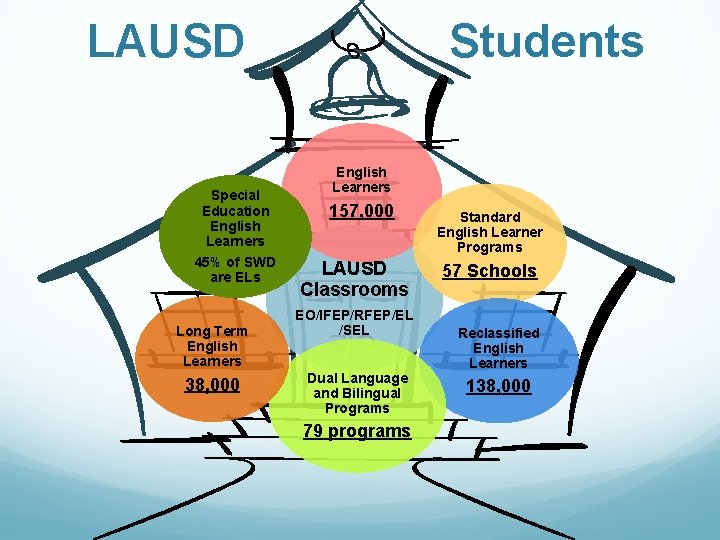
LAUSD Special Education English Learners 45% of SWD are ELs Long Term English Learners 38, 000 Students English Learners 157, 000 LAUSD Classrooms EO/IFEP/RFEP/EL /SEL Dual Language and Bilingual Programs 79 programs Standard English Learner Programs 57 Schools Reclassified English Learners 138, 000
Guiding Principles 1. English Learners (ELs) are held to the same high expectations of learning established for all students. 2. ELs develop full receptive and productive proficiencies in English in the domains of listening, speaking, reading & writing. 3. ELs are taught challenging academic content that enables them to meet performance standards in all content areas. 4. ELs receive instruction that builds on their previous education and cognitive abilities and that reflects their language proficiency levels. 5. ELs are evaluated with appropriate and valid assessments that are aligned to state and local standards and that take into account the language development stages & cultural backgrounds of the students. 6. The academic success of ELs is a responsibility shared by all educators, the family and the community. English Learner Master Plan, 2012, Pages 2 -3
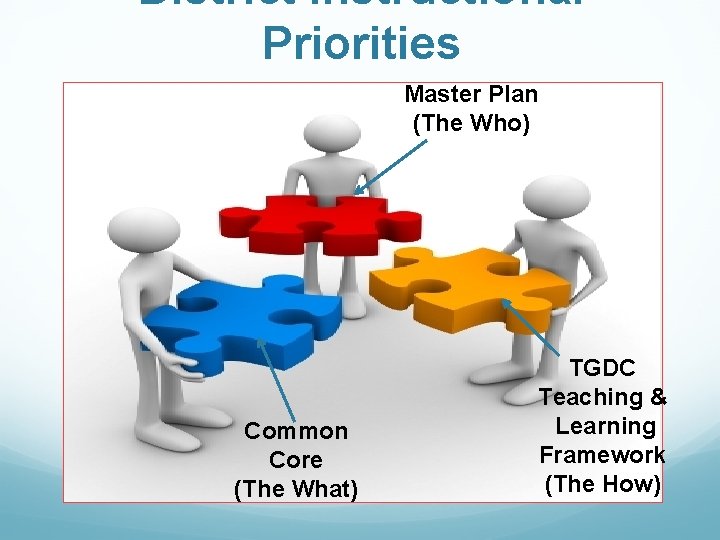
District Instructional Priorities Master Plan (The Who) Common Core (The What) TGDC Teaching & Learning Framework (The How)
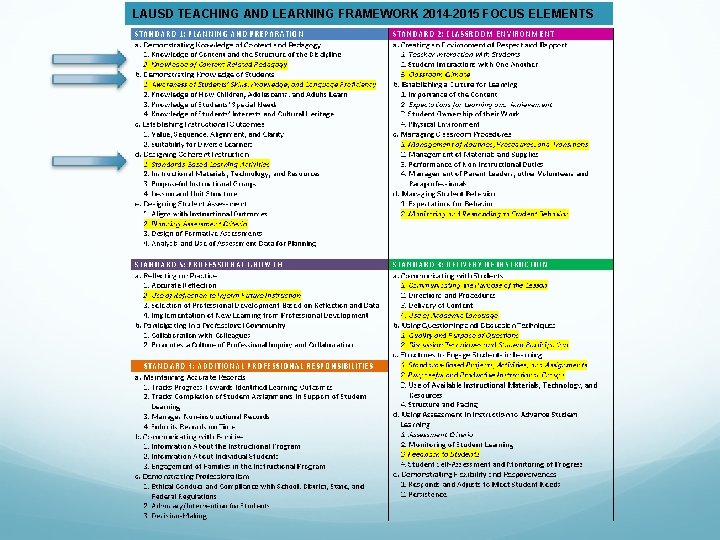
LAUSD TEACHING AND LEARNING FRAMEWORK 2014 -2015 FOCUS ELEMENTS
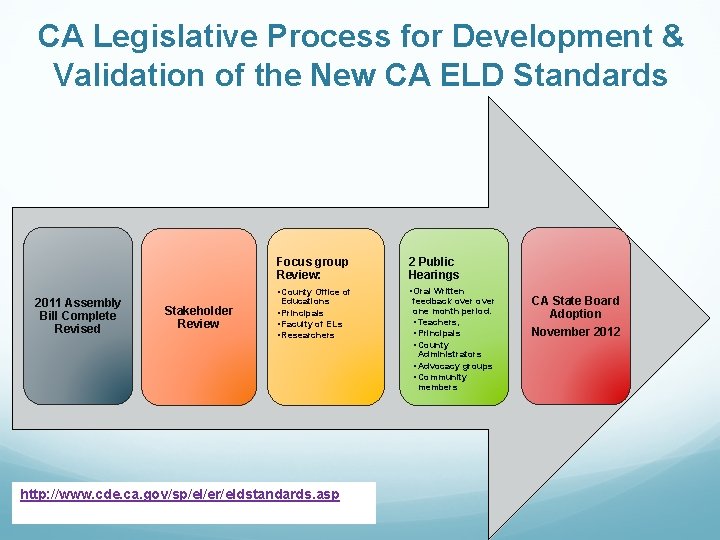
CA Legislative Process for Development & Validation of the New CA ELD Standards 2011 Assembly Bill Complete Revised Stakeholder Review Focus group Review: 2 Public Hearings • County Office of • Oral Written Educations • Principals • Faculty of ELs • Researchers http: //www. cde. ca. gov/sp/el/er/eldstandards. asp feedback over one month period. • Teachers, • Principals • County Administrators • Advocacy groups • Community members CA State Board Adoption November 2012
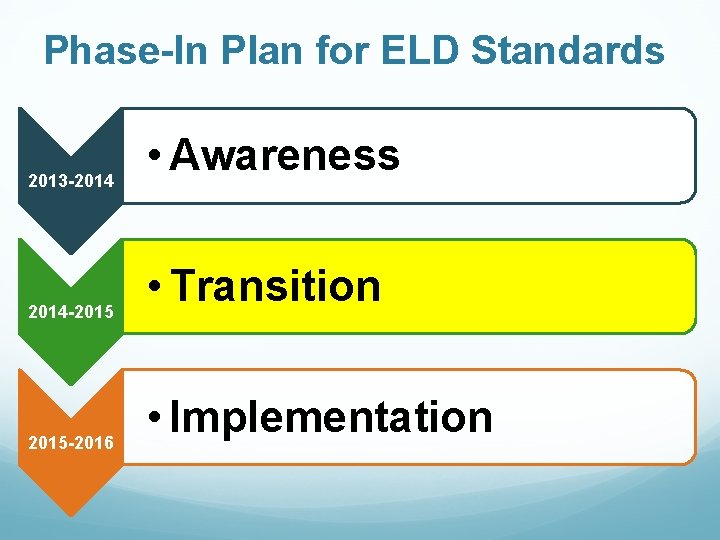
Phase-In Plan for ELD Standards 2013 -2014 -2015 -2016 • Awareness • Transition • Implementation
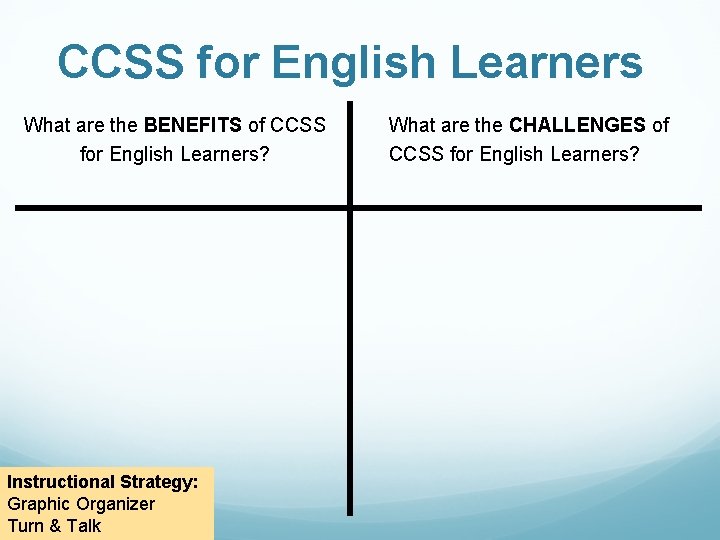
CCSS for English Learners What are the BENEFITS of CCSS for English Learners? Instructional Strategy: Graphic Organizer Turn & Talk What are the CHALLENGES of CCSS for English Learners?
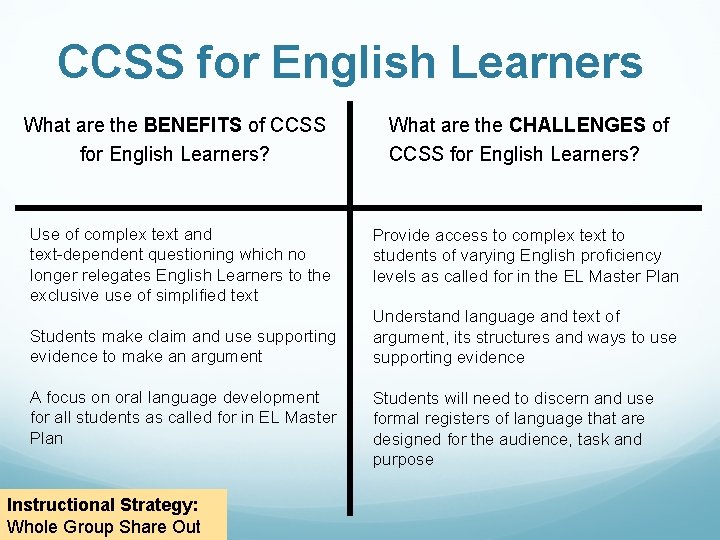
CCSS for English Learners What are the BENEFITS of CCSS for English Learners? Use of complex text and text-dependent questioning which no longer relegates English Learners to the exclusive use of simplified text Students make claim and use supporting evidence to make an argument A focus on oral language development for all students as called for in EL Master Plan Instructional Strategy: Whole Group Share Out What are the CHALLENGES of CCSS for English Learners? Provide access to complex text to students of varying English proficiency levels as called for in the EL Master Plan Understand language and text of argument, its structures and ways to use supporting evidence Students will need to discern and use formal registers of language that are designed for the audience, task and purpose
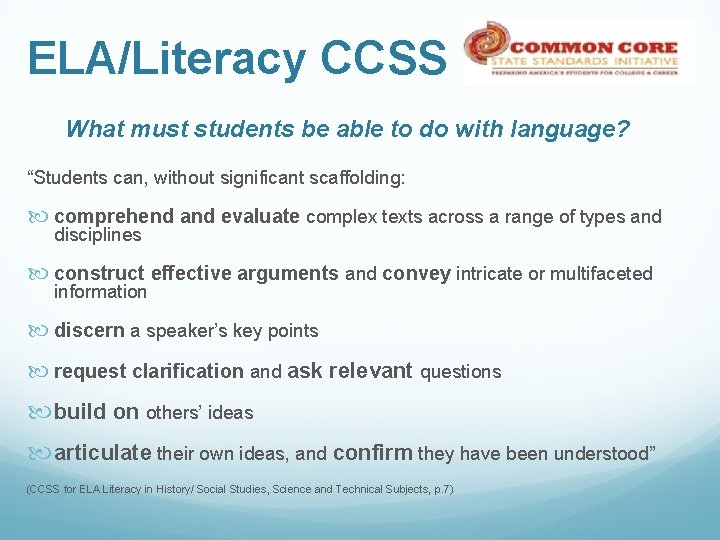
ELA/Literacy CCSS What must students be able to do with language? “Students can, without significant scaffolding: comprehend and evaluate complex texts across a range of types and disciplines construct effective arguments and convey intricate or multifaceted information discern a speaker’s key points request clarification and ask relevant questions build on others’ ideas articulate their own ideas, and confirm they have been understood” (CCSS for ELA Literacy in History/ Social Studies, Science and Technical Subjects, p. 7)
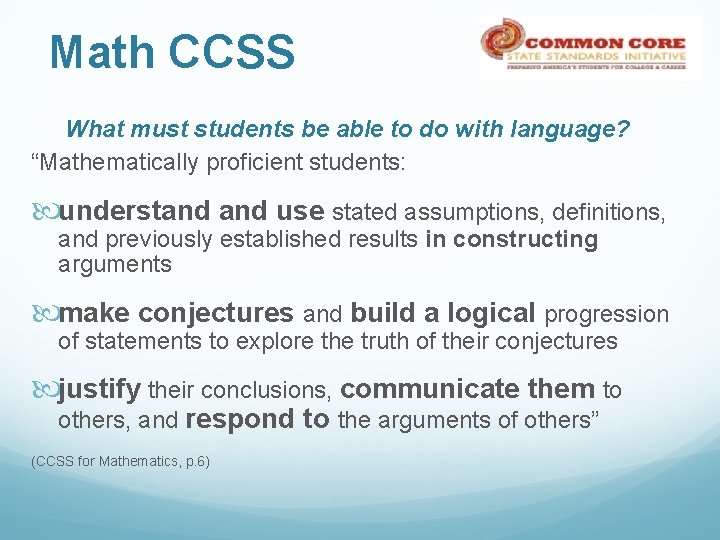
Math CCSS What must students be able to do with language? “Mathematically proficient students: understand use stated assumptions, definitions, and previously established results in constructing arguments make conjectures and build a logical progression of statements to explore the truth of their conjectures justify their conclusions, communicate them to others, and respond to the arguments of others” (CCSS for Mathematics, p. 6)
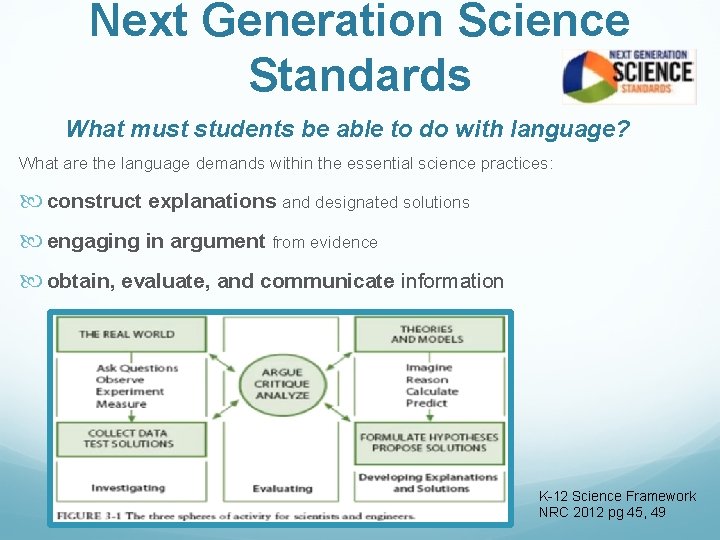
Next Generation Science Standards What must students be able to do with language? What are the language demands within the essential science practices: construct explanations and designated solutions engaging in argument from evidence obtain, evaluate, and communicate information K-12 Science Framework NRC 2012 pg 45, 49
Why? Instructional Strategy: Turn & Talk
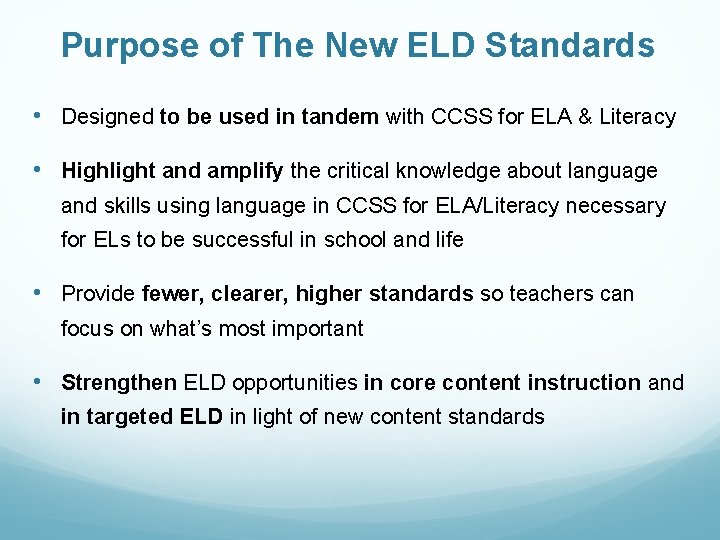
Purpose of The New ELD Standards • Designed to be used in tandem with CCSS for ELA & Literacy • Highlight and amplify the critical knowledge about language and skills using language in CCSS for ELA/Literacy necessary for ELs to be successful in school and life • Provide fewer, clearer, higher standards so teachers can focus on what’s most important • Strengthen ELD opportunities in core content instruction and in targeted ELD in light of new content standards
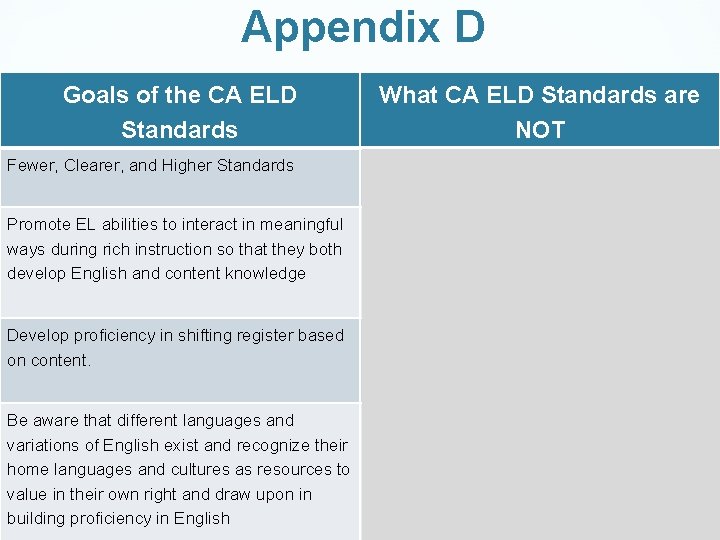
Appendix D Goals of the CA ELD Standards What CA ELD Standards are NOT Fewer, Clearer, and Higher Standards The CA ELD standards are not to be used in isolation from CCSS Promote EL abilities to interact in meaningful ways during rich instruction so that they both develop English and content knowledge The CA ELD standards are not to be used piecemeal at a given proficiency level Develop proficiency in shifting register based on content. The CA ELD standards do not provide an exhaustive list of all the linguistic processes. Be aware that different languages and The CA ELD standards are not a curriculum variations of English exist and recognize their or a curriculum framework home languages and cultures as resources to value in their own right and draw upon in building proficiency in English
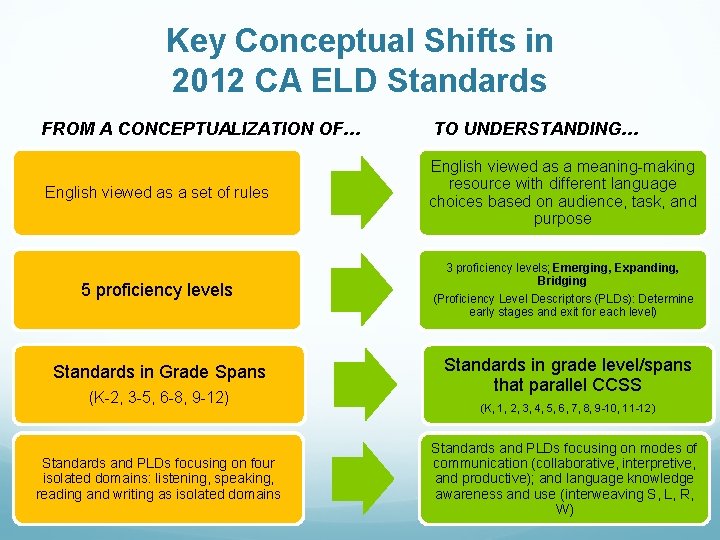
Key Conceptual Shifts in 2012 CA ELD Standards FROM A CONCEPTUALIZATION OF… TO UNDERSTANDING… English viewed as a set of rules English viewed as a meaning-making resource with different language choices based on audience, task, and purpose 5 proficiency levels 3 proficiency levels; Emerging, Expanding, Bridging (Proficiency Level Descriptors (PLDs): Determine early stages and exit for each level) Standards in Grade Spans (K-2, 3 -5, 6 -8, 9 -12) Standards and PLDs focusing on four isolated domains: listening, speaking, reading and writing as isolated domains Standards in grade level/spans that parallel CCSS (K, 1, 2, 3, 4, 5, 6, 7, 8, 9 -10, 11 -12) Standards and PLDs focusing on modes of communication (collaborative, interpretive, and productive); and language knowledge awareness and use (interweaving S, L, R, W)
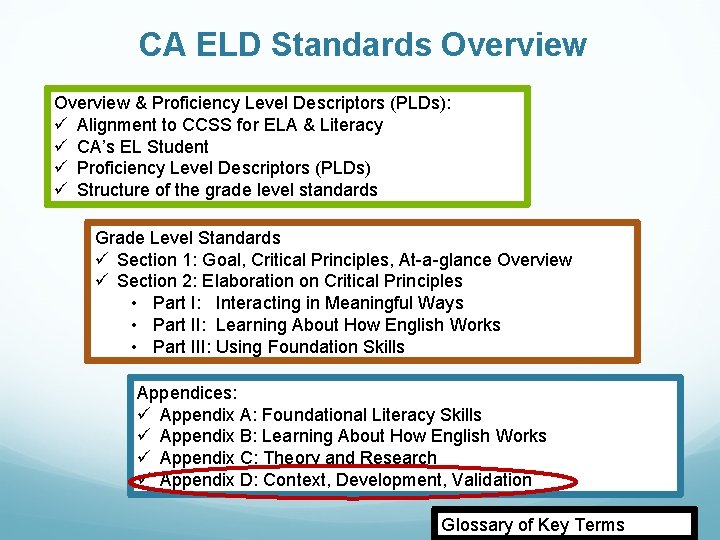
CA ELD Standards Overview & Proficiency Level Descriptors (PLDs): ü Alignment to CCSS for ELA & Literacy ü CA’s EL Student ü Proficiency Level Descriptors (PLDs) ü Structure of the grade level standards Grade Level Standards ü Section 1: Goal, Critical Principles, At-a-glance Overview ü Section 2: Elaboration on Critical Principles • Part I: Interacting in Meaningful Ways • Part II: Learning About How English Works • Part III: Using Foundation Skills Appendices: ü Appendix A: Foundational Literacy Skills ü Appendix B: Learning About How English Works ü Appendix C: Theory and Research ü Appendix D: Context, Development, Validation Glossary of Key Terms
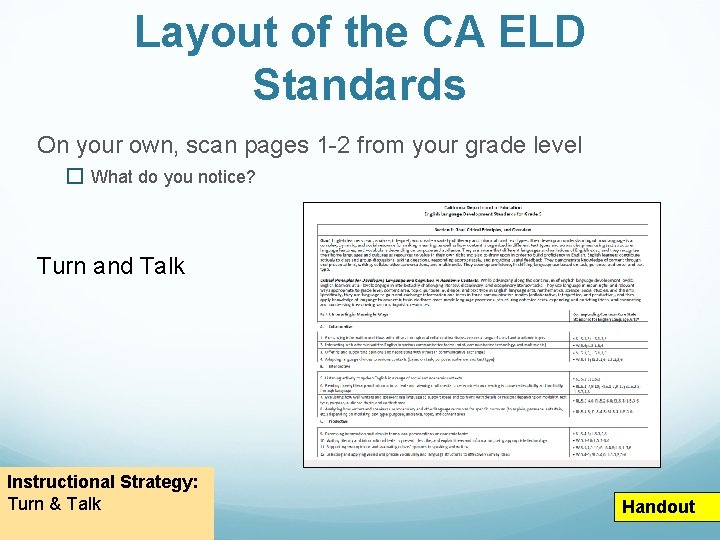
Layout of the CA ELD Standards On your own, scan pages 1 -2 from your grade level � What do you notice? Turn and Talk Instructional Strategy: Turn & Talk Handout
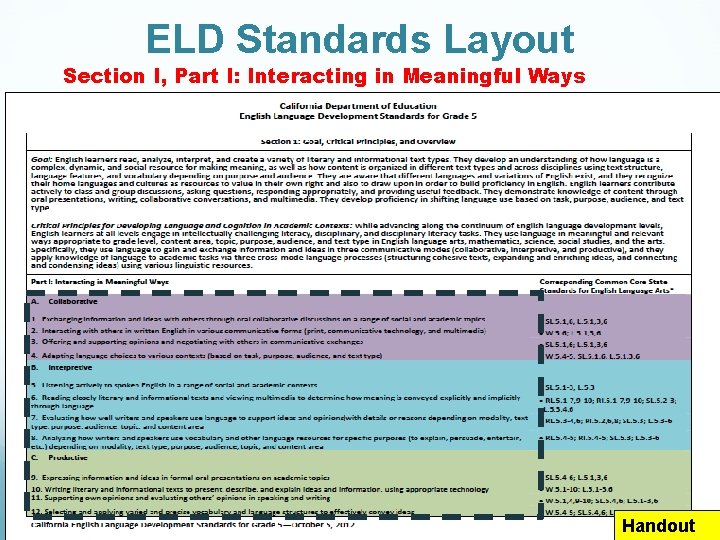
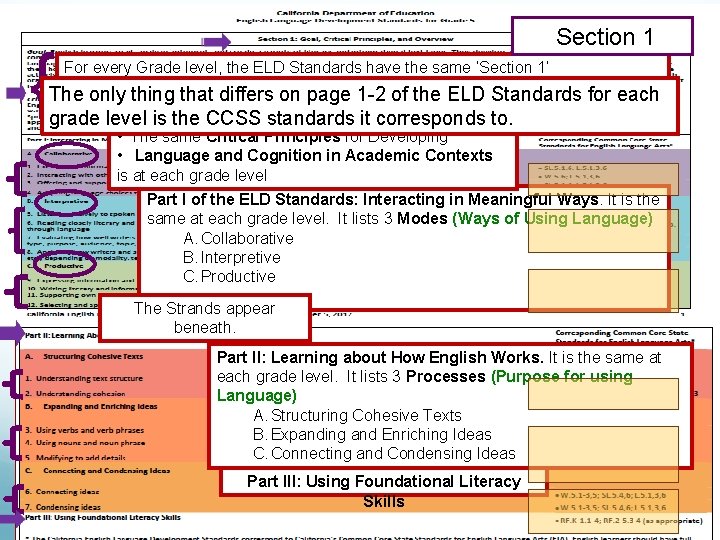
ELD Standards Layout Section I, Part I: Interacting in Meaningful Ways Handout
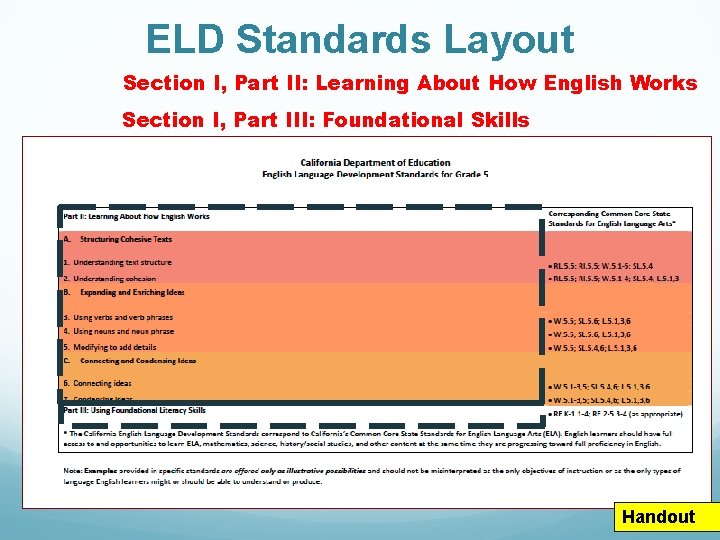
ELD Standards Layout Section I, Part II: Learning About How English Works Section I, Part III: Foundational Skills Handout
{ Section 1 For every Grade level, the ELD Standards have the same ‘Section 1’ The only thing that differs on page 1 -2 of the ELD Standards for each • Theissame is listed at each it grade level the Goal CCSS standards corresponds to. • The same Critical Principles for Developing • Language and Cognition in Academic Contexts is at each grade level Part I of the ELD Standards: Interacting in Meaningful Ways. It is the same at each grade level. It lists 3 Modes (Ways of Using Language) A. Collaborative B. Interpretive C. Productive The Strands appear beneath. Part II: Learning about How English Works. It is the same at each grade level. It lists 3 Processes (Purpose for using Language) A. Structuring Cohesive Texts B. Expanding and Enriching Ideas C. Connecting and Condensing Ideas Part III: Using Foundational Literacy Skills
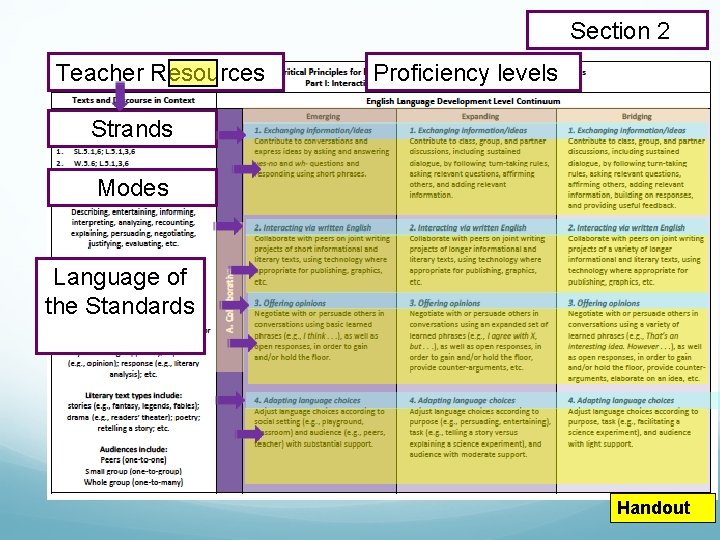
Section 2 Teacher Resources Proficiency levels Strands Modes Language of the Standards Handout
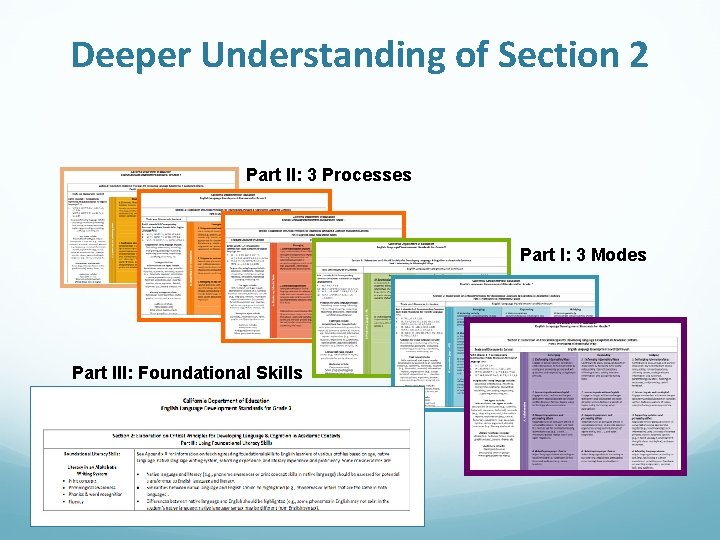
Deeper Understanding of Section 2 Part II: 3 Processes Part I: 3 Modes Part III: Foundational Skills
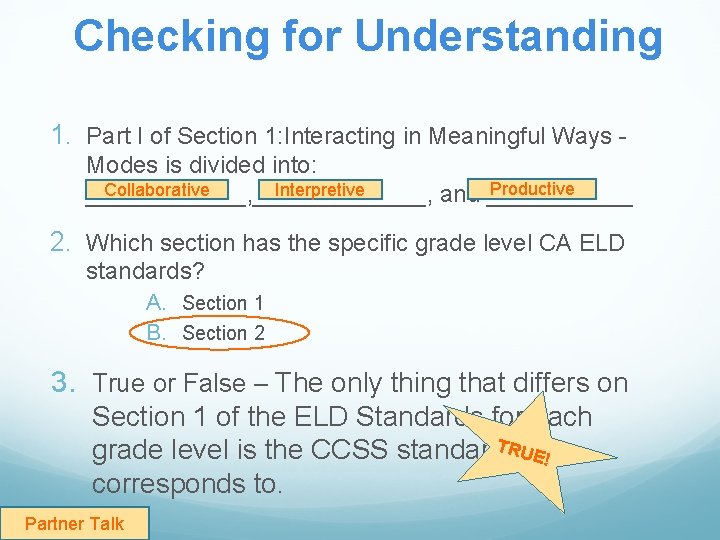
Checking for Understanding 1. Part I of Section 1: Interacting in Meaningful Ways Modes is divided into: Productive Collaborative Interpretive ______, _______, and ______ 2. Which section has the specific grade level CA ELD standards? A. Section 1 B. Section 2 3. True or False – The only thing that differs on Section 1 of the ELD Standards for each TRUit grade level is the CCSS standards E! corresponds to. Partner Talk
Key Conceptual Shifts in 2012 CA ELD Standards FROM A CONCEPTUALIZATION OF… TO UNDERSTANDING… English viewed as a set of rules English viewed as a meaning-making resource with different language choices based on audience, task, and purpose 5 proficiency levels 3 proficiency levels; Emerging, Expanding, Bridging (Proficiency Level Descriptors (PLDs): Determine early stages and exit for each level) Standards in Grade Spans (K-2, 3 -5, 6 -8, 9 -12) Standards and PLDs focusing on four isolated domains: listening, speaking, reading and writing as isolated domains Standards in grade level/spans that parallel CCSS (K, 1, 2, 3, 4, 5, 6, 7, 8, 9 -10, 11 -12) Standards and PLDs focusing on modes of communication (collaborative, interpretive, and productive); and language knowledge awareness and use (interweaving S, L, R, W)
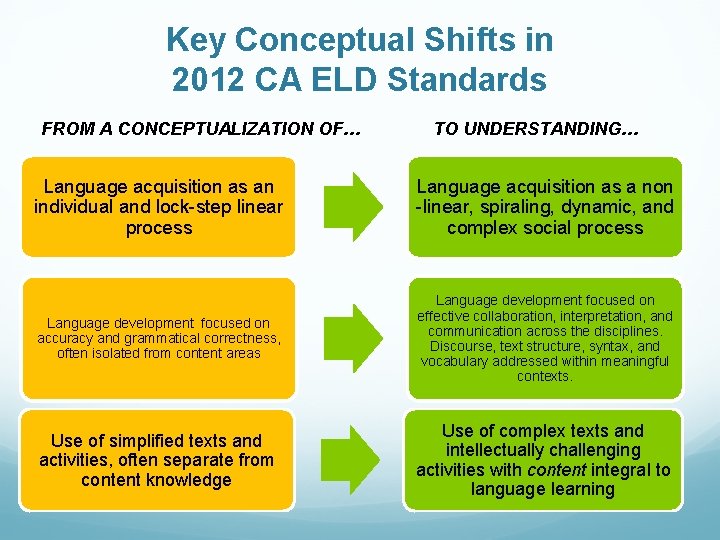
Key Conceptual Shifts in 2012 CA ELD Standards FROM A CONCEPTUALIZATION OF… TO UNDERSTANDING… Language acquisition as an individual and lock-step linear process Language acquisition as a non -linear, spiraling, dynamic, and complex social process Language development focused on accuracy and grammatical correctness, often isolated from content areas Language development focused on effective collaboration, interpretation, and communication across the disciplines. Discourse, text structure, syntax, and vocabulary addressed within meaningful contexts. Use of simplified texts and activities, often separate from content knowledge Use of complex texts and intellectually challenging activities with content integral to language learning
Objectives 1. Explore the context, development and validation of CA ELD Standards (Appendix D) 2. Become familiar with the layout of the ELD standards 3. Understand CA ELD Standard Shifts
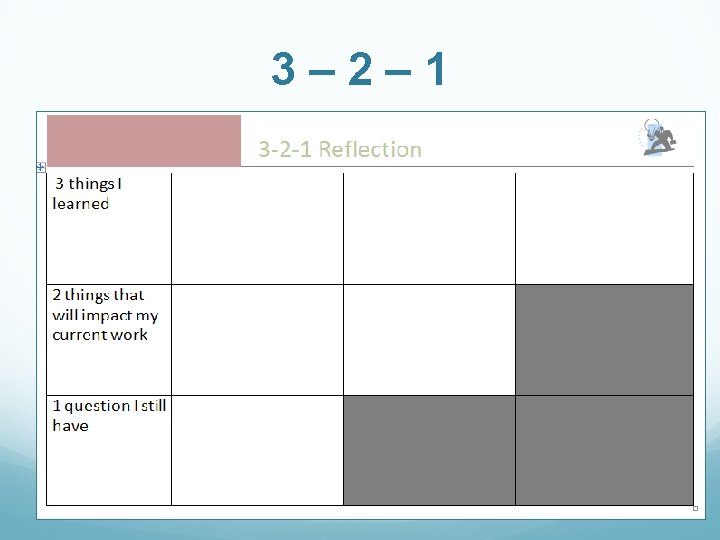
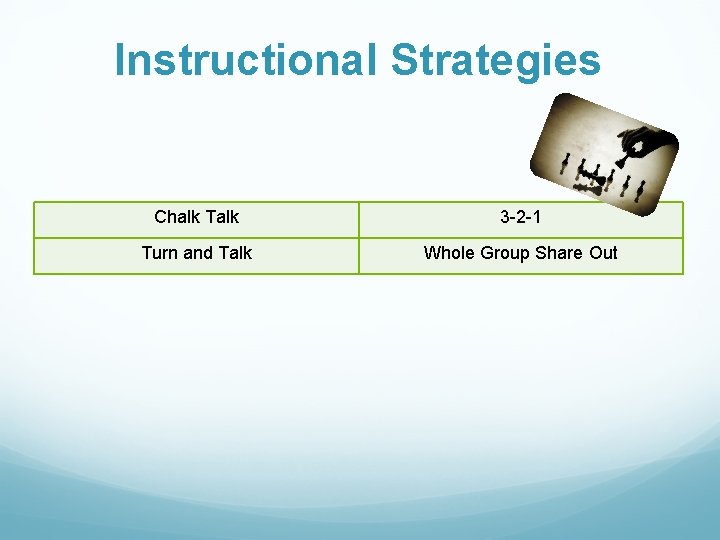
Instructional Strategies Chalk Talk 3 -2 -1 Turn and Talk Whole Group Share Out