
Language Learning Styles and Strategies Why do we







- Slides: 35
Language Learning Styles and Strategies
Why do we need to know our students learning styles?
Case study • Bu Aminah teach a classroom in which the students have varied learning styles. Budi for examples, he learns best when the activity includes practice and experiments. Mona, on the other hands can study only if the explanation is accompanied with visual illustration. Unlike Budi and Mona, Rahmi can learn only if the class is quite and he can fully concentrate on teachers’ explanantion.
Learning Styles What are the Learning Styles ? →The general approaches to learning How many Learning Styles are there? →Four main dimension and many among each
Learning Styles Sensory Preferences Personality Types Desired Degree of Generality Biological Differences
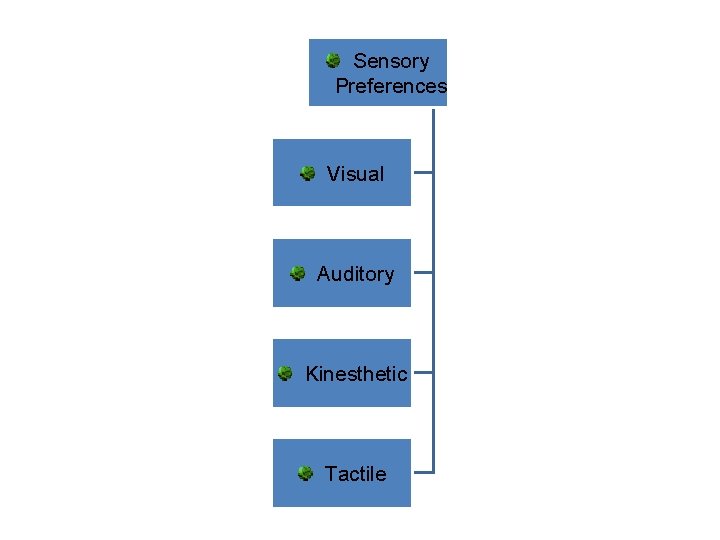
Sensory Preferences Visual Auditory Kinesthetic Tactile
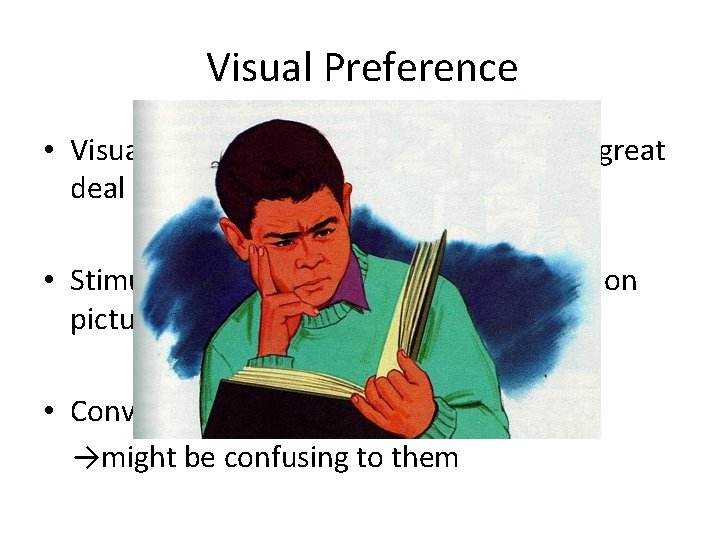
Visual Preference • Visual students like to read and obtain a great deal from visual stimulation. • Stimulations such as words, images, motion pictures and live performances • Conversation and oral instruction →might be confusing to them
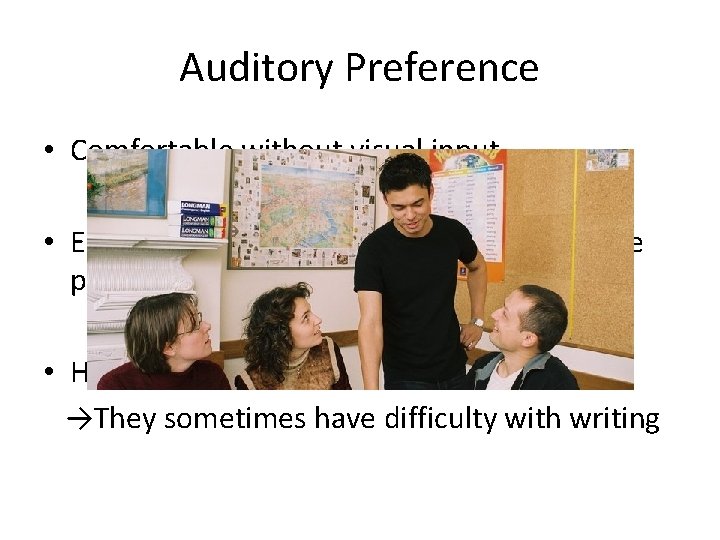
Auditory Preference • Comfortable without visual input • Excited by the classroom interactions in role plays and similar activities. • However!!! →They sometimes have difficulty with writing
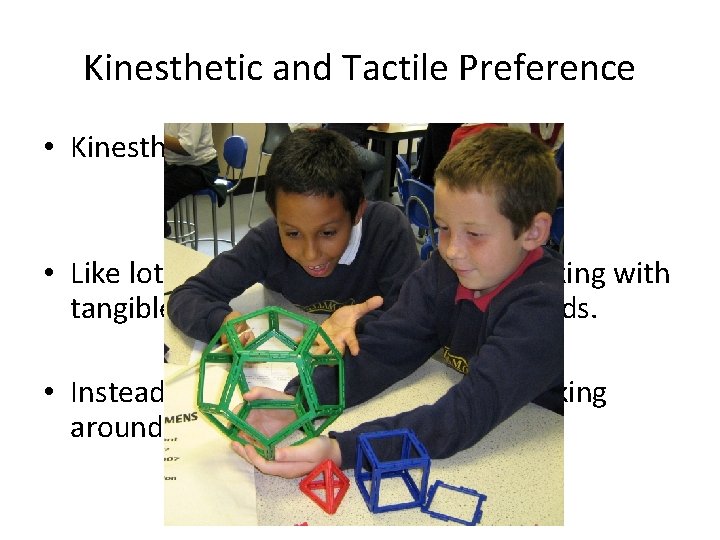
Kinesthetic and Tactile Preference • Kinesthetic Tactile • Like lots of movement and enjoy working with tangible objects, collages and flashcards. • Instead of sitting still, they prefer walking around the classroom
Q&A • What sensory preference do you prefer?
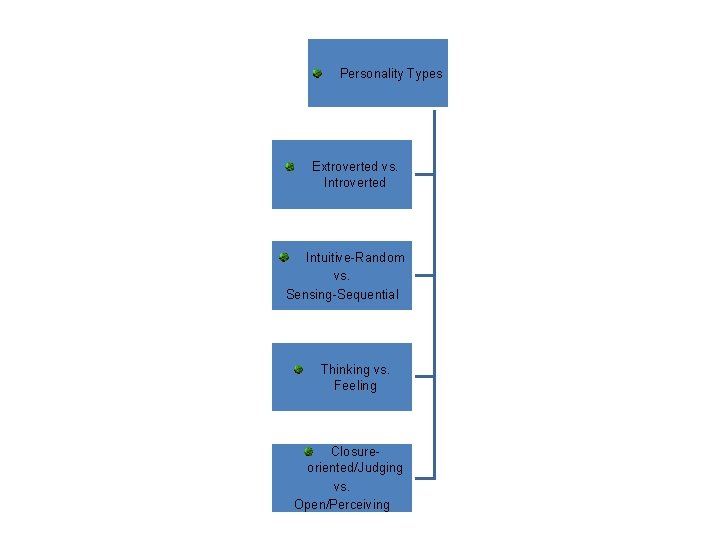
Personality Types Extroverted vs. Introverted Intuitive-Random vs. Sensing-Sequential Thinking vs. Feeling Closureoriented/Judging vs. Open/Perceiving
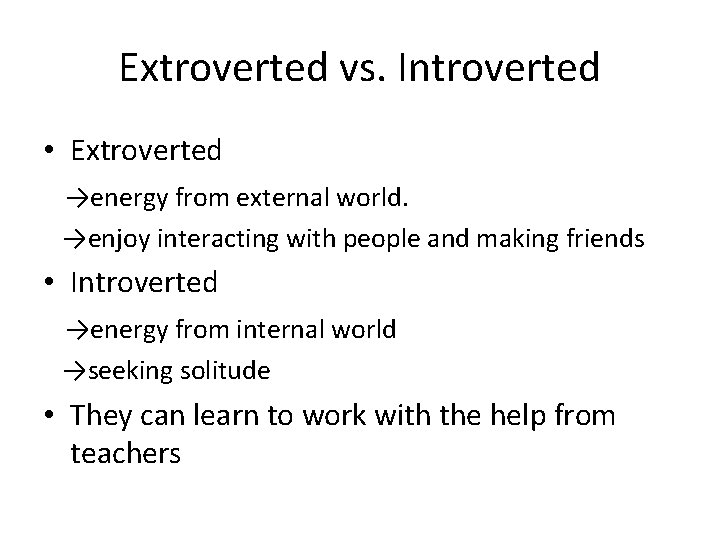
Extroverted vs. Introverted • Extroverted →energy from external world. →enjoy interacting with people and making friends • Introverted →energy from internal world →seeking solitude • They can learn to work with the help from teachers
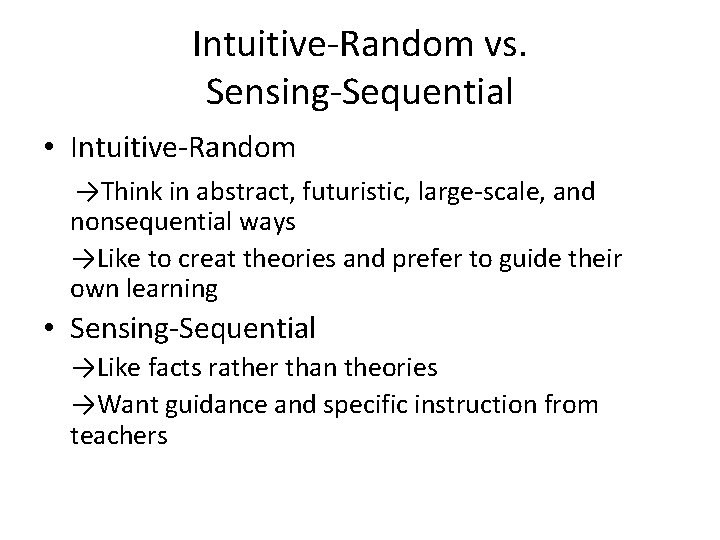
Intuitive-Random vs. Sensing-Sequential • Intuitive-Random →Think in abstract, futuristic, large-scale, and nonsequential ways →Like to creat theories and prefer to guide their own learning • Sensing-Sequential →Like facts rather than theories →Want guidance and specific instruction from teachers
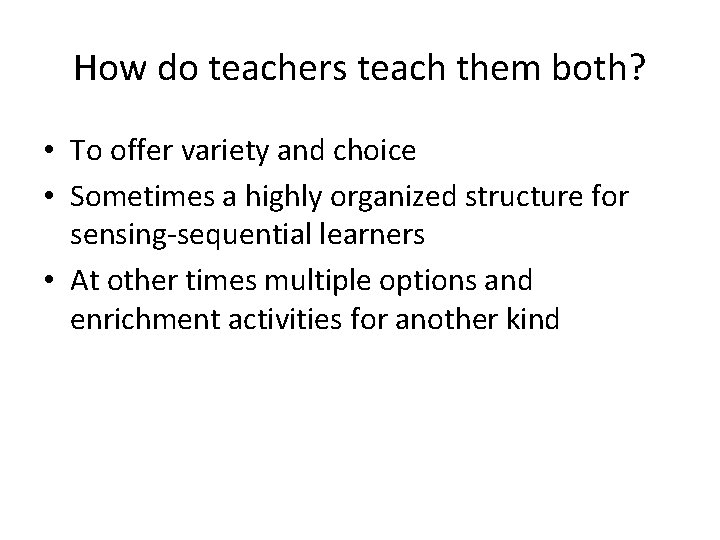
How do teachers teach them both? • To offer variety and choice • Sometimes a highly organized structure for sensing-sequential learners • At other times multiple options and enrichment activities for another kind
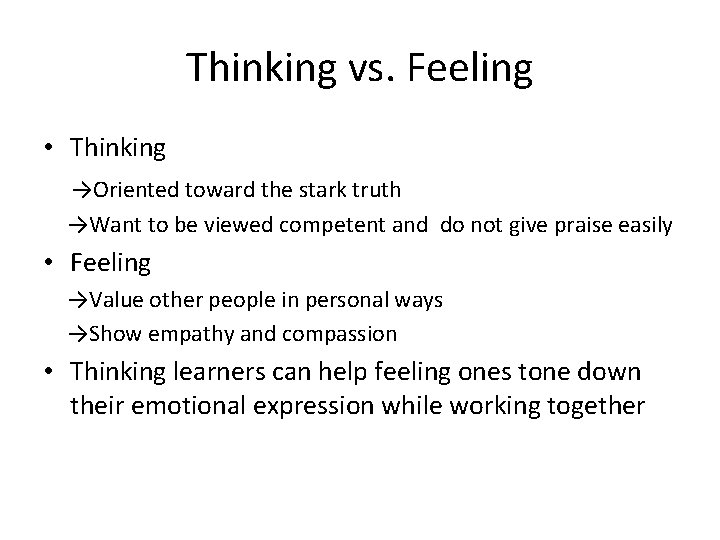
Thinking vs. Feeling • Thinking →Oriented toward the stark truth →Want to be viewed competent and do not give praise easily • Feeling →Value other people in personal ways →Show empathy and compassion • Thinking learners can help feeling ones tone down their emotional expression while working together
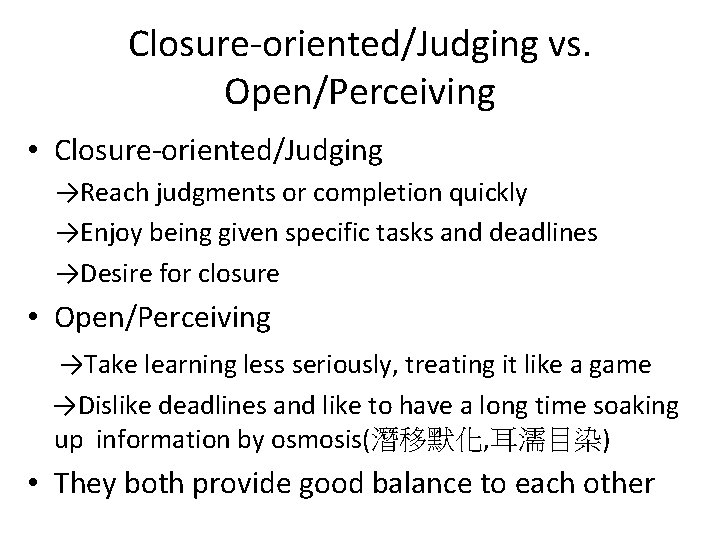
Closure-oriented/Judging vs. Open/Perceiving • Closure-oriented/Judging →Reach judgments or completion quickly →Enjoy being given specific tasks and deadlines →Desire for closure • Open/Perceiving →Take learning less seriously, treating it like a game →Dislike deadlines and like to have a long time soaking up information by osmosis(潛移默化, 耳濡目染) • They both provide good balance to each other
Q&A • What personality type do you think you are?
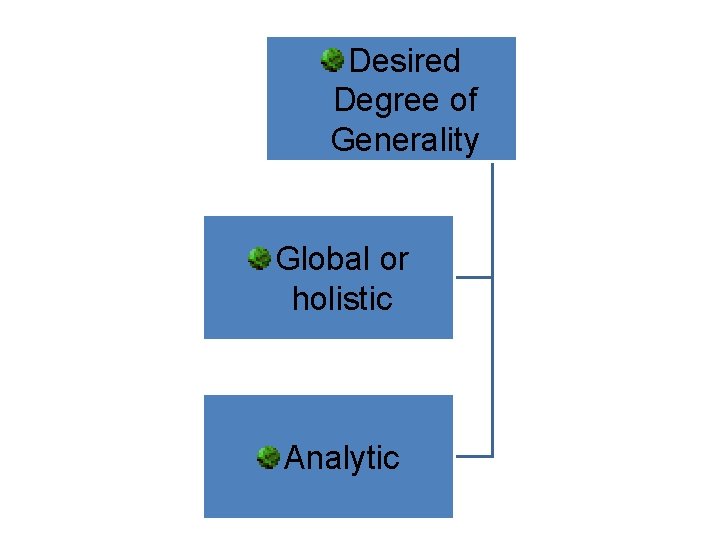
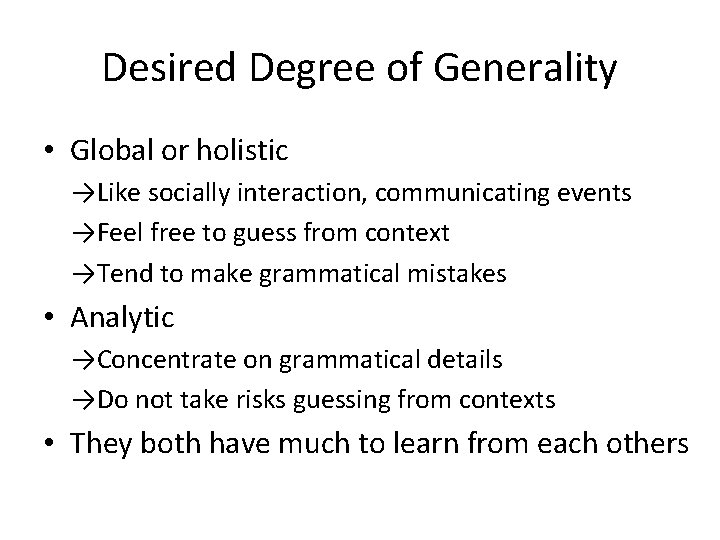
Desired Degree of Generality Global or holistic Analytic
Desired Degree of Generality • Global or holistic →Like socially interaction, communicating events →Feel free to guess from context →Tend to make grammatical mistakes • Analytic →Concentrate on grammatical details →Do not take risks guessing from contexts • They both have much to learn from each others
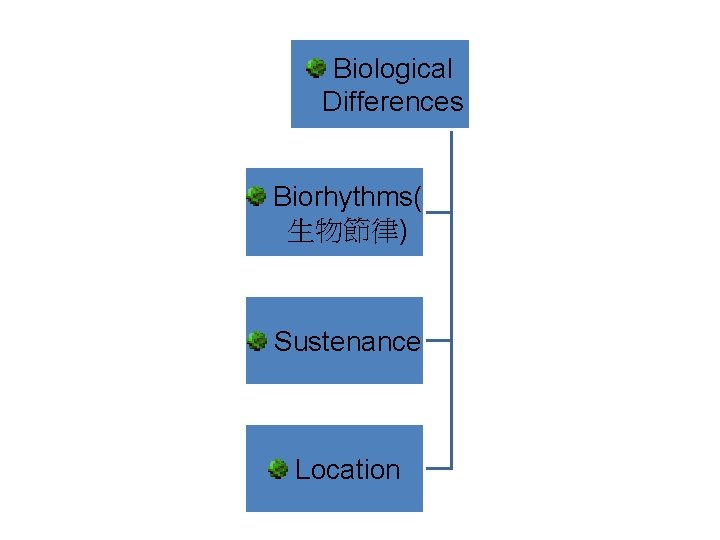
Biological Differences Biorhythms( 生物節律) Sustenance Location
Biorhythms • Learners have their best time for studying • Some perform well in the morning; some in the evening…
Sustenance • The need for food and drink while learning. • Quite a number of L 2 learners feel very comfortable learning with a candy bar, a cup of coffee or a soda in hand while some tend to be distracted from studying
Location • Involves the nature of environment – Temperature – Lighting – Sound – And even the firmness of the chairs
Learning Strategies • What are learning strategies? →Specific behaviors or thought processes that learners use to enhance their learning • How many learning strategies are there? →Six main categories
About strategies • A strategy is neither good nor bad • A strategy is useful if →a. It relates well to the L 2 task at hand →b. It fits the particular student’s learning style →c. The student employs it effectively • Enable students to become more independent, autonomous, lifelong learners.
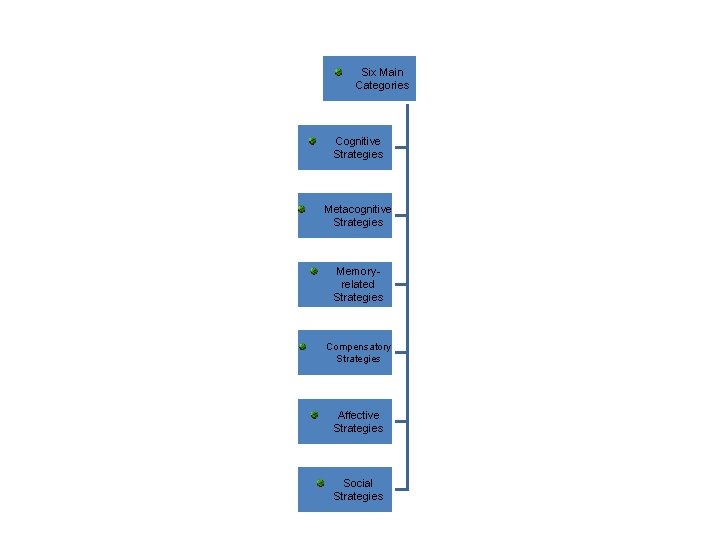
Six Main Categories Cognitive Strategies Metacognitive Strategies Memoryrelated Strategies Compensatory Strategies Affective Strategies Social Strategies
Cognitive Strategies • Enable learners to manipulate the language materials • E. g. , through reasoning, analysis, notetaking, summarizing, outlining, reorganizing, etc.
Metacognitive Strategies • Identifying one’s own learning style preferences and needs • Manage the learning process overall.
Memory-related Strategies • Help learners to link one L 2 item or concept to another, but do not always involve deep understanding • Enable learners to learn and retrieve information in an orderly string • Learners need such strategy much less when they become better
Compensatory Strategies • Guessing from context in listening and reading • Use synonyms and “talk around” the missing word to aid speaking and writing • Use gestures or pause words • Help learners to make up missing words
Affective Strategies • Identify one’s mood anxiety level • Use deep breathing or positive self-talk • Students who progress toward proficiency seldom need it
Social Strategies • Work with others and understand the target culture as well as the language • Intensive interaction with people
Assessing • Learning Styles →The written survey →Students answer questions that reveal their particular preferences • Learning Strategies →Self-report, observations, interview, learner journals, etc →the most widely used book→Strategy Inventory for Language Learning
Thanks for your attention