
Language Experience Approach Timothy Shanahan University of Illinois



- Slides: 39
Language Experience Approach Timothy Shanahan University of Illinois at Chicago www. shanahanonliteracy. com
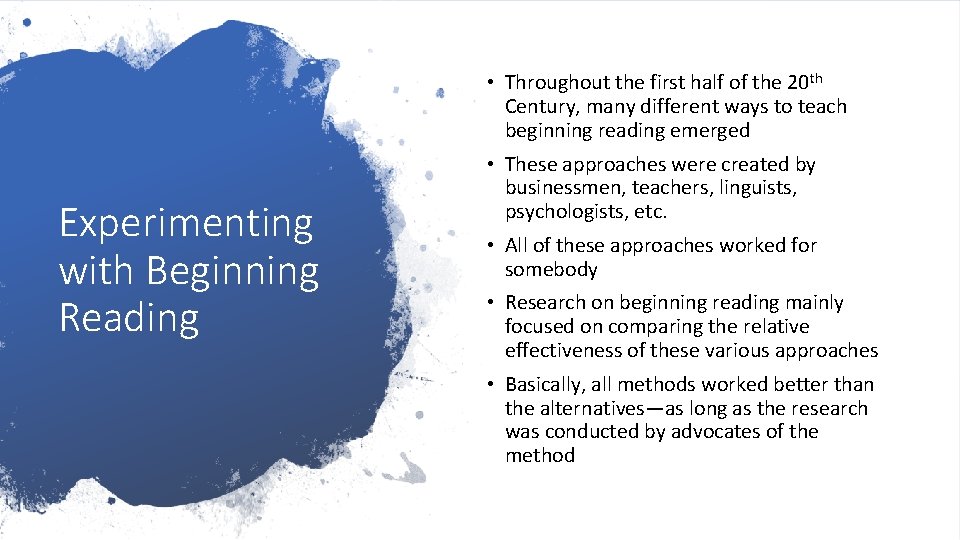
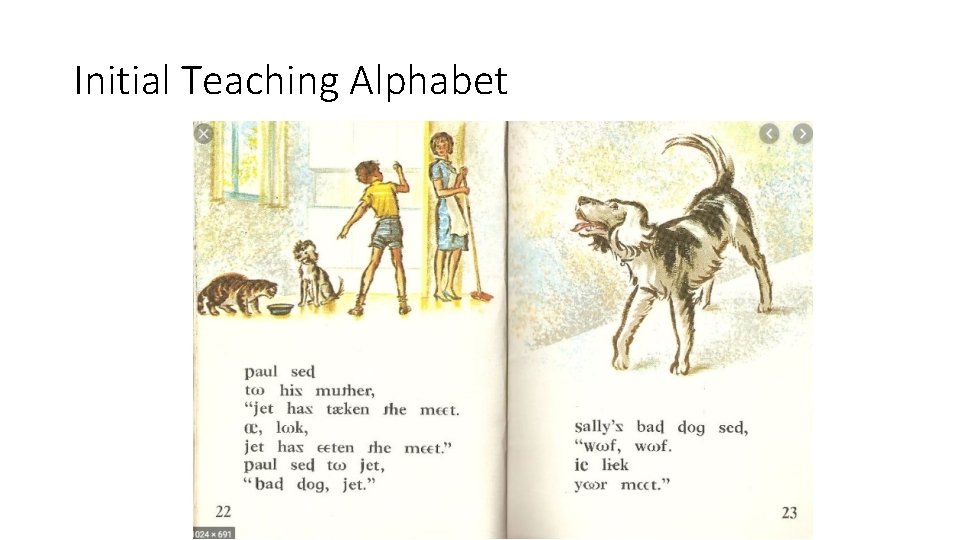
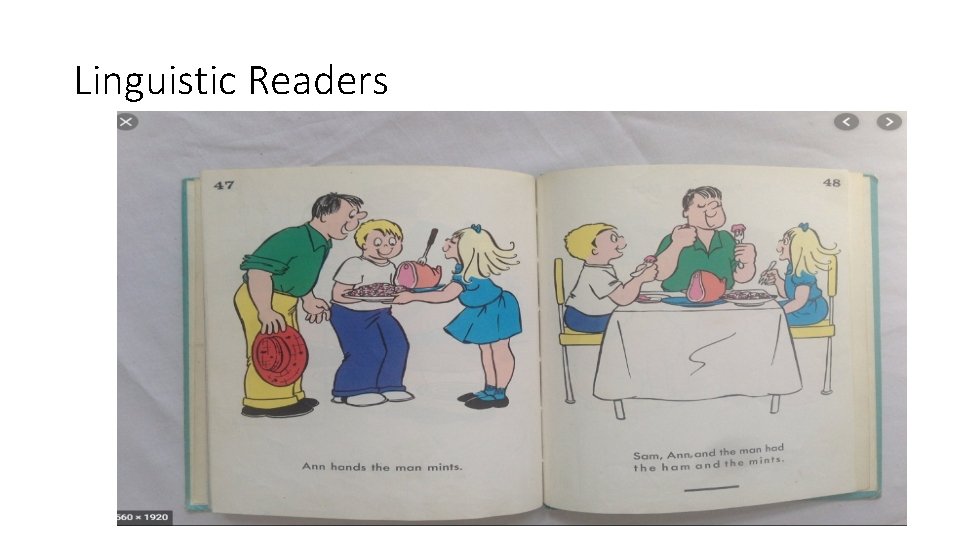
• Throughout the first half of the 20 th Century, many different ways to teach beginning reading emerged Experimenting with Beginning Reading • These approaches were created by businessmen, teachers, linguists, psychologists, etc. • All of these approaches worked for somebody • Research on beginning reading mainly focused on comparing the relative effectiveness of these various approaches • Basically, all methods worked better than the alternatives—as long as the research was conducted by advocates of the method
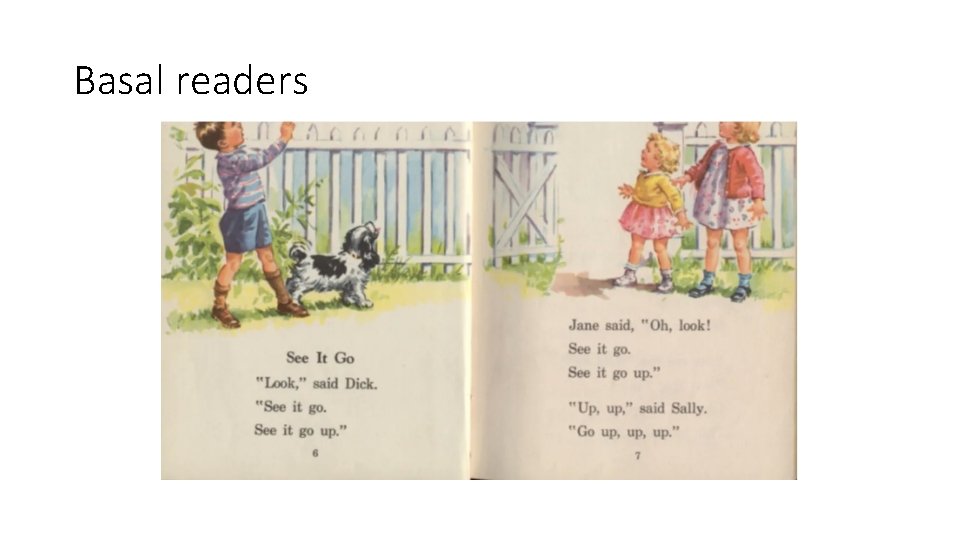
Basal readers
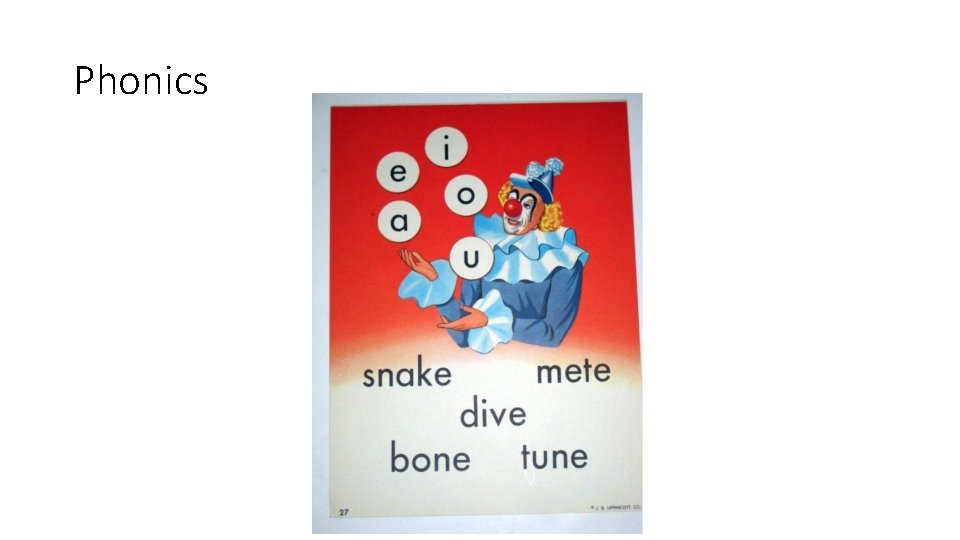
Phonics
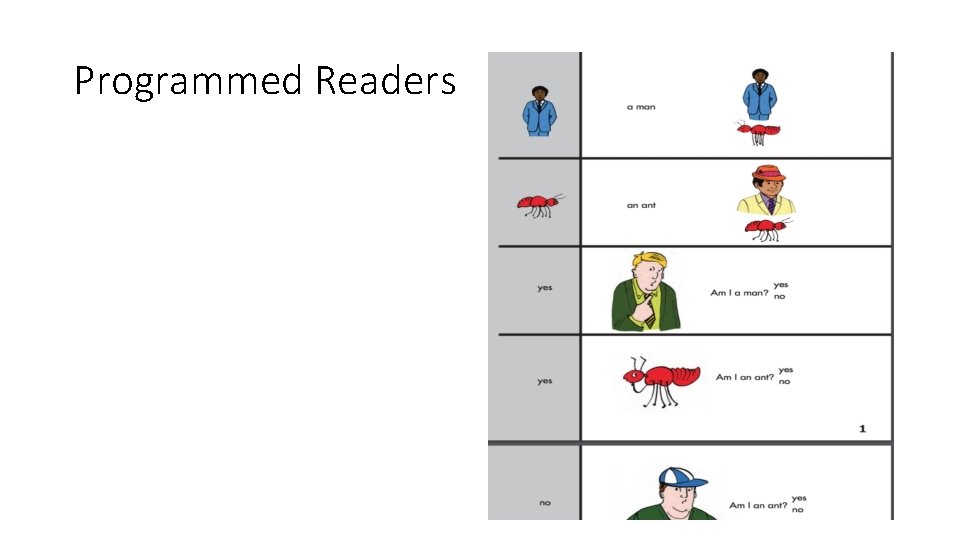
Programmed Readers
Initial Teaching Alphabet
Linguistic Readers
Words in Color
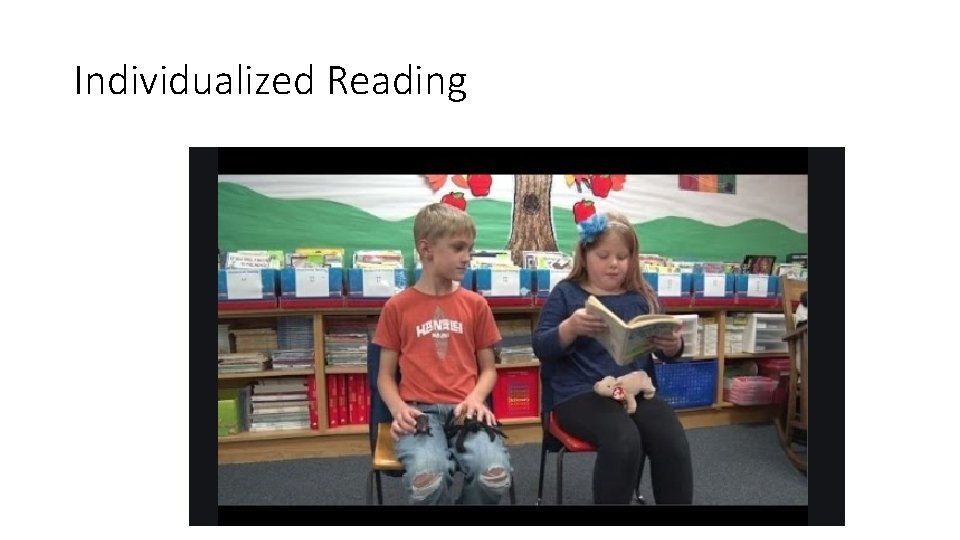
Individualized Reading
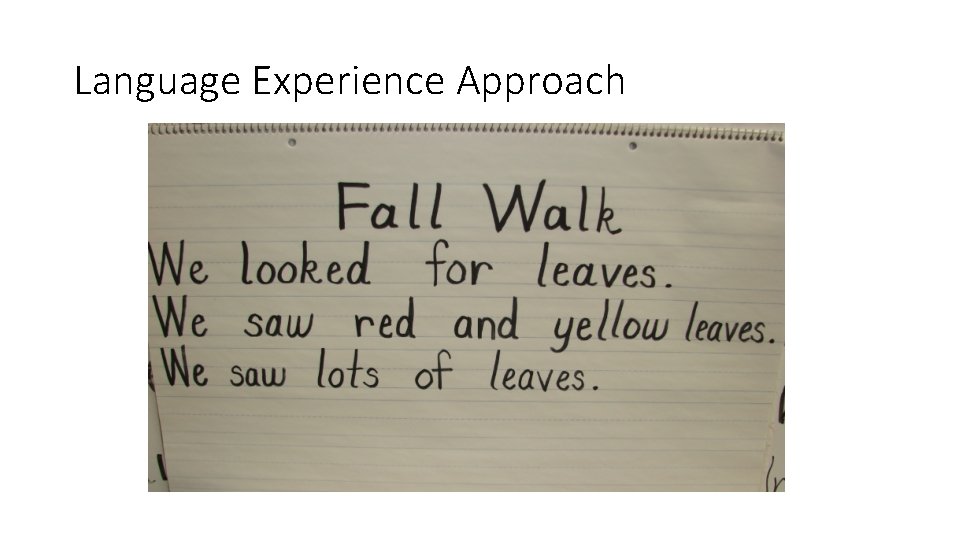
Language Experience Approach
First Grade Studies • U. S. Cooperative First-Grade Studies (1965) brings this ferment to an end • These 20+ studies that shared their data found that generally all of these approaches worked, but that approaches that included student writing and explicit phonics outperformed the others • The result was that reading programs became more homogenized and eclectic • Most popular: basal reading programs, with a phonics component, writing, and an individualized reading library
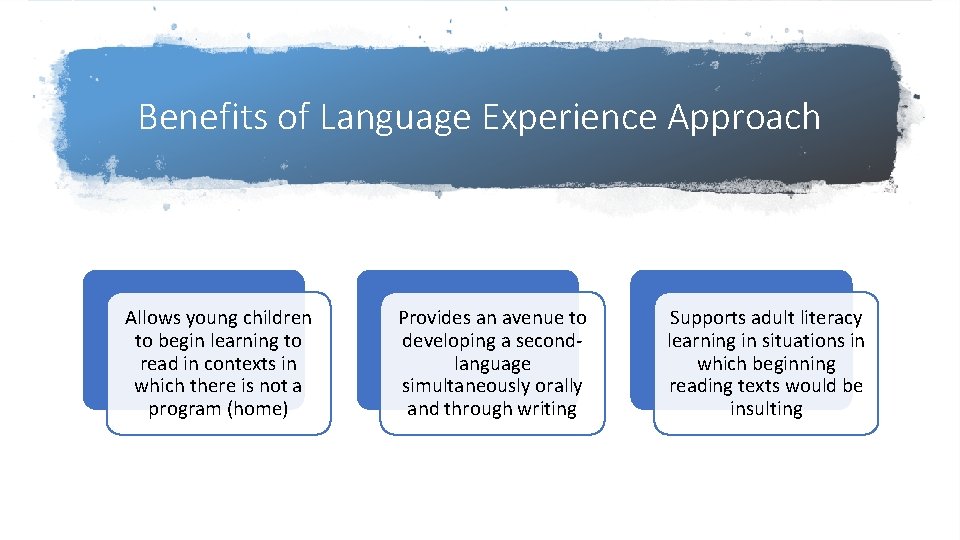
Benefits of Language Experience Approach Allows young children to begin learning to read in contexts in which there is not a program (home) Provides an avenue to developing a secondlanguage simultaneously orally and through writing Supports adult literacy learning in situations in which beginning reading texts would be insulting
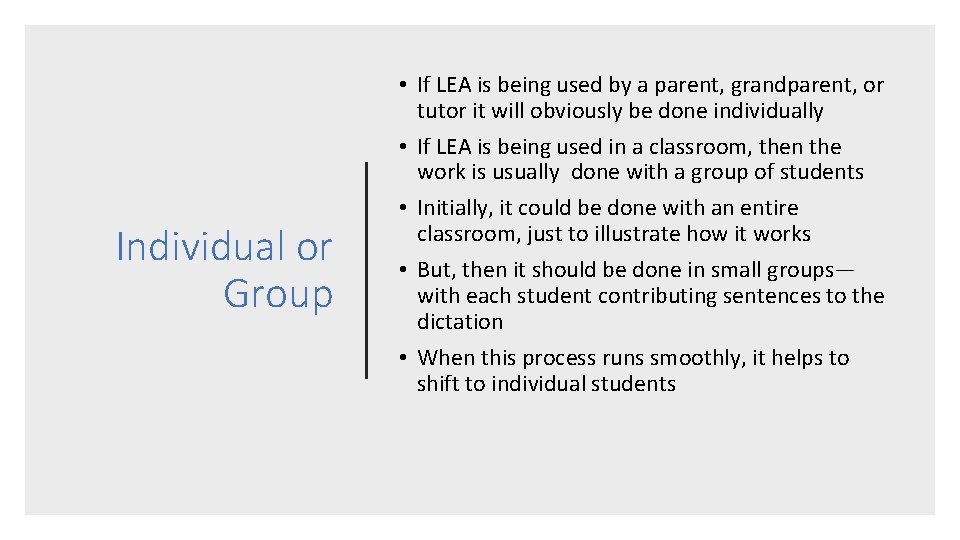
Individual or Group • If LEA is being used by a parent, grandparent, or tutor it will obviously be done individually • If LEA is being used in a classroom, then the work is usually done with a group of students • Initially, it could be done with an entire classroom, just to illustrate how it works • But, then it should be done in small groups— with each student contributing sentences to the dictation • When this process runs smoothly, it helps to shift to individual students
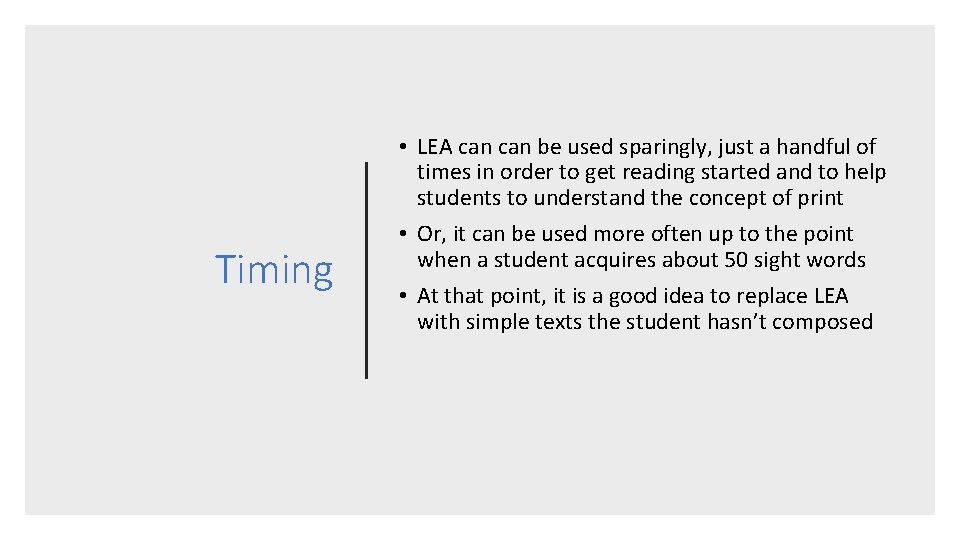
Timing • LEA can be used sparingly, just a handful of times in order to get reading started and to help students to understand the concept of print • Or, it can be used more often up to the point when a student acquires about 50 sight words • At that point, it is a good idea to replace LEA with simple texts the student hasn’t composed
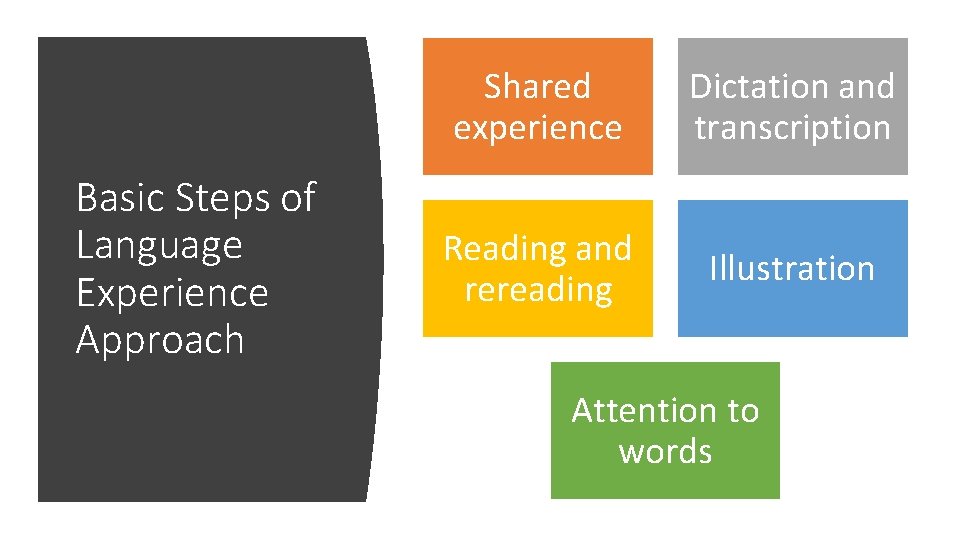
Basic Steps of Language Experience Approach Shared experience Dictation and transcription Reading and rereading Illustration Attention to words
Shared Experiences • The texts that will be the basis of beginning reading derive from the student’s experiences • Child activities may include music, cooking, arts and crafts, field trips, exploration of objects, etc. • Adult activities may include workrelated (e. g. , mechanics, gardening, food preparation, farm work) or household activities (e. g. , cooking, marketing, child care) • Using real objects and activities makes these experiences the basis of language
Those activities become experiences through talk Conversation and Discussion These ideas and memories need to be constructed through language Question the student about the activity/object Help build new vocabulary if possible
Dictation and transcription • Student language is now going to be translated into text (oral words become written words) • Explain to student that you are going to serve as the secretary writing down their ideas so they can be preserved • Get the student to tell about the experience and transcribe what is said
Eliciting Sentences • Initially, students might just tell words or phrases • Telling them to say a complete sentence or to say something that sounds like the language in a book can help • Or, translate the words or phrases into a statement for the student—saying it and getting the student to repeat it
Keeping Up With Dictation • At the start, students don’t know how to time their dictation • Sometimes they go too fast • It helps if they can see your transcription –say the words as you write them to provide another cue • If you are having trouble keeping up, just tell the student to slow down or to wait
Transcribe the Dictation Verbatim • The point is to show the students that what they say can be written down • Transcription is not the time to correct grammar or improve word usage • A big part of rereading will depend upon memory – if you alter what the student says, then you disrupt the relationship between text and memory
Spell Appropriately • Often children, second language learners, and even low education adults may mispronounce words or say them with dialect-based pronunciations • Nevertheless, it is important to transcribe these word with standard English spelling • Thus, if the student pronounces, “I have a code. ” you would write down, “I have a cold. ” • Doing it this way ensures that students connect their pronunciations with standard spelllings
Make Sure Student Sees Transcription • Beginning readers have to learn how print works • Observing transcription as it is being transcribed, and hearing the words spoken/repeated as they are being transcribed reveals to the student that text is written left-to-right and top-to-bottom
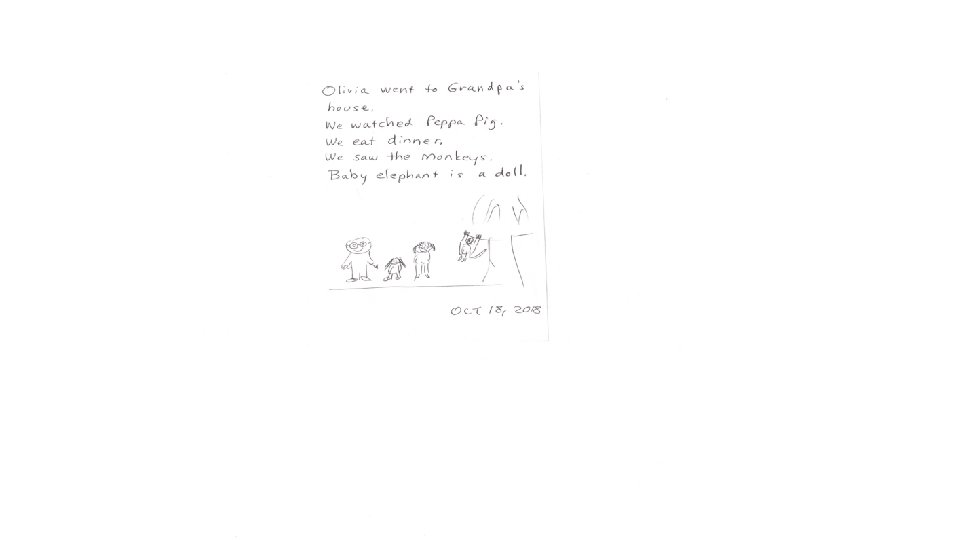
Make the Dictation Legible • Transcription should be done using print manuscript (not cursive) • The transcription should be legible (copying over later is not a good idea) • Since students often learn to read words from the transcribed dictation it can be helpful to space words slightly more than usual.
Reading and Rereading • Student says the words that are to be transcribed • Teacher repeats the words as the text is transcribed • Teacher rereads the text to the student • Student rereads the text, too (multiple times) • If there is any difficulty reading the text, try choral reading
Continue to Reread Over Several Days • Rereading of these stories leads to memorization • This memorization allows for fingerpoint reading—which helps beginning readers to develop ”concept of word” • Have the student reread the text for social reasons • Have the student reread the text each day for at least two days
Illustration • Perhaps have the student illustrate the text • This should be done in the context of rereading • You can guide this illustration to make it representational of the text by talking to the student about what needs to be included • This step keeps the emphasis on meaning
Attention to Words • Sight vocabulary is one of the big areas of learning in LEA • To emphasize this after several rereadings individual words are isolated and identified • There is no formal teaching of words or emphasis on the memorization of words, but students learn words from the rereading
Window Card • After three days of working with a dictation, the teacher introduces the window card • The window card is used to isolate words from their context (randomly isolating words across a text) • If the student cannot recognize a word, nothing happens • If the student can read a word, it is recorded on a word card
Word Bank • The word cards are collected in a small container or sandwich bag • These words can be reviewed frequently • These words can be used for game activities and word sorts (emphasizing meaning or decoding elements—such as grouping words by their first letter) • The point is to build fast recognition of a collection of words
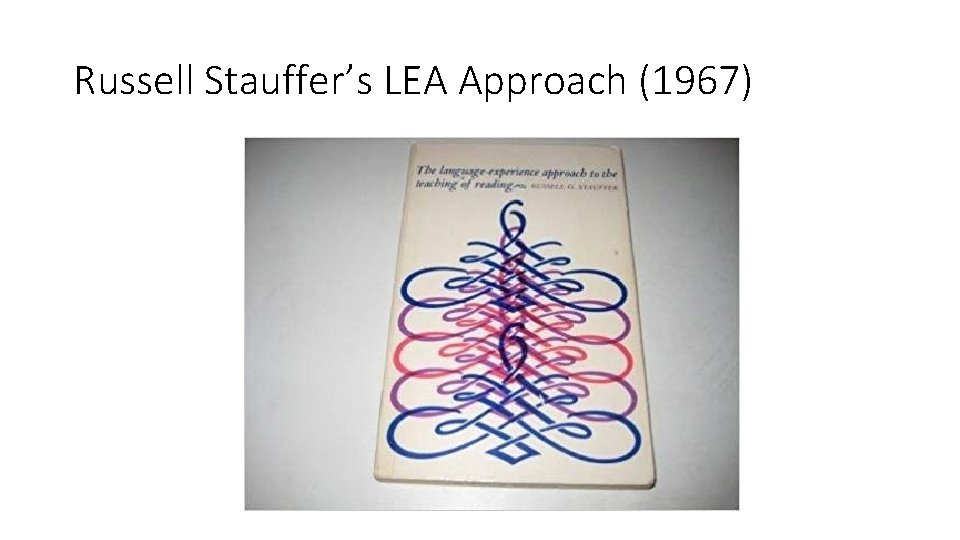
Russell Stauffer’s LEA Approach (1967)
Stauffer’s Approach Stauffer promoted language experience approach as a point of initiation for beginning reading But he believed that this introduction needed to be presented in a much more eclectic and complete literacy context
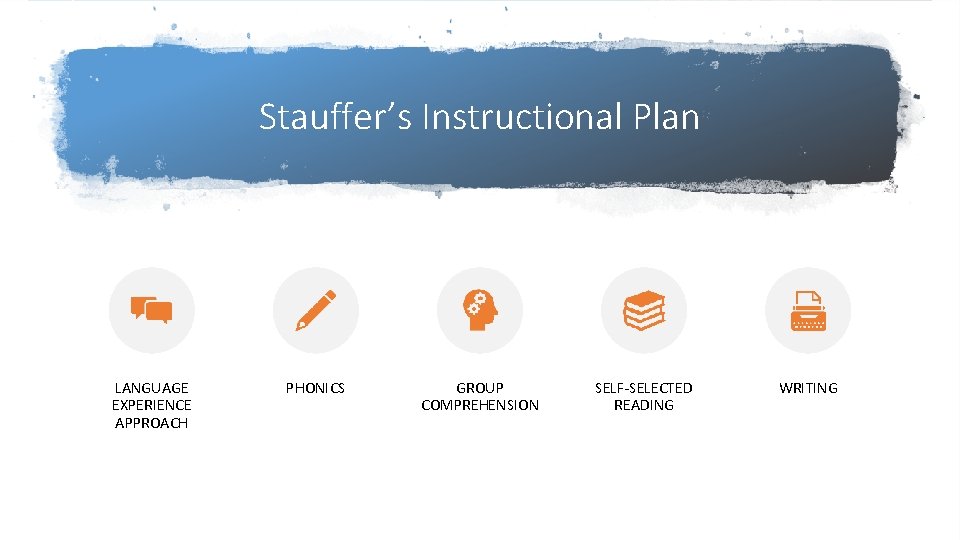
Stauffer’s Instructional Plan LANGUAGE EXPERIENCE APPROACH PHONICS GROUP COMPREHENSION SELF-SELECTED READING WRITING
Stauffer’s USOE First Grade Study pitted phonicsfortified LEA against basal readers LEA + phonics did better, as did any approaches with explicit decoding instruction At one time, phonics was totally separate (from text based programs) Phonics instruction supports decoding and sight word acquisition Phonics
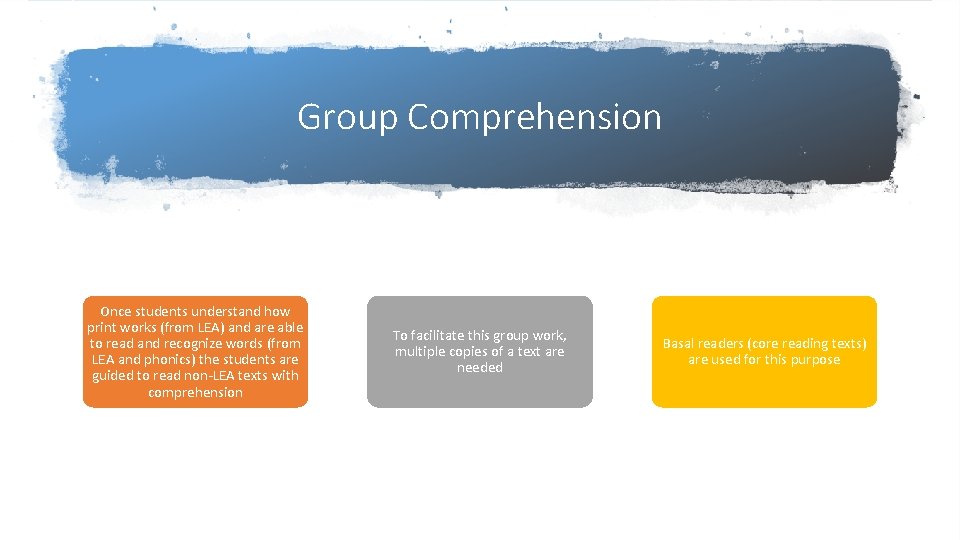
Group Comprehension Once students understand how print works (from LEA) and are able to read and recognize words (from LEA and phonics) the students are guided to read non-LEA texts with comprehension To facilitate this group work, multiple copies of a text are needed Basal readers (core reading texts) are used for this purpose
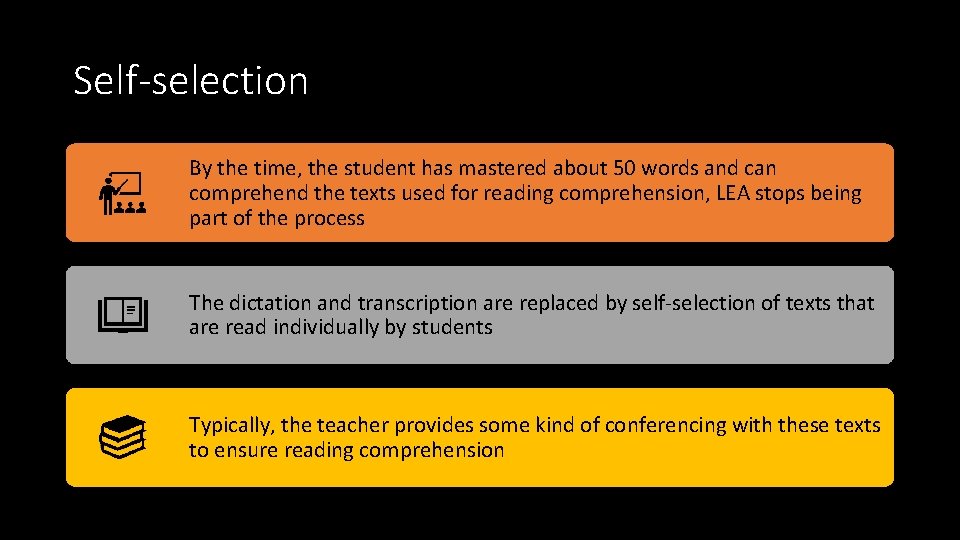
Self-selection By the time, the student has mastered about 50 words and can comprehend the texts used for reading comprehension, LEA stops being part of the process The dictation and transcription are replaced by self-selection of texts that are read individually by students Typically, the teacher provides some kind of conferencing with these texts to ensure reading comprehension
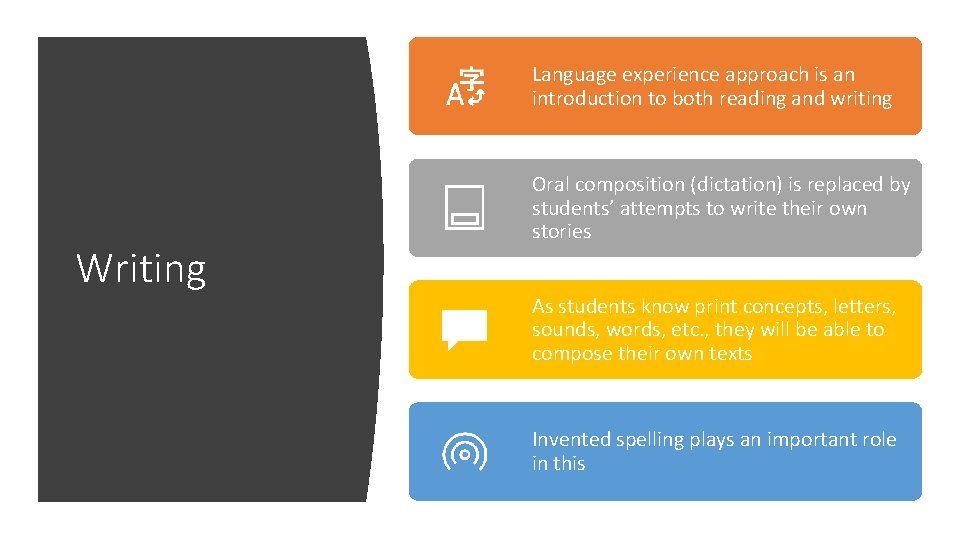
Language experience approach is an introduction to both reading and writing Writing Oral composition (dictation) is replaced by students’ attempts to write their own stories As students know print concepts, letters, sounds, words, etc. , they will be able to compose their own texts Invented spelling plays an important role in this
Language Experience Approach Timothy Shanahan University of Illinois at Chicago www. shanahanonliteracy. com