
Language Dialect and Speaker Recognition Using Gaussian Mixture
- Slides: 60
Language, Dialect, and Speaker Recognition Using Gaussian Mixture Models on the Cell Processor Nicolas Malyska, Sanjeev Mohindra, Karen Lauro, Douglas Reynolds, and Jeremy Kepner {nmalyska, smohindra, karen. lauro, reynolds, kepner}@ll. mit. edu This work is sponsored by the United States Air Force under Air Force Contract FA 8721 -05 -C-0002. Opinions, interpretations, conclusions and recommendations are those of the authors and are not necessarily endorsed by the United States Government. MIT Lincoln Laboratory
Outline • Introduction • Recognition for speech applications using GMMs • Parallel implementation of the GMM • Performance model • Conclusions and future work MIT Lincoln Laboratory
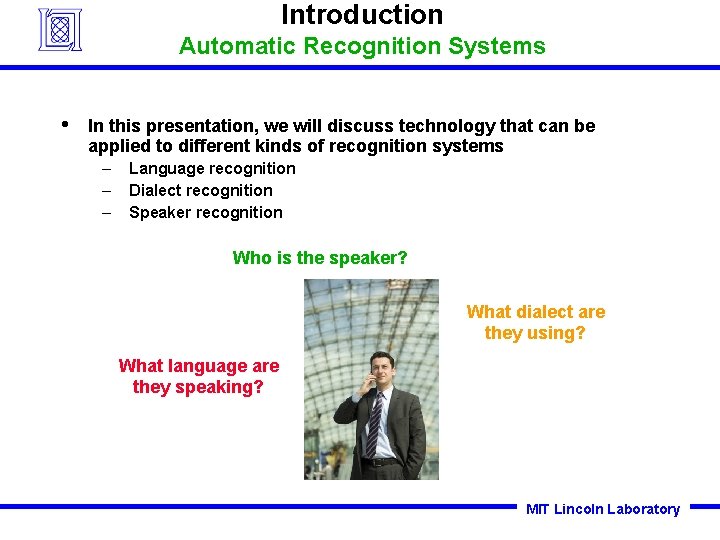
Introduction Automatic Recognition Systems • In this presentation, we will discuss technology that can be applied to different kinds of recognition systems – – – Language recognition Dialect recognition Speaker recognition Who is the speaker? What dialect are they using? What language are they speaking? MIT Lincoln Laboratory
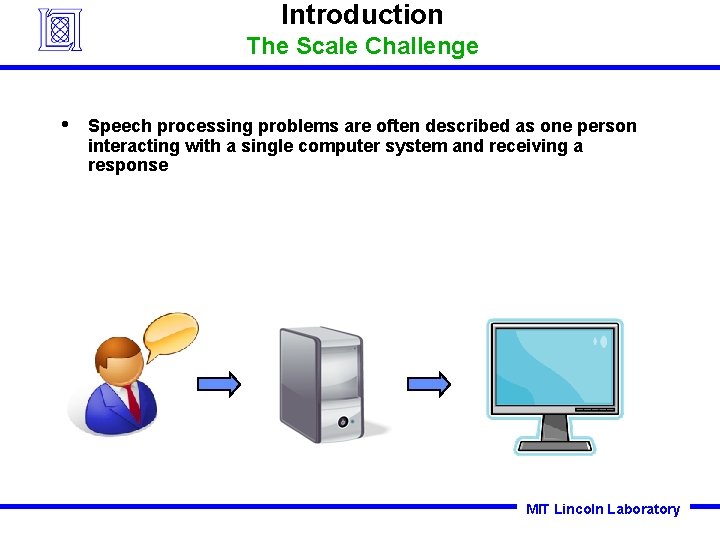
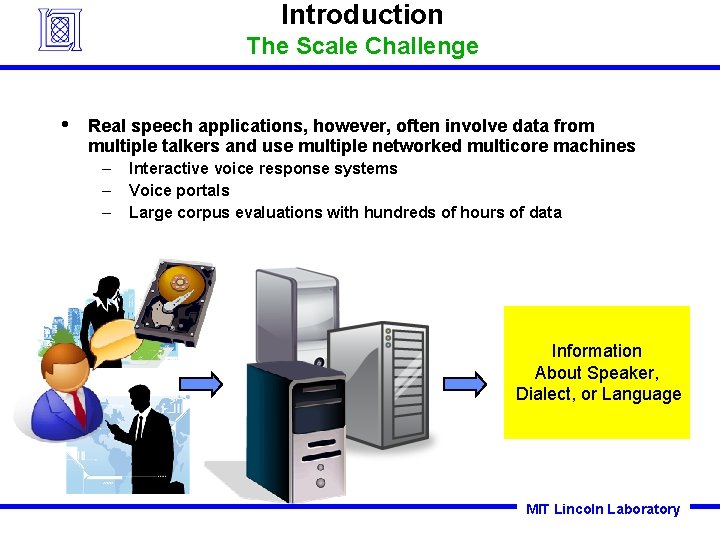
Introduction The Scale Challenge • Speech processing problems are often described as one person interacting with a single computer system and receiving a response MIT Lincoln Laboratory
Introduction The Scale Challenge • Real speech applications, however, often involve data from multiple talkers and use multiple networked multicore machines – – – Interactive voice response systems Voice portals Large corpus evaluations with hundreds of hours of data Information About Speaker, Dialect, or Language MIT Lincoln Laboratory
Introduction The Computational Challenge • Speech-processing algorithms are computationally expensive • Large amounts of data need to be available for these applications – • Must cache required data efficiently so that it is quickly available Algorithms must be parallelized to maximize throughput – – – Conventional approaches focus on parallel solutions over multiple networked computers Existing packages not optimized for high-performance-per-watt machines with multiple cores, required in embedded systems with power, thermal, and size constraints Want highly-responsive “real-time” systems in many applications, including in embedded systems MIT Lincoln Laboratory
Outline • Introduction • Recognition for speech applications using GMMs • Parallel implementation of the GMM • Performance model • Conclusions and future work MIT Lincoln Laboratory
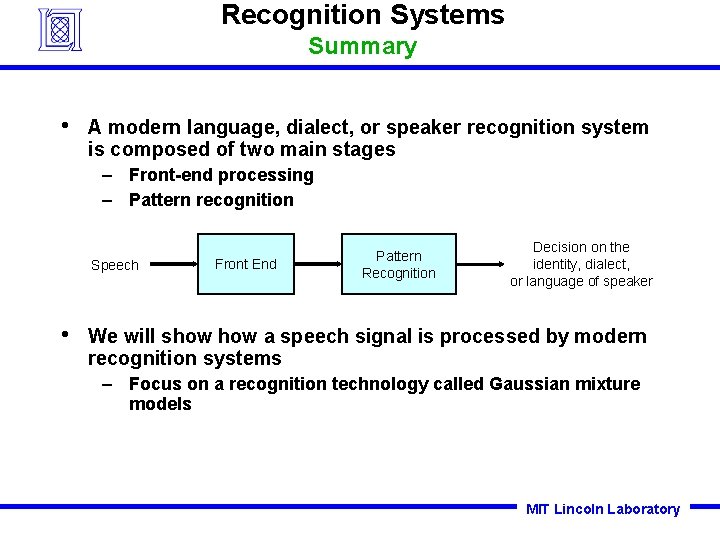
Recognition Systems Summary • A modern language, dialect, or speaker recognition system is composed of two main stages – Front-end processing – Pattern recognition Speech • Front End Pattern Recognition Decision on the identity, dialect, or language of speaker We will show a speech signal is processed by modern recognition systems – Focus on a recognition technology called Gaussian mixture models MIT Lincoln Laboratory
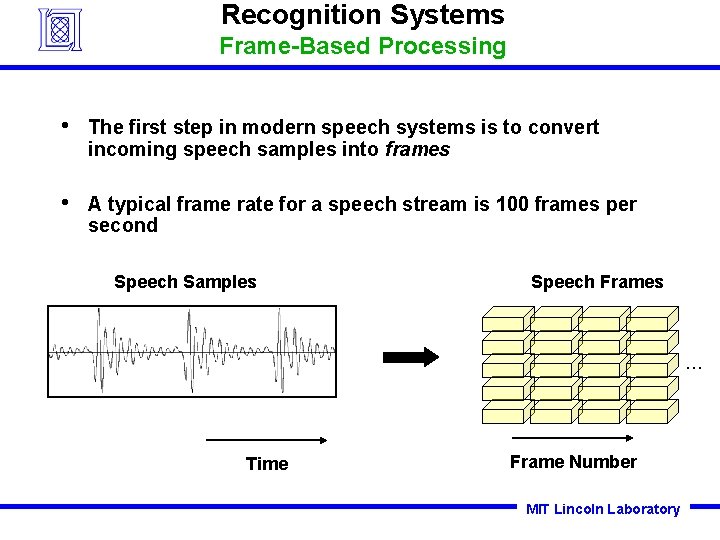
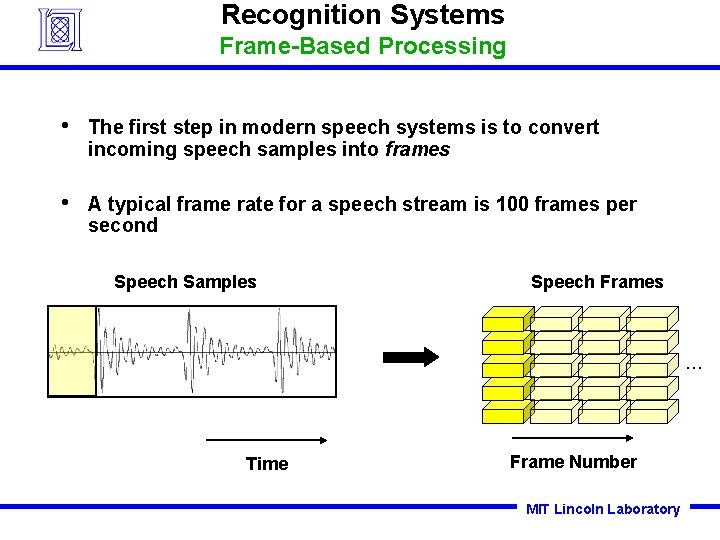
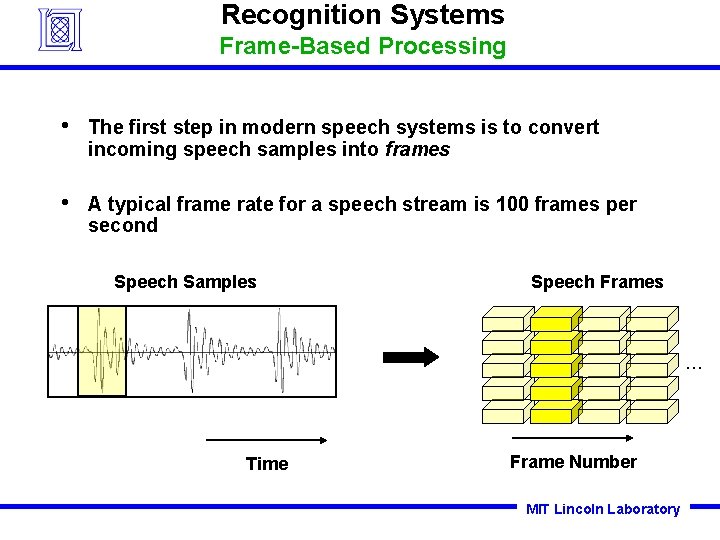
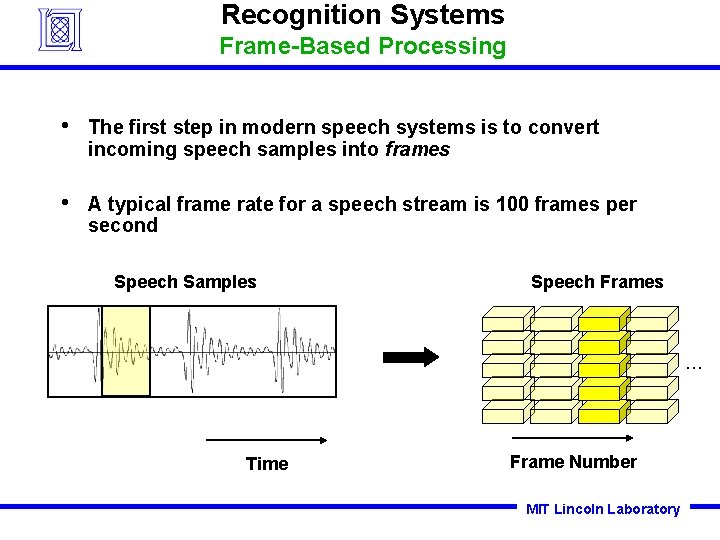
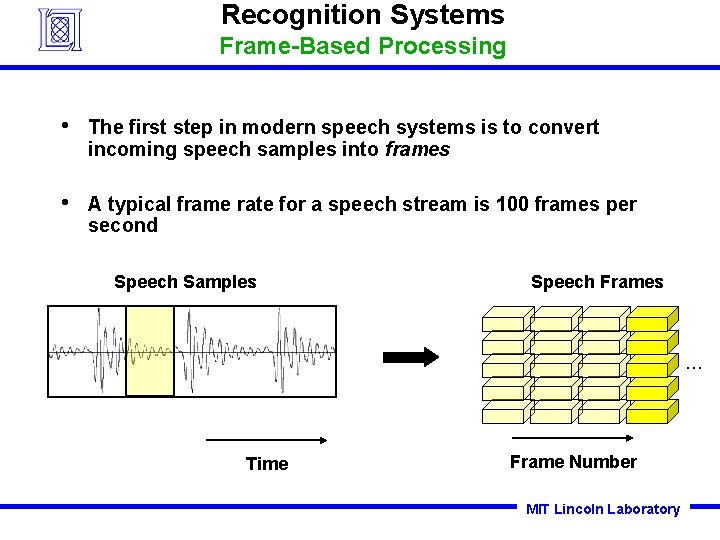
Recognition Systems Frame-Based Processing • The first step in modern speech systems is to convert incoming speech samples into frames • A typical frame rate for a speech stream is 100 frames per second Speech Samples Speech Frames … Time Frame Number MIT Lincoln Laboratory
Recognition Systems Frame-Based Processing • The first step in modern speech systems is to convert incoming speech samples into frames • A typical frame rate for a speech stream is 100 frames per second Speech Samples Speech Frames … Time Frame Number MIT Lincoln Laboratory
Recognition Systems Frame-Based Processing • The first step in modern speech systems is to convert incoming speech samples into frames • A typical frame rate for a speech stream is 100 frames per second Speech Samples Speech Frames … Time Frame Number MIT Lincoln Laboratory
Recognition Systems Frame-Based Processing • The first step in modern speech systems is to convert incoming speech samples into frames • A typical frame rate for a speech stream is 100 frames per second Speech Samples Speech Frames … Time Frame Number MIT Lincoln Laboratory
Recognition Systems Frame-Based Processing • The first step in modern speech systems is to convert incoming speech samples into frames • A typical frame rate for a speech stream is 100 frames per second Speech Samples Speech Frames … Time Frame Number MIT Lincoln Laboratory
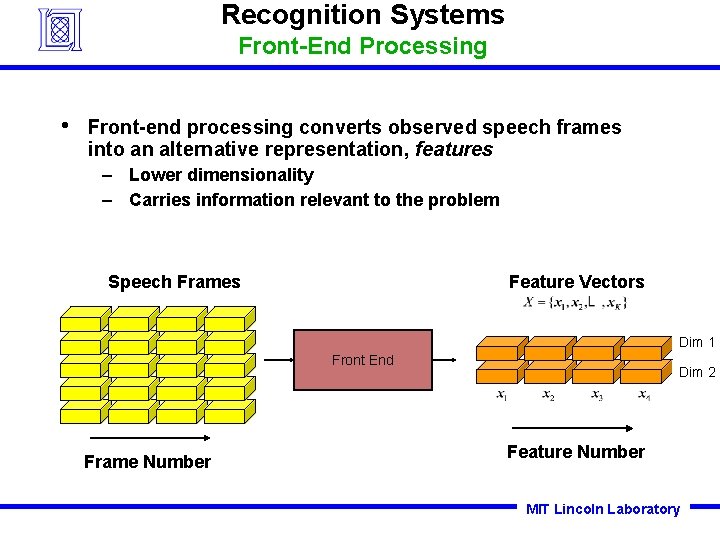
Recognition Systems Front-End Processing • Front-end processing converts observed speech frames into an alternative representation, features – Lower dimensionality – Carries information relevant to the problem Speech Frames Feature Vectors Dim 1 Front End Frame Number Dim 2 Feature Number MIT Lincoln Laboratory
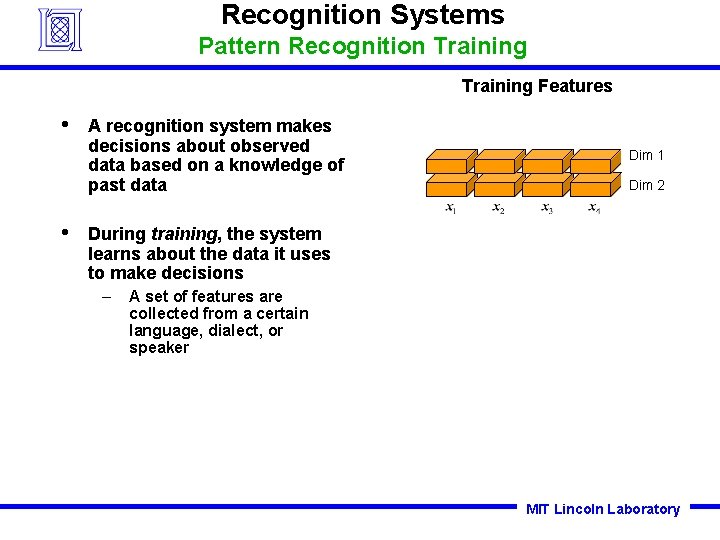
Recognition Systems Pattern Recognition Training Features • • A recognition system makes decisions about observed data based on a knowledge of past data Dim 1 Dim 2 During training, the system learns about the data it uses to make decisions – A set of features are collected from a certain language, dialect, or speaker MIT Lincoln Laboratory
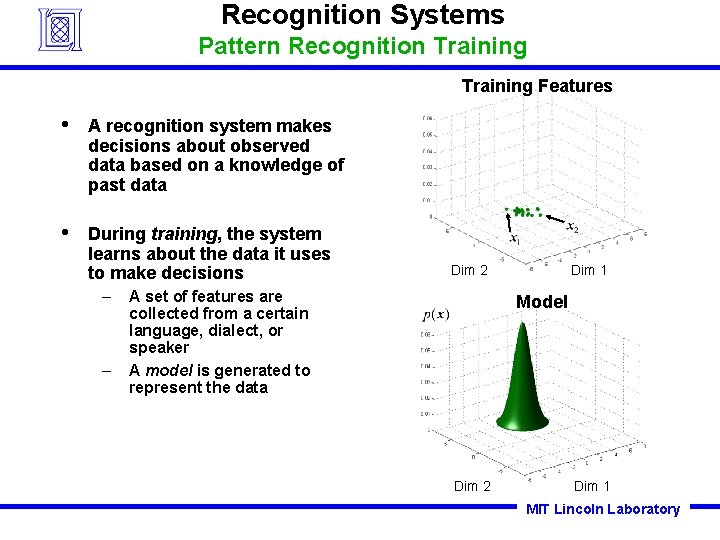
Recognition Systems Pattern Recognition Training Features • A recognition system makes decisions about observed data based on a knowledge of past data • During training, the system learns about the data it uses to make decisions – – Dim 2 A set of features are collected from a certain language, dialect, or speaker A model is generated to represent the data Dim 1 Model Dim 2 Dim 1 MIT Lincoln Laboratory
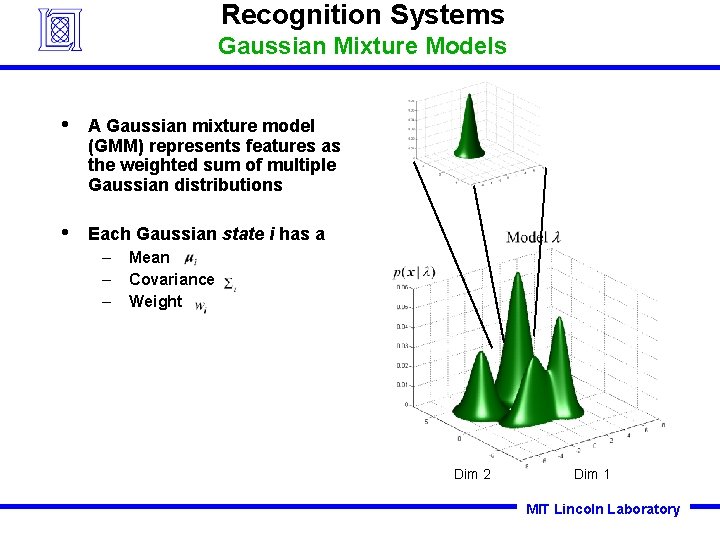
Recognition Systems Gaussian Mixture Models • A Gaussian mixture model (GMM) represents features as the weighted sum of multiple Gaussian distributions • Each Gaussian state i has a – – – Mean Covariance Weight Dim 2 Dim 1 MIT Lincoln Laboratory
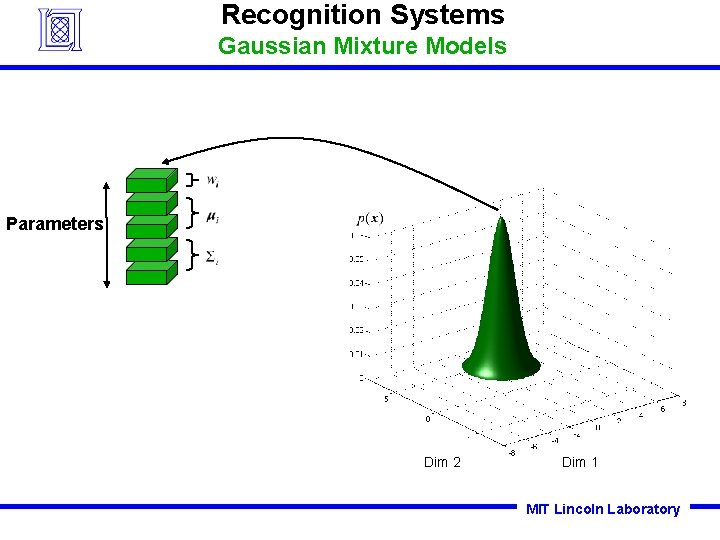
Recognition Systems Gaussian Mixture Models Parameters Dim 2 Dim 1 MIT Lincoln Laboratory
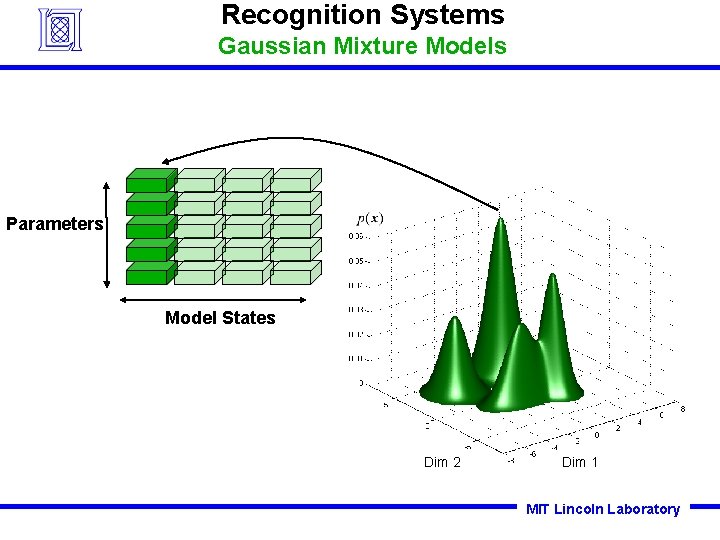
Recognition Systems Gaussian Mixture Models Parameters Model States Dim 2 Dim 1 MIT Lincoln Laboratory
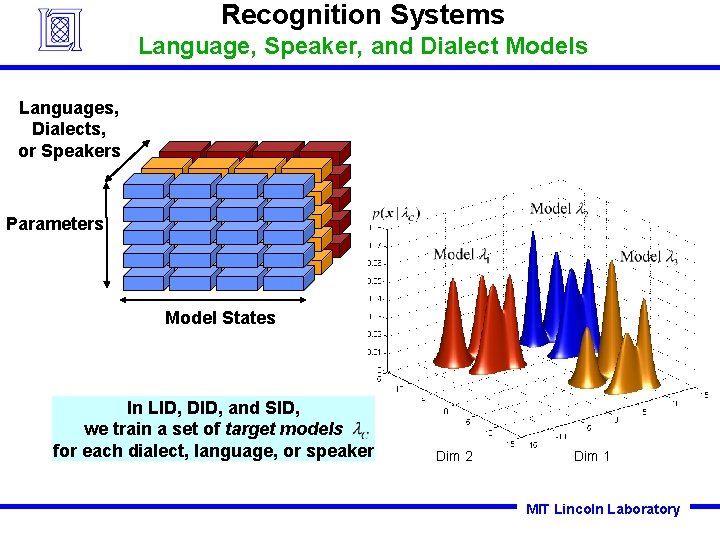
Recognition Systems Language, Speaker, and Dialect Models Languages, Dialects, or Speakers Parameters Model States In LID, DID, and SID, we train a set of target models for each dialect, language, or speaker Dim 2 Dim 1 MIT Lincoln Laboratory
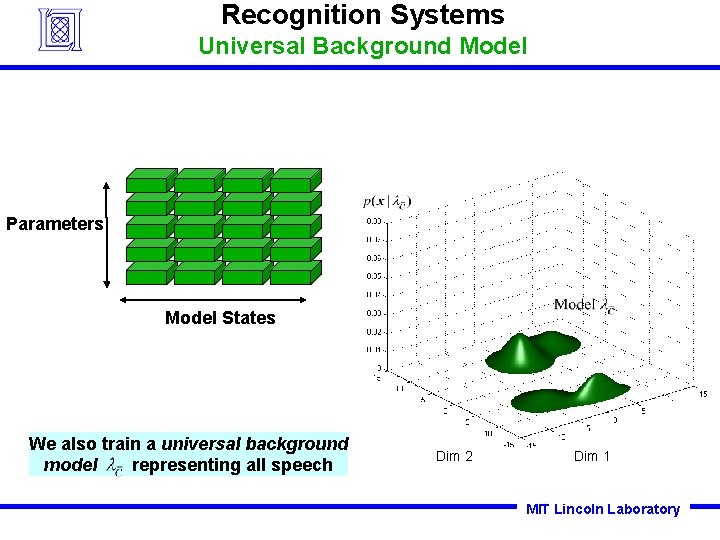
Recognition Systems Universal Background Model Parameters Model States We also train a universal background model representing all speech Dim 2 Dim 1 MIT Lincoln Laboratory
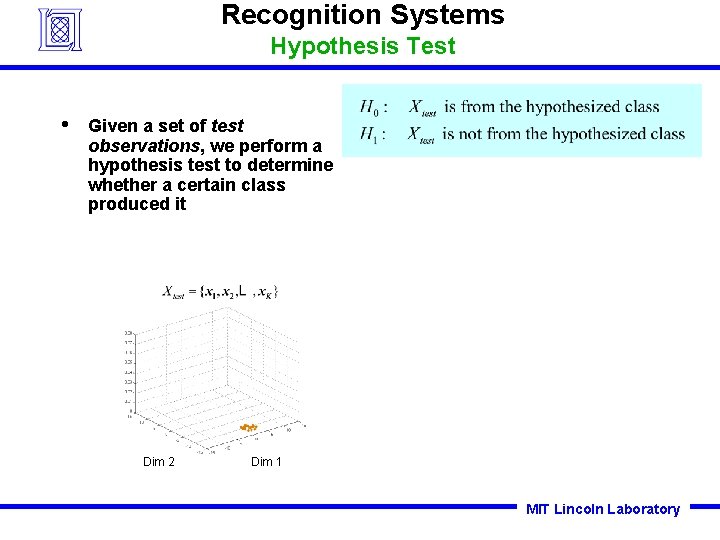
Recognition Systems Hypothesis Test • Given a set of test observations, we perform a hypothesis test to determine whether a certain class produced it Dim 2 Dim 1 MIT Lincoln Laboratory
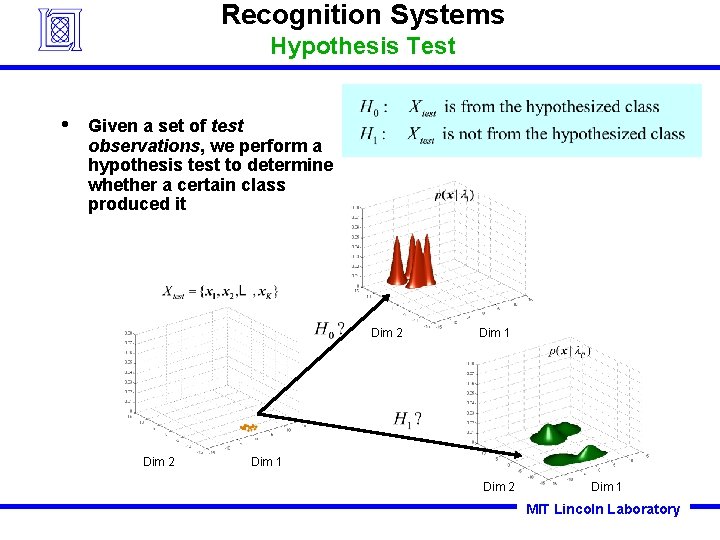
Recognition Systems Hypothesis Test • Given a set of test observations, we perform a hypothesis test to determine whether a certain class produced it Dim 2 Dim 1 MIT Lincoln Laboratory
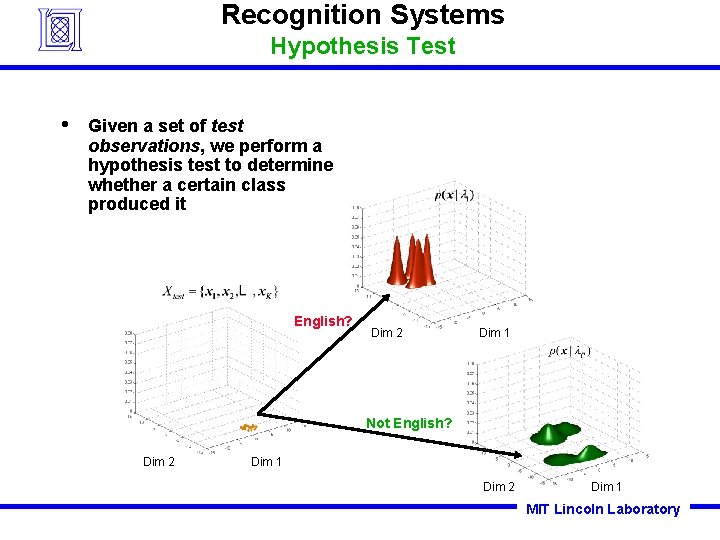
Recognition Systems Hypothesis Test • Given a set of test observations, we perform a hypothesis test to determine whether a certain class produced it English? Dim 2 Dim 1 Not English? Dim 2 Dim 1 MIT Lincoln Laboratory
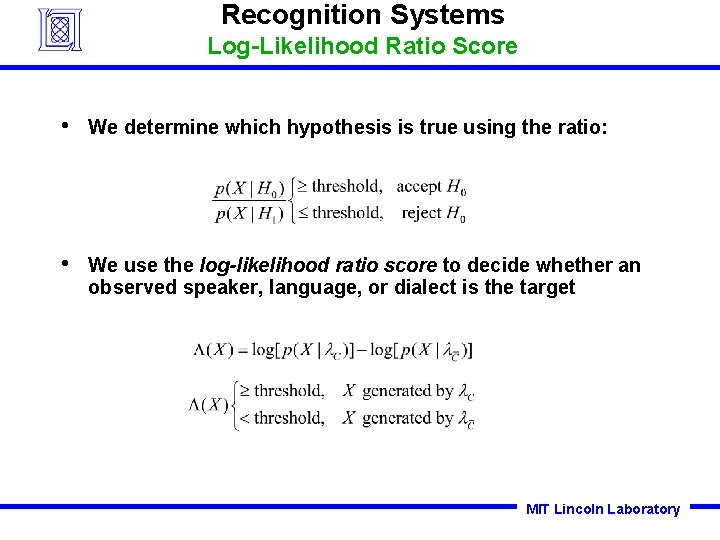
Recognition Systems Log-Likelihood Ratio Score • We determine which hypothesis is true using the ratio: • We use the log-likelihood ratio score to decide whether an observed speaker, language, or dialect is the target MIT Lincoln Laboratory
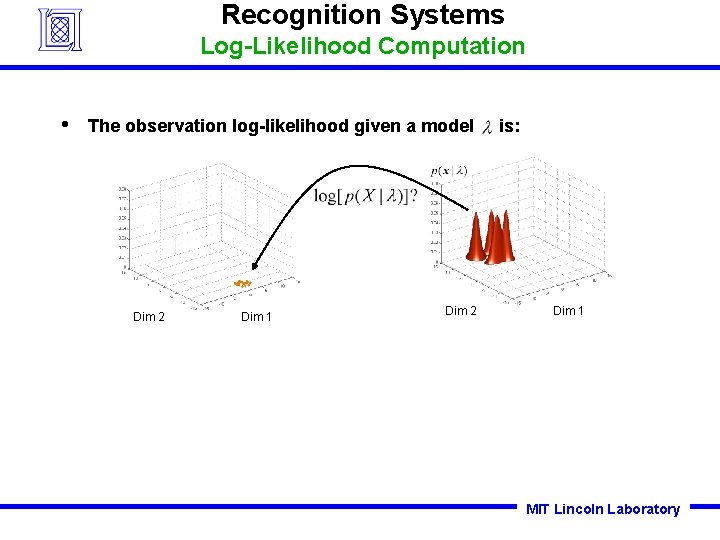
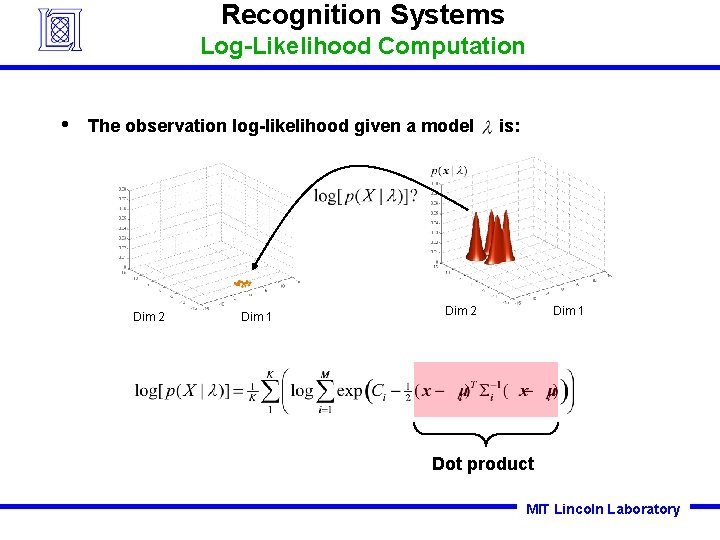
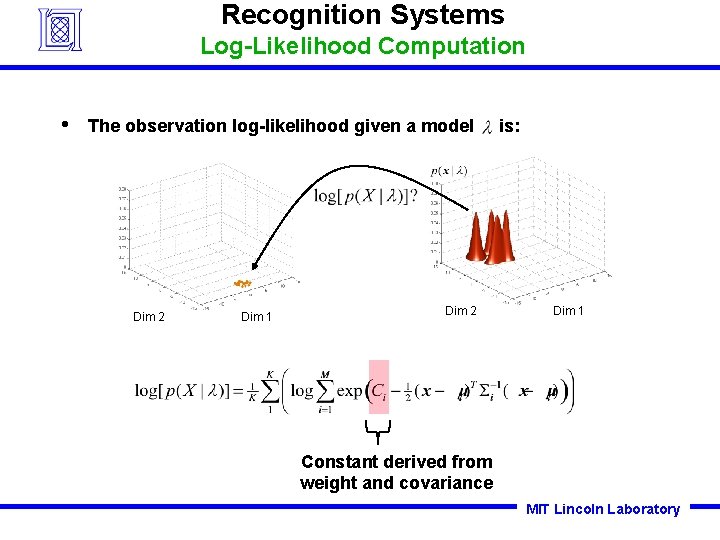
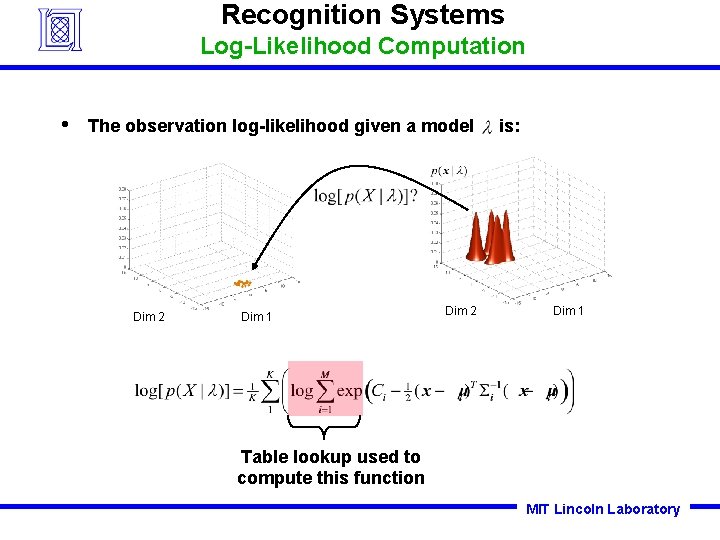
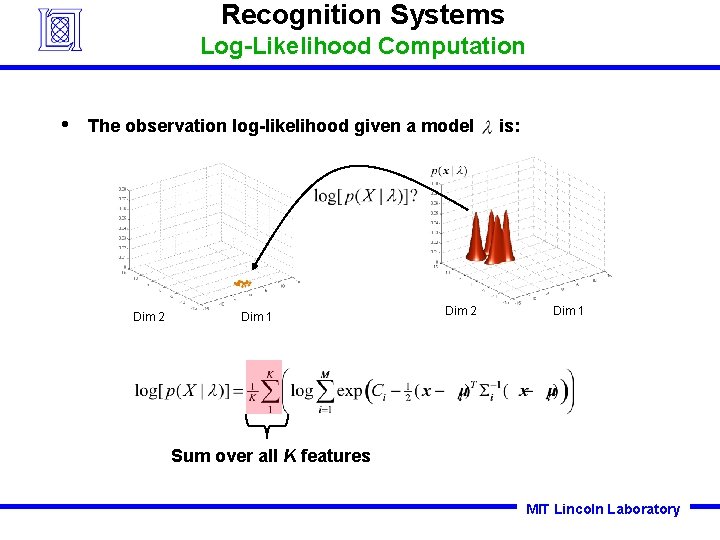
Recognition Systems Log-Likelihood Computation • The observation log-likelihood given a model Dim 2 Dim 1 Dim 2 is: Dim 1 MIT Lincoln Laboratory
Recognition Systems Log-Likelihood Computation • The observation log-likelihood given a model Dim 2 Dim 1 is: Dim 2 Dim 1 Dot product MIT Lincoln Laboratory
Recognition Systems Log-Likelihood Computation • The observation log-likelihood given a model Dim 2 Dim 1 Dim 2 is: Dim 1 Constant derived from weight and covariance MIT Lincoln Laboratory
Recognition Systems Log-Likelihood Computation • The observation log-likelihood given a model Dim 2 Dim 1 Dim 2 is: Dim 1 Table lookup used to compute this function MIT Lincoln Laboratory
Recognition Systems Log-Likelihood Computation • The observation log-likelihood given a model Dim 2 Dim 1 Dim 2 is: Dim 1 Sum over all K features MIT Lincoln Laboratory
Outline • Introduction • Recognition for speech applications using GMMs • Parallel implementation of the GMM • Performance model • Conclusions and future work MIT Lincoln Laboratory
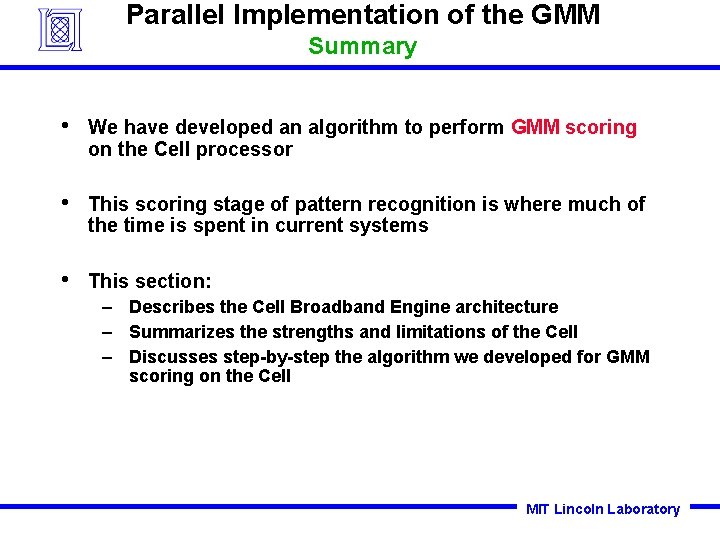
Parallel Implementation of the GMM Summary • We have developed an algorithm to perform GMM scoring on the Cell processor • This scoring stage of pattern recognition is where much of the time is spent in current systems • This section: – Describes the Cell Broadband Engine architecture – Summarizes the strengths and limitations of the Cell – Discusses step-by-step the algorithm we developed for GMM scoring on the Cell MIT Lincoln Laboratory
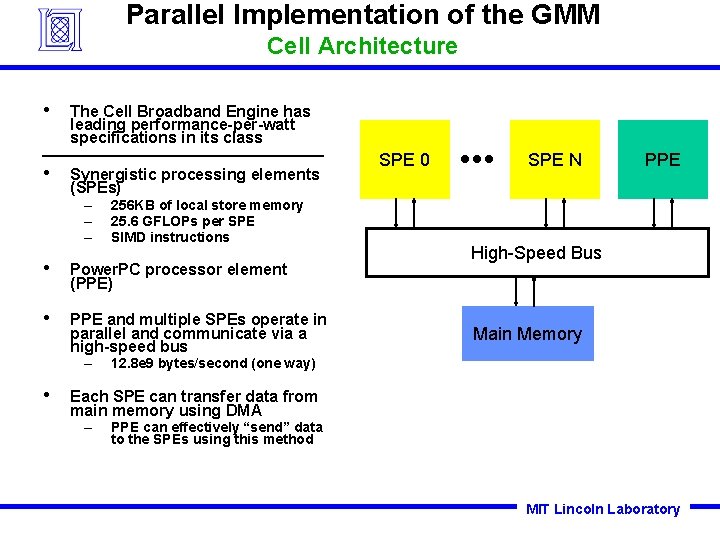
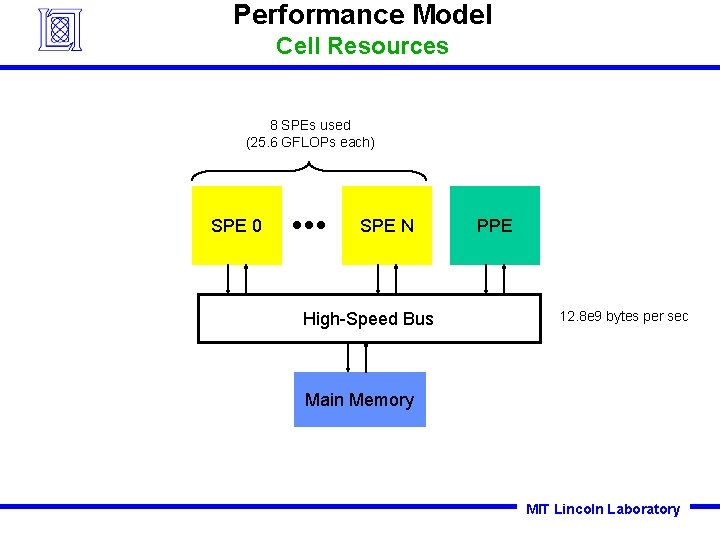
Parallel Implementation of the GMM Cell Architecture • The Cell Broadband Engine has leading performance-per-watt specifications in its class • Synergistic processing elements (SPEs) – – – 256 KB of local store memory 25. 6 GFLOPs per SPE SIMD instructions • Power. PC processor element (PPE) • PPE and multiple SPEs operate in parallel and communicate via a high-speed bus – • SPE 0 SPE N PPE High-Speed Bus Main Memory 12. 8 e 9 bytes/second (one way) Each SPE can transfer data from main memory using DMA – PPE can effectively “send” data to the SPEs using this method MIT Lincoln Laboratory
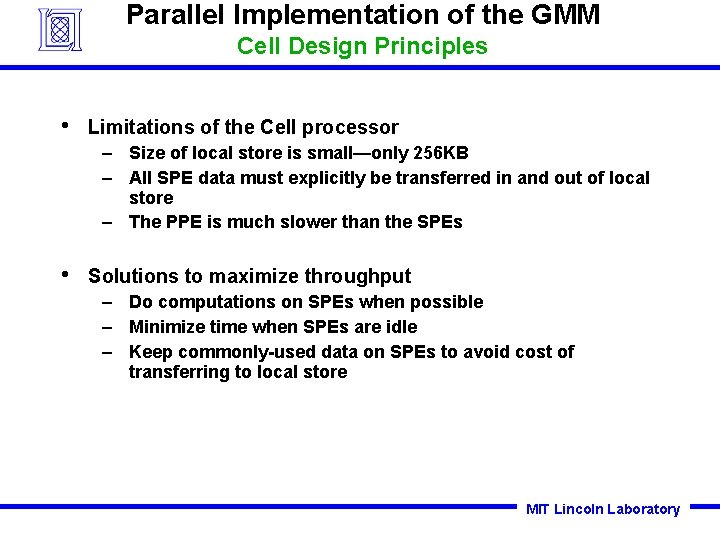
Parallel Implementation of the GMM Cell Design Principles • Limitations of the Cell processor – Size of local store is small—only 256 KB – All SPE data must explicitly be transferred in and out of local store – The PPE is much slower than the SPEs • Solutions to maximize throughput – Do computations on SPEs when possible – Minimize time when SPEs are idle – Keep commonly-used data on SPEs to avoid cost of transferring to local store MIT Lincoln Laboratory
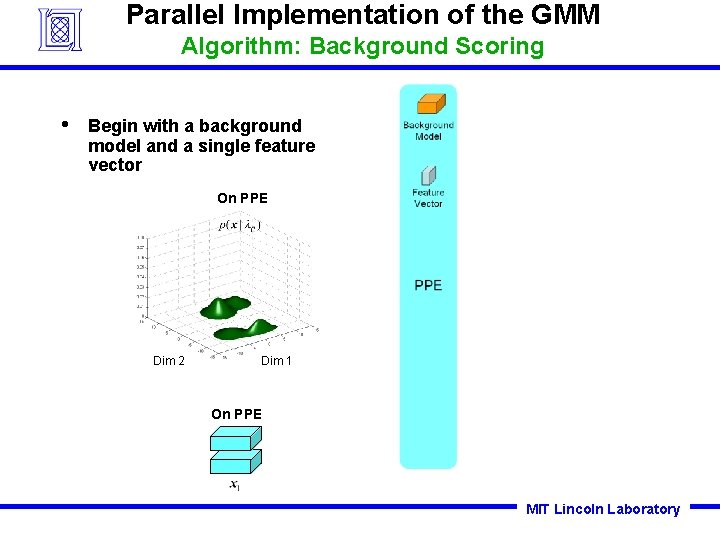
Parallel Implementation of the GMM Algorithm: Background Scoring • Begin with a background model and a single feature vector On PPE Dim 2 Dim 1 On PPE MIT Lincoln Laboratory
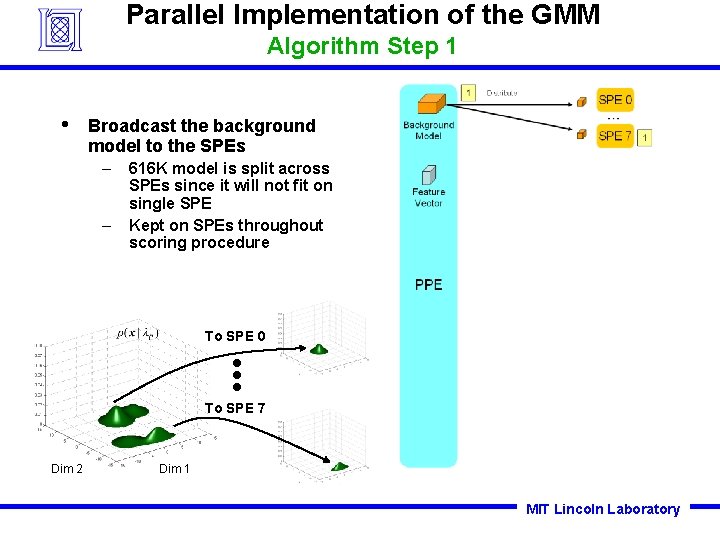
Parallel Implementation of the GMM Algorithm Step 1 • Broadcast the background model to the SPEs – – 616 K model is split across SPEs since it will not fit on single SPE Kept on SPEs throughout scoring procedure To SPE 0 To SPE 7 Dim 2 Dim 1 MIT Lincoln Laboratory
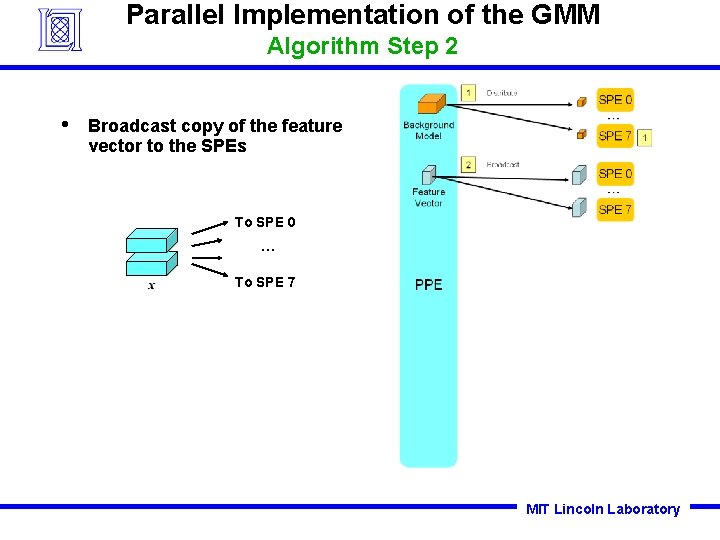
Parallel Implementation of the GMM Algorithm Step 2 • Broadcast copy of the feature vector to the SPEs To SPE 0 … To SPE 7 MIT Lincoln Laboratory
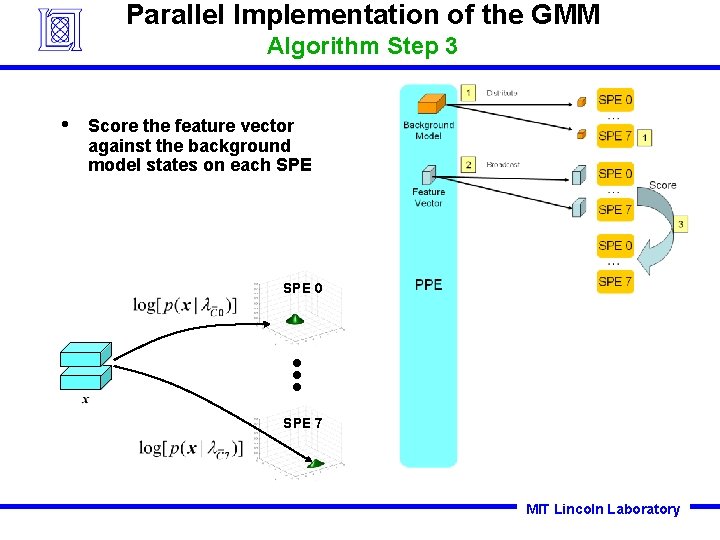
Parallel Implementation of the GMM Algorithm Step 3 • Score the feature vector against the background model states on each SPE 0 SPE 7 MIT Lincoln Laboratory
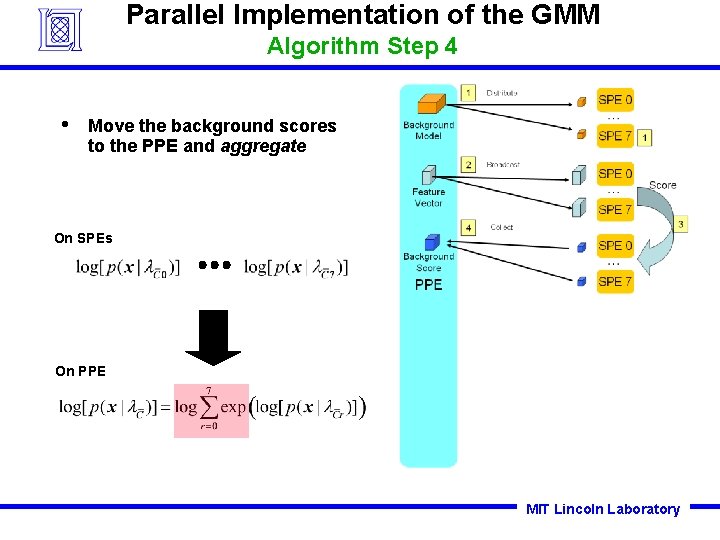
Parallel Implementation of the GMM Algorithm Step 4 • Move the background scores to the PPE and aggregate On SPEs On PPE MIT Lincoln Laboratory
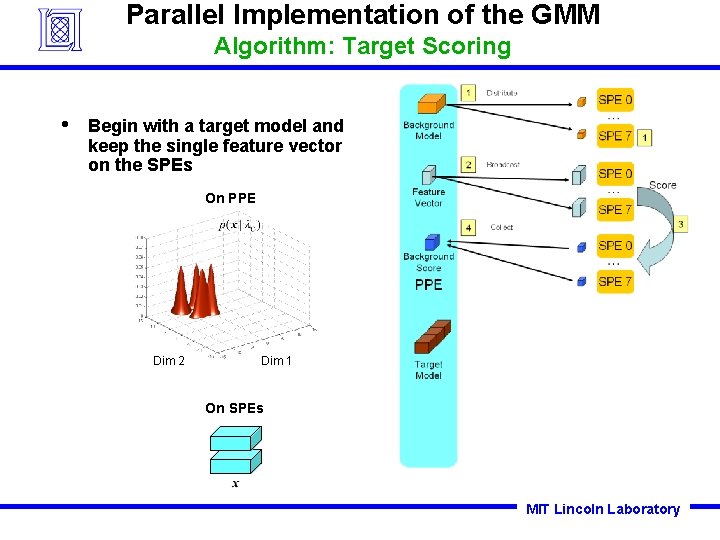
Parallel Implementation of the GMM Algorithm: Target Scoring • Begin with a target model and keep the single feature vector on the SPEs On PPE Dim 2 Dim 1 On SPEs MIT Lincoln Laboratory
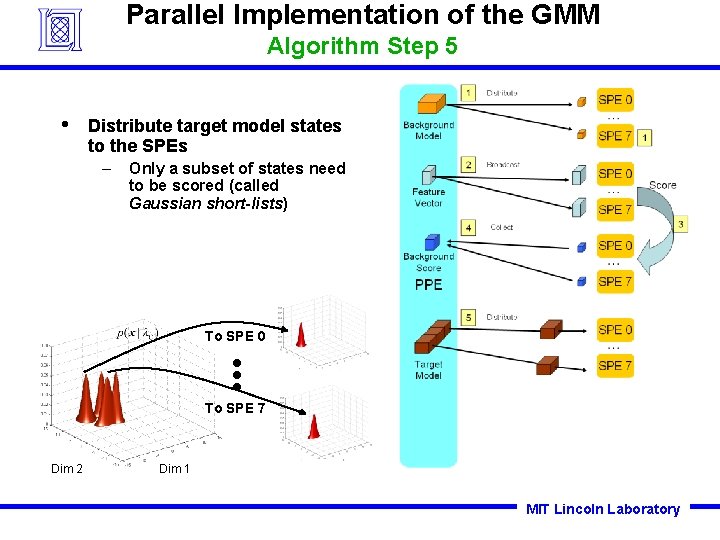
Parallel Implementation of the GMM Algorithm Step 5 • Distribute target model states to the SPEs – Only a subset of states need to be scored (called Gaussian short-lists) To SPE 0 To SPE 7 Dim 2 Dim 1 MIT Lincoln Laboratory
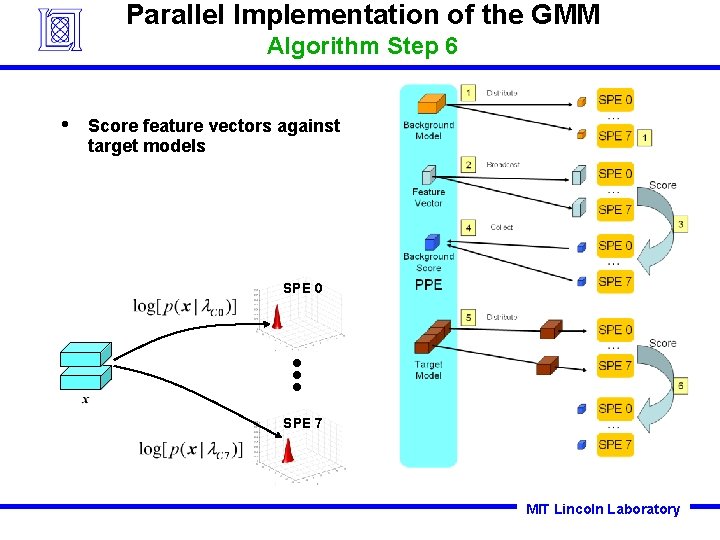
Parallel Implementation of the GMM Algorithm Step 6 • Score feature vectors against target models SPE 0 SPE 7 MIT Lincoln Laboratory
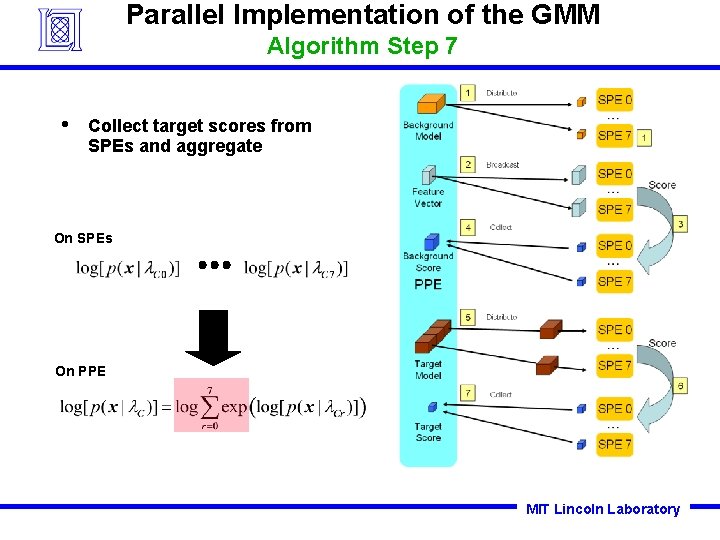
Parallel Implementation of the GMM Algorithm Step 7 • Collect target scores from SPEs and aggregate On SPEs On PPE MIT Lincoln Laboratory
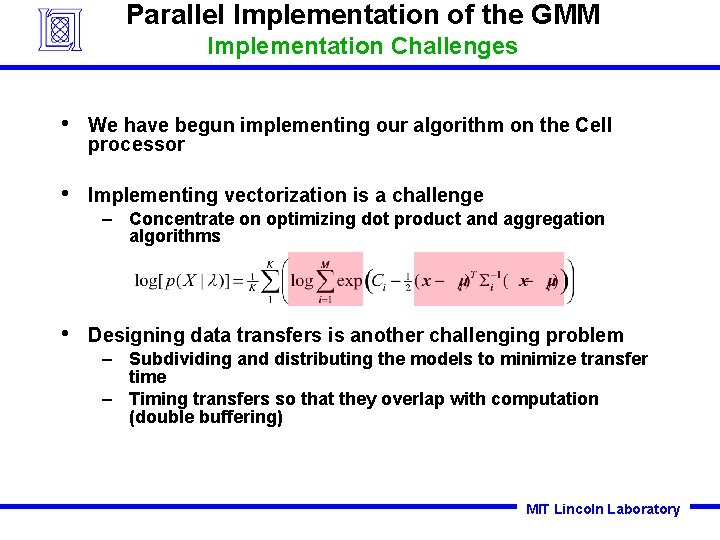
Parallel Implementation of the GMM Implementation Challenges • We have begun implementing our algorithm on the Cell processor • Implementing vectorization is a challenge – Concentrate on optimizing dot product and aggregation algorithms • Designing data transfers is another challenging problem – Subdividing and distributing the models to minimize transfer time – Timing transfers so that they overlap with computation (double buffering) MIT Lincoln Laboratory
Outline • Introduction • Recognition for speech applications using GMMs • Parallel implementation of the GMM • Performance model • Conclusions and future work MIT Lincoln Laboratory
Performance Model Cell Resources 8 SPEs used (25. 6 GFLOPs each) SPE 0 SPE N High-Speed Bus PPE 12. 8 e 9 bytes per sec Main Memory MIT Lincoln Laboratory
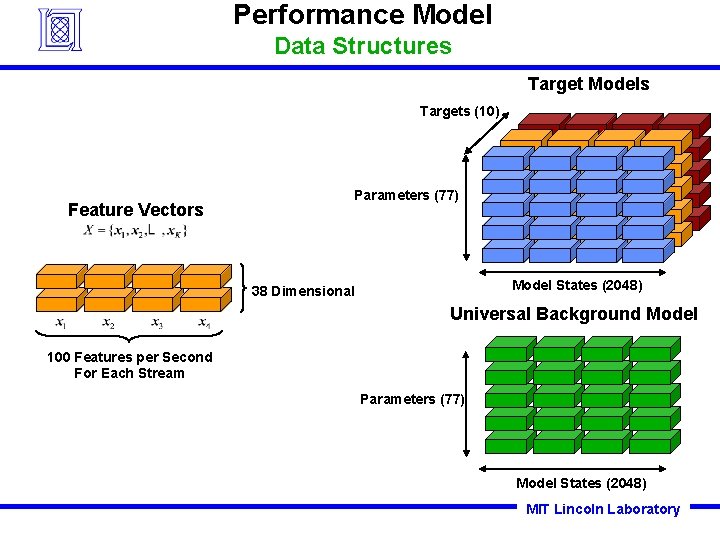
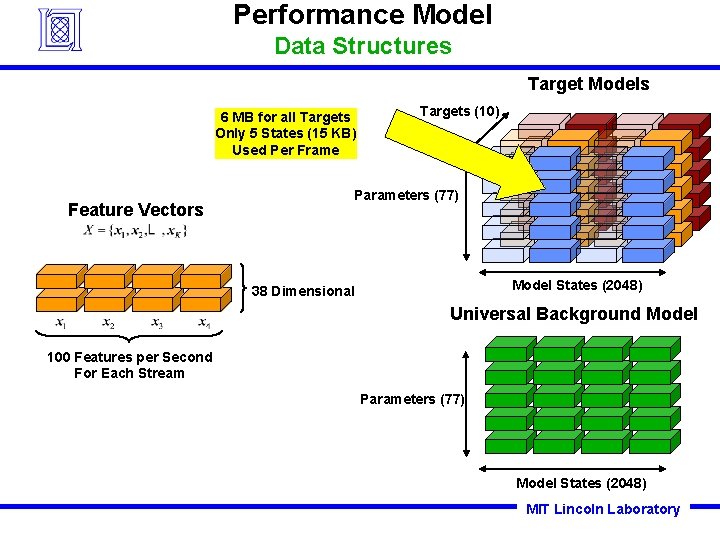
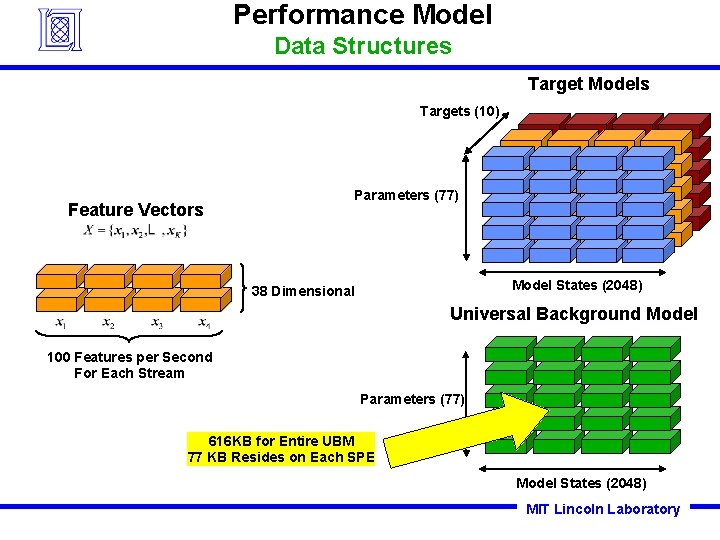
Performance Model Data Structures Target Models Targets (10) Feature Vectors Parameters (77) Model States (2048) 38 Dimensional Universal Background Model 100 Features per Second For Each Stream Parameters (77) Model States (2048) MIT Lincoln Laboratory
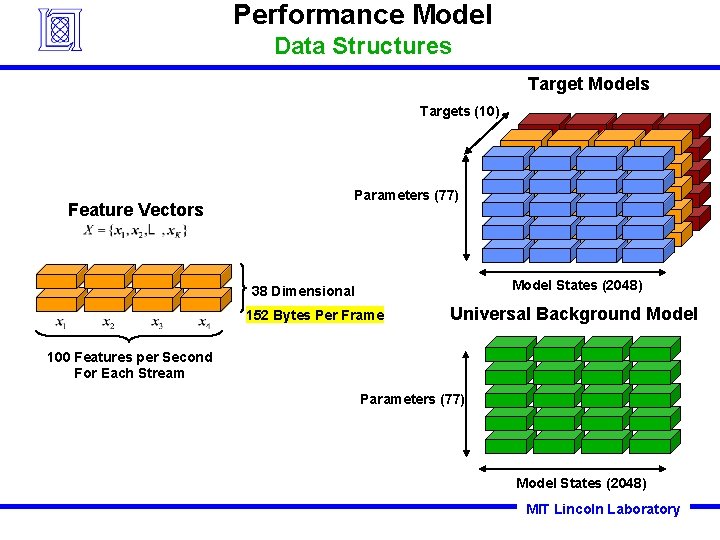
Performance Model Data Structures Target Models Targets (10) Feature Vectors Parameters (77) Model States (2048) 38 Dimensional 152 Bytes Per Frame Universal Background Model 100 Features per Second For Each Stream Parameters (77) Model States (2048) MIT Lincoln Laboratory
Performance Model Data Structures Target Models 6 MB for all Targets Only 5 States (15 KB) Used Per Frame Feature Vectors Targets (10) Parameters (77) Model States (2048) 38 Dimensional Universal Background Model 100 Features per Second For Each Stream Parameters (77) Model States (2048) MIT Lincoln Laboratory
Performance Model Data Structures Target Models Targets (10) Feature Vectors Parameters (77) Model States (2048) 38 Dimensional Universal Background Model 100 Features per Second For Each Stream Parameters (77) 616 KB for Entire UBM 77 KB Resides on Each SPE Model States (2048) MIT Lincoln Laboratory
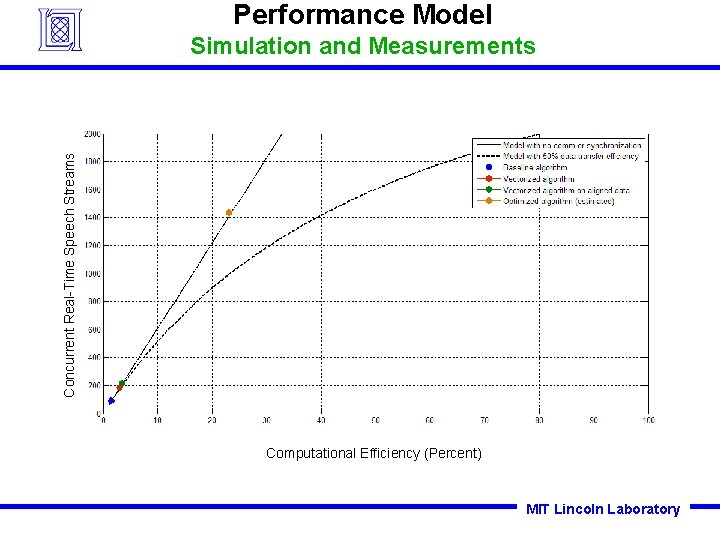
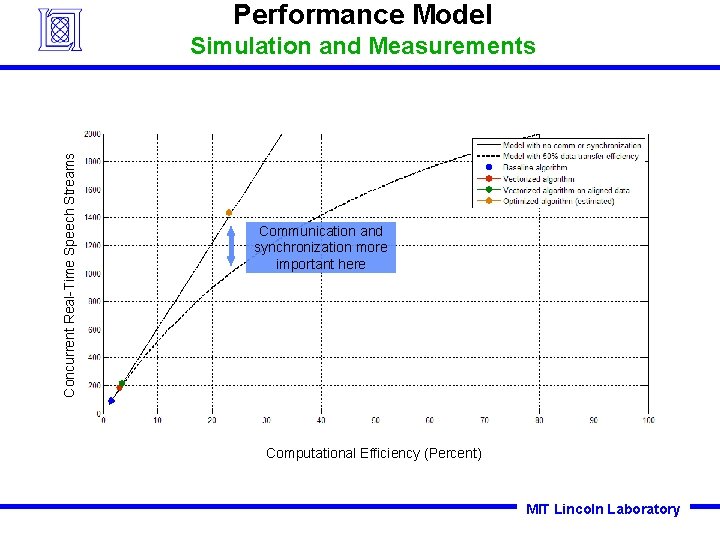
Performance Model Concurrent Real-Time Speech Streams Simulation and Measurements Computational Efficiency (Percent) MIT Lincoln Laboratory
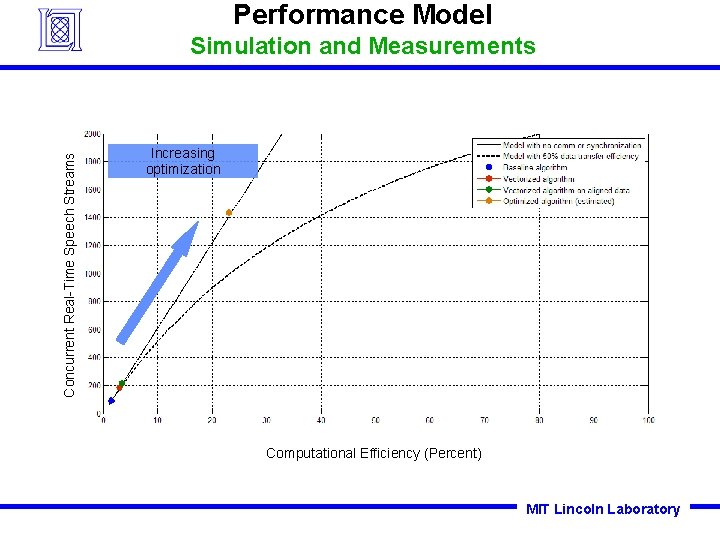
Performance Model Concurrent Real-Time Speech Streams Simulation and Measurements Increasing optimization Computational Efficiency (Percent) MIT Lincoln Laboratory
Performance Model Concurrent Real-Time Speech Streams Simulation and Measurements Communication and synchronization more important here Computational Efficiency (Percent) MIT Lincoln Laboratory
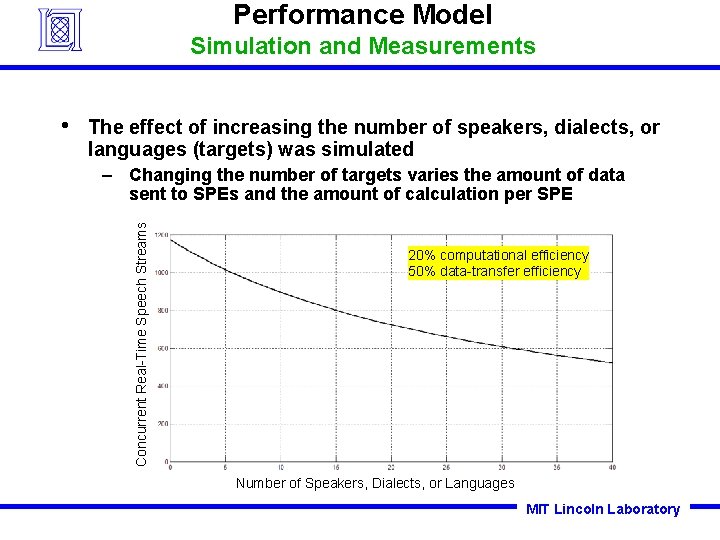
Performance Model Simulation and Measurements The effect of increasing the number of speakers, dialects, or languages (targets) was simulated – Changing the number of targets varies the amount of data sent to SPEs and the amount of calculation per SPE Concurrent Real-Time Speech Streams • 20% computational efficiency 50% data-transfer efficiency Number of Speakers, Dialects, or Languages MIT Lincoln Laboratory
Outline • Introduction • Recognition for speech applications using GMMs • Parallel implementation of the GMM • Performance model • Conclusions and future work MIT Lincoln Laboratory
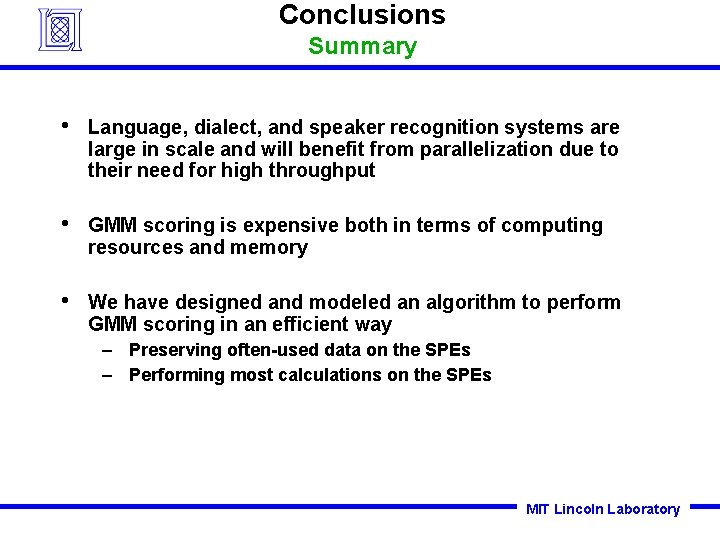
Conclusions Summary • Language, dialect, and speaker recognition systems are large in scale and will benefit from parallelization due to their need for high throughput • GMM scoring is expensive both in terms of computing resources and memory • We have designed and modeled an algorithm to perform GMM scoring in an efficient way – Preserving often-used data on the SPEs – Performing most calculations on the SPEs MIT Lincoln Laboratory
Conclusions Future Work • Optimization and measurement of the full algorithm to validate the model • Compare our system against other state-of-the-art serial and parallel approaches – – • Intel single processor Intel multicore Intel networked Cell PPE Our results will become part of the PVTOL library MIT Lincoln Laboratory
Acknowledgement • • • Cliff Weinstein Joe Campbell Alan Mc. Cree Tom Quatieri Sharon Sacco MIT Lincoln Laboratory
Backup MIT Lincoln Laboratory
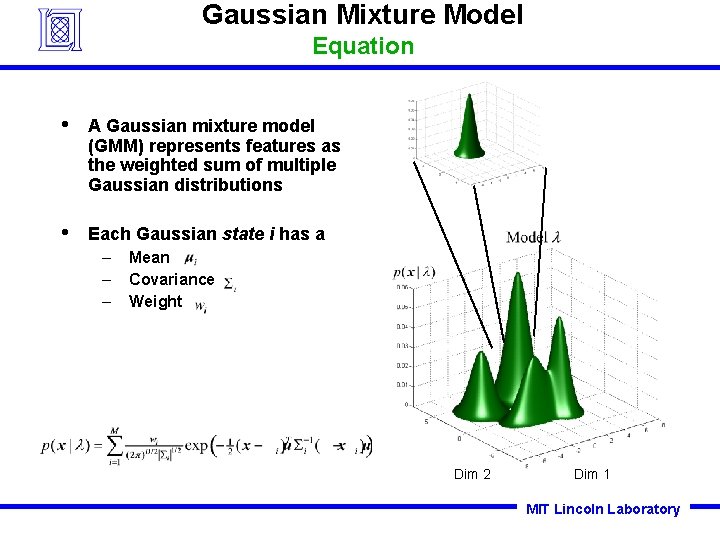
Gaussian Mixture Model Equation • A Gaussian mixture model (GMM) represents features as the weighted sum of multiple Gaussian distributions • Each Gaussian state i has a – – – Mean Covariance Weight Dim 2 Dim 1 MIT Lincoln Laboratory