
Language Dialect and Accent Nature of a language
- Slides: 12
Language, Dialect and Accent
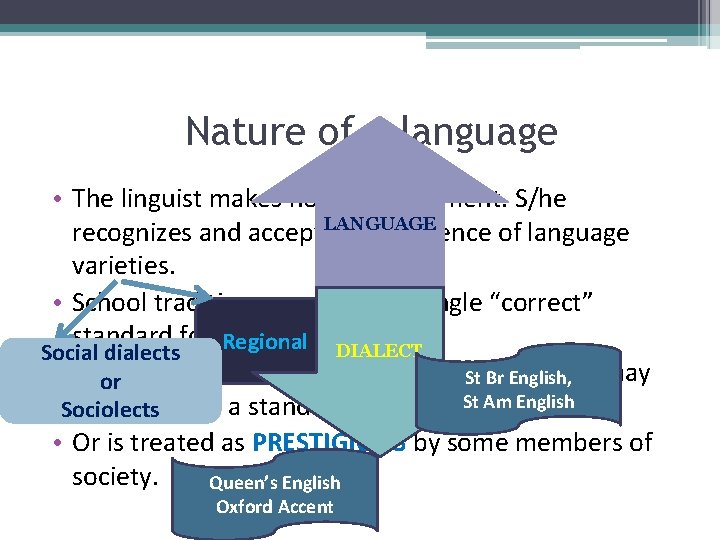
Nature of a language • The linguist makes no value judgment. S/he recognizes and accepts. LANGUAGE the existence of language varieties. • School traditions emphasize a single “correct” standard form. Regional dialects DIALECT Social dialects • Linguistics acknowledges that a certain dialect may St Br English, or St Am English be treated as a standard form Sociolects • Or is treated as PRESTIGIOUS by some members of society. Queen’s English Oxford Accent
• Linguists in recent decades have become more interested in the language of the people who (by a rigid conception of a St. Language) do not talk “properly”: language of small children and foreigners. • The language of children has therefore a linguistic interest quite apart from its psychological interest as the development of speech in infancy. • The mixed languages of former colonies (Jamaican Creole or Haitian Creole) have been studied with the same interest as can be studied Fr or Eng.
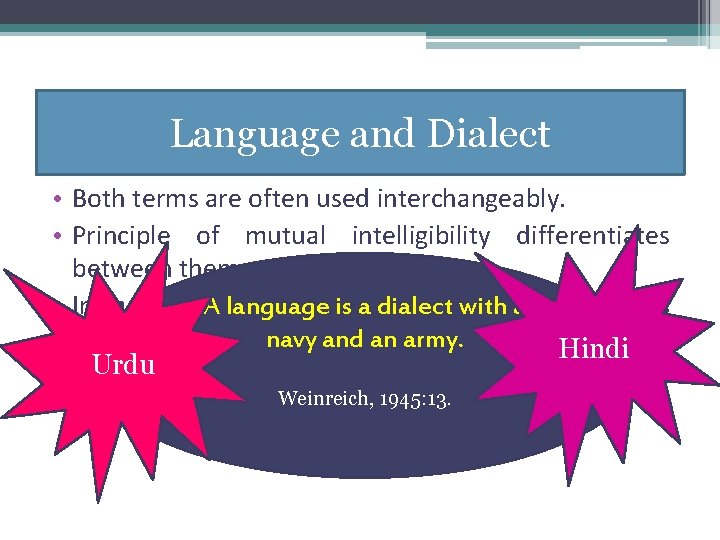
Language and Dialect • Both terms are often used interchangeably. • Principle of mutual intelligibility differentiates between them. Any varieties which • In most cases, the 2 use one orare another depends A language isof a dialect with a Ifnavy theyand are mutually NOT on linguistic bases, but ontosocio-political an army. mutually intelligiblerather are taken Hindi Urdu factors. UNintelligible , then they are constitute two dialects Weinreich, 1945: 13. of the separate languages. same language.
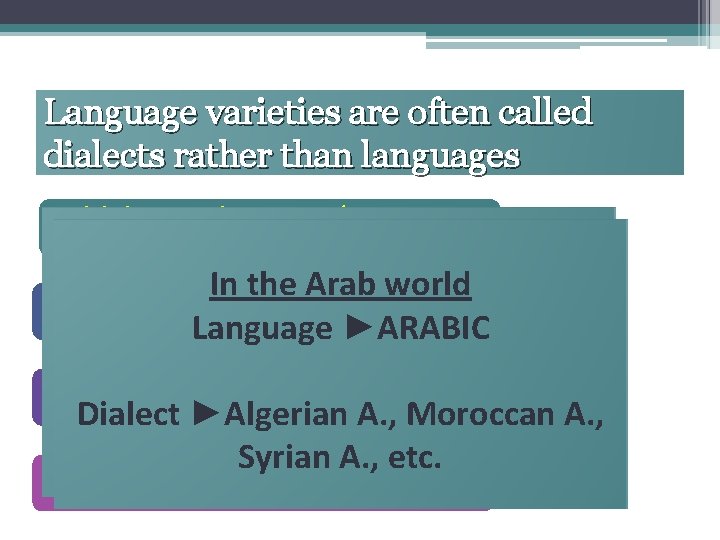
Language varieties are often called dialects rather than languages Solely because they are not (or not recognized as) literary languages Dialect. In► Subordinate term the Arab world Because the speakers of the given language do not have a state ►ARABIC of their own Language Because they are not used in press or Language ► Super. A. , ordinate term. A. , literature, or very little, Dialect ►Algerian Moroccan Syrian A. , etc. Or because their language lacks prestige.
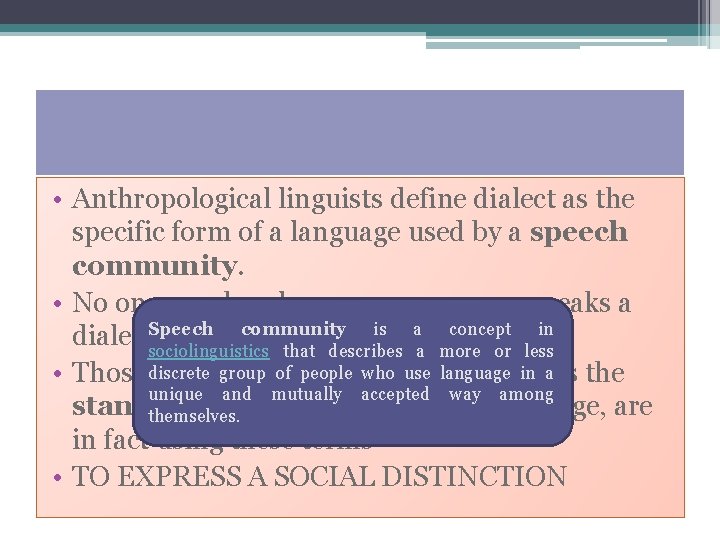
• Anthropological linguists define dialect as the specific form of a language used by a speech community. • No one speaks a language ; everyone speaks a community is a concept in dialect. Speech of a language sociolinguistics that describes a more or less group of people who use language in aas the • Those discrete who identify a particular dailect unique and mutually accepted way among standard or proper version of a language, are themselves. in fact using these terms • TO EXPRESS A SOCIAL DISTINCTION
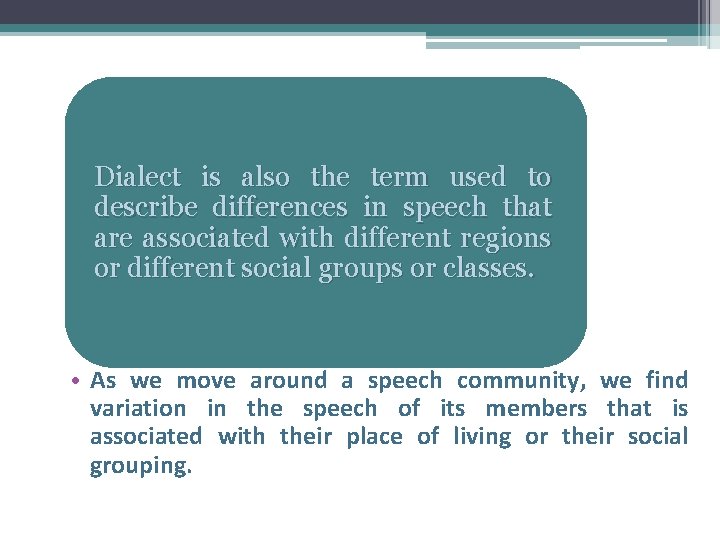
Dialect is also the term used to describe differences in speech that are associated with different regions or different social groups or classes. • As we move around a speech community, we find variation in the speech of its members that is associated with their place of living or their social grouping.
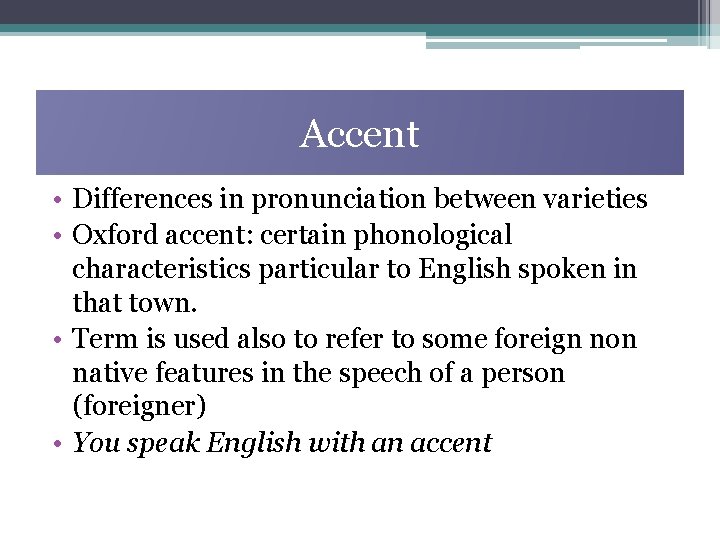
Accent • Differences in pronunciation between varieties • Oxford accent: certain phonological characteristics particular to English spoken in that town. • Term is used also to refer to some foreign non native features in the speech of a person (foreigner) • You speak English with an accent
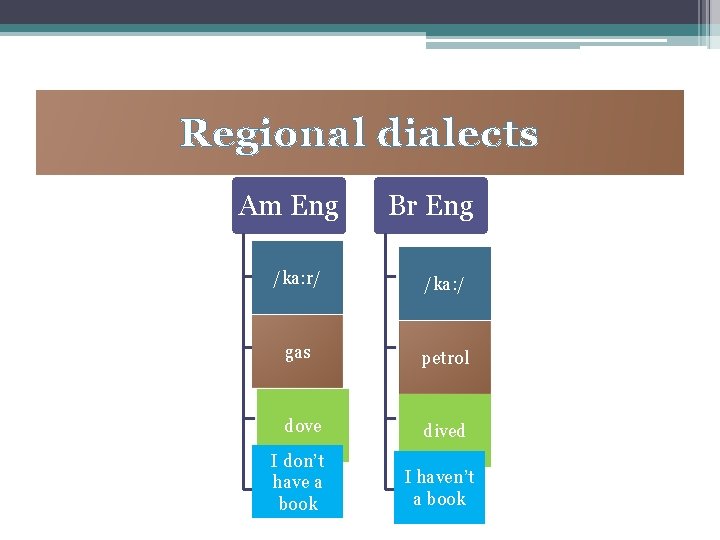
Regional dialects Am Eng Br Eng Pronunciation /ka: r/ Pronunciation Lexis gas petrol Morphology I don’t have Syntaxa book I haven’t Syntax a book dove /ka: / Lexis dived
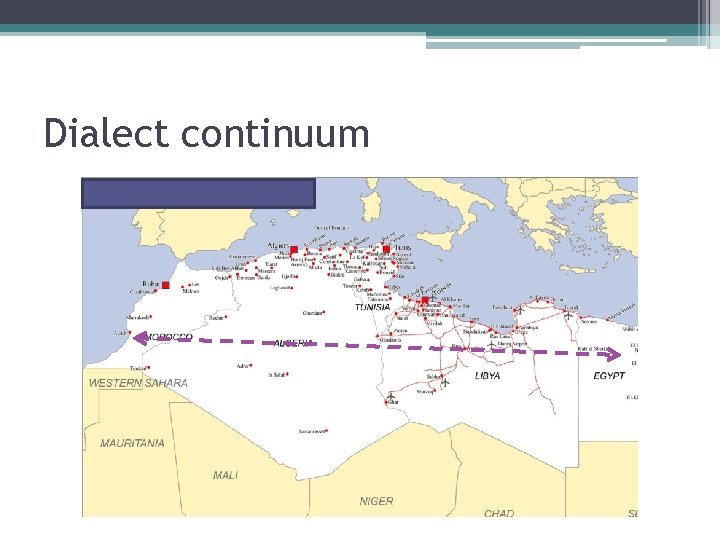
Dialect continuum
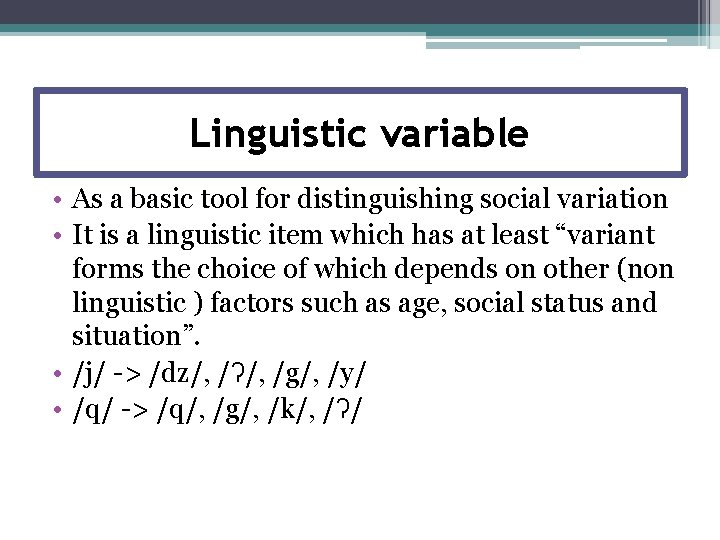
Linguistic variable • As a basic tool for distinguishing social variation • It is a linguistic item which has at least “variant forms the choice of which depends on other (non linguistic ) factors such as age, social status and situation”. • /j/ -> /dz/, /ʔ/, /g/, /y/ • /q/ -> /q/, /g/, /k/, /ʔ/
• SHUKRAN WA ILA ALIQA’A