
LANGUAGE CULTURE AND IDENTITY Chapter 7 WHAT IS



- Slides: 15
LANGUAGE, CULTURE, AND IDENTITY Chapter 7
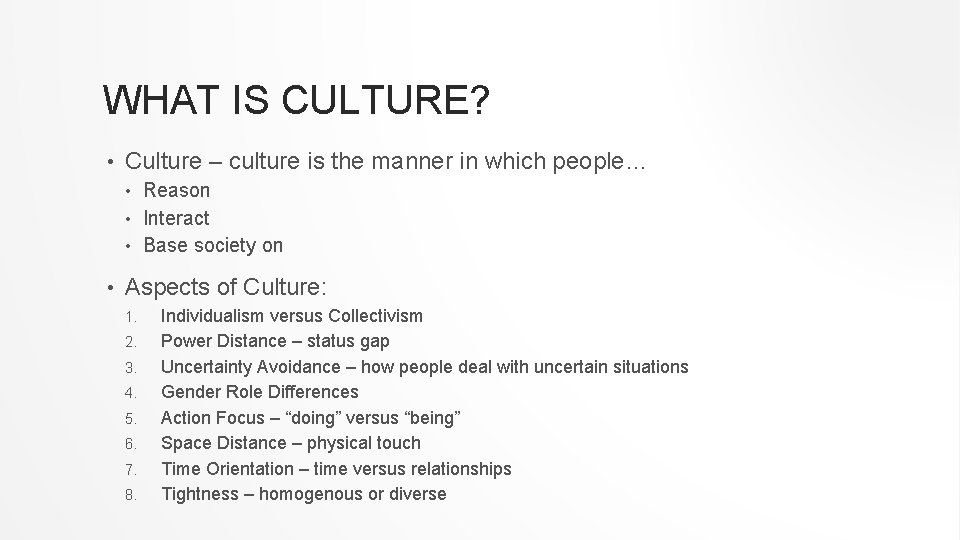
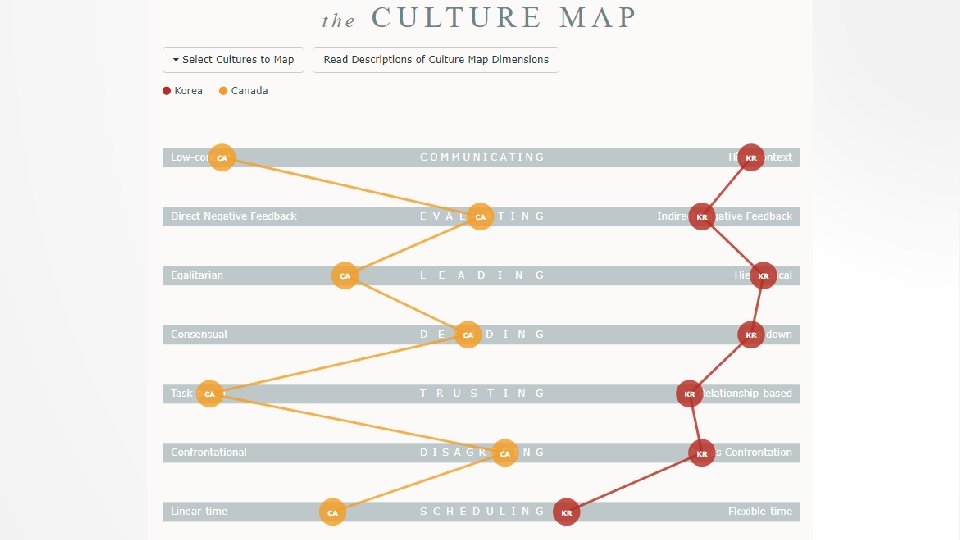
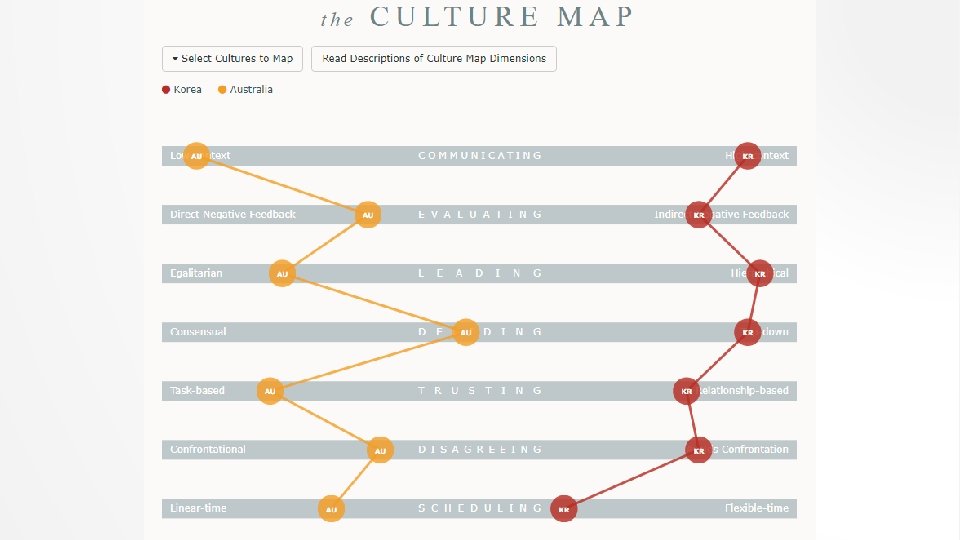
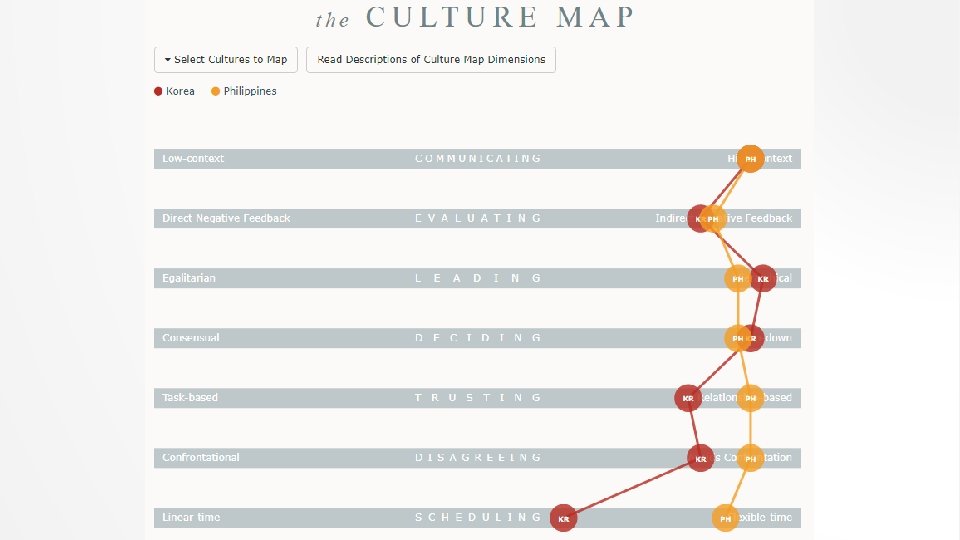
WHAT IS CULTURE? • Culture – culture is the manner in which people… Reason • Interact • Base society on • • Aspects of Culture: 1. 2. 3. 4. 5. 6. 7. 8. Individualism versus Collectivism Power Distance – status gap Uncertainty Avoidance – how people deal with uncertain situations Gender Role Differences Action Focus – “doing” versus “being” Space Distance – physical touch Time Orientation – time versus relationships Tightness – homogenous or diverse
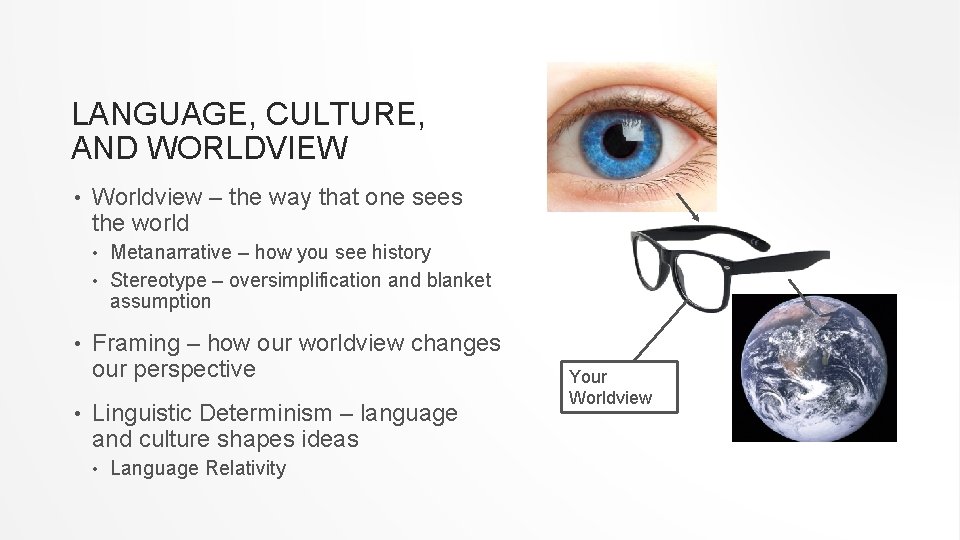
LANGUAGE, CULTURE, AND WORLDVIEW • Worldview – the way that one sees the world Metanarrative – how you see history • Stereotype – oversimplification and blanket assumption • • • Framing – how our worldview changes our perspective Linguistic Determinism – language and culture shapes ideas • Language Relativity Your Worldview
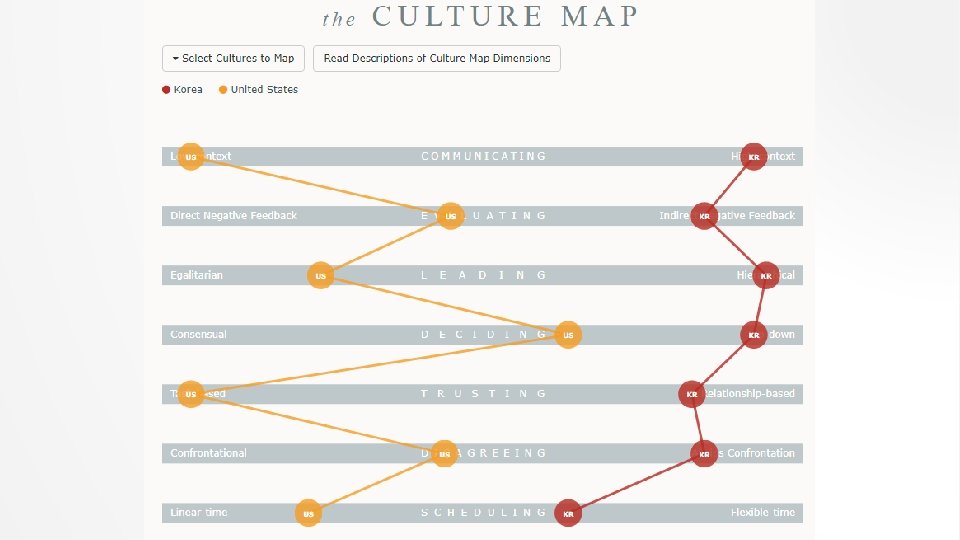
WHAT IS HAPPENING?
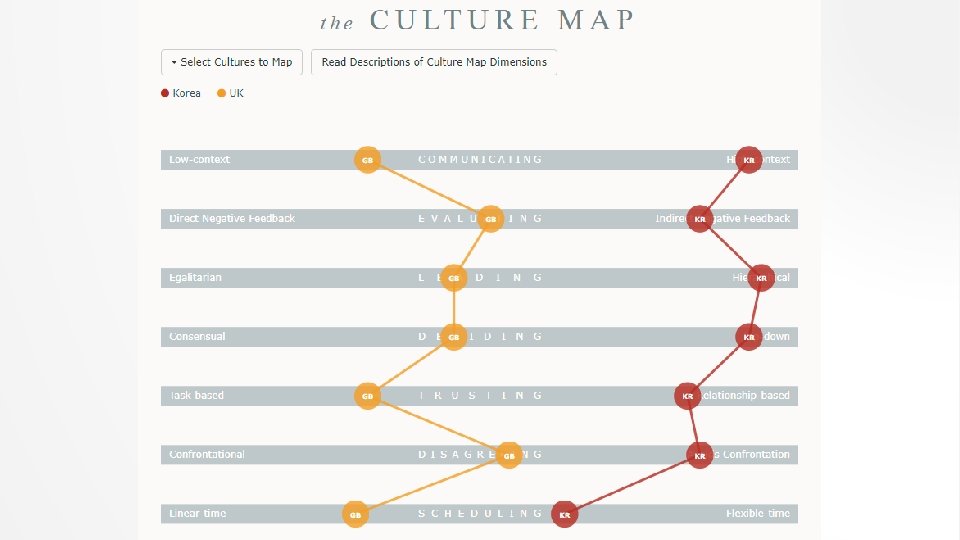
WHAT IS HAPPENING?
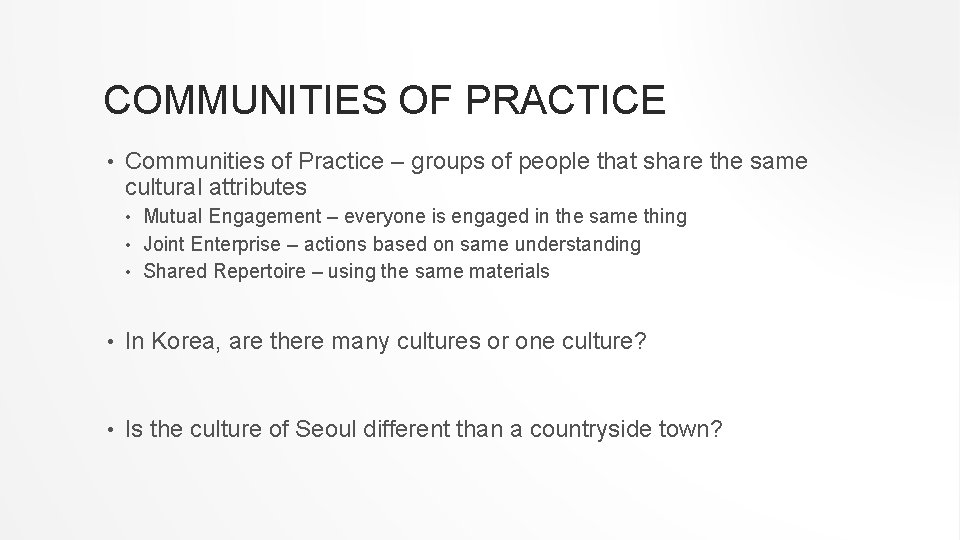
COMMUNITIES OF PRACTICE • Communities of Practice – groups of people that share the same cultural attributes Mutual Engagement – everyone is engaged in the same thing • Joint Enterprise – actions based on same understanding • Shared Repertoire – using the same materials • • In Korea, are there many cultures or one culture? • Is the culture of Seoul different than a countryside town?
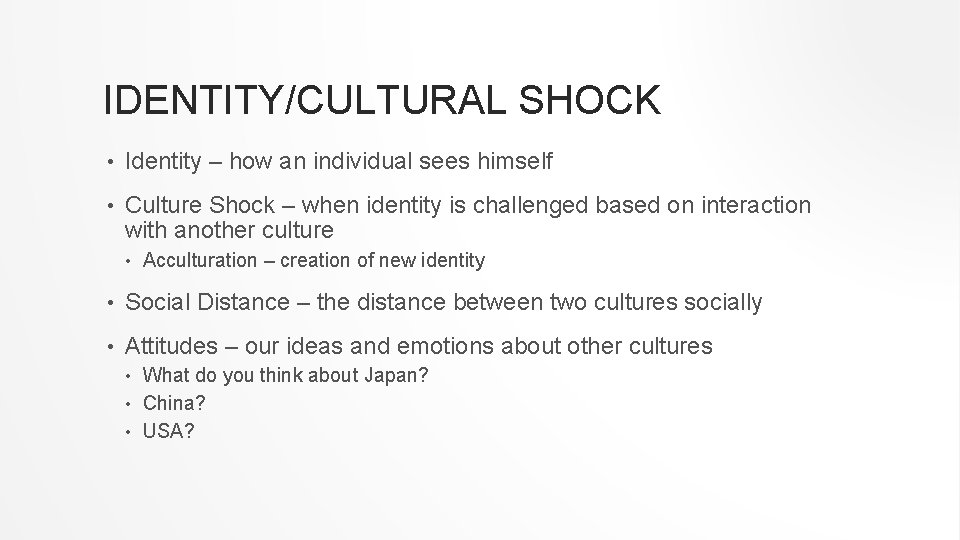
IDENTITY/CULTURAL SHOCK • Identity – how an individual sees himself • Culture Shock – when identity is challenged based on interaction with another culture • Acculturation – creation of new identity • Social Distance – the distance between two cultures socially • Attitudes – our ideas and emotions about other cultures What do you think about Japan? • China? • USA? •
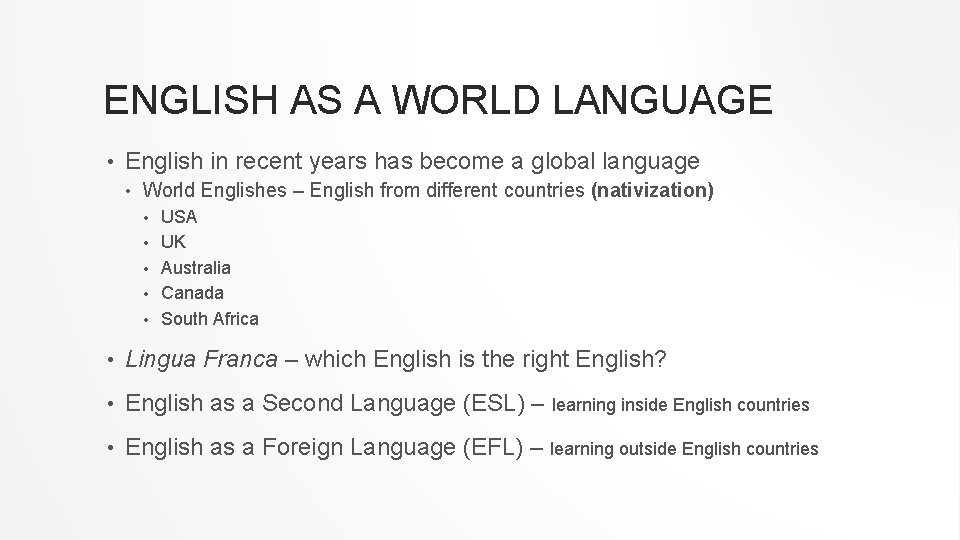
ENGLISH AS A WORLD LANGUAGE • English in recent years has become a global language • World Englishes – English from different countries (nativization) • • • USA UK Australia Canada South Africa • Lingua Franca – which English is the right English? • English as a Second Language (ESL) – learning inside English countries • English as a Foreign Language (EFL) – learning outside English countries
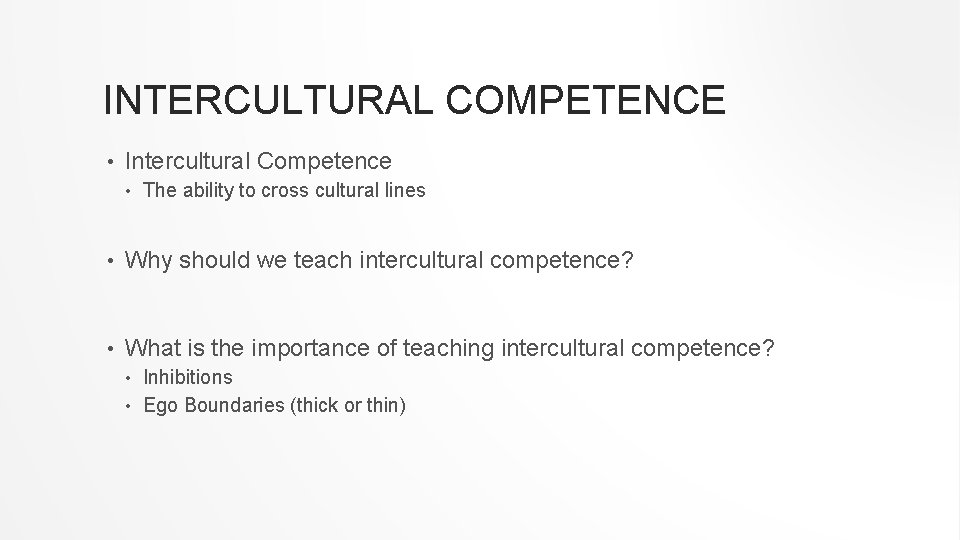
INTERCULTURAL COMPETENCE • Intercultural Competence • The ability to cross cultural lines • Why should we teach intercultural competence? • What is the importance of teaching intercultural competence? Inhibitions • Ego Boundaries (thick or thin) •