
Language Change Theorists AO 2 Concepts and Theories
- Slides: 26
Language Change Theorists AO 2 –Concepts and Theories
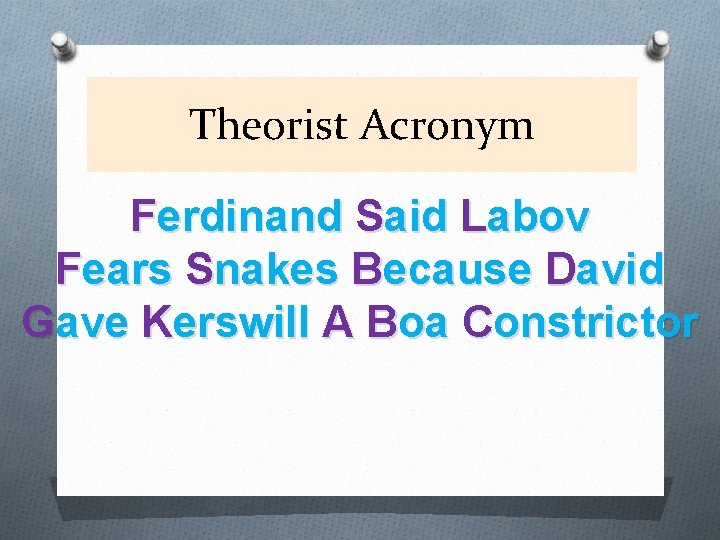
Theorist Acronym Ferdinand Said Labov Fears Snakes Because David Gave Kerswill A Boa Constrictor
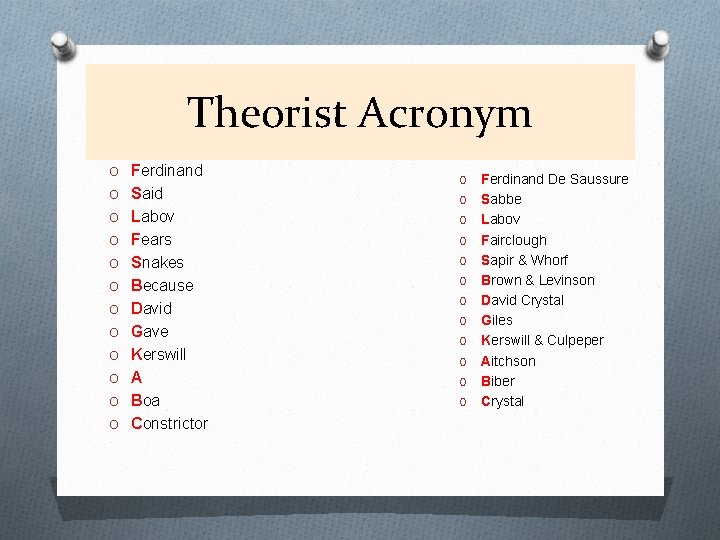
Theorist Acronym O Ferdinand O Said O Labov O O Fears O O Snakes O O Because O O David O Gave O Kerswill O A O Boa O Constrictor O O O Ferdinand De Saussure Sabbe Labov Fairclough Sapir & Whorf Brown & Levinson David Crystal Giles Kerswill & Culpeper Aitchson Biber Crystal
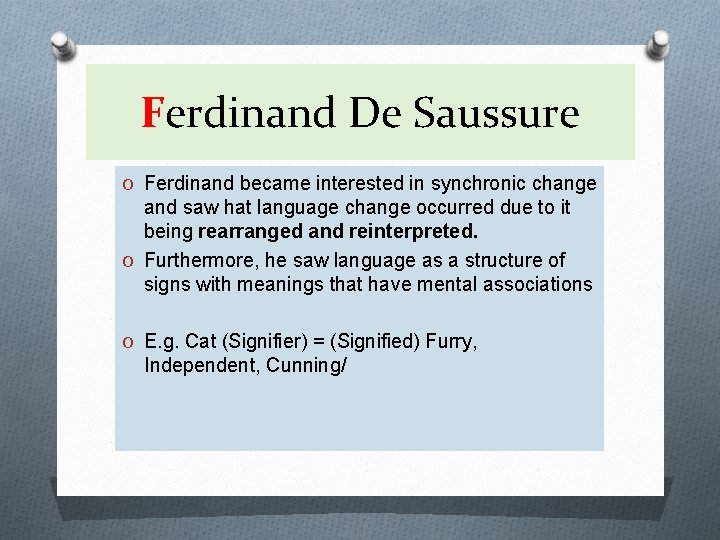
Ferdinand De Saussure O Ferdinand became interested in synchronic change and saw hat language change occurred due to it being rearranged and reinterpreted. O Furthermore, he saw language as a structure of signs with meanings that have mental associations O E. g. Cat (Signifier) = (Signified) Furry, Independent, Cunning/
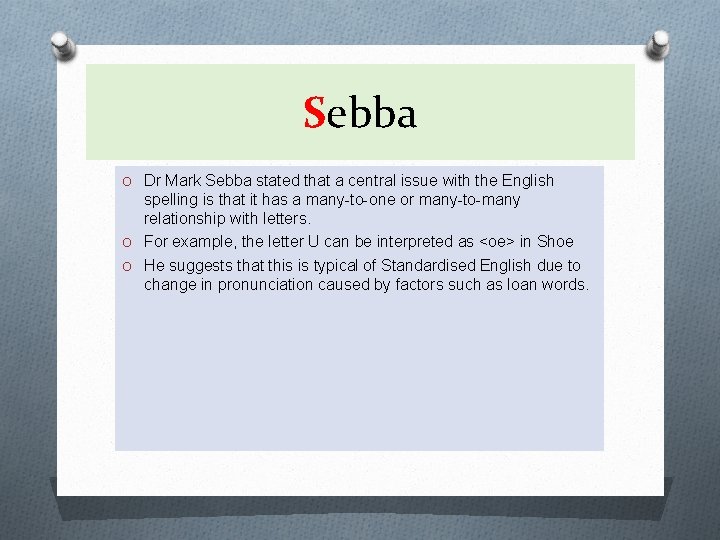
Sebba O Dr Mark Sebba stated that a central issue with the English spelling is that it has a many-to-one or many-to-many relationship with letters. O For example, the letter U can be interpreted as <oe> in Shoe O He suggests that this is typical of Standardised English due to change in pronunciation caused by factors such as loan words.
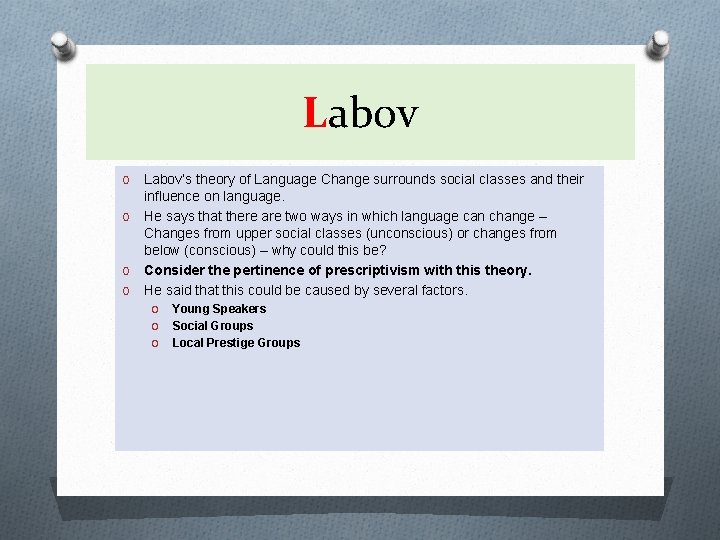
Labov’s theory of Language Change surrounds social classes and their influence on language. O He says that there are two ways in which language can change – Changes from upper social classes (unconscious) or changes from below (conscious) – why could this be? O Consider the pertinence of prescriptivism with this theory. O He said that this could be caused by several factors. O O Young Speakers Social Groups Local Prestige Groups
Fairclough O From Fairclough derived theory of synthetic personalisation.
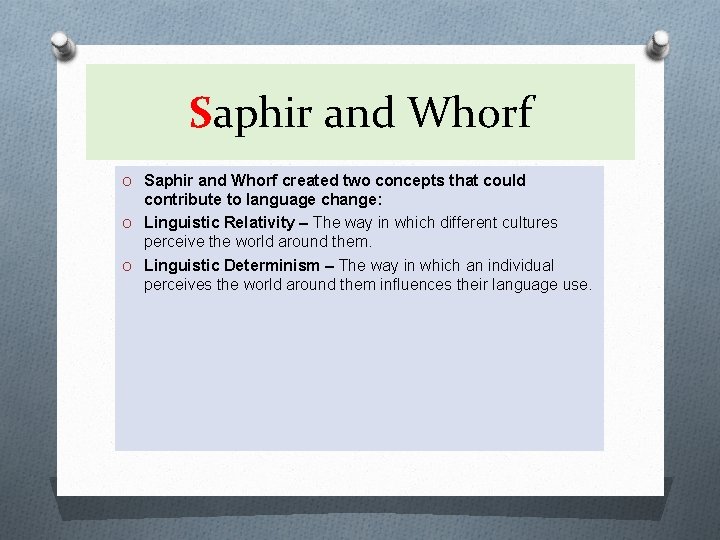
Saphir and Whorf O Saphir and Whorf created two concepts that could contribute to language change: O Linguistic Relativity – The way in which different cultures perceive the world around them. O Linguistic Determinism – The way in which an individual perceives the world around them influences their language use.
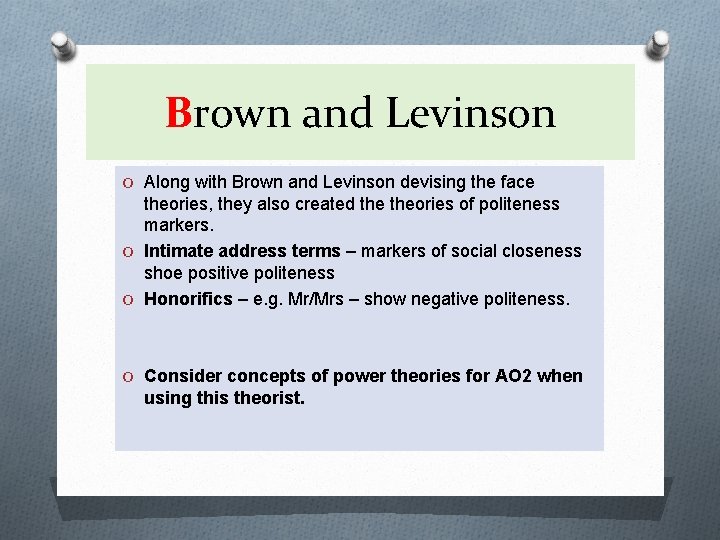
Brown and Levinson O Along with Brown and Levinson devising the face theories, they also created theories of politeness markers. O Intimate address terms – markers of social closeness shoe positive politeness O Honorifics – e. g. Mr/Mrs – show negative politeness. O Consider concepts of power theories for AO 2 when using this theorist.
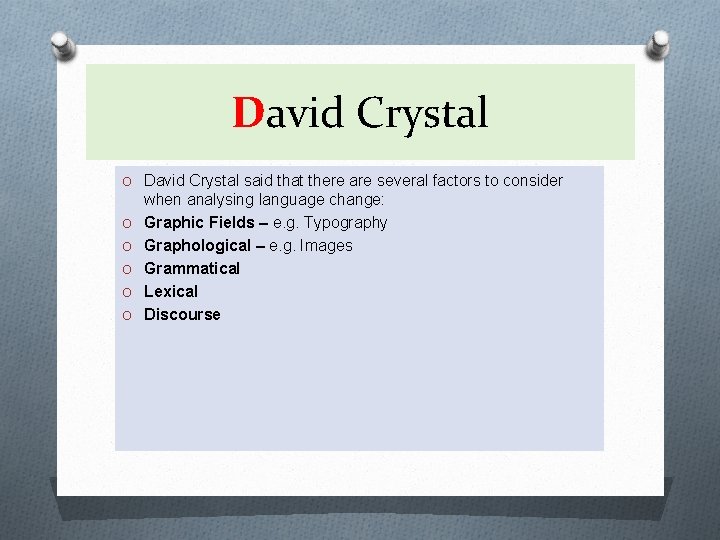
David Crystal O David Crystal said that there are several factors to consider O O O when analysing language change: Graphic Fields – e. g. Typography Graphological – e. g. Images Grammatical Lexical Discourse
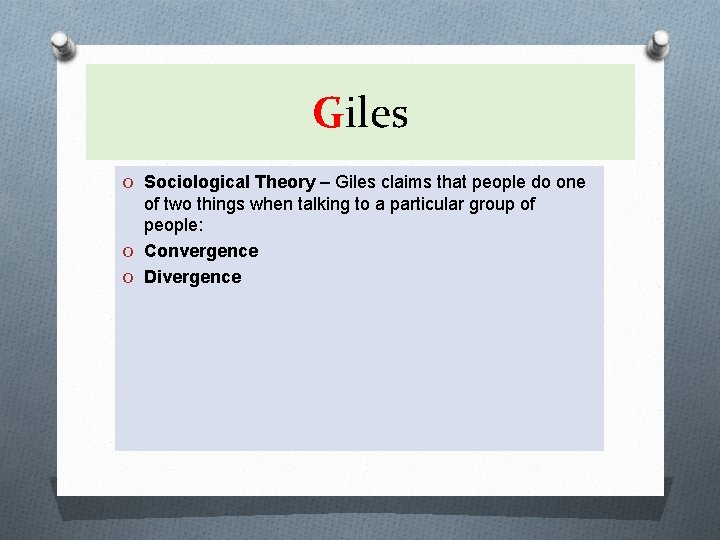
Giles O Sociological Theory – Giles claims that people do one of two things when talking to a particular group of people: O Convergence O Divergence
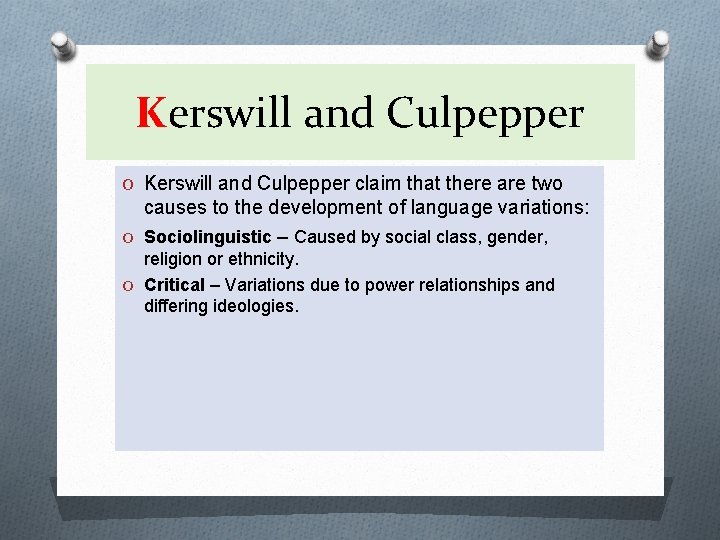
Kerswill and Culpepper O Kerswill and Culpepper claim that there are two O causes to the development of language variations: Sociolinguistic – Caused by social class, gender, religion or ethnicity. O Critical – Variations due to power relationships and differing ideologies.
Aitchson O Aitchson created several metaphoric ideas that contribute to language change. O Damp Spoon Syndrome O Crumbling Castle View O Infectious Disease Assumption
Biber O Biber claims that, along with the process of informalisation, there are other terms that explain language change: O Colloquialisation – Writing uses language that is common within spoken registers. O Economisation – Certain genres have resulted in compressed writing styles to ensure the efficient communication of information
Crystal O Crystal claims that when: O We are at home we use our regional dialect. O When travelling GB we use Standard English. O When travelling around the globe we use World Standard English O Does this account for variant language?
K&C
B&L
C
L
FDS
G
F
S&W
B
A
S