
LANGUAGE ARTS TERMS TO KNOW LINK TERMS TO
- Slides: 19
LANGUAGE ARTS: TERMS TO KNOW LINK
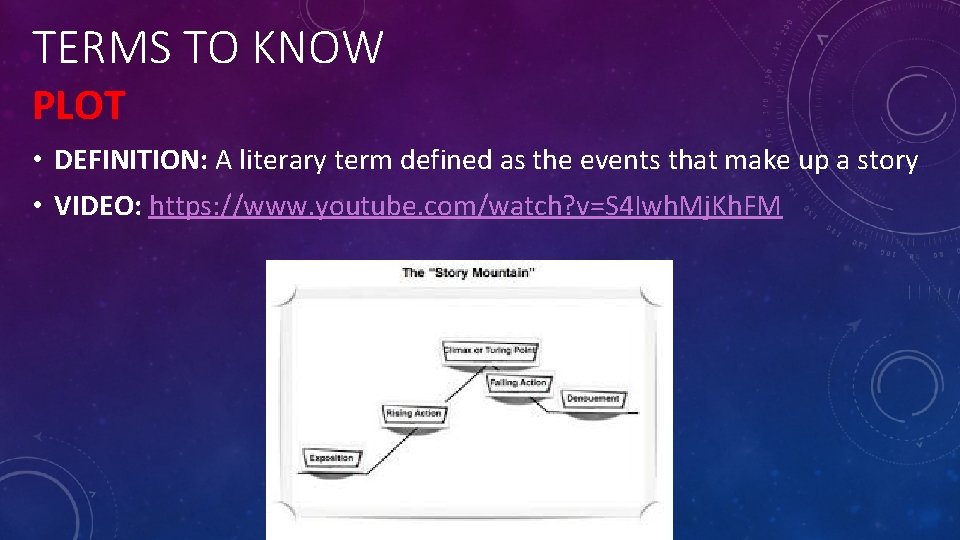
TERMS TO KNOW PLOT • DEFINITION: A literary term defined as the events that make up a story • VIDEO: https: //www. youtube. com/watch? v=S 4 Iwh. Mj. Kh. FM
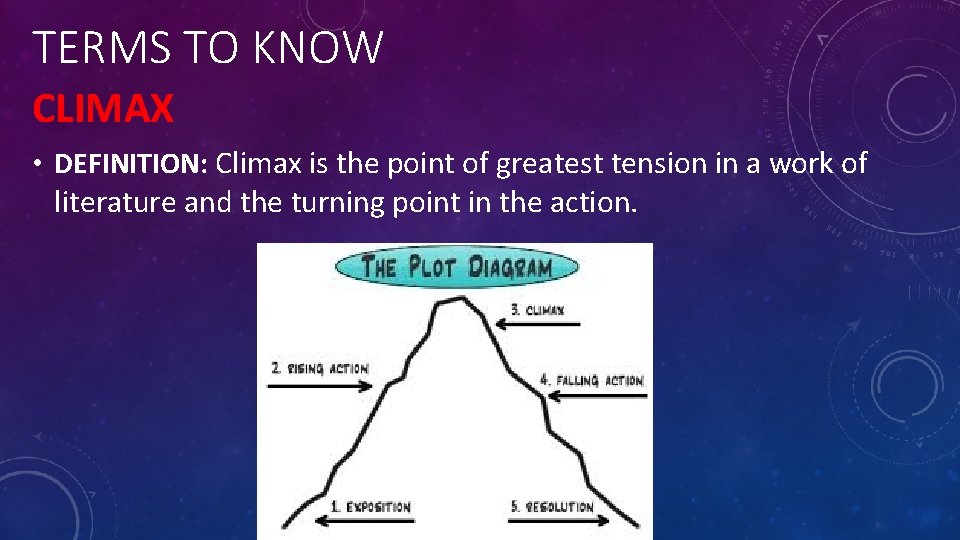
TERMS TO KNOW CLIMAX • DEFINITION: Climax is the point of greatest tension in a work of literature and the turning point in the action.
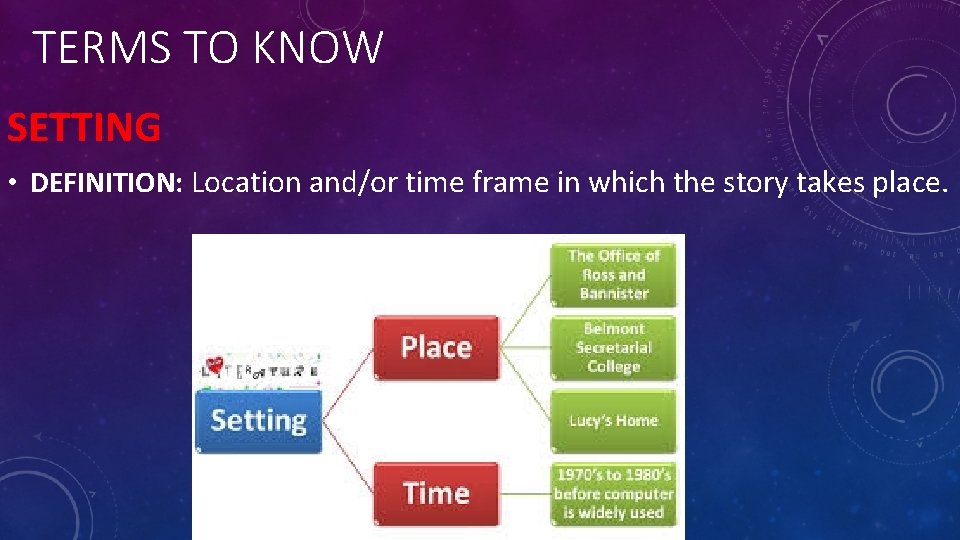
TERMS TO KNOW SETTING • DEFINITION: Location and/or time frame in which the story takes place.
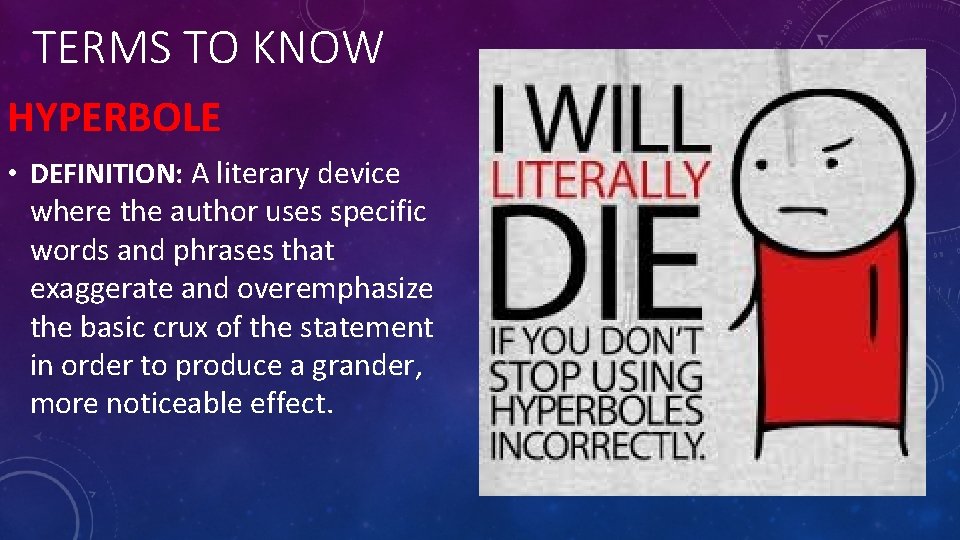
TERMS TO KNOW HYPERBOLE • DEFINITION: A literary device where the author uses specific words and phrases that exaggerate and overemphasize the basic crux of the statement in order to produce a grander, more noticeable effect.
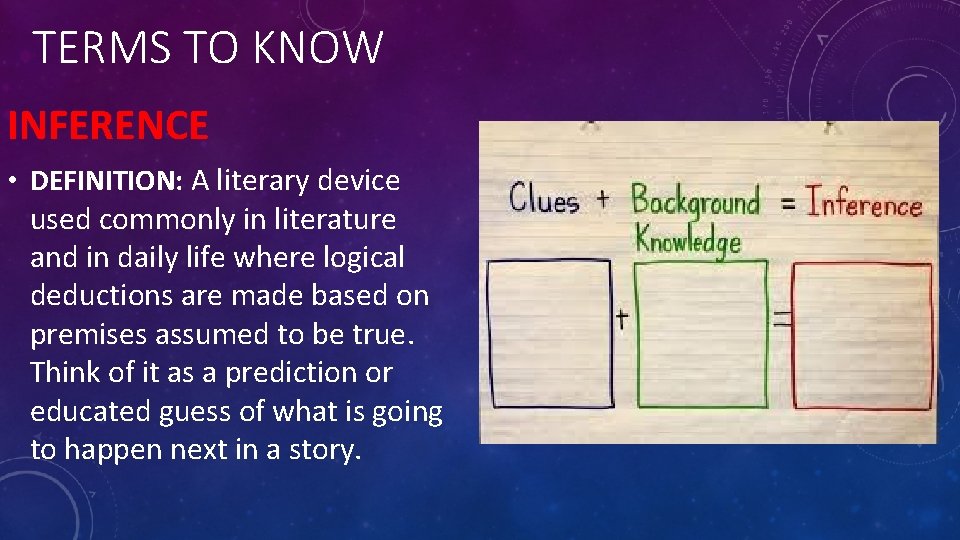
TERMS TO KNOW INFERENCE • DEFINITION: A literary device used commonly in literature and in daily life where logical deductions are made based on premises assumed to be true. Think of it as a prediction or educated guess of what is going to happen next in a story.
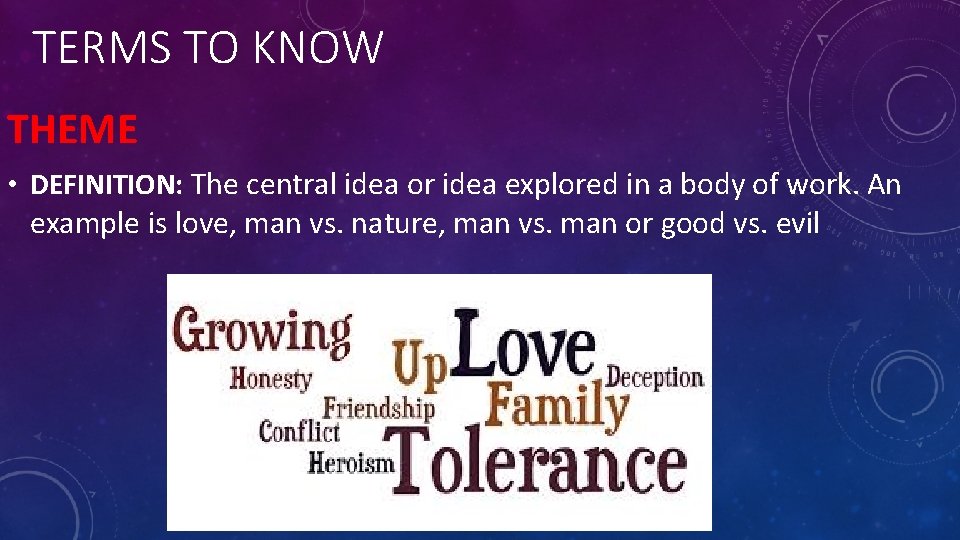
TERMS TO KNOW THEME • DEFINITION: The central idea or idea explored in a body of work. An example is love, man vs. nature, man vs. man or good vs. evil
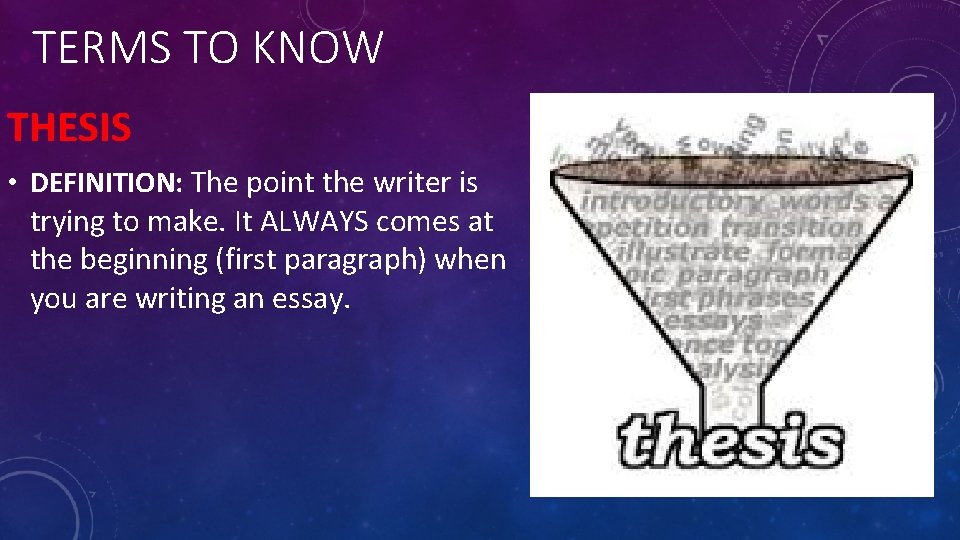
TERMS TO KNOW THESIS • DEFINITION: The point the writer is trying to make. It ALWAYS comes at the beginning (first paragraph) when you are writing an essay.
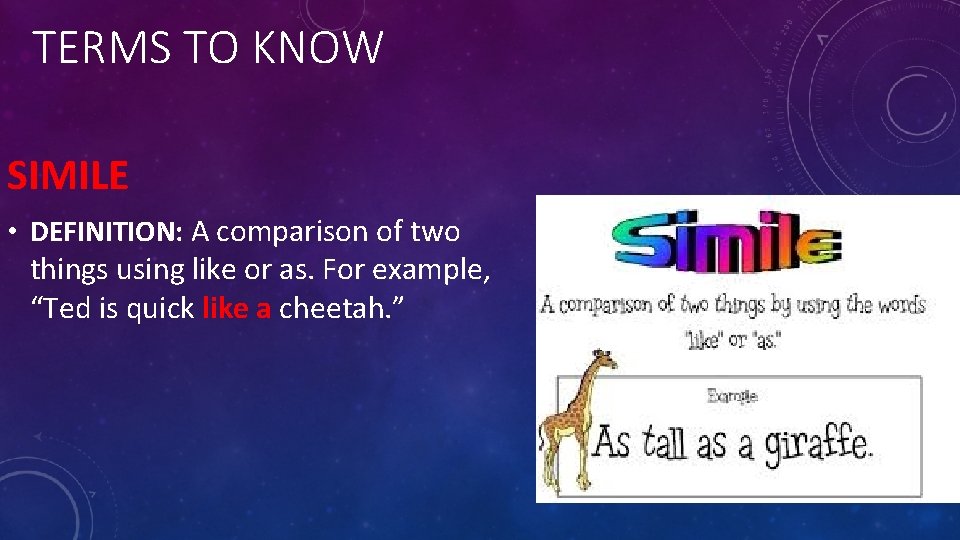
TERMS TO KNOW SIMILE • DEFINITION: A comparison of two things using like or as. For example, “Ted is quick like a cheetah. ”
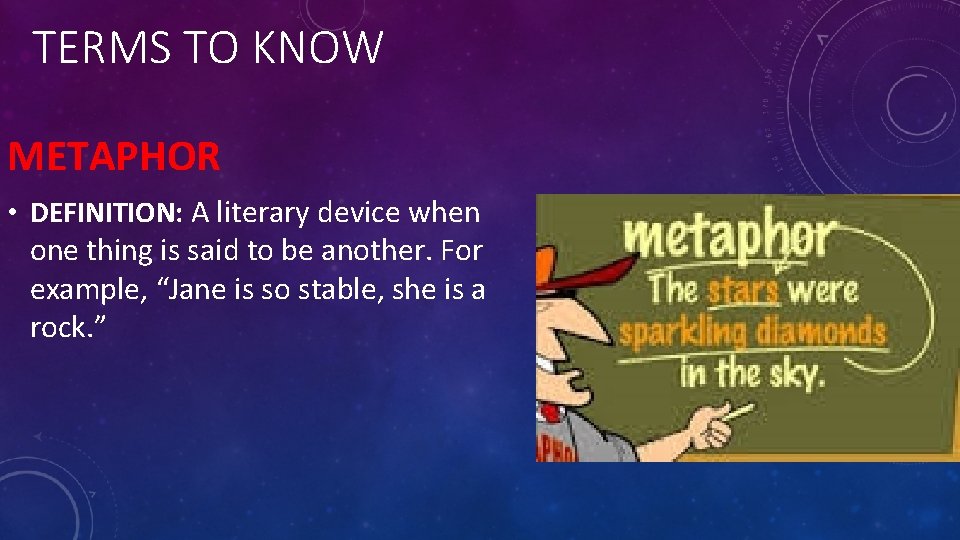
TERMS TO KNOW METAPHOR • DEFINITION: A literary device when one thing is said to be another. For example, “Jane is so stable, she is a rock. ”
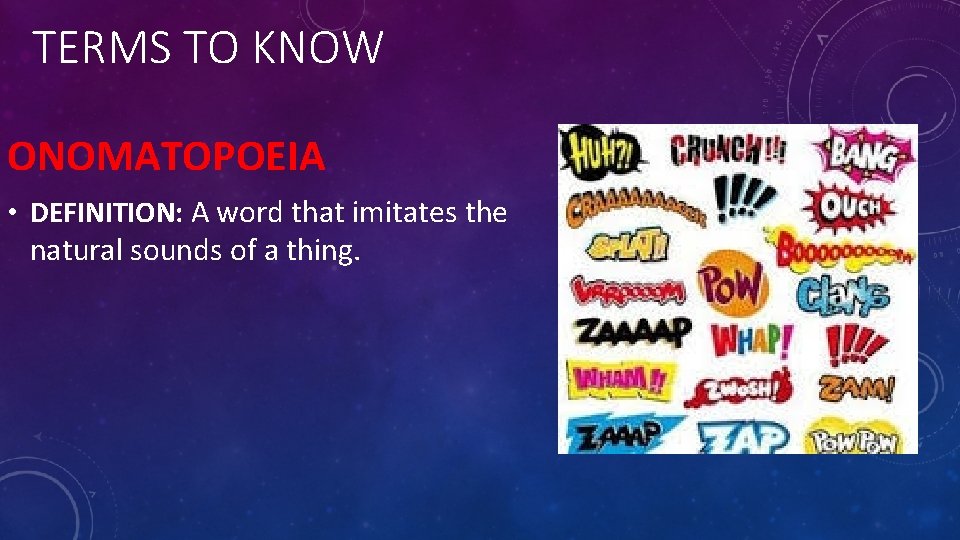
TERMS TO KNOW ONOMATOPOEIA • DEFINITION: A word that imitates the natural sounds of a thing.
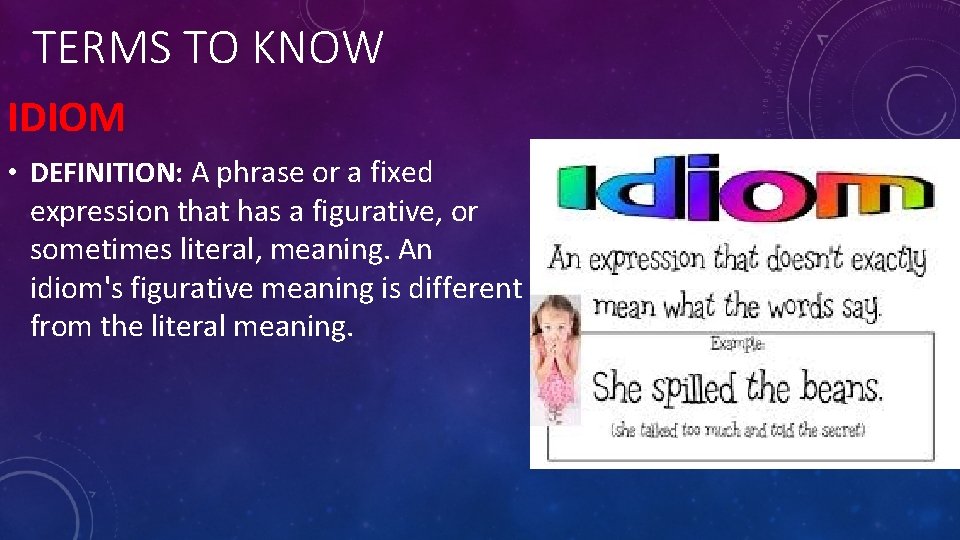
TERMS TO KNOW IDIOM • DEFINITION: A phrase or a fixed expression that has a figurative, or sometimes literal, meaning. An idiom's figurative meaning is different from the literal meaning.
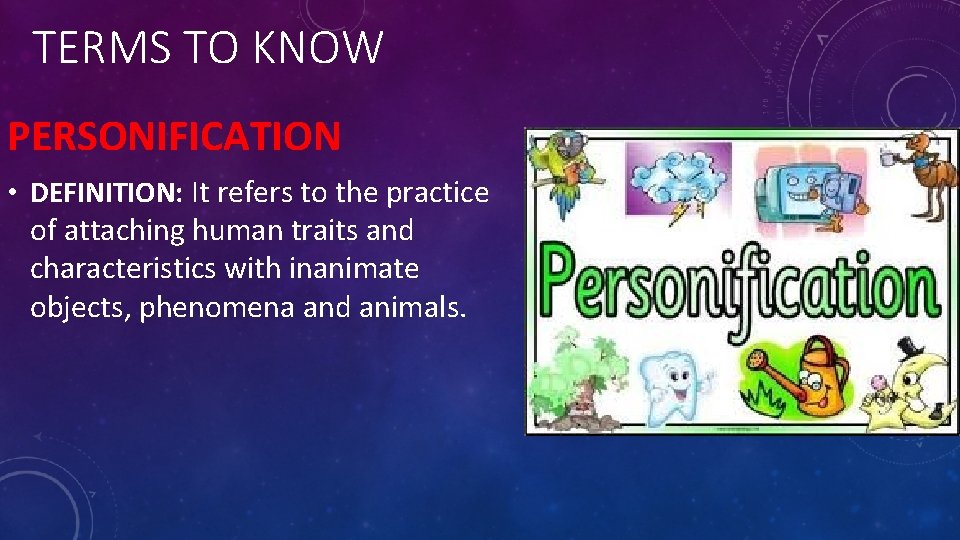
TERMS TO KNOW PERSONIFICATION • DEFINITION: It refers to the practice of attaching human traits and characteristics with inanimate objects, phenomena and animals.
TERMS TO KNOW MYTHS • DEFINITION: Tales that explain the actions of gods, goddesses, and the heroes who interact with them. These stories are not true, but are an attempt to explain unexplainable things.
TERMS TO KNOW LEGENDS • DEFINITION: Traditional stories based on real-life events. As these stories are re-told, fact often changes to fiction and the characters often become larger than life.
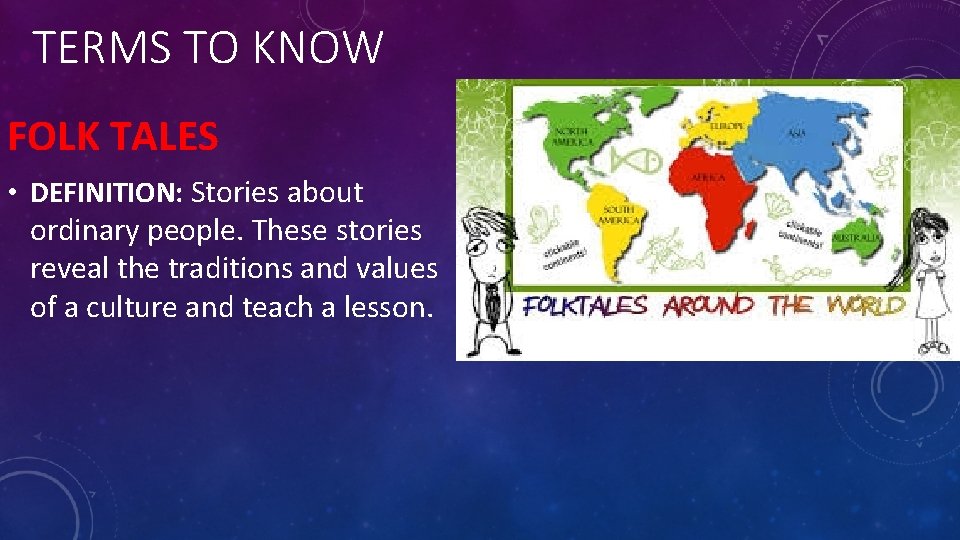
TERMS TO KNOW FOLK TALES • DEFINITION: Stories about ordinary people. These stories reveal the traditions and values of a culture and teach a lesson.
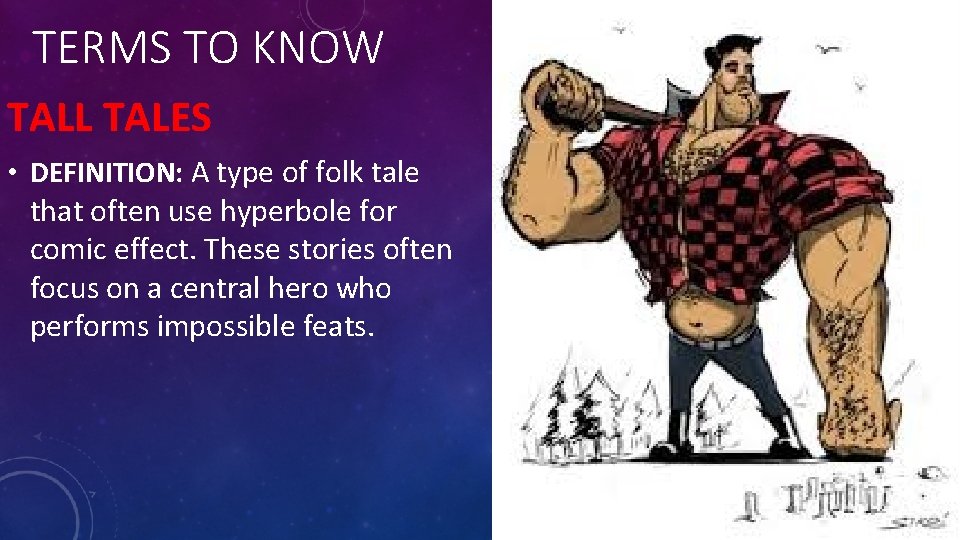
TERMS TO KNOW TALL TALES • DEFINITION: A type of folk tale that often use hyperbole for comic effect. These stories often focus on a central hero who performs impossible feats.
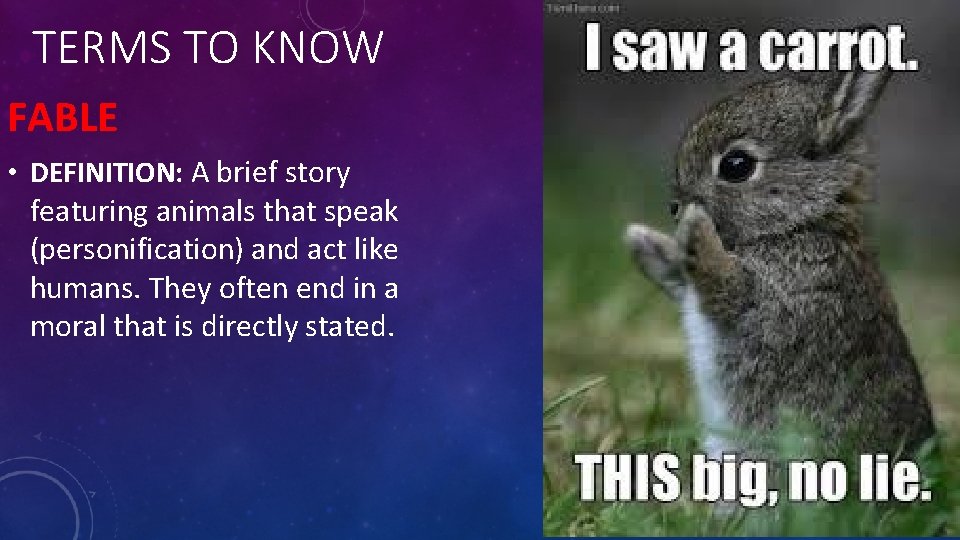
TERMS TO KNOW FABLE • DEFINITION: A brief story featuring animals that speak (personification) and act like humans. They often end in a moral that is directly stated.
TERMS TO KNOW EPICS • DEFINITION: Long narrative poems important to the history of a nation or culture. They tell of a larger-than-life hero who goes on a dangerous journey or quest.