
Language and Technology Lesson 1 1 February 2021
Language and Technology Lesson 1 1 February 2021
Exam Specification • You will be asked on a text related to Language and Power, Language and Gender or Language and Technology on Paper 2 • The section is called Language in the Media, and is worth 24 marks • We will be exploring aspects related to Language and Technology for the next few weeks
Starter • Write a list of the type of technologies you use to communicate in a typical week. Consider: • Whether you use different technologies for different purposes and audiences. • The affordances and constraints of these technologies. • The ways in which you adapt your language choices dependent on the technology…. . For example, do you change your spelling and grammar when sending text messages?

Language and Technology • The role of technology on the production, reproduction, exchange and consumption of texts in the 20 th and 21 st centuries has provided greater language choices in some situations alongside limited expression in others. • The speed of technological development has affected lexis, grammar, orthography (spelling conventions) and phonology. • David Crystal, a renowned linguist, states that the internet is the largest collection of English vocabulary that has ever existed. • New words or neologisms traditionally take up to 10 years to become embedded into the language but today, a new word can be introduced and embedded within a few days.
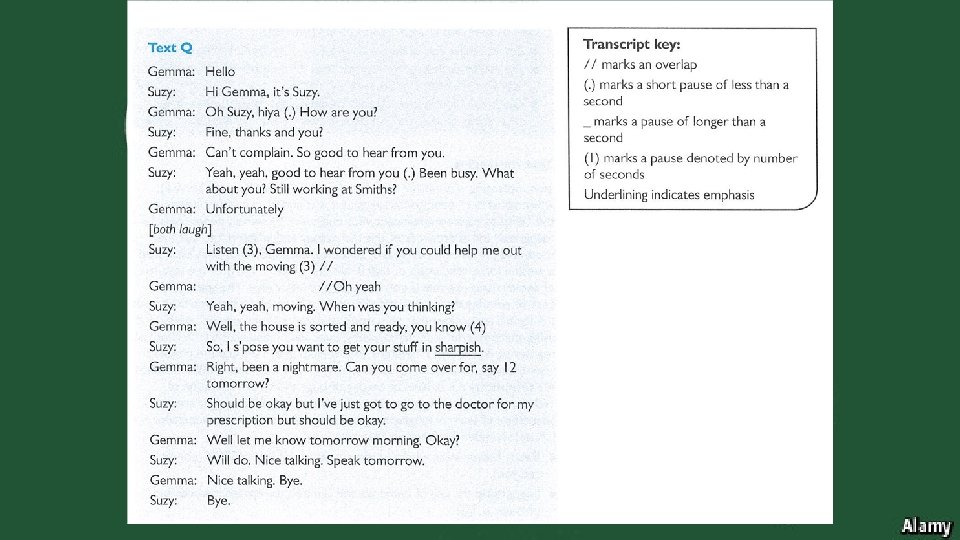
Telephone Conversations • Although the telephone predates digital technology, the discourse structure of the telephone still influences the way we communicate in digital form. • Schlegoff (1986) presented a pattern for the opening and closing of telephone conversations: q. Summons/answer q. Identification q. Greetings sequence and initiating communication q‘How are you’ sequences with phatic talk to consolidate connections. q. Pre-closing and closing: metatalk that focuses on the act of talking such as ‘enough talk for now’ and phatic talk such as ‘it’s been so good to catch up’ and discourser markers such as ‘well’, ‘anyway’.
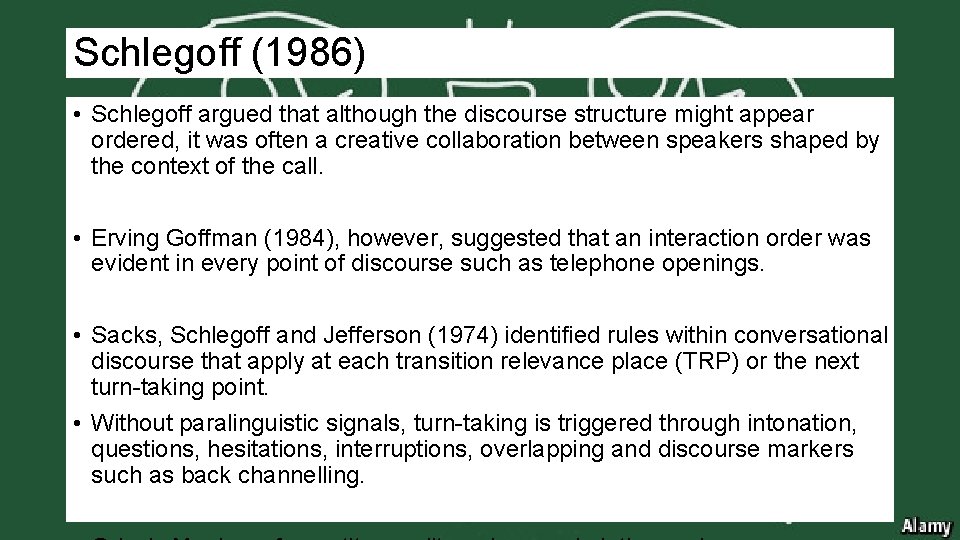
Schlegoff (1986) • Schlegoff argued that although the discourse structure might appear ordered, it was often a creative collaboration between speakers shaped by the context of the call. • Erving Goffman (1984), however, suggested that an interaction order was evident in every point of discourse such as telephone openings. • Sacks, Schlegoff and Jefferson (1974) identified rules within conversational discourse that apply at each transition relevance place (TRP) or the next turn-taking point. • Without paralinguistic signals, turn-taking is triggered through intonation, questions, hesitations, interruptions, overlapping and discourse markers such as back channelling.
Task • Read the text, a transcript of a telephone conversation between two female friends. • Annotate the transcript using Schlegoff’s framework of analysis, as well as your previous understanding of linguistic features. • You can also consider your knowledge of language and gender.
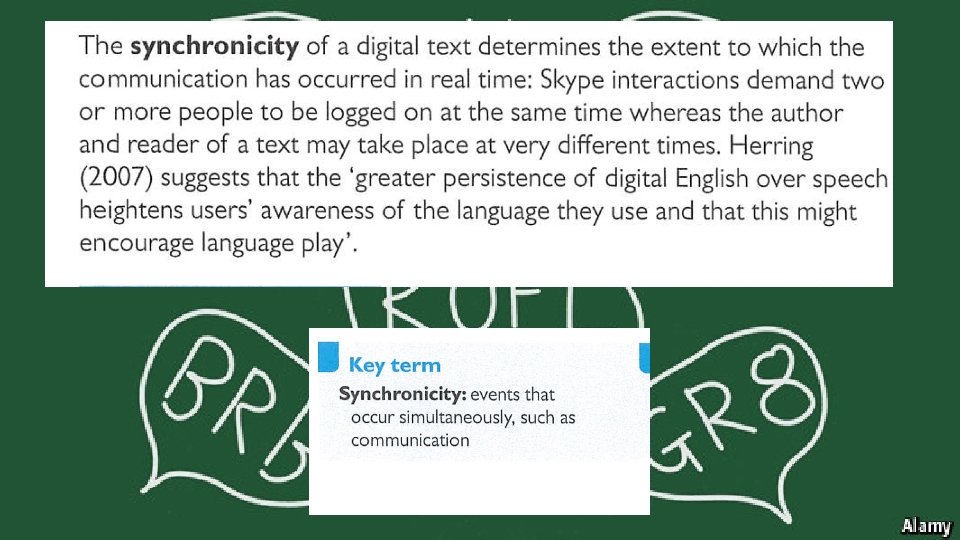
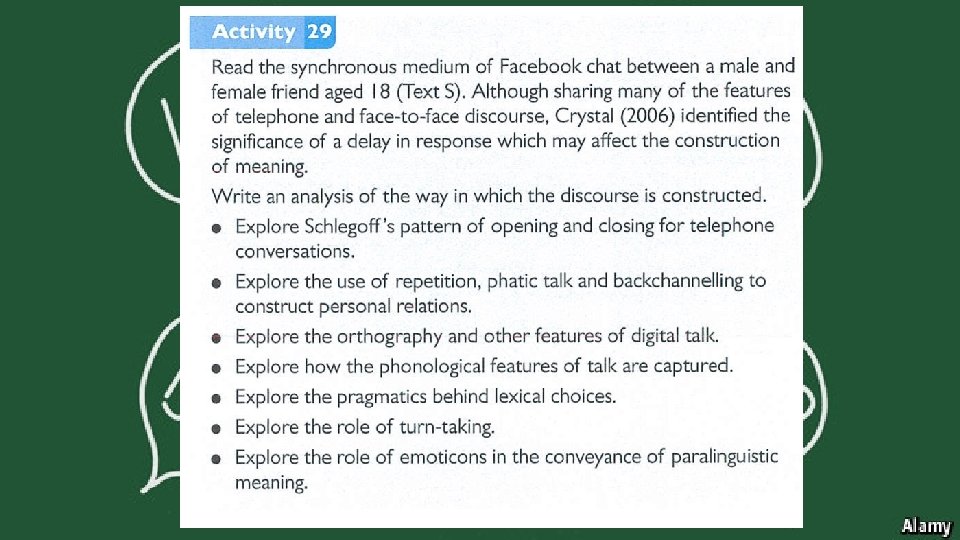
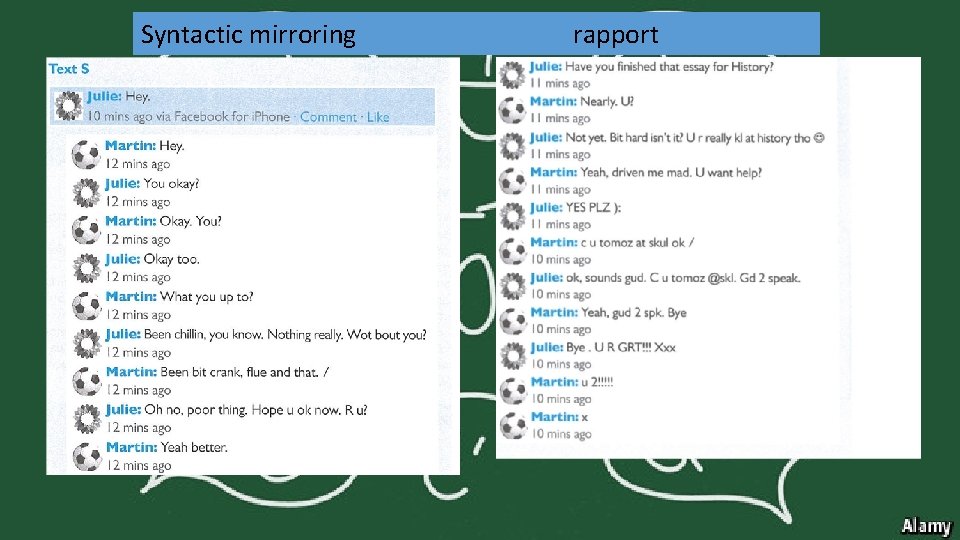
Syntactic mirroring rapport
Language Change and Technology Look at your own text message exchanges with individuals or groups Try to identify features considered today
Language Change and Technology Pejoration – the process of worsening over time Amelioration – the process of improving over time Prescriptivists – linguistic theorists who believe in closely following pre-established rules Descriptivists – linguistic theorists who believe language should be allowed to develop naturally. We should study language as it is, not how it ‘should’ be How would these words relate to attitudes around language change? Conduct some research, which we will feed back on next week. We will also look at David Crystal’s ideas together now
- Slides: 13