
Language and Style Concise but conversational writing is
Language and Style Concise but conversational writing is used in promotional sites Ø A. P. writing guidelines (Associated Press) are used for journalism and ezines. Ø
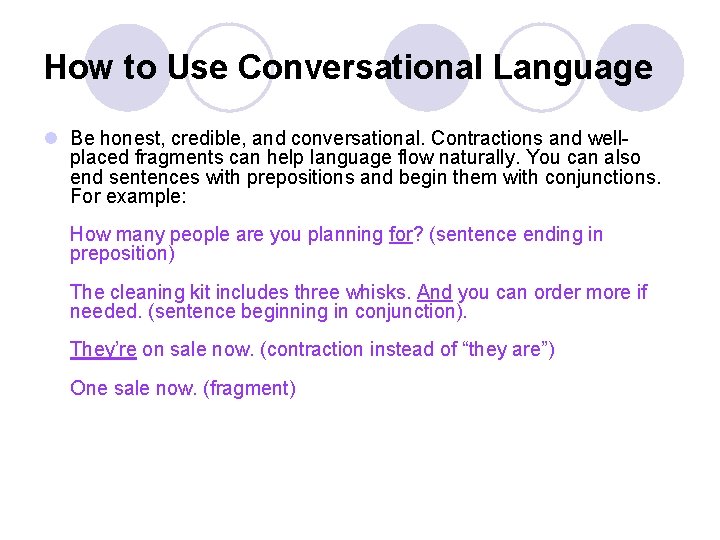
How to Use Conversational Language l Be honest, credible, and conversational. Contractions and wellplaced fragments can help language flow naturally. You can also end sentences with prepositions and begin them with conjunctions. For example: How many people are you planning for? (sentence ending in preposition) The cleaning kit includes three whisks. And you can order more if needed. (sentence beginning in conjunction). They’re on sale now. (contraction instead of “they are”) One sale now. (fragment)
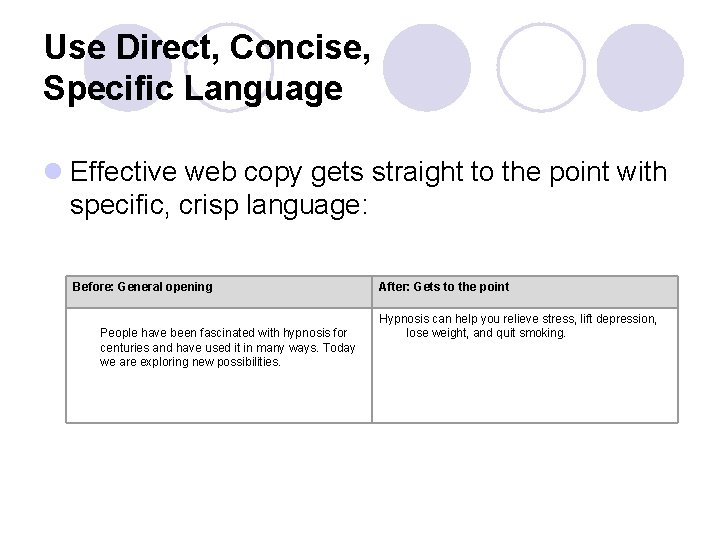
Use Direct, Concise, Specific Language l Effective web copy gets straight to the point with specific, crisp language: Before: General opening People have been fascinated with hypnosis for centuries and have used it in many ways. Today we are exploring new possibilities. After: Gets to the point Hypnosis can help you relieve stress, lift depression, lose weight, and quit smoking.
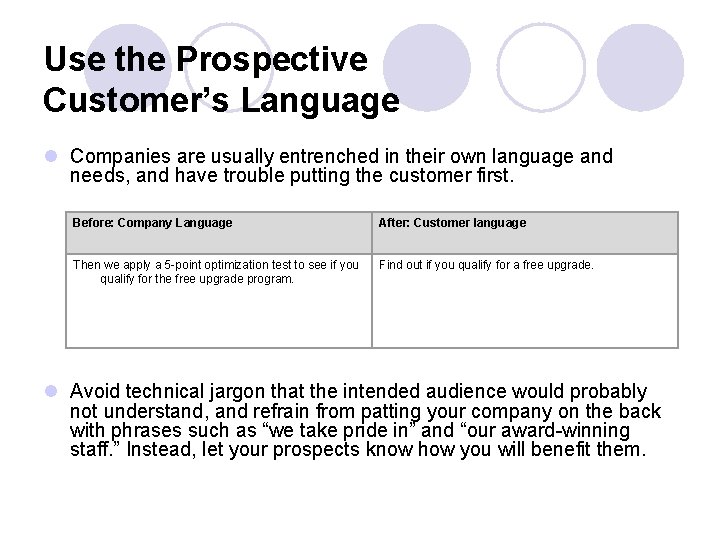
Use the Prospective Customer’s Language l Companies are usually entrenched in their own language and needs, and have trouble putting the customer first. Before: Company Language After: Customer language Then we apply a 5 -point optimization test to see if you qualify for the free upgrade program. Find out if you qualify for a free upgrade. l Avoid technical jargon that the intended audience would probably not understand, and refrain from patting your company on the back with phrases such as “we take pride in” and “our award-winning staff. ” Instead, let your prospects know how you will benefit them.
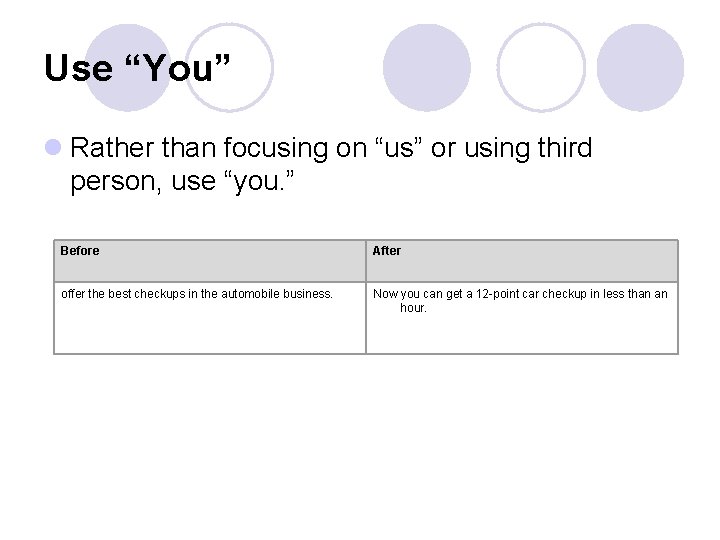
Use “You” l Rather than focusing on “us” or using third person, use “you. ” Before After offer the best checkups in the automobile business. Now you can get a 12 -point car checkup in less than an hour.
How To Avoid Sexist Language l Find alternatives to words that end in “man” or “men” (example: chairman = chairperson), and manage pronouns: l When possible, use plural pronouns and plural antecedents. Singular: A doctor will make his prescription. Plural: Doctors will make their prescriptions. l When plurals are not possible, alternate between the masculine and plural pronouns (he and she, him and her, his and her, etc. )
l See the “Words to Avoid” Sheet
- Slides: 7