
Language and Culture in the Second Language Classroom

- Slides: 18
Language and Culture in the Second Language Classroom Anthony J. Liddicoat University of South Australia
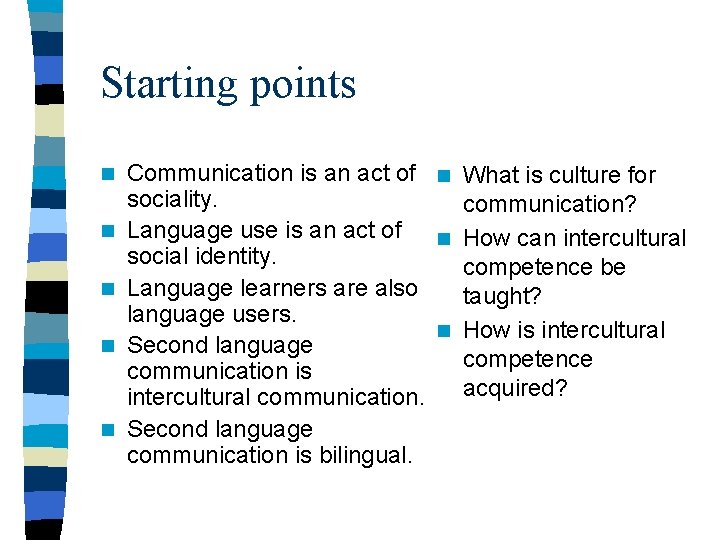
Starting points n n n Communication is an act of n What is culture for sociality. communication? Language use is an act of n How can intercultural social identity. competence be Language learners are also taught? language users. n How is intercultural Second language competence communication is acquired? intercultural communication. Second language communication is bilingual.
Conceptualising language and culture for language teaching
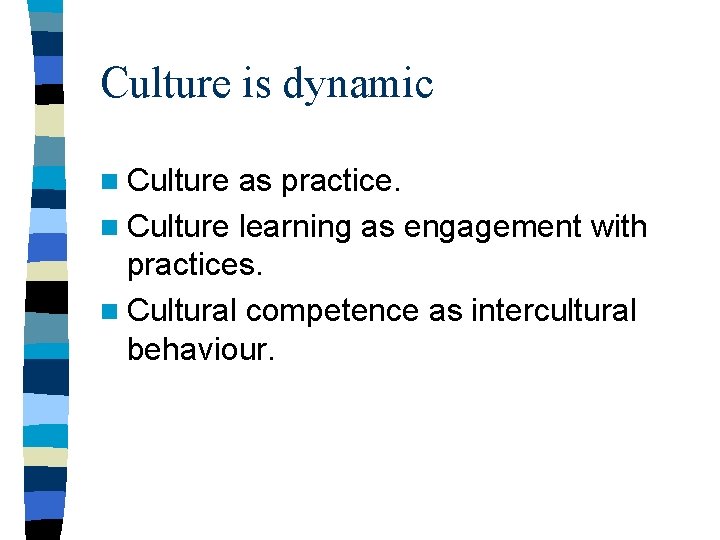
Culture is dynamic n Culture as practice. n Culture learning as engagement with practices. n Cultural competence as intercultural behaviour.
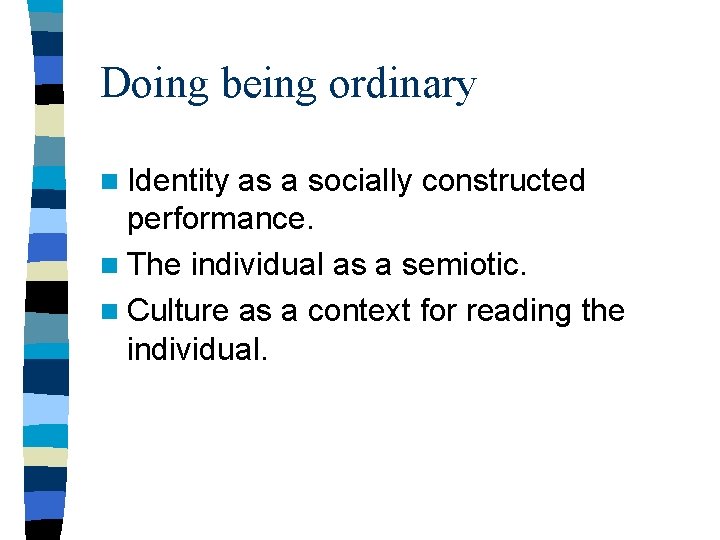
Doing being ordinary n Identity as a socially constructed performance. n The individual as a semiotic. n Culture as a context for reading the individual.
Culture is variable n Culture varies with time, place, social category and for age, gender, religion, ethnicity, sexuality. n People participate in their own cultures in different ways. n People can resist/subvert/challenge cultural practices.
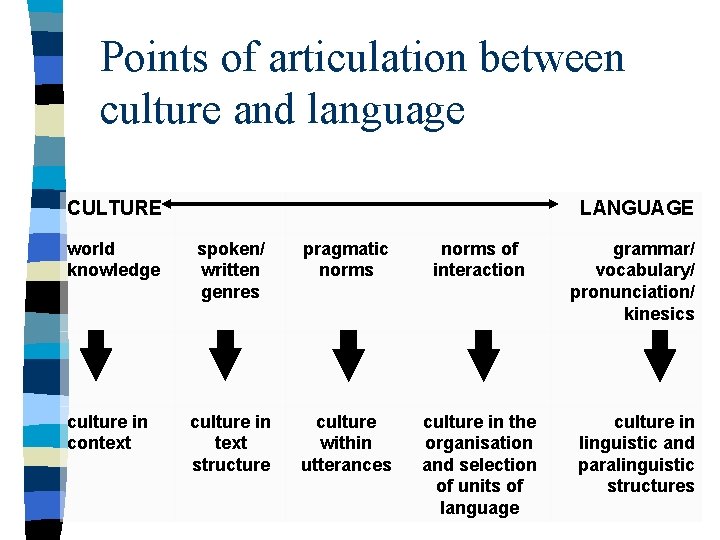
Points of articulation between culture and language CULTURE world knowledge culture in context LANGUAGE spoken/ written genres pragmatic norms of interaction grammar/ vocabulary/ pronunciation/ kinesics culture in text structure culture within utterances culture in the organisation and selection of units of language culture in linguistic and paralinguistic structures
Aspects of intercultural competence n n n n Accepting that behaviour is culturally determined. Accepting that there is no one right way to do things. Valuing one’s own culture and other cultures. Using language to explore culture. Finding personal solutions in intercultural interaction. Using L 1 culture as a resource to learn about L 2 culture. Finding an intercultural style and identity.
Teaching languages interculturally
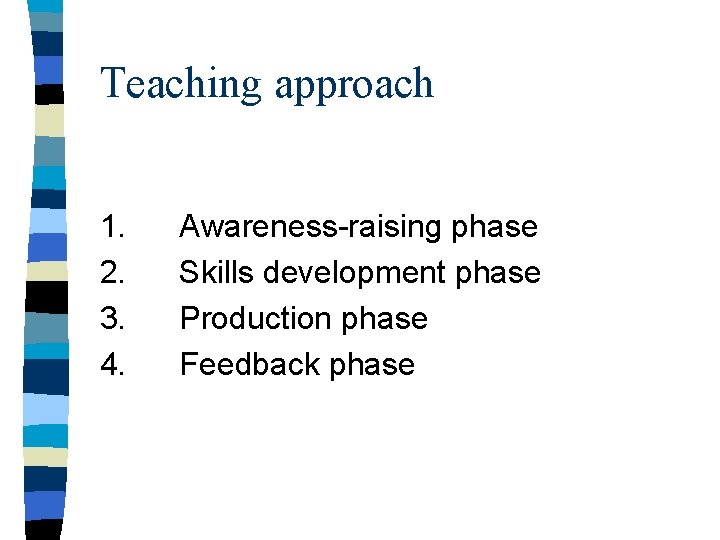
Teaching approach 1. Awareness-raising phase 2. Skills development phase 3. Production phase 4. Feedback phase
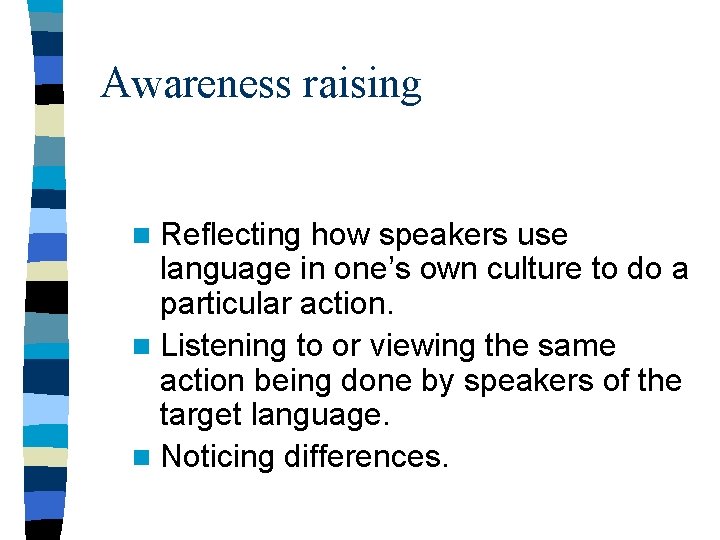
Awareness raising Reflecting how speakers use language in one’s own culture to do a particular action. n Listening to or viewing the same action being done by speakers of the target language. n Noticing differences. n
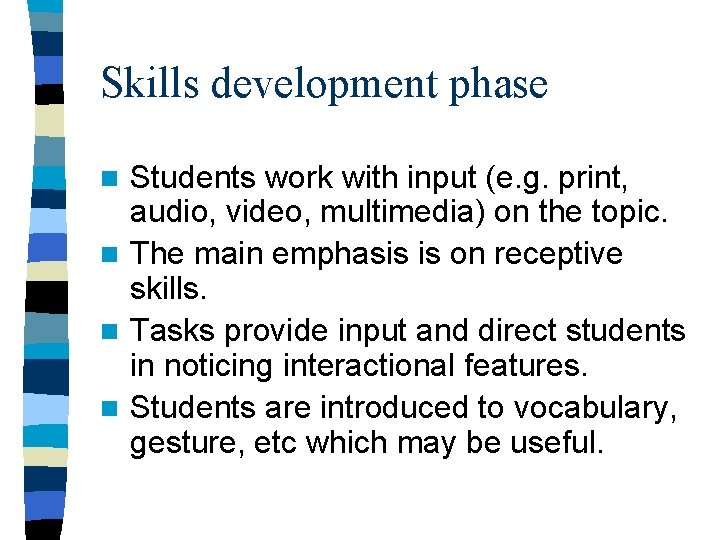
Skills development phase Students work with input (e. g. print, audio, video, multimedia) on the topic. n The main emphasis is on receptive skills. n Tasks provide input and direct students in noticing interactional features. n Students are introduced to vocabulary, gesture, etc which may be useful. n
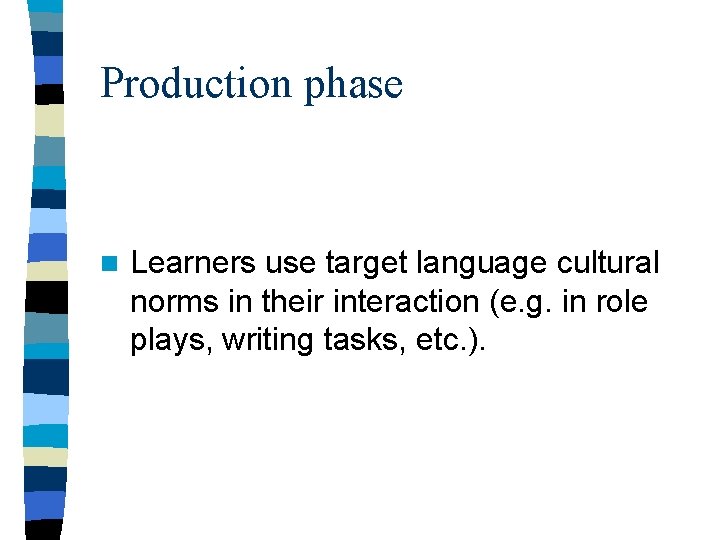
Production phase n Learners use target language cultural norms in their interaction (e. g. in role plays, writing tasks, etc. ).
Feedback phase Discussing the experience of using target language norms. n Allowing learners to express positive and negative feelings. n Reflecting on how learners felt about “acting differently”. n
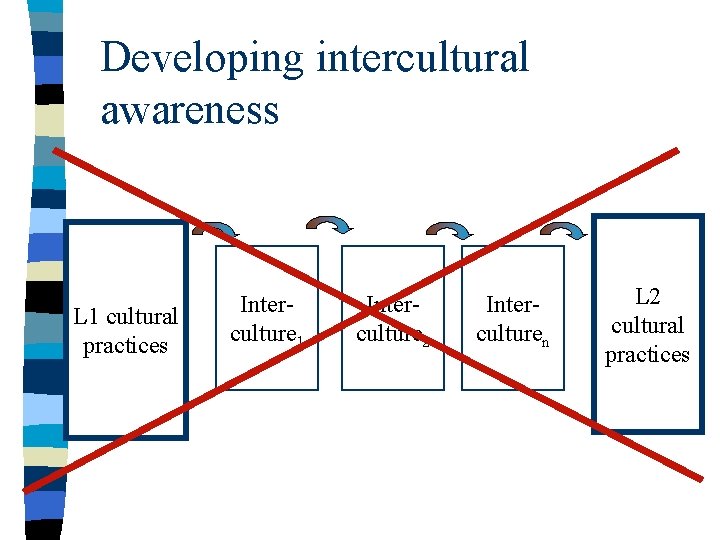
Developing intercultural awareness L 1 cultural practices Interculture 1 Interculture 2 Interculturen L 2 cultural practices
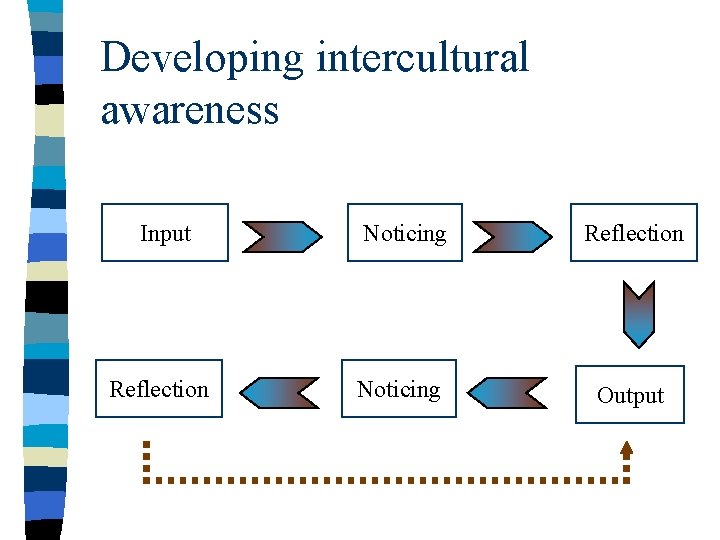
Developing intercultural awareness Input Noticing Reflection Noticing Output
Developing intercultural awareness The development of intercultural competence does not appear to be linear or staged. n The development of intercultural competence is not necessarily ‘progressive’. More advanced states can be less target-like than less advanced states. n The development of intercultural competence is reflective and interactive. n
Conclusions Culture for communication is not a series of facts or rules for culturally appropriate communication. n Culture for communication is linguistically and interactionally realised by individuals in the act of communication. n Teaching culture for communication becomes a process of providing occasions for noticing, comparing and reflecting on acts of communication. n Learning culture for communication involves reflection on the culturally conditioned nature of social action. n