
Language and Culture Chapter20 What is a culture
- Slides: 16
Language and Culture Chapter-20
What is a culture? ITIONS s to the cumulative deposit of knowledge, experience, beliefs, values, attitudes, meanings ons of time, roles, spatial relations, concepts of the universe, and material objects and po a group of people in the course of generations through individual and group striving. e systems of knowledge shared by a relatively large group of people. ommunication, communication is culture. s broadest sense is cultivated behavior; that is the totality of a person's learned, accumula ially transmitted, or more briefly, behavior through social learning. a way of life of a group of people--the behaviors, beliefs, values, and symbols that they acc king about them, and that are passed along by communication and imitation from one gen mbolic communication. Some of its symbols include a group's skills, knowledge, attitudes e meanings of the symbols are learned and deliberately perpetuated in a society through it sists of patterns, explicit and implicit, of and for behavior acquired and transmitted by sym ve achievement of human groups, including their embodiments in artifacts; the essential c raditional ideas and especially their attached values; culture systems may, on the one han of action, on the other hand, as conditioning influences upon further action. e sum of total of the learned behavior of a group of people that are generally considered to e and are transmitted from generation to generation. collective programming of the mind that distinguishes the members of one group or categ r. (https: //www. tamu. edu/f
Relationship between Language and Culture: ü On a practical level, language has to do with sounds, symbols and gestures that a community puts in order and associates so that they can communicate. On a deeper level, language is an expression of who we are as individuals, communities, nations. (https: //www. sil. org/why-languageculture-studies) ü We identify ‘we’ and ‘they’ through our use of language, because we view our language as a symbol of our identity; the prohibition of its use in certain place is perceived as the rejection of their social group and culture. Language symbolizes cultural reality. (Kramsch, C. (1998). Language and culture. Oxford University Press. ) ü As teachers of language, we do not teach only language but also our culture. The way we say certain things, is hugely affected by our culture. It is hard to isolate them.
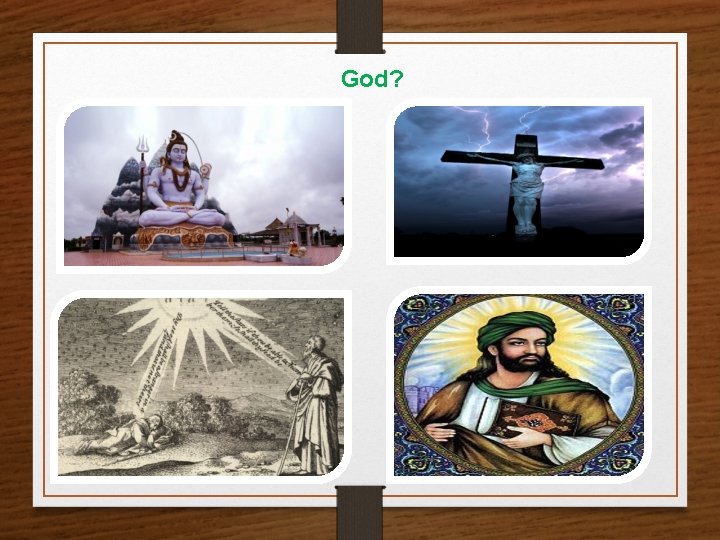
God?
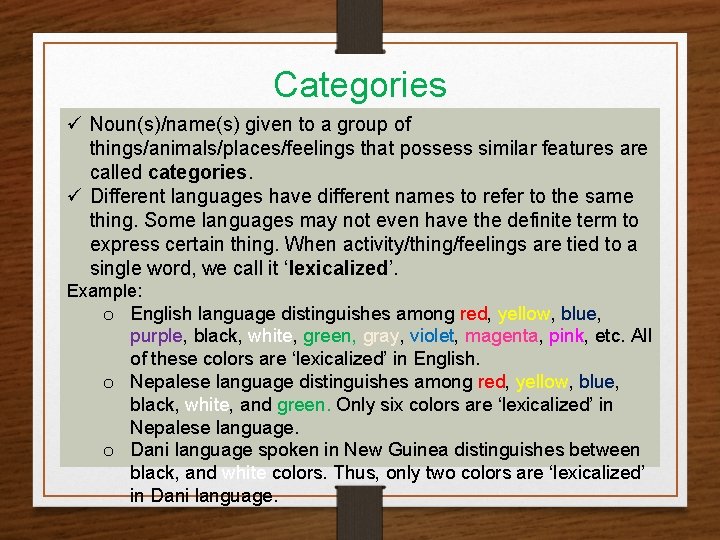
Categories ü Noun(s)/name(s) given to a group of things/animals/places/feelings that possess similar features are called categories. ü Different languages have different names to refer to the same thing. Some languages may not even have the definite term to express certain thing. When activity/thing/feelings are tied to a single word, we call it ‘lexicalized’. Example: o English language distinguishes among red, yellow, blue, purple, black, white, green, gray, violet, magenta, pink, etc. All of these colors are ‘lexicalized’ in English. o Nepalese language distinguishes among red, yellow, blue, black, white, and green. Only six colors are ‘lexicalized’ in Nepalese language. o Dani language spoken in New Guinea distinguishes between black, and white colors. Thus, only two colors are ‘lexicalized’ in Dani language.
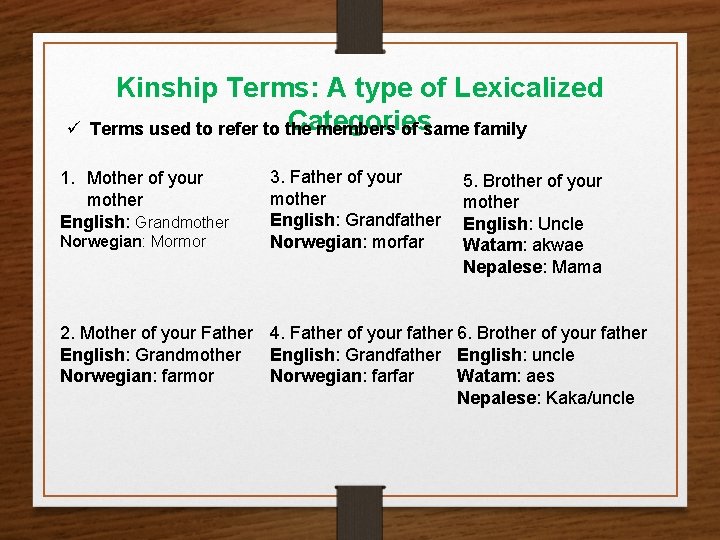
Kinship Terms: A type of Lexicalized Categories ü Terms used to refer to the members of same family 1. Mother of your mother English: Grandmother Norwegian: Mormor 3. Father of your mother English: Grandfather Norwegian: morfar 5. Brother of your mother English: Uncle Watam: akwae Nepalese: Mama 2. Mother of your Father 4. Father of your father 6. Brother of your father English: Grandmother English: Grandfather English: uncle Norwegian: farmor Norwegian: farfar Watam: aes Nepalese: Kaka/uncle
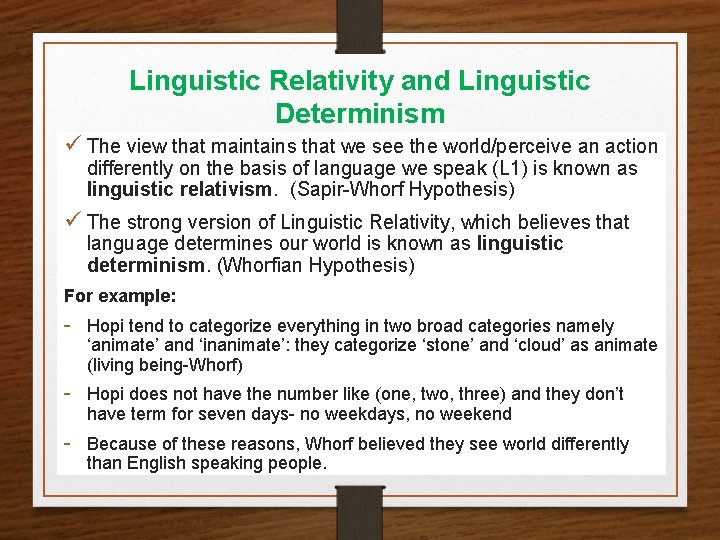
Linguistic Relativity and Linguistic Determinism ü The view that maintains that we see the world/perceive an action differently on the basis of language we speak (L 1) is known as linguistic relativism. (Sapir-Whorf Hypothesis) ü The strong version of Linguistic Relativity, which believes that language determines our world is known as linguistic determinism. (Whorfian Hypothesis) For example: - Hopi tend to categorize everything in two broad categories namely ‘animate’ and ‘inanimate’: they categorize ‘stone’ and ‘cloud’ as animate (living being-Whorf) - Hopi does not have the number like (one, two, three) and they don’t have term for seven days- no weekdays, no weekend - Because of these reasons, Whorf believed they see world differently than English speaking people.
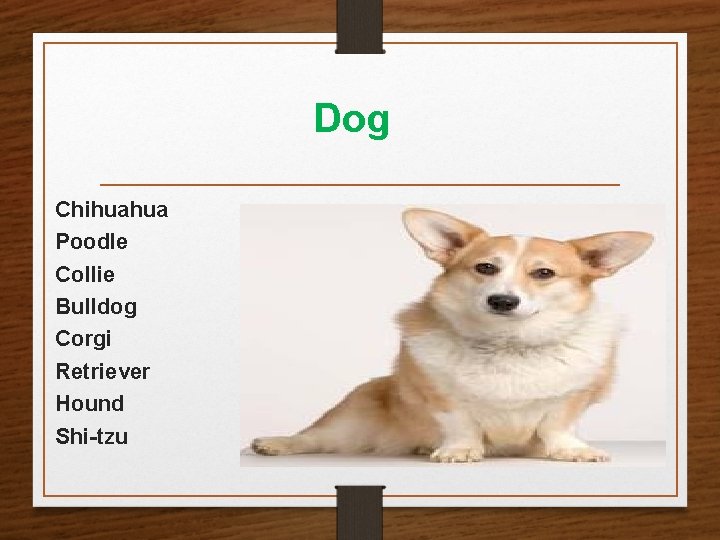
Dog Chihuahua Poodle Collie Bulldog Corgi Retriever Hound Shi-tzu
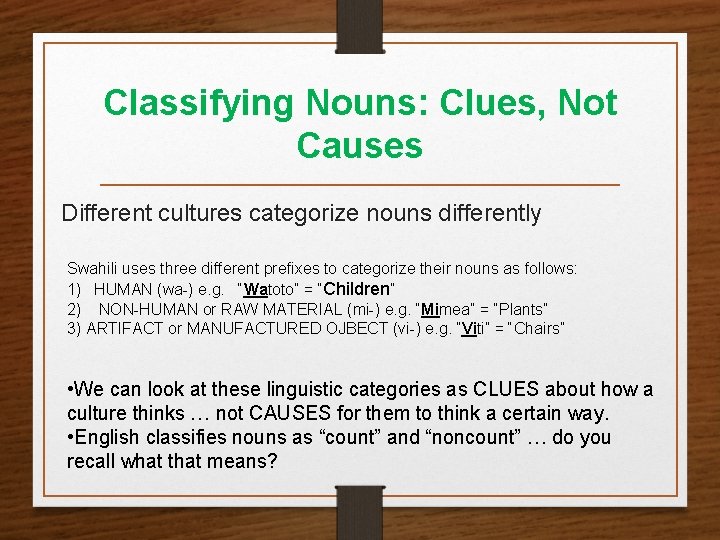
Classifying Nouns: Clues, Not Causes Different cultures categorize nouns differently Swahili uses three different prefixes to categorize their nouns as follows: 1) HUMAN (wa-) e. g. “Watoto” = “Children” 2) NON-HUMAN or RAW MATERIAL (mi-) e. g. “Mimea” = “Plants” 3) ARTIFACT or MANUFACTURED OJBECT (vi-) e. g. “Viti” = “Chairs” • We can look at these linguistic categories as CLUES about how a culture thinks … not CAUSES for them to think a certain way. • English classifies nouns as “count” and “noncount” … do you recall what that means?
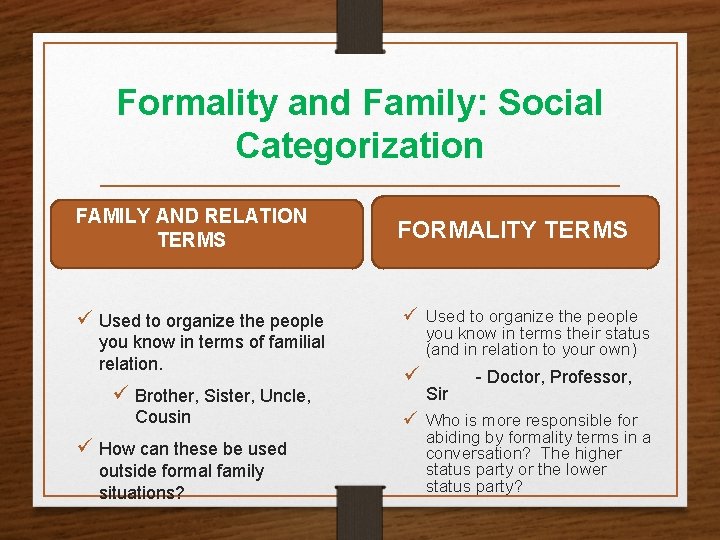
Formality and Family: Social Categorization FAMILY AND RELATION TERMS FORMALITY TERMS ü Used to organize the people you know in terms of familial relation. ü Brother, Sister, Uncle, Cousin ü How can these be used outside formal family situations? you know in terms their status (and in relation to your own) ü Sir - Doctor, Professor, ü Who is more responsible for abiding by formality terms in a conversation? The higher status party or the lower status party?
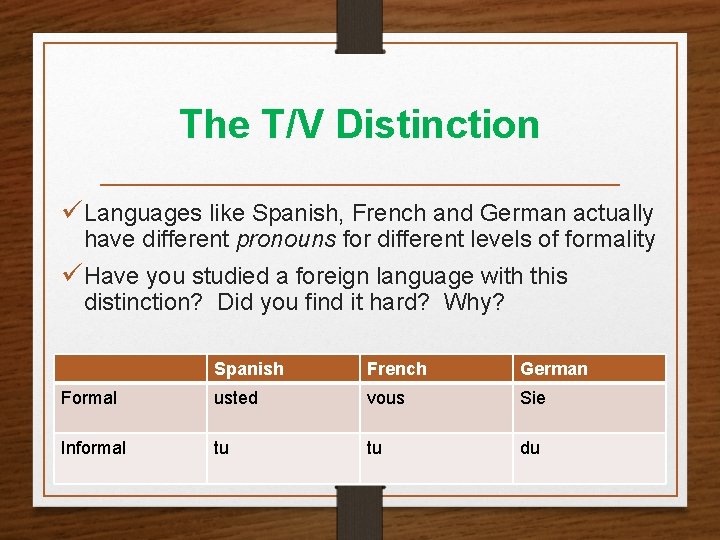
The T/V Distinction üLanguages like Spanish, French and German actually have different pronouns for different levels of formality üHave you studied a foreign language with this distinction? Did you find it hard? Why? Spanish French German Formal usted vous Sie Informal tu tu du
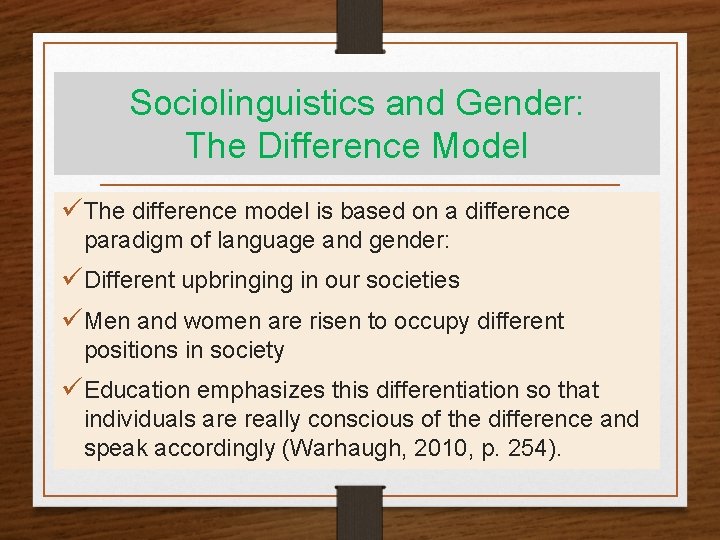
Sociolinguistics and Gender: The Difference Model üThe difference model is based on a difference paradigm of language and gender: üDifferent upbringing in our societies üMen and women are risen to occupy different positions in society üEducation emphasizes this differentiation so that individuals are really conscious of the difference and speak accordingly (Warhaugh, 2010, p. 254).
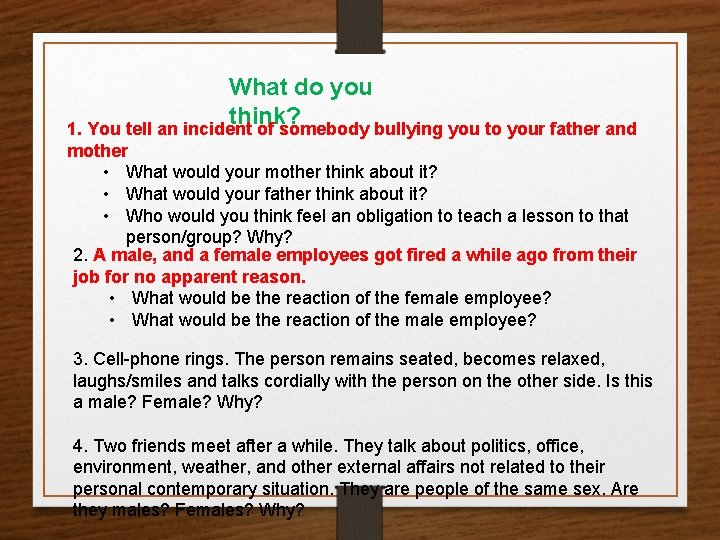
What do you think? 1. You tell an incident of somebody bullying you to your father and mother • What would your mother think about it? • What would your father think about it? • Who would you think feel an obligation to teach a lesson to that person/group? Why? 2. A male, and a female employees got fired a while ago from their job for no apparent reason. • What would be the reaction of the female employee? • What would be the reaction of the male employee? 3. Cell-phone rings. The person remains seated, becomes relaxed, laughs/smiles and talks cordially with the person on the other side. Is this a male? Female? Why? 4. Two friends meet after a while. They talk about politics, office, environment, weather, and other external affairs not related to their personal contemporary situation. They are people of the same sex. Are they males? Females? Why?
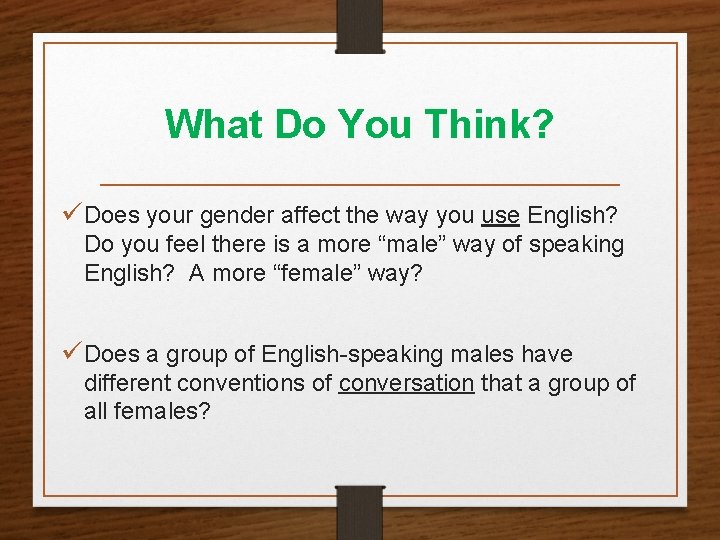
What Do You Think? üDoes your gender affect the way you use English? Do you feel there is a more “male” way of speaking English? A more “female” way? üDoes a group of English-speaking males have different conventions of conversation that a group of all females?
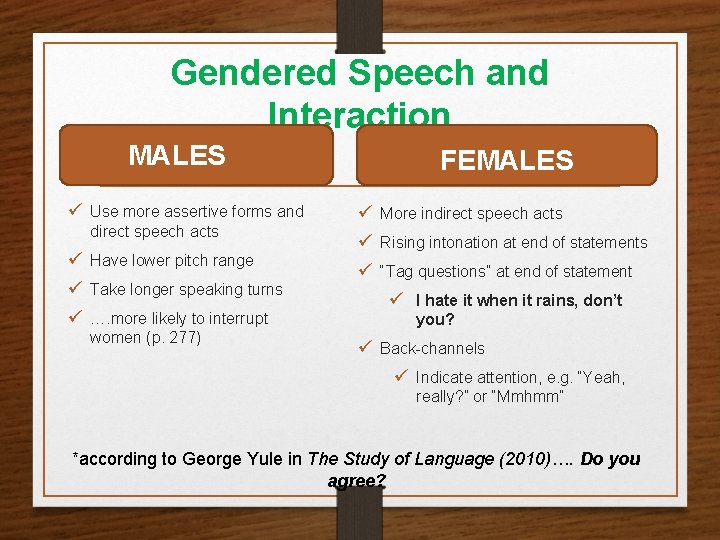
Gendered Speech and Interaction MALES ü Use more assertive forms and direct speech acts ü Have lower pitch range ü Take longer speaking turns ü …. more likely to interrupt women (p. 277) FEMALES ü More indirect speech acts ü Rising intonation at end of statements ü “Tag questions” at end of statement ü I hate it when it rains, don’t you? ü Back-channels ü Indicate attention, e. g. “Yeah, really? ” or “Mmhmm” *according to George Yule in The Study of Language (2010)…. Do you agree?
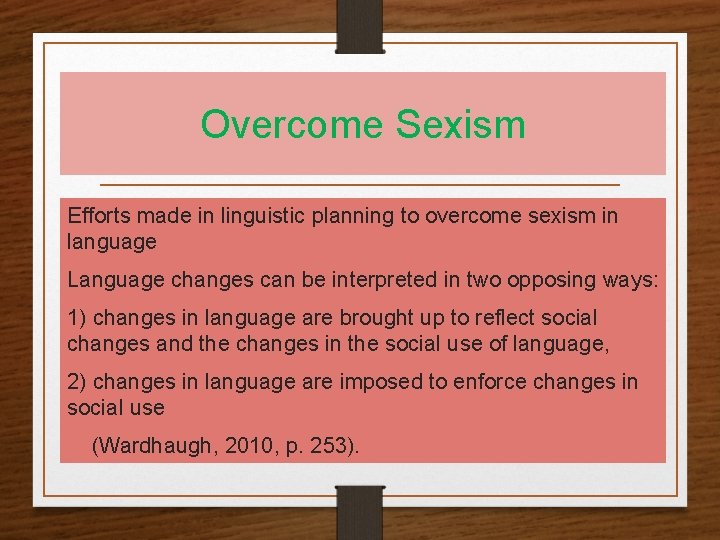
Overcome Sexism Efforts made in linguistic planning to overcome sexism in language Language changes can be interpreted in two opposing ways: 1) changes in language are brought up to reflect social changes and the changes in the social use of language, 2) changes in language are imposed to enforce changes in social use (Wardhaugh, 2010, p. 253).