
Language and Communication Specialty Course 2017 2018 Informational
- Slides: 12
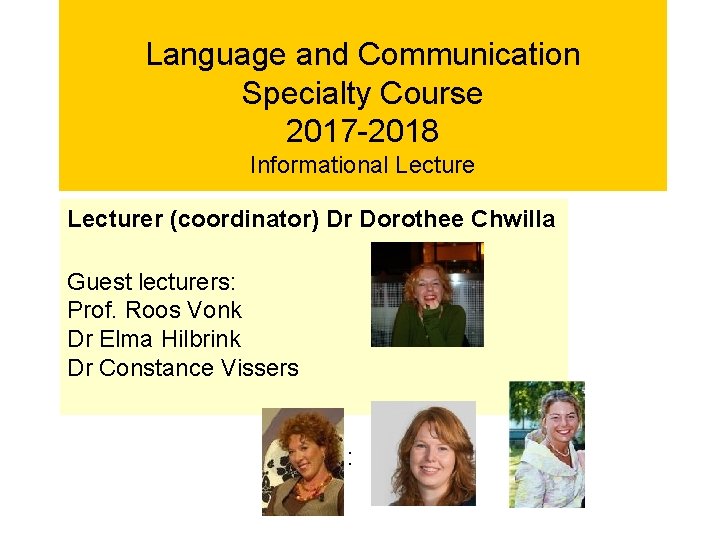
Language and Communication Specialty Course 2017 -2018 Informational Lecturer (coordinator) Dr Dorothee Chwilla Guest lecturers: Prof. Roos Vonk Dr Elma Hilbrink Dr Constance Vissers :
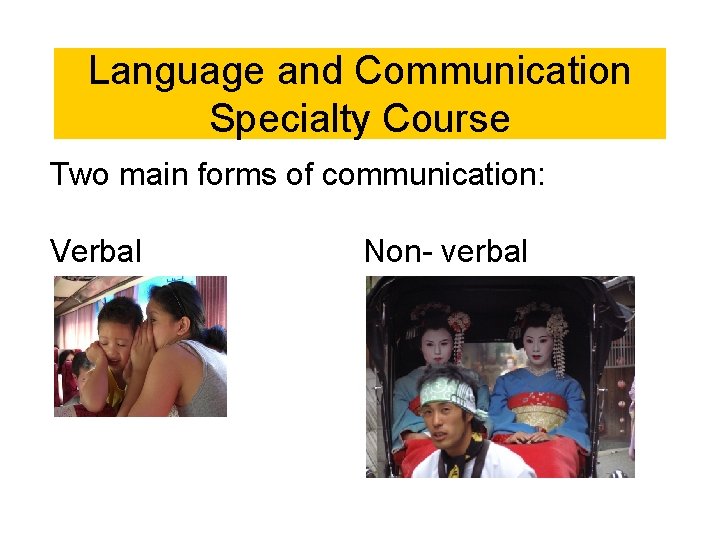
Language and Communication Specialty Course Two main forms of communication: Verbal Non- verbal
Language and Communication Specialty Course Questions that will be addressed • What is communication? • Within which theoretical framework can we analyse communication? • What precedes verbal communication? • What are the components of verbal and non-verbal communication? • What is the relationship between language and other systems? • How abnormal is language usage among special populations? • Does our emotional state affect language? • Which effects do social media have on communication?
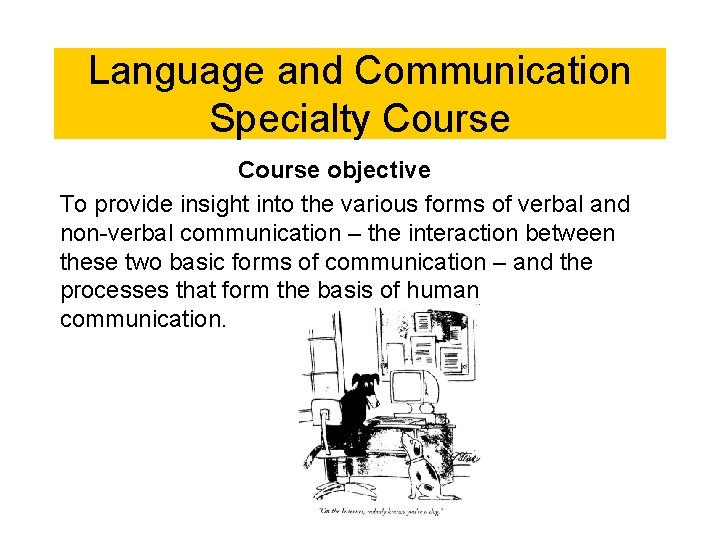
Language and Communication Specialty Course objective To provide insight into the various forms of verbal and non-verbal communication – the interaction between these two basic forms of communication – and the processes that form the basis of human communication.
Language and Communication Specialty Course Central Themes · · · Basic concepts of communication (D. Chwilla). A model for language processing (D. Chwilla) Non-verbal communication (R. Vonk) Interaction as the foundation for communication (E. Hilbrink) Language and the brain (D. Chwilla) Language and communication in clinical populations (C. Vissers) · Language and emotion (D. Chwilla) · Communication via social media (D. Chwilla)
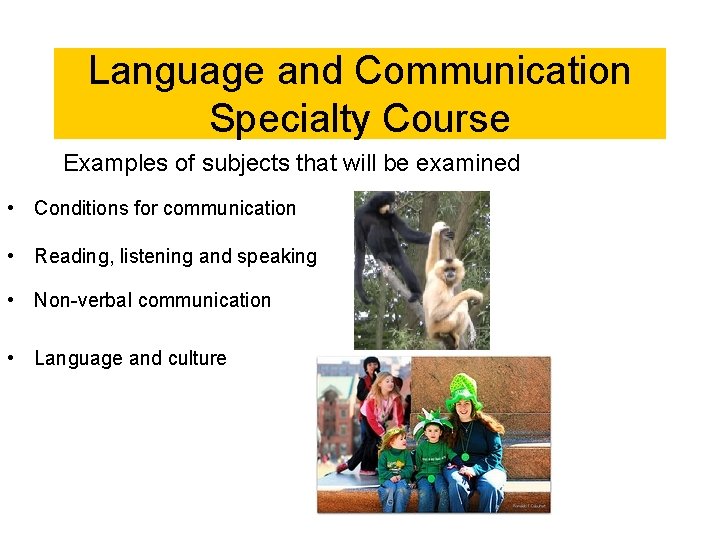
Language and Communication Specialty Course Examples of subjects that will be examined • Conditions for communication • Reading, listening and speaking • Non-verbal communication • Language and culture
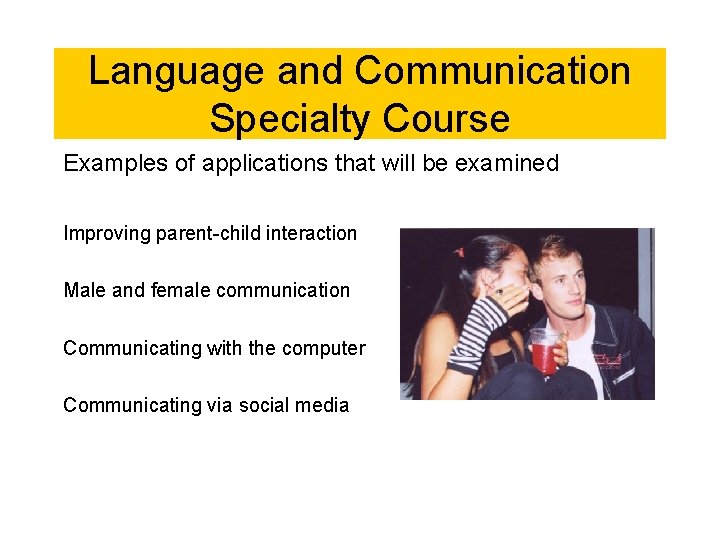
Language and Communication Specialty Course Examples of applications that will be examined Improving parent-child interaction Male and female communication Communicating with the computer Communicating via social media
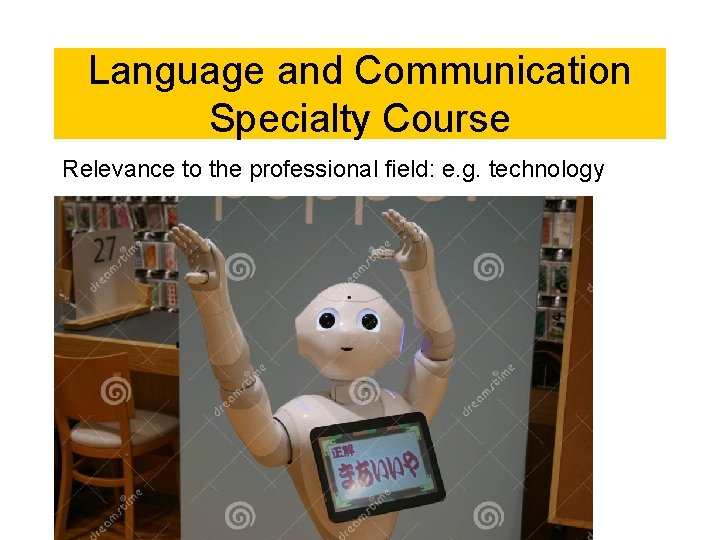
Language and Communication Specialty Course Relevance to the professional field: e. g. technology • Technologie • Onderzoek • Ontwikkeling • Preventie • Onderwijs • Cultuur
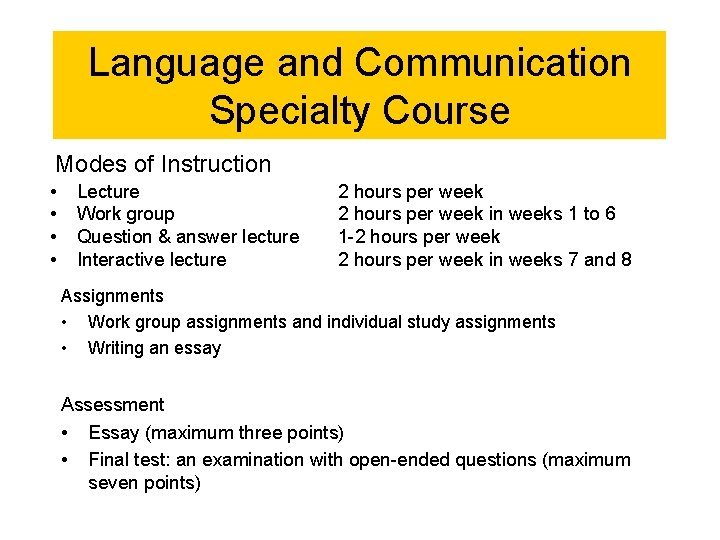
Language and Communication Specialty Course Modes of Instruction • • Lecture Work group Question & answer lecture Interactive lecture 2 hours per week in weeks 1 to 6 1 -2 hours per week in weeks 7 and 8 Assignments • Work group assignments and individual study assignments • Writing an essay Assessment • Essay (maximum three points) • Final test: an examination with open-ended questions (maximum seven points)
Specialty Course: Language and Communication linked to this (2 nd semester) Research practicum 2: Language and attention Coordinator: Dorothee Chwilla
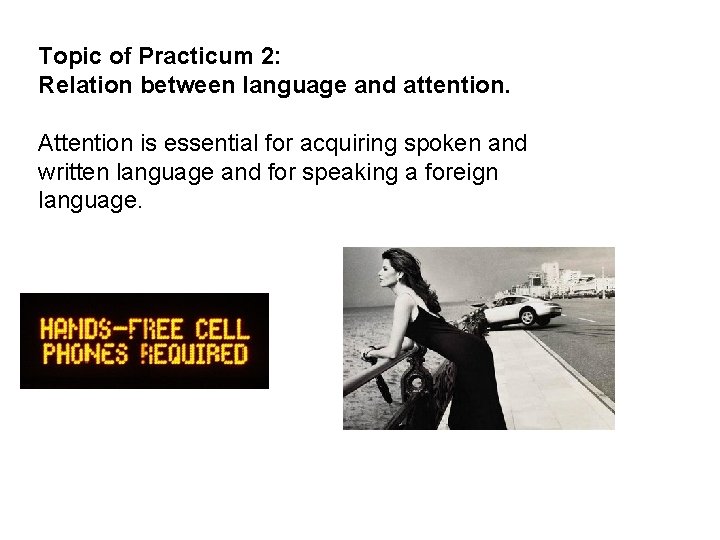
Topic of Practicum 2: Relation between language and attention. Attention is essential for acquiring spoken and written language and for speaking a foreign language.
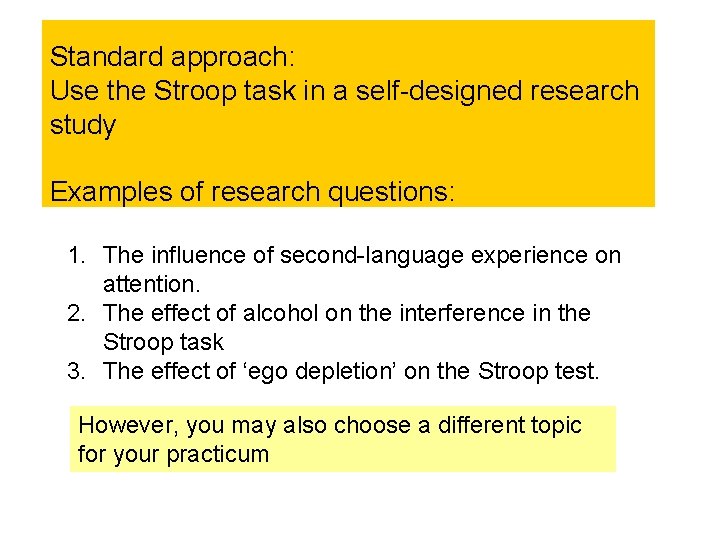
Standard approach: Use the Stroop task in a self-designed research study Examples of research questions: 1. The influence of second-language experience on attention. 2. The effect of alcohol on the interference in the Stroop task 3. The effect of ‘ego depletion’ on the Stroop test. However, you may also choose a different topic for your practicum