
LANDSCAPES of NY ESRT p 2 and pgs

- Slides: 22
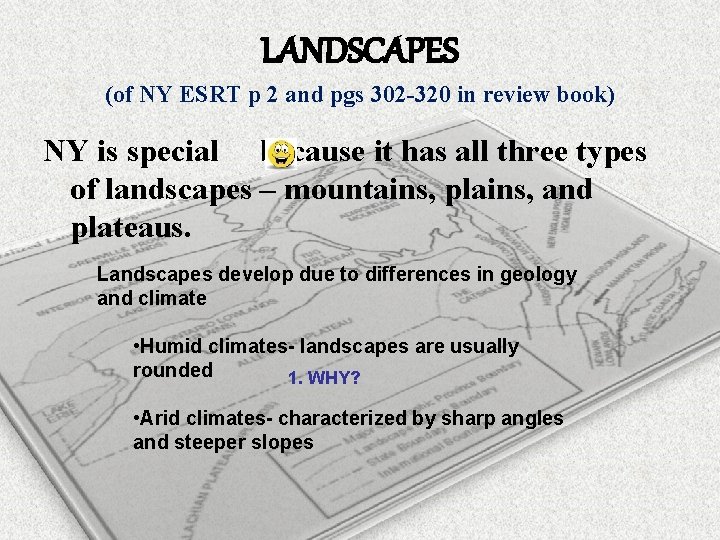
LANDSCAPES (of NY ESRT p 2 and pgs 302 -320 in review book) NY is special because it has all three types of landscapes – mountains, plains, and plateaus. Landscapes develop due to differences in geology and climate • Humid climates- landscapes are usually rounded 1. WHY? • Arid climates- characterized by sharp angles and steeper slopes
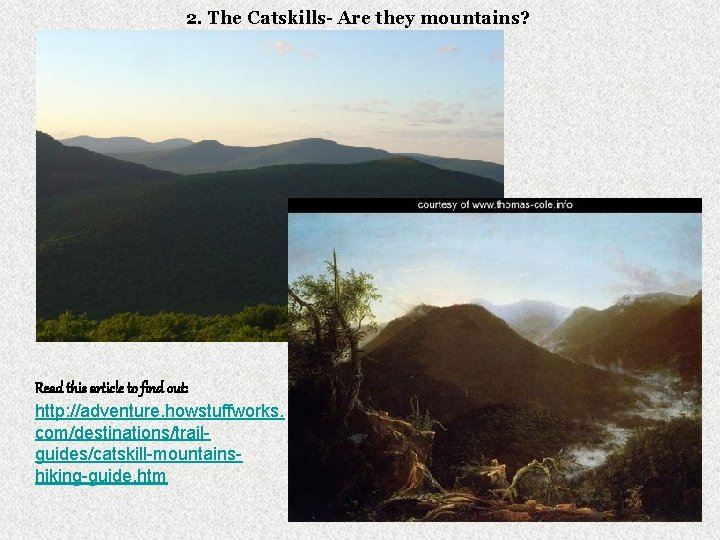
2. The Catskills- Are they mountains? Read this article to find out: http: //adventure. howstuffworks. com/destinations/trailguides/catskill-mountainshiking-guide. htm
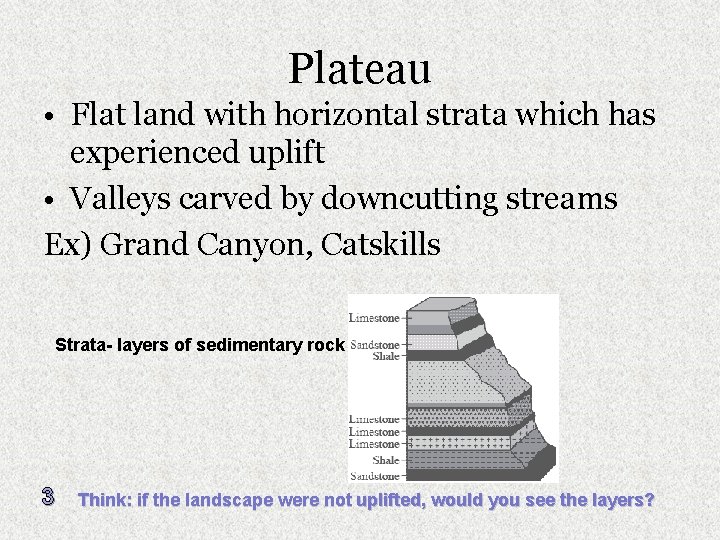
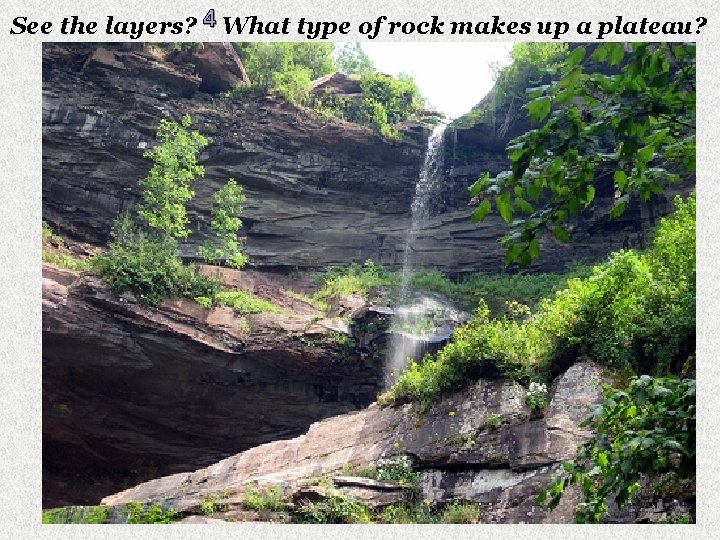
Plateau • Flat land with horizontal strata which has experienced uplift • Valleys carved by downcutting streams Ex) Grand Canyon, Catskills Strata- layers of sedimentary rock 3 Think: if the landscape were not uplifted, would you see the layers?
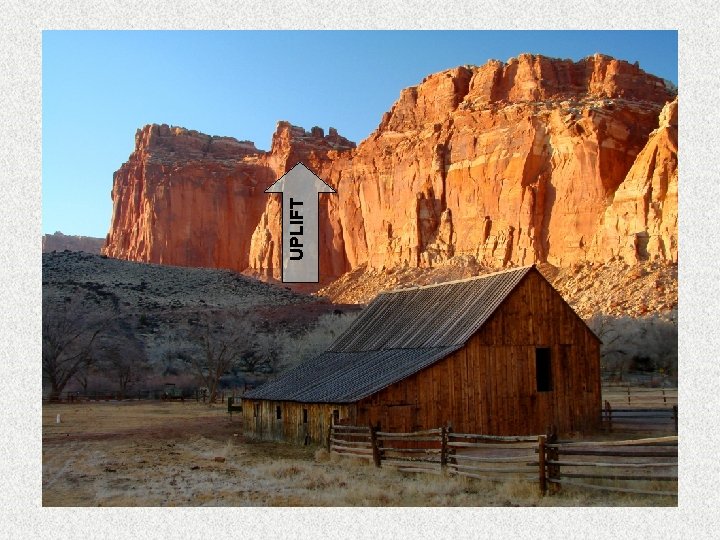
UPLIFT
See the layers? 4 What type of rock makes up a plateau?
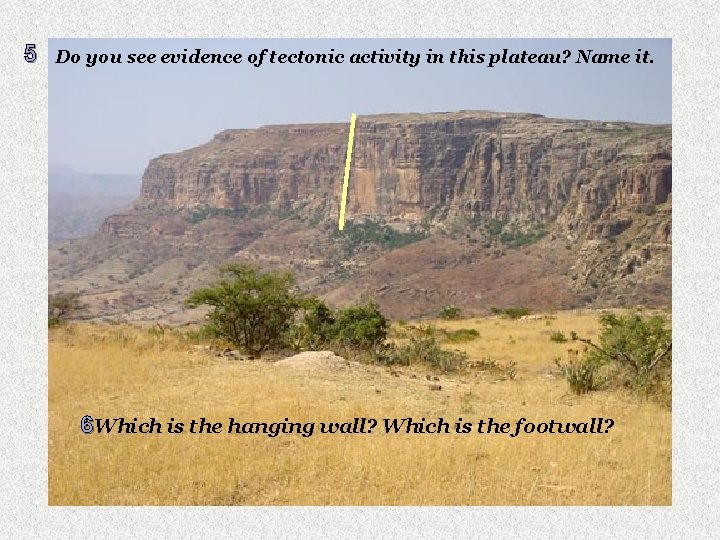
5 Do you see evidence of tectonic activity in this plateau? Name it. 6 Which is the hanging wall? Which is the footwall?
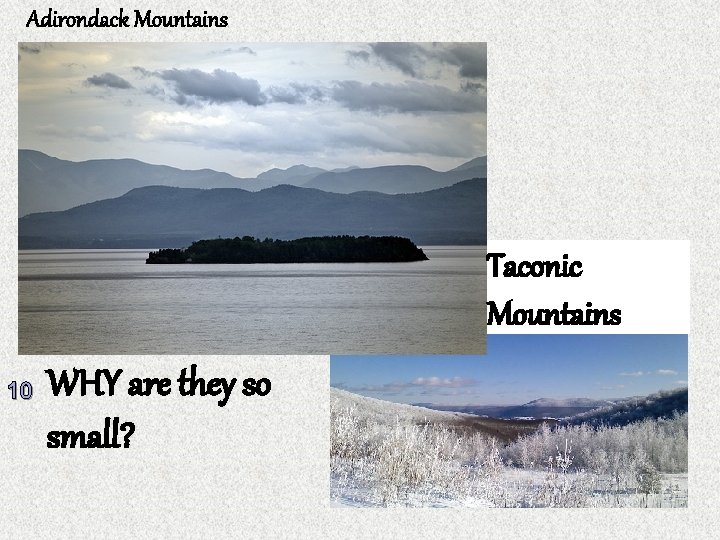
Mountains orogeny- mountain building event • High peaks and deep valleys • May include all 3 types of rock (igneous, metamorphic and sedimentary) • Strata is often folded and sometimes faulted. Ex) Rockies, Alps, Himalayas • NY ancient mountains: Taconic and Adirondacks Sneak peek to next unit: check out ESRT pgs 8 -9. 7 When did the Adirondacks form? 8 When did the Taconic orogeny happen?
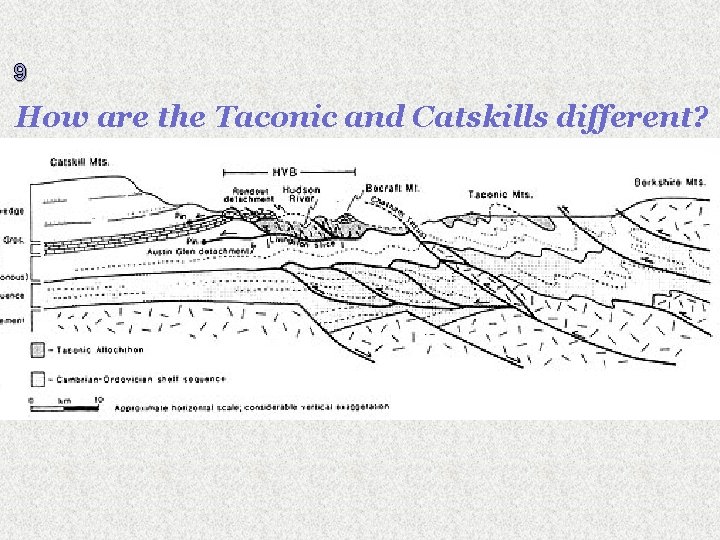
9 How are the Taconic and Catskills different?
Adirondack Mountains Taconic Mountains 10 WHY are they so small?
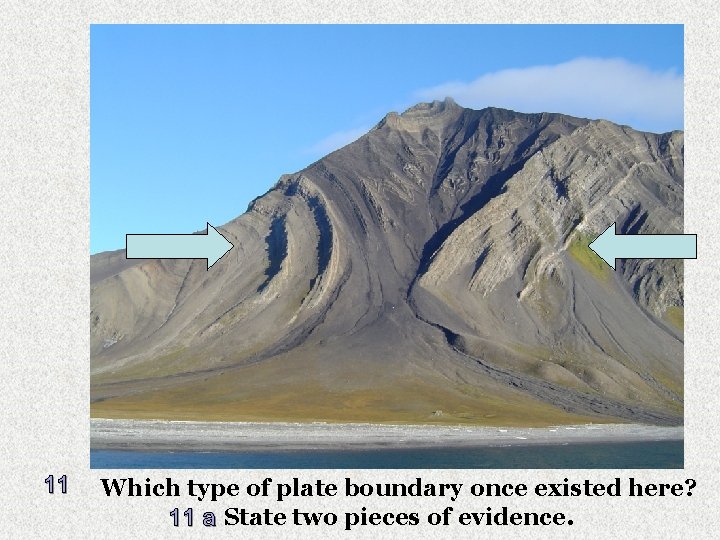
11 Which type of plate boundary once existed here? 11 a State two pieces of evidence.
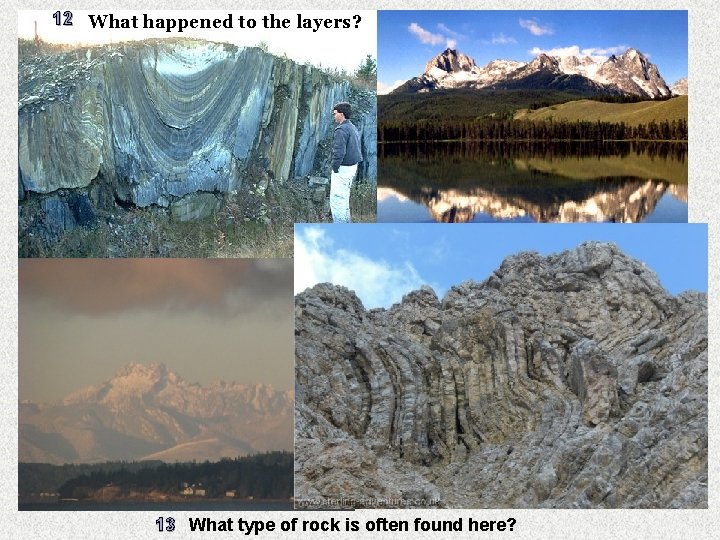
12 What happened to the layers? 13 What type of rock is often found here?
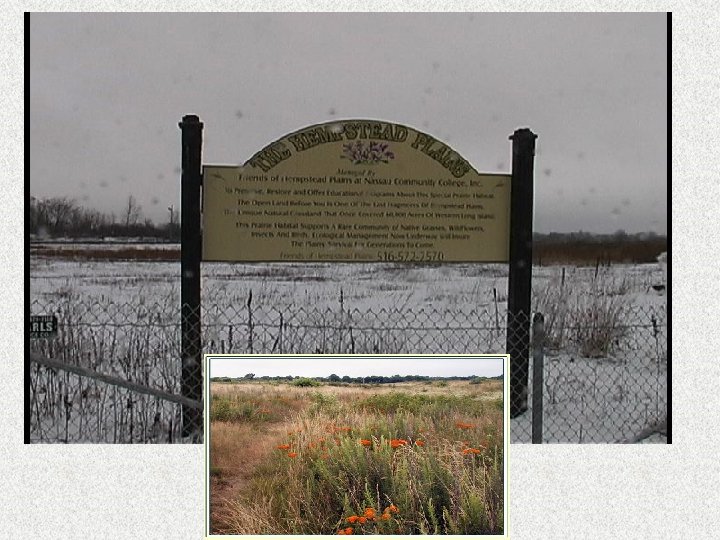
Plains • Generally flat and at low elevation • Horizontal strata RELIEF The change in elevation between highest and lowest places. Put the landscapes in order from greatest to least relief 14 _______
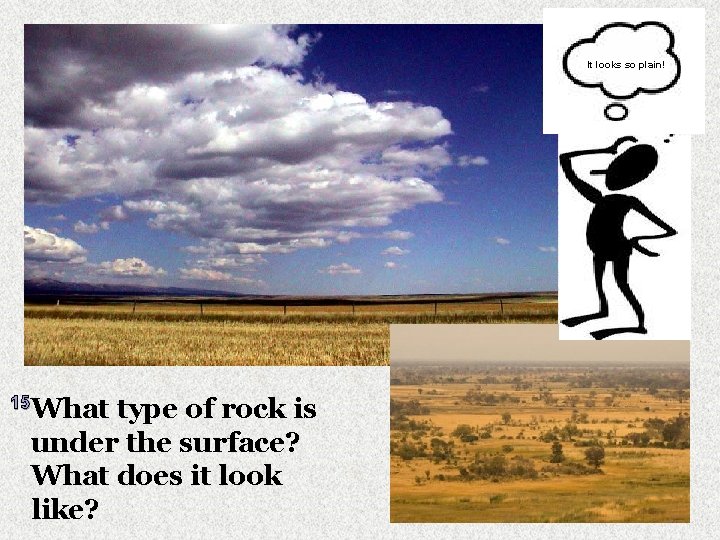
It looks so plain! 15 What type of rock is under the surface? What does it look like?
Drainage Patterns
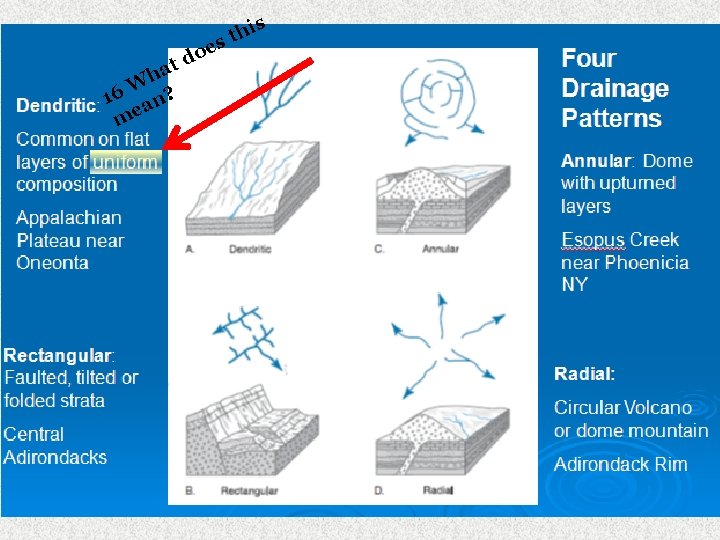
td a h W 16 an? me his t s oe
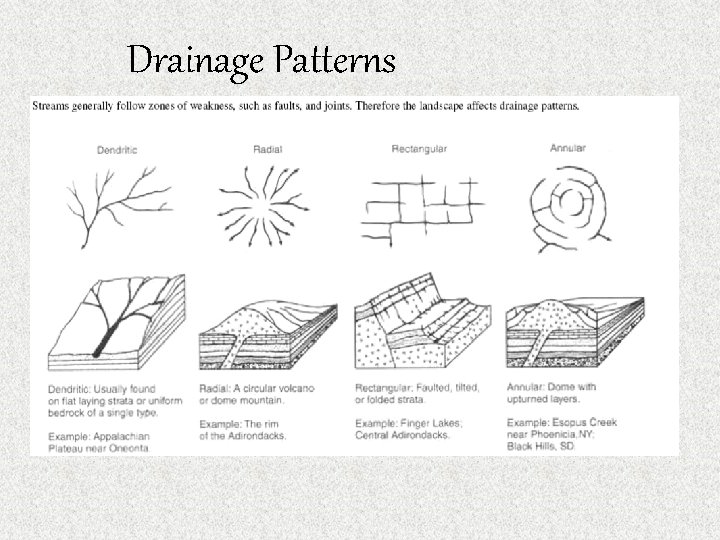
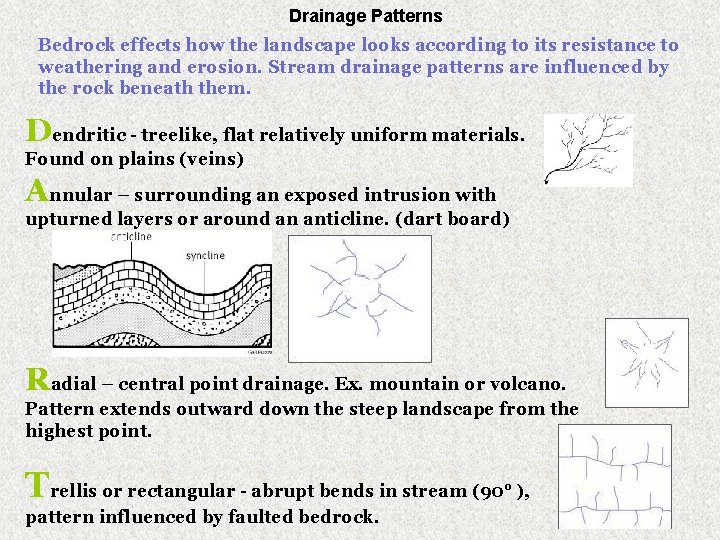
Drainage Patterns Bedrock effects how the landscape looks according to its resistance to weathering and erosion. Stream drainage patterns are influenced by the rock beneath them. Dendritic - treelike, flat relatively uniform materials. Found on plains (veins) Annular – surrounding an exposed intrusion with upturned layers or around an anticline. (dart board) Radial – central point drainage. Ex. mountain or volcano. Pattern extends outward down the steep landscape from the highest point. Trellis or rectangular - abrupt bends in stream (90° ), pattern influenced by faulted bedrock.
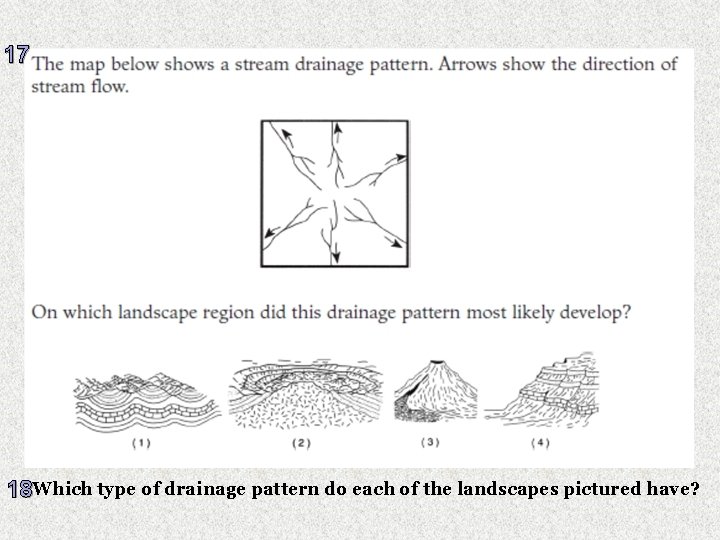
17 18 Which type of drainage pattern do each of the landscapes pictured have?
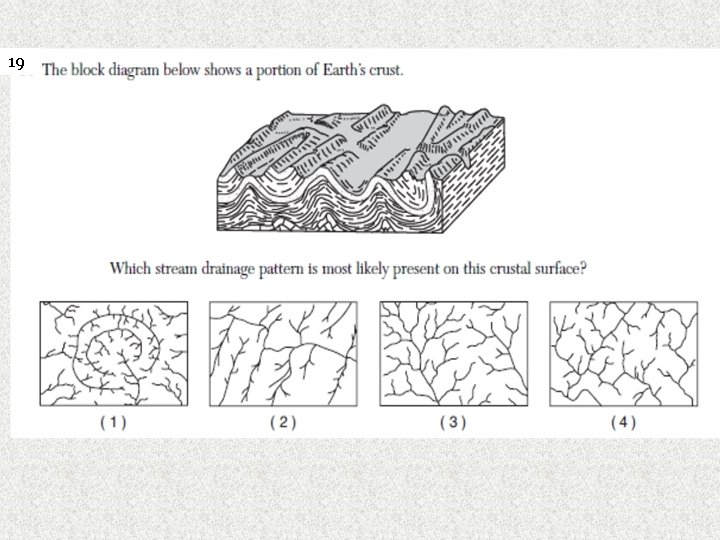
19
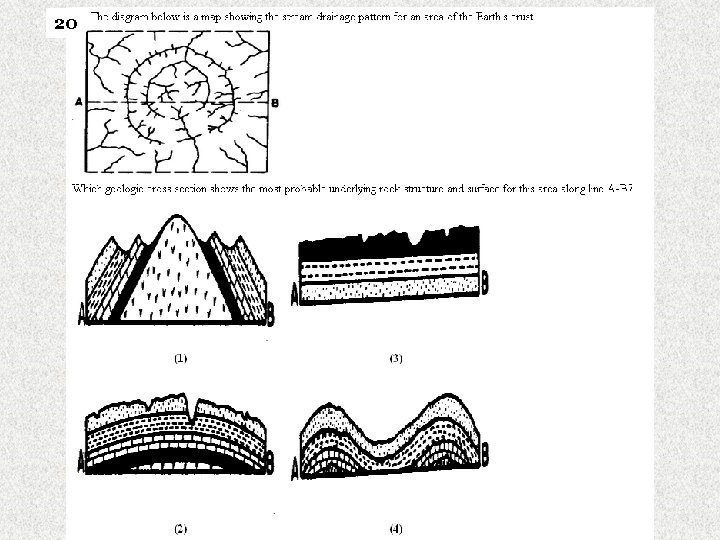
20
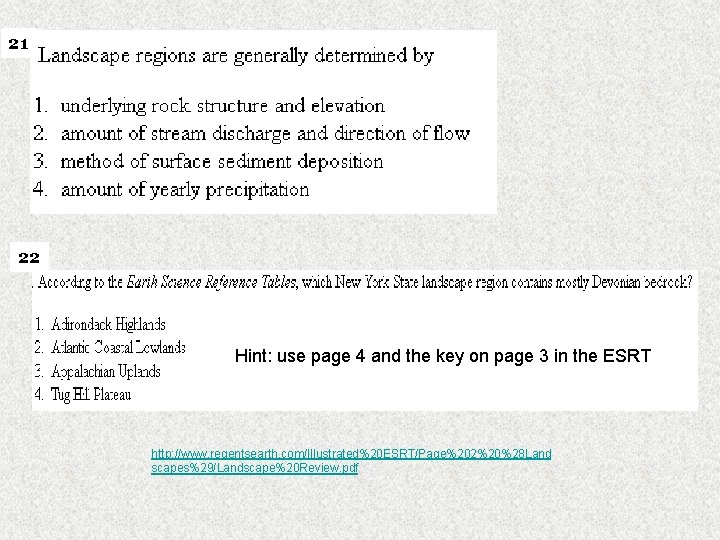
21 22 Hint: use page 4 and the key on page 3 in the ESRT http: //www. regentsearth. com/Illustrated%20 ESRT/Page%202%20%28 Land scapes%29/Landscape%20 Review. pdf
The End!