
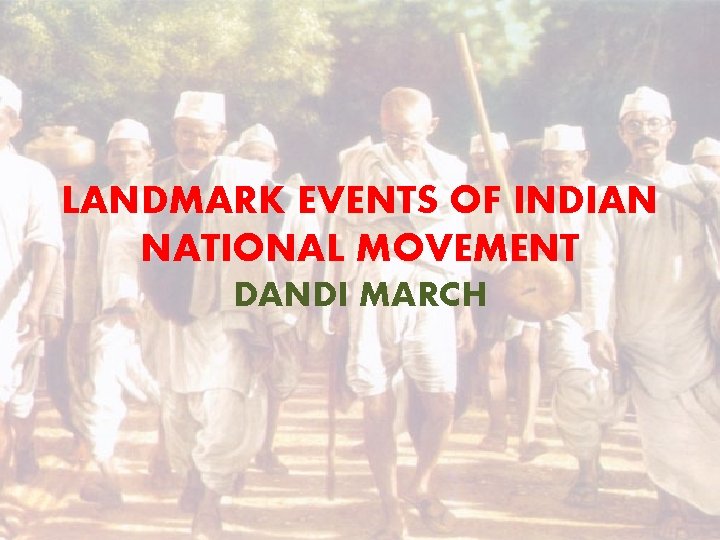
LANDMARK EVENTS OF INDIAN NATIONAL MOVEMENT DANDI MARCH
- Slides: 6
LANDMARK EVENTS OF INDIAN NATIONAL MOVEMENT DANDI MARCH
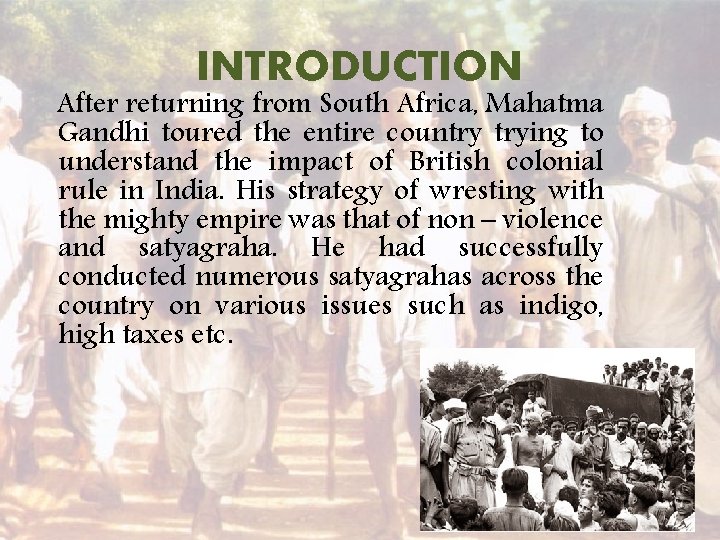
INTRODUCTION After returning from South Africa, Mahatma Gandhi toured the entire country trying to understand the impact of British colonial rule in India. His strategy of wresting with the mighty empire was that of non – violence and satyagraha. He had successfully conducted numerous satyagrahas across the country on various issues such as indigo, high taxes etc.
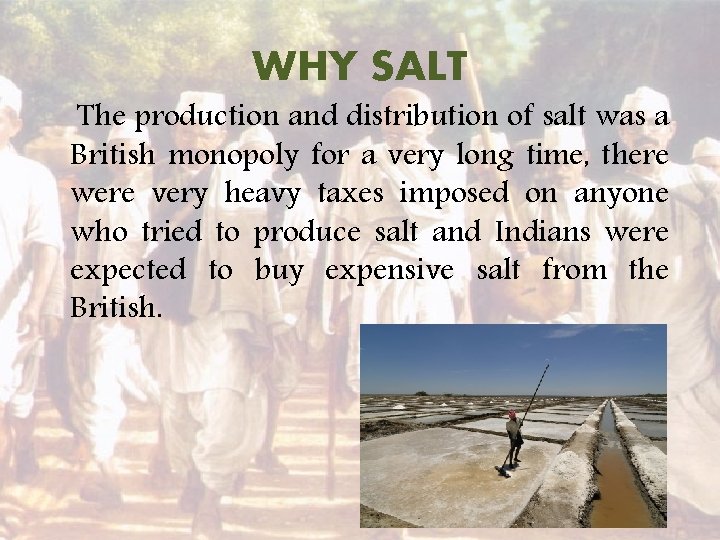
WHY SALT The production and distribution of salt was a British monopoly for a very long time, there were very heavy taxes imposed on anyone who tried to produce salt and Indians were expected to buy expensive salt from the British.
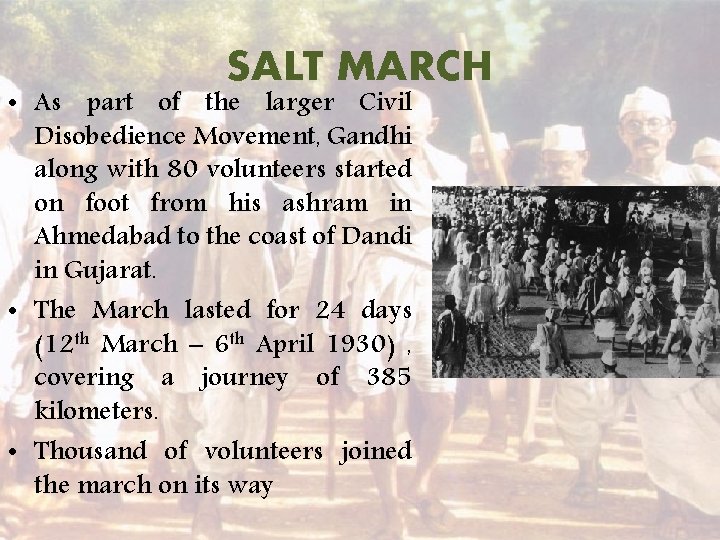
SALT MARCH • As part of the larger Civil Disobedience Movement, Gandhi along with 80 volunteers started on foot from his ashram in Ahmedabad to the coast of Dandi in Gujarat. • The March lasted for 24 days (12 th March – 6 th April 1930) , covering a journey of 385 kilometers. • Thousand of volunteers joined the march on its way
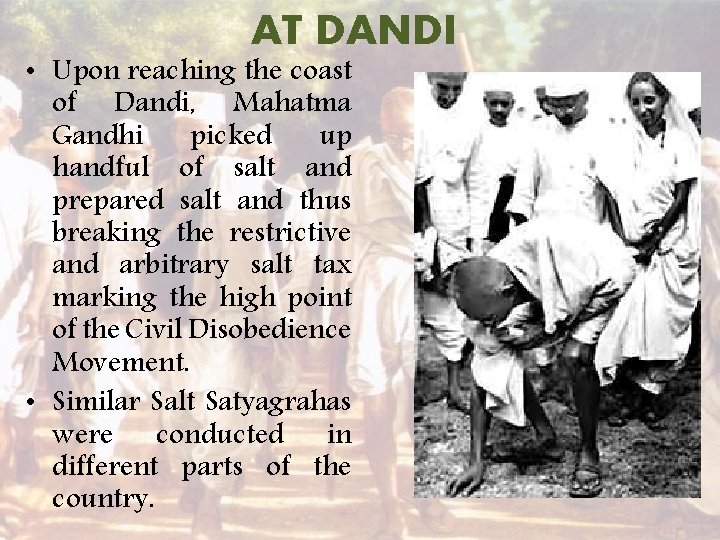
AT DANDI • Upon reaching the coast of Dandi, Mahatma Gandhi picked up handful of salt and prepared salt and thus breaking the restrictive and arbitrary salt tax marking the high point of the Civil Disobedience Movement. • Similar Salt Satyagrahas were conducted in different parts of the country.
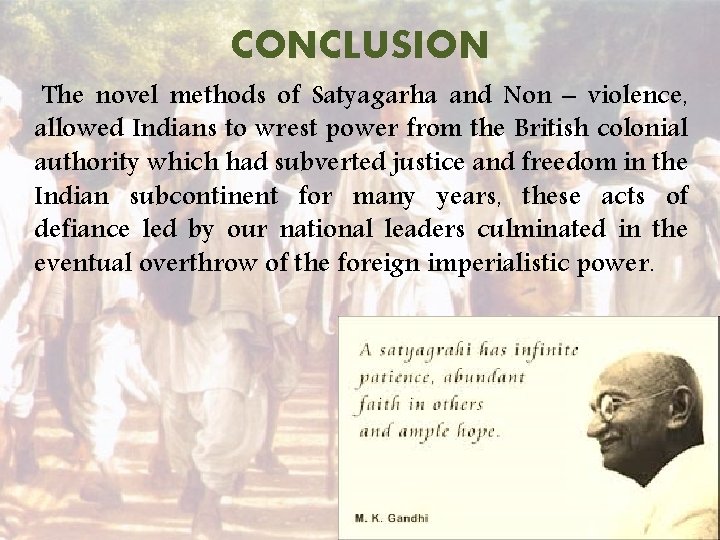
CONCLUSION The novel methods of Satyagarha and Non – violence, allowed Indians to wrest power from the British colonial authority which had subverted justice and freedom in the Indian subcontinent for many years, these acts of defiance led by our national leaders culminated in the eventual overthrow of the foreign imperialistic power.