
LANDING ZONE SAFETY at Childrens Medical Center Landing
- Slides: 16
LANDING ZONE SAFETY at Children’s Medical Center
Landing Zone Safety • Safety and security is of the utmost importance during landing and taking off • Dual pilot • This presentation is specifically for Children’s aircraft • Other helicopters have different approach zones and regulations • Concepts may be applied to all aircraft
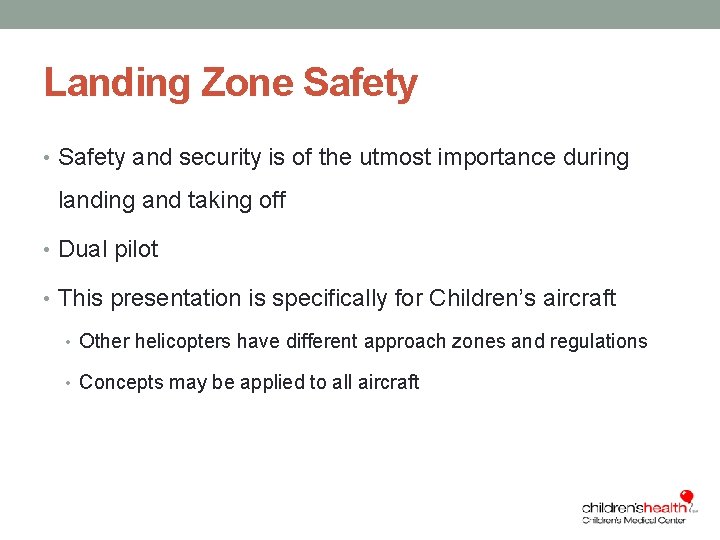
Children’s Aircraft • S 76 C++ Sikorsky • Length: 52’ 6” • From tip of main rotor blade to tip of tail rotor blade • Width: 44’ (blades) • Weight 11, 700 maximum
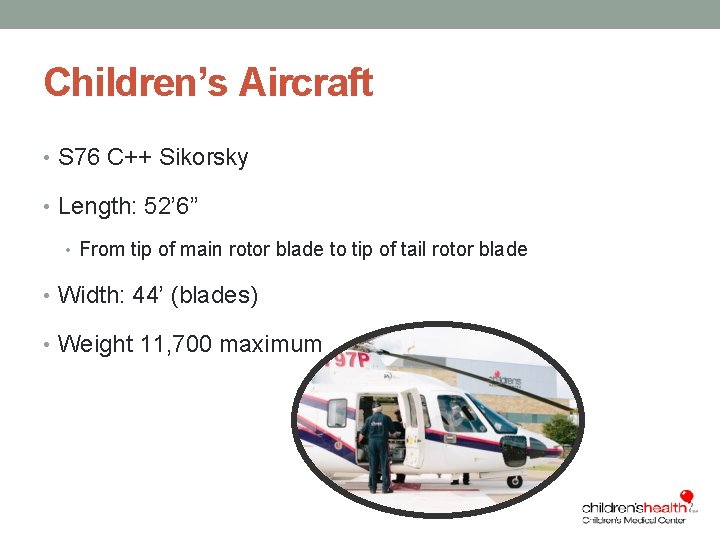
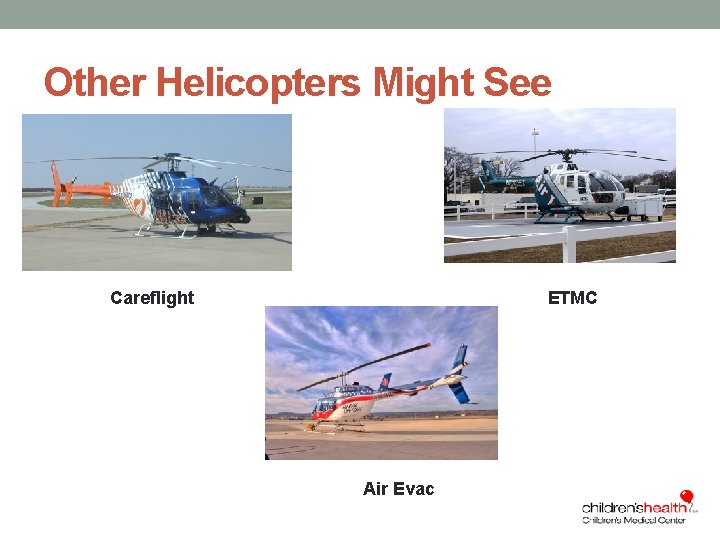
Other Helicopters Might See Careflight ETMC Air Evac
Things to Think About • Height of the rotor disk can vary with winds, terrain and RPM • At operating RPM the tail rotor is noticeable to the naked eye • Remember • Contact with the tail rotor will be fatal! fatal
Safety Guidelines • Is the Landing Zone (LZ) confined from the public? • If not: • Is there someone assigned to rope off or secure the site ? • Is the staff trained for their own personal safety?
Safety Guidelines • All personnel should be at least 150 feet from helicopter during takeoff and landing • There should be no debris or trash • All marking devices should be secured to the ground • No smoking within 100 feet of aircraft • All objects should be at least 150 feet from landing zone • Trees, vehicles, bystanders, etc.
Safety Guidelines • Secure all clothing , bedding and anything else that can become airborne • Do not wear isolation gowns, hats, etc. • Never point white light directly at the aircraft • This includes media cameras, lasers or flash photography • Wear eye and ear protection • Turn back to rotor wash • Stay in vestibule
Safety Guidelines • Do not approach the aircraft • The pilot will motion when it is safe to approach the aircraft • For patient’s safety, keep the patient in the facility until the medical team arrives • For safety reasons, the medical team will unload and reload without assistance from the referring facility • If approaching aircraft, only approach from the sides • Keep the pilots in view
REMEMBER Never approach this aircraft from the front or rear! It can be fatal.
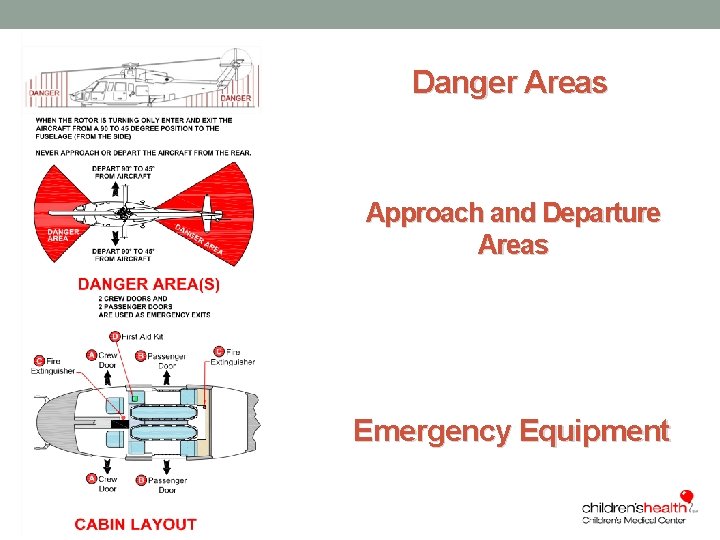
Danger Areas Approach and Departure Areas Emergency Equipment
ED Responsibilities • Ensure that there is a stretcher and oxygen • Oxygen tank from ED • Stretcher found by pad • Clean and replace when finished
In the Event of a Disaster… • Consider these things: • Disaster plan • Rescue-patient, parent, crew members • Never approach until all moving parts have stopped on helicopter • Break windows, if possible • Try to get doors open, if possible
Disaster • Consider these things: • Call for help • Get fire extinguishers • Concentrate resources on getting patient and crew out rather than fire containment • Notify proper authorities • Code Yellow
REMEMBER Safety is our #1 goal
Any Questions • Call MOC (214)803 -4346