
Landing a Tail Wheel Aircraft Objectives To land
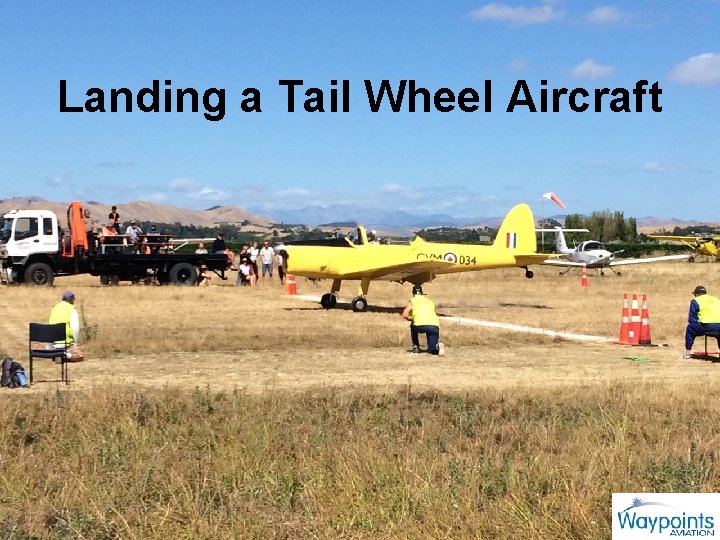
Landing a Tail Wheel Aircraft
Objectives • To land a tail wheel aircraft: - on the main wheels (wheeler); and, - on all three wheels (three-pointer). • To maintain directional control throughout the landing roll.
Considerations • Control in pitch; and, • Directional control.
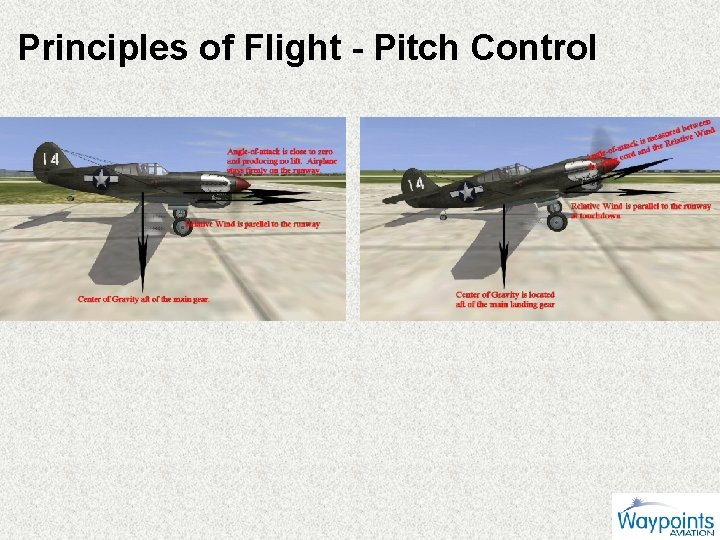
Principles of Flight - Pitch Control

Principles of Flight - Directional Control

Principles of Flight - Slipstream Effect
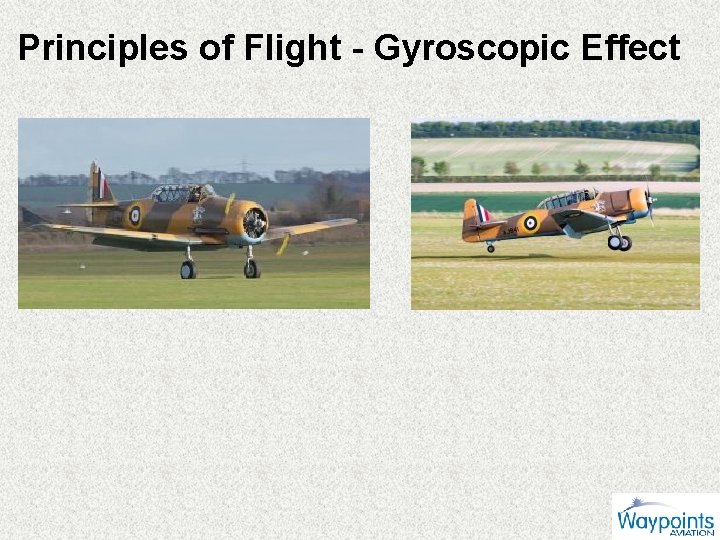
Principles of Flight - Gyroscopic Effect

Principles of Flight - Torque Effect All three effects tend to work together. But their direction of effect depends on the rotational direction of the propeller.
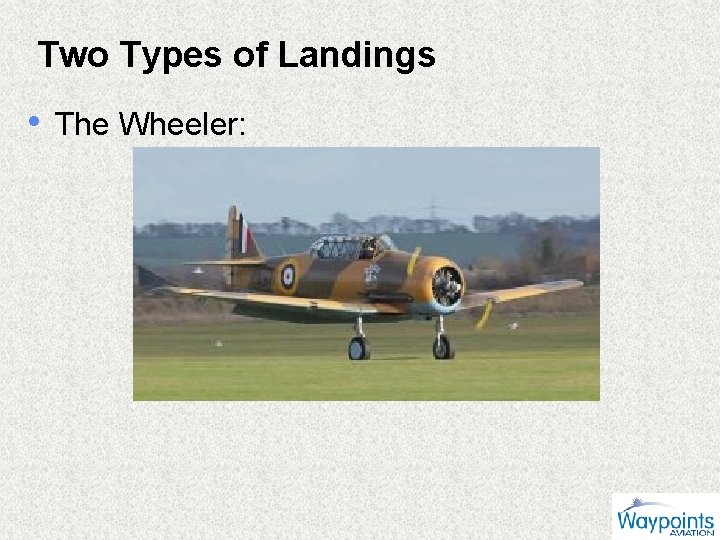
Two Types of Landings • The Wheeler:
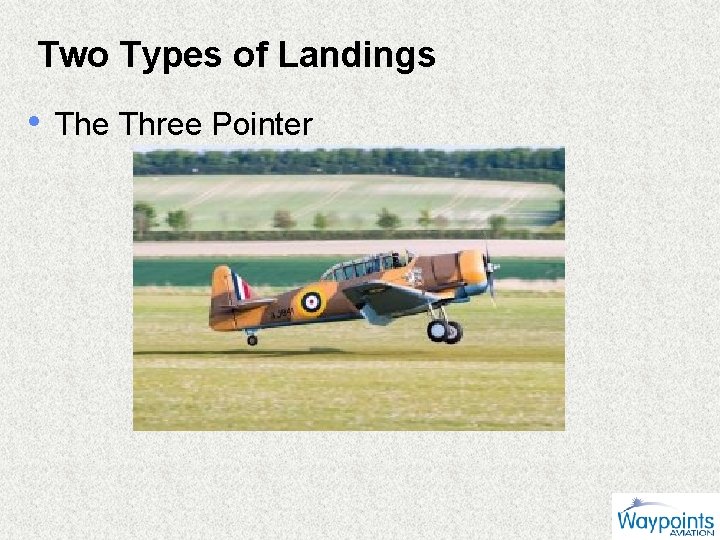
Two Types of Landings • The Three Pointer
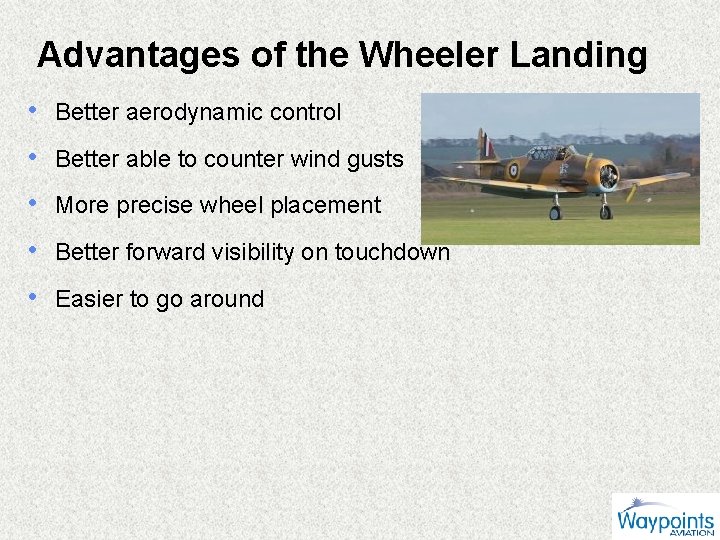
Advantages of the Wheeler Landing • Better aerodynamic control • Better able to counter wind gusts • More precise wheel placement • Better forward visibility on touchdown • Easier to go around
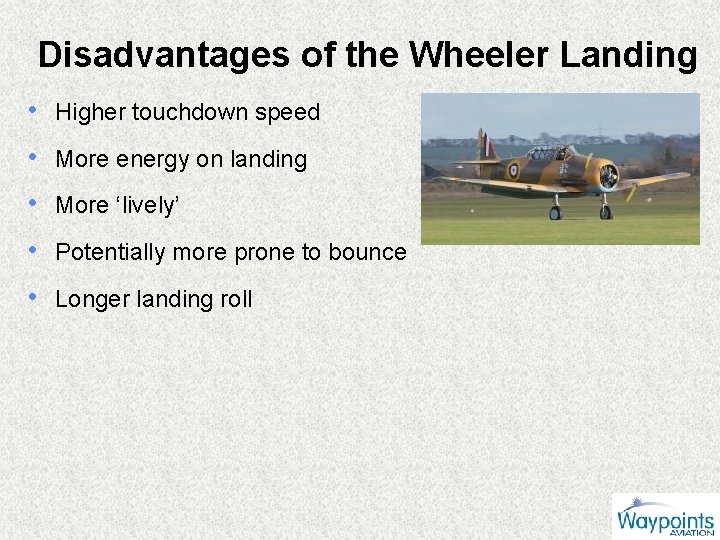
Disadvantages of the Wheeler Landing • Higher touchdown speed • More energy on landing • More ‘lively’ • Potentially more prone to bounce • Longer landing roll
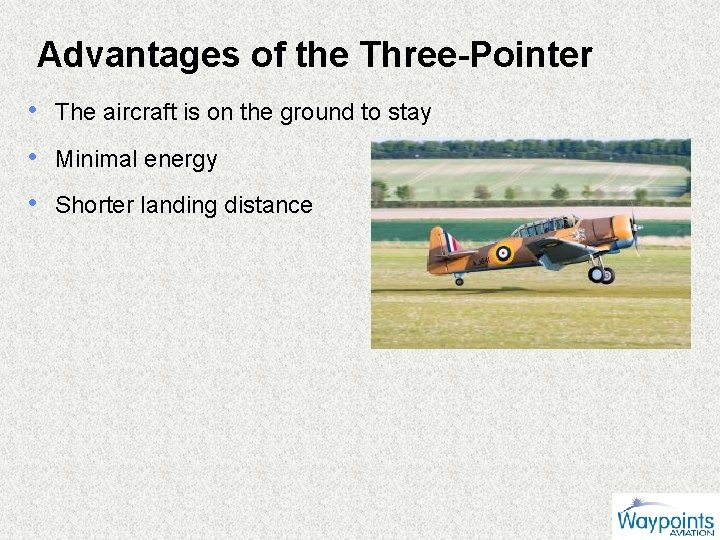
Advantages of the Three-Pointer • The aircraft is on the ground to stay • Minimal energy • Shorter landing distance
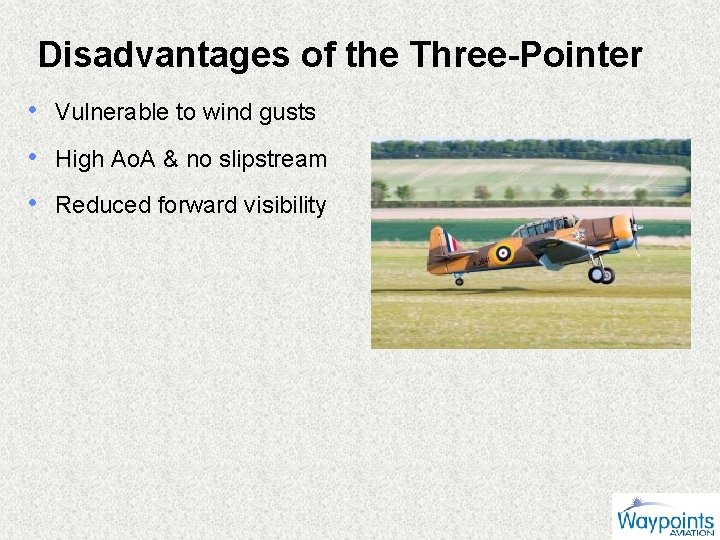
Disadvantages of the Three-Pointer • Vulnerable to wind gusts • High Ao. A & no slipstream • Reduced forward visibility
Airmanship & Human Factors Relaxation • Smooth gentle inputs • Helps control the three effects Where to look • To the far end of the runway
Engine Management Throttle • Smooth gentle inputs • Helps control two of the three effects
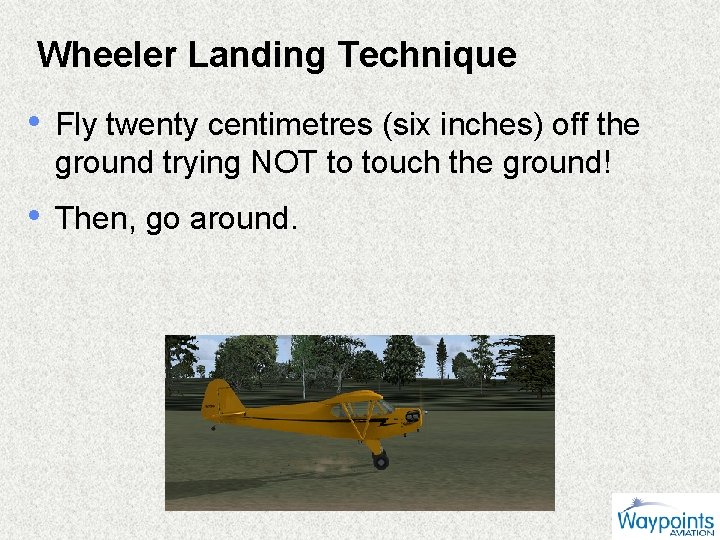
Wheeler Landing Technique • Fly twenty centimetres (six inches) off the ground trying NOT to touch the ground! • Then, go around.
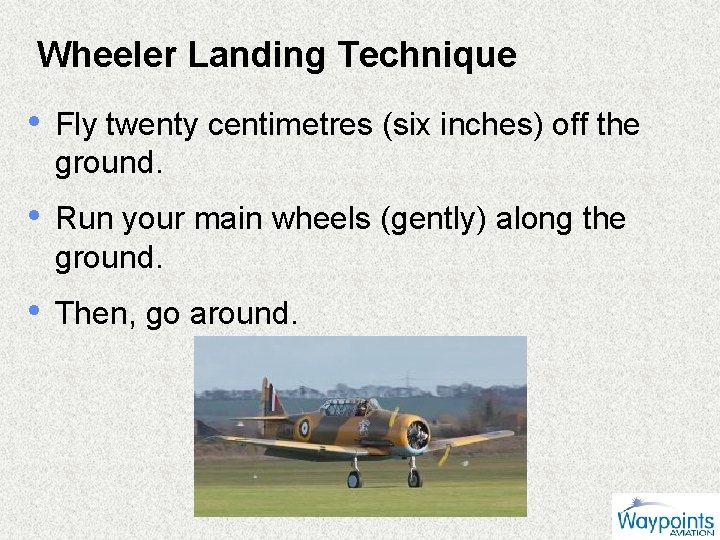
Wheeler Landing Technique • Fly twenty centimetres (six inches) off the ground. • Run your main wheels (gently) along the ground. • Then, go around.
Wheeler Landing Technique • Fly twenty centimetres (six inches) off the ground. • Run your main wheels (gently) along the ground. • Then, smoothly close throttle. • Apply gentle braking and fly the tail onto the ground, keeping straight. • When the tail is on - stick fully aft.
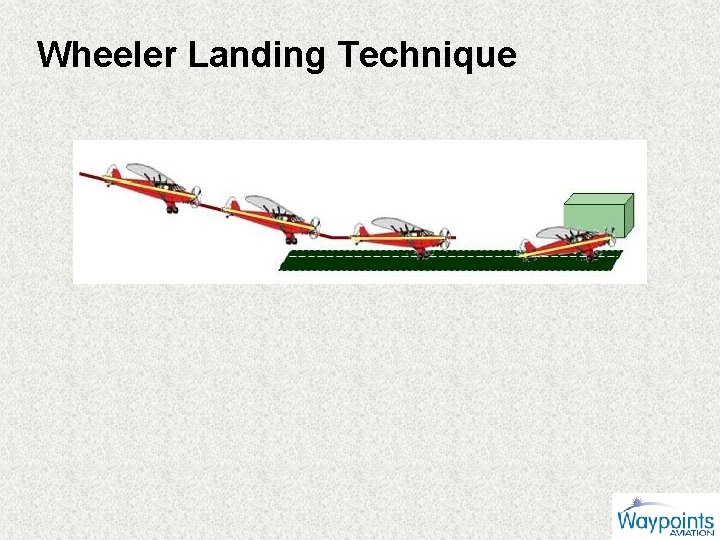
Wheeler Landing Technique
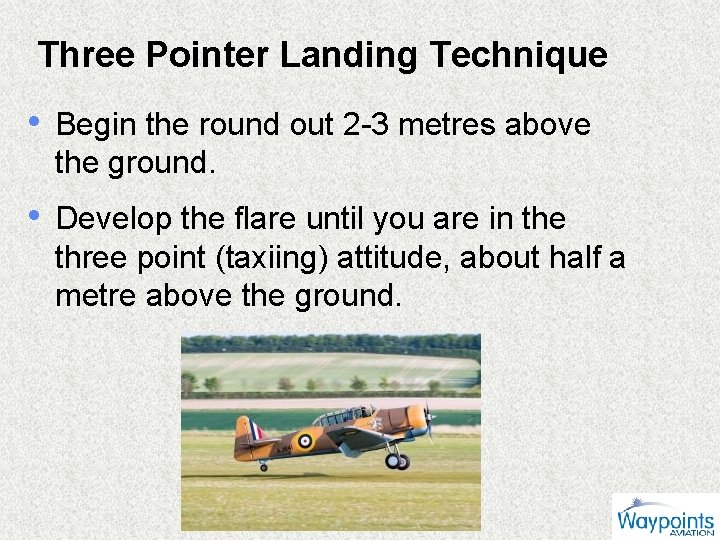
Three Pointer Landing Technique • Begin the round out 2 -3 metres above the ground. • Develop the flare until you are in the three point (taxiing) attitude, about half a metre above the ground.
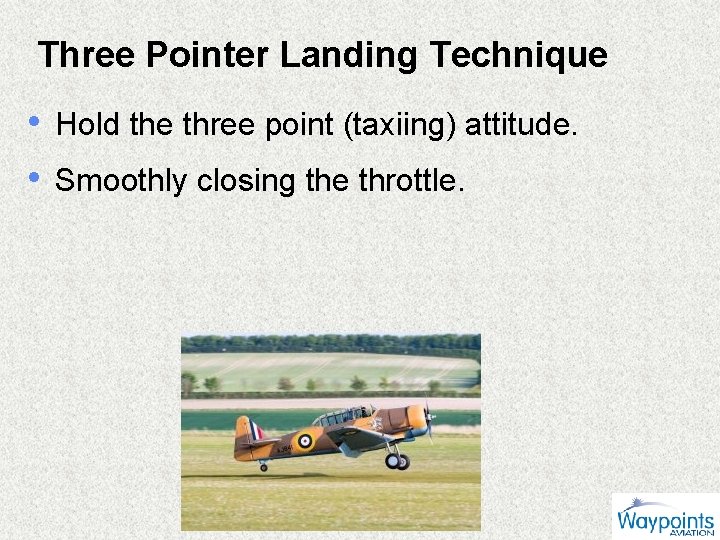
Three Pointer Landing Technique • Hold the three point (taxiing) attitude. • Smoothly closing the throttle.
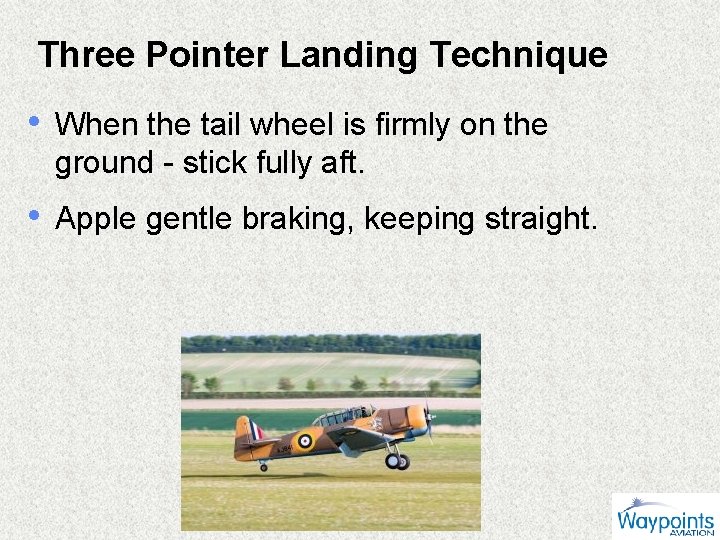
Three Pointer Landing Technique • When the tail wheel is firmly on the ground - stick fully aft. • Apple gentle braking, keeping straight.
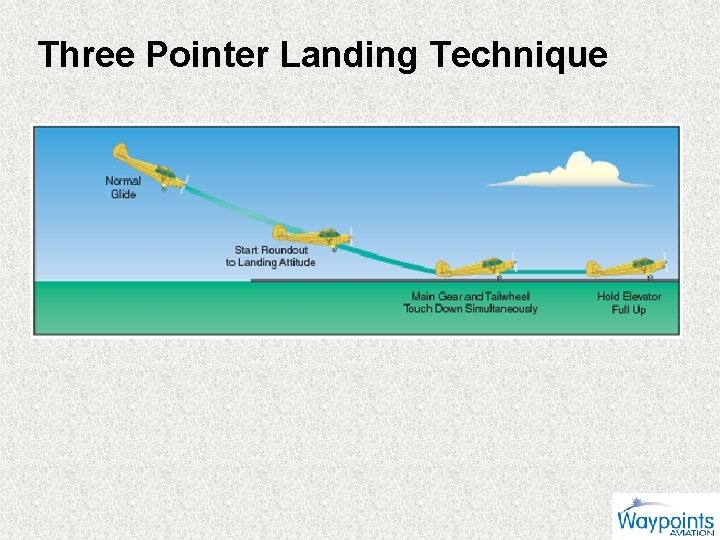
Three Pointer Landing Technique
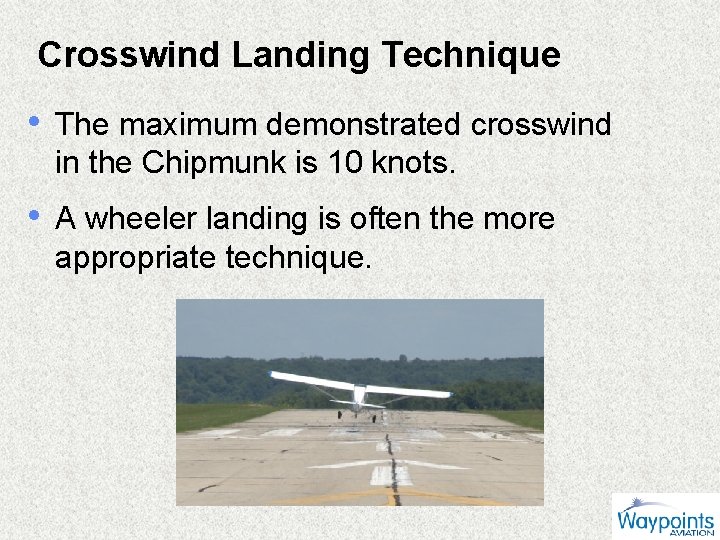
Crosswind Landing Technique • The maximum demonstrated crosswind in the Chipmunk is 10 knots. • A wheeler landing is often the more appropriate technique.
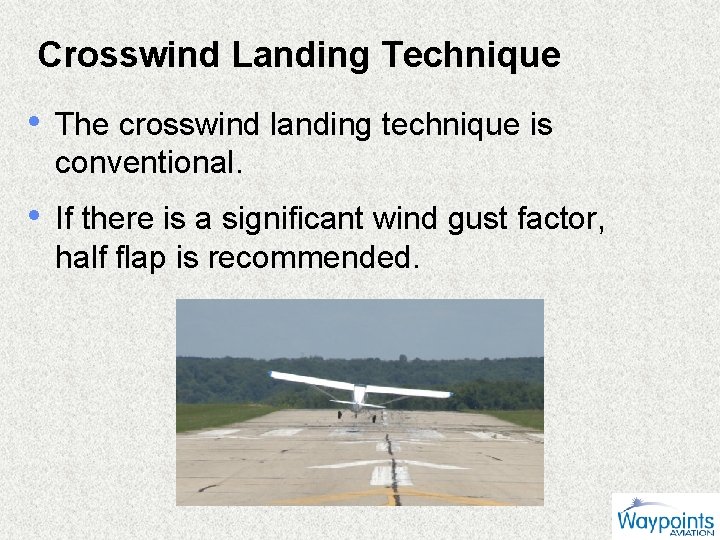
Crosswind Landing Technique • The crosswind landing technique is conventional. • If there is a significant wind gust factor, half flap is recommended.
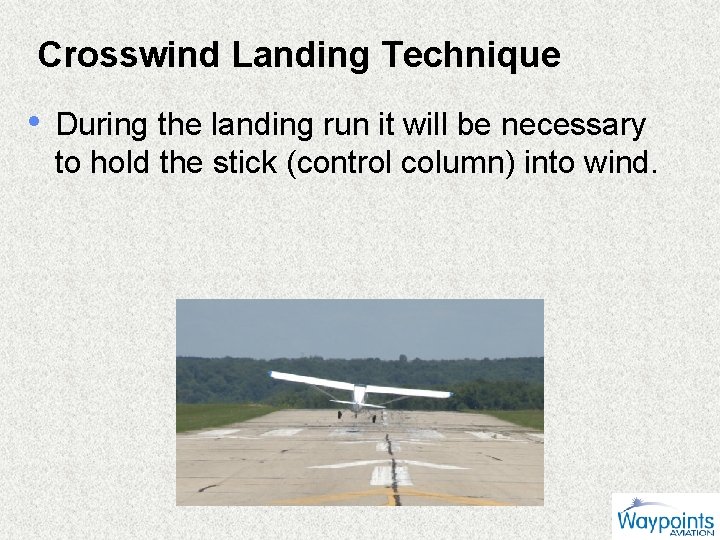
Crosswind Landing Technique • During the landing run it will be necessary to hold the stick (control column) into wind.
- Slides: 27