
Landforms of sea erosion Coastline The coastline is
- Slides: 13
Landforms of sea erosion
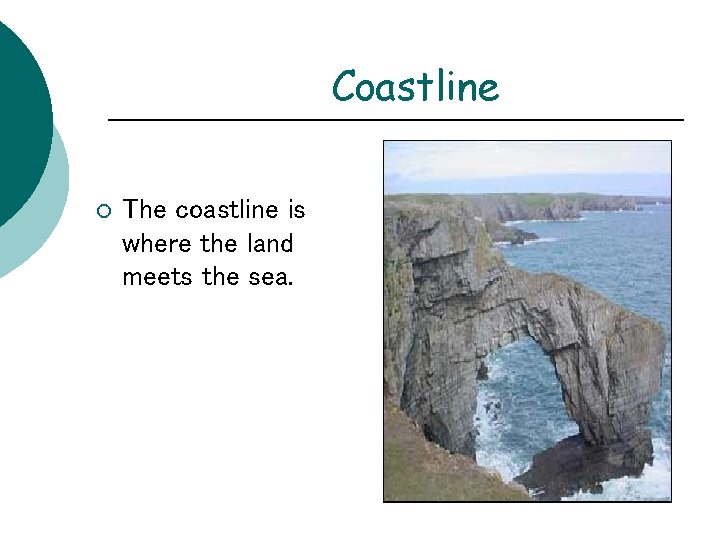
Coastline ¡ The coastline is where the land meets the sea.
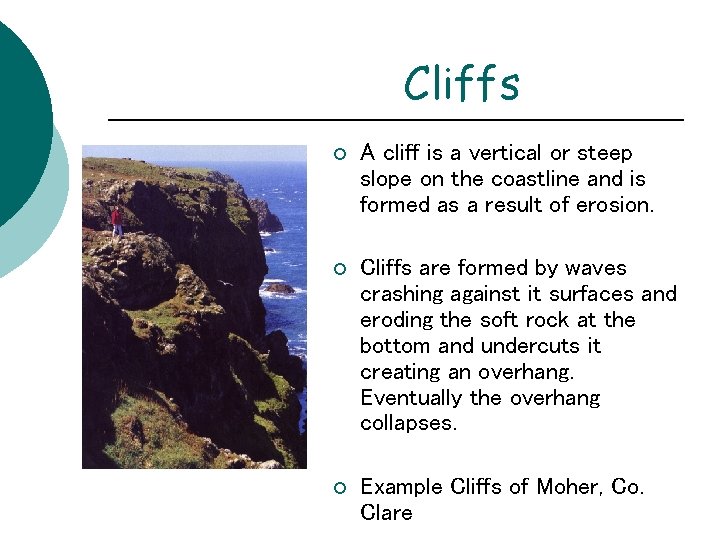
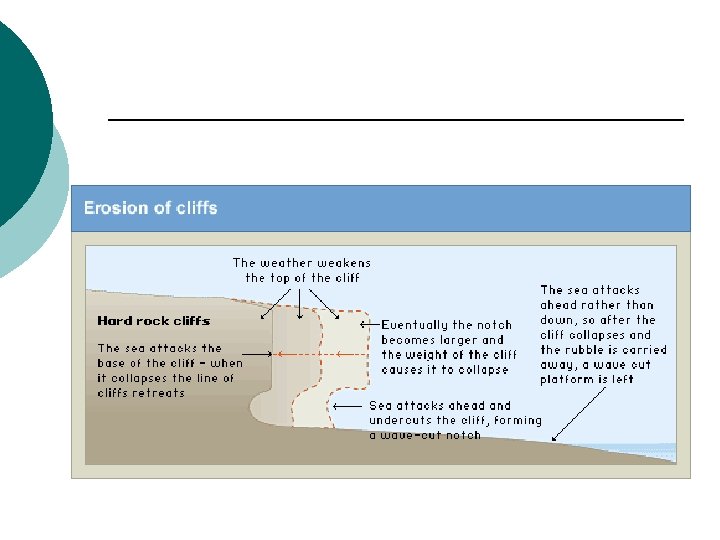
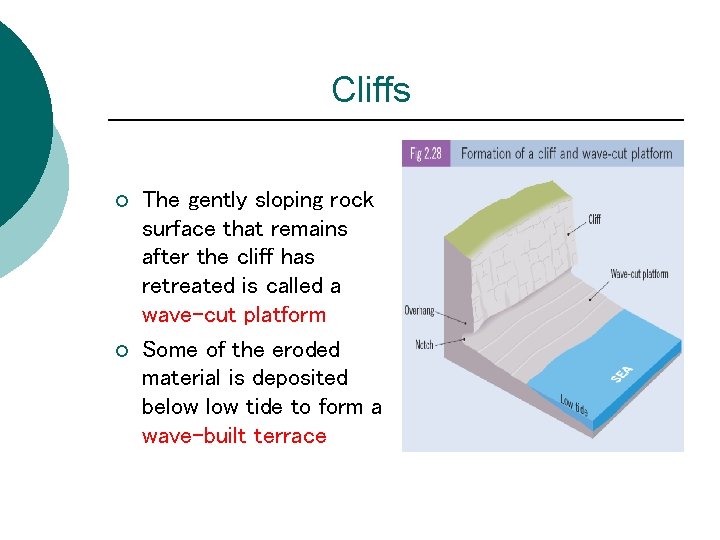
Cliffs ¡ A cliff is a vertical or steep slope on the coastline and is formed as a result of erosion. ¡ Cliffs are formed by waves crashing against it surfaces and eroding the soft rock at the bottom and undercuts it creating an overhang. Eventually the overhang collapses. ¡ Example Cliffs of Moher, Co. Clare
Cliffs ¡ ¡ The gently sloping rock surface that remains after the cliff has retreated is called a wave-cut platform Some of the eroded material is deposited below tide to form a wave-built terrace
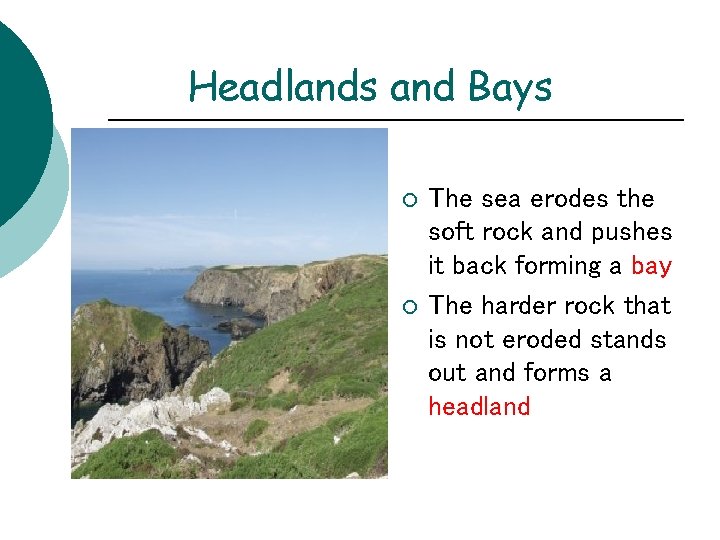
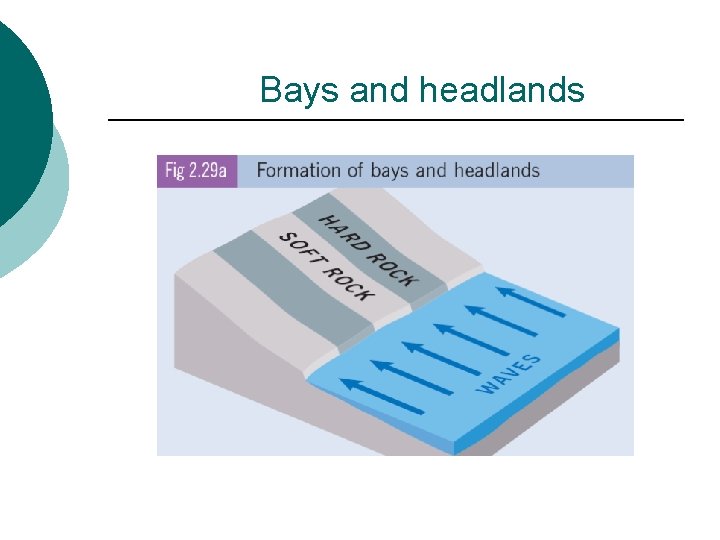
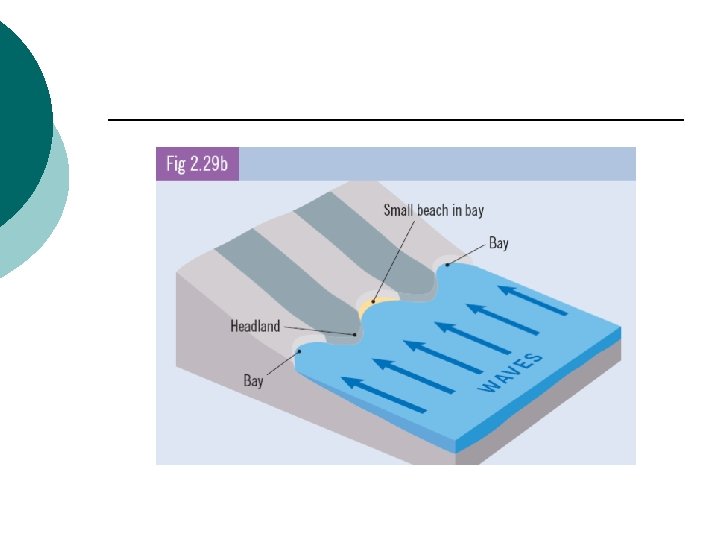
Headlands and Bays ¡ ¡ The sea erodes the soft rock and pushes it back forming a bay The harder rock that is not eroded stands out and forms a headland
Bays and headlands
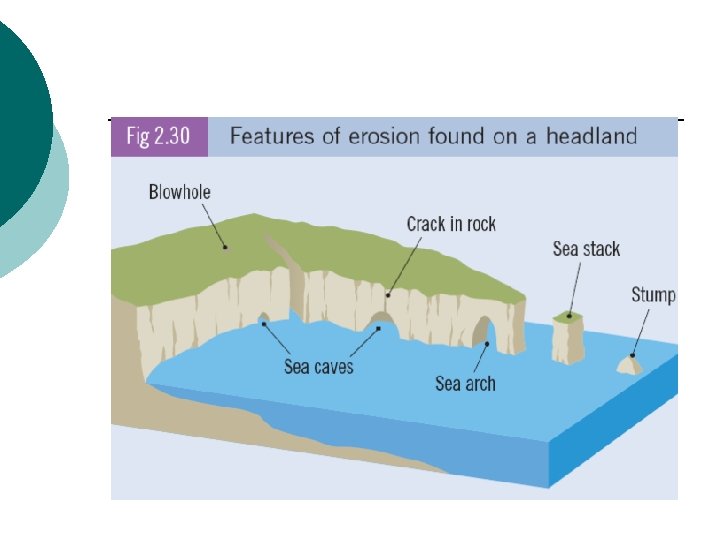
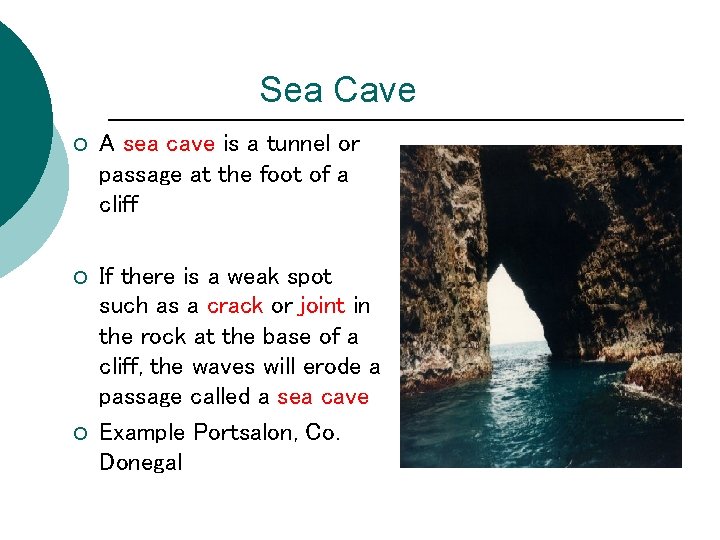
Sea Cave ¡ A sea cave is a tunnel or passage at the foot of a cliff ¡ If there is a weak spot such as a crack or joint in the rock at the base of a cliff, the waves will erode a passage called a sea cave Example Portsalon, Co. Donegal ¡
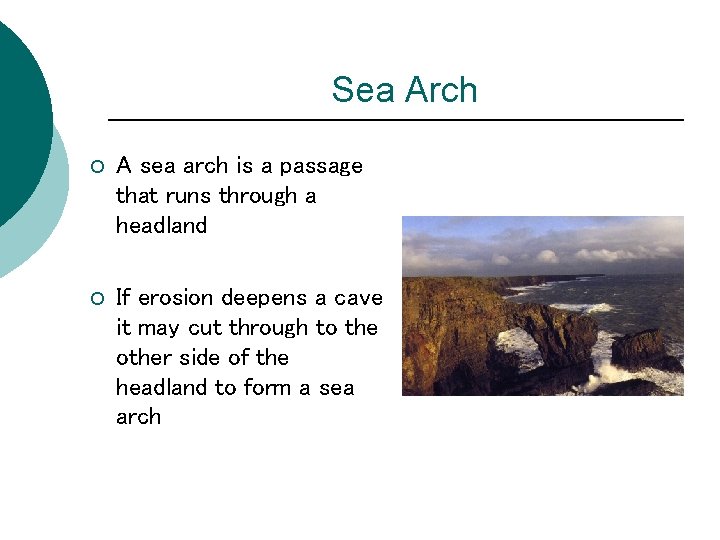
Sea Arch ¡ A sea arch is a passage that runs through a headland ¡ If erosion deepens a cave it may cut through to the other side of the headland to form a sea arch
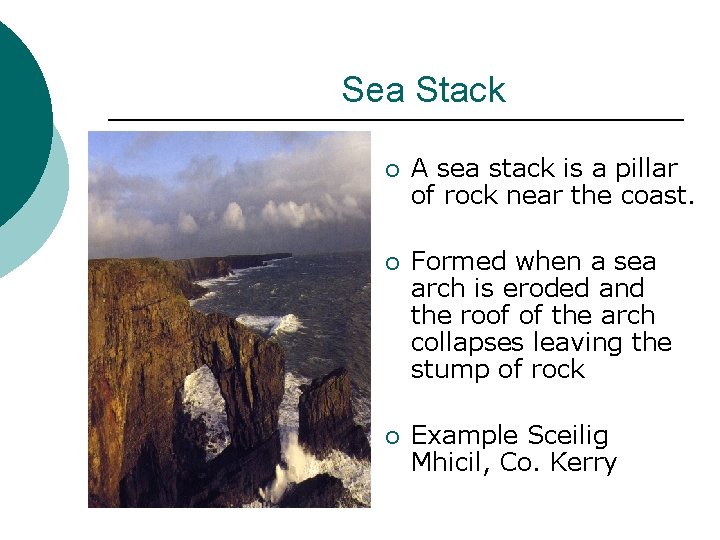
Sea Stack ¡ A sea stack is a pillar of rock near the coast. ¡ Formed when a sea arch is eroded and the roof of the arch collapses leaving the stump of rock ¡ Example Sceilig Mhicil, Co. Kerry
Blowhole ¡ ¡ ¡ A blowhole is a passage that links the roof of a cave with the surface of the cliff top Air is trapped and compressed in the cave by powerful waves. Pressure breaks the rock at the roof of the cave After a long time the rock collapses to form a blow hole Sea spray spurts out from it during stormy weather