
LANDFORMS n Landforms features that make up the
- Slides: 21
LANDFORMS
n Landforms: features that make up the Earth's surface.
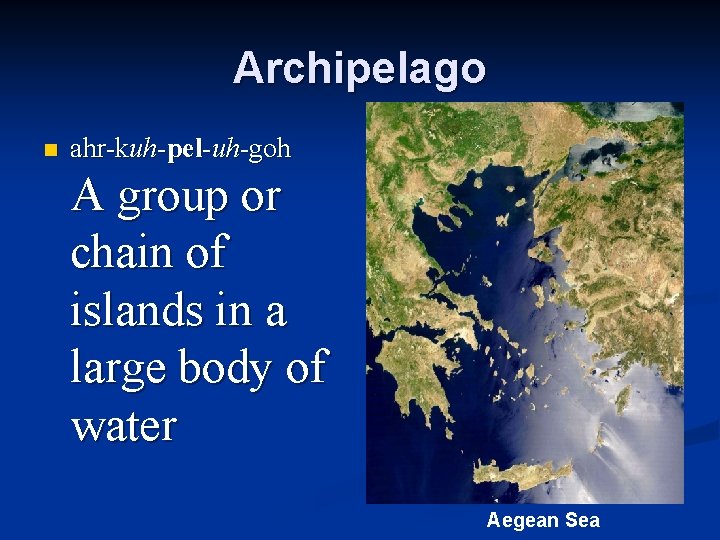
Archipelago n ahr-kuh-pel-uh-goh A group or chain of islands in a large body of water Aegean Sea
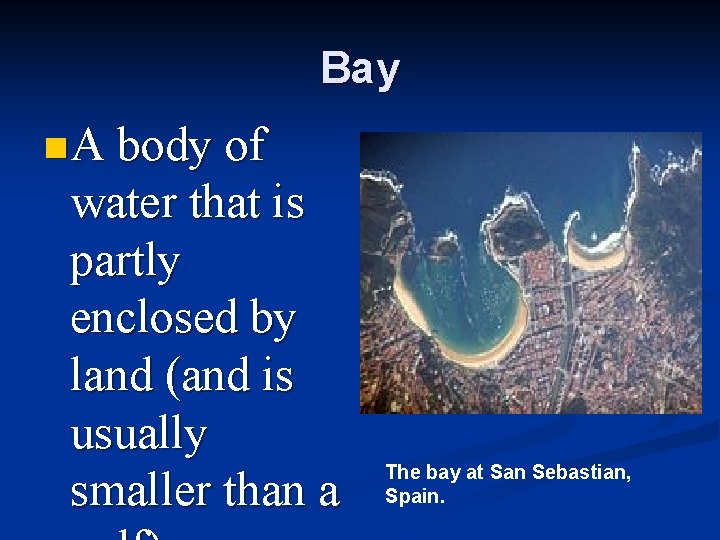
Bay n A body of water that is partly enclosed by land (and is usually smaller than a The bay at San Sebastian, Spain.
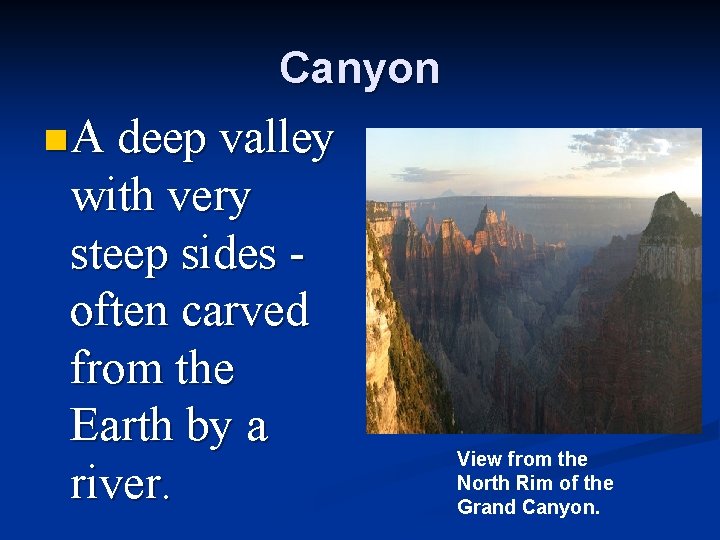
Canyon n A deep valley with very steep sides often carved from the Earth by a river. View from the North Rim of the Grand Canyon.
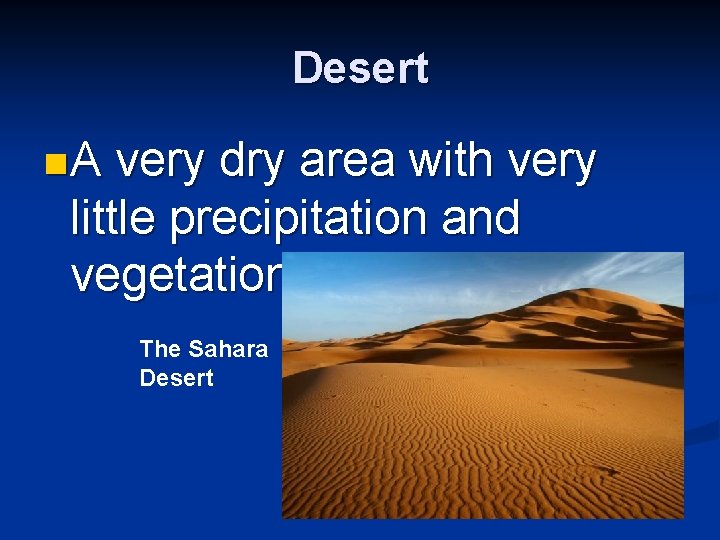
Desert n. A very dry area with very little precipitation and vegetation. The Sahara Desert
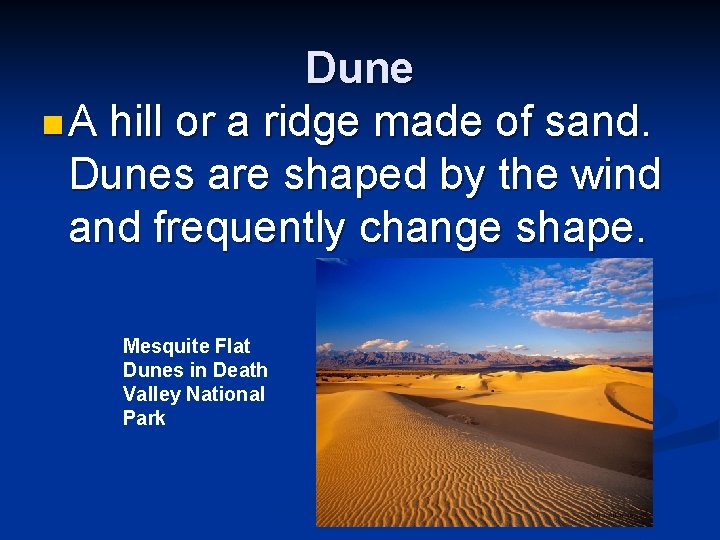
Dune n A hill or a ridge made of sand. Dunes are shaped by the wind and frequently change shape. Mesquite Flat Dunes in Death Valley National Park
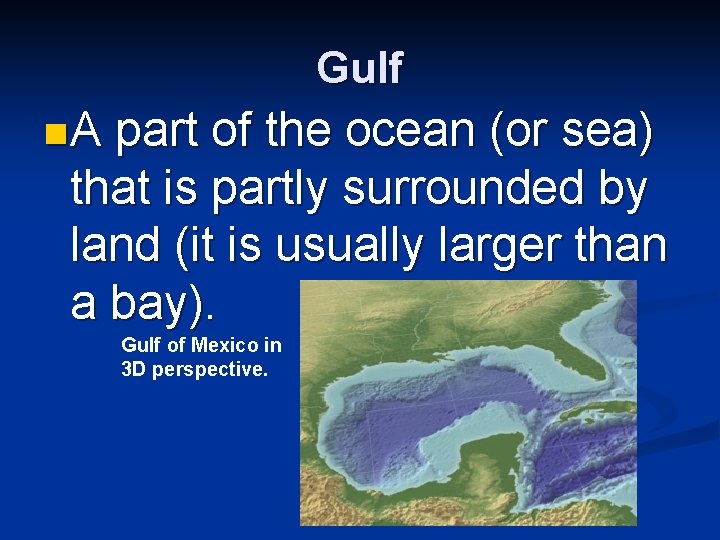
Gulf n. A part of the ocean (or sea) that is partly surrounded by land (it is usually larger than a bay). Gulf of Mexico in 3 D perspective.
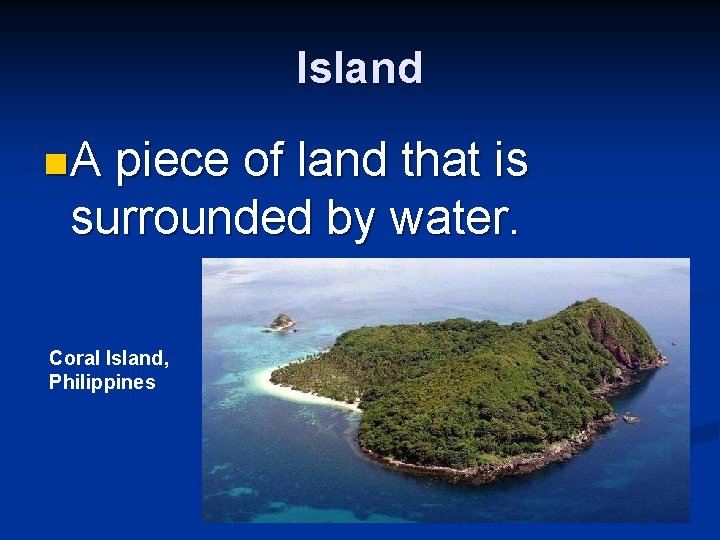
Island n. A piece of land that is surrounded by water. Coral Island, Philippines
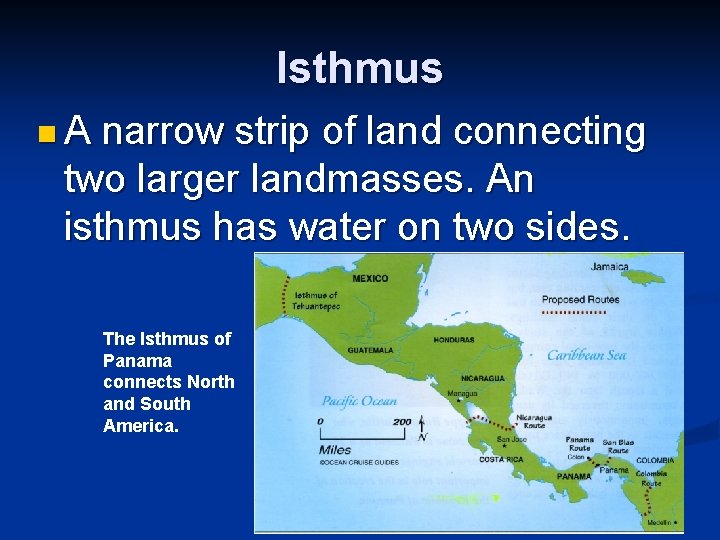
Isthmus n. A narrow strip of land connecting two larger landmasses. An isthmus has water on two sides. The Isthmus of Panama connects North and South America.
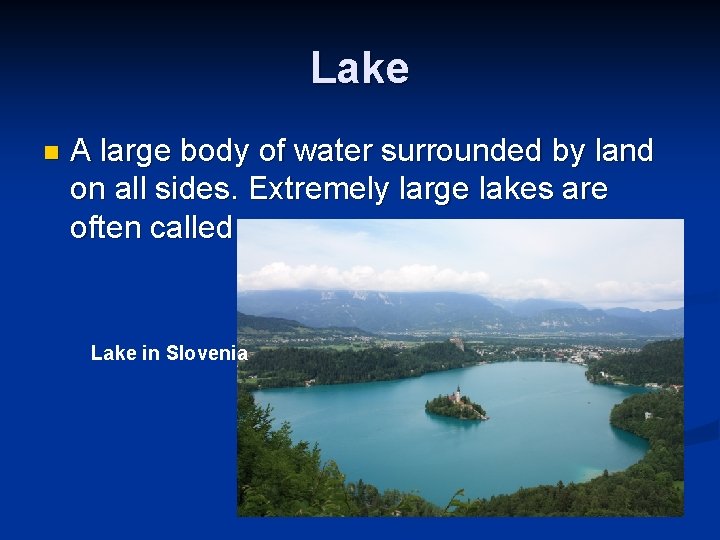
Lake n A large body of water surrounded by land on all sides. Extremely large lakes are often called seas. Lake in Slovenia
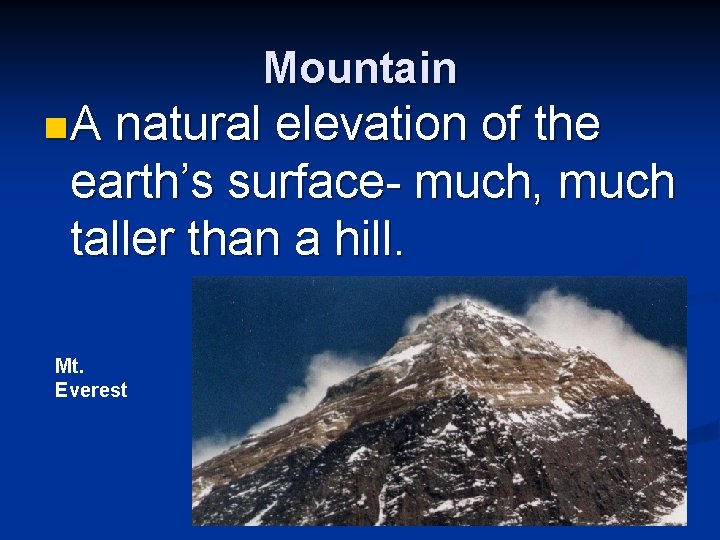
Mountain n. A natural elevation of the earth’s surface- much, much taller than a hill. Mt. Everest
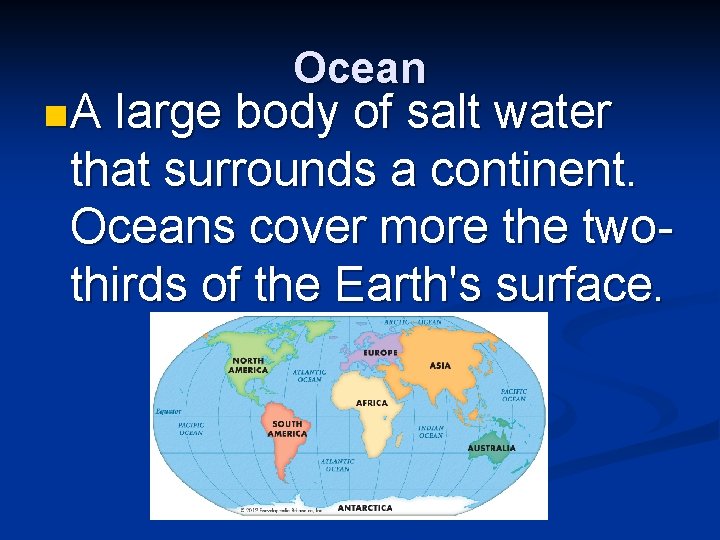
n. A Ocean large body of salt water that surrounds a continent. Oceans cover more the twothirds of the Earth's surface.
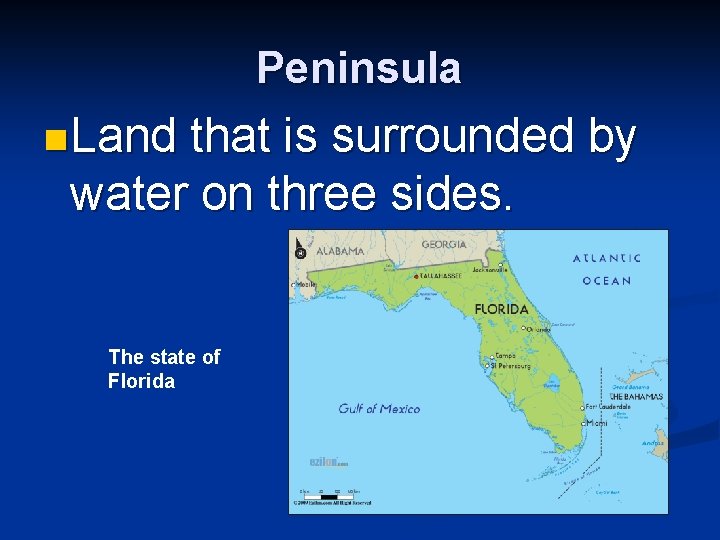
Peninsula n Land that is surrounded by water on three sides. The state of Florida
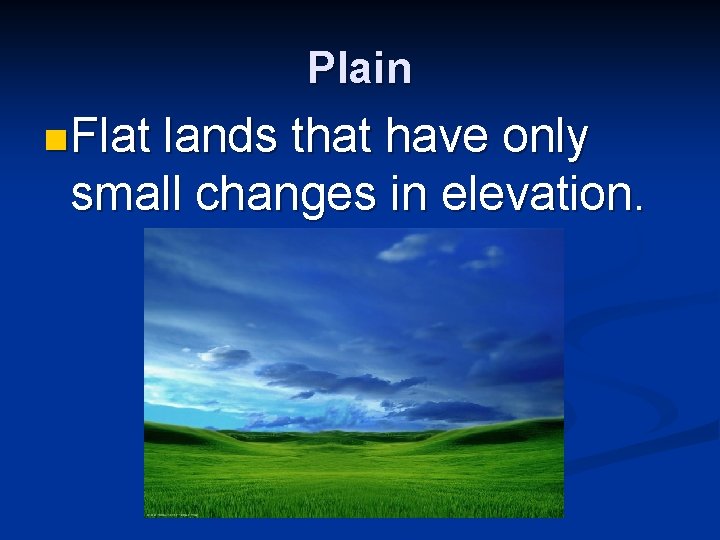
Plain n Flat lands that have only small changes in elevation.
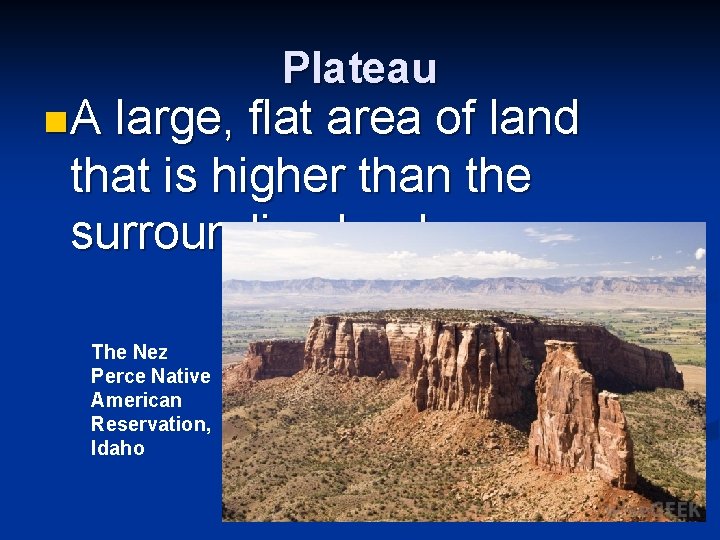
n. A Plateau large, flat area of land that is higher than the surrounding land. The Nez Perce Native American Reservation, Idaho
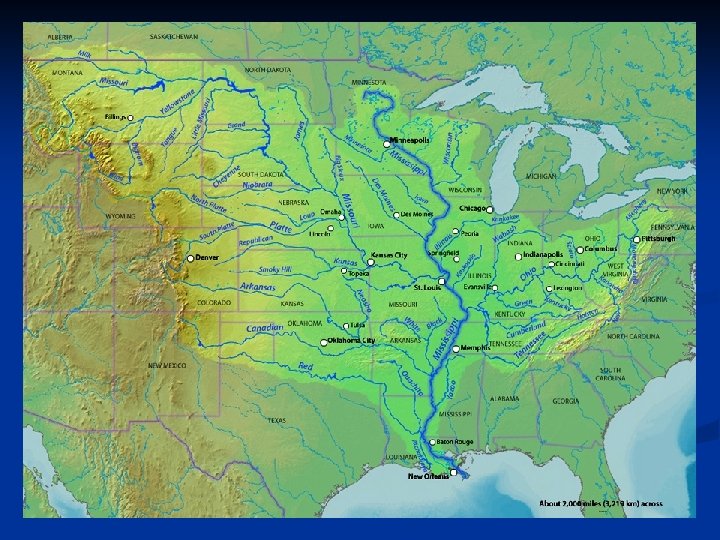
River n. A large, flowing body of water that usually empties into a sea or ocean.
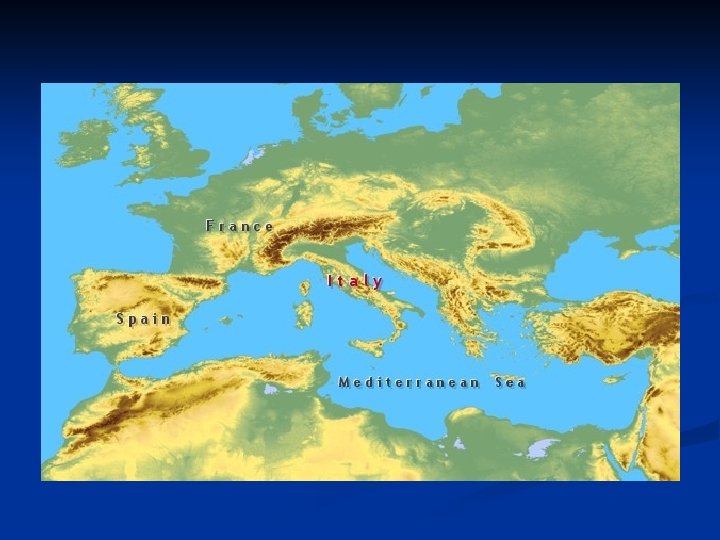
Sea n. A large body of salty water that is often connected to an ocean. A sea may be partly or completely surrounded by land.
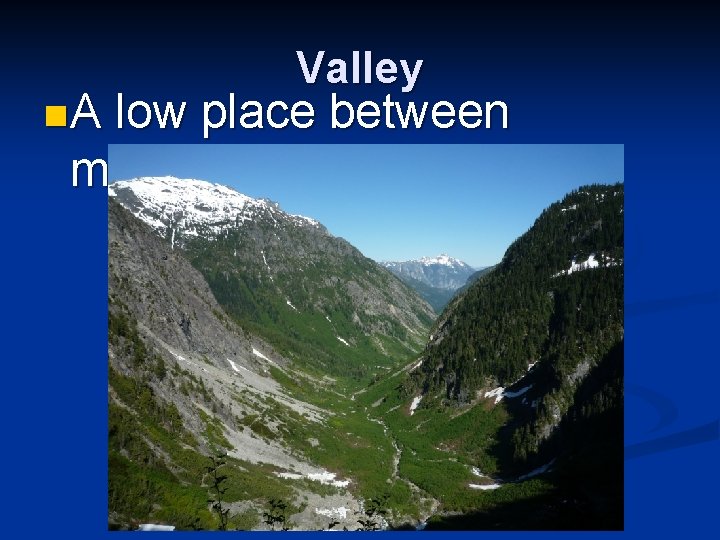
n. A Valley low place between mountains.