
Landforms Mrs Cook Landforms Features on Earths surface
- Slides: 27
Landforms Mrs. Cook
Landforms • Features on Earth’s surface, such as mountains, valleys, and plateaus.
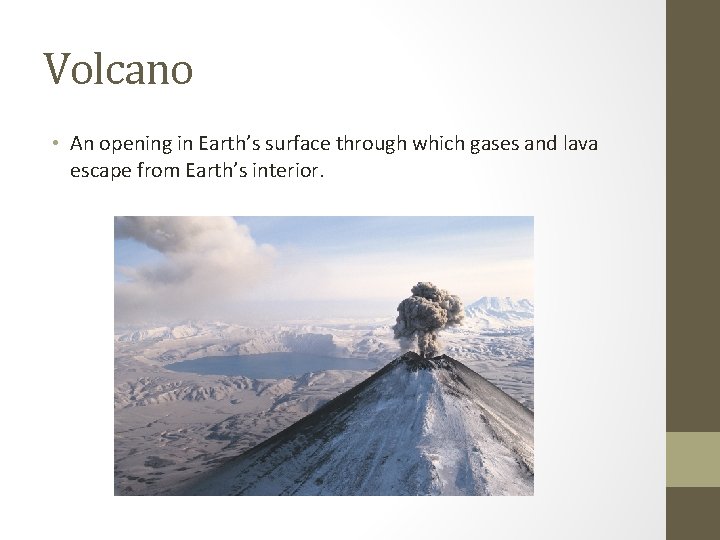
Volcano • An opening in Earth’s surface through which gases and lava escape from Earth’s interior.
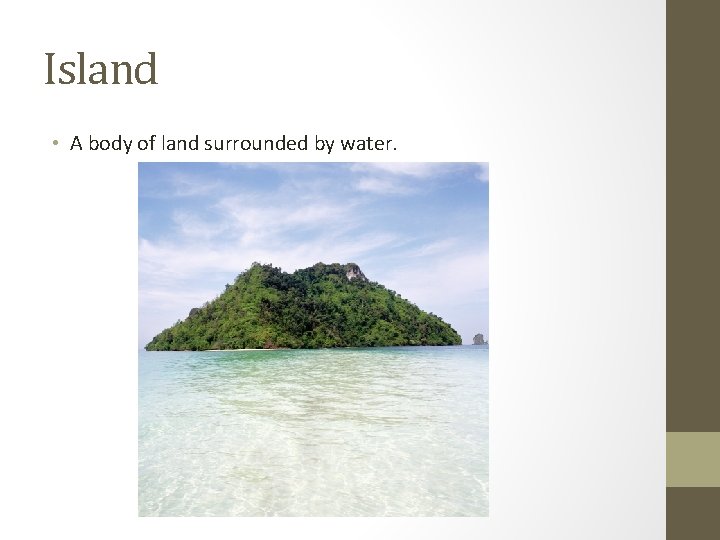
Island • A body of land surrounded by water.
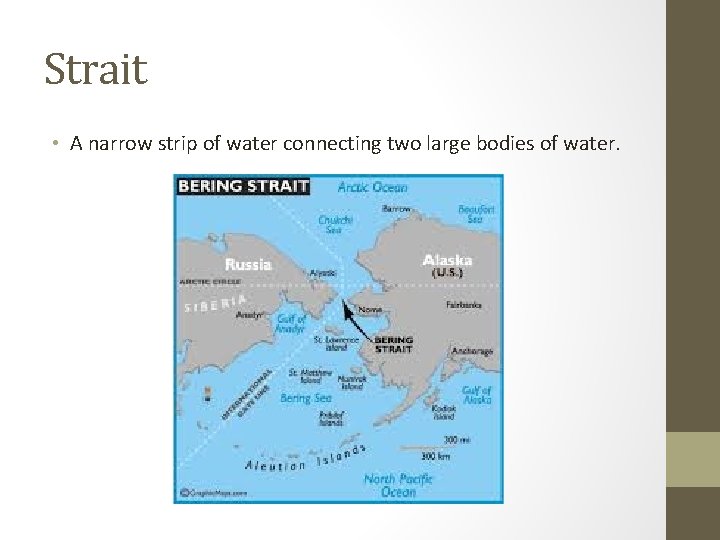
Strait • A narrow strip of water connecting two large bodies of water.
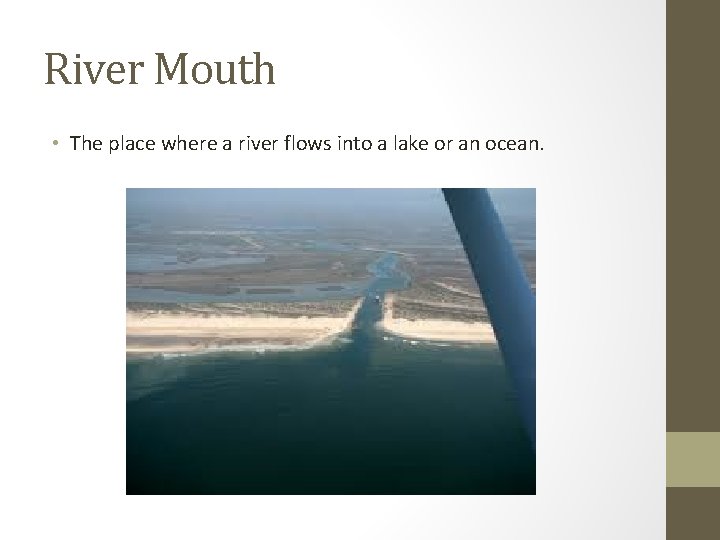
River Mouth • The place where a river flows into a lake or an ocean.
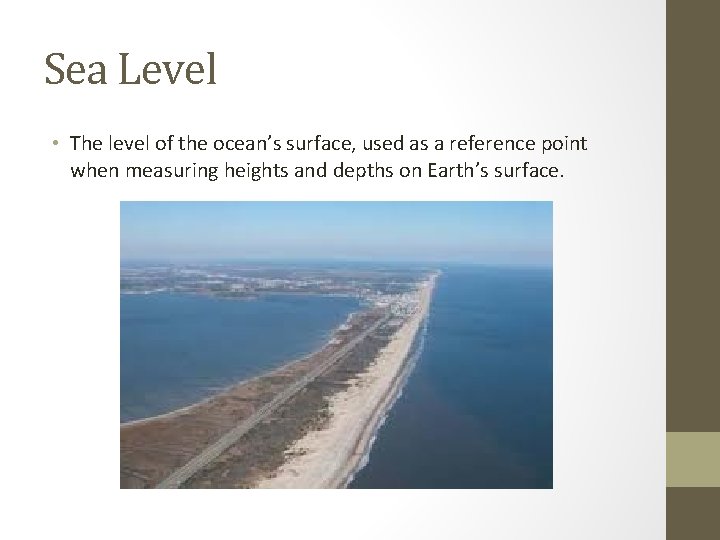
Sea Level • The level of the ocean’s surface, used as a reference point when measuring heights and depths on Earth’s surface.
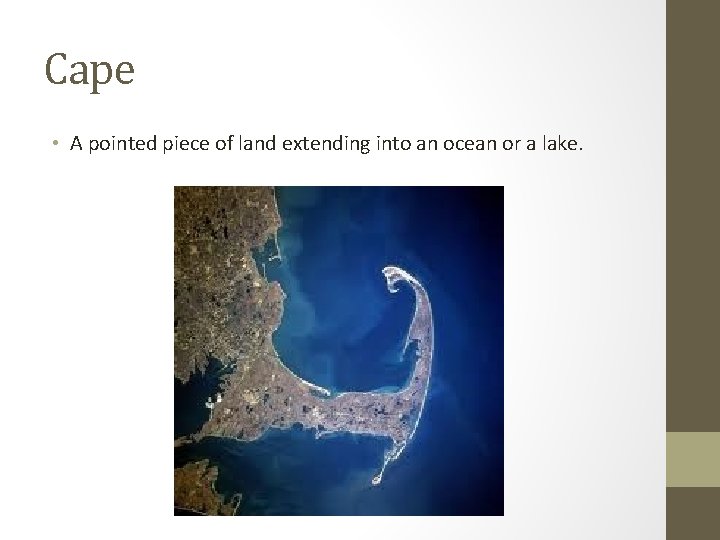
Cape • A pointed piece of land extending into an ocean or a lake.
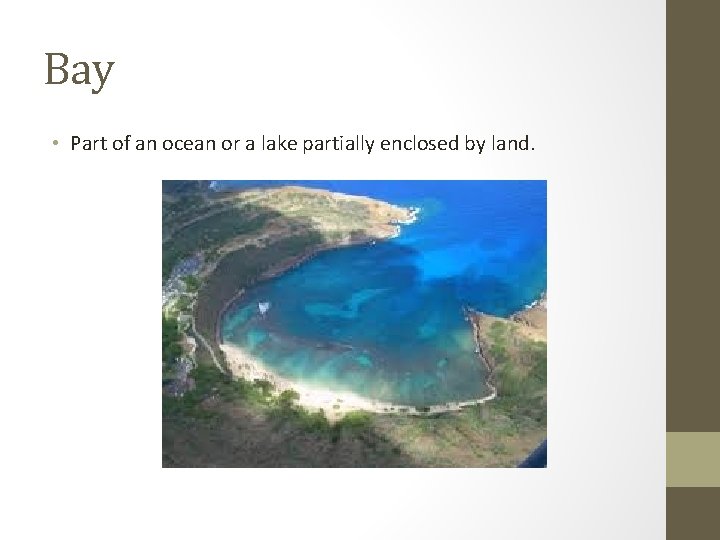
Bay • Part of an ocean or a lake partially enclosed by land.
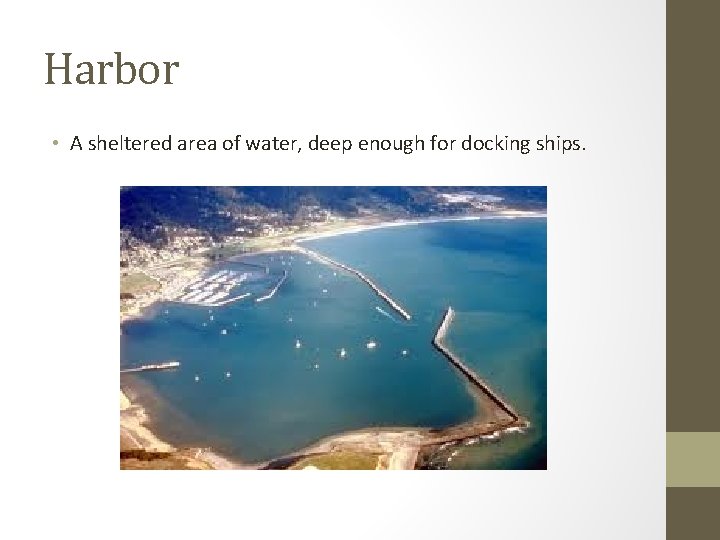
Harbor • A sheltered area of water, deep enough for docking ships.
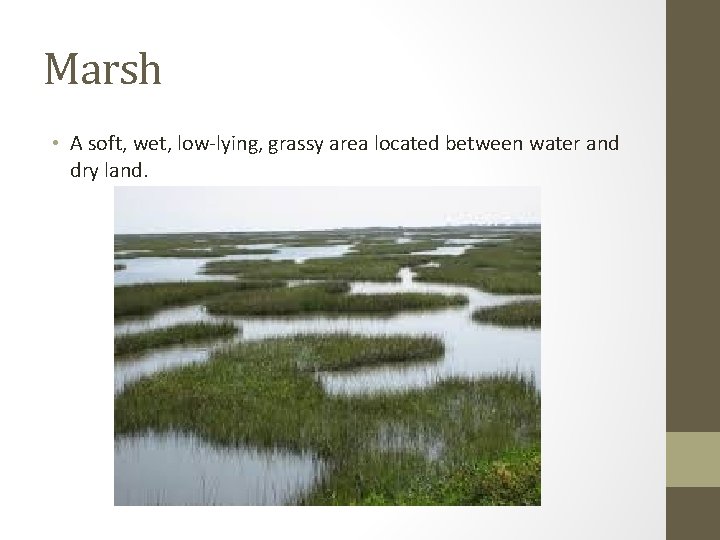
Marsh • A soft, wet, low-lying, grassy area located between water and dry land.
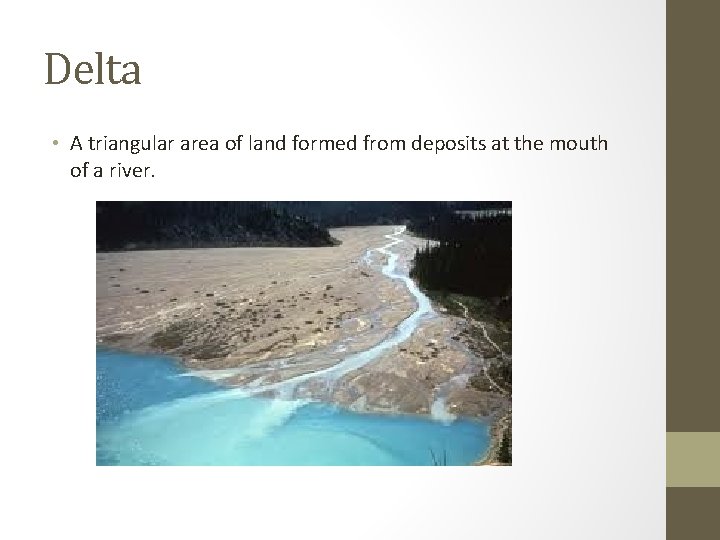
Delta • A triangular area of land formed from deposits at the mouth of a river.
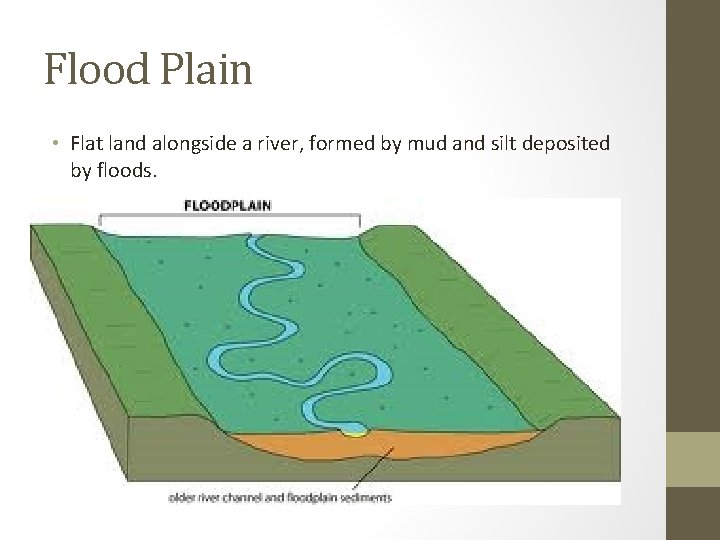
Flood Plain • Flat land alongside a river, formed by mud and silt deposited by floods.
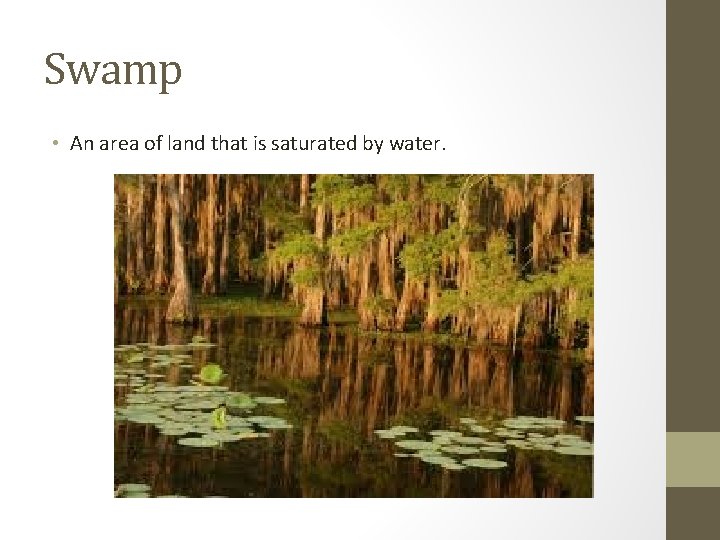
Swamp • An area of land that is saturated by water.
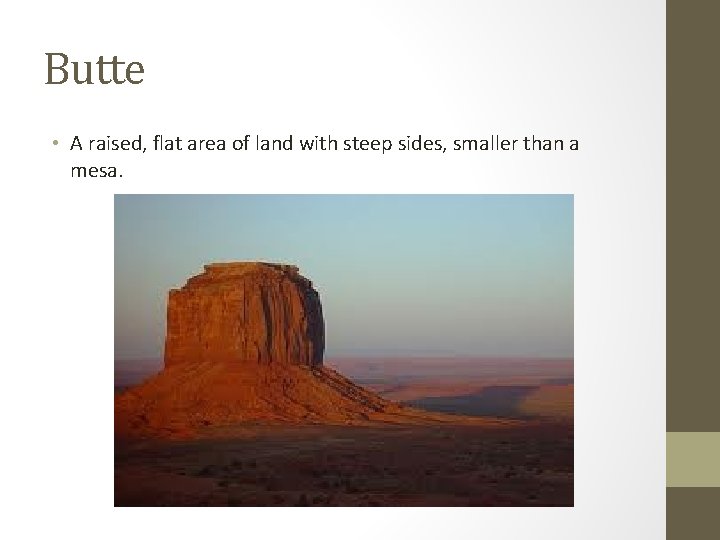
Butte • A raised, flat area of land with steep sides, smaller than a mesa.
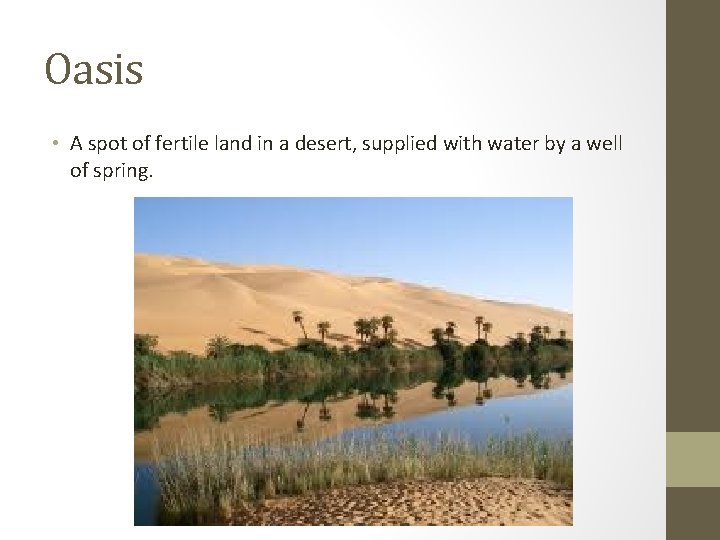
Oasis • A spot of fertile land in a desert, supplied with water by a well of spring.
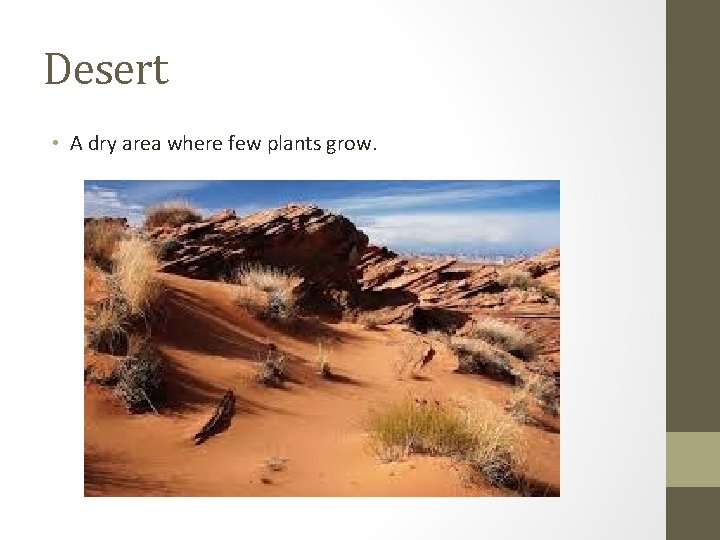
Desert • A dry area where few plants grow.
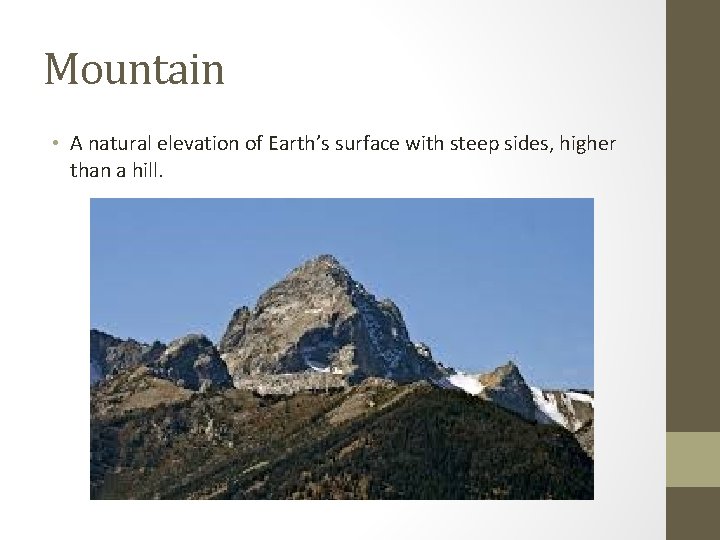
Mountain • A natural elevation of Earth’s surface with steep sides, higher than a hill.
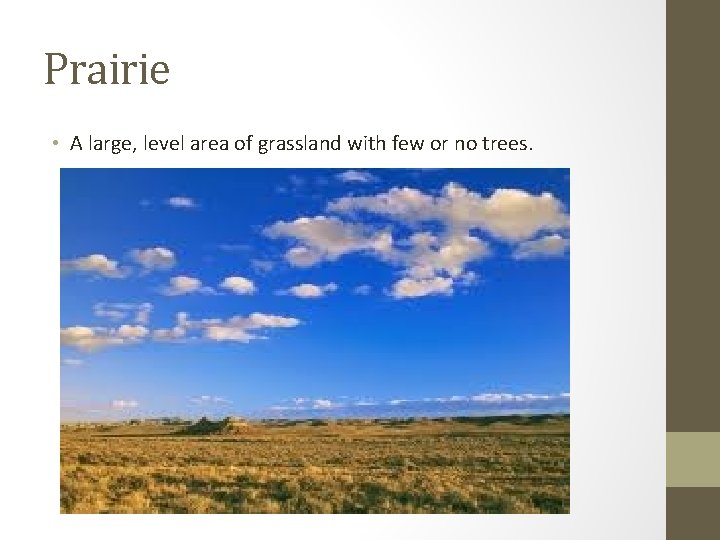
Prairie • A large, level area of grassland with few or no trees.
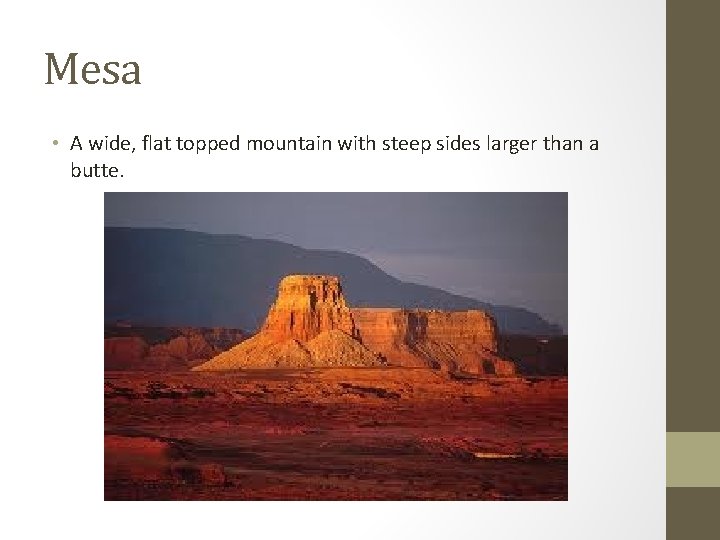
Mesa • A wide, flat topped mountain with steep sides larger than a butte.
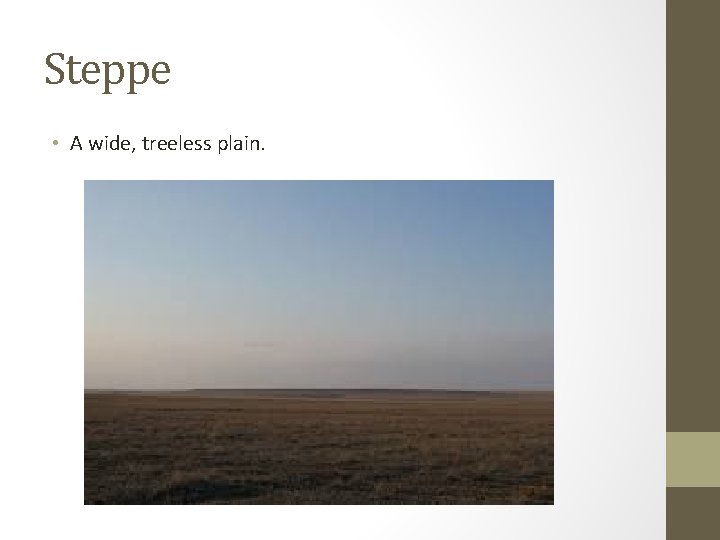
Steppe • A wide, treeless plain.
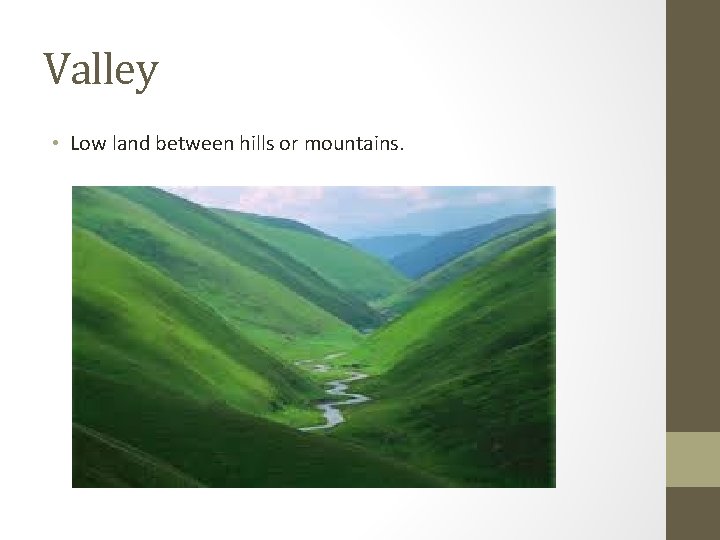
Valley • Low land between hills or mountains.
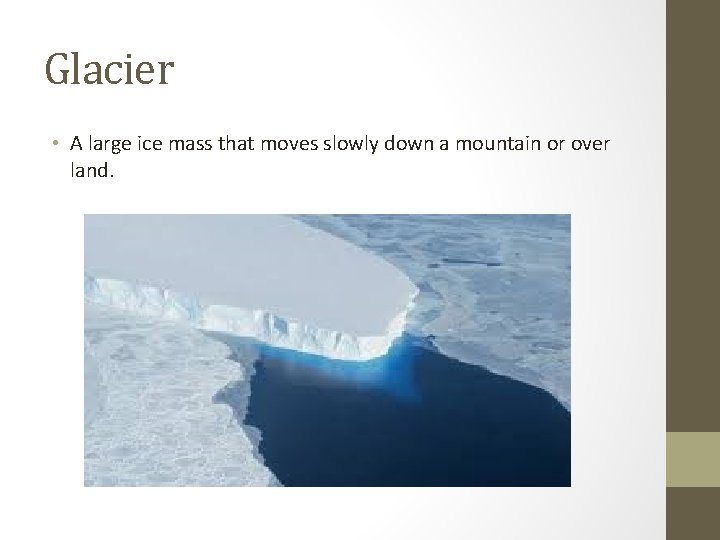
Glacier • A large ice mass that moves slowly down a mountain or over land.
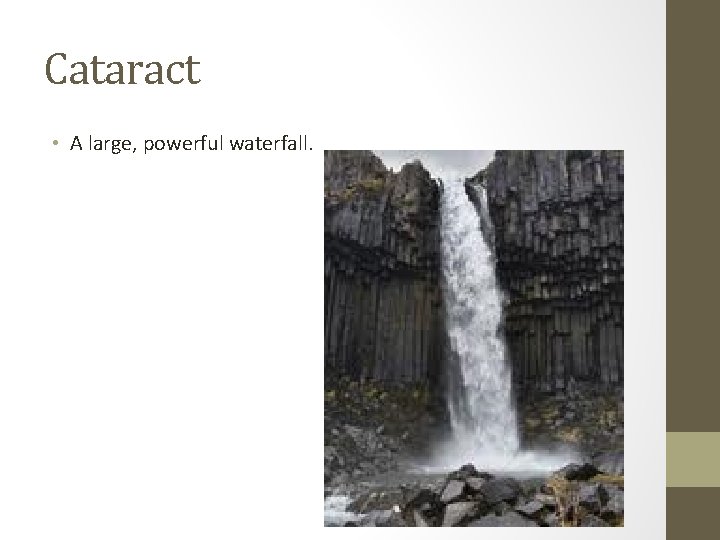
Cataract • A large, powerful waterfall.
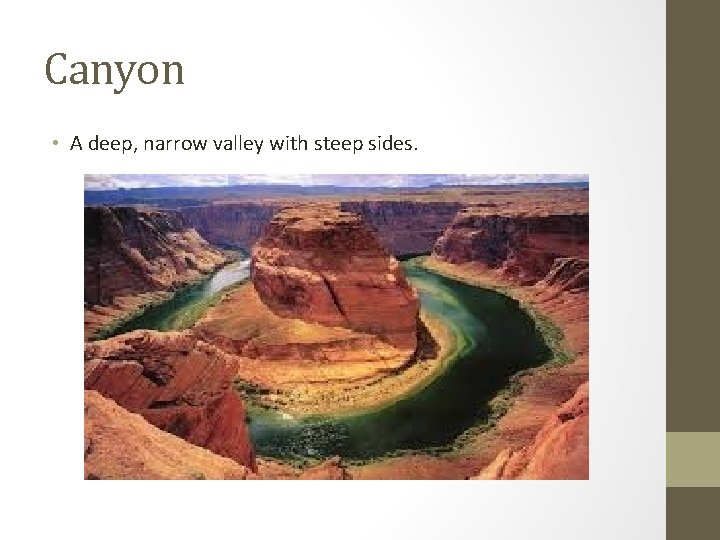
Canyon • A deep, narrow valley with steep sides.
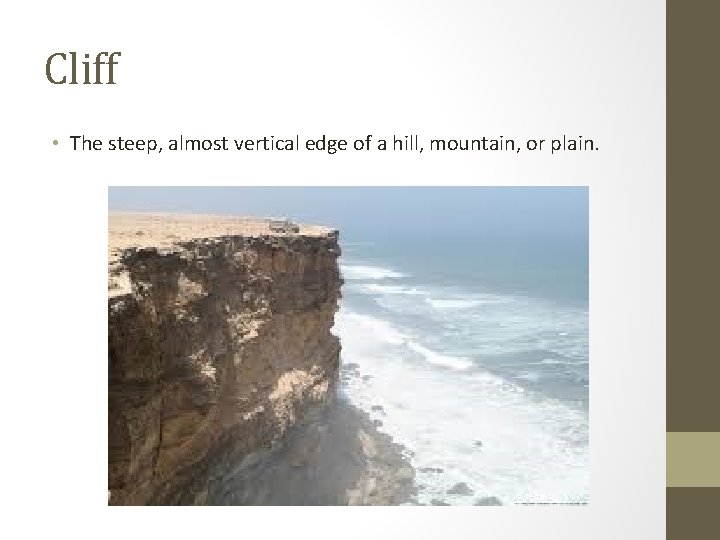
Cliff • The steep, almost vertical edge of a hill, mountain, or plain.
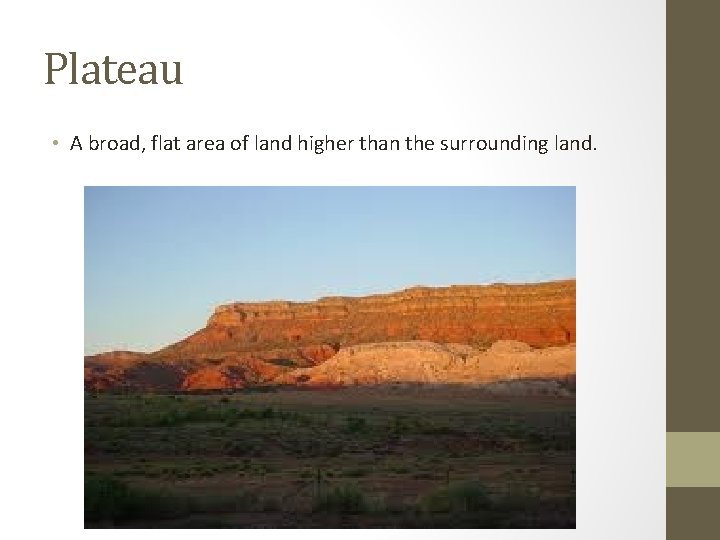
Plateau • A broad, flat area of land higher than the surrounding land.