
Landforms Mountain Ranges of the Region Kunlun Mountains
- Slides: 15
Landforms Mountain Ranges of the Region • Kunlun Mountains are located in west China Plateaus and Plains • Plateau of Tibet • Gobi Desert stretches from northwest China into Mongolia - covers 500, 000 square miles • Northern China includes Manchurian Plain, North China Plain Coast and Peninsula • Eastern coast of China has several peninsulas (Korean) • China’s long coastline has several major port cities The Islands of East Asia • Chinese islands include Hainan and Hong Kong - Hong Kong was Britain’s; returned to China’s control in 1997 -The lack of colonialism in E Asia • Japan is a small island nation with large economic power • Taiwan once belonged to China, which still claims it today Continued. . . NEXT
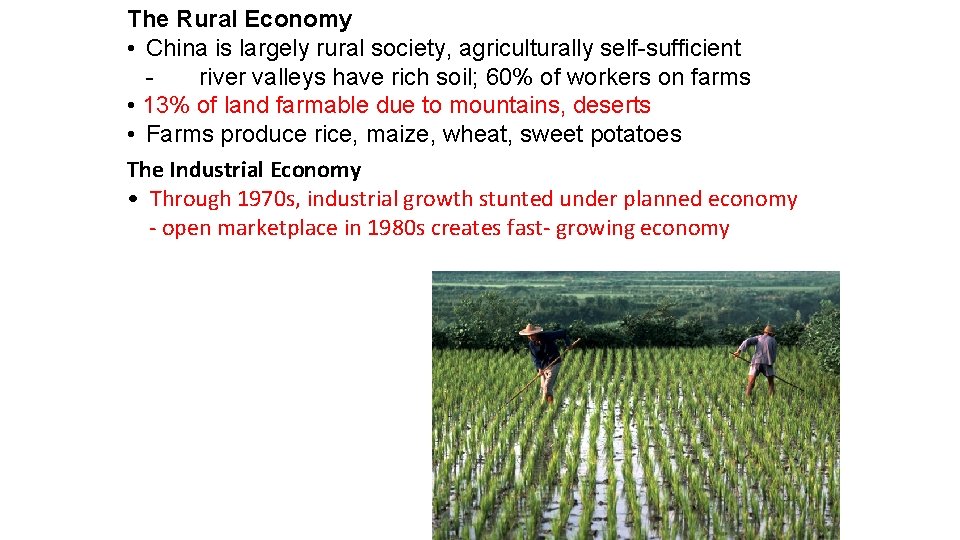
The Rural Economy • China is largely rural society, agriculturally self-sufficient river valleys have rich soil; 60% of workers on farms • 13% of land farmable due to mountains, deserts • Farms produce rice, maize, wheat, sweet potatoes The Industrial Economy • Through 1970 s, industrial growth stunted under planned economy - open marketplace in 1980 s creates fast- growing economy Continued. . . NEXT
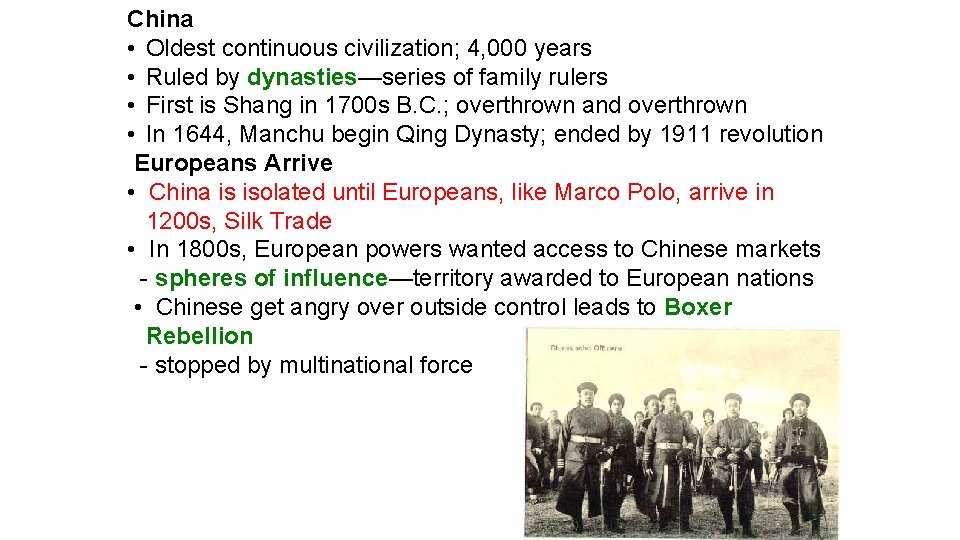
China • Oldest continuous civilization; 4, 000 years • Ruled by dynasties—series of family rulers • First is Shang in 1700 s B. C. ; overthrown and overthrown • In 1644, Manchu begin Qing Dynasty; ended by 1911 revolution Europeans Arrive • China is isolated until Europeans, like Marco Polo, arrive in 1200 s, Silk Trade • In 1800 s, European powers wanted access to Chinese markets - spheres of influence—territory awarded to European nations • Chinese get angry over outside control leads to Boxer Rebellion - stopped by multinational force NEXT
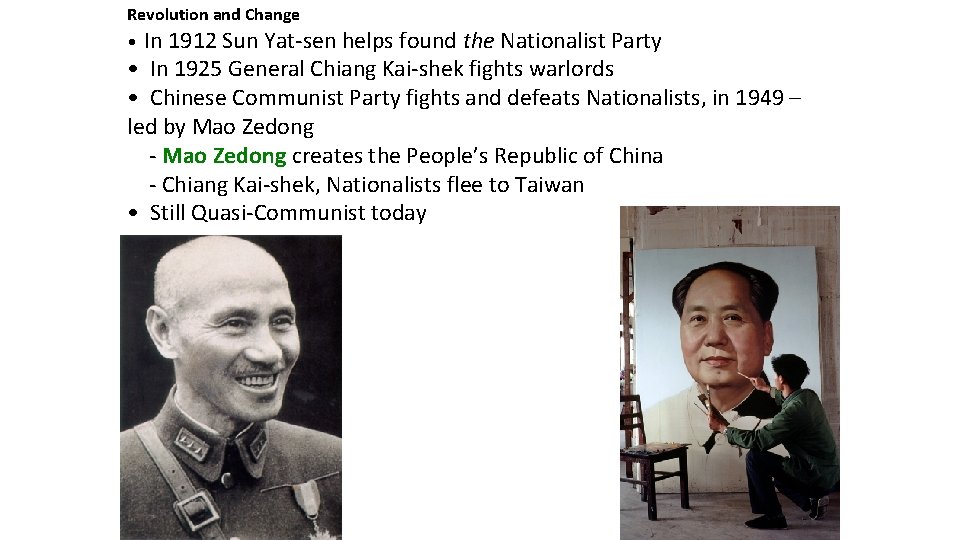
Revolution and Change In 1912 Sun Yat-sen helps found the Nationalist Party • In 1925 General Chiang Kai-shek fights warlords • Chinese Communist Party fights and defeats Nationalists, in 1949 – led by Mao Zedong - Mao Zedong creates the People’s Republic of China - Chiang Kai-shek, Nationalists flee to Taiwan • Still Quasi-Communist today • NEXT
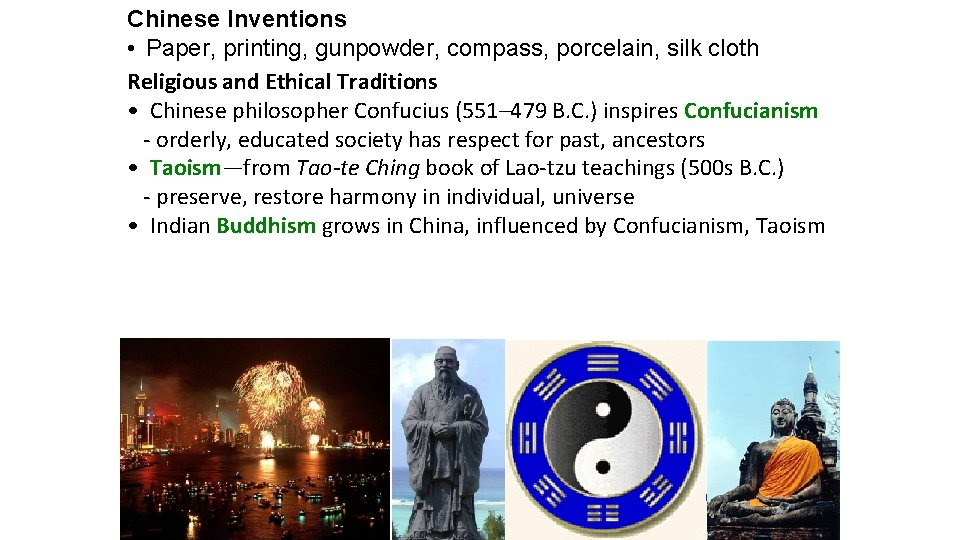
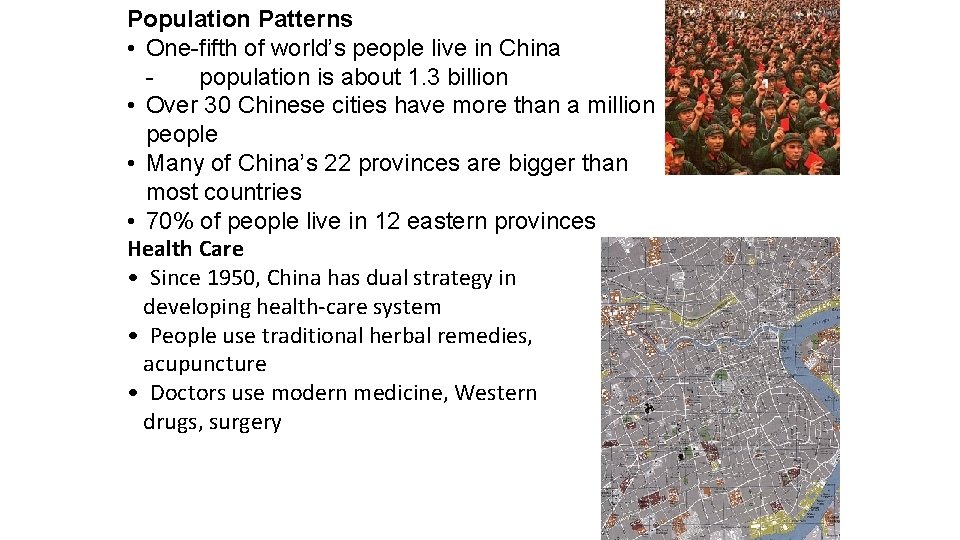
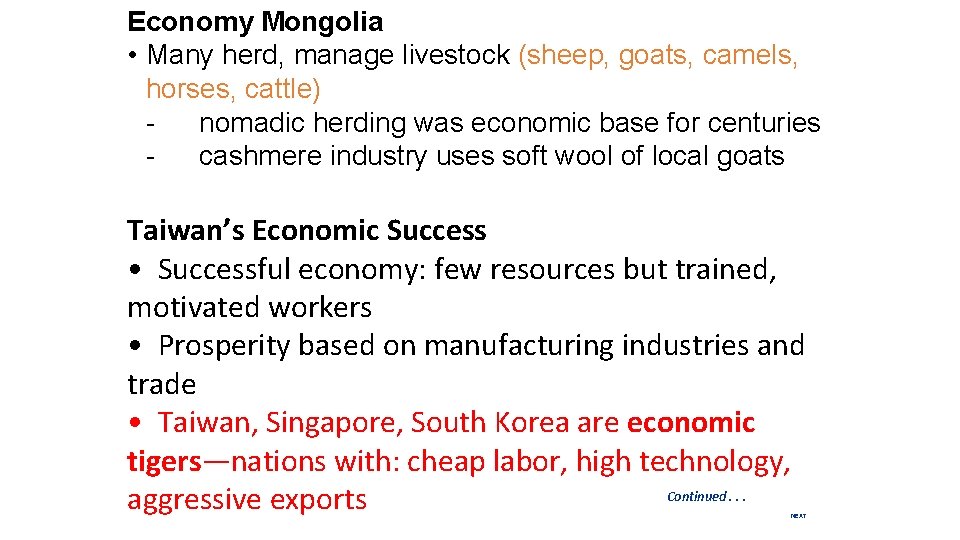
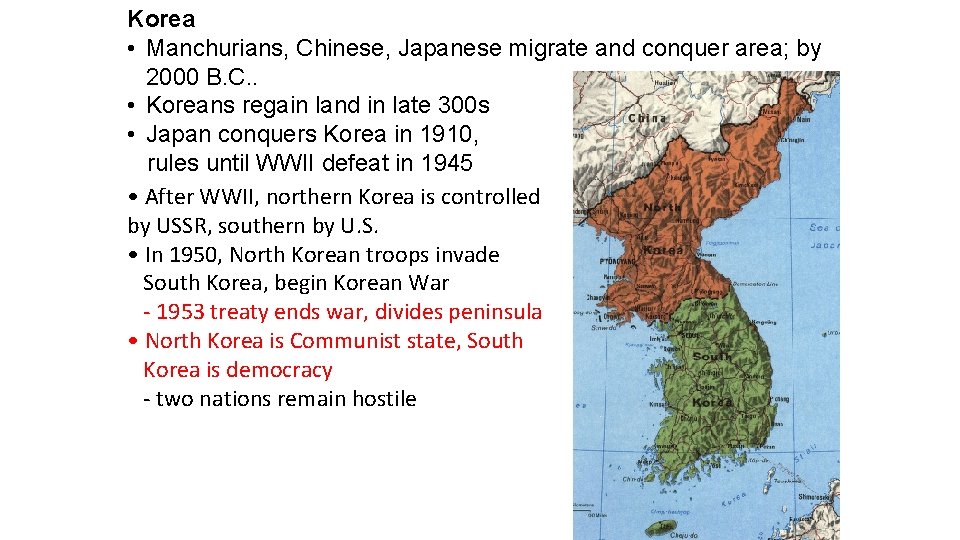
Chinese Inventions • Paper, printing, gunpowder, compass, porcelain, silk cloth Religious and Ethical Traditions • Chinese philosopher Confucius (551– 479 B. C. ) inspires Confucianism - orderly, educated society has respect for past, ancestors • Taoism—from Tao-te Ching book of Lao-tzu teachings (500 s B. C. ) - preserve, restore harmony in individual, universe • Indian Buddhism grows in China, influenced by Confucianism, Taoism Continued. . . NEXT
Population Patterns • One-fifth of world’s people live in China population is about 1. 3 billion • Over 30 Chinese cities have more than a million people • Many of China’s 22 provinces are bigger than most countries • 70% of people live in 12 eastern provinces Health Care • Since 1950, China has dual strategy in developing health-care system • People use traditional herbal remedies, acupuncture • Doctors use modern medicine, Western drugs, surgery Continued. . . NEXT
Economy Mongolia • Many herd, manage livestock (sheep, goats, camels, horses, cattle) nomadic herding was economic base for centuries cashmere industry uses soft wool of local goats Taiwan’s Economic Success • Successful economy: few resources but trained, motivated workers • Prosperity based on manufacturing industries and trade • Taiwan, Singapore, South Korea are economic tigers—nations with: cheap labor, high technology, Continued. . . aggressive exports NEXT
Korea • Manchurians, Chinese, Japanese migrate and conquer area; by 2000 B. C. . • Koreans regain land in late 300 s • Japan conquers Korea in 1910, rules until WWII defeat in 1945 • After WWII, northern Korea is controlled by USSR, southern by U. S. • In 1950, North Korean troops invade South Korea, begin Korean War - 1953 treaty ends war, divides peninsula • North Korea is Communist state, South Korea is democracy - two nations remain hostile Continued. . . NEXT
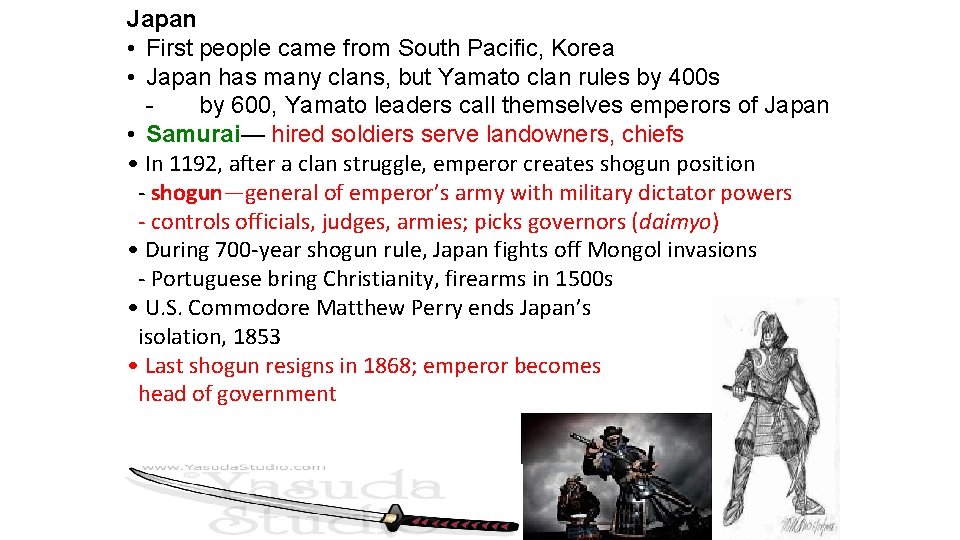
Japan • First people came from South Pacific, Korea • Japan has many clans, but Yamato clan rules by 400 s by 600, Yamato leaders call themselves emperors of Japan • Samurai— hired soldiers serve landowners, chiefs • In 1192, after a clan struggle, emperor creates shogun position - shogun—general of emperor’s army with military dictator powers - controls officials, judges, armies; picks governors (daimyo) • During 700 -year shogun rule, Japan fights off Mongol invasions - Portuguese bring Christianity, firearms in 1500 s • U. S. Commodore Matthew Perry ends Japan’s isolation, 1853 • Last shogun resigns in 1868; emperor becomes head of government NEXT
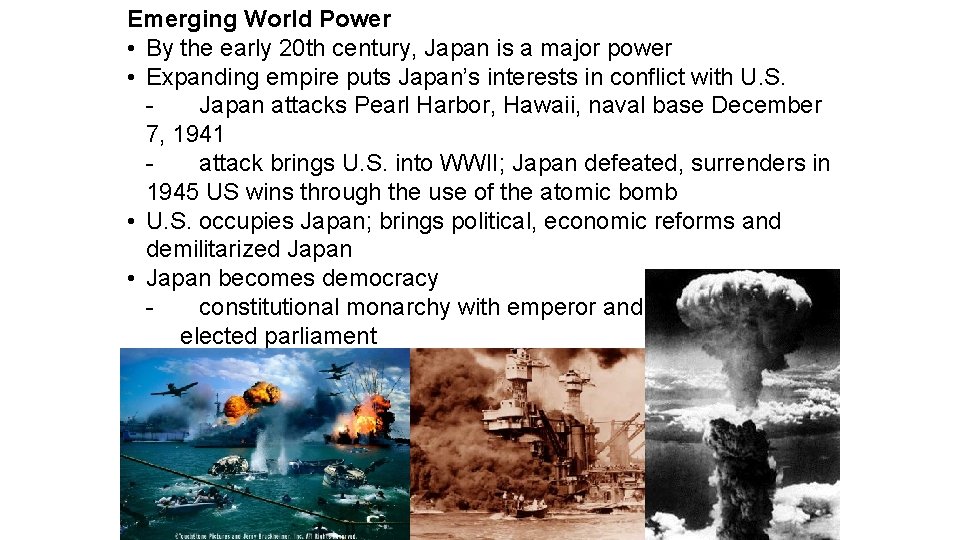
Emerging World Power • By the early 20 th century, Japan is a major power • Expanding empire puts Japan’s interests in conflict with U. S. Japan attacks Pearl Harbor, Hawaii, naval base December 7, 1941 attack brings U. S. into WWII; Japan defeated, surrenders in 1945 US wins through the use of the atomic bomb • U. S. occupies Japan; brings political, economic reforms and demilitarized Japan • Japan becomes democracy constitutional monarchy with emperor and elected parliament NEXT
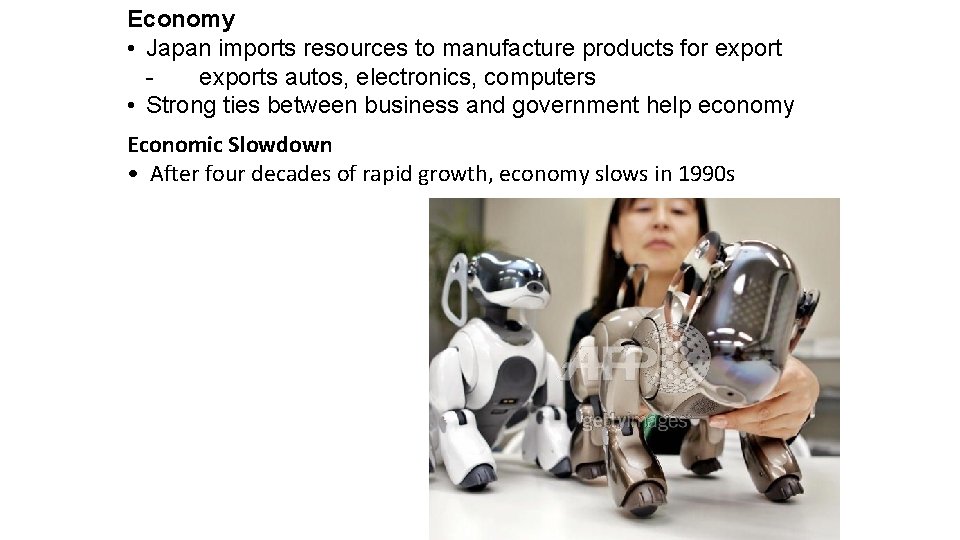
Economy • Japan imports resources to manufacture products for exports autos, electronics, computers • Strong ties between business and government help economy Economic Slowdown • After four decades of rapid growth, economy slows in 1990 s NEXT
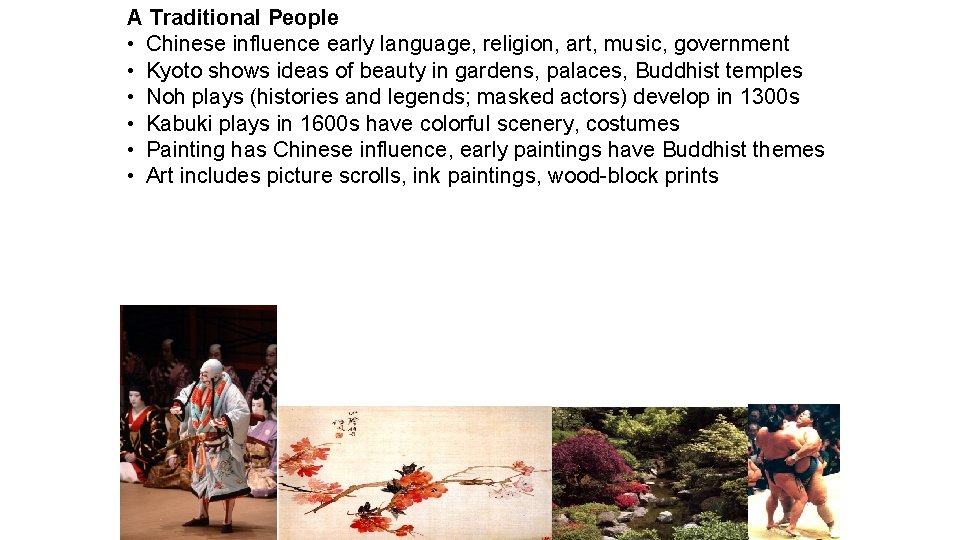
A Traditional People • Chinese influence early language, religion, art, music, government • Kyoto shows ideas of beauty in gardens, palaces, Buddhist temples • Noh plays (histories and legends; masked actors) develop in 1300 s • Kabuki plays in 1600 s have colorful scenery, costumes • Painting has Chinese influence, early paintings have Buddhist themes • Art includes picture scrolls, ink paintings, wood-block prints Continued. . . NEXT
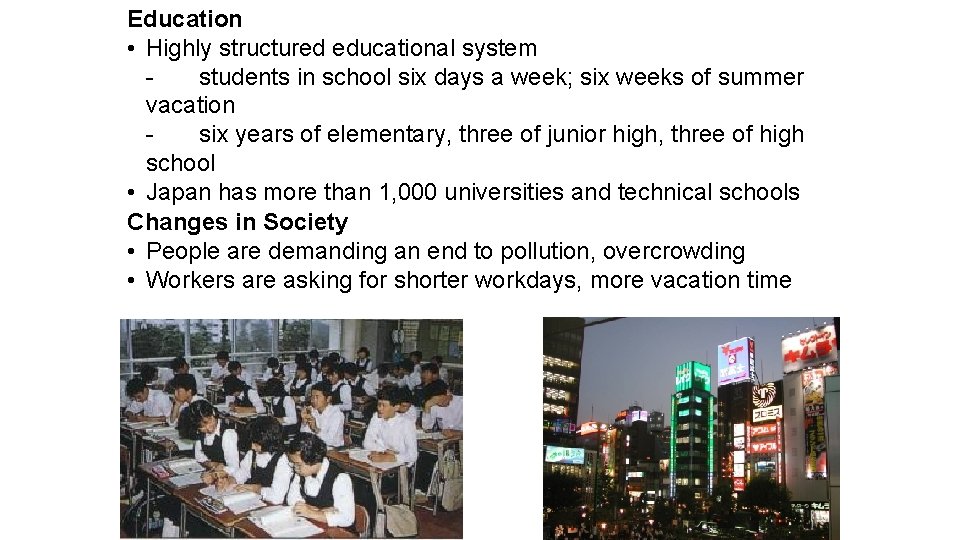
Education • Highly structured educational system students in school six days a week; six weeks of summer vacation six years of elementary, three of junior high, three of high school • Japan has more than 1, 000 universities and technical schools Changes in Society • People are demanding an end to pollution, overcrowding • Workers are asking for shorter workdays, more vacation time NEXT
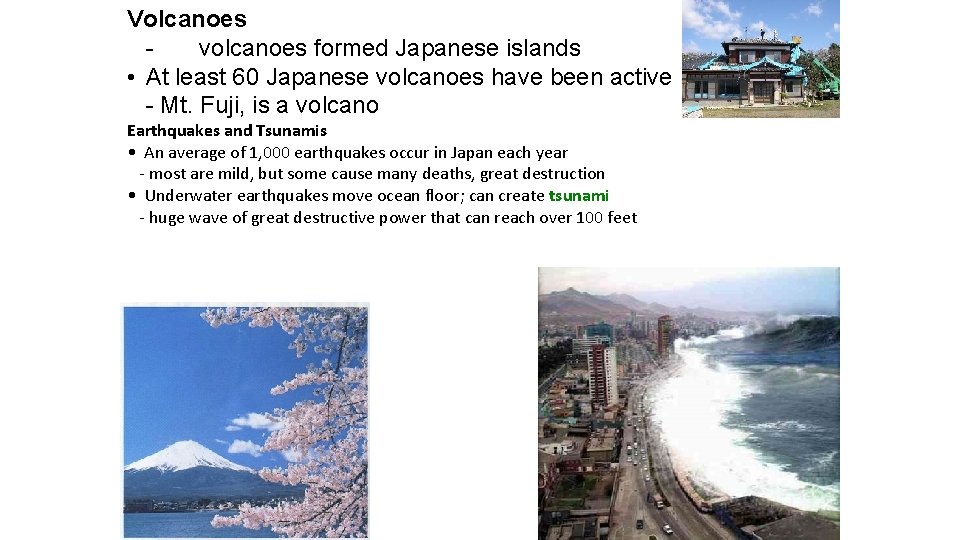
Volcanoes volcanoes formed Japanese islands • At least 60 Japanese volcanoes have been active - Mt. Fuji, is a volcano Earthquakes and Tsunamis • An average of 1, 000 earthquakes occur in Japan each year - most are mild, but some cause many deaths, great destruction • Underwater earthquakes move ocean floor; can create tsunami - huge wave of great destructive power that can reach over 100 feet Continued. . . NEXT
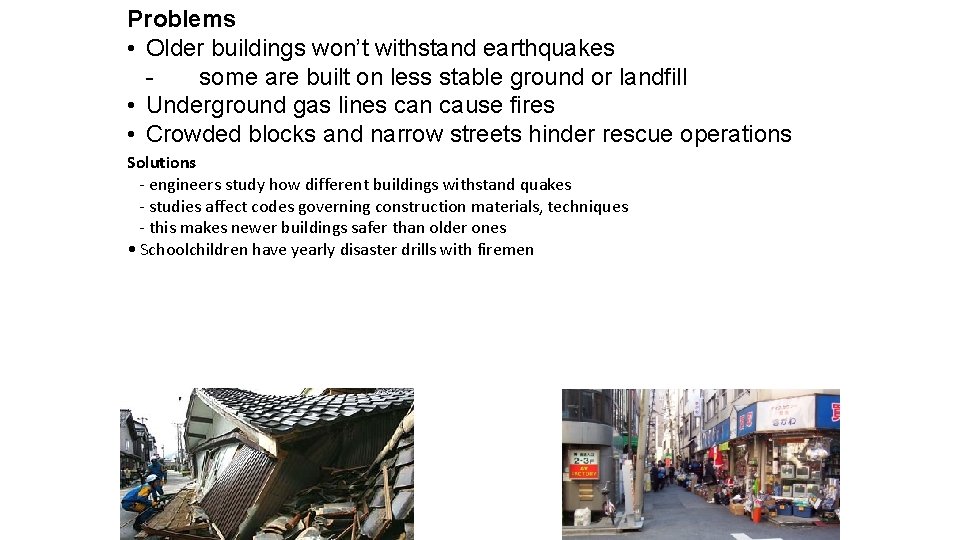
Problems • Older buildings won’t withstand earthquakes some are built on less stable ground or landfill • Underground gas lines can cause fires • Crowded blocks and narrow streets hinder rescue operations Solutions - engineers study how different buildings withstand quakes - studies affect codes governing construction materials, techniques - this makes newer buildings safer than older ones • Schoolchildren have yearly disaster drills with firemen Continued. . . NEXT