
Landforms Geography of the World Archipelago a group
- Slides: 46
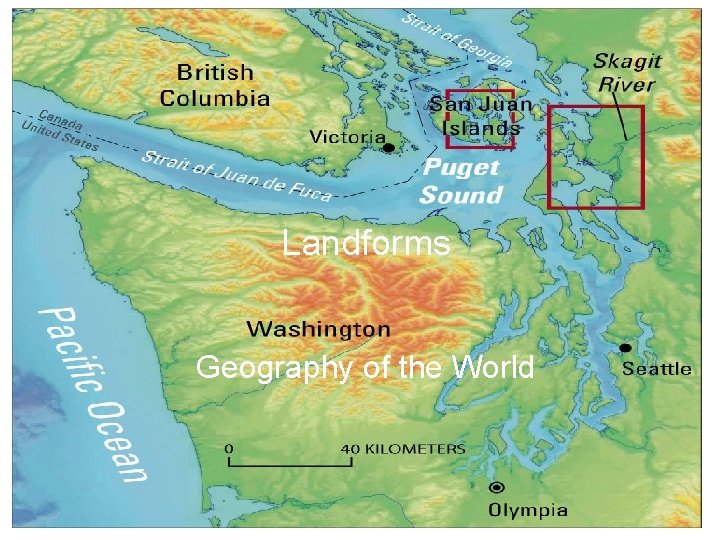
Landforms Geography of the World
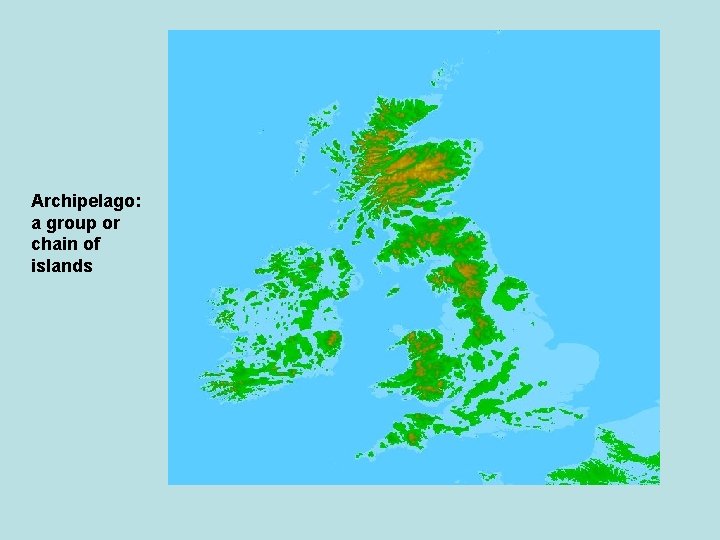
Archipelago: a group or chain of islands
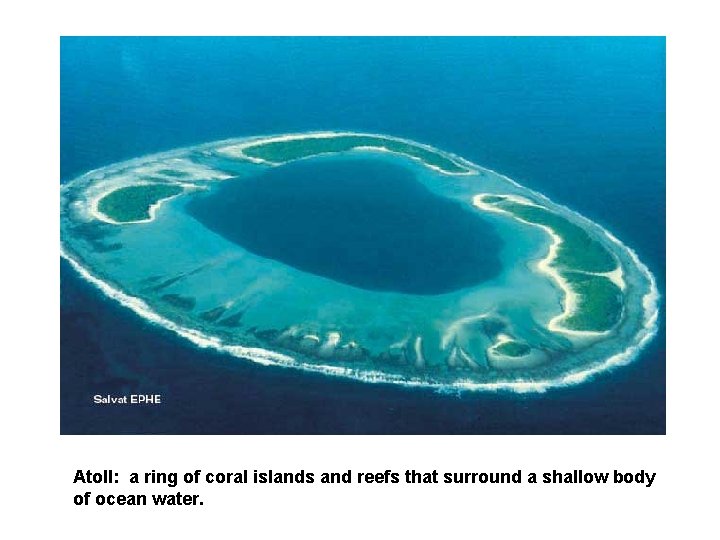
Atoll: a ring of coral islands and reefs that surround a shallow body of ocean water.
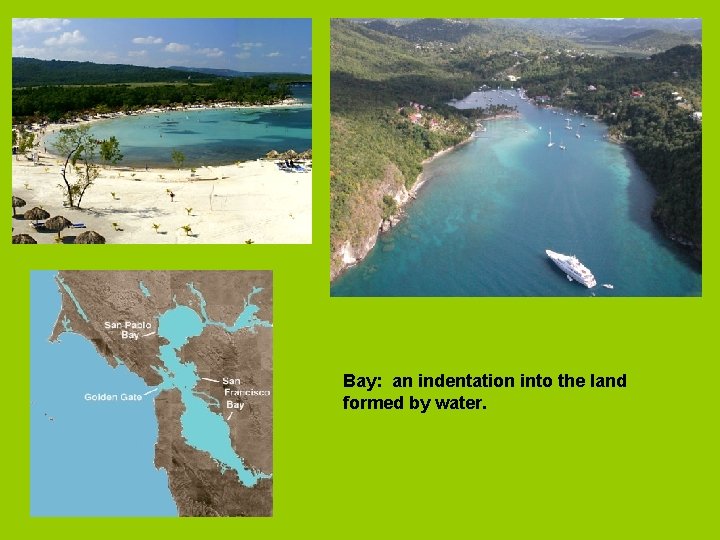
Bay: an indentation into the land formed by water.
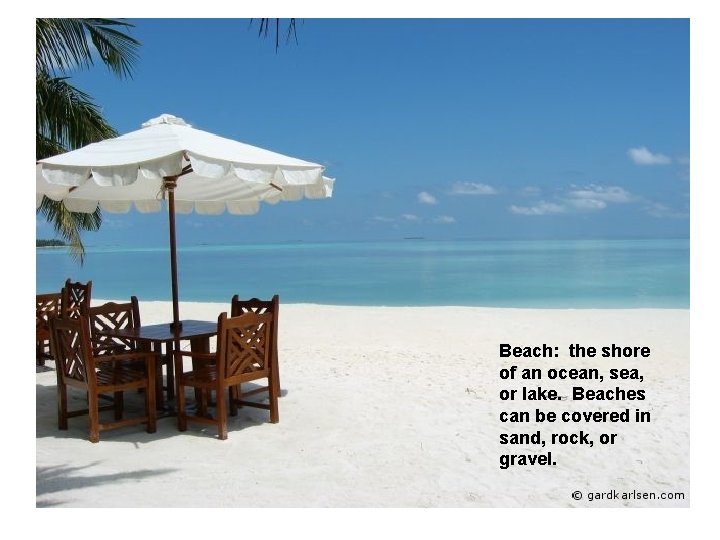
Beach: the shore of an ocean, sea, or lake. Beaches can be covered in sand, rock, or gravel.
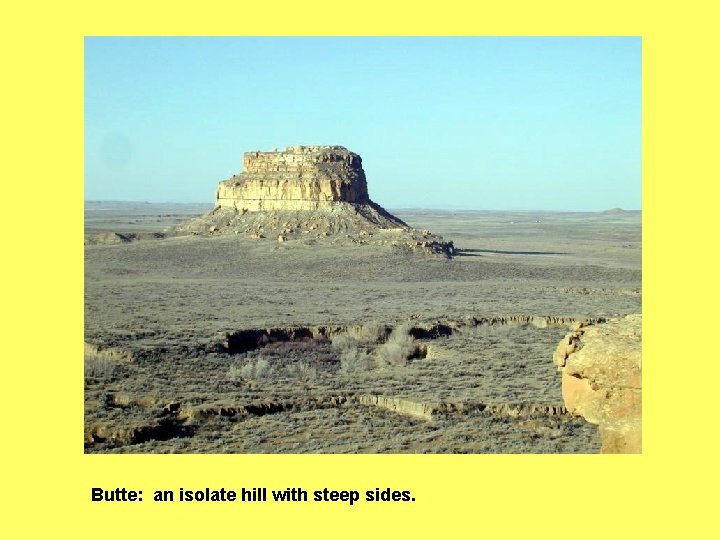
Butte: an isolate hill with steep sides.
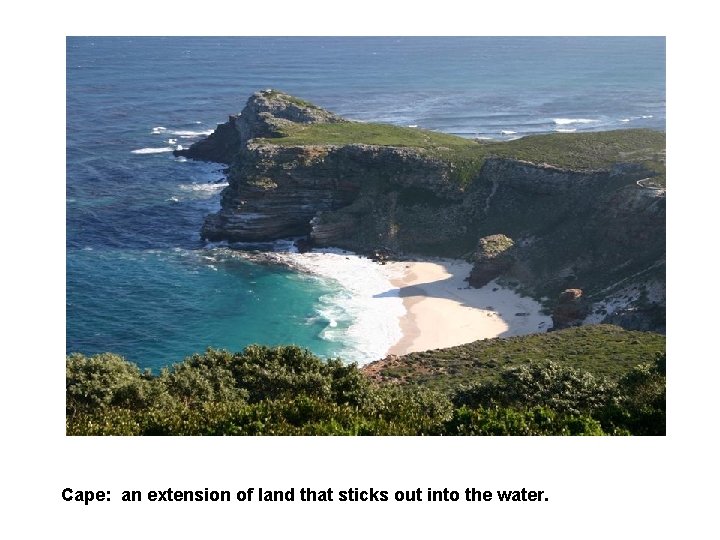
Cape: an extension of land that sticks out into the water.
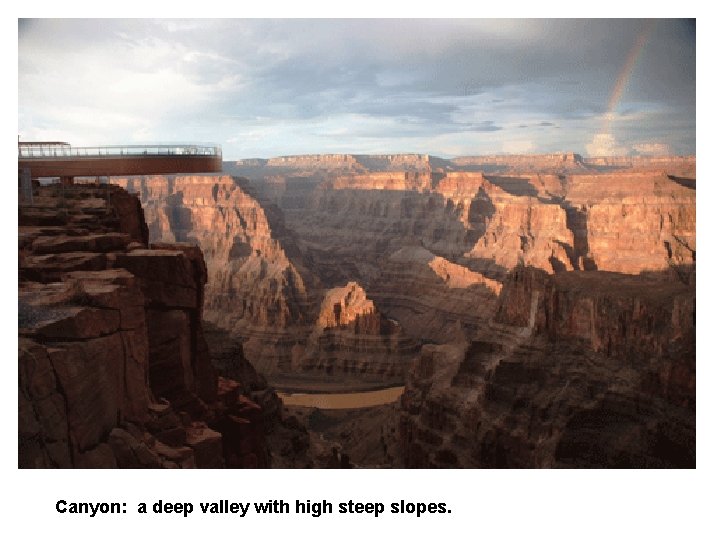
Canyon: a deep valley with high steep slopes.
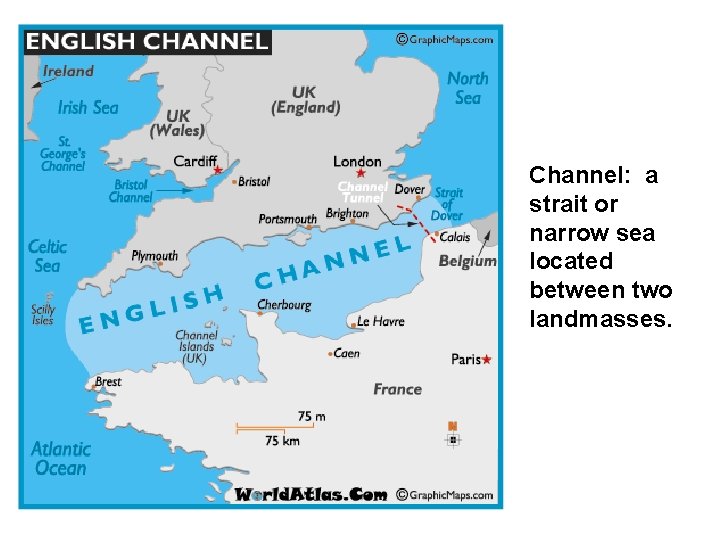
Channel: a strait or narrow sea located between two landmasses.
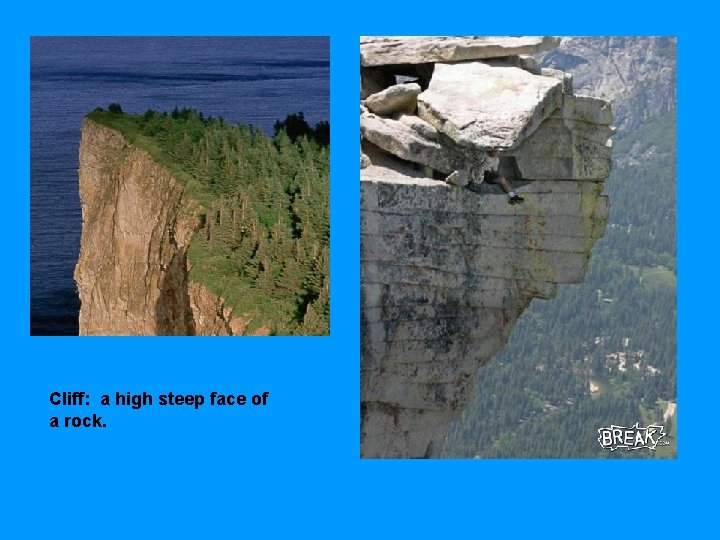
Cliff: a high steep face of a rock.
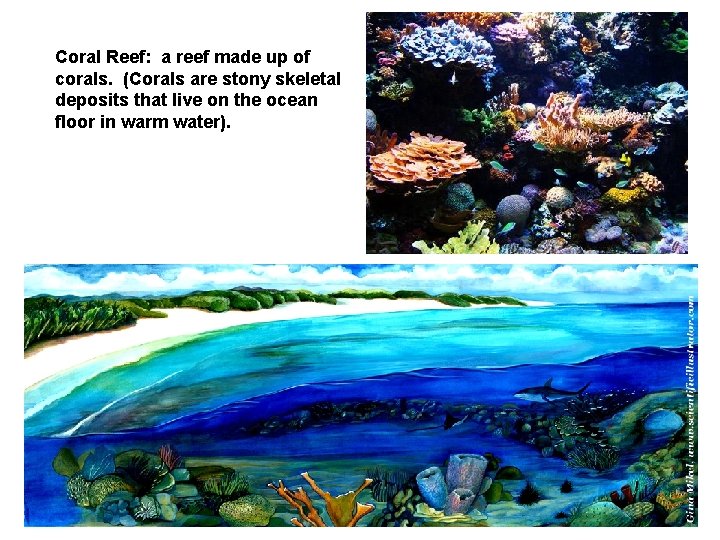
Coral Reef: a reef made up of corals. (Corals are stony skeletal deposits that live on the ocean floor in warm water).
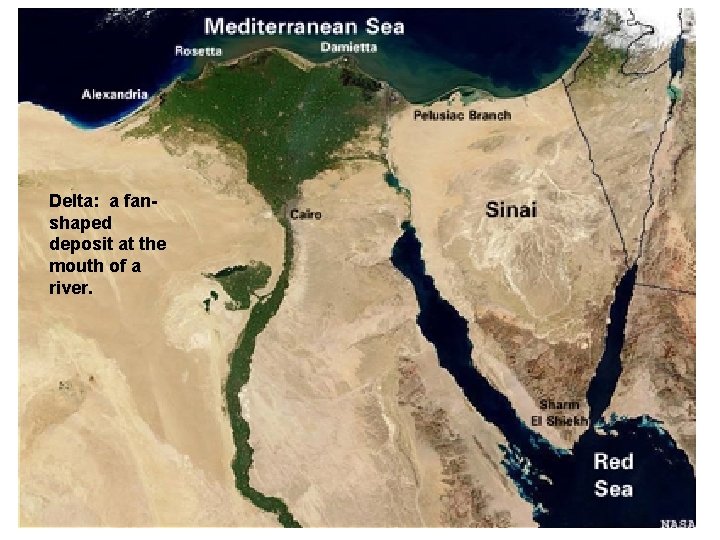
Delta: a fanshaped deposit at the mouth of a river.
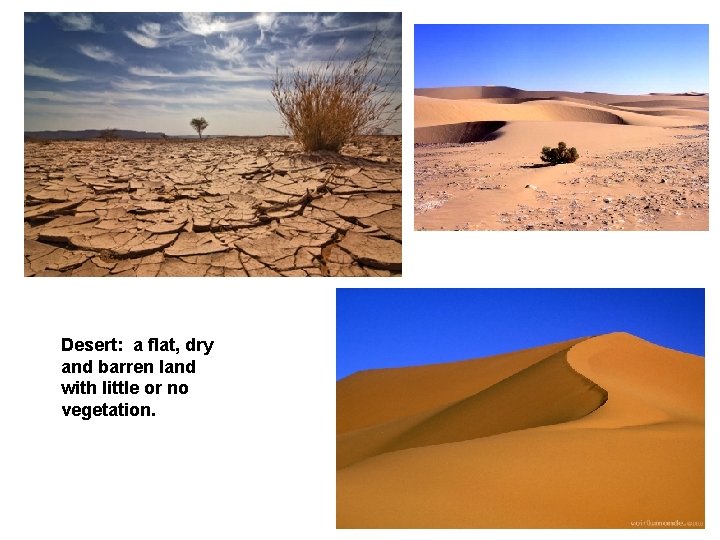
Desert: a flat, dry and barren land with little or no vegetation.
Dune: a hill or ridge of wind-blown sand.
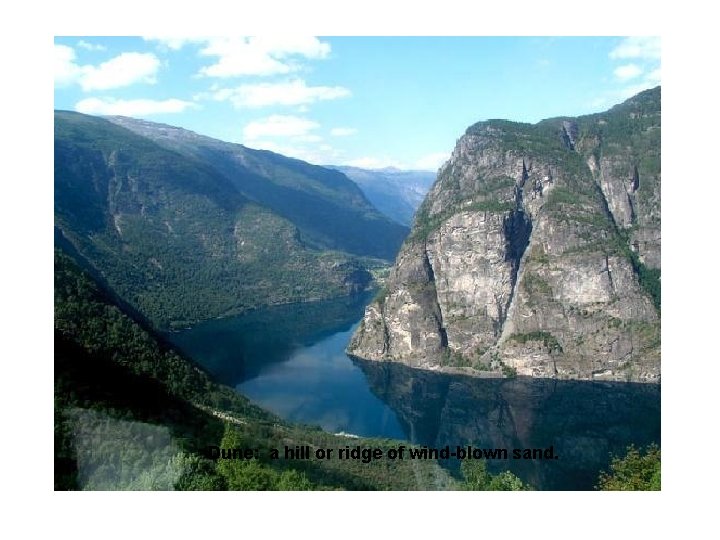
Fjord: an inlet of water located between steep cliffs.
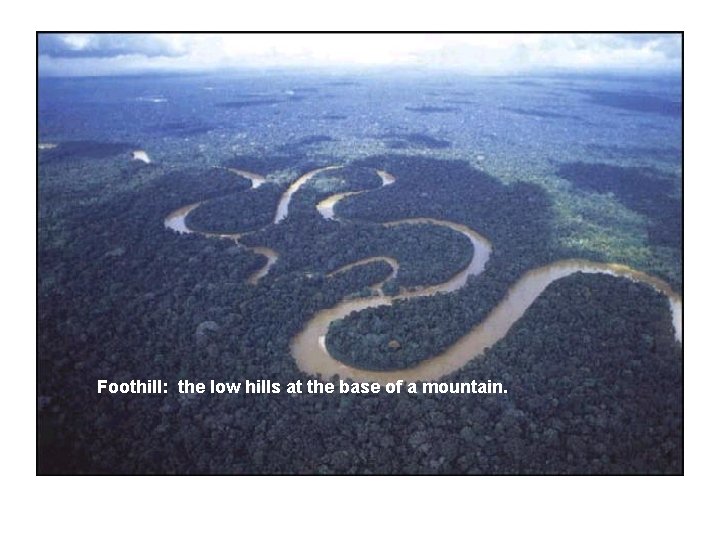
Foothill: the low hills at the base of a mountain.
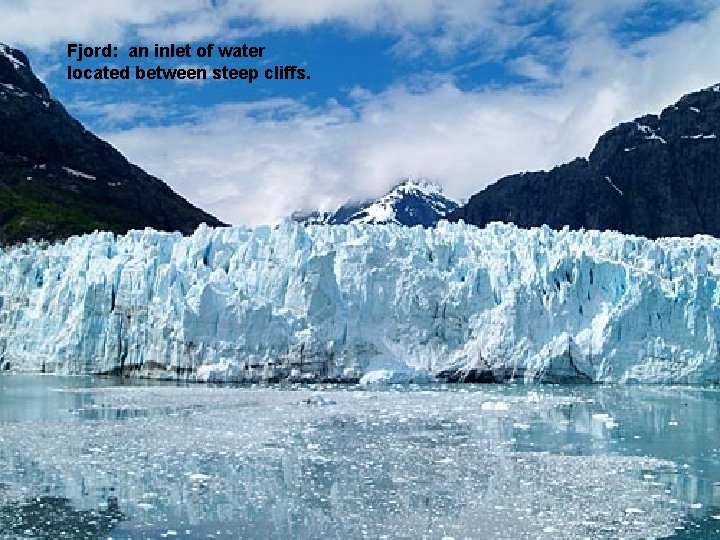
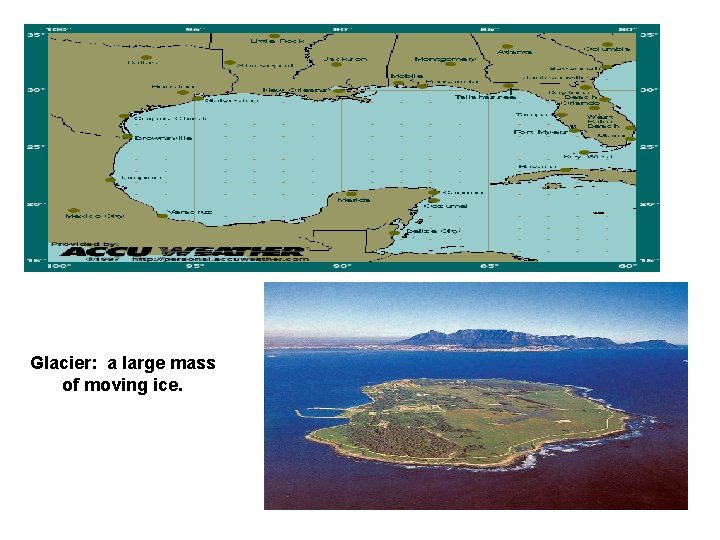
Glacier: a large mass of moving ice.
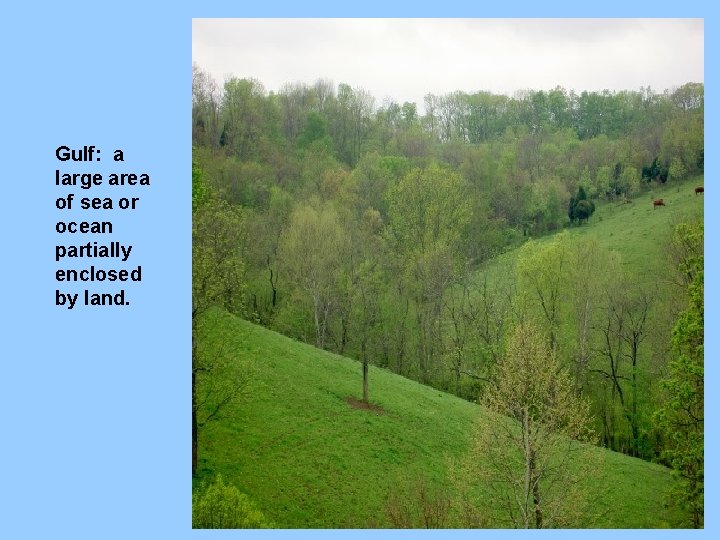
Gulf: a large area of sea or ocean partially enclosed by land.
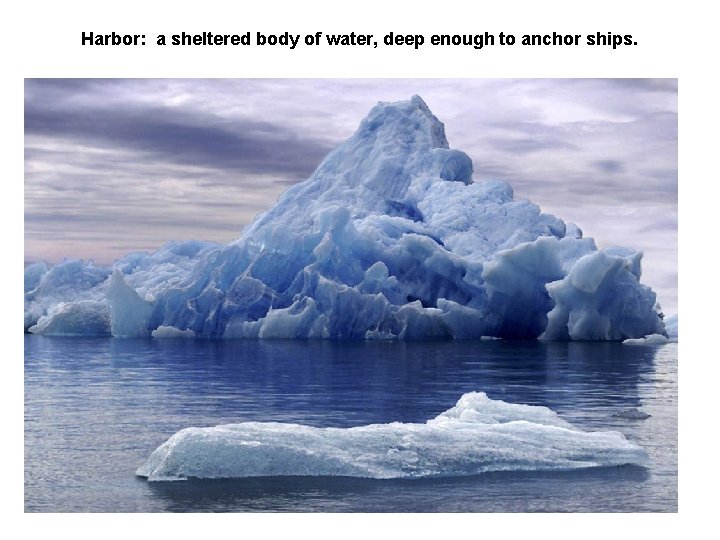
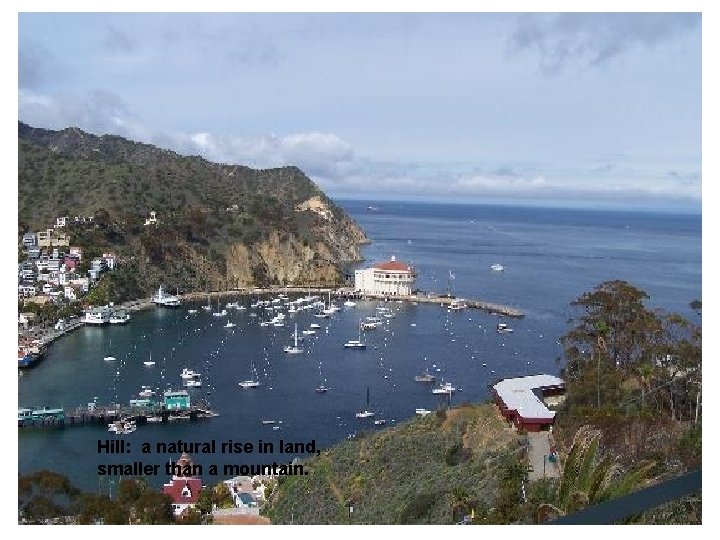
Harbor: a sheltered body of water, deep enough to anchor ships.
Hill: a natural rise in land, smaller than a mountain.
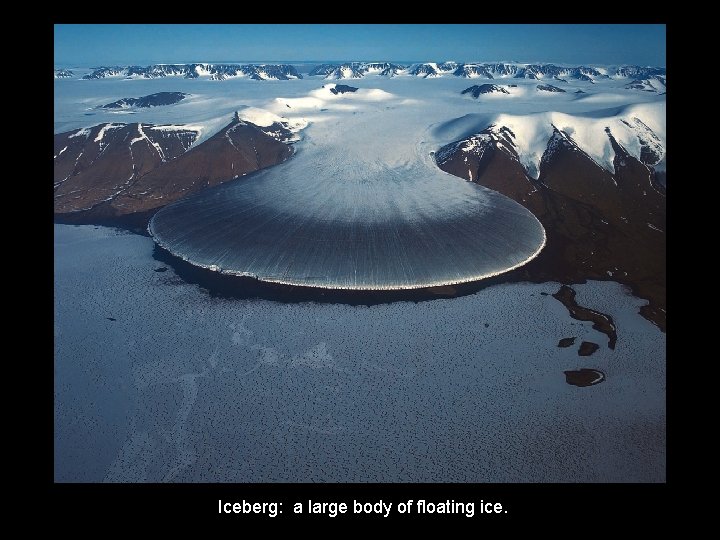
Iceberg: a large body of floating ice.
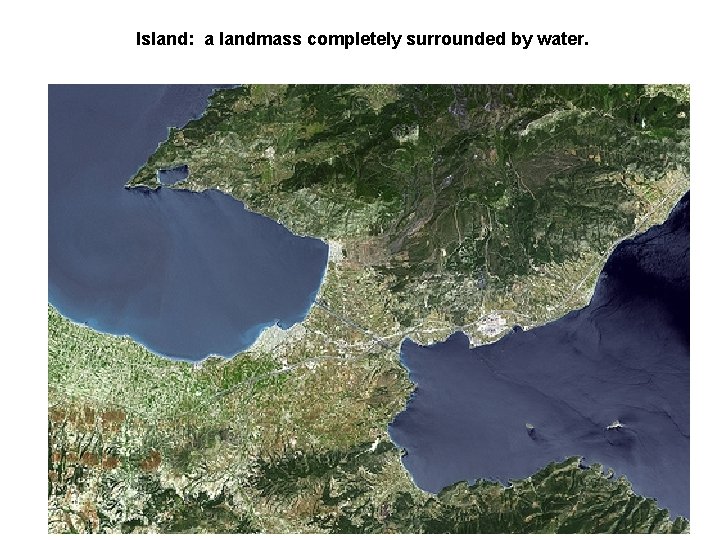
Island: a landmass completely surrounded by water.
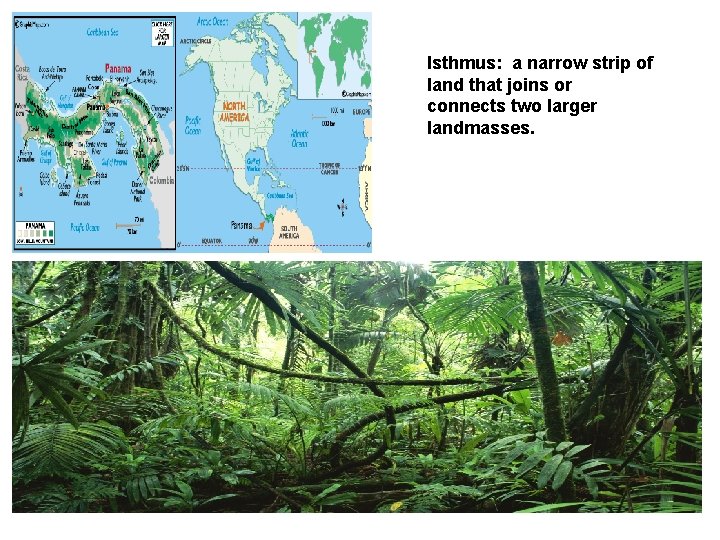
Isthmus: a narrow strip of land that joins or connects two larger landmasses.
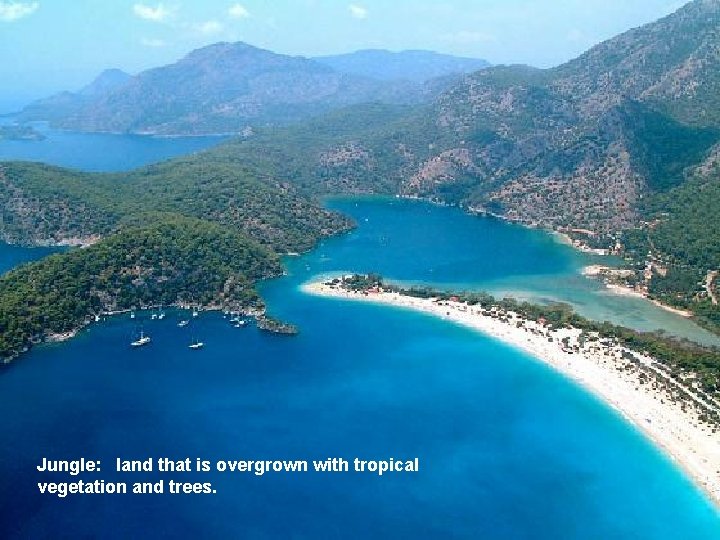
Jungle: land that is overgrown with tropical vegetation and trees.
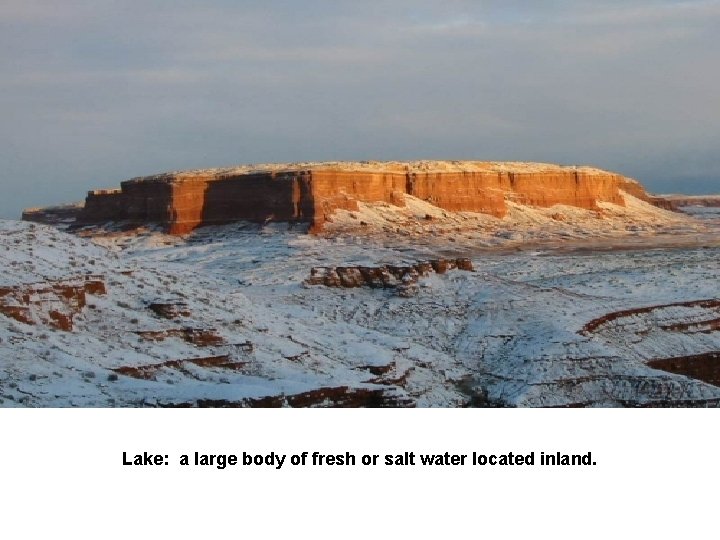
Lake: a large body of fresh or salt water located inland.
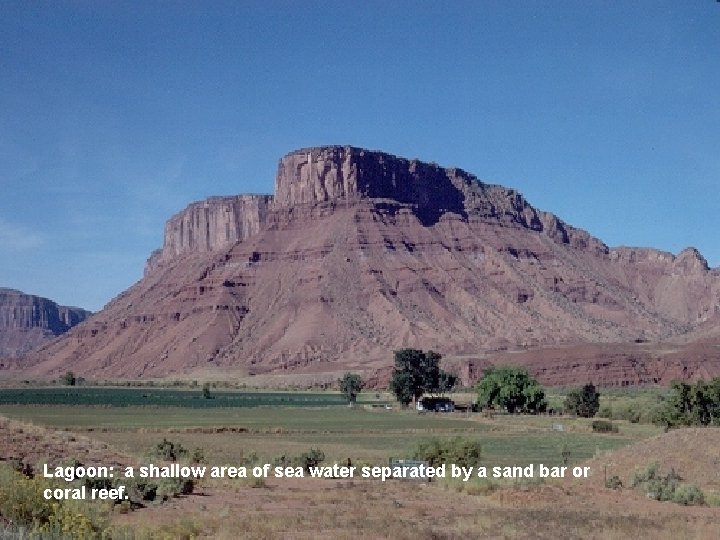
Lagoon: a shallow area of sea water separated by a sand bar or coral reef.
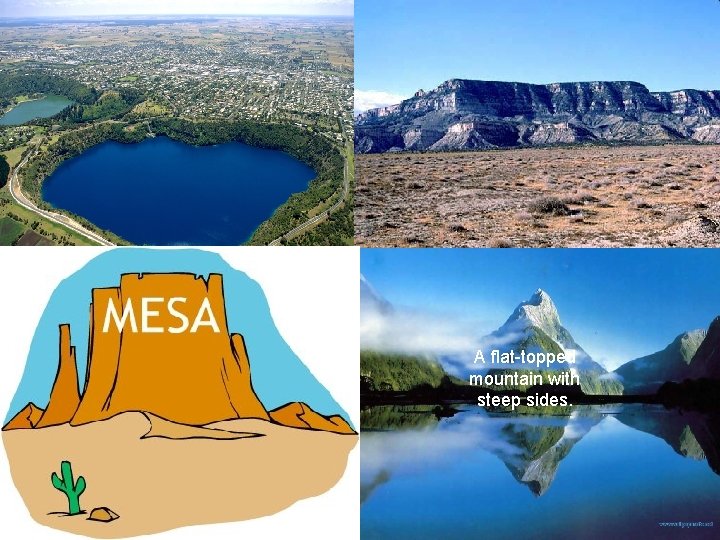
A flat-topped mountain with steep sides.
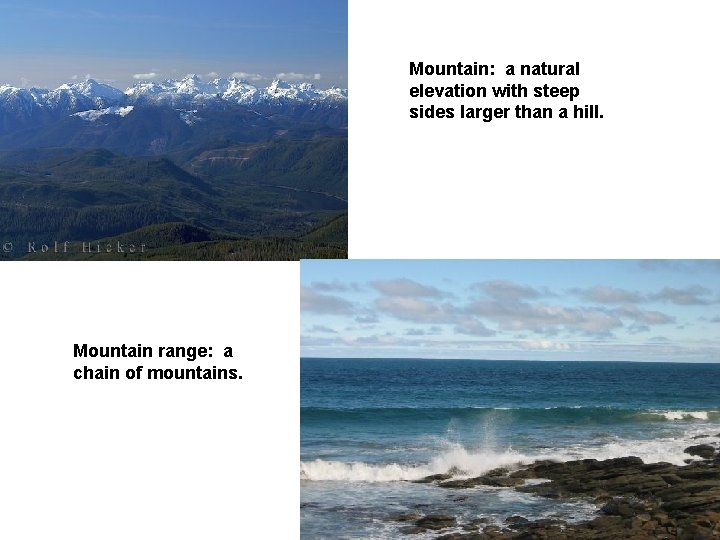
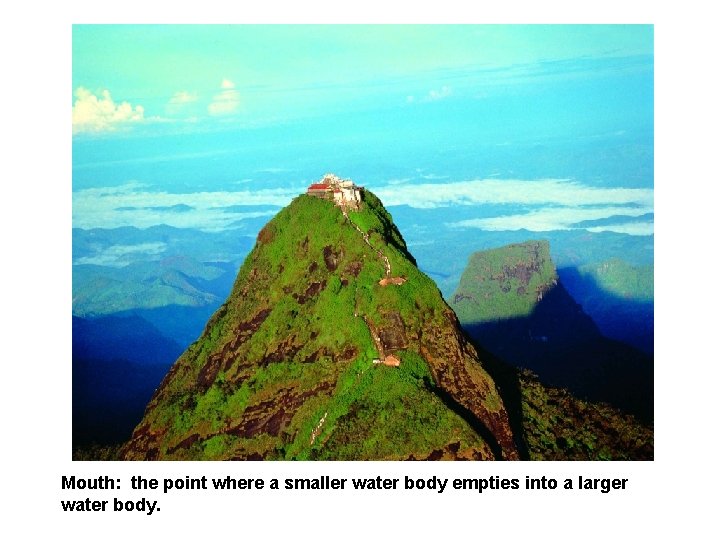
Mountain: a natural elevation with steep sides larger than a hill. Mountain range: a chain of mountains.
Mouth: the point where a smaller water body empties into a larger water body.
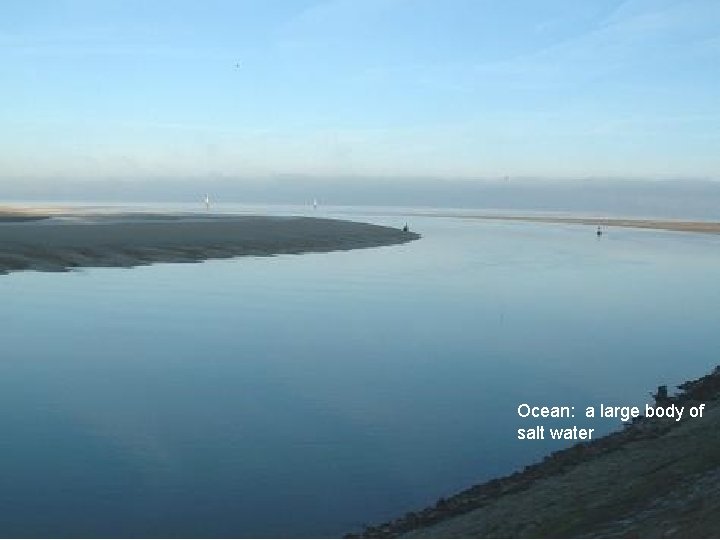
Ocean: a large body of salt water
Peak: the summit of a mountain
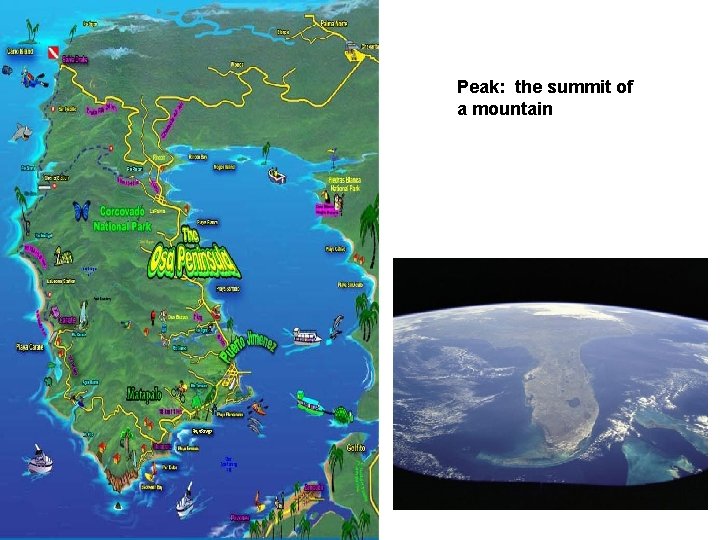
Peninsula: a landmass covered by water on three sides.
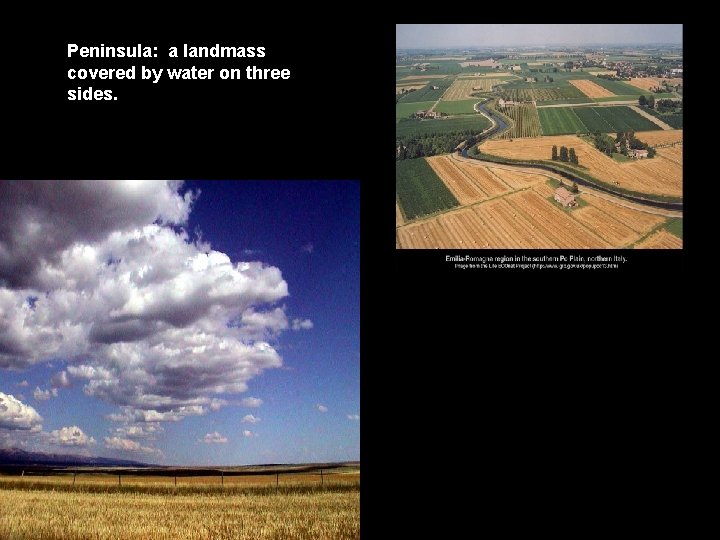
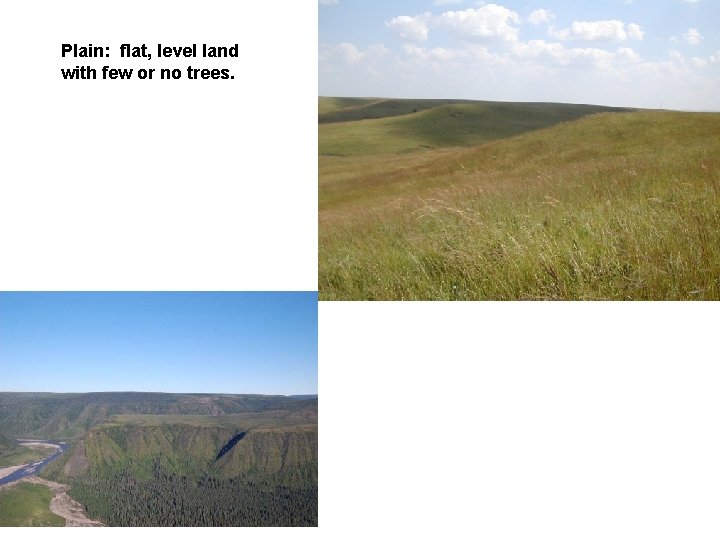
Plain: flat, level land with few or no trees.
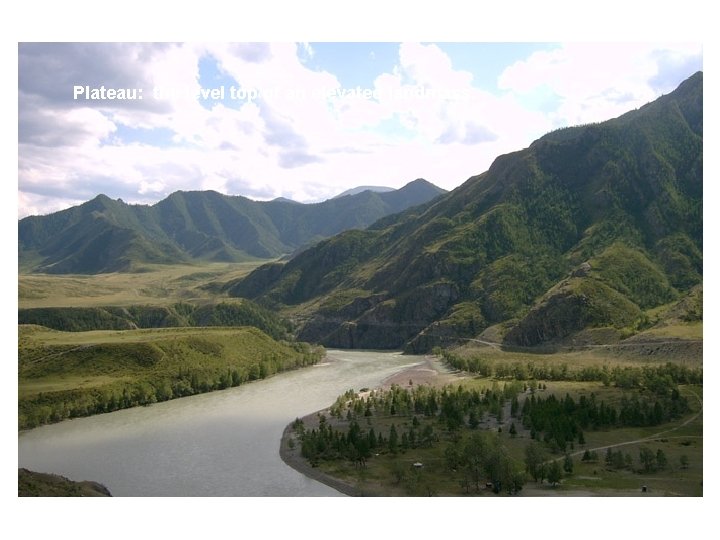
Plateau: the level top of an elevated landmass.
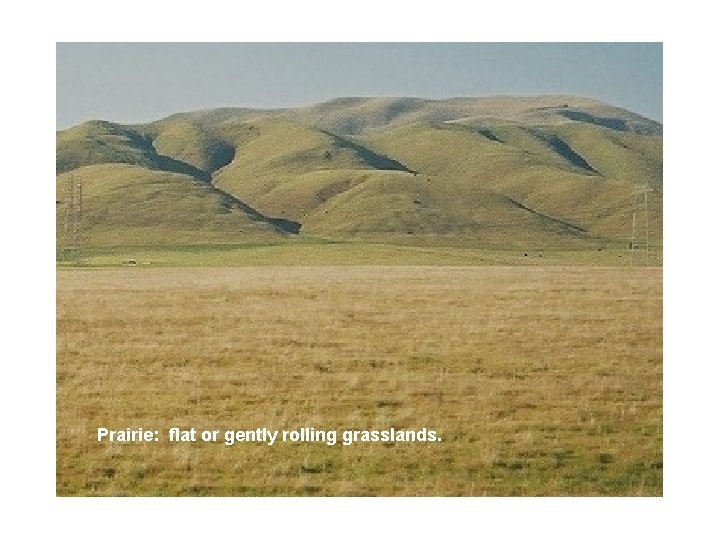
Prairie: flat or gently rolling grasslands.
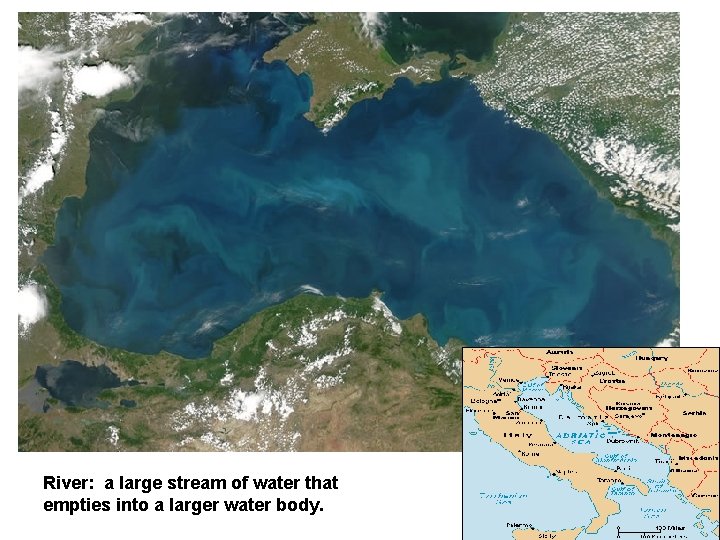
River: a large stream of water that empties into a larger water body.
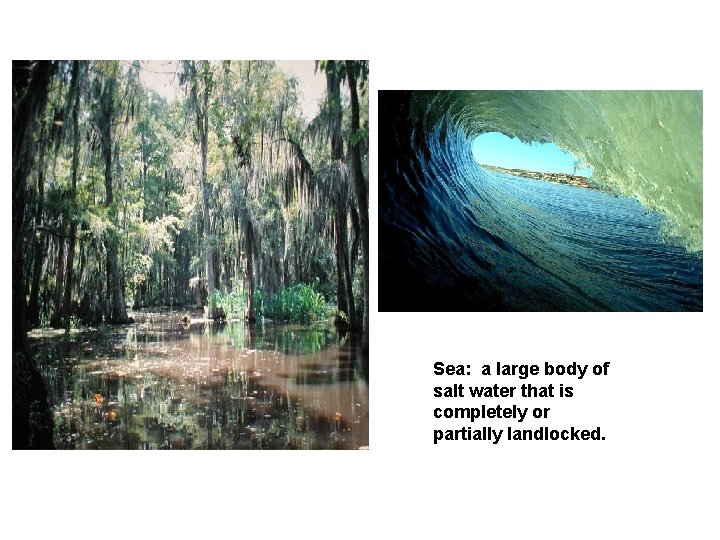
Sea: a large body of salt water that is completely or partially landlocked.
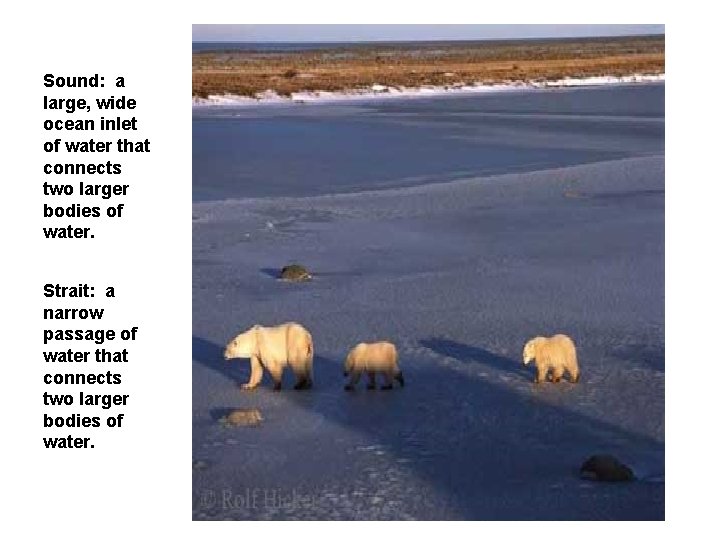
Sound: a large, wide ocean inlet of water that connects two larger bodies of water. Strait: a narrow passage of water that connects two larger bodies of water.
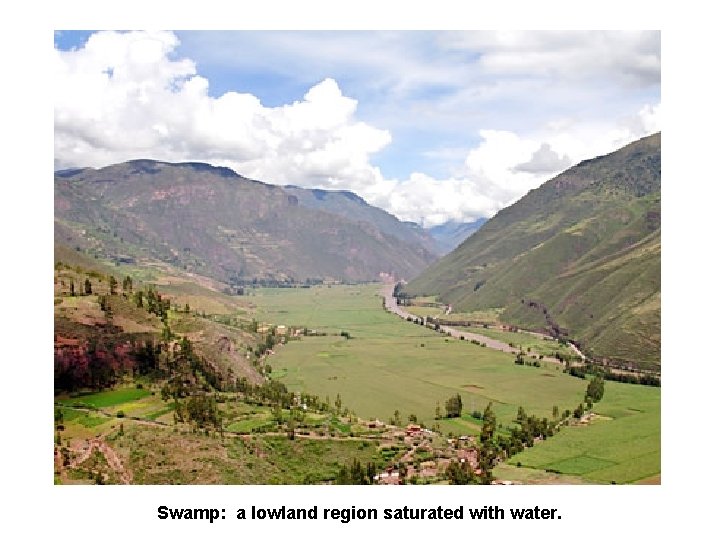
Swamp: a lowland region saturated with water.
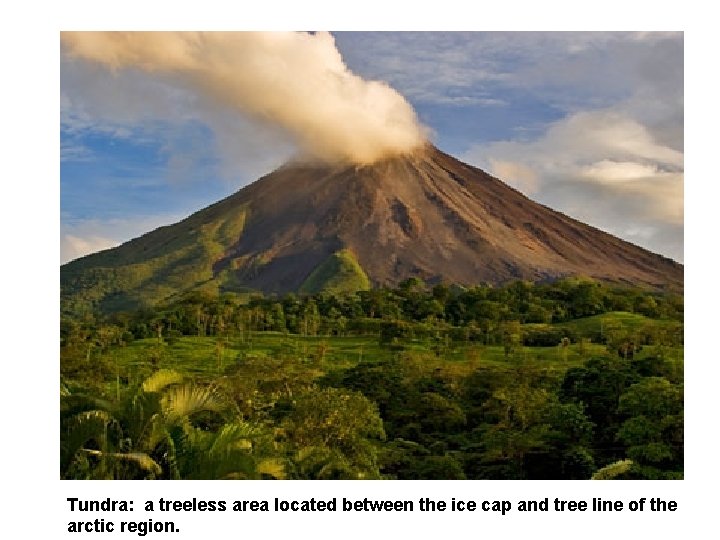
Tundra: a treeless area located between the ice cap and tree line of the arctic region.
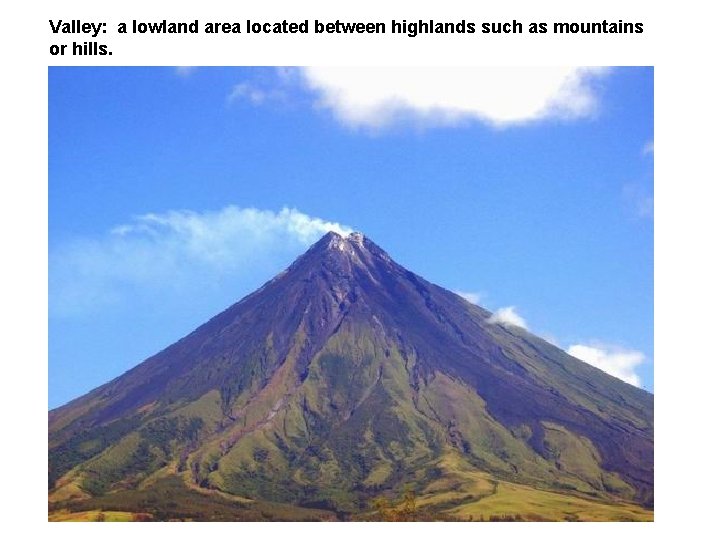
Valley: a lowland area located between highlands such as mountains or hills.
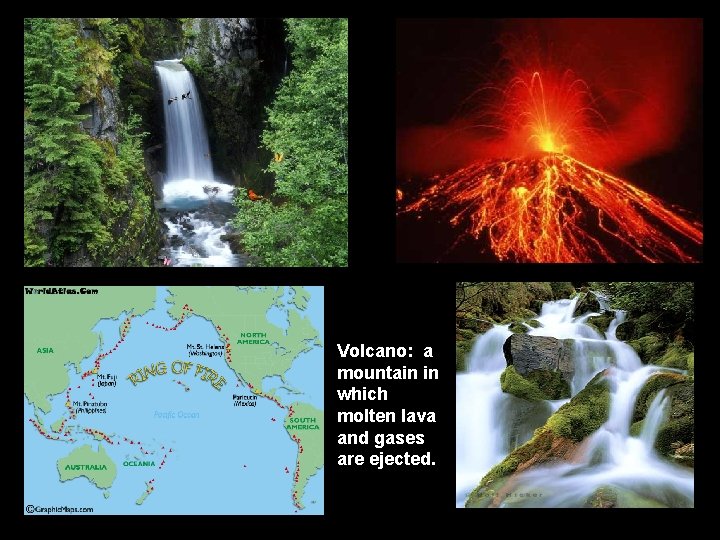
Volcano: a mountain in which molten lava and gases are ejected.
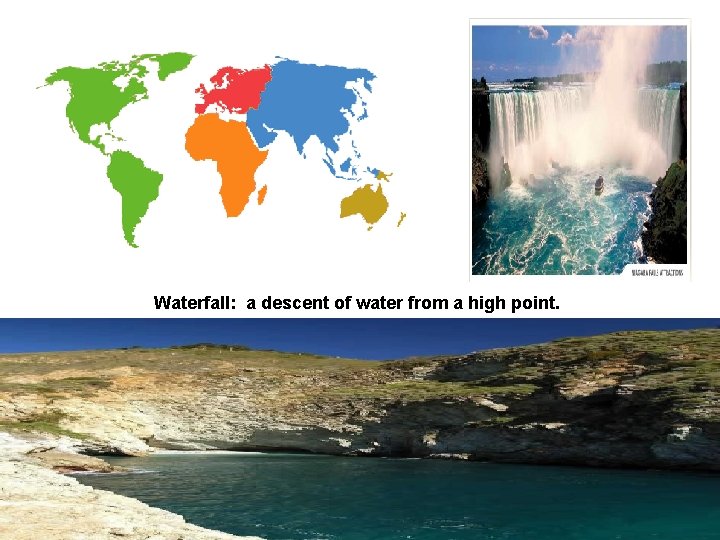
Waterfall: a descent of water from a high point.
Continent: a large continuous land mass
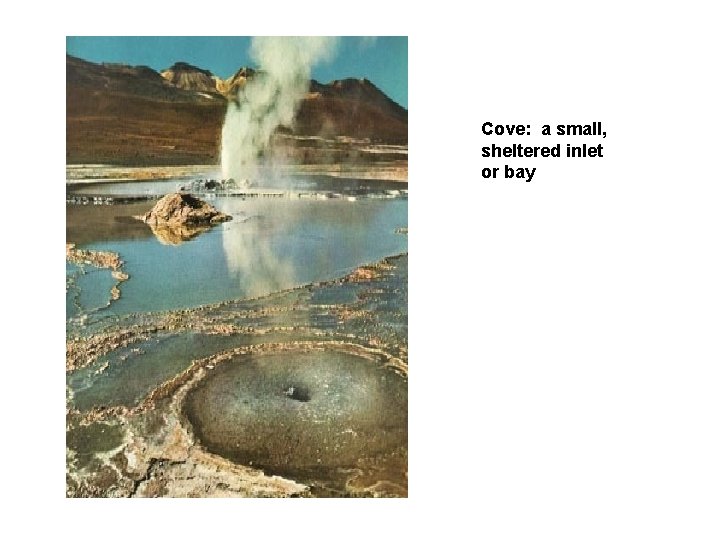
Cove: a small, sheltered inlet or bay
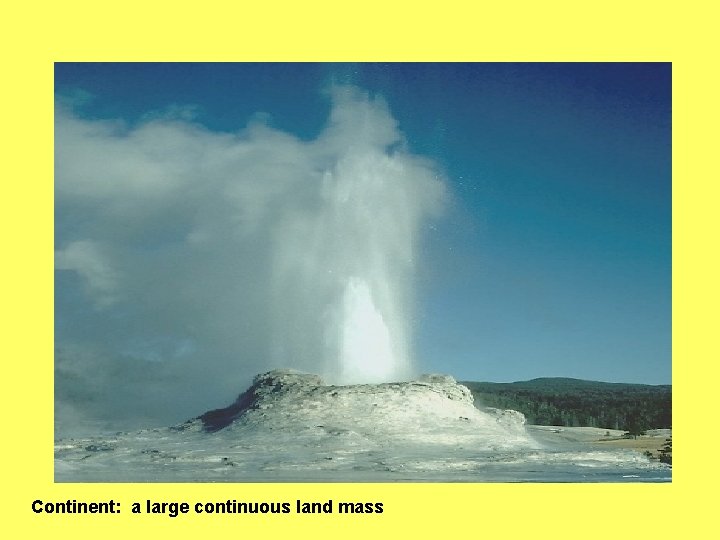
Geyser: a spring that jets hot water or steam into the air.