
Landforms Bodies of Water Forces of Change n
Landforms & Bodies of Water
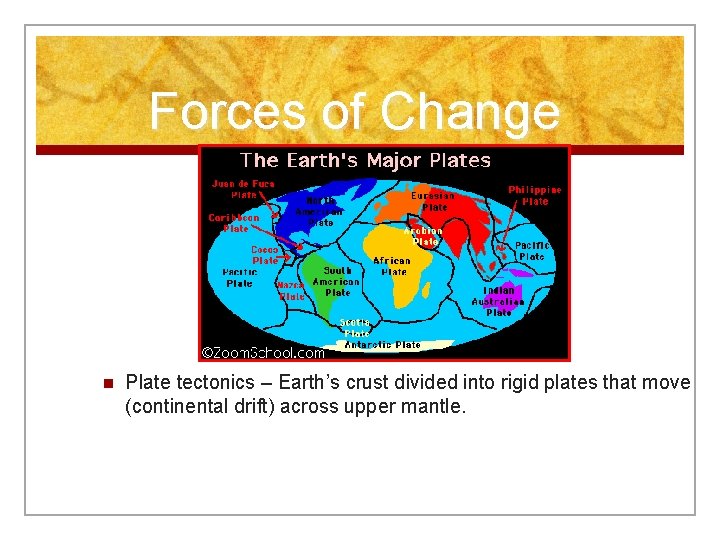
Forces of Change n Plate tectonics – Earth’s crust divided into rigid plates that move (continental drift) across upper mantle.
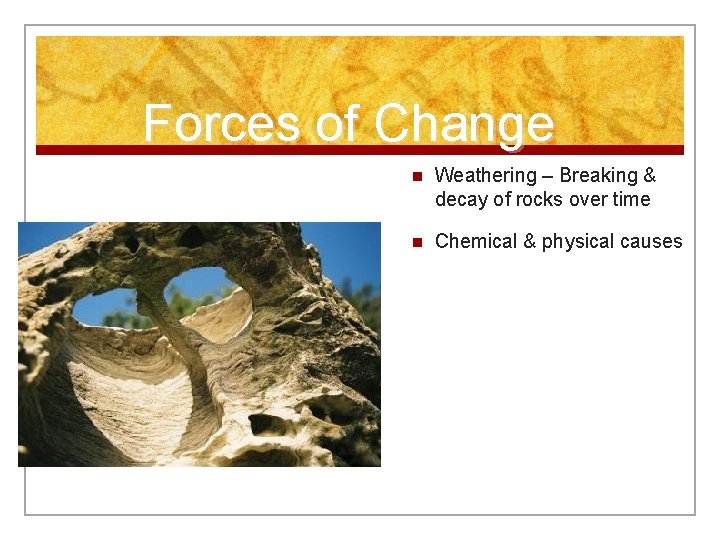
Forces of Change n Weathering – Breaking & decay of rocks over time n Chemical & physical causes
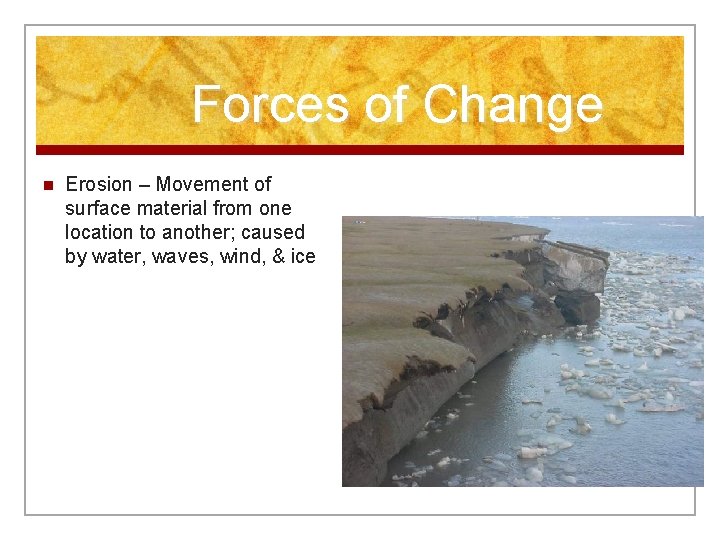
Forces of Change n Erosion – Movement of surface material from one location to another; caused by water, waves, wind, & ice
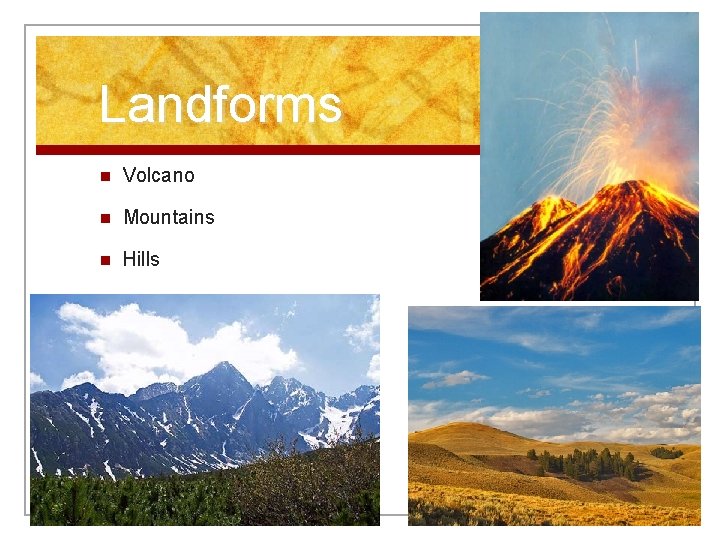
Landforms n Volcano n Mountains n Hills

Landforms n Plain: Level area of treeless country n Valley: is a
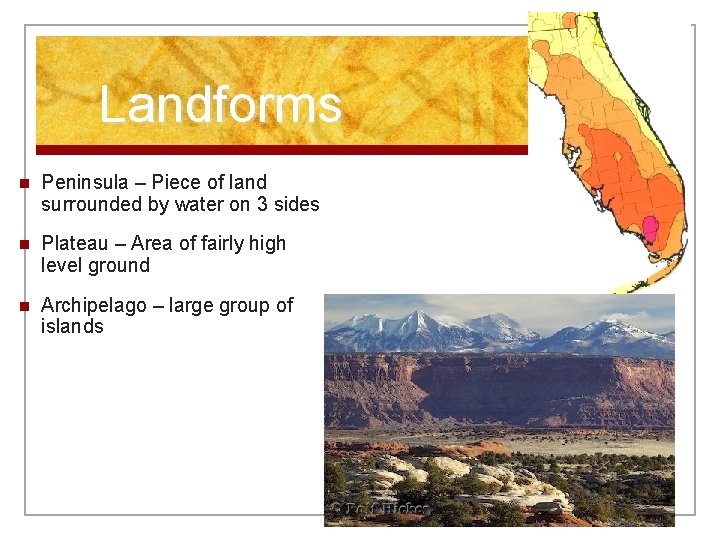
Landforms n Peninsula – Piece of land surrounded by water on 3 sides n Plateau – Area of fairly high level ground n Archipelago – large group of islands
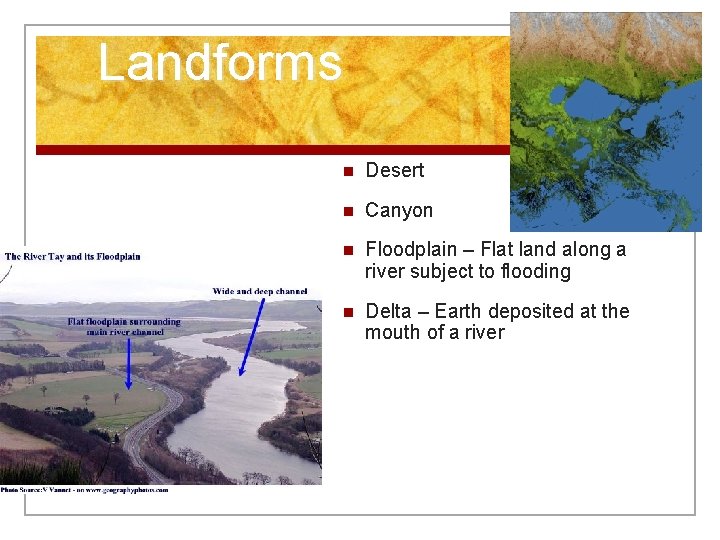
Landforms n Desert n Canyon n Floodplain – Flat land along a river subject to flooding n Delta – Earth deposited at the mouth of a river
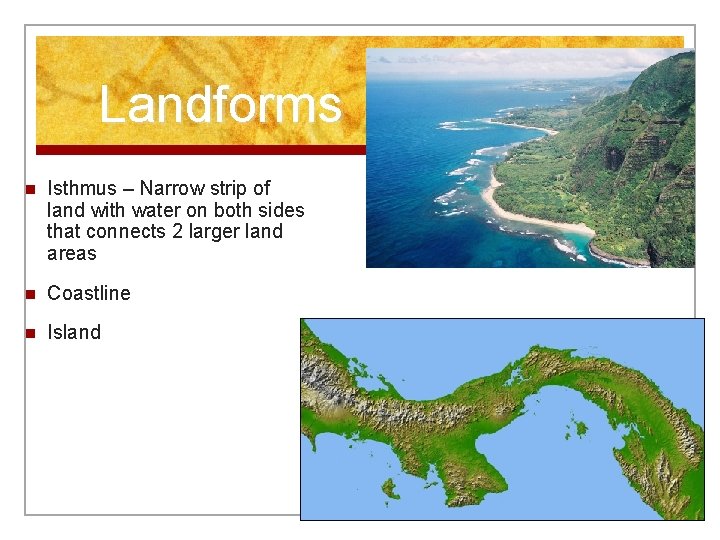
Landforms n Isthmus – Narrow strip of land with water on both sides that connects 2 larger land areas n Coastline n Island

Bodies of Water n Ocean n River n Strait – Narrow passage of water connecting 2 larger bodies of water
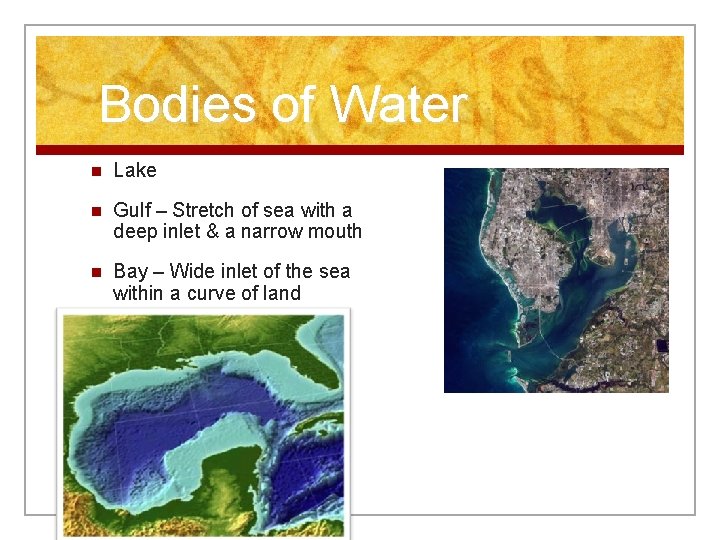
Bodies of Water n Lake n Gulf – Stretch of sea with a deep inlet & a narrow mouth n Bay – Wide inlet of the sea within a curve of land

Group Rules 1. Everyone participates. 2. Respect team member opinions. 3. Adhere to established time limits. 4. “Bell” = end your discussions.
Group Work- Please have everyone's name on the paper. 1. How many peninsula’s are located on Map page s 27 and s 28? 1 point 2. What landform connects North and South America? 1 point 3. What is the most common geographical feature on earth? 1 point 4. What is the difference between an ocean and a sea? 1 point 5. How have oceans, rivers, and lakes helped the development of the United States? Defend your answer! 3 points 6. Has geography hurt or helped the United States, or both? Defend your answer. 3 points • Total 10 Points
- Slides: 13