
Landfill Design and Operation DR RAGUNATHAN SANTIAGOO Pusat
- Slides: 27
Landfill Design and Operation DR. RAGUNATHAN SANTIAGOO Pusat Pengajian Kejuruteraan Alam Sekitar School of Environmental Engineering
Landfill Technology Definitions Landfill - Physical facilities used for the disposal of residual solid wastes in the surface soils of the earth Sanitary landfill – An engineered facility for the disposal of municipal solid wastes designed and operated to minimize public health and environmental impact. Secure landfill – An engineered facility for the disposal of municipal solid wastes designed and operated to hazardous wastes Pusat Pengajian Kejuruteraan Alam Sekitar School of Environmental Engineering
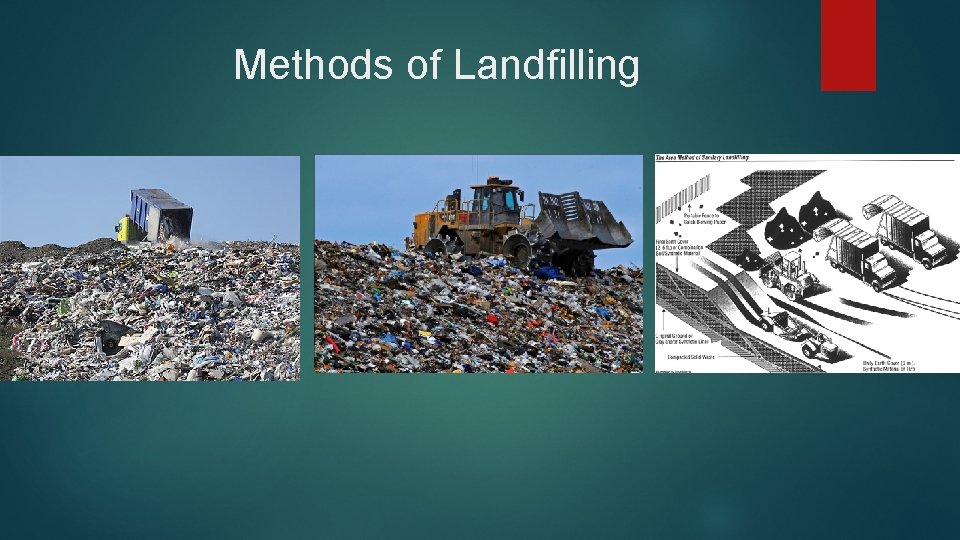
Methods of Landfilling
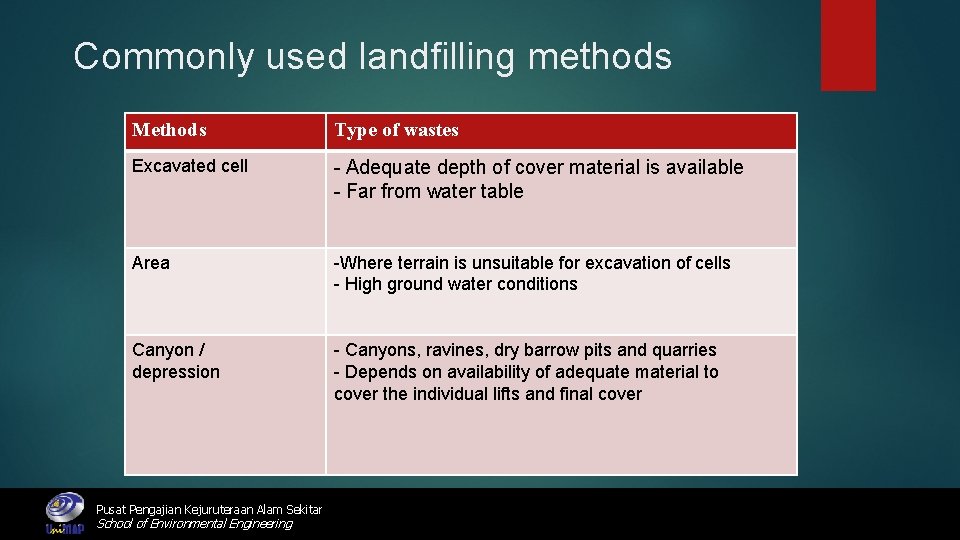
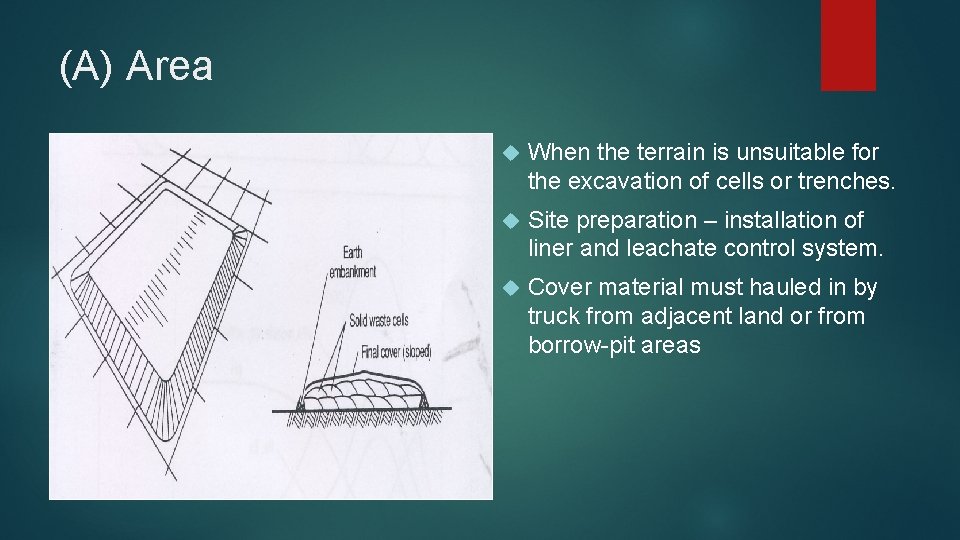
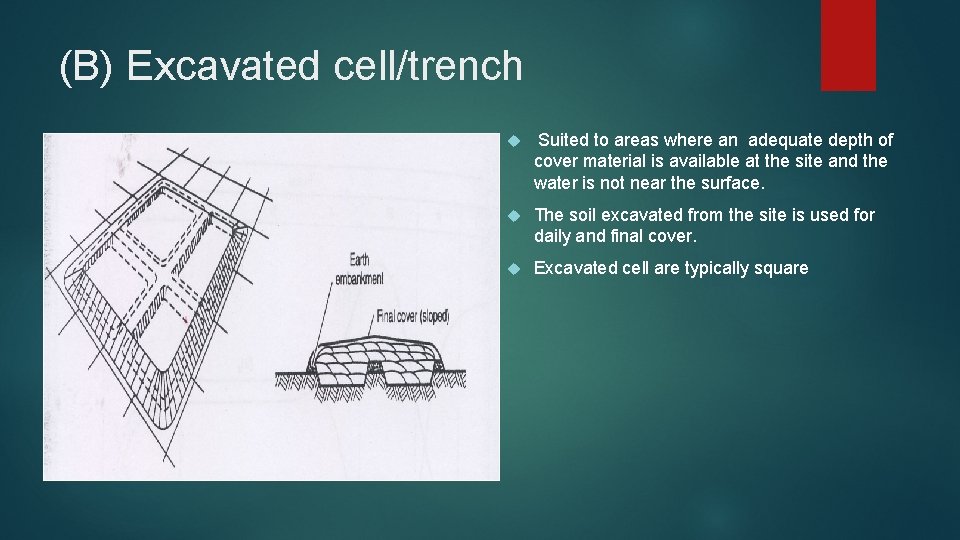
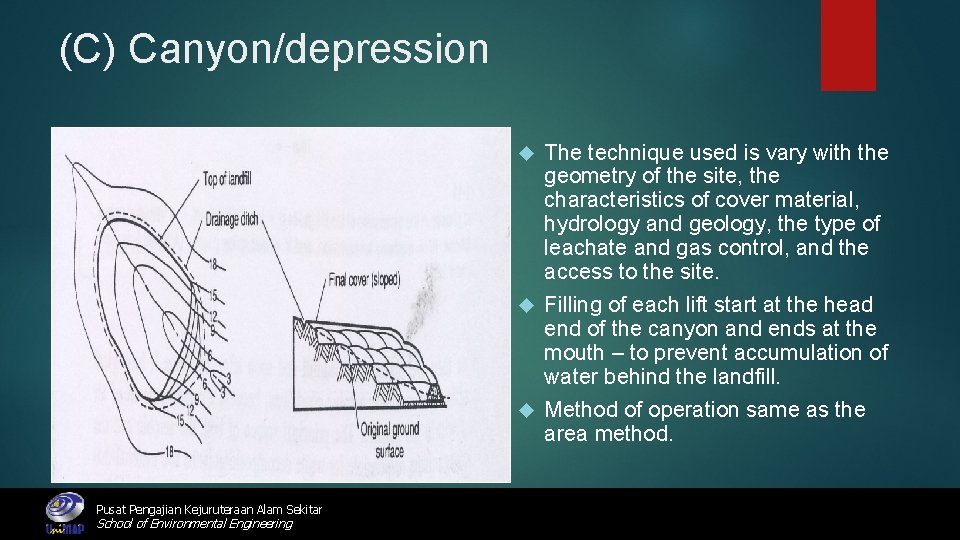
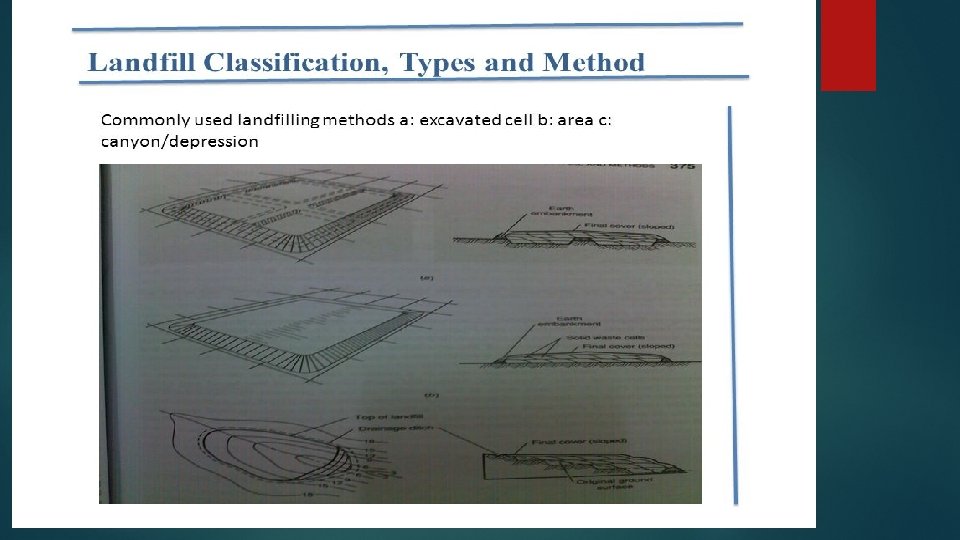
Commonly used landfilling methods Methods Type of wastes Excavated cell - Adequate depth of cover material is available - Far from water table Area -Where terrain is unsuitable for excavation of cells - High ground water conditions Canyon / depression - Canyons, ravines, dry barrow pits and quarries - Depends on availability of adequate material to cover the individual lifts and final cover Pusat Pengajian Kejuruteraan Alam Sekitar School of Environmental Engineering
(A) Area When the terrain is unsuitable for the excavation of cells or trenches. Site preparation – installation of liner and leachate control system. Cover material must hauled in by truck from adjacent land or from borrow-pit areas
(B) Excavated cell/trench Suited to areas where an adequate depth of cover material is available at the site and the water is not near the surface. The soil excavated from the site is used for daily and final cover. Excavated cell are typically square
(C) Canyon/depression Pusat Pengajian Kejuruteraan Alam Sekitar School of Environmental Engineering The technique used is vary with the geometry of the site, the characteristics of cover material, hydrology and geology, the type of leachate and gas control, and the access to the site. Filling of each lift start at the head end of the canyon and ends at the mouth – to prevent accumulation of water behind the landfill. Method of operation same as the area method.
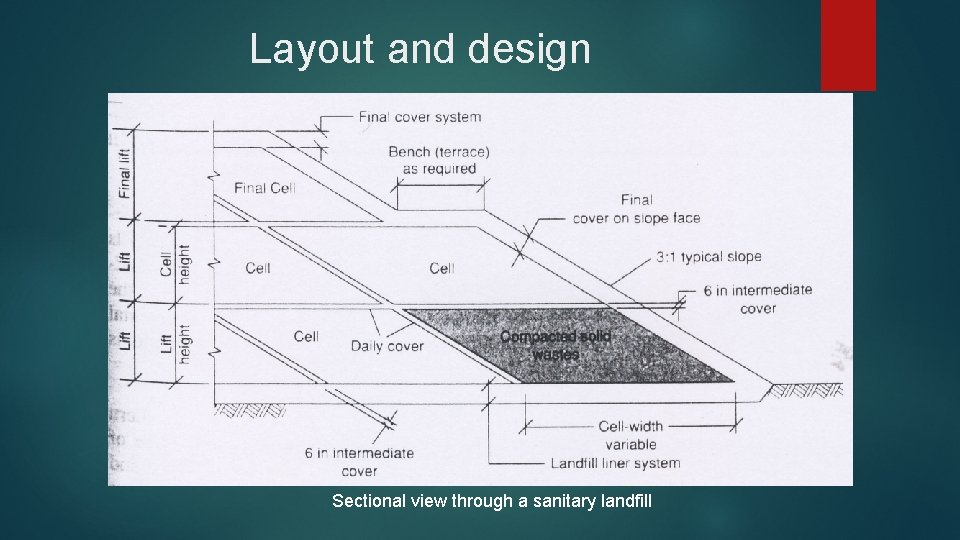
Layout and design Sectional view through a sanitary landfill
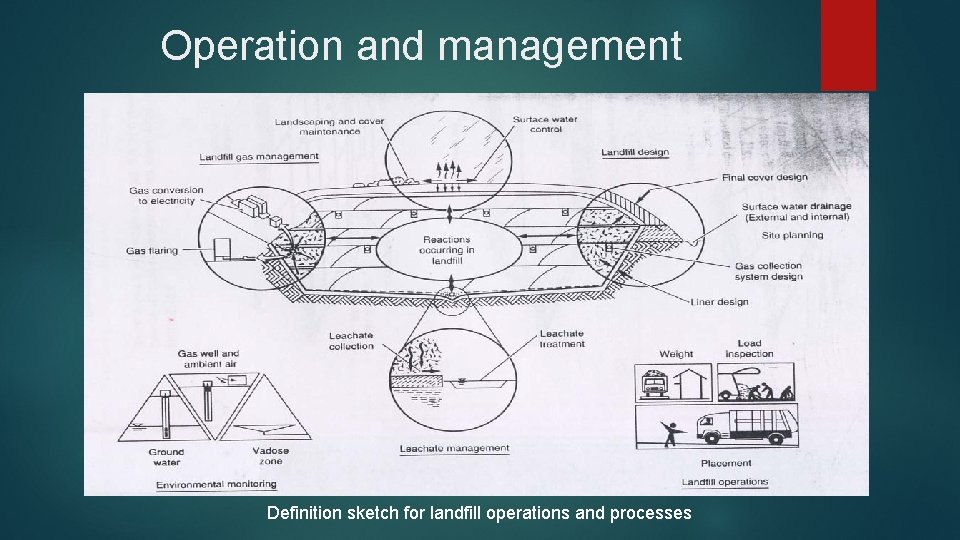
Operation and management Definition sketch for landfill operations and processes
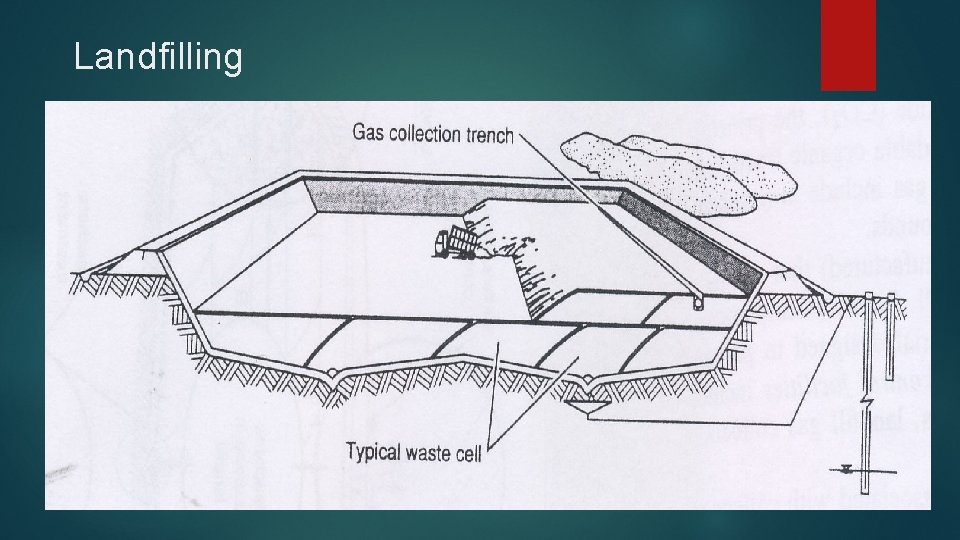
Landfilling
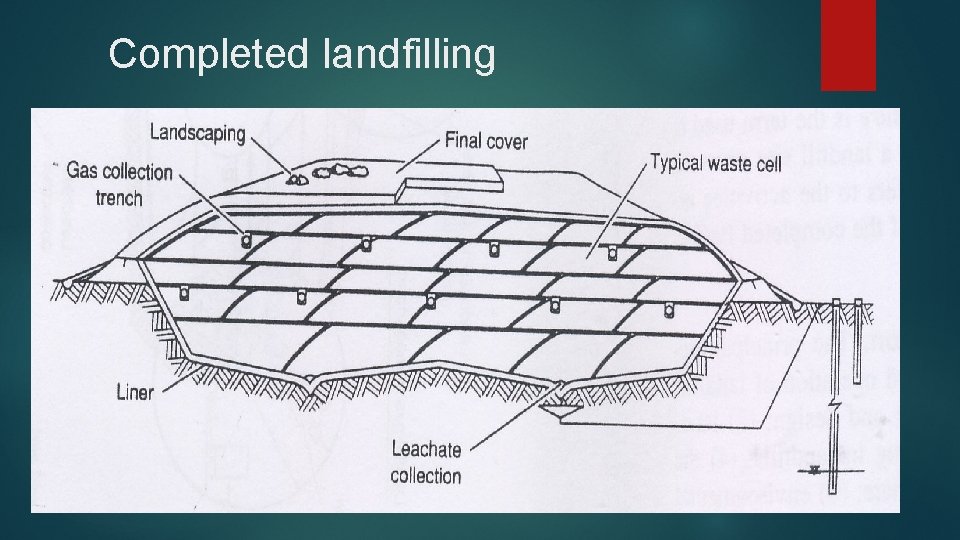
Completed landfilling
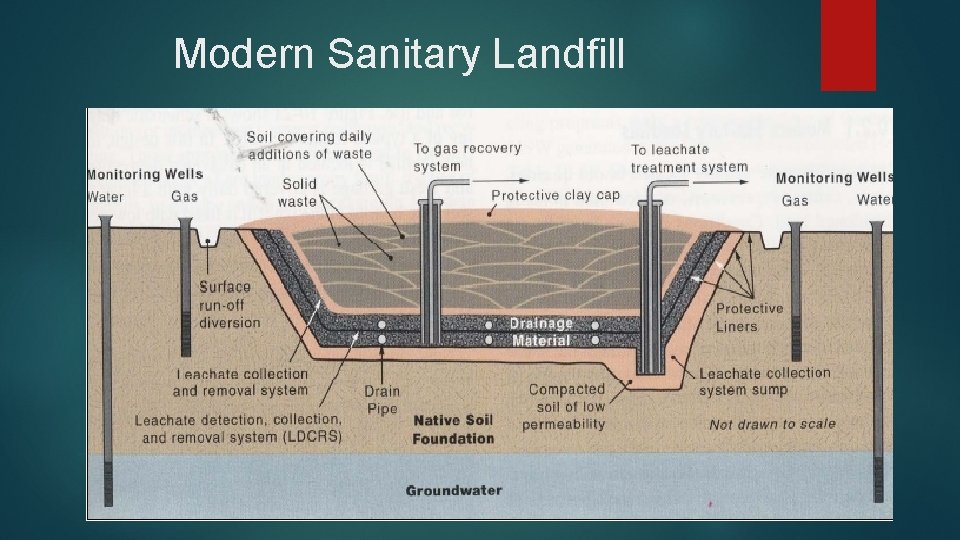
Modern Sanitary Landfill
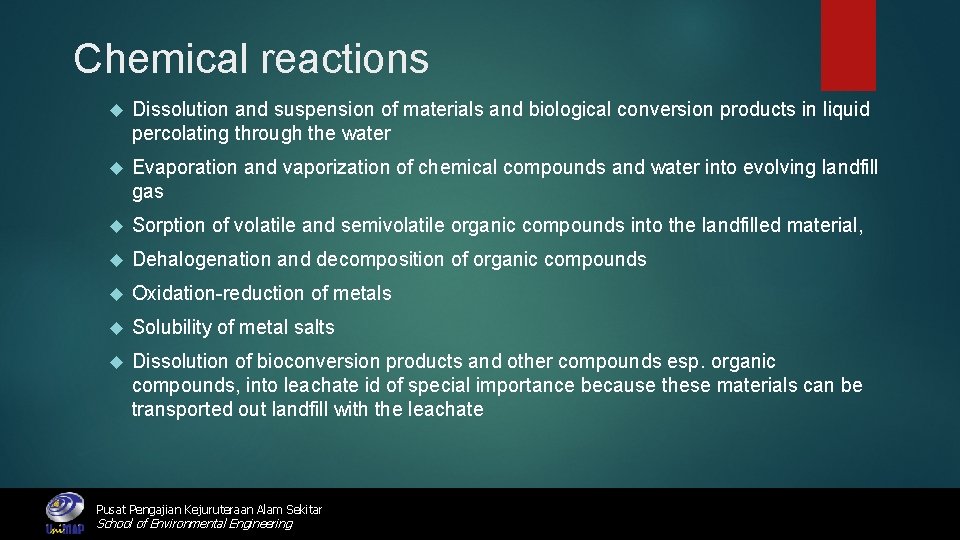
Chemical reactions Dissolution and suspension of materials and biological conversion products in liquid percolating through the water Evaporation and vaporization of chemical compounds and water into evolving landfill gas Sorption of volatile and semivolatile organic compounds into the landfilled material, Dehalogenation and decomposition of organic compounds Oxidation-reduction of metals Solubility of metal salts Dissolution of bioconversion products and other compounds esp. organic compounds, into leachate id of special importance because these materials can be transported out landfill with the leachate Pusat Pengajian Kejuruteraan Alam Sekitar School of Environmental Engineering
Physical reactions Lateral diffusion of gases in landfill Emission of landfill gases to surrounding environment Movement of leachate within the landfill and into underlying soil Settlement caused by consolidation and decomposition of landfill materials Pusat Pengajian Kejuruteraan Alam Sekitar School of Environmental Engineering
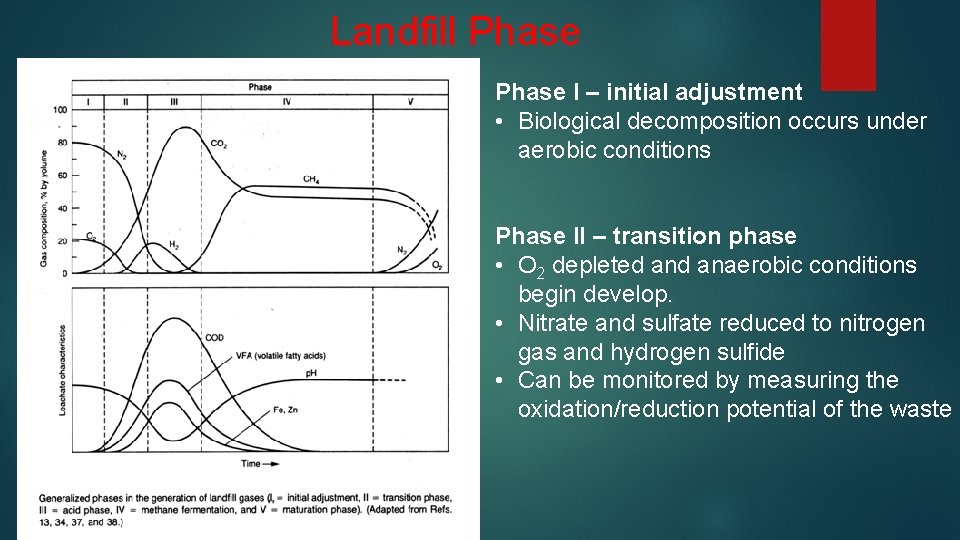
Biochemical reactions Biotransformation of organics into landfill gases and liquids Starting with aerobic, then followed by anaerobic processes. Aerobic process produces CO 2 and H 2 O Anaerobic process produces CO 2, CH 4 and trace amounts of ammonia and hydrogen sulfide Pusat Pengajian Kejuruteraan Alam Sekitar School of Environmental Engineering
Landfill Phase I – initial adjustment • Biological decomposition occurs under aerobic conditions Phase II – transition phase • O 2 depleted anaerobic conditions begin develop. • Nitrate and sulfate reduced to nitrogen gas and hydrogen sulfide • Can be monitored by measuring the oxidation/reduction potential of the waste
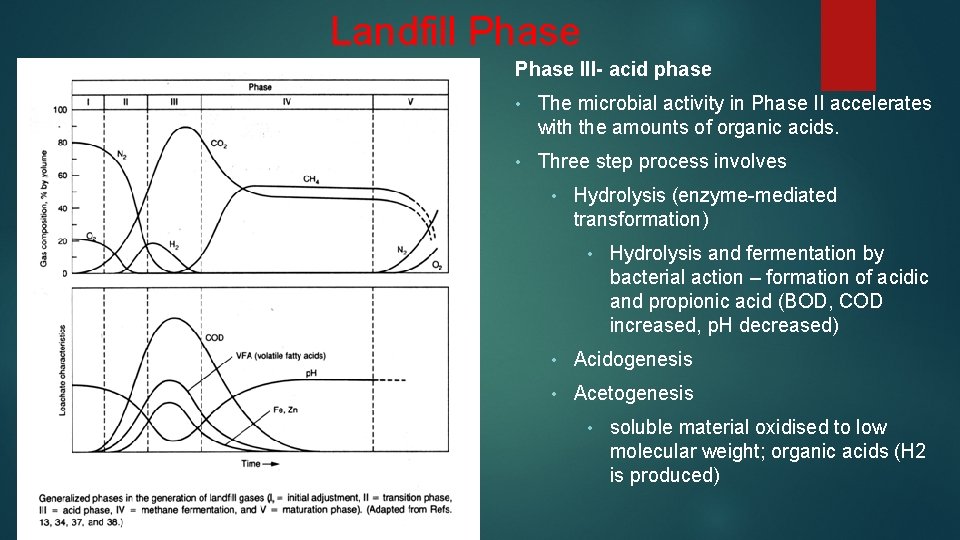
Landfill Phase III- acid phase • The microbial activity in Phase II accelerates with the amounts of organic acids. • Three step process involves • Hydrolysis (enzyme-mediated transformation) • Hydrolysis and fermentation by bacterial action – formation of acidic and propionic acid (BOD, COD increased, p. H decreased) • Acidogenesis • Acetogenesis • soluble material oxidised to low molecular weight; organic acids (H 2 is produced)
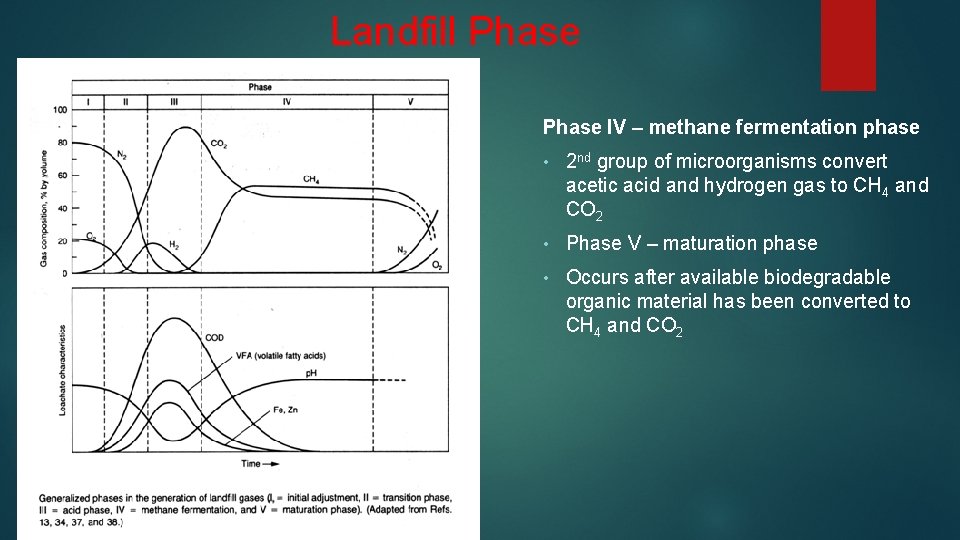
Landfill Phase IV – methane fermentation phase • 2 nd group of microorganisms convert acetic acid and hydrogen gas to CH 4 and CO 2 • Phase V – maturation phase • Occurs after available biodegradable organic material has been converted to CH 4 and CO 2
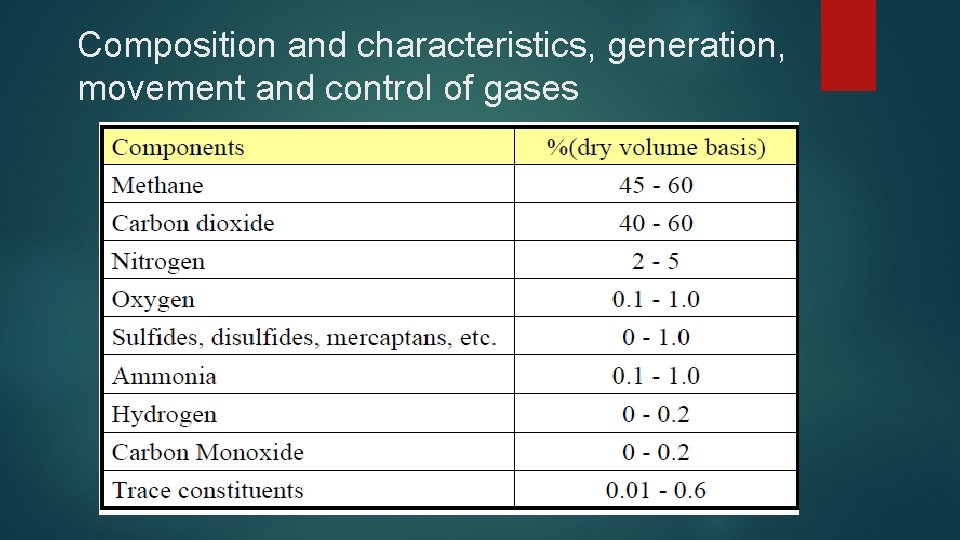
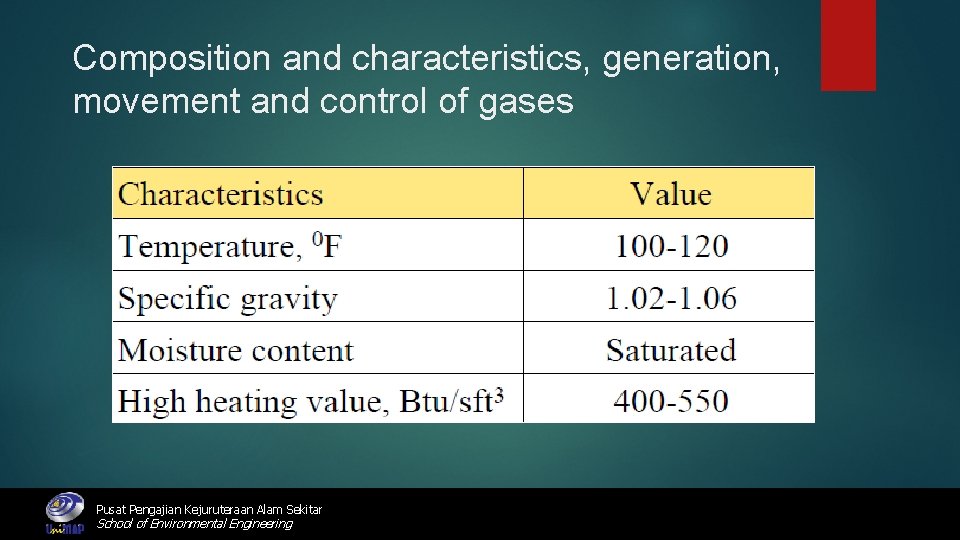
Composition and characteristics, generation, movement and control of gases
Composition and characteristics, generation, movement and control of gases Pusat Pengajian Kejuruteraan Alam Sekitar School of Environmental Engineering
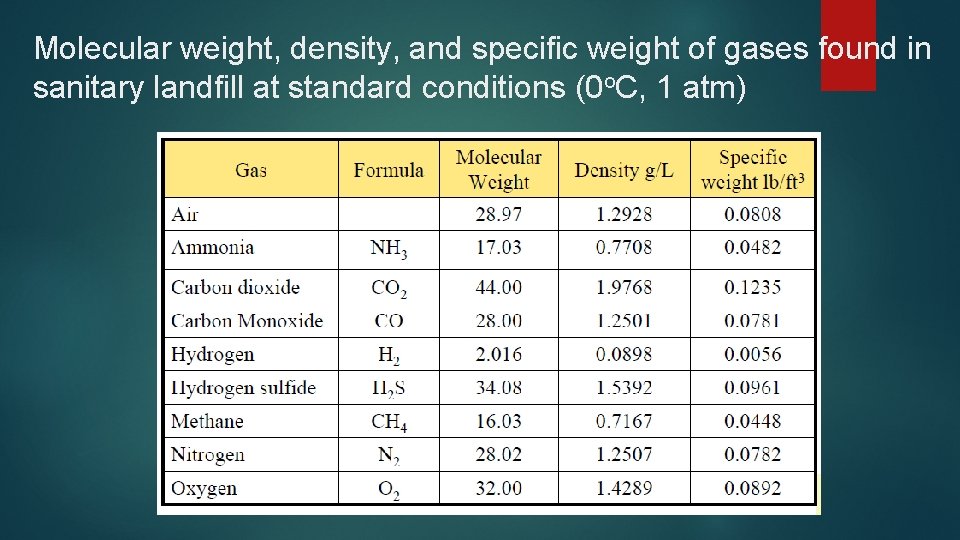
Molecular weight, density, and specific weight of gases found in sanitary landfill at standard conditions (0 o. C, 1 atm)
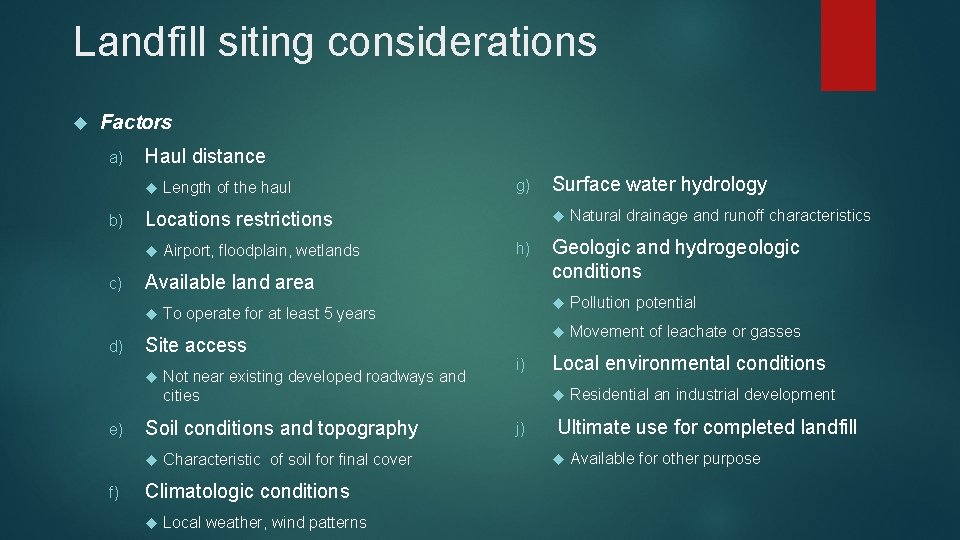
Landfill siting considerations Factors a) Haul distance b) Not near existing developed roadways and cities Soil conditions and topography f) h) To operate for at least 5 years Site access e) Airport, floodplain, wetlands Characteristic of soil for final cover Climatologic conditions Local weather, wind patterns Surface water hydrology Available land area d) g) Locations restrictions c) Length of the haul i) Geologic and hydrogeologic conditions Pollution potential Movement of leachate or gasses Local environmental conditions j) Natural drainage and runoff characteristics Residential an industrial development Ultimate use for completed landfill Available for other purpose
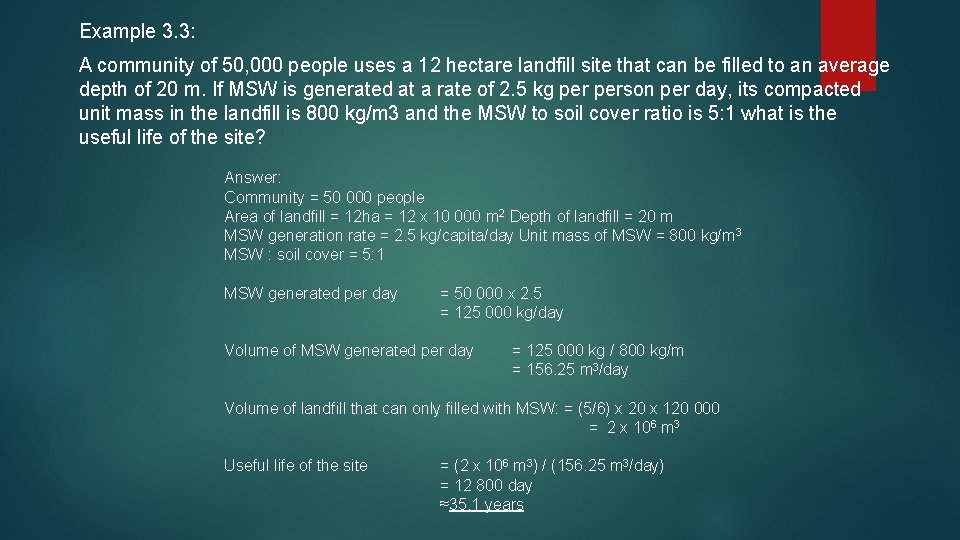
Example 3. 3: A community of 50, 000 people uses a 12 hectare landfill site that can be filled to an average depth of 20 m. If MSW is generated at a rate of 2. 5 kg person per day, its compacted unit mass in the landfill is 800 kg/m 3 and the MSW to soil cover ratio is 5: 1 what is the useful life of the site? Answer: Community = 50 000 people Area of landfill = 12 ha = 12 x 10 000 m 2 Depth of landfill = 20 m MSW generation rate = 2. 5 kg/capita/day Unit mass of MSW = 800 kg/m 3 MSW : soil cover = 5: 1 MSW generated per day = 50 000 x 2. 5 = 125 000 kg/day Volume of MSW generated per day = 125 000 kg / 800 kg/m = 156. 25 m 3/day Volume of landfill that can only filled with MSW: = (5/6) x 20 x 120 000 = 2 x 10⁶ m 3 Useful life of the site = (2 x 10⁶ m 3) / (156. 25 m 3/day) = 12 800 day ≈35. 1 years
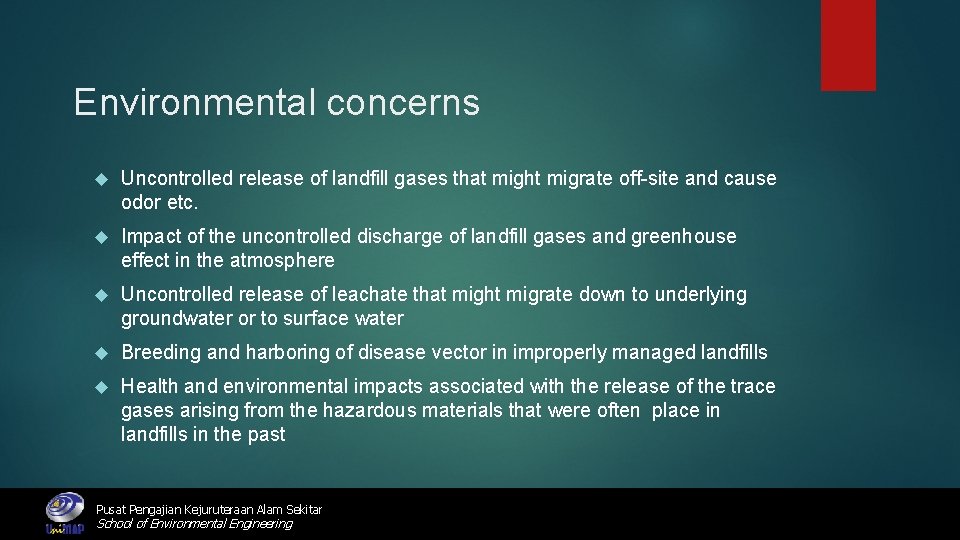
Environmental concerns Uncontrolled release of landfill gases that might migrate off-site and cause odor etc. Impact of the uncontrolled discharge of landfill gases and greenhouse effect in the atmosphere Uncontrolled release of leachate that might migrate down to underlying groundwater or to surface water Breeding and harboring of disease vector in improperly managed landfills Health and environmental impacts associated with the release of the trace gases arising from the hazardous materials that were often place in landfills in the past Pusat Pengajian Kejuruteraan Alam Sekitar School of Environmental Engineering
Landfill planning, design and operation Layout and design Operation and management Biochemical reactions Management of landfill gases Management of leachate Environmental monitoring Landfill closure and post-closure Pusat Pengajian Kejuruteraan Alam Sekitar School of Environmental Engineering
Task for next Lecture/Wishes (Thank You for being my excellent students) * Understanding is the key to knowledge and wisdom.