
Land use and transportation system Piece of land
- Slides: 7
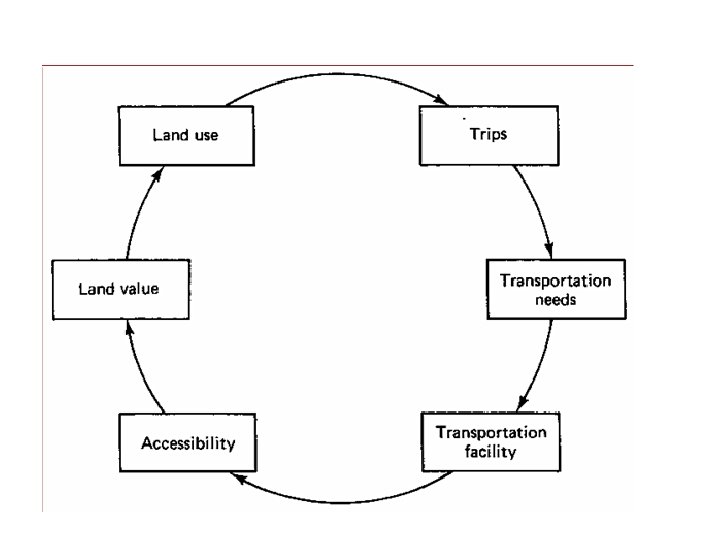
Land use and transportation system: • Piece of land with a particular type of land use produces a certain number of trips. Theses trips indicate the need for transportation facilities in order to serve the trip making demand. In turn the new or improved transportation facilities provide better accessibility. Naturally, the demand to develop this land increases because of its improved accessibility, causing its land value to increase. So Travel patterns are influenced by land use. • Land use models are used to forecast future development patterns as well as the potential for proposed transportation improvement to induce new or accelerated
• The output of land use models typically provides the input to the trip generation step of the travel forecasting model.
Land Use Types Common land use types include: • • Port and terminal: land uses, including waterports, airports, transit stations, etc. • • Industrial: land uses, including general light and heavy industrial, manufacturing, warehousing, etc. • • Residential: land uses, including single-family homes, various types of apartments, senior living, etc. • • Lodging: land uses, including hotels, motels, resorts, etc. • • Recreational: land uses, including various parks, fitness facilities, movie theaters, racetracks, etc. • • Institutional: land uses, including schools, churches, military facilities, museums, libraries, etc.
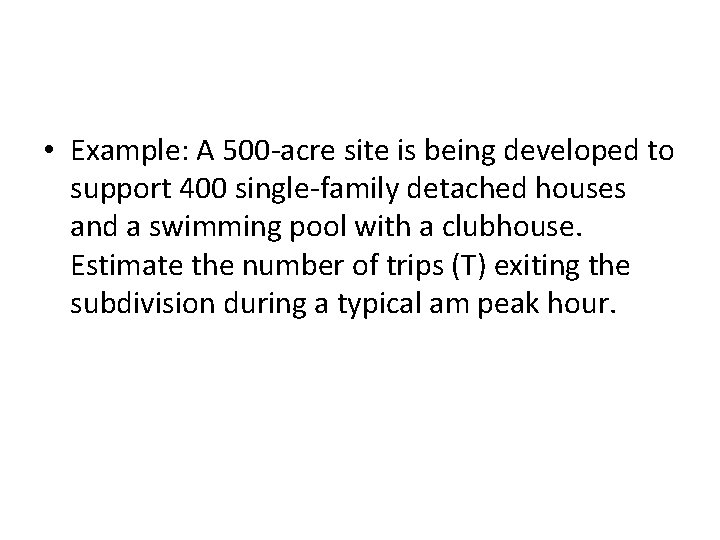
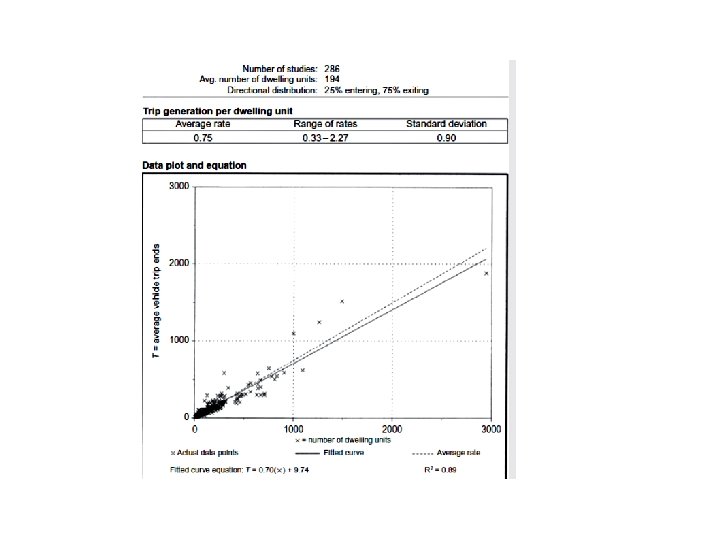
• Example: A 500 -acre site is being developed to support 400 single-family detached houses and a swimming pool with a clubhouse. Estimate the number of trips (T) exiting the subdivision during a typical am peak hour.
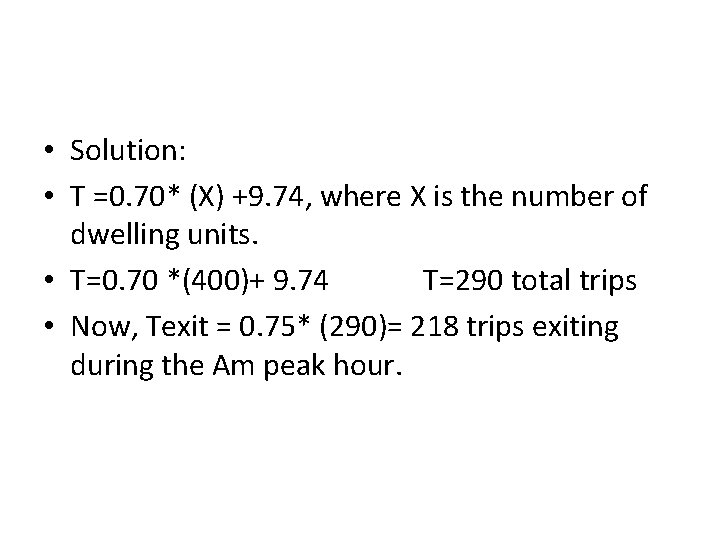
• Solution: • T =0. 70* (X) +9. 74, where X is the number of dwelling units. • T=0. 70 *(400)+ 9. 74 T=290 total trips • Now, Texit = 0. 75* (290)= 218 trips exiting during the Am peak hour.