
Land use and transport Where are we Remember
Land use and transport
Where are we? Remember, there are four exam categories 1. Demand modelling with Logit 2. Assignment 3. LUTI 4. Models and appraisal
Content Demand 1. Demand (contd) Logit model (repetition) Nested logit model Trip generation, Trip distribution and modal split Locational choice modelling (car ownership)
Assignment 2. Assignment Dec 4

Content 3. LUTI • This is the topic today!

Content 3. LUTI • This is the topic today! • Chapter 5 in v. W book (also recommend ch 9 on accessibility)
Content Modelling and Appraisal 4. Modelling and Appraisal Other models than Logit Car ownership modelling Scheduling models (Mon Dec 9) Appraisal: What is it? What is it, really? Critique and defense (more on Dec 16)
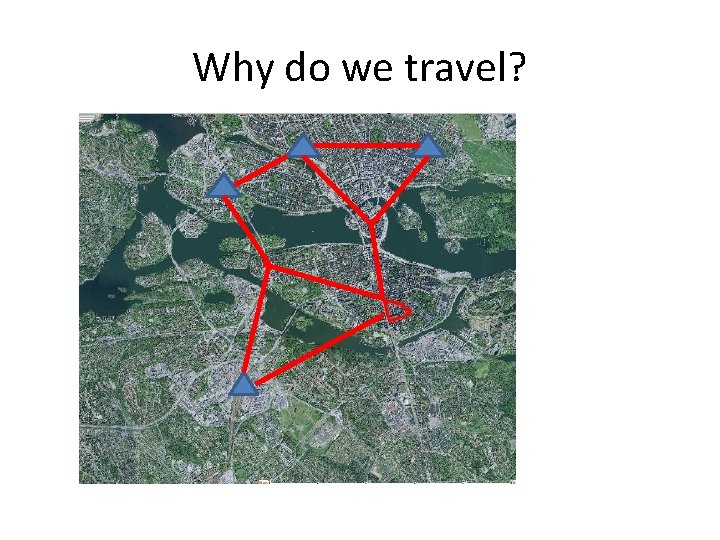
Why do we travel?
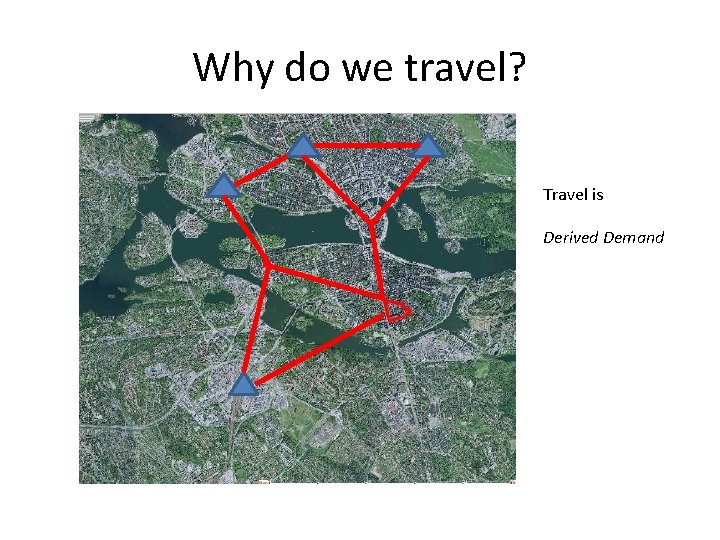
Why do we travel? Travel is Derived Demand
Derived demand ”The theory of utilitarian travel demand”
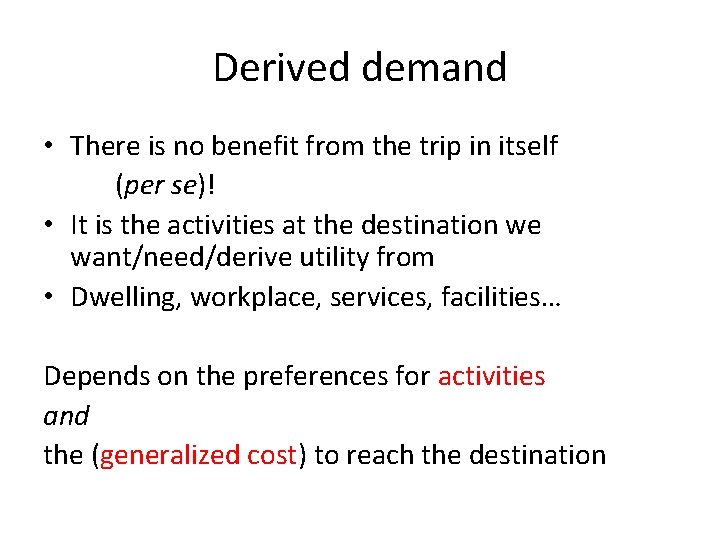
Derived demand • There is no benefit from the trip in itself (per se)! • It is the activities at the destination we want/need/derive utility from • Dwelling, workplace, services, facilities… Depends on the preferences for activities and the (generalized cost) to reach the destination
Derived demand This is really the central core: Depends on the preferences for activities and the (generalized cost) to reach the destination
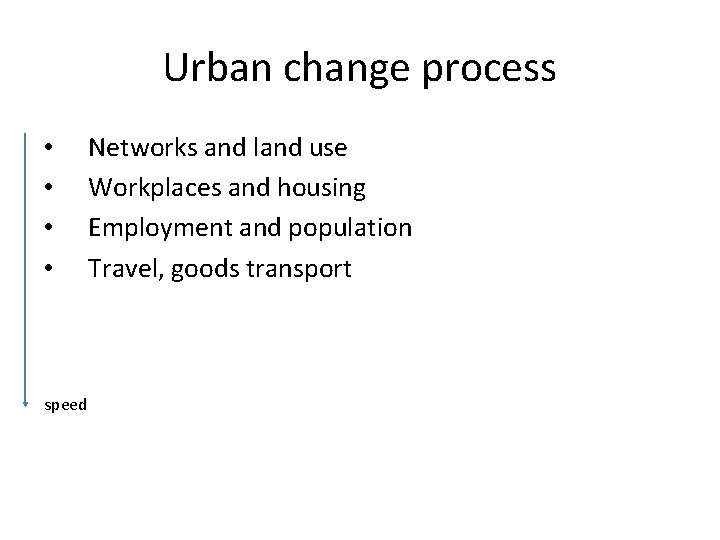
Urban change process • • speed Networks and land use Workplaces and housing Employment and population Travel, goods transport
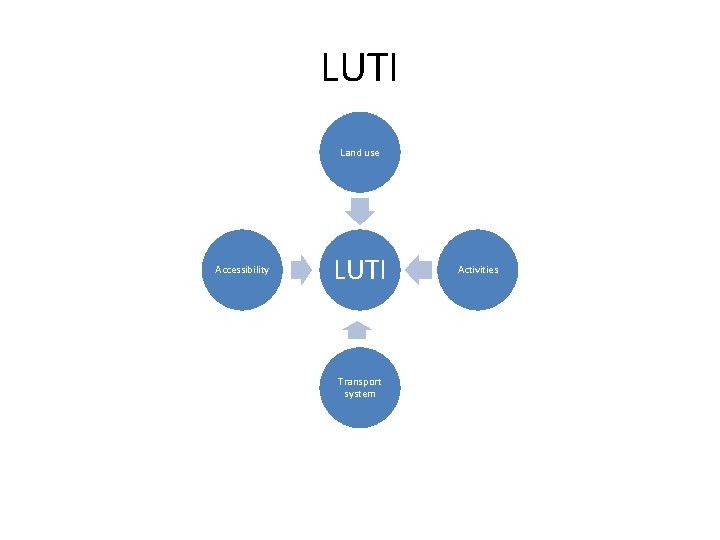
LUTI Land use Accessibility LUTI Transport system Activities
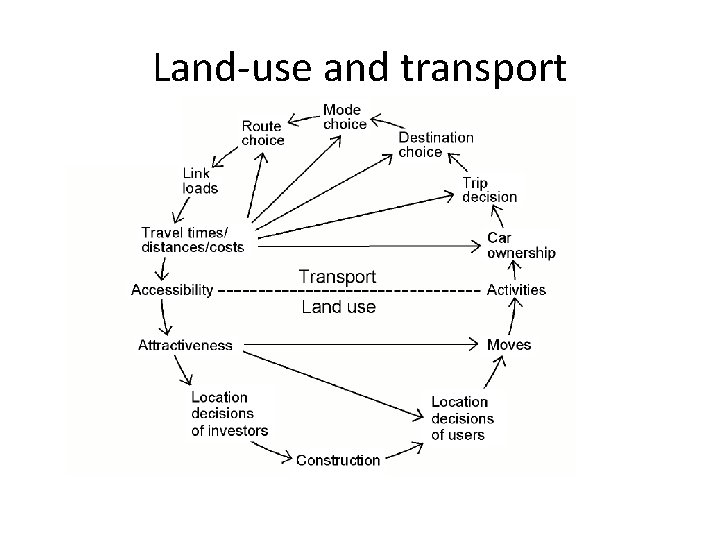
Land-use and transport
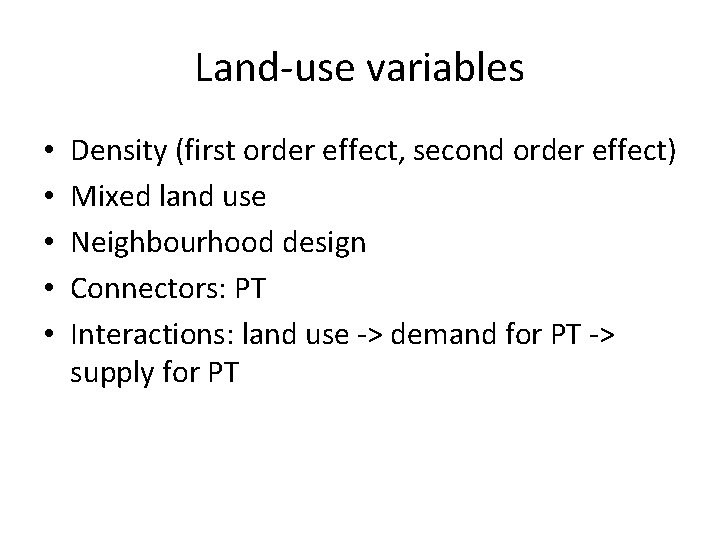
Land-use variables • • • Density (first order effect, second order effect) Mixed land use Neighbourhood design Connectors: PT Interactions: land use -> demand for PT -> supply for PT
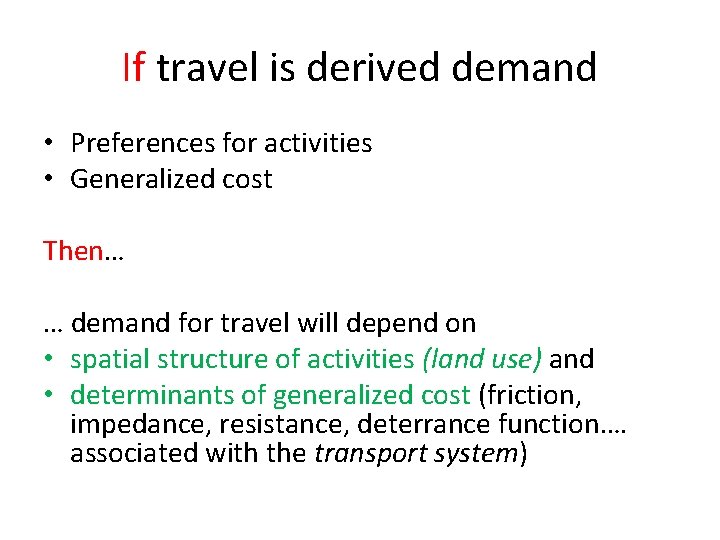
If travel is derived demand • Preferences for activities • Generalized cost Then… … demand for travel will depend on • spatial structure of activities (land use) and • determinants of generalized cost (friction, impedance, resistance, deterrance function…. associated with the transport system)
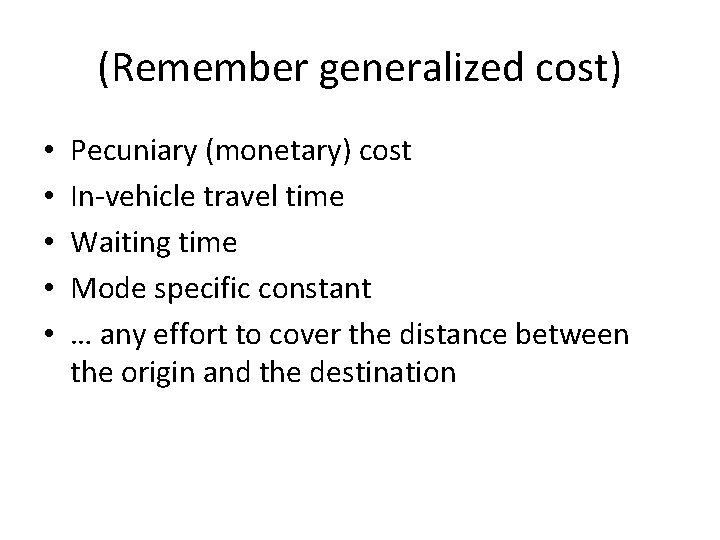
(Remember generalized cost) • • • Pecuniary (monetary) cost In-vehicle travel time Waiting time Mode specific constant … any effort to cover the distance between the origin and the destination
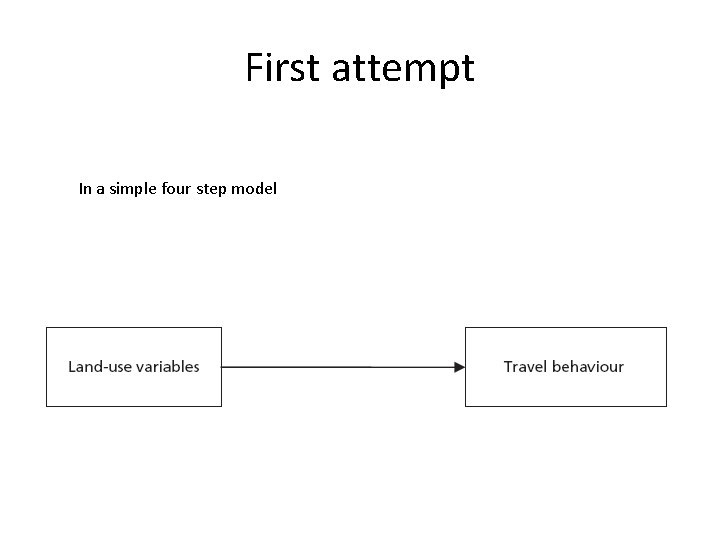
First attempt In a simple four step model
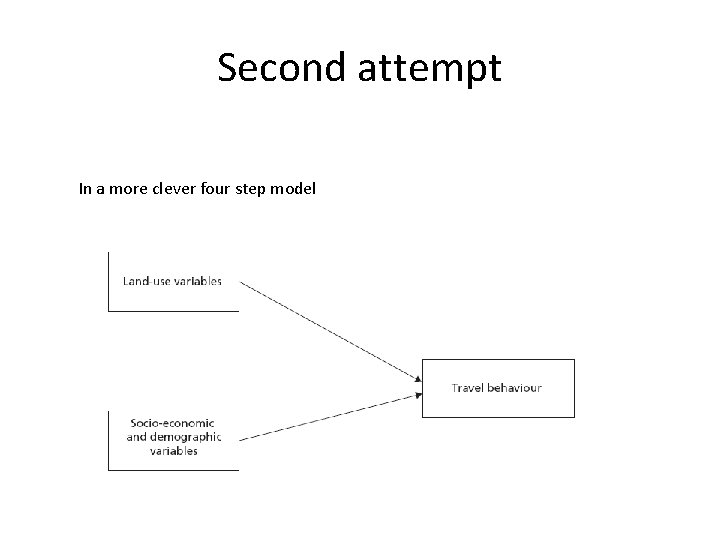
Second attempt In a more clever four step model
Travel demand the 3 Ds • Density • Diversity • Design ”Elasticities are moderate to modest, but certainly not inconsequential” Cervero and Kockelman (1998)
Self selection problem • Attitudes are important for travel behaviour (some would call this preferences) • Attitudes are important for locational choice • Therefore, it is difficult to disentangle what is what! Locational choice: residential choice, choice of workplace location, choice of shopping destination, or any other destination/activity
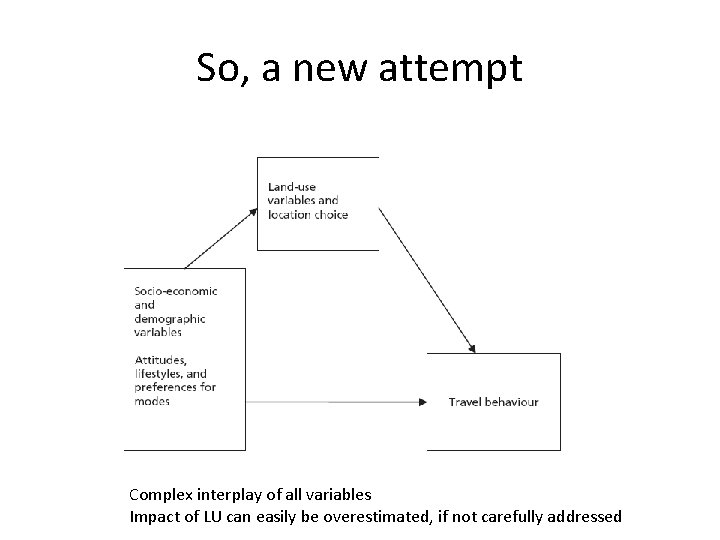
So, a new attempt Complex interplay of all variables Impact of LU can easily be overestimated, if not carefully addressed
A sustainability paradox • Land-use policies will have only a minor effect as a measure for increased sustainability • Land-use pattern is a dominating factor with a huge impact of sustainability
So why the different conclusions? • • • Different (some bad) research methods Different levels Different geographical scales Time horizon Differences between countries Impact of policy
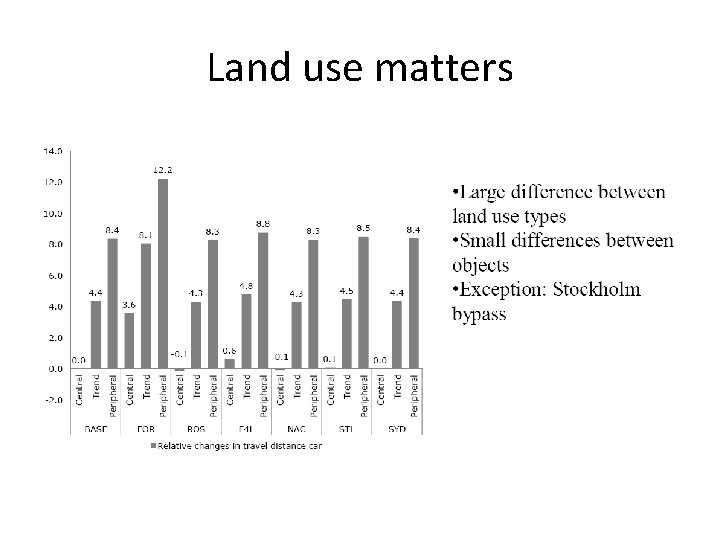
Land use matters
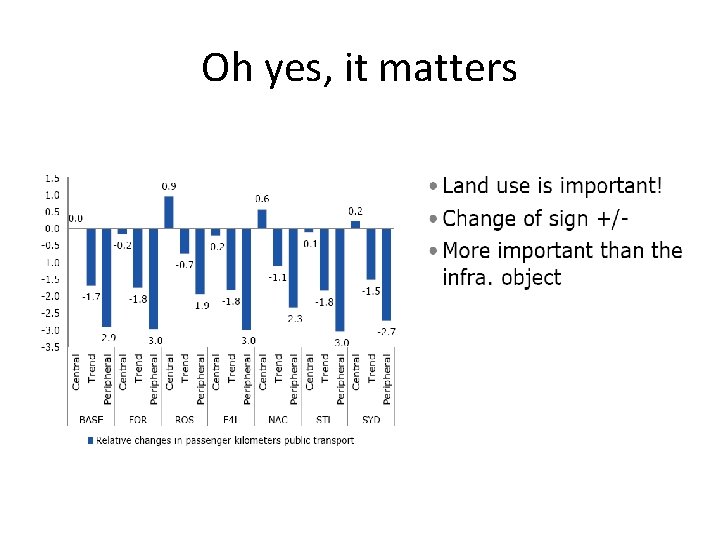
Oh yes, it matters
Evaluation 1. Indicators 2. Evaluation methods
1. Indicators (i) Accessibility To what extent does the spatial structure and the transport system enable us to travel between locations we want to visit and thereby participate in the activities desired? Accessibility measures based on • The spatial structure and transport network only • … or also based on people’s revealed preferences (behavior)
1. Indicators (i) Accessibility measures based on • The spatial structure and transport network only (most measures used in geography, and travel time indicators) • … or also based on people’s revealed preferences (behavior) (so-called utility based indicators, used in transport modelling and economics)
1. Indicators (ii) Saftey (iii) Environmental impact indicators (iv) Livable streets (v) Health (vi) Non-use benefits: option value …. (See PROSPECTS Methodological Guidebook 3. 3)
2. Evaluation methods (i) CBA (ii) MCA
Relationship between consumer surplus and accessibility Consumer surplus can be measured in terms of the log sum formula It captures both the benefits due to GC, and the benefits derived from the activities in the destinations!
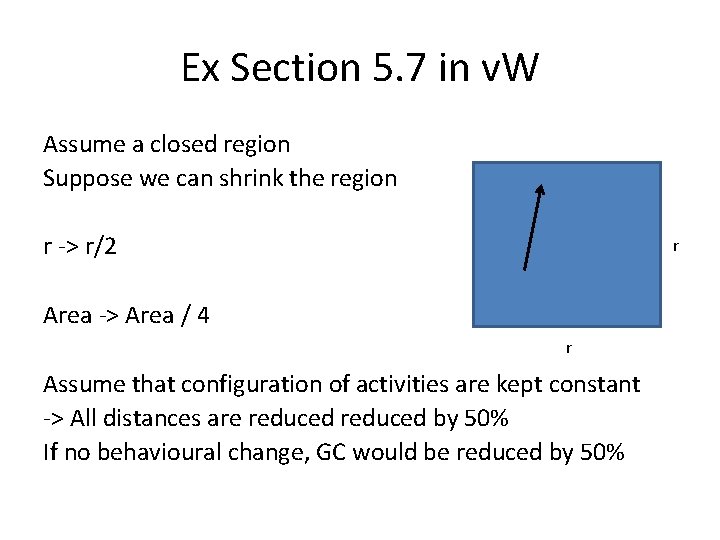
Ex Section 5. 7 in v. W Assume a closed region Suppose we can shrink the region r -> r/2 r Area -> Area / 4 r Assume that configuration of activities are kept constant -> All distances are reduced by 50% If no behavioural change, GC would be reduced by 50%
Ex Section 5. 7 in v. W All distances are reduced by 50% But now we can travel more! Suppose that CTTB hypothesis holds By trading off travel time disutility against activity utilities, r remote people can choose more destinations, or more destinations In the end, no change in total travel! But certainly, there accessibility benefits! r
Ex Section 5. 7 in v. W r r (Se PMG chapter 9. 1 -9. 4, the latter is rather technical, not included in course literature)
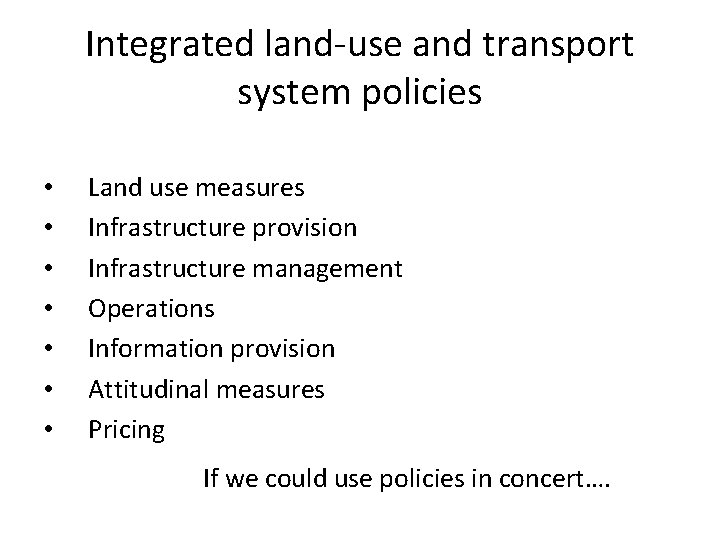
Integrated land-use and transport system policies • • Land use measures Infrastructure provision Infrastructure management Operations Information provision Attitudinal measures Pricing If we could use policies in concert….
Take-aways • Transport is derived demand (surprice!) • Travel demand will depend on spatial structure and generalized cost (transport system) • Discuss different time scales at operation • Discussion about land-use and transport demand interaction wrt impacts, in particular the ’LUTI sustainability paradox’, and reconciliation efforts • Discuss the concept of accessibility • Discuss the potential of integrated Land-use and transport policies
- Slides: 38