
Land Use and Development Regulations Our object in
Land Use and Development Regulations Our object in the construction of the state is the greatest happiness of the whole, and not that of any one class. - Plato The building of cities is one of man's greatest achievements. - Edmund Bacon Civil Engineering and Architecture © 2010 Project Lead The Way, Inc.
Land Use Planning (Urban Planning) Planning for the long-term growth of an area Purpose: – – – Preserve public health, safety, and welfare Maintain compatible development within an area Provide adequate air, light, access, and open space Protect the natural environment and historic resources Minimize traffic congestion Enhance the streetscape and pedestrian environment Regulated by municipalities (towns, cities, counties)
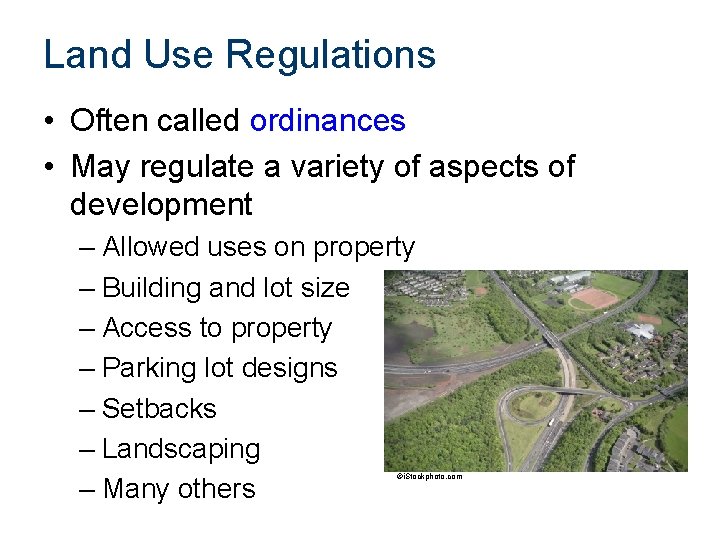
Land Use Regulations • Often called ordinances • May regulate a variety of aspects of development – Allowed uses on property – Building and lot size – Access to property – Parking lot designs – Setbacks – Landscaping – Many others ©i. Stockphoto. com
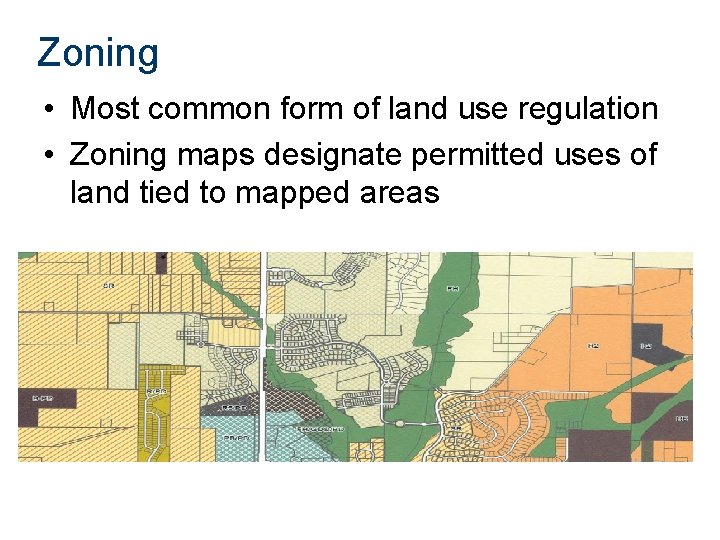
Zoning • Most common form of land use regulation • Zoning maps designate permitted uses of land tied to mapped areas
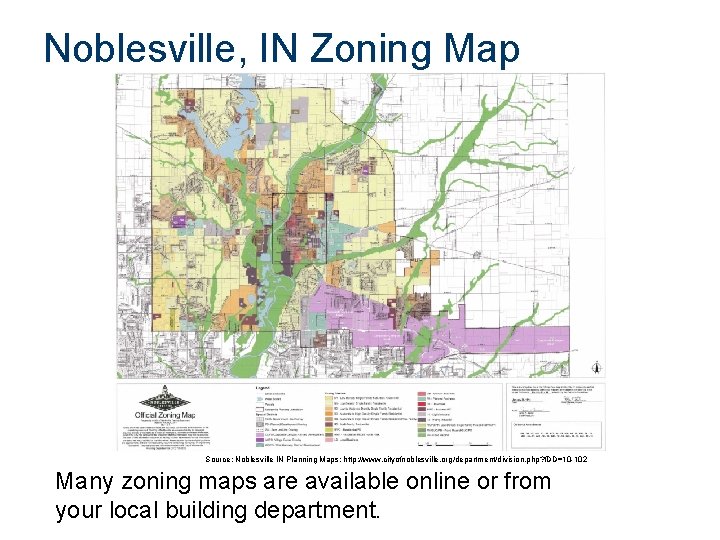
Noblesville, IN Zoning Map Source: Noblesville IN Planning Maps: http: //www. cityofnoblesville. org/department/division. php? f. DD=10 -102 Many zoning maps are available online or from your local building department.
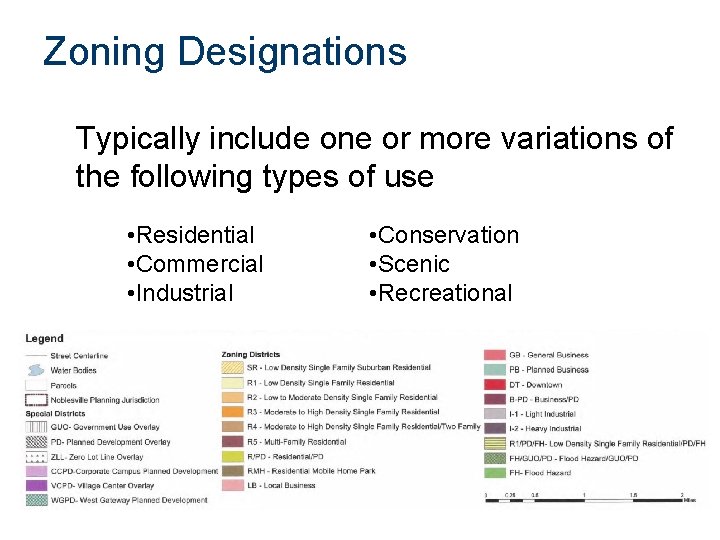
Zoning Designations Typically include one or more variations of the following types of use • Residential • Commercial • Industrial • Conservation • Scenic • Recreational
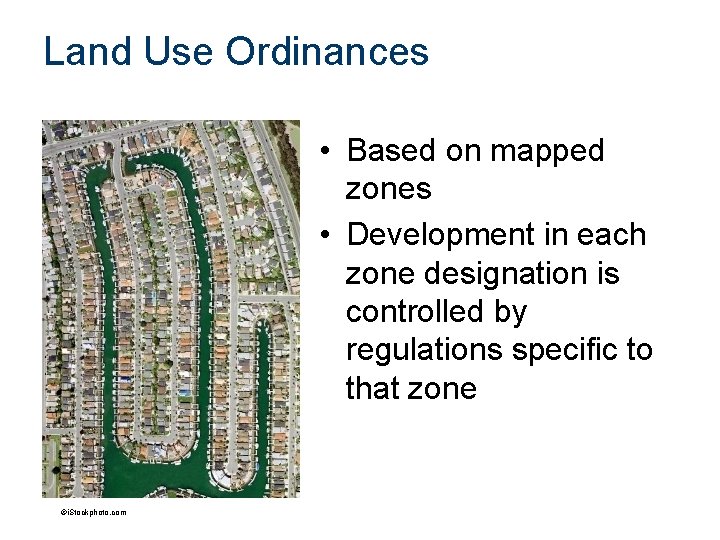
Land Use Ordinances • Based on mapped zones • Development in each zone designation is controlled by regulations specific to that zone ©i. Stockphoto. com
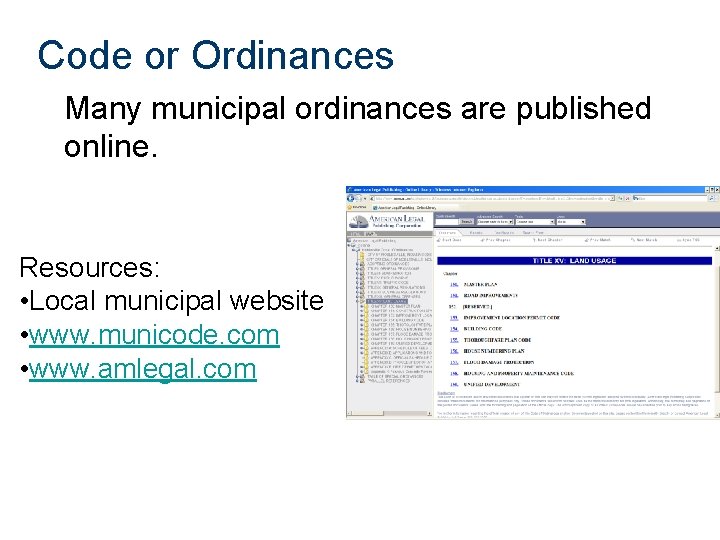
Code or Ordinances Many municipal ordinances are published online. Resources: • Local municipal website • www. municode. com • www. amlegal. com
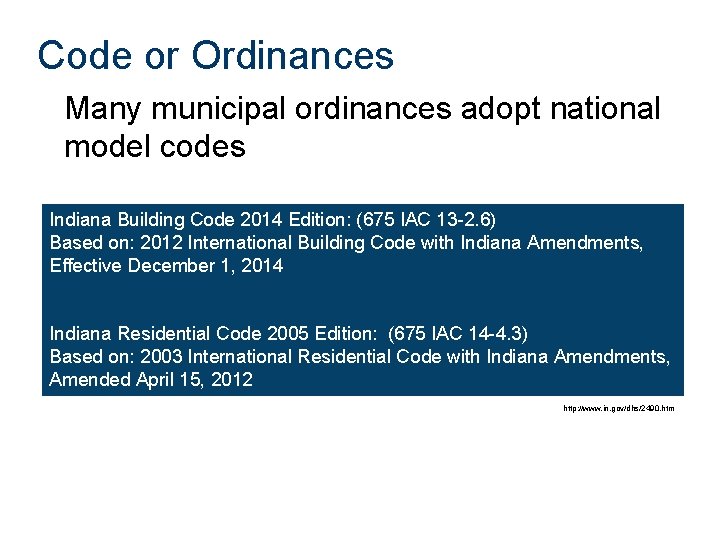
Code or Ordinances Many municipal ordinances adopt national model codes Indiana Building Code 2014 Edition: (675 IAC 13 -2. 6) Based on: 2012 International Building Code with Indiana Amendments, Effective December 1, 2014 Indiana Residential Code 2005 Edition: (675 IAC 14 -4. 3) Based on: 2003 International Residential Code with Indiana Amendments, Amended April 15, 2012 http: //www. in. gov/dhs/2490. htm
International Building Code (IBC) • Local municipalities usually adopt the IBC but may publish their own modifications. • Modifications and specifications are generally published on the Internet for all to reference. • Engineering firms have at least one copy to use for continual reference.
IBC Classification To properly use the IBC, a building design must be classified in two important ways. • Occupancy—The building is classified in the group that its occupancy most resembles. • Construction Type—The five construction types categorize buildings constructed of materials with varying degrees of combustibility. The primary purpose of these classifications is fire safety.
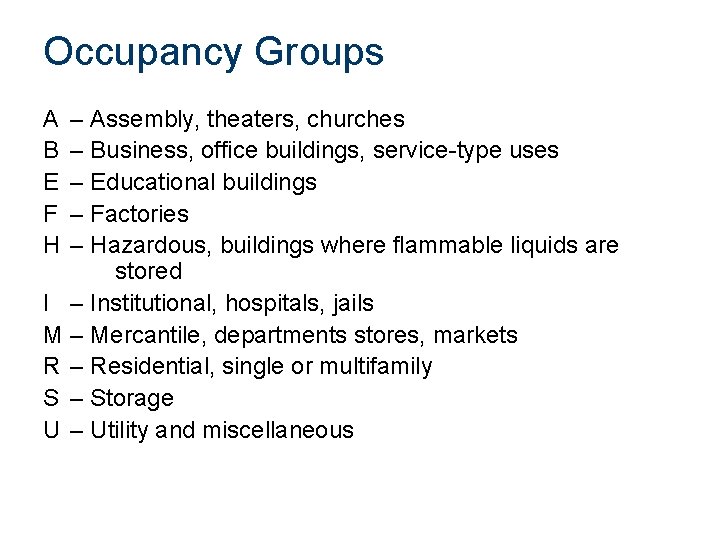
Occupancy Groups A B E F H – Assembly, theaters, churches – Business, office buildings, service-type uses – Educational buildings – Factories – Hazardous, buildings where flammable liquids are stored I – Institutional, hospitals, jails M – Mercantile, departments stores, markets R – Residential, single or multifamily S – Storage U – Utility and miscellaneous
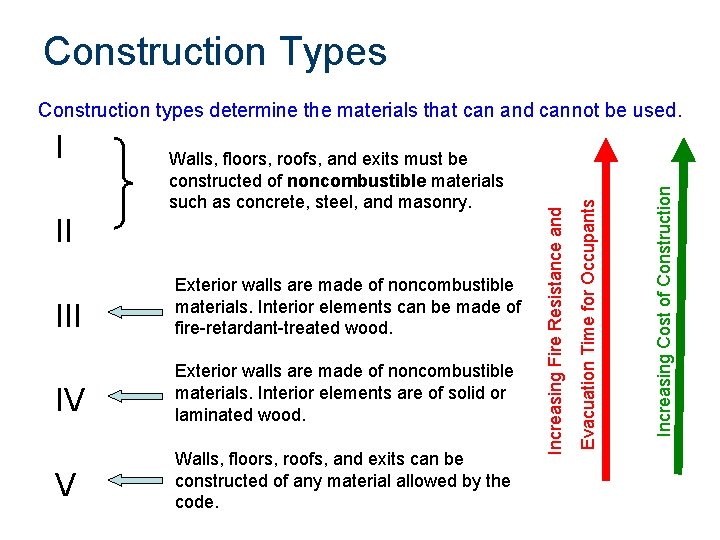
Construction Types II III Exterior walls are made of noncombustible materials. Interior elements can be made of fire-retardant-treated wood. IV Exterior walls are made of noncombustible materials. Interior elements are of solid or laminated wood. V Walls, floors, roofs, and exits can be constructed of any material allowed by the code. Increasing Cost of Construction Walls, floors, roofs, and exits must be constructed of noncombustible materials such as concrete, steel, and masonry. Evacuation Time for Occupants I Increasing Fire Resistance and Construction types determine the materials that can and cannot be used.
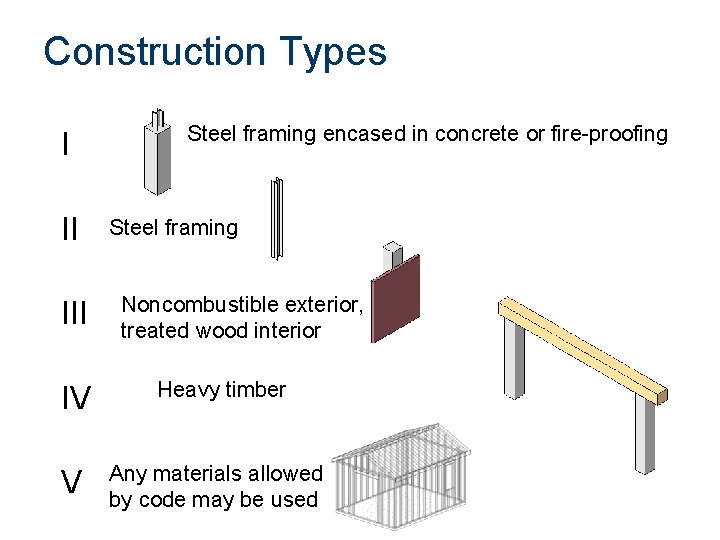
Construction Types I II III Steel framing encased in concrete or fire-proofing Steel framing Noncombustible exterior, treated wood interior IV Heavy timber V Any materials allowed by code may be used
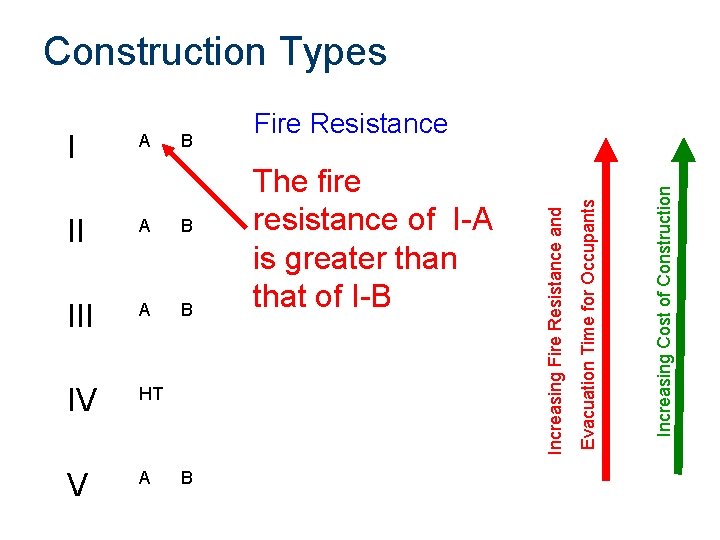
Construction Types B III A B IV HT V A B The fire resistance of I-A is greater than that of I-B Increasing Cost of Construction A Fire Resistance Evacuation Time for Occupants II B Increasing Fire Resistance and I A
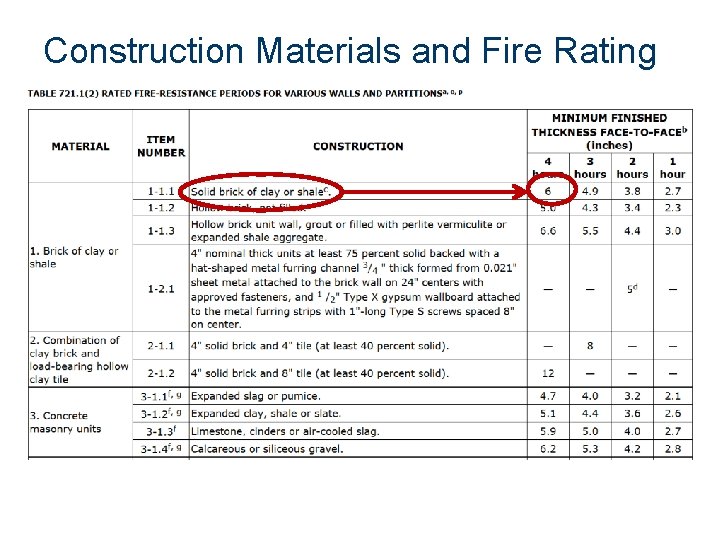
Construction Materials and Fire Rating
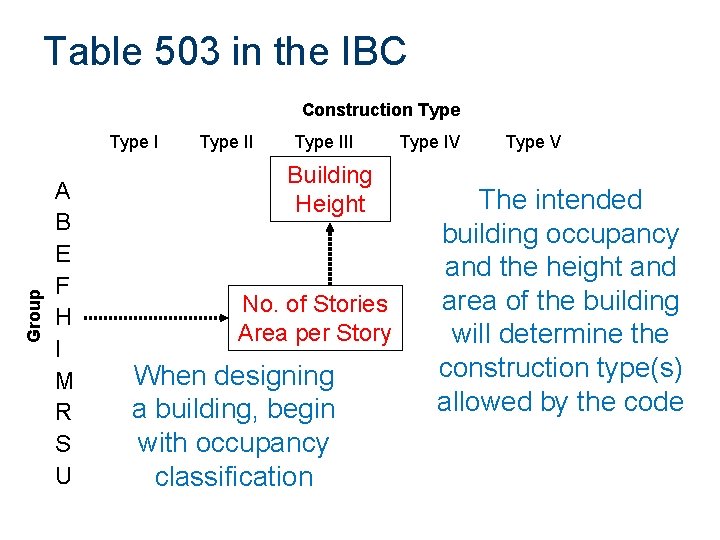
Table 503 in the IBC Construction Type Group Type I A B E F H I M R S U Type III Building Height No. of Stories Area per Story When designing a building, begin with occupancy classification Type IV Type V The intended building occupancy and the height and area of the building will determine the construction type(s) allowed by the code

Image Resources • City of Noblesville, IN. Retrieved March 13, 2015 from http: //www. cityofnoblesville. org/department/division. php? f. DD=10 -102 • i. Stockphotos. com
- Slides: 18