
Land resources Land resources Land as a resource


- Slides: 65
Land resources
Land resources Land as a resource - Landforms such as • • • hills, valleys, plains, river basins and wetlands include different resource generating areas that the people living in them depend on.
Superstition or way which is needed • Many traditional farming societies had ways of preserving areas from which they used resources. • Eg. In the ‘sacred groves’ of the Western Ghats, requests to the spirit of the Grove for permission to cut a tree, or extract a resource, were accompanied by simple rituals. • The outcome of a chance fall on one side or the other of a stone balanced on a rock gave or withheld permission. The request could not be repeated for a specified period. • If land is utilized carefully it can be considered a renewable resource.
Shifting from renewable to non-renewable • The roots of trees and grasses bind the soil. • If forests are depleted, or grasslands overgrazed, the land becomes unproductive and wasteland is formed. • Intensive irrigation leads to water logging and salination, on which crops cannot grow. • Land is also converted into a non-renewable resource when highly toxic industrial and nuclear wastes are dumped on it. • Land – finite natural resources. • While mankind has learnt to adapt his lifestyle to various ecosystems world over, he cannot live comfortably for instance on polar ice caps, on under the sea, or in space in the foreseeable future.
Uses of land • Man needs land for • • • building homes, cultivating food, maintaining pastures for domestic animals, developing industries to provide goods supporting the industry by creating towns and cities. • Equally importantly, man needs to protect wilderness area in forests, grasslands, wetlands, mountains, coasts, etc. to protect our vitally valuable biodiversity.
Rational to careful planning • One can develop most of these different types of land uses almost anywhere, • but Protected Areas (National Park’s and Wildlife Sanctuaries) can only be situated where some of the natural ecosystems are still undisturbed. • These Protected Areas are important aspects of good landuse planning.
Land Degradation • Every year, between 5 to 7 million hectares of land worldwide is added to the existing degraded farmland. • Farmland is under threat due to • more and more intense utilisation. • When soil is used more intensively by farming, it is eroded more rapidly by wind and rain. • Over irrigating farmland leads to salinization, as evaporation of water brings the salts to the surface of the soil on which crops cannot grow. • Over irrigation also creates water logging of the topsoil so that crop roots are affected and the crop deteriorates. • The use of more and more chemical fertilizers poisons the soil so that eventually the land becomes unproductive. • As urban centers grow and industrial expansion results into reduction in agricultural land forests leads to serious loss and has long term ill effects on human civilisation.
Soil erosion • The characteristics of natural ecosystems such as forests and grasslands depend on the type of soil. • Various types of soil - wide variety of crops. • The misuse of an ecosystem leads to loss of valuable soil through erosion by the monsoon rains and, to a smaller extent, by wind. • The roots of trees – glue for soil so Deforestation leads to rapid soil erosion. • Soil is washed into streams and is transported into rivers and finally lost to the sea. • The process is more evident in areas where deforestation has led to erosion on steep hill slopes as in the Himalayas and in the Western Ghats. • These areas are called ‘ecologically sensitive areas’ or ESAs.
Steps needs to be taken • To prevent the loss of millions of tons of valuable soil every year, it is essential to preserve what remains of our natural forest cover. • It is equally important to reforest denuded areas. • The linkage between the existence of forests and the presence of soil is greater than the forest’s physical soil binding function alone. • The soil is habitat for soil micro-organisms, fungi, worms and insects, • Which help to recycle nutrients in the system. • Further losses of our soil wealth will impoverish our country and reduce its capacity to grow enough food in future.
Case study • Selenium – Punjab • In 1981 -82, farmers from Hoshirapur and Nawanshehar Districts approached scientists of the Punjab Agricultural University (PAU), Ludhiana, as wheat crops had turned white. • Soil analysis indicated selenium (Se) levels in the area were above toxic limits. • Se is a naturally occurring trace element, essential for animal and human health, but the gap between requirement and excess is narrow. • Soils containing 0. 5 microgrammes (ug) of Se per kg or more are injurious to health. In some areas of Punjab, Se levels ranges from 0. 31 ug/kg to 4. 55 ug/kg. • Rice cultivation requires the presence of standing water. Being highly soluble, Se dissolves and comes to the surface. The water then evaporates leaving the Se behind.
CASE STUDY • Selenium – Punjab • In 1981 -82, farmers from Hoshirapur and Nawanshehar Districts approached scientists of the Punjab Agricultural University (PAU), Ludhiana, as wheat crops had turned white. Soil analysis indicated selenium (Se) levels in the area were above toxic limits. Se is a naturally occurring trace element, essential for animal and human health, but the gap between requirement and excess is narrow. Soils containing 0. 5 microgrammes (ug) of Se per kg or more are injurious to health. In some areas of Punjab, Se levels ranges from 0. 31 ug/kg to 4. 55 ug/kg. Rice cultivation requires the presence of standing water. Being highly soluble, Se dissolves and comes to the surface. The water then evaporates leaving the Se behind.
y g r e n E s e c r u o s e r
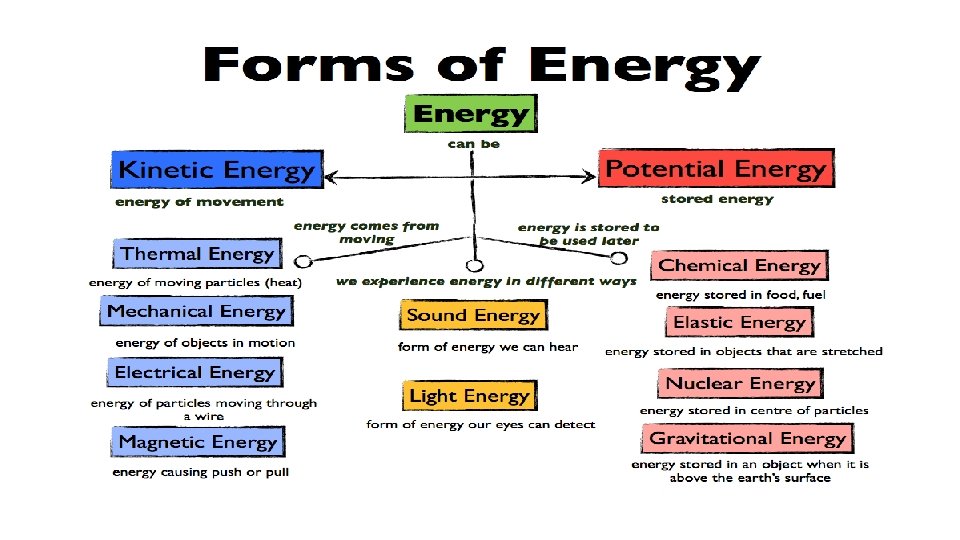
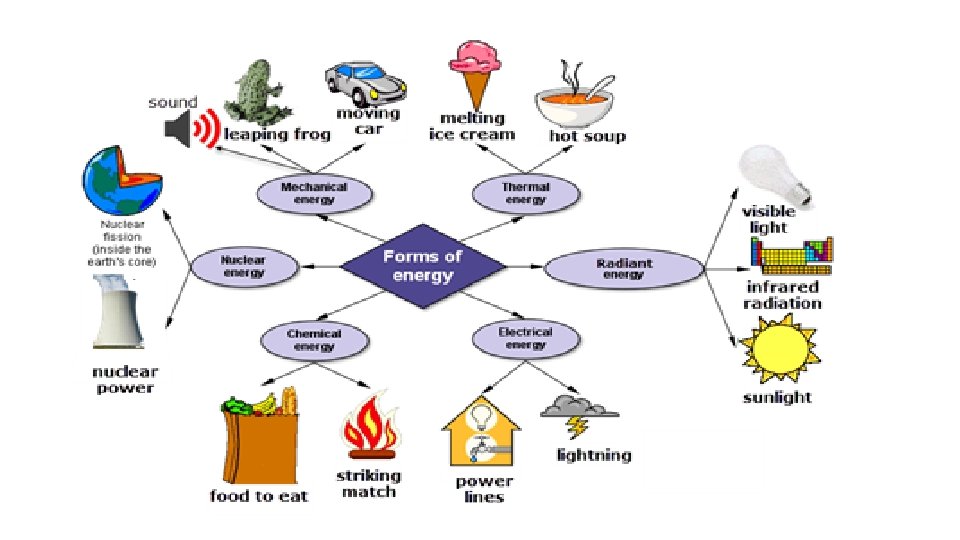
Energy • Energy is defined by physicists as the capacity to do work. • Energy is found on our planet in a variety of forms, • • • Kinetic energy Potential energy Rotational energy Vibration energy Mechanical energy Thermal energy • some of which are immediately useful to do work, while others require a process of transformation.
Sun – primary source of energy • We use it directly for its warmth and through various natural processes that provide us with food, water, fuel and shelter. • The sun’s rays power the growth of plants, which form our food material, give off oxygen which we breathe in and take up carbon dioxide that we breathe out. • Energy from the sun evaporates water from oceans, rivers and lakes, to form clouds that turn into rain. • Today’s fossil fuels were once the forests that grew in prehistoric times due to the energy of the sun.
Types of energy and its application • Chemical energy, contained in chemical compounds is released when they are broken down by animals in the presence of oxygen. • Electrical energy produced in several ways, powers transport, artificial lighting, agriculture and industry. • Nuclear energy is held in the nucleus of an atom and is now harnessed to develop electrical energy. • We use energy for • • household use, agriculture, production of industrial goods and for running transport.
Example – agriculture • Modern agriculture require a lot of fertilizers and to produce it • We need large industrial units which will consume lots of energy in • • Power generation Transportation of raw material and product Processing Manufacturing of machine
No ‘risk free’ energy • No energy related technology is completely ‘risk free’. • Unlimited demands on energy increase this risk factor many fold. • All energy use creates heat and contributes to atmospheric temperature. • Many forms of energy release carbon dioxide and lead to global warming. • Nuclear energy plants have caused enormous losses to the environment due to the leakage of nuclear material. • The inability to effectively manage and safely dispose of nuclear waste is a serious global concern.
Scarcity vs overuse • At present almost 2 billion people worldwide have no access to electricity at all. • While more people will require electrical energy, those who do have access to it continue to increase their individual requirements. • In addition, a large proportion of energy from electricity is wasted during transmission as well as at the user level. • It is broadly accepted that long-term trends in energy use should be towards a cleaner global energy system that is less carbon intensive and less reliant on finite non-renewable energy sources. • Overuse will lead to scarcity in future. • It is estimated that the currently used methods of using renewable energy and non renewable fossil fuel sources together will be insufficient to meet foreseeable global demands for power generation beyond the next 50 to 100 years.
Growing energy needs • Energy has always been closely linked to man’s economic growth and development. • Present strategies for development that have focused on rapid economic growth have used energy utilization as an index of economic development. • This index however, does not take into account the long-term ill effects on society of excessive energy utilisation
Increase in use of energy • Between 1950 and 1990, the world’s energy needs increased four fold. • The world’s demand for electricity has doubled over the last 22 years! • The world’s total primary energy consumption in 2000 was 9096 million tons of oil. • A global average per capita that works out to be 1. 5 tons of oil. • Electricity is at present the fastest growing form of end-use energy worldwide. • By 2005 the Asia-Pacific region is expected to surpass North America in energy consumption and by 2020 is expected to consume some 40% more energy than North America.
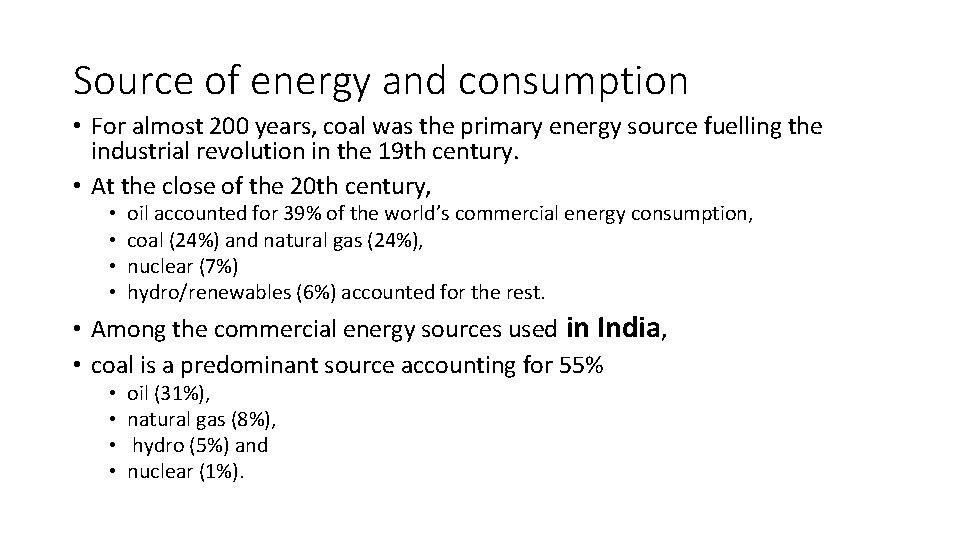
Source of energy and consumption • For almost 200 years, coal was the primary energy source fuelling the industrial revolution in the 19 th century. • At the close of the 20 th century, • • oil accounted for 39% of the world’s commercial energy consumption, coal (24%) and natural gas (24%), nuclear (7%) hydro/renewables (6%) accounted for the rest. • Among the commercial energy sources used in India, • coal is a predominant source accounting for 55% • • oil (31%), natural gas (8%), hydro (5%) and nuclear (1%).
Types of energy • There are three main types of energy • non-renewable • renewable; and • nuclear energy. • However, this classification is inaccurate because several of the renewable sources, if not used ‘sustainably’, can be depleted more quickly than they can be renewed.
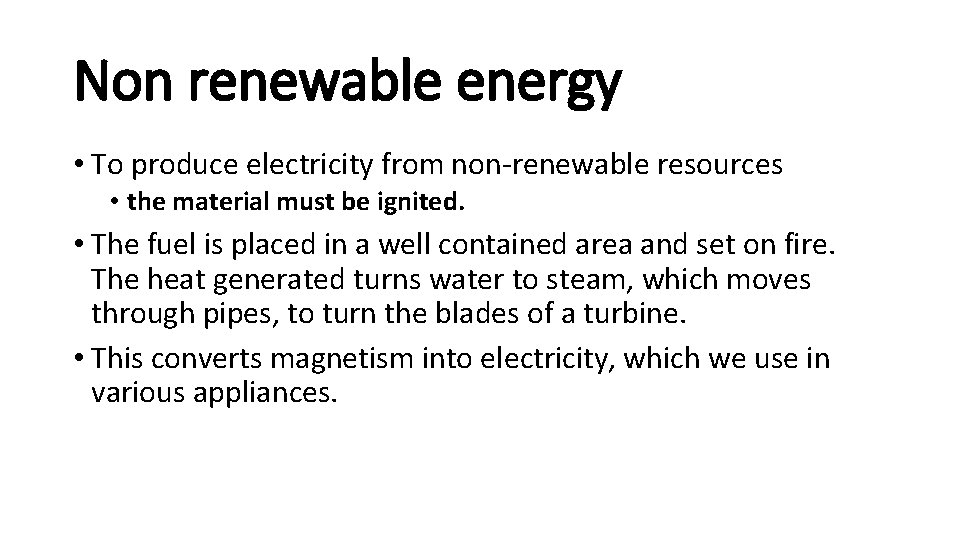
Non renewable energy • To produce electricity from non-renewable resources • the material must be ignited. • The fuel is placed in a well contained area and set on fire. The heat generated turns water to steam, which moves through pipes, to turn the blades of a turbine. • This converts magnetism into electricity, which we use in various appliances.
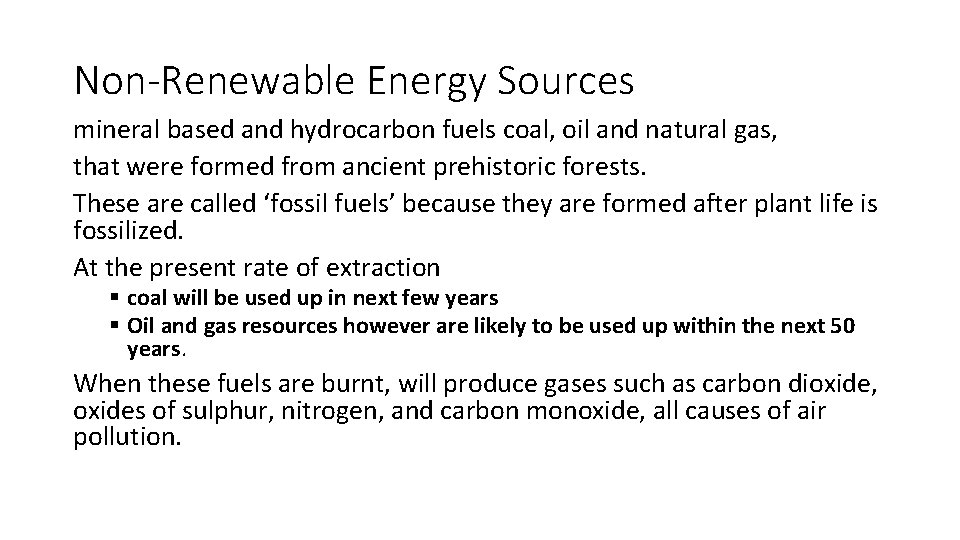
Non-Renewable Energy Sources mineral based and hydrocarbon fuels coal, oil and natural gas, that were formed from ancient prehistoric forests. These are called ‘fossil fuels’ because they are formed after plant life is fossilized. At the present rate of extraction § coal will be used up in next few years § Oil and gas resources however are likely to be used up within the next 50 years. When these fuels are burnt, will produce gases such as carbon dioxide, oxides of sulphur, nitrogen, and carbon monoxide, all causes of air pollution.
Effects and results lung problems in an enormous number of people all over the world, have also affected buildings like the Taj Mahal killed many forests and lakes due to acid rain Many of these gases also act like a green house letting sunlight in and trapping the heat inside. • This is leading to global warming, which resulted in • • • a raise in global temperature, increased drought in some areas, floods in other regions, the melting of icecaps, and a rise in sea levels, which is slowly submerging coastal belts all over the world Warming the seas also leads to the death of sensitive organisms such as coral.
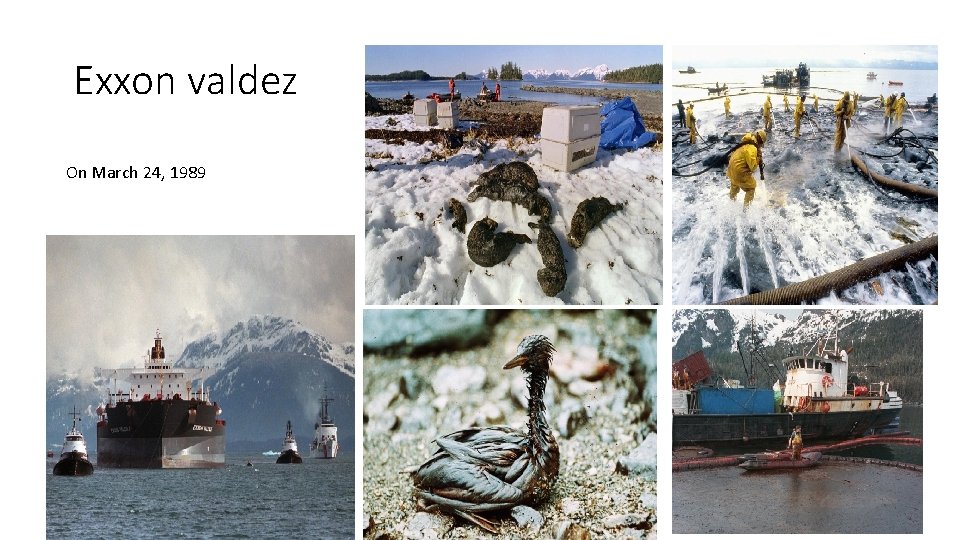
Oil and its environmental impacts • India’s oil reserves which are being used at present lie off the coast of Mumbai and in Assam. • Most of our natural gas is linked to oil and, because there is no distribution system, it is just burnt off. • This wastes nearly 40% of available gas. • The processes of oil and natural gas - drilling, processing, transport and utilisation • Serious environmental consequences - leaks in air and water, accidental fires • During refining oil, solid waste such as salts and grease are produced which also damage the environment. • Oil slicks are caused at sea from offshore oil wells, cleaning of oil tankers and due to shipwrecks. • The most well-known disaster occurred when the Exxon Valdez sank in 1989 and birds, sea otters, seals, fish and other marine life along the coast of Alaska was seriously affected.
Exxon valdez On March 24, 1989
Impact on environment • Oil powered vehicles emit • • • carbon dioxide sulphur dioxide, nitrous oxide, carbon monoxide and particulate matter • which is a major cause of air pollution especially in cities with heavy traffic density. • Leaded petrol, leads to neuro damage and reduces attention spans. • Solution - add catalytic converters on all the new cars • Unleaded fuel - contains benzene and butadene carcinogenic compounds. • Delhi, which used to have serious smog problems due to traffic, has been able to reduce this health hazard by changing a large number of its vehicles to CNG, which contains methane
CASE STUDY • Oil related disasters • During the Gulf War, oil installations burned for weeks polluting the air with poisonous gasses. • The fires wasted 5 million barrels of oil and produced over a million tons of airborne pollutants, including sulphur dioxide, a major cause of acid rain. • The gases moved to a height of 3 km and spread as far as India. Oil also polluted coastlines, killing birds and fish.
Coal and its environmental impacts • Coal - world’s single largest contributor of green house gases and is one of the most important causes of global warming. • Many coal-based power generation plants are not fitted with devices such as electrostatic precipitators to reduce emissions of suspended particulate matter (SPM) which is a major contributor to air pollution. • Burning coal also produces oxides of sulphur and nitrogen which, combined with water vapour, lead to ‘acid rain’. • This kills forest vegetation, and damages architectural heritage sites, pollutes water and affects human health. • Thermal power stations that use coal produce waste in the form of ‘fly ash’. Large dumps are required to dispose off this waste material, while efforts have been made to use it for making bricks. • The transport of large quantities of fly ash and its eventual dumping are costs that have to be included in calculating the cost-benefits of thermal power.
Renewable energy • Constantly replacable • Less polluting • Examples - hydropower, solar, wind, and geothermal (energy from the heat inside the earth). • We also get renewable energy from burning trees and even garbage as fuel and processing other plants into biofuels.
Dream which may come true • One day, • All our homes may get their energy from the sun or the wind. • Our car’s gas tank will use biofuel. • Our garbage might contribute to your city’s energy supply. • Renewable energy technologies will improve the efficiency and cost of energy systems. • We may reach the point when we may no longer rely mostly on fossil fuel energy.
CASE STUDY • Nearly 50% of the world’s population is dependent on fuel wood as a source of energy. • This is obvious in our own country, which has lost a large proportion of its forest cover as our population expands and burns enormous amounts of wood. • Rural women, and even women from the lower economic strata in towns, still have to spend a large part of their lives collecting fuel wood. • To overcome this, various types of fuel-efficient stoves (‘chulas’) can burn wood extremely slowly and do not waste the heat, and also produce less smoke and ash than normal ‘chulas’. • There have also been several efforts to grow fuelwood by involving local people in these efforts. Examples include Social Forestry, Farm Forestry and Joint Forestry Management.
Hydroelectric Power • This uses water flowing down a natural gradient to turn turbines to generate electricity known as ‘hydroelectric power’ by constructing dams across rivers. • Between 1950 and 1970, Hydropower generation worldwide increased seven times. • Advantages • • The long life of hydropower plants, the renewable nature of the energy source, very low operating and maintenance costs absence of inflationary pressures as in fossil fuels
Drawbacks Cheap electricity – ecological problems Production - large areas of forest and agricultural lands are submerged. These lands traditionally provided a livelihood for local tribal people and farmers. Conflicts over land use are inevitable. • Silting of the reservoirs (especially as a result of deforestation) reduces the life of the hydroelectric power installations. • less availability of water for other use lead conflict • Navigation and fisheries becomes difficult once the water is dammed for generation of electricity. • Resettlement of displaced persons • In certain regions large dams can induce seismic activity which will result in earthquakes. There is a great possibility of this occurring around the Tehri dam in the Himalayan foothills. Shri Sunderlal Bahuguna, the initiator of the Chipko Movement has fought against the Tehri Dam for several years.
Existing solution • With large dams causing social problems, there has been a trend to develop small hydroelectric generation units. • Multiple small dams have less impact on the environment. • China has the largest number of these - 60, 000, generating 13, 250 megawatts, i. e. 30% of China’s electricity. • Sweden, the US, Italy and France also have developed small dams for electrical power generation. • The development of small hydroelectric power units could become a very important resource in India, which has steeply falling rivers and the economic capability and technical resources to exploit them.
CASE STUDY – first dams in India • In 1882, the first Hydroelectric power dam was built in Appleton, Wisconsin. • In India the first hydroelectric power dams were built in the late 1800 s and early 1900 s by the Tatas in the Western Ghats of Maharashtra. • Jamshedjee Tata, a great visionary who developed industry in India in the 1800 s, wished to have a clean source of energy to run cotton and textile mills in Bombay as he found people were getting respiratory infections due to coal driven mills. • He thus asked the British Government to permit him to develop dams in the Western Ghats to generate electricity. • The four dams are the Andhra, Shirowata, Valvan and Mulshi hydel dams. • Important feature of Tata power projects • Use the high rainfall in the hills as storage areas. While the rivers flowing eastwards from the Western Ghats are dammed in the foothills near the Deccan plateau, the water is tunneled through the crest of the Ghats to drop several hundred meters to the coastal belt. • Large turbines in the power plants generate electricity for Mumbai and its giant industrial belt.
CASE STUDY - Narmada Project • The Narmada Bachao Andolan in India is an example of a movement against large dams. • The gigantic Narmada River Project has affected the livelihoods of hundreds of extremely poor forest dwellers. • Rich will become more rich and poor will become more poor • The rich landholders downstream from the Sardar Sarovar dam will derive the maximum economic benefit • whereas the poor tribal people have lost their homes and traditional way of life. • The dam will also destroy the livelihood of fishermen at the estuary. The disastrous impact that this project has on the lives of the poor, and the way in which they are being exploited, need to be clearly understood.
Solar energy • In one hour, • the sun pours as much energy onto the earth as we use in a whole year. • If it were possible to harness this colossal quantum of energy, humanity would need no other source of energy. • Today we have developed several methods of collecting this energy for heating water and generating electricity.
Solar energy for homes: • Modern housing that uses air conditioning and/ or heating are extremely energy dependant. • A passive solar home or building is designed to collect the sun’s heat through large, south-facing glass windows. In solar heated buildings, sunspaces are built on the south side of the structure which act as large heat absorbers. • The floors of sunspaces are usually made of tiles or bricks that absorb heat throughout the day, then release heat at night when its cold. • In energy efficient architecture the sun, water and wind are used to heat a building when the weather is cold and to cool it in summer. • This is based on design and building material. Thick walls of stone or mud were used in traditional architecture as an insulator. Small doors and windows kept direct sunlight and heat out. • Deeply set glass windows in colonial homes, on which direct sunlight could not reach, permitted the glass from creating a green house effect. Verandahs also served a similar purpose.
Solar water heating • Most solar water-heating systems have two main parts: • the solar collector and the storage tank. • The solar energy collector heats the water, which then flows to a well insulated storage tank. • Solar water heater mechanism – flat collector, tubes • Can’t be useful when sun is not shining so homes must have backup system. • About 80% of homes in Israel have solar hot water heaters.
Solar cookers • The heat produced by the sun can be directly used for cooking using solar cookers. • A solar cooker, • Metal box - black - to absorb and retain heat. • The lid - reflective surface - to reflect the heat from the sun into the box. • The box contains black vessels in which the food to be cooked is placed. • India has the world’s largest solar cooker program and an estimated 2 lakh families that use solar cookers. • Although solar cookers reduce the need for fuel wood and pollution from smoky wood fires, they have not caught on well in rural areas as they are not suitable to traditional cooking practices. • However, they have great potential if marketed well. • Other Solar-Powered Devices: Solar desalination systems (for converting saline or brackish water into pure distilled water) have been developed. In future, they should become important alternatives for man’s future economic growth in areas where fresh water is not available.
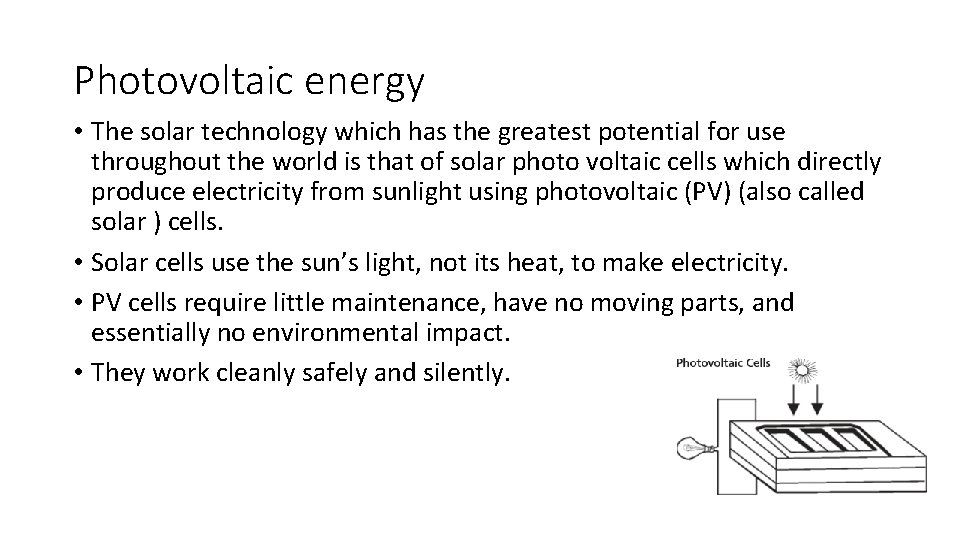
Photovoltaic energy • The solar technology which has the greatest potential for use throughout the world is that of solar photo voltaic cells which directly produce electricity from sunlight using photovoltaic (PV) (also called solar ) cells. • Solar cells use the sun’s light, not its heat, to make electricity. • PV cells require little maintenance, have no moving parts, and essentially no environmental impact. • They work cleanly safely and silently.
Easy to install, easy to use • They can be installed quickly in small modules, anywhere there is sunlight. • Solar cells are made up of two separate layers of silicon, each of which contains an electric charge. • When light hits the cells, the charges begin to move between the two layers and electricity is produced. • PV cells are wired together to form a module. A module of about 40 cells is enough to power a light bulb. • For more power, PV modules are wired together into an array. PV arrays can produce enough power to meet the electrical needs of a home. • Over the past few years, extensive work has been done in decreasing PV technology costs, increasing efficiency, and extending cell lifetimes. Many new materials, such as amorphous silicon, are being tested to reduce costs and automate manufacturing.
Current uses and limitation • PV cells are commonly used today in calculators and watches. • They also provide power to satellites, electric lights, and small electrical appliances such as radios and for water pumping, highway lighting, weather stations, and other electrical systems located away from power lines. • Some electric utility companies are building PV systems into their power supply networks. • PV cells are environmentally friendly , • they do not release pollutants or toxic material to the air or water • there is no radioactive substance • no catastrophic accidents. • Some PV cells, however, • do contain small quantities of toxic substances such as cadmium these can be released to the environment in the event of a fire. • Solar cells are made of silicon which, although the second most abundant element in the earth’s crust, has to be mined. Mining creates environmental problems. • PV systems also of course only work when the sun is shining, and thus need batteries to store the electricity.
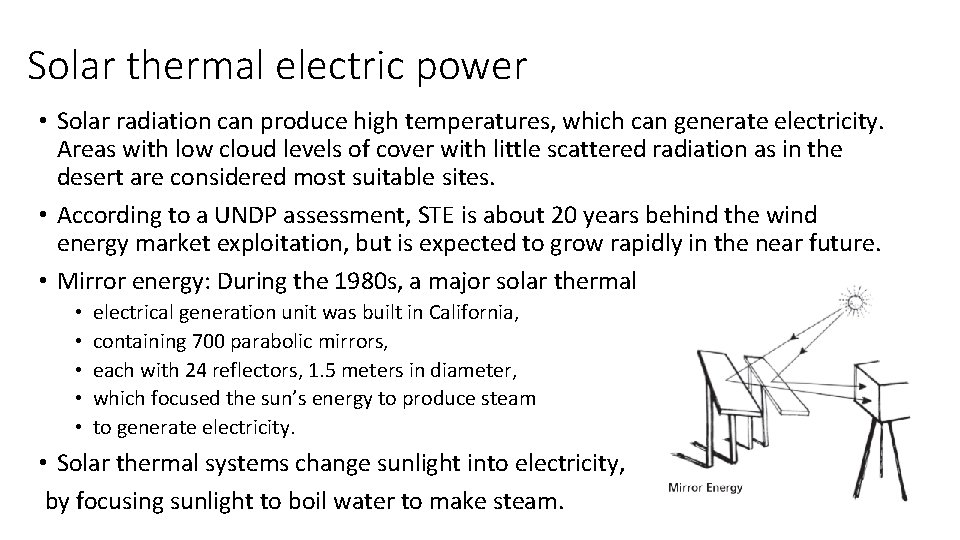
Solar thermal electric power • Solar radiation can produce high temperatures, which can generate electricity. Areas with low cloud levels of cover with little scattered radiation as in the desert are considered most suitable sites. • According to a UNDP assessment, STE is about 20 years behind the wind energy market exploitation, but is expected to grow rapidly in the near future. • Mirror energy: During the 1980 s, a major solar thermal • • • electrical generation unit was built in California, containing 700 parabolic mirrors, each with 24 reflectors, 1. 5 meters in diameter, which focused the sun’s energy to produce steam to generate electricity. • Solar thermal systems change sunlight into electricity, by focusing sunlight to boil water to make steam.
CASE STUDIES In 1981, a plane called ‘The Solar Challenger’ flew from Paris to England in 5 hours, 20 minutes. It had 16, 000 solar cells glued to the wings and tail of the plane and they produced enough power to drive a small electric motor and propeller. Since 1987, every three years there is a World Solar challenge for solar operated vehicles in Australia where the vehicles cover 3000 kms. • The world’s first solar-powered hospital is in Mali in Africa. Being situated at the edge of the Sahara desert, Mali receives a large amount of sunlight. Panels of solar cells supply the power needed to run vital equipment and keep medical supplies cool in refrigerators. • Space technology required solar energy and the space race spurred the development of solar cells. Only sunlight can provide power for long periods of time for a space station or long distance spaceship. • Japanese farmers are substituting PV operated insect killers for toxic pesticides. • In recent years, the popularity of building integrated photovoltaics (BIPV’s) has grown considerably. In this application, PV devices are designed as part of building materials (i. e. roofs and siding) both to produce electricity and reduce costs by replacing the costs of normal construction materials. There are more than 3, 000 BIPV systems in Germany and Japan has a program that will build 70, 000 BIPV buildings.
Biomass energy • When a log is burned we are using biomass energy. • Biomass energy is a form of stored solar energy. Although wood is the largest source of biomass energy, we also use agricultural waste, sugarcane wastes, and other farm byproducts to make energy. • There are three ways to use biomass. • It can be burned to produce heat and electricity • changed to a gas-like fuel such as methane, or changed to a liquid fuel. • Liquid fuels, also called biofuels, include two forms of alcohol: ethanol and methanol • Because biomass can be changed directly into liquid fuel, it could someday supply much of our transportation fuel needs for cars, trucks, buses, airplanes and trains with diesel fuel replaced by ‘ biodiesel ’ made from vegetable oils. • In the United States, this fuel is now being produced from soybean oil. Researchers are also developing algae that produce oils, which can be converted to biodiesel and new ways have been found to produce ethanol from grasses, trees, bark, sawdust, paper, and farming waste.
• Organic municipal solid waste includes paper, food wastes, and other organic non -fossil-fuel derived materials such as textiles, natural rubber, and leather that are found in the waste of urban areas. • Currently, in the US, approximately 31% of organic waste is recovered from municipal solid waste via recycling and composting programs, 62% is deposited in landfills, and 7% is incinerated. • Waste material can be converted into electricity by combustion boilers or steam turbines. • Note that like any fuel, biomass creates some pollutants, including carbon dioxide, when burned or converted into energy. • In terms of air pollutants, biomass generate less relative to fossil fuels. Biomass is naturally low in sulphur and therefore, when burned, generates low sulphur dioxide emissions. • However, if burned in the open air, some biomass feedstocks would emit relatively high levels of nitrous oxides (given the high nitrogen content of plan material), carbon monoxide, and particulates.
Not pollution free • Note that like any fuel, biomass creates some pollutants, including carbon dioxide, when burned or converted into energy. • In terms of air pollutants, biomass generate less relative to fossil fuels. • Biomass is naturally low in sulphur and therefore, when burned, generates low sulphur dioxide emissions. • However, if burned in the open air, some biomass feedstocks would emit relatively high levels of nitrous oxides (given the high nitrogen content of plan material), carbon monoxide, and particulates)
Biogas • Biogas is produced from plant material and animal waste, garbage, waste from households and some types of industrial wastes, such as fish processing, dairies, and sewage treatment plants. • It is a mixture of gases which includes methane, carbon dioxide, hydrogen sulphide and water vapour. • In this mixture, methane burns easily. With a ton of food waste, one can produce 85 Cu. M of biogas. • Once used, the residue is used as an agricultural fertilizer. • Denmark produces a large quantity of biogas from waste and produces 15, 000 megawatts of electricity from 15 farmers’ cooperatives. • London has a plant which makes 30 megawatts of electricity a year from 420, 000 tons of municipal waste which gives power to 50, 000 families. • In Germany, 25% of landfills for garbage produce power from biogas. • Japan uses 85% of its waste and France about 50%.
• Biogas plants have become increasingly popular in India in the rural sector. • The biogas plants use cowdung, which is converted into a gas which is used as a fuel. • It is also used for running dual fuel engines. • The reduction in kitchen smoke by using biogas has reduced lung conditions in thousands of homes. • The fibrous waste of the sugar industry is the world’s largest potential source of biomass energy. • Ethanol produced from sugarcane molasses is a good automobile fuel and is now used in a third of the vehicles in Brazil. • The National Project on Biogas Development (NPBD), and Community/ Institutional Biogas Plant Program promote various biogas projects. By 1996 there were already 2. 18 million families in India that used biogas. However China has 20 million households using biogas!
Wind power • Wind was the earliest energy source used for transportation by sailing ships. • Some 2000 years ago, windmills were developed in China, Afghanistan and Persia to draw water for irrigation and grinding grain. • Most of the early work on generating electricity from wind was carried out in Denmark, at the end of the last century. • Today, Denmark and California have large wind turbine cooperatives which sell electricity to the government grid. • In Tamil Nadu, there are large wind farms producing 850 megawatts of electricity. • At present, India is the third largest wind energy producer in the world.
• The power in wind is a function of the wind speed and therefore the average wind speed of an area is an important determinant of economically feasible power. • Wind speed increases with height. At a given turbine site, the power available 30 meters above ground is typically 60 percent greater than at 10 meters. • Over the past two decades, a great deal of technical progress has been made in the design, siting, installation, operation, and maintenance of power-producing wind mills (turbines). • These improvements have led to higher wind conversion efficiencies and lower electricity production costs.
Environmental Impacts • Wind power has few environmental impacts, as there are virtually no air or water emissions, or radiation, or solid waste production. • The principal problems are bird kills, noise, effect on TV reception • Although large areas of land are required for setting up wind farms, the amount used by the turbine bases, the foundations and the access roads is less than 1% of the total area covered by the wind farm. • The rest of the area can also be used for agricultural purposes or for grazing. • Siting windmills offshore reduces their demand for land visual impact. • Wind is an intermittent source and the intermittency of wind depends on the geographic distribution of wind. • Wind therefore cannot be used as the sole resource for electricity, and requires some other backup or stand-by electricity source.
Tidal and Wave Power • The earth’s surface is 70% water. • By warming the water, the sun, creates ocean currents and wind that produces waves. It is estimated that the solar energy absorbed by the tropical oceans in a week could equal the entire oil reserves of the world – 1 trillion barrels of oil. • The energy of waves in the sea that crash on the land of all the continents is estimated at 2 to 3 million megawatts of energy. • From the 1970 s several countries have been experimenting with technology to harness the kinetic energy of the ocean to generate electricity. • Tidal power is tapped by placing a barrage across an estuary and forcing the tidal flow to pass through turbines. • In a one-way system the incoming tide is allowed to fill the basin through a sluice, and the water so collected is used to produce electricity during the low tide. • In a two way system power is generated from both the incoming as well as the outgoing tide.
• Tidal power stations bring • major ecological changes in the sensitive ecosystem of coastal regions • can destroy the habitats and nesting places of water birds and interfere with fisheries. • creating health and pollution hazards in the estuary. • Other drawbacks include • Offshore energy devices posing navigational hazards. • Residual drift current could affect spawning of some fish, whose larvae would be carried away from spawning grounds. • They may also affect the migration patterns of surface swimming fish. • Wave power converts the motion of waves into electrical or mechanical energy. For this, an energy extraction device is used to drive turbogenerators. • Electricity can be generated at sea and transmitted by cable to land. This energy source has yet to be fully explored. The largest concentration of potential wave energy on earth is located between latitudes 40 to 60 degrees in both the northern and southern hemispheres, where the winds blow most strongly. • Another developing concept harnesses energy due to the differences in temperature between the warm upper layers of the ocean and the cold deep sea water. These plants are known as Ocean Thermal Energy Conversion (OTEC). This is a high tech installation which may prove to be highly valuable in the future
Geothermal energy • It is the energy stored within the earth (“geo” for earth and “thermal” for heat). • Geothermal energy starts with hot, molten rock (called magma ) deep inside the earth which surfaces at some parts of the earth’s crust. • The heat rising from the magma warms underground pools of water known as geothermal reservoirs. • If there is an opening, hot underground water comes to the surface and forms hot springs, or it may boil to form geysers. • With modern technology, wells are drilled deep below the surface of the earth to tap into geothermal reservoirs. This is called direct use of geothermal energy, and it provides a steady stream of hot water that is pumped to the earth’s surface. • In the 20 th century geothermal energy has been harnessed on a large scale for space heating, industrial use and electricity production, especially in Iceland, Japan and New Zealand. • Geothermal energy is nearly as cheap as hydropower and will thus be increasingly utilised in future. However, water from geothermal reservoirs often contains minerals that are corrosive and polluting. Geothermal fluids are a problem which must be treated before disposal.
Nuclear Power • In 1938 two German scientists Otto Hahn and Fritz Strassman demonstrated nuclear fission. • They found they could split the nucleus of a uranium atom by bombarding it with neutrons. • As the nucleus split, some mass was converted to energy. • The nuclear power industry however was born in the late 1950 s. The first largescale nuclear power plant in the world became operational in 1957 in Pennsylvania, US. • Dr. Homi Bhabha was the father of Nuclear Power development in India. • The Bhabha Atomic Research Center in Mumbai studies and develops modern nuclear technology. India has 10 nuclear reactors at 5 nuclear power stations that produce 2% of India’s electricity. • These are located in Maharashtra (Tarapur), Rajasthan, Tamil Nadu, Uttar Pradesh and Gujrat. India has uranium from mines in Bihar. There are deposits of thorium in Kerala and Tamil Nadu.
• The nuclear reactors use Uranium 235 to produce electricity. • Energy released from 1 kg of Uranium 235 is equivalent to that produced by burning 3, 000 tons of coal. • U 235 is made into rods which are fitted into a nuclear reactor. The control rods absorb neutrons and thus adjust the fission which releases energy due to the chain reaction in a reactor unit. • The heat energy produced in the reaction is used to heat water and produce steam, which drives turbines that produce electricity. • The drawback • the rods need to be changed periodically. • Impacts on the environment due to disposal of nuclear waste. • Releases very hot waste water that damages aquatic ecosystems, even though it is cooled by a water system before it is released. • The high cost of disposal of its waste and the decommissioning of old plants. • High economic as well as ecological costs that are not taken into account when developing new nuclear installations. • For environmental reasons, Sweden has decided to become a Nuclear Free Country by 2010.
Higher efficiency higher risk • Conventional environmental impacts from nuclear power are negligible, what overshadows all the other types of energy sources is that an accident can be devastating and the effects last for long periods of time. • While it does not pollute air or water routinely like oil or biomass, a single accident can kill thousands of people, make many others seriously ill, and destroy an area for decades by its radioactivity which leads to death, cancer and genetic deformities. • Land, water, vegetation are destroyed for long periods of time. • Management, storage and disposal of radioactive wastes resulting from nuclear power generation are the biggest expenses of the nuclear power industry. • There have been nuclear accidents at Chernobyl in USSR and at the Three Mile Island in USA. The radioactivity unleashed by such an accident can affect mankind for generations.
Changes in method • Industry and transport are the main growing users of energy in India. • Industries that are known for generating pollution also waste the most energy. • These include chemical industries, especially petrochemical units, iron and steel, textiles, paper, etc. • Unplanned and inefficient public transport systems, especially in cities, waste large amount of energy. • Using bicycles is an excellent method to reduce the use of energy. • In agriculture, irrigation pumps to lift water are the most energy intensive agricultural use. • These are either electrical or run on fossil fuels.
CASE STUDIES • Indian industries use more energy than necessary. • Steel and energy : To produce one tonne of steel, India spends 9. 5 million kilocalories. In Italy it is 4. 3 million kilocalories and for Japan it is only 4. 1 million kilocalories. • Cement industry : Over 2 million kilocalories are used to produce one tonne of cement in India. In Germany it is 0. 82 million kilocalories, in USA, 0. 92 million kilocalories. • Vehicles : Lighter materials should be used for cars. Instead of steel we should use aluminum, fiber glass or plastics. These lighter materials can reduce the weight by 15 % and increase the fuel economy by 6 to 8%. • Refrigerators : Better technologies reduced the annual energy needed by a typical Danish 200 liter refrigerator (with no freezer) from 350 kilo Watt hour (k. Wh) to 90 k. Wh. • Lighting : An 18 -watt modern, compact fluorescent lamp, can replace a standard 75 -watt incandescent lamp.