
Land Plants The Gymnosperms www onacd ca Gymnosperms
- Slides: 10
Land Plants – The Gymnosperms www. onacd. ca
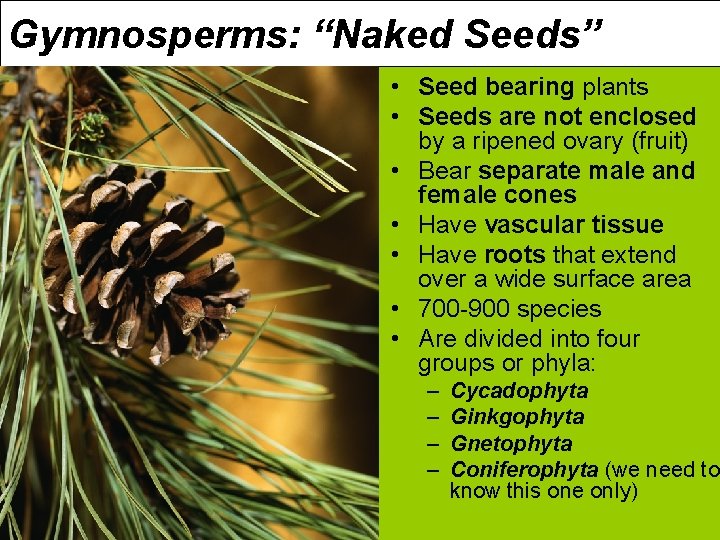
Gymnosperms: “Naked Seeds” • Seed bearing plants • Seeds are not enclosed by a ripened ovary (fruit) • Bear separate male and female cones • Have vascular tissue • Have roots that extend over a wide surface area • 700 -900 species • Are divided into four groups or phyla: – – Cycadophyta Ginkgophyta Gnetophyta Coniferophyta (we need to know this one only)
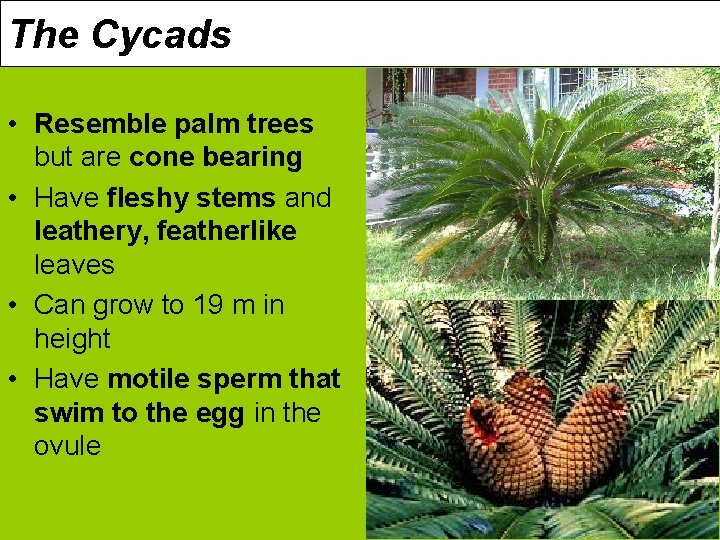
The Cycads • Resemble palm trees but are cone bearing • Have fleshy stems and leathery, featherlike leaves • Can grow to 19 m in height • Have motile sperm that swim to the egg in the ovule
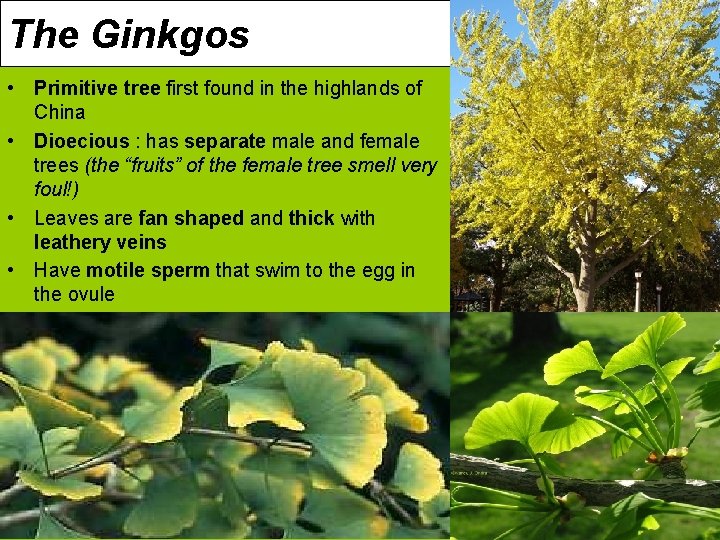
The Ginkgos • Primitive tree first found in the highlands of China • Dioecious : has separate male and female trees (the “fruits” of the female tree smell very foul!) • Leaves are fan shaped and thick with leathery veins • Have motile sperm that swim to the egg in the ovule
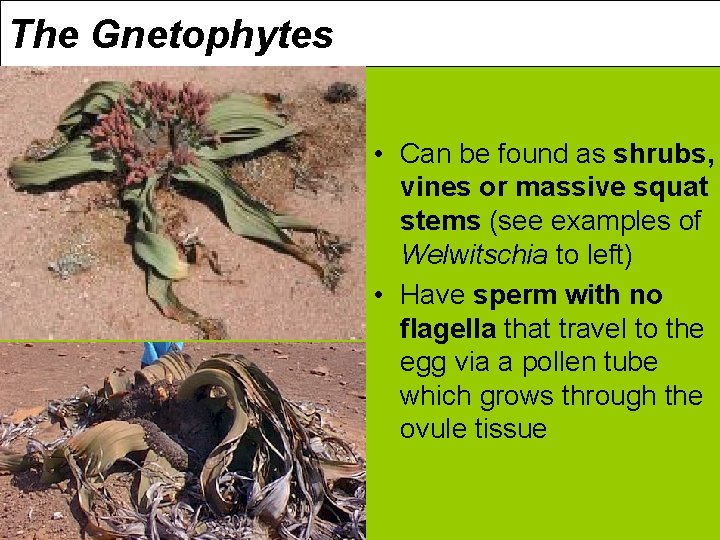
The Gnetophytes • Can be found as shrubs, vines or massive squat stems (see examples of Welwitschia to left) • Have sperm with no flagella that travel to the egg via a pollen tube which grows through the ovule tissue
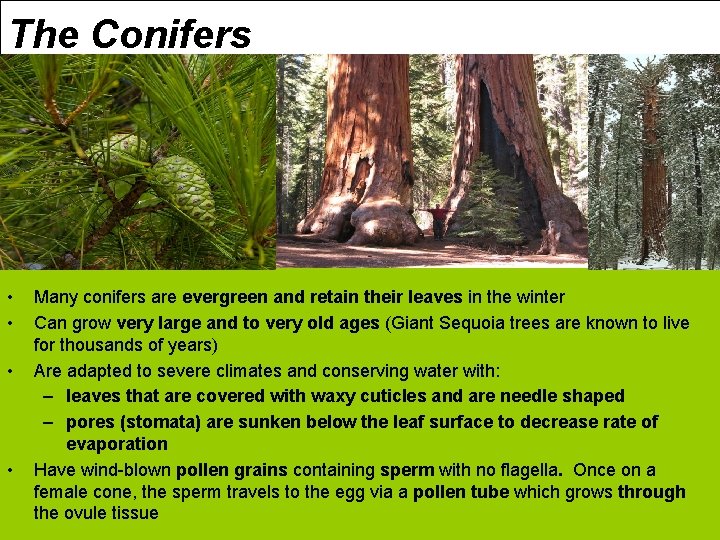
The Conifers • • Many conifers are evergreen and retain their leaves in the winter Can grow very large and to very old ages (Giant Sequoia trees are known to live for thousands of years) Are adapted to severe climates and conserving water with: – leaves that are covered with waxy cuticles and are needle shaped – pores (stomata) are sunken below the leaf surface to decrease rate of evaporation Have wind-blown pollen grains containing sperm with no flagella. Once on a female cone, the sperm travels to the egg via a pollen tube which grows through the ovule tissue
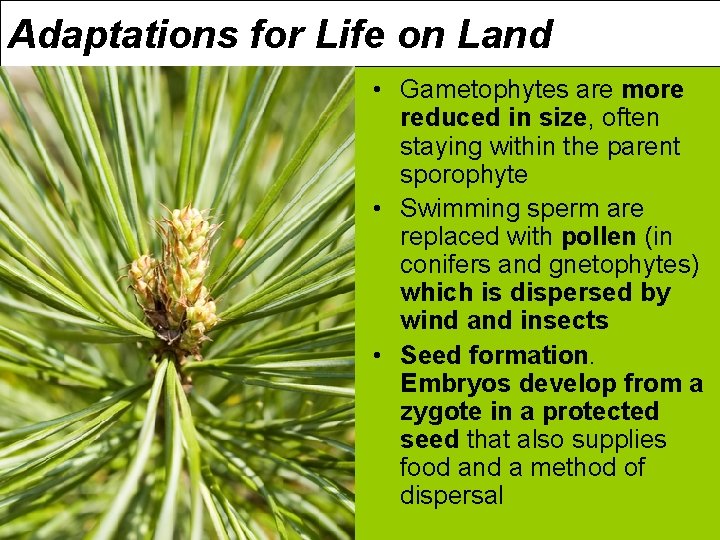
Adaptations for Life on Land • Gametophytes are more reduced in size, often staying within the parent sporophyte • Swimming sperm are replaced with pollen (in conifers and gnetophytes) which is dispersed by wind and insects • Seed formation. Embryos develop from a zygote in a protected seed that also supplies food and a method of dispersal
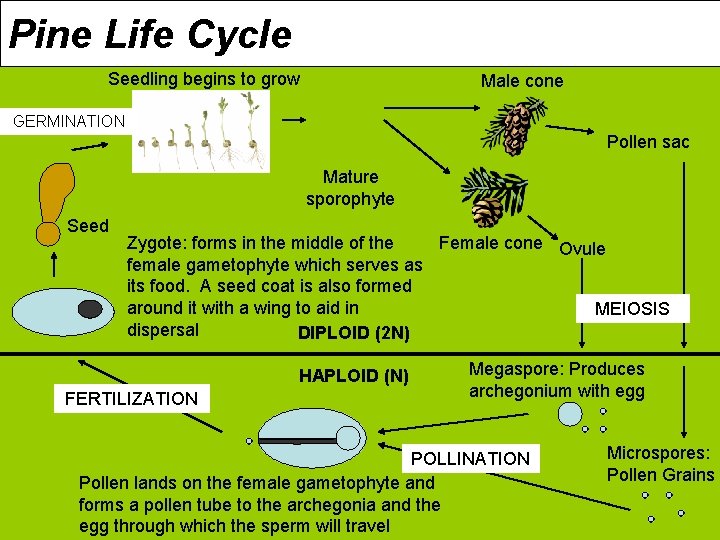
Pine Life Cycle Seedling begins to grow Male cone GERMINATION Pollen sac Mature sporophyte Seed Zygote: forms in the middle of the Female cone Ovule female gametophyte which serves as its food. A seed coat is also formed around it with a wing to aid in MEIOSIS dispersal DIPLOID (2 N) HAPLOID (N) FERTILIZATION Megaspore: Produces archegonium with egg POLLINATION Pollen lands on the female gametophyte and forms a pollen tube to the archegonia and the egg through which the sperm will travel Microspores: Pollen Grains
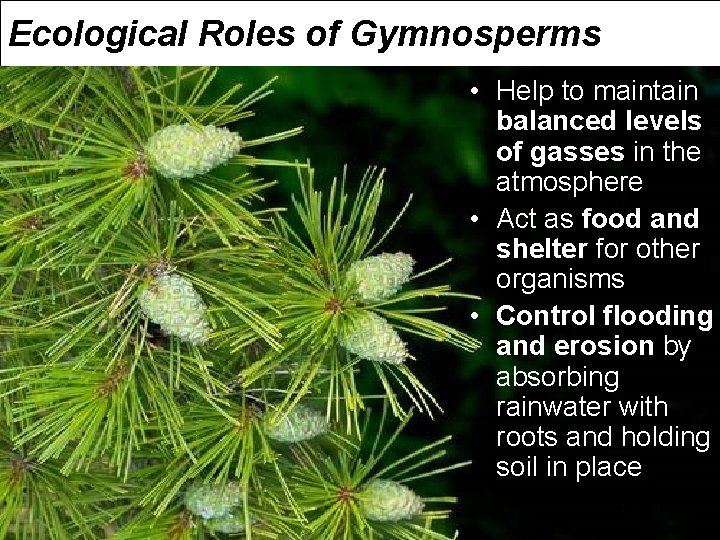
Ecological Roles of Gymnosperms • Help to maintain balanced levels of gasses in the atmosphere • Act as food and shelter for other organisms • Control flooding and erosion by absorbing rainwater with roots and holding soil in place
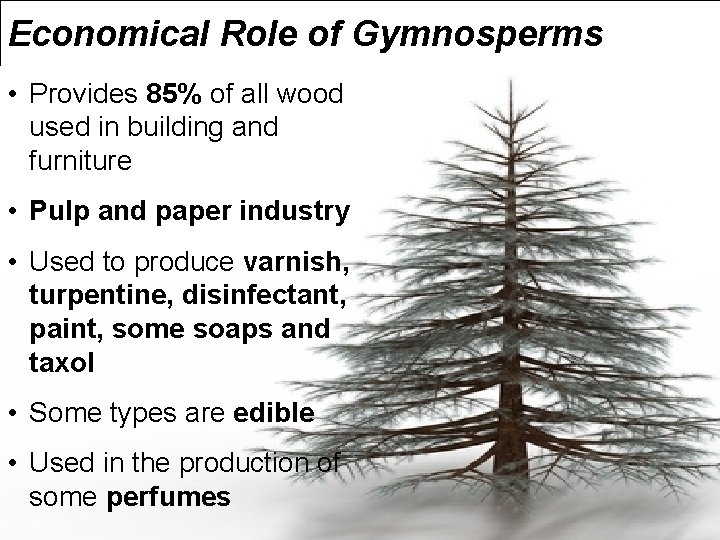
Economical Role of Gymnosperms • Provides 85% of all wood used in building and furniture • Pulp and paper industry • Used to produce varnish, turpentine, disinfectant, paint, some soaps and taxol • Some types are edible • Used in the production of some perfumes