
Land Marine Seismic Acquisition from 2 D to

- Slides: 88
Land Marine Seismic Acquisition from 2 D to 3 D From chapters 7 -12 “Elements of 3 D Seismology” by Chris Liner
Outline-1 CMP METHOD (Harry Mayne) Seismic sensors • geophones • hydrophones • gimballed geophones and hydrophones • accelerometers Sources • Explosives • Vibroseis SEGY data
Outline-2 Acquisition Parameters • Time Sample Rate • Offset Range • Listen Time • Sample Rate and Temporal Aliasing • Geophone Spacing and Spatial Aliasing • Shooting geometry • inline • cross-line
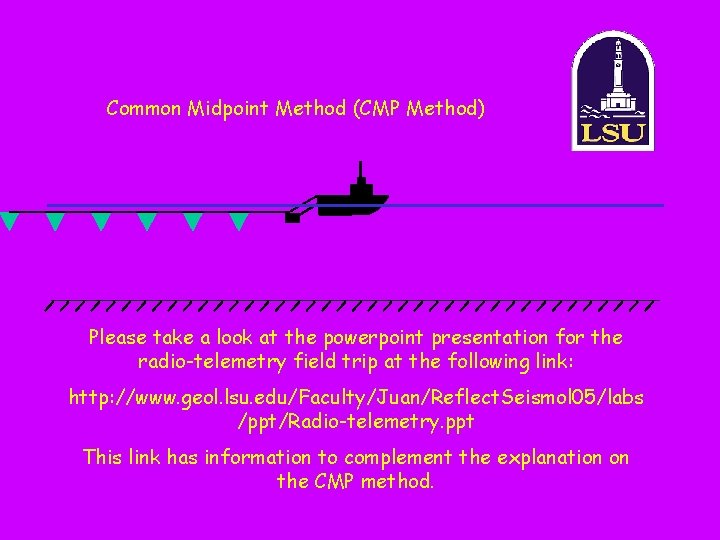
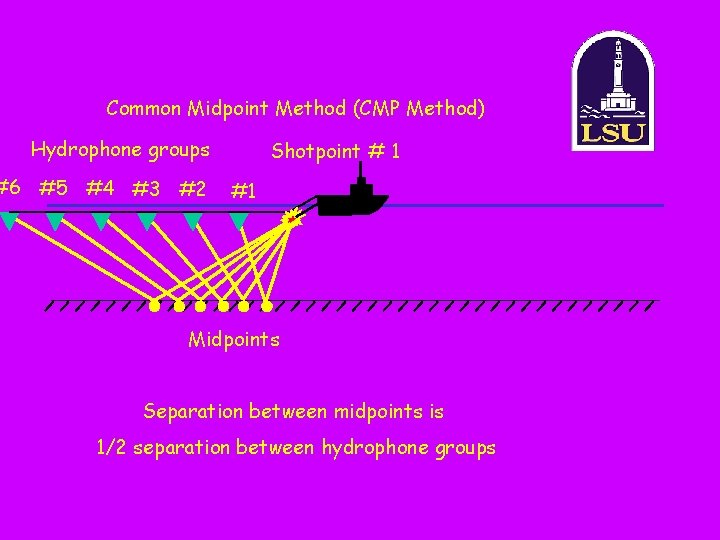
Common Midpoint Method (CMP Method) Please take a look at the powerpoint presentation for the radio-telemetry field trip at the following link: http: //www. geol. lsu. edu/Faculty/Juan/Reflect. Seismol 05/labs /ppt/Radio-telemetry. ppt This link has information to complement the explanation on the CMP method.
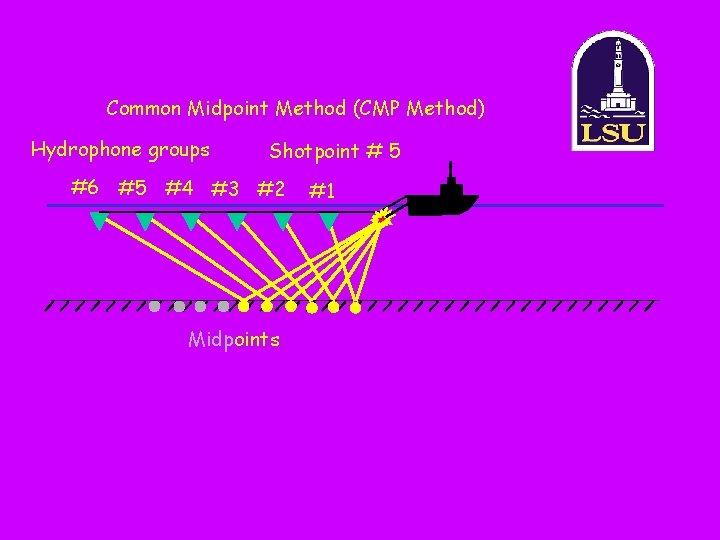
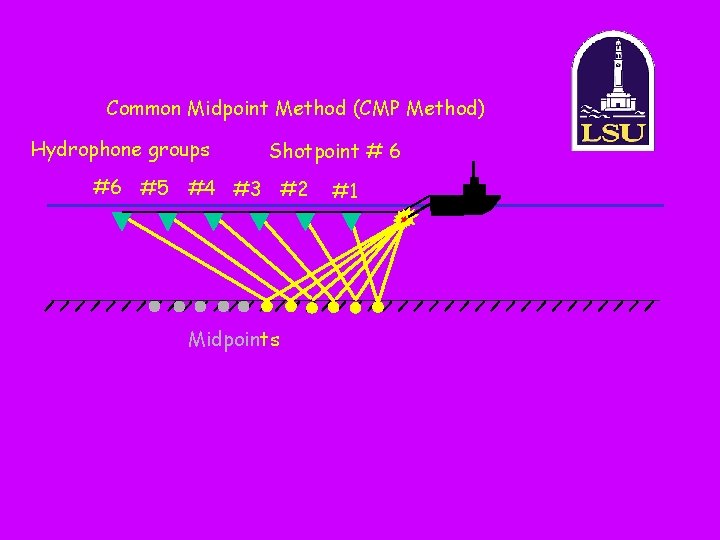
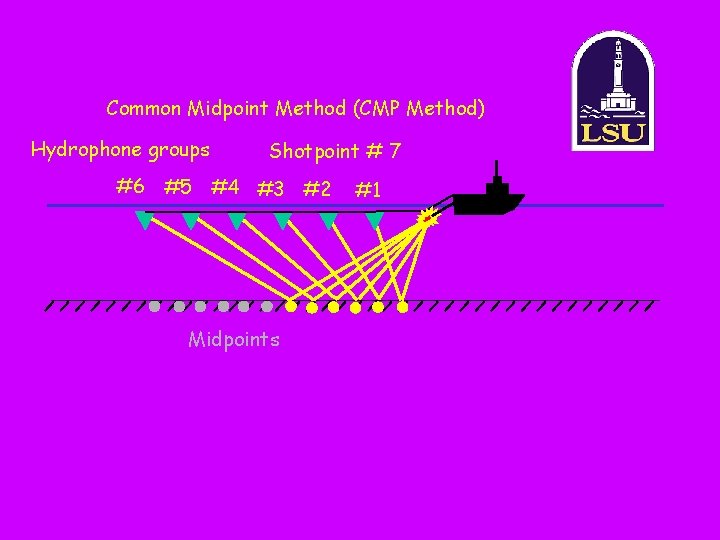
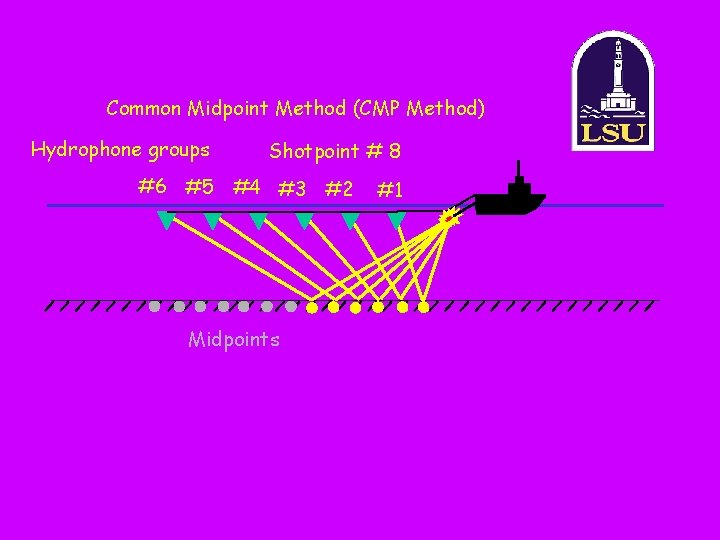
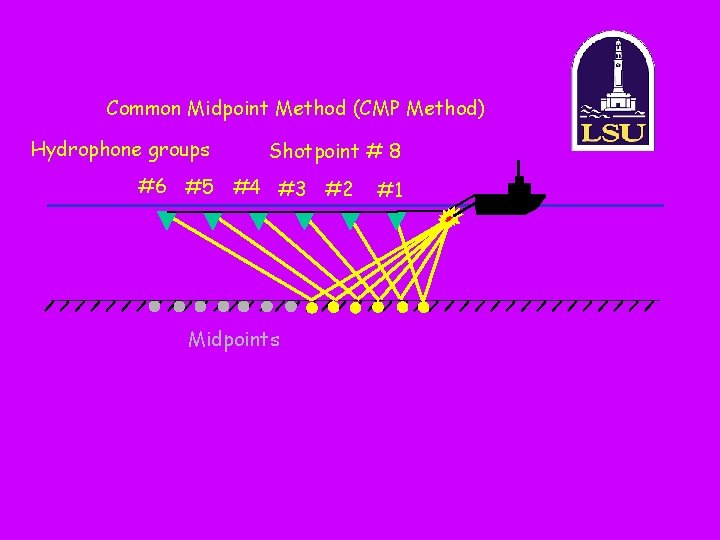
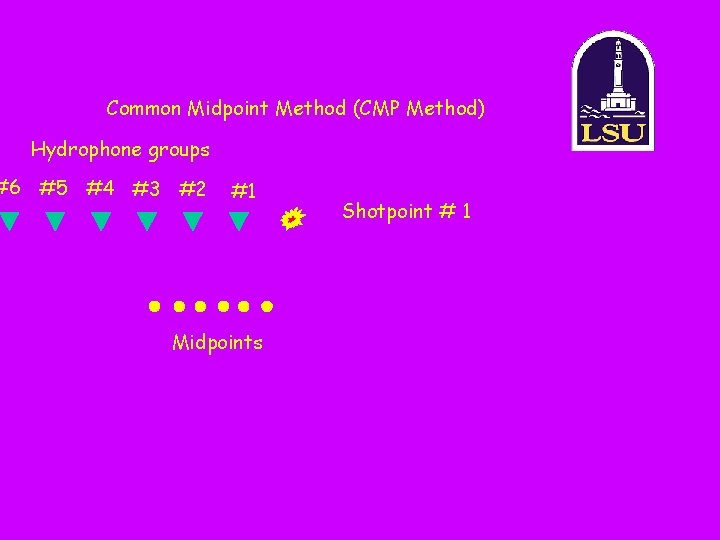
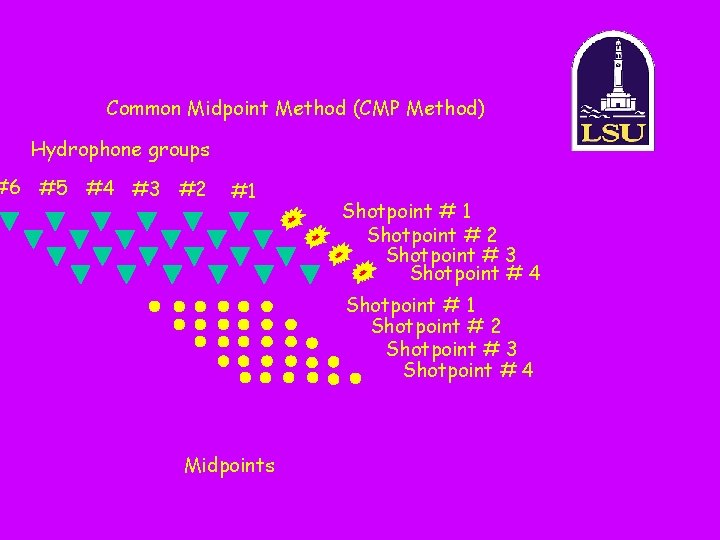
Common Midpoint Method (CMP Method) Hydrophone groups #6 #5 #4 #3 #2 Shotpoint # 1 #1 Midpoints Separation between midpoints is 1/2 separation between hydrophone groups
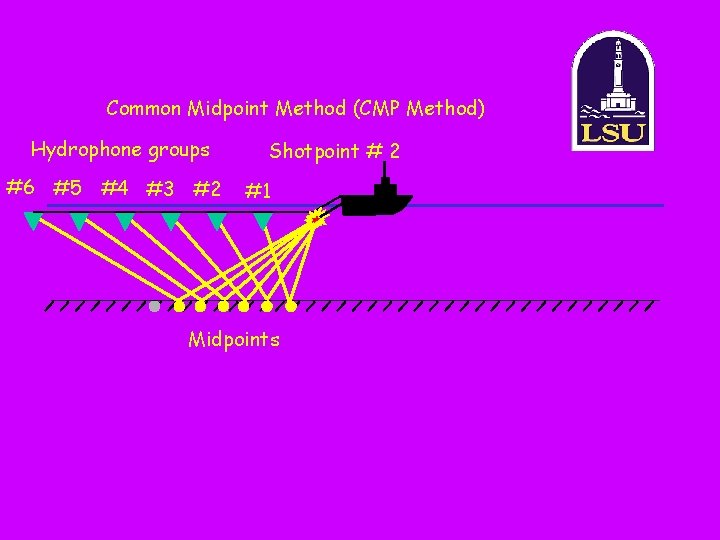
Common Midpoint Method (CMP Method) Hydrophone groups #6 #5 #4 #3 #2 Shotpoint # 2 #1 Midpoints
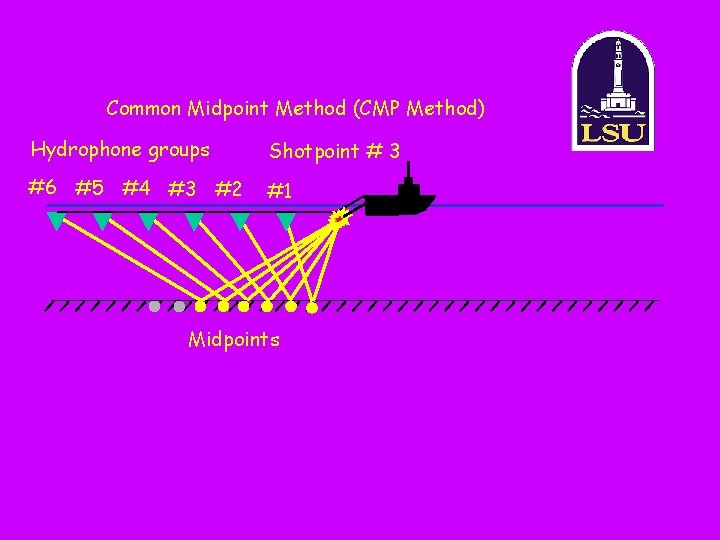
Common Midpoint Method (CMP Method) Hydrophone groups Shotpoint # 3 #6 #5 #4 #3 #2 #1 Midpoints
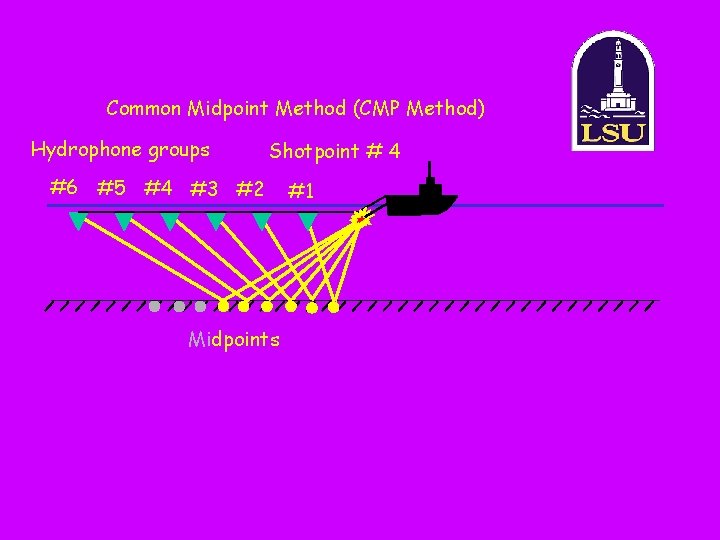
Common Midpoint Method (CMP Method) Hydrophone groups Shotpoint # 4 #6 #5 #4 #3 #2 Midpoints #1
Common Midpoint Method (CMP Method) Hydrophone groups Shotpoint # 5 #6 #5 #4 #3 #2 Midpoints #1
Common Midpoint Method (CMP Method) Hydrophone groups Shotpoint # 6 #6 #5 #4 #3 #2 Midpoints #1
Common Midpoint Method (CMP Method) Hydrophone groups Shotpoint # 7 #6 #5 #4 #3 #2 Midpoints #1
Common Midpoint Method (CMP Method) Hydrophone groups Shotpoint # 8 #6 #5 #4 #3 #2 Midpoints #1
Common Midpoint Method (CMP Method) Hydrophone groups Shotpoint # 8 #6 #5 #4 #3 #2 Midpoints #1
Common Midpoint Method (CMP Method) Hydrophone groups #6 #5 #4 #3 #2 #1 Midpoints Shotpoint # 1
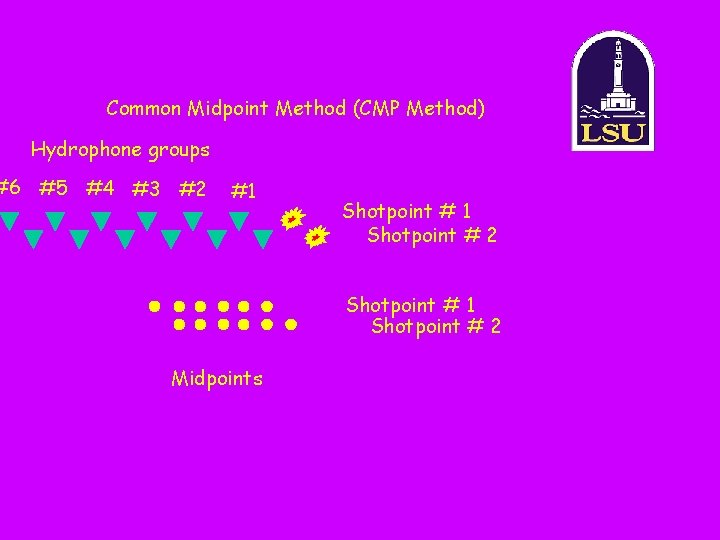
Common Midpoint Method (CMP Method) Hydrophone groups #6 #5 #4 #3 #2 #1 Shotpoint # 2 Shotpoint # 1 Shotpoint # 2 Midpoints
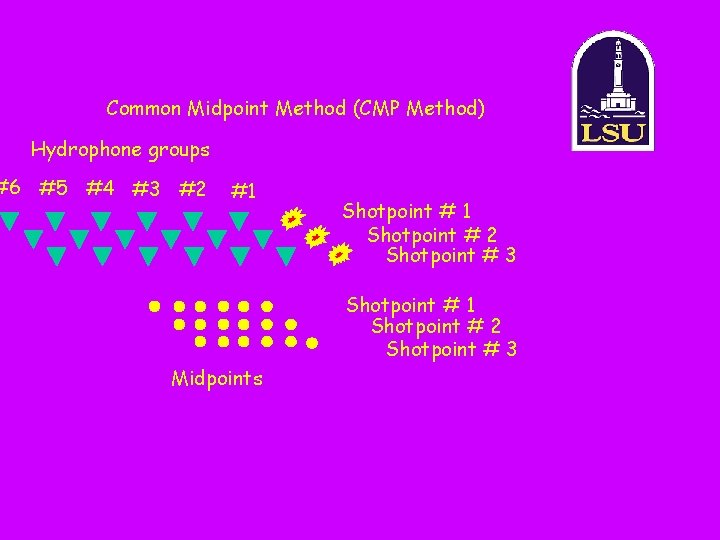
Common Midpoint Method (CMP Method) Hydrophone groups #6 #5 #4 #3 #2 #1 Shotpoint # 2 Shotpoint # 3 Shotpoint # 1 Shotpoint # 2 Shotpoint # 3 Midpoints
Common Midpoint Method (CMP Method) Hydrophone groups #6 #5 #4 #3 #2 #1 Shotpoint # 2 Shotpoint # 3 Shotpoint # 4 Shotpoint # 1 Shotpoint # 2 Shotpoint # 3 Shotpoint # 4 Midpoints
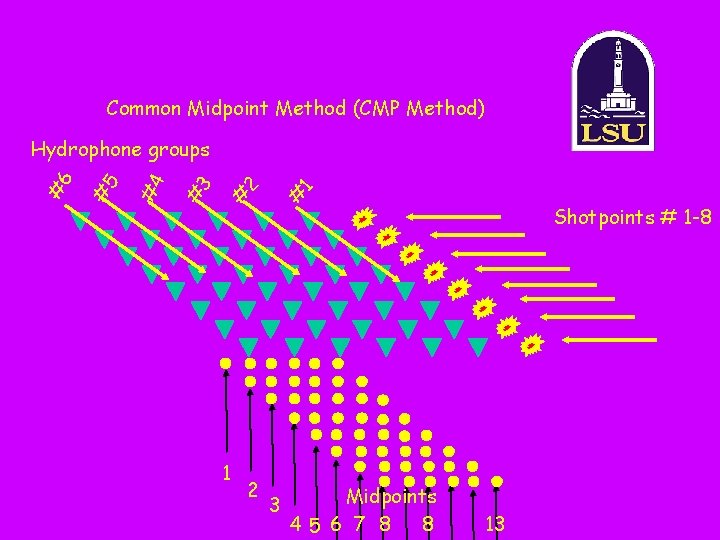
Common Midpoint Method (CMP Method) 1 # 1 2 # 3 # #4 # 5 #6 Hydrophone groups 2 3 Midpoints 45 6 7 8 8 Shotpoints # 1 -8 13
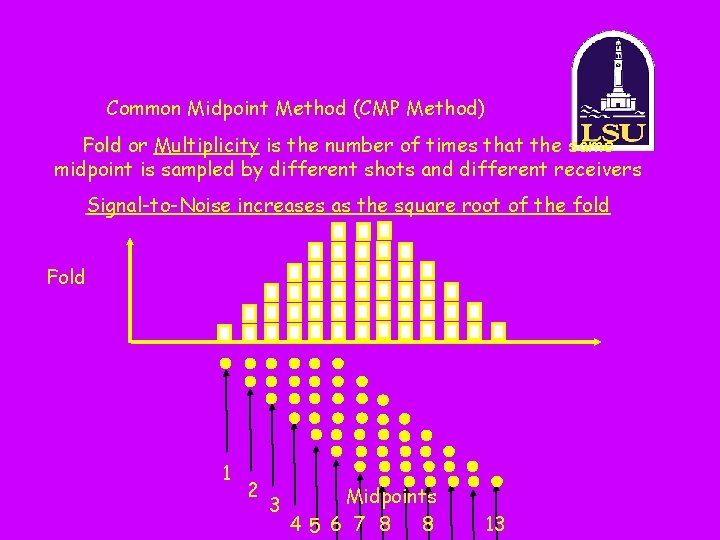
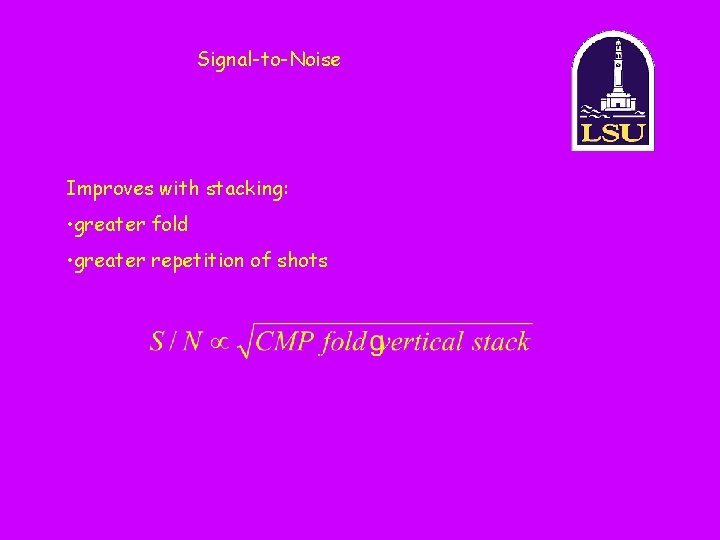
Common Midpoint Method (CMP Method) Fold or Multiplicity is the number of times that the same midpoint is sampled by different shots and different receivers Signal-to-Noise increases as the square root of the fold Fold 1 2 3 Midpoints 45 6 7 8 8 13
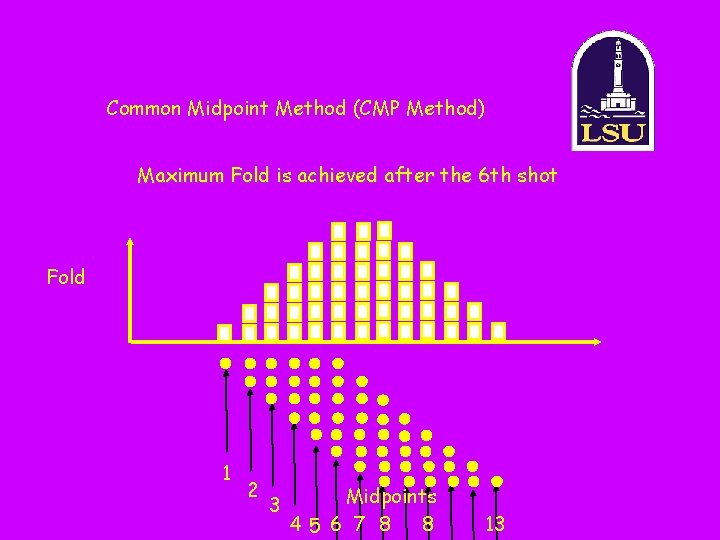
Common Midpoint Method (CMP Method) Maximum Fold is achieved after the 6 th shot Fold 1 2 3 Midpoints 45 6 7 8 8 13
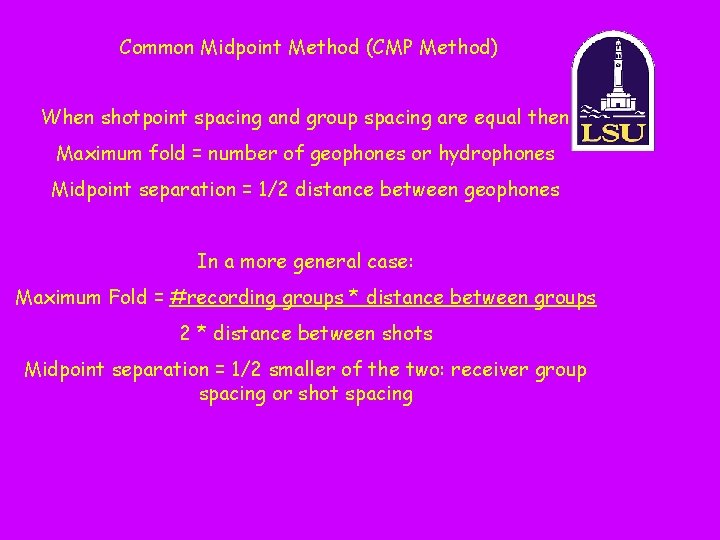
Common Midpoint Method (CMP Method) When shotpoint spacing and group spacing are equal then Maximum fold = number of geophones or hydrophones Midpoint separation = 1/2 distance between geophones In a more general case: Maximum Fold = #recording groups * distance between groups 2 * distance between shots Midpoint separation = 1/2 smaller of the two: receiver group spacing or shot spacing
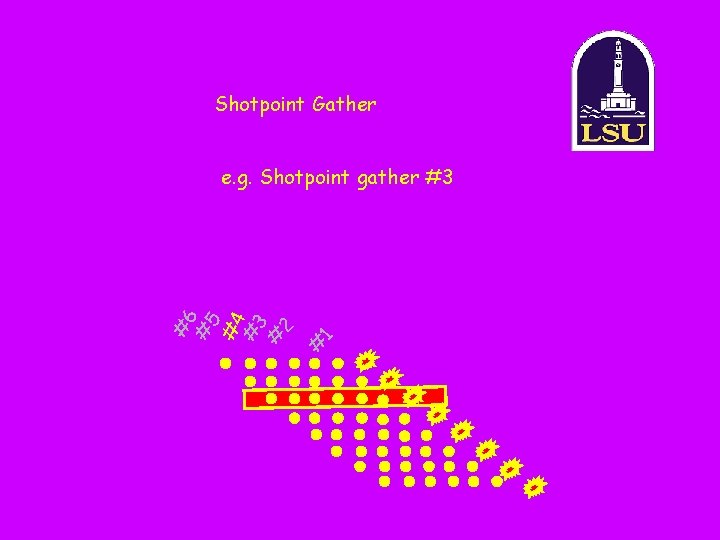
Gather Types A gather i. e. “a subset of the traces from the entire data set” can be of different types: • Shotpoint gather • Common source-receiver offset gather (COS) • Common midpoint gather
Shotpoint Gather 1 # #6 # 5 #4 # 3 # 2 e. g. Shotpoint gather #3
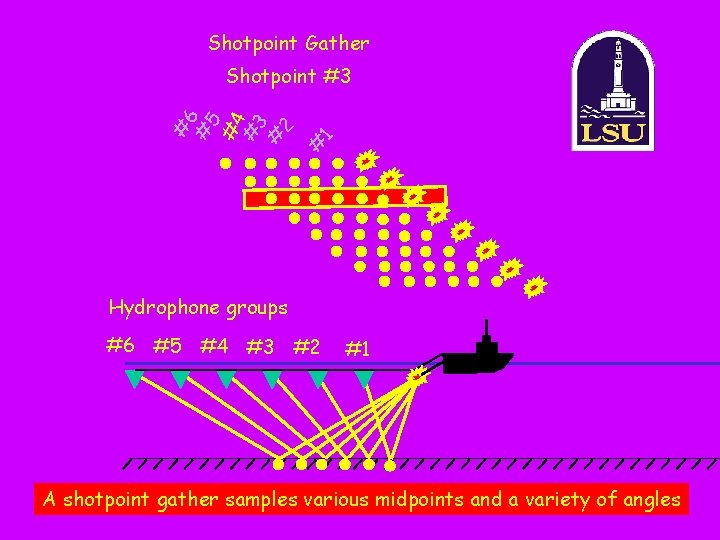
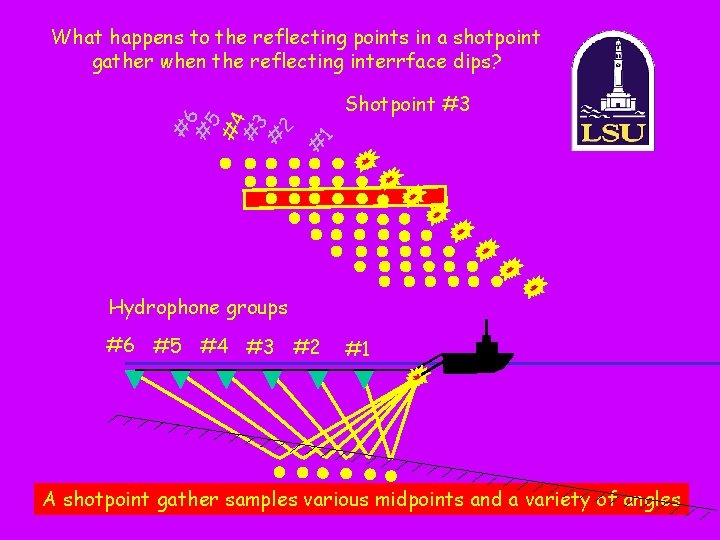
Shotpoint Gather 1 # #6 # 5 #4 # 3 # 2 Shotpoint #3 Hydrophone groups #6 #5 #4 #3 #2 #1 A shotpoint gather samples various midpoints and a variety of angles
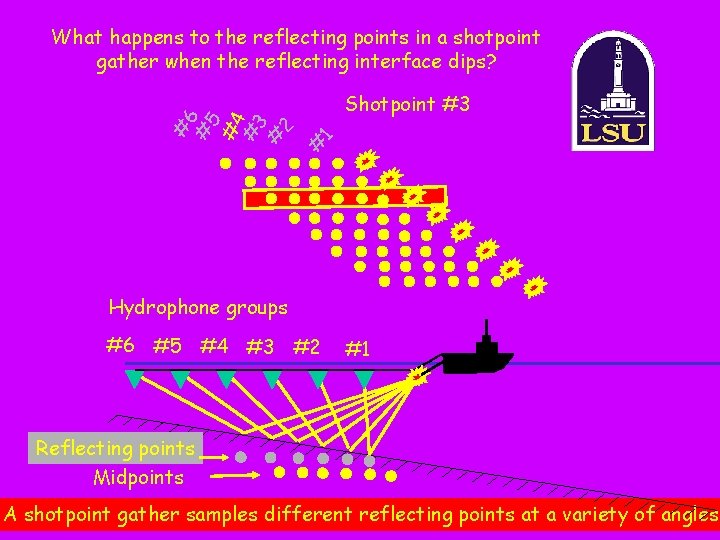
1 Shotpoint #3 # #6 # 5 #4 # 3 # 2 What happens to the reflecting points in a shotpoint gather when the reflecting interrface dips? Hydrophone groups #6 #5 #4 #3 #2 #1 A shotpoint gather samples various midpoints and a variety of angles
1 Shotpoint #3 # #6 # 5 #4 # 3 # 2 What happens to the reflecting points in a shotpoint gather when the reflecting interface dips? Hydrophone groups #6 #5 #4 #3 #2 #1 Reflecting points Midpoints A shotpoint gather samples different reflecting points at a variety of angles
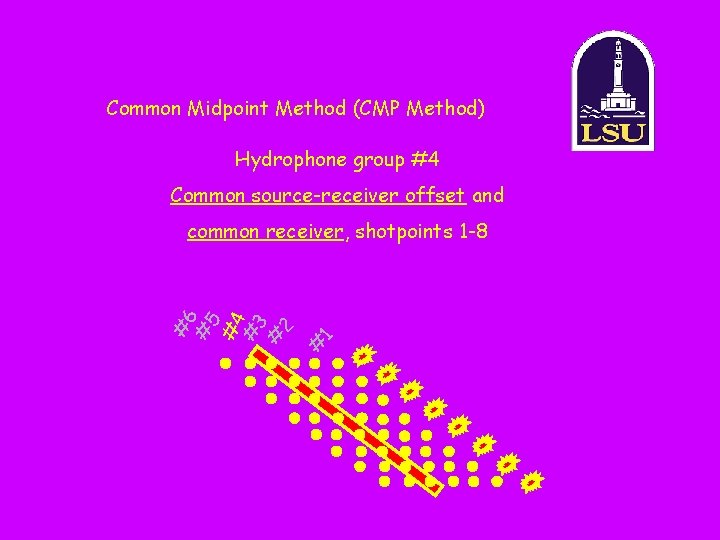
Common Midpoint Method (CMP Method) Hydrophone group #4 Common source-receiver offset and 1 # #6 # 5 #4 # 3 # 2 common receiver, shotpoints 1 -8
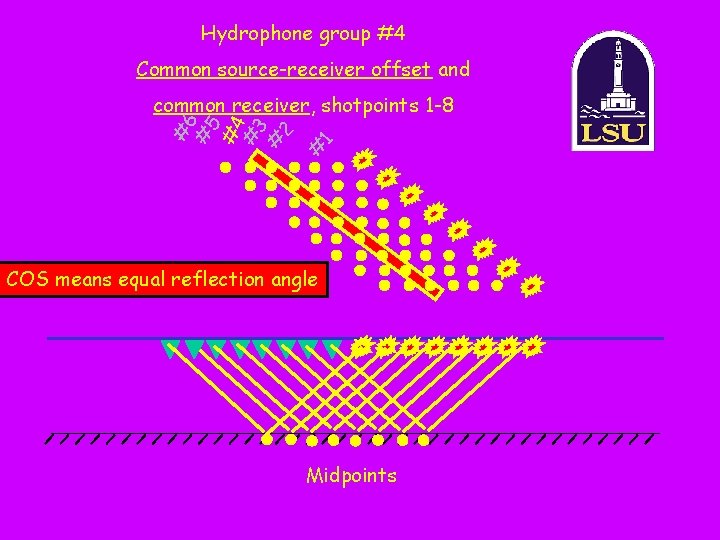
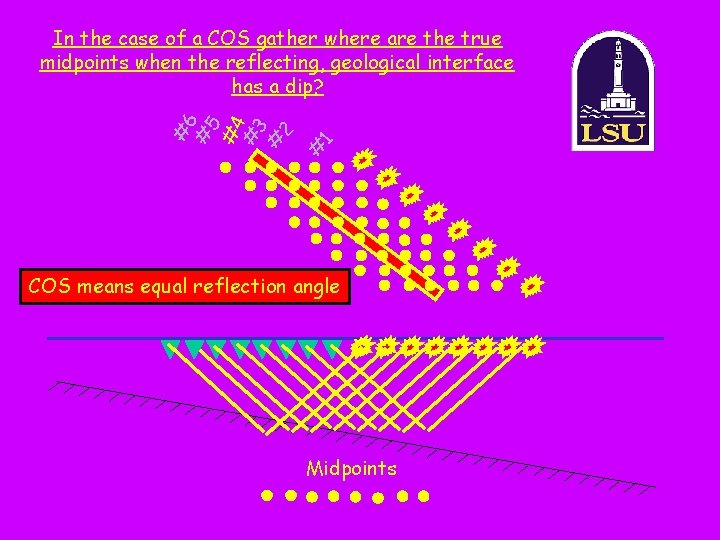
Hydrophone group #4 Common source-receiver offset and 1 # #6 # 5 #4 # 3 # 2 common receiver, shotpoints 1 -8 COS means equal reflection angle Midpoints
1 # #6 # 5 #4 # 3 # 2 In the case of a COS gather where are the true midpoints when the reflecting, geological interface has a dip? COS means equal reflection angle Midpoints
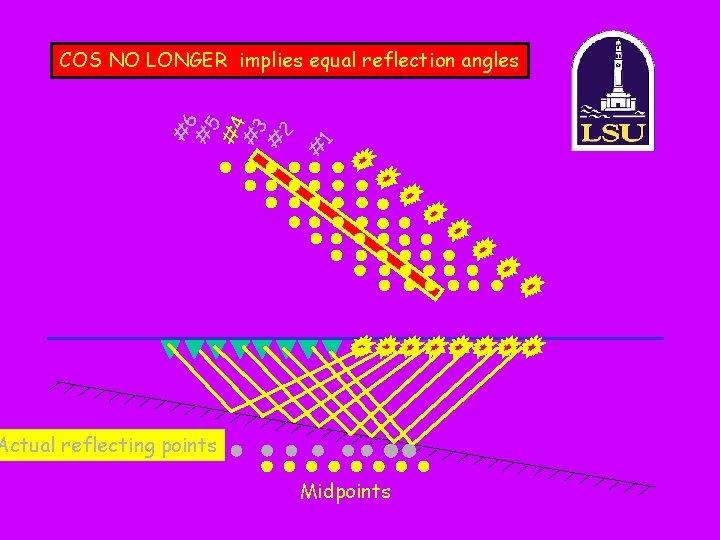
1 # #6 # 5 #4 # 3 # 2 COS NO LONGER implies equal reflection angles Actual reflecting points Midpoints
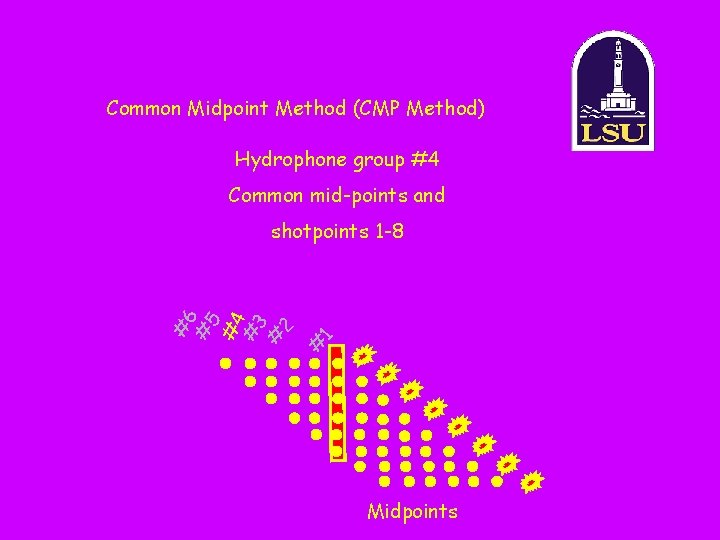
Common Midpoint Method (CMP Method) Hydrophone group #4 Common mid-points and 1 # #6 # 5 #4 # 3 # 2 shotpoints 1 -8 Midpoints
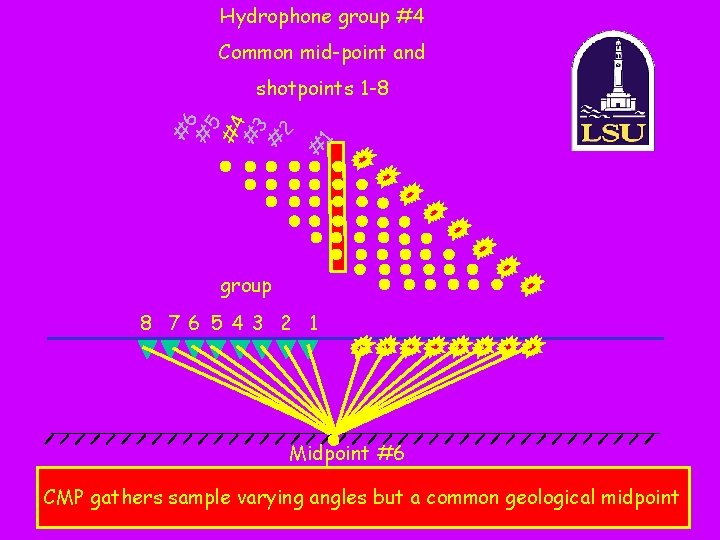
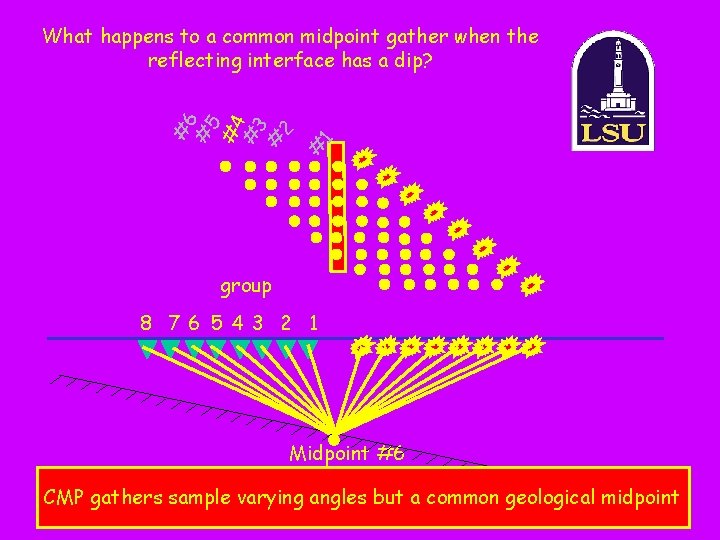
Hydrophone group #4 Common mid-point and 1 # #6 # 5 #4 # 3 # 2 shotpoints 1 -8 group 8 76 5 4 3 2 1 Midpoint #6 CMP gathers sample varying angles but a common geological midpoint
1 # #6 # 5 #4 # 3 # 2 What happens to a common midpoint gather when the reflecting interface has a dip? group 8 76 5 4 3 2 1 Midpoint #6 CMP gathers sample varying angles but a common geological midpoint
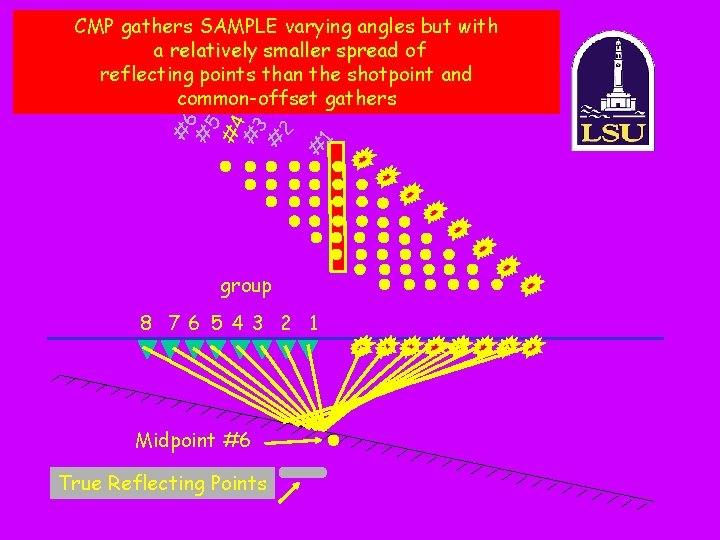
1 # #6 # 5 #4 # 3 # 2 CMP gathers SAMPLE varying angles but with a relatively smaller spread of reflecting points than the shotpoint and common-offset gathers group 8 76 5 4 3 2 1 Midpoint #6 True Reflecting Points
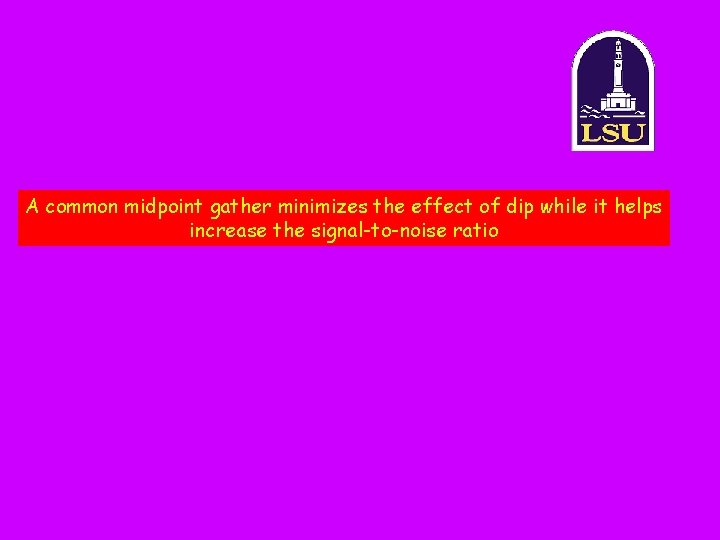
A common midpoint gather minimizes the effect of dip while it helps increase the signal-to-noise ratio
Outline-1 CMP METHOD (Harry Mayne) Seismic sensors • geophones • hydrophones • gimballed geophones and hydrophones • accelerometers Sources • Explosives • Vibroseis SEGY data
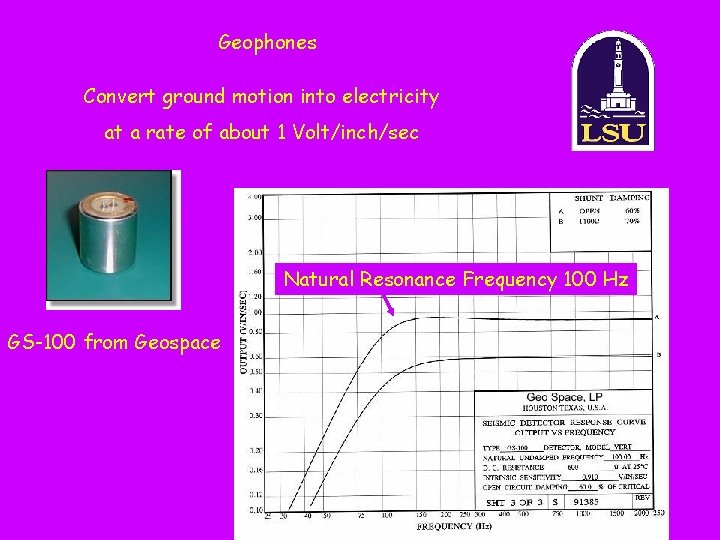
Geophones Convert ground motion into electricity at a rate of about 1 Volt/inch/sec Natural Resonance Frequency 100 Hz GS-100 from Geospace
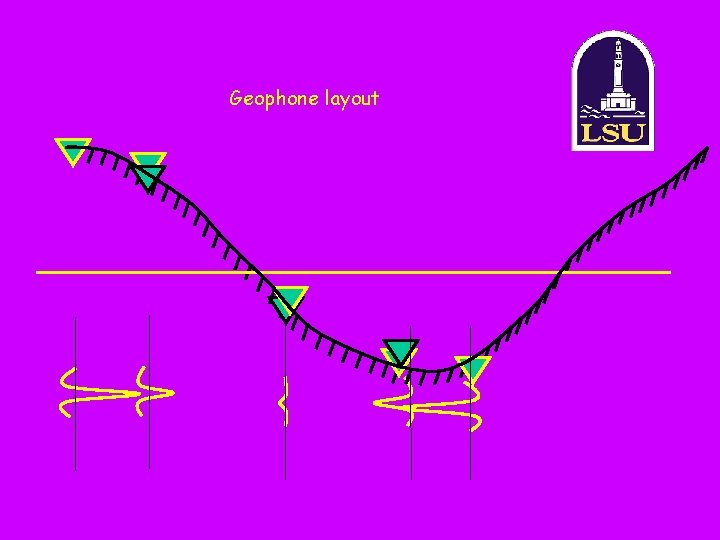
Geophone layout
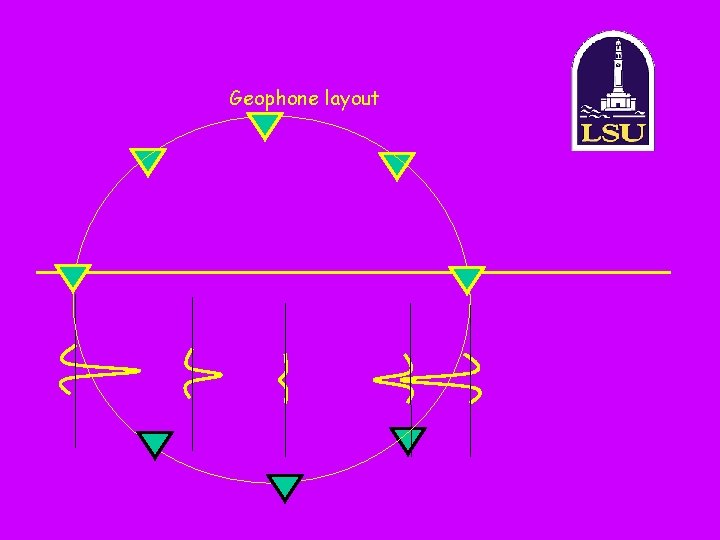
Geophone layout
Seismic Sensors • Hydrophones convert changing pressure into Volts (Volts/bar) e. g. Preseis 2517 from I/O 1 V/micro. Pascal
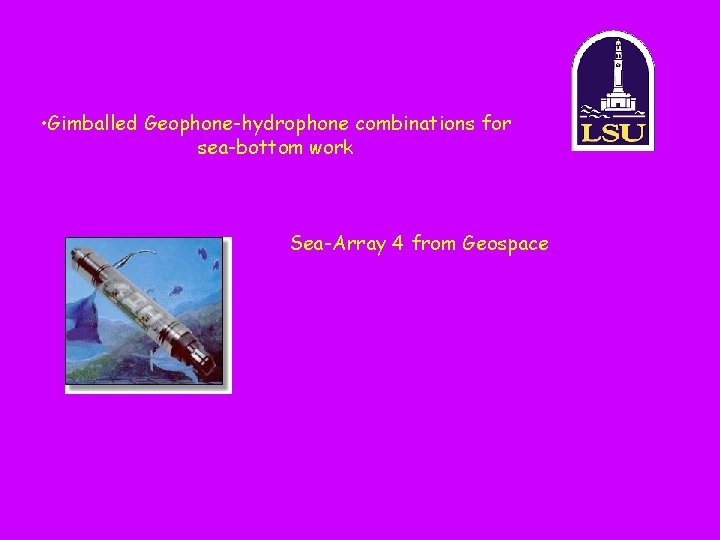
• Gimballed Geophone-hydrophone combinations for sea-bottom work Sea-Array 4 from Geospace
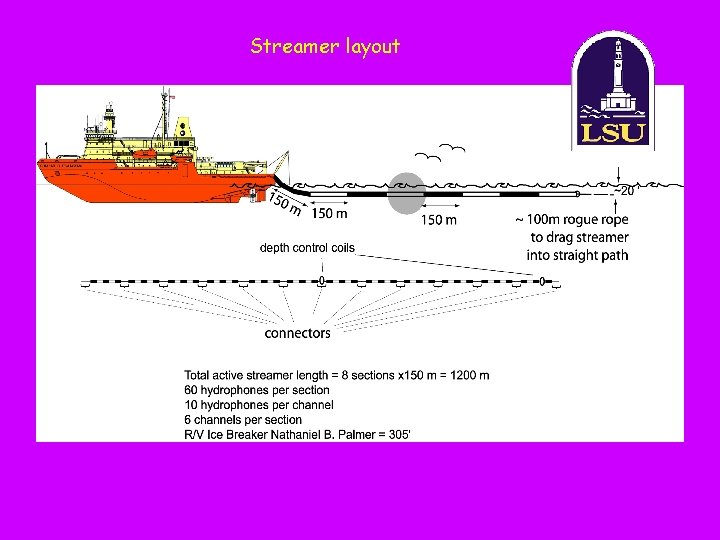
Streamer layout
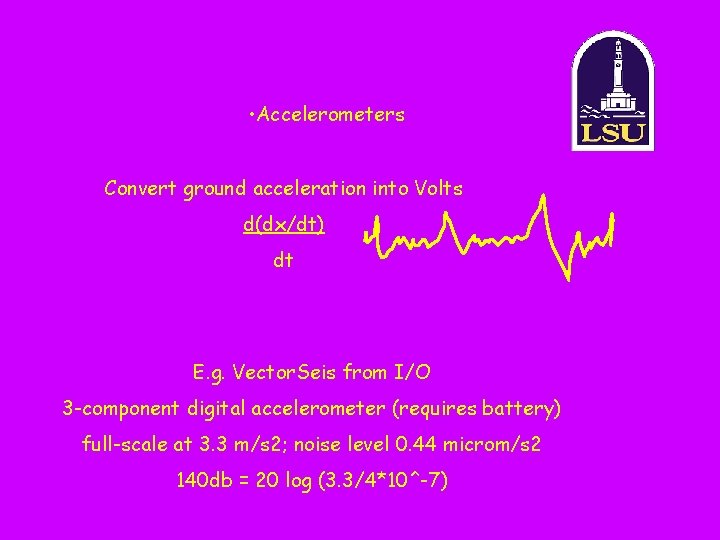
• Accelerometers Convert ground acceleration into Volts d(dx/dt) dt E. g. Vector. Seis from I/O 3 -component digital accelerometer (requires battery) full-scale at 3. 3 m/s 2; noise level 0. 44 microm/s 2 140 db = 20 log (3. 3/4*10^-7)
Outline-1 CMP METHOD (Harry Mayne) Seismic sensors • geophones • hydrophones • gimballed geophones and hydrophones • accelerometers Sources • Explosives • Vibroseis SEGY data
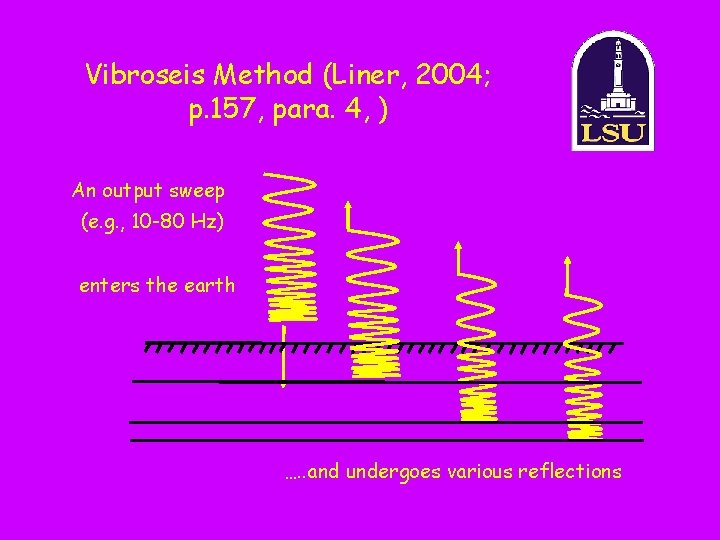
Vibroseis Method (Liner, 2004; p. 157, para. 4, ) An output sweep (e. g. , 10 -80 Hz) enters the earth …. . and undergoes various reflections
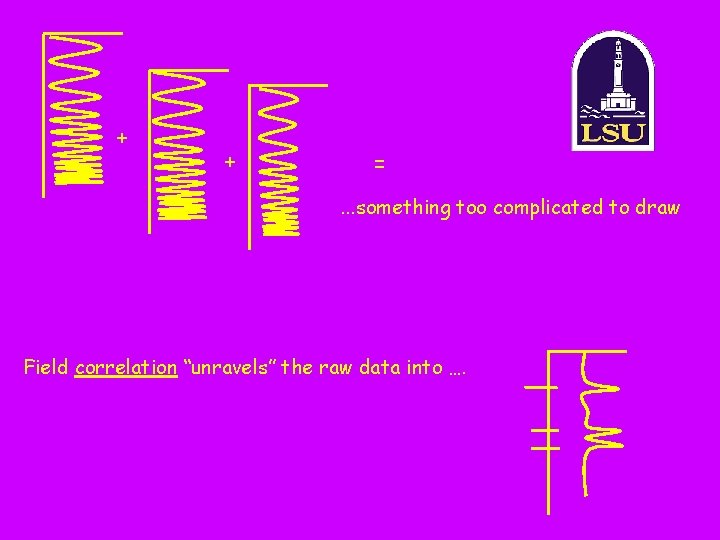
+ + =. . . something too complicated to draw Field correlation “unravels” the raw data into ….
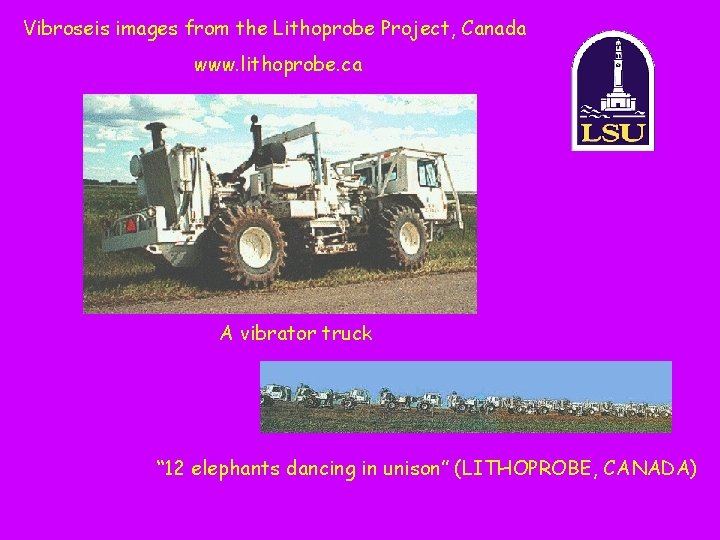
Vibroseis images from the Lithoprobe Project, Canada www. lithoprobe. ca A vibrator truck “ 12 elephants dancing in unison” (LITHOPROBE, CANADA)
Explosives Noble Explochem Limited
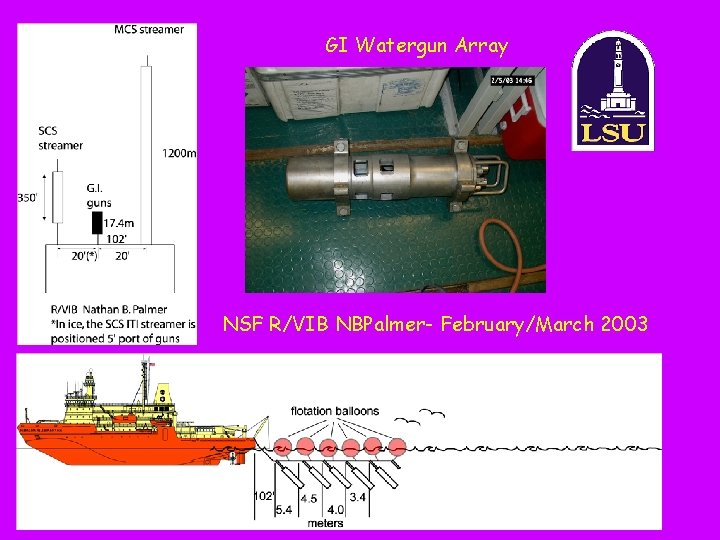
GI Watergun Array NSF R/VIB NBPalmer- February/March 2003
Sercel G. GUN 150 cu. In. firing at 2, 000 p. s. i. • Link to movie of this G. Gun working in a pool
Outline-1 CMP METHOD (Harry Mayne) Seismic sensors • geophones • hydrophones • gimballed geophones and hydrophones • accelerometers Sources • Explosives • Vibroseis SEGY data
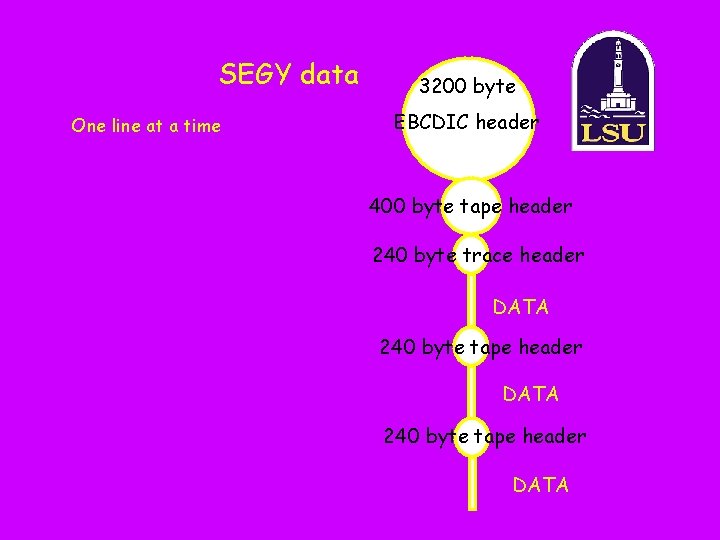
SEGY data One line at a time 3200 byte EBCDIC header 400 byte tape header 240 byte trace header DATA 240 byte tape header DATA
Outline-2 Acquisition Parameters • Time Sample Rate • Offset Range • Listen Time • Sample Rate and Temporal Aliasing • Geophone Spacing and Spatial Aliasing • Shooting geometry • inline • cross-line
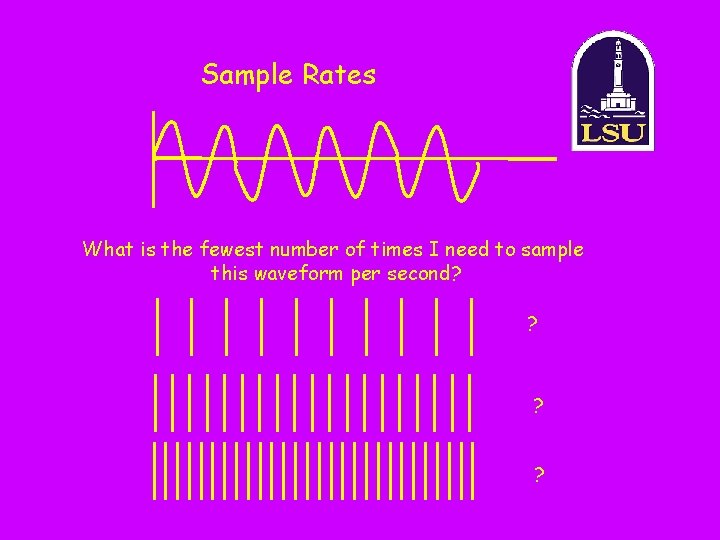
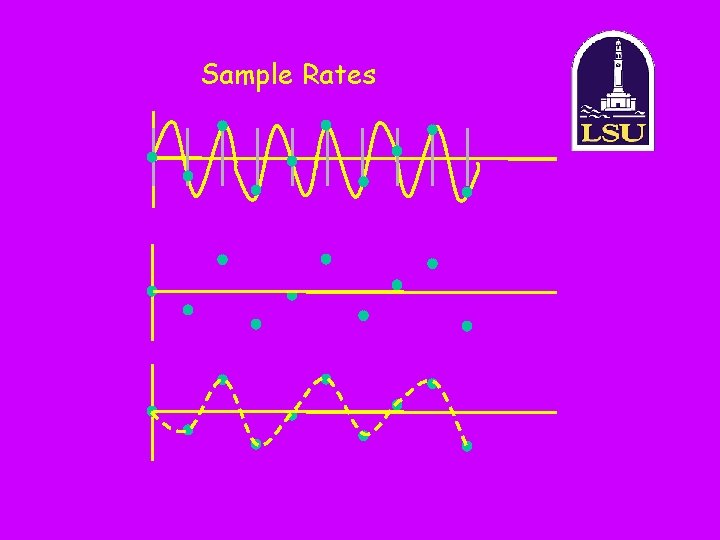
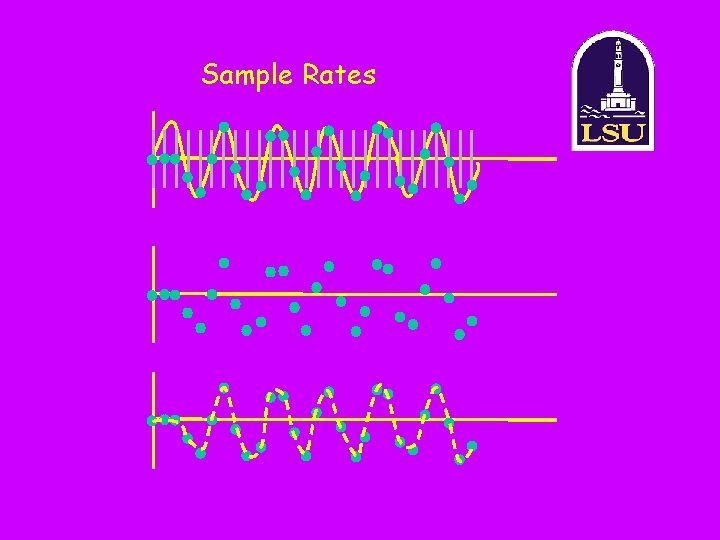
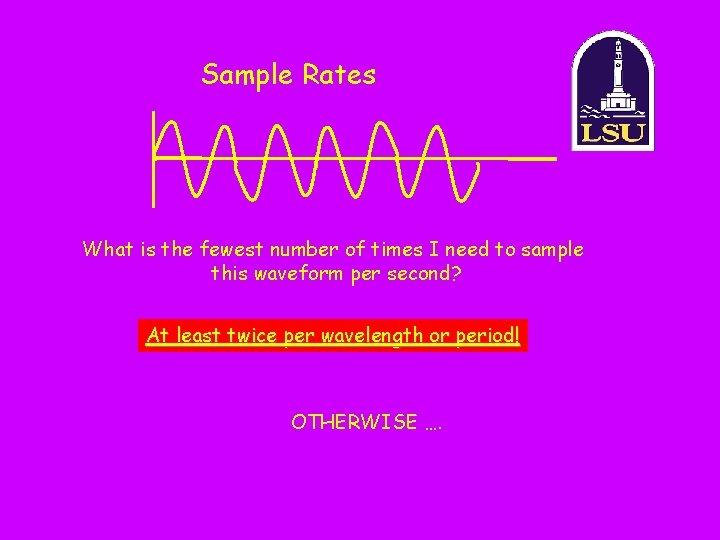
Sample Rates What is the fewest number of times I need to sample this waveform per second? ?
Sample Rates
Sample Rates
Sample Rates
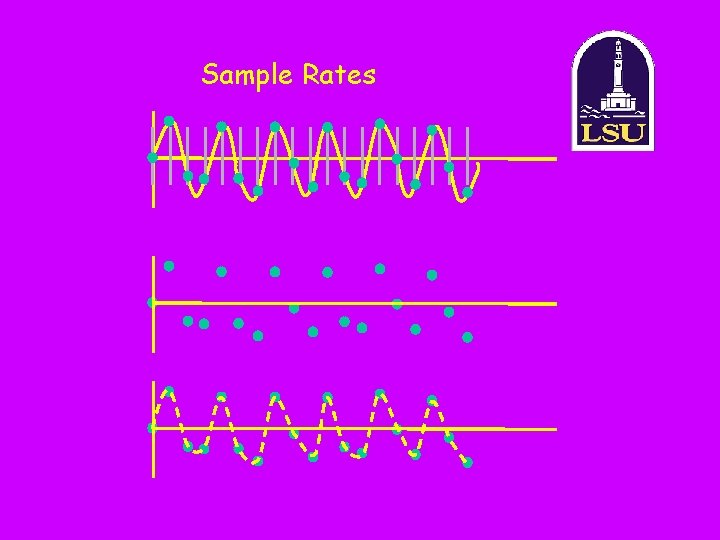
Sample Rates What is the fewest number of times I need to sample this waveform per second? At least twice per wavelength or period! OTHERWISE ….
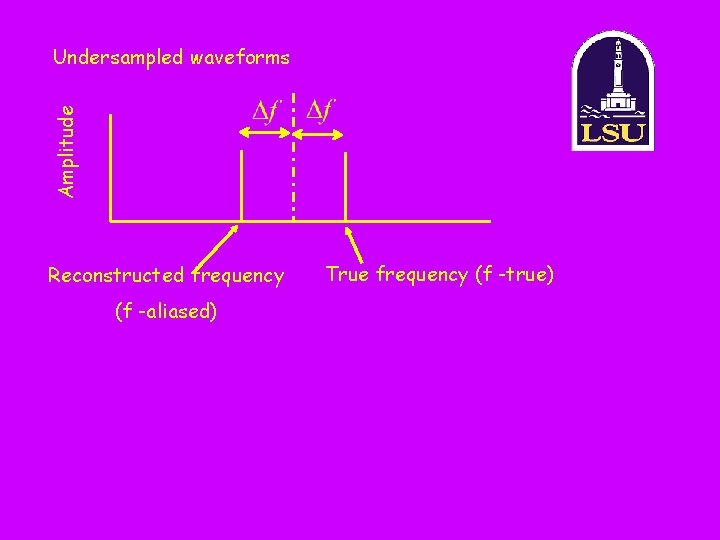
Amplitude Undersampled waveforms Reconstructed frequency (f -aliased) True frequency (f -true)
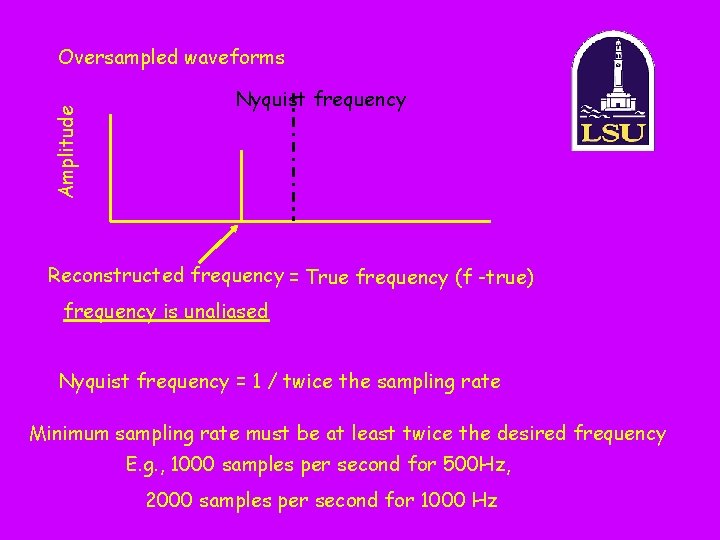
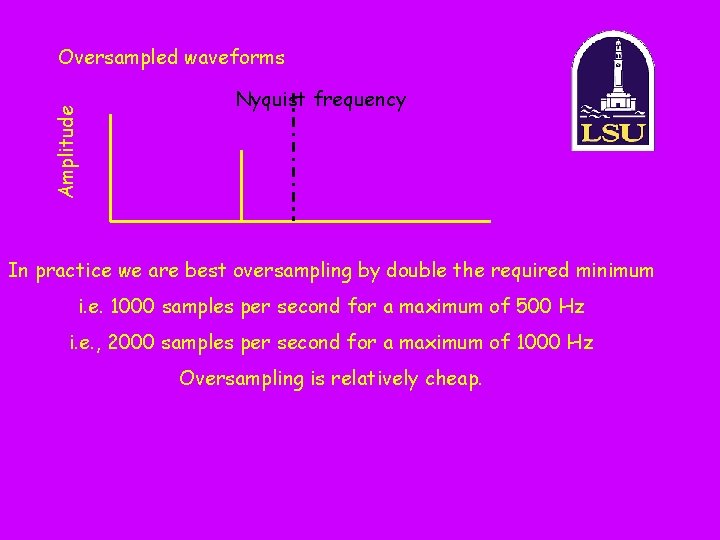
Amplitude Oversampled waveforms Nyquist frequency Reconstructed frequency = True frequency (f -true) frequency is unaliased Nyquist frequency = 1 / twice the sampling rate Minimum sampling rate must be at least twice the desired frequency E. g. , 1000 samples per second for 500 Hz, 2000 samples per second for 1000 Hz
Amplitude Oversampled waveforms Nyquist frequency In practice we are best oversampling by double the required minimum i. e. 1000 samples per second for a maximum of 500 Hz i. e. , 2000 samples per second for a maximum of 1000 Hz Oversampling is relatively cheap.
Outline-2 Acquisition Parameters • Sample Rate and Temporal Aliasing • Offset Range • Listen Time • Geophone Spacing and Spatial Aliasing
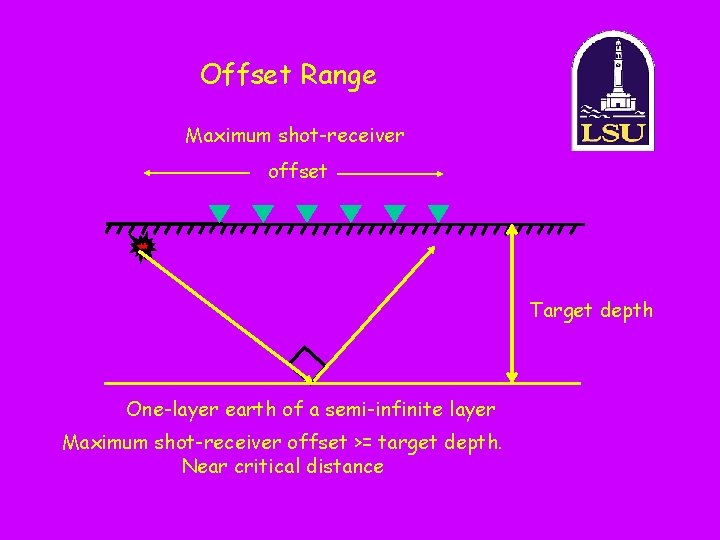
Offset Range Maximum shot-receiver offset Target depth One-layer earth of a semi-infinite layer Maximum shot-receiver offset >= target depth. Near critical distance
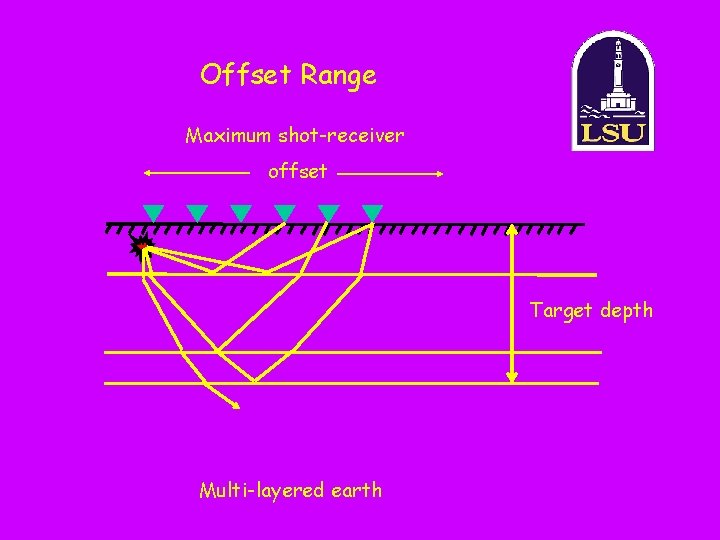
Offset Range Maximum shot-receiver offset Target depth Multi-layered earth
Outline-2 Acquisition Parameters • Time Sample Rate • Offset Range • Listen Time • Sample Rate and Temporal Aliasing • Geophone Spacing and Spatial Aliasing • Shooting geometry • inline • cross-line
Listen Time …. Twice target time to be sage
Outline-2 Acquisition Parameters • Time Sample Rate • Offset Range • Listen Time • Sample Rate and Temporal Aliasing • Geophone Spacing and Spatial Aliasing • Shooting geometry • inline • cross-line
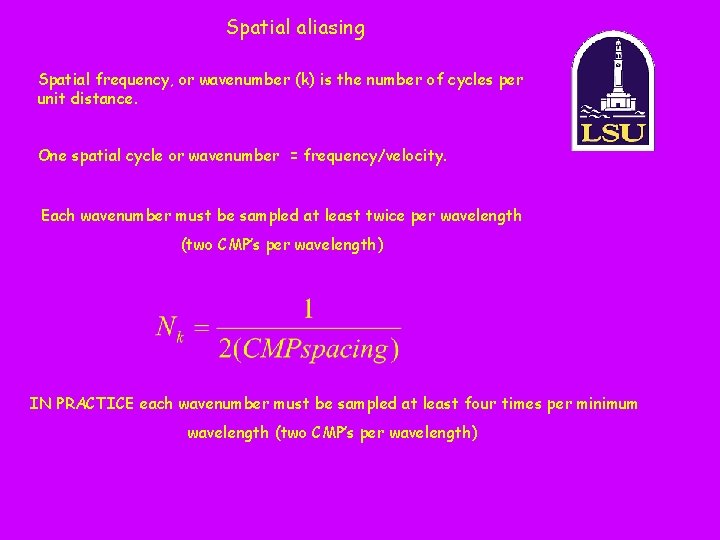
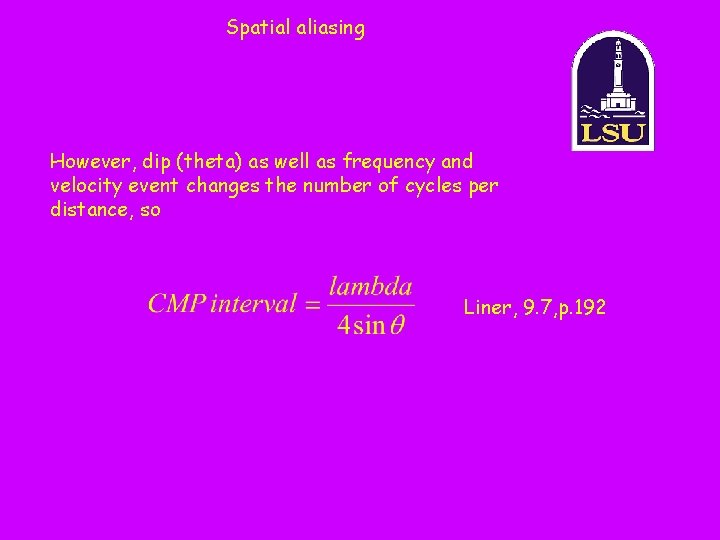
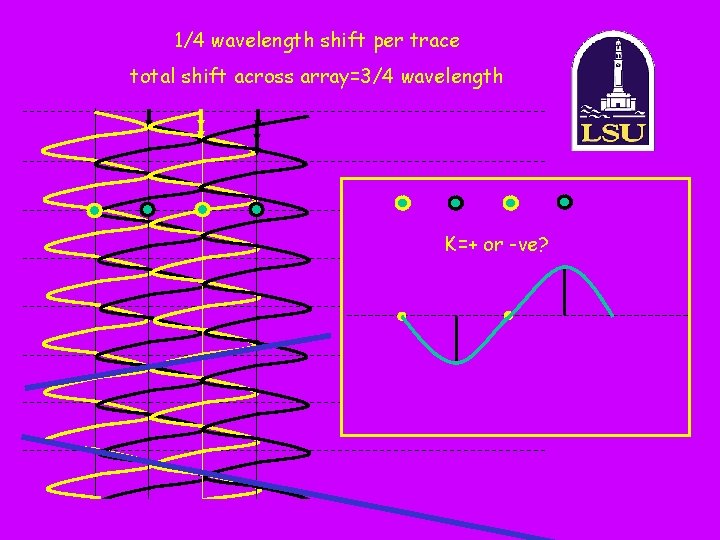
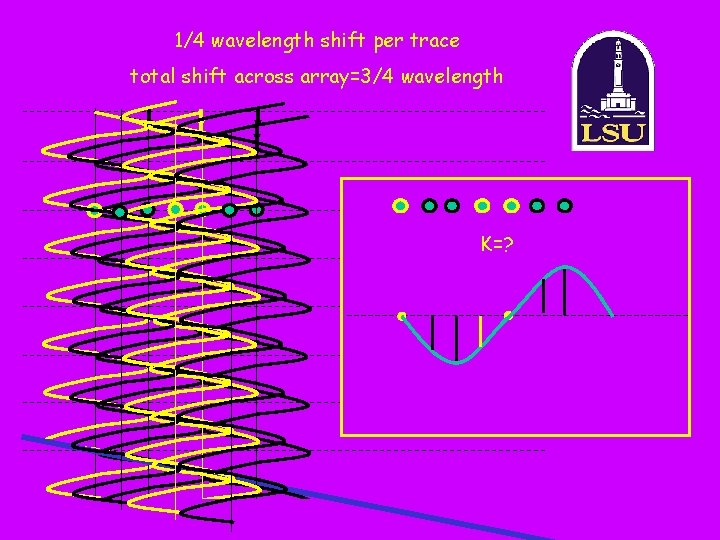
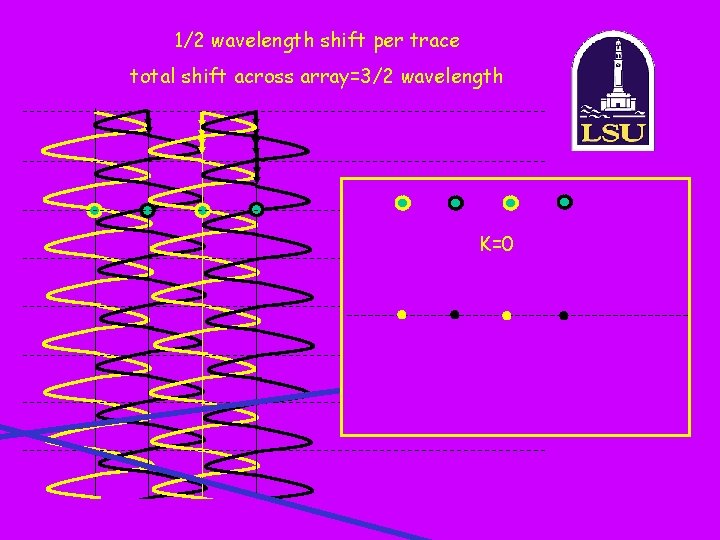
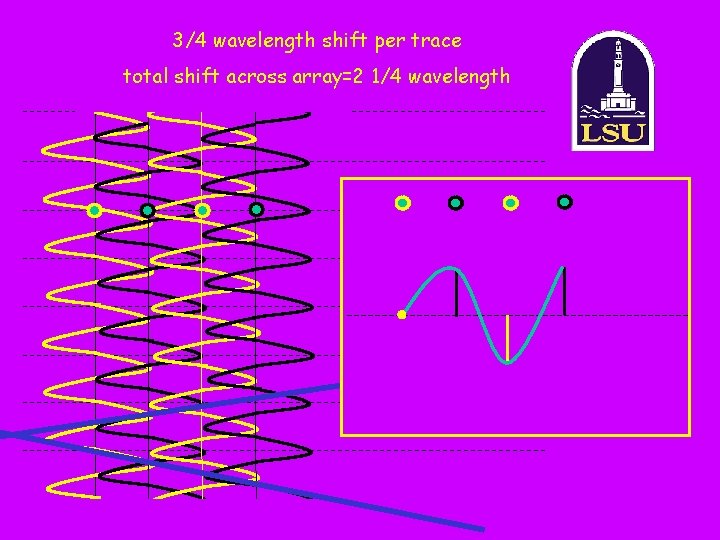
Spatial aliasing Spatial frequency, or wavenumber (k) is the number of cycles per unit distance. One spatial cycle or wavenumber = frequency/velocity. Each wavenumber must be sampled at least twice per wavelength (two CMP’s per wavelength) IN PRACTICE each wavenumber must be sampled at least four times per minimum wavelength (two CMP’s per wavelength)
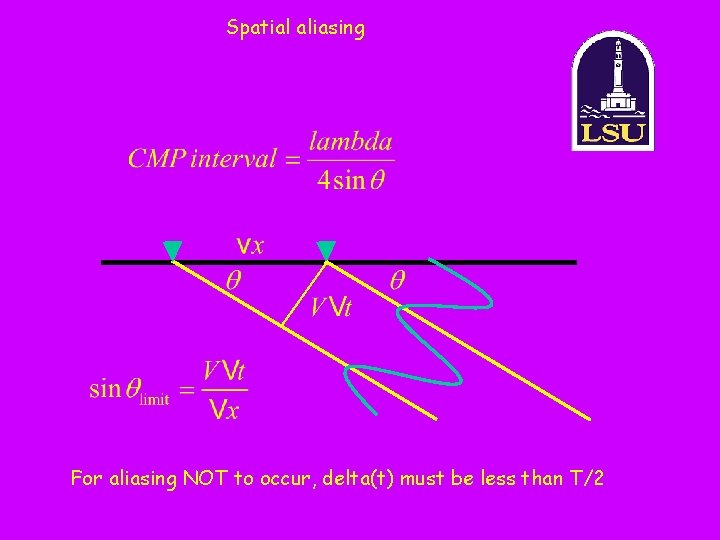
Spatial aliasing However, dip (theta) as well as frequency and velocity event changes the number of cycles per distance, so Liner, 9. 7, p. 192
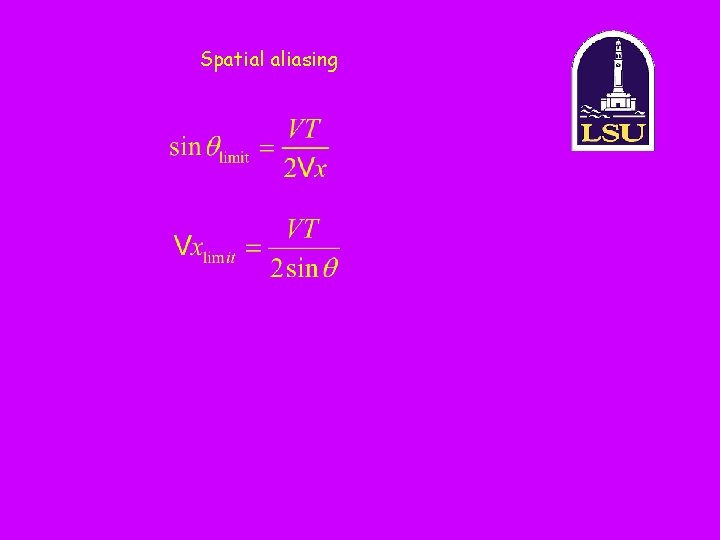
Spatial aliasing For aliasing NOT to occur, delta(t) must be less than T/2
Spatial aliasing
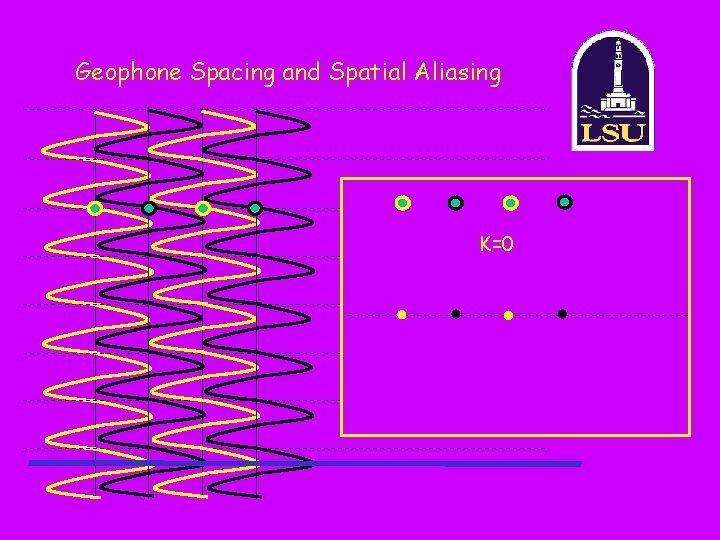
Geophone Spacing and Spatial Aliasing K=0
1/4 wavelength shift per trace total shift across array=3/4 wavelength K=+ or -ve?
1/4 wavelength shift per trace total shift across array=3/4 wavelength K=?
1/2 wavelength shift per trace total shift across array=3/2 wavelength K=0
3/4 wavelength shift per trace total shift across array=2 1/4 wavelength
Spatial aliasing • Degrades (“string of pearls”) stacked sections • Degrades migration
Signal-to-Noise Improves with stacking: • greater fold • greater repetition of shots
Outline-2 Acquisition Parameters • Time Sample Rate • Offset Range • Listen Time • Sample Rate and Temporal Aliasing • Geophone Spacing and Spatial Aliasing • Shooting geometry • inline • cross-line
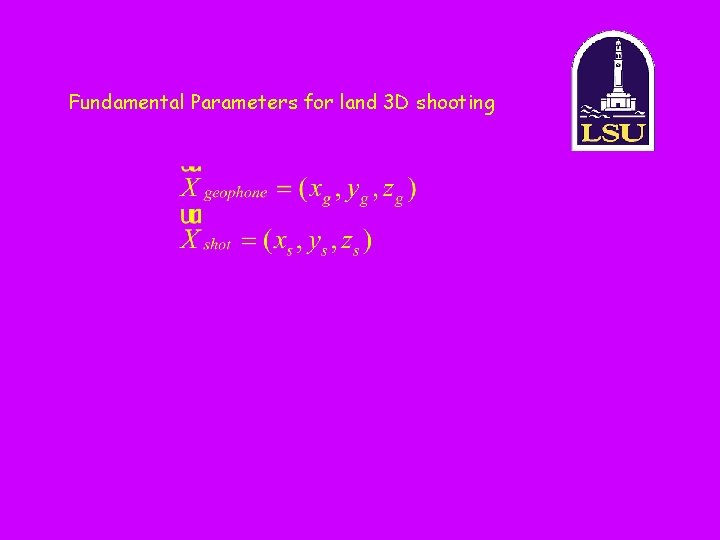
Fundamental Parameters for land 3 D shooting
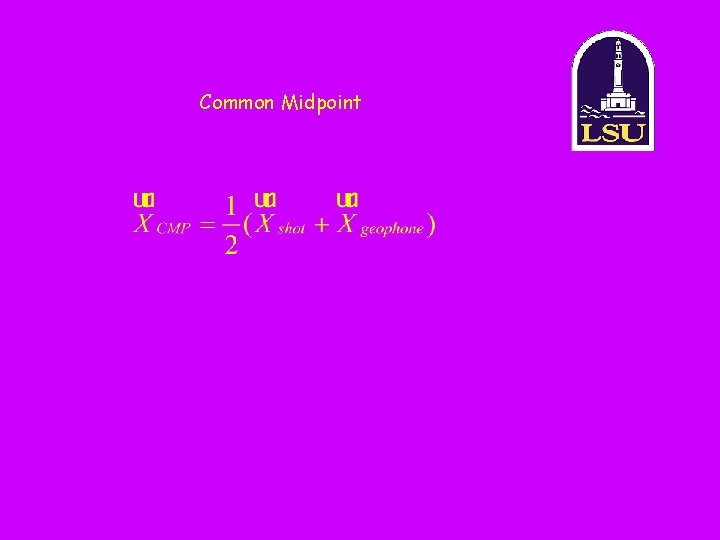
Common Midpoint
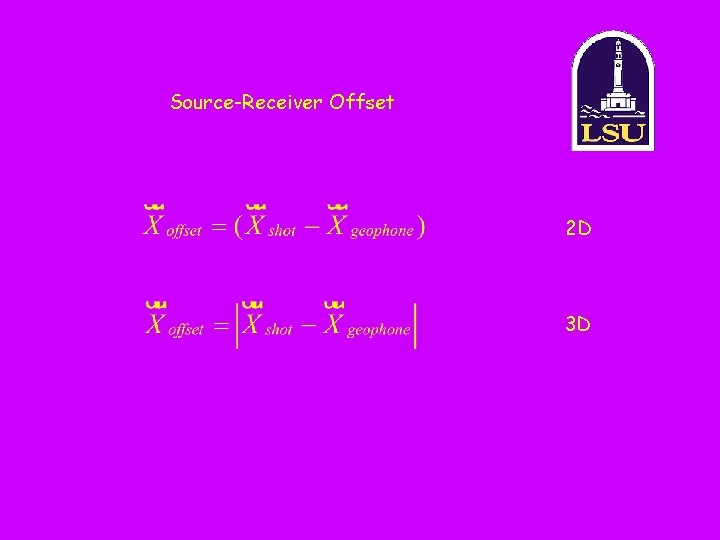
Source-Receiver Offset 2 D 3 D
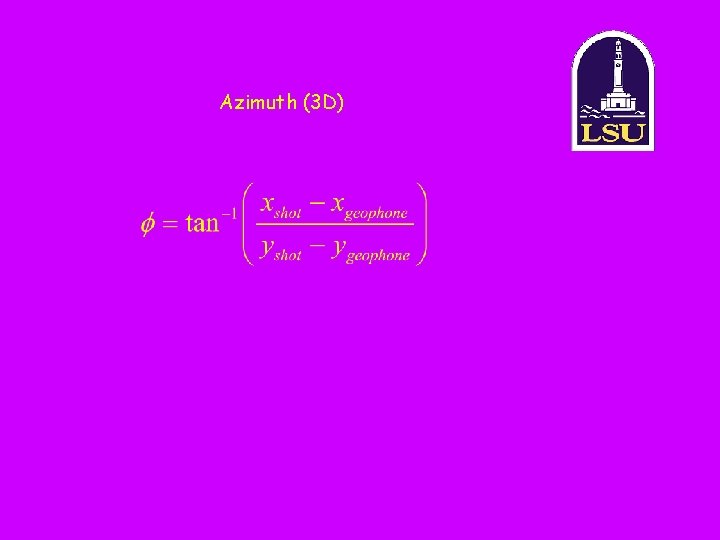
Azimuth (3 D)
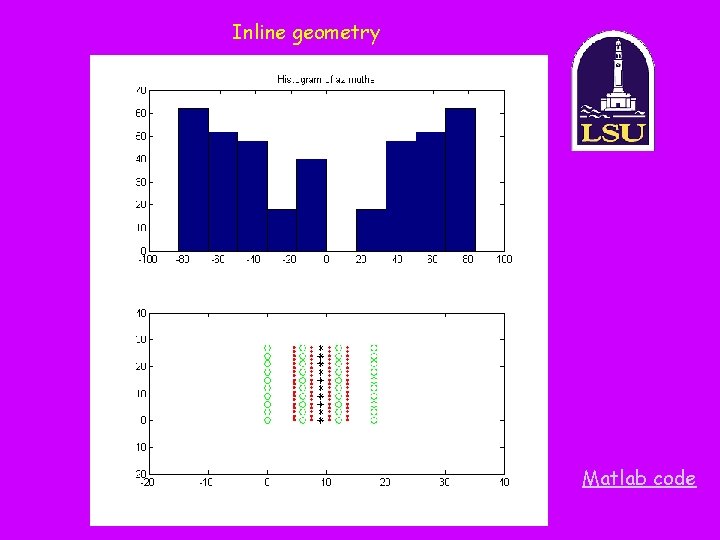
Inline geometry Matlab code
Outline-2 Acquisition Parameters • Time Sample Rate • Offset Range • Listen Time • Sample Rate and Temporal Aliasing • Geophone Spacing and Spatial Aliasing • Shooting geometry • inline • cross-line
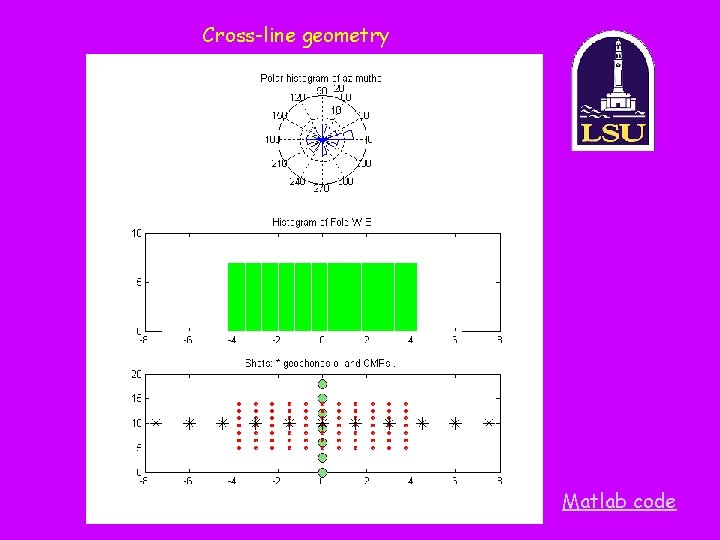
Cross-line geometry Matlab code
Spatial aliasing • Degrades (“string of pearls”) stacked sections • Degrades migration