
Land Fever in Georgia Headright System Late 1700s
- Slides: 23
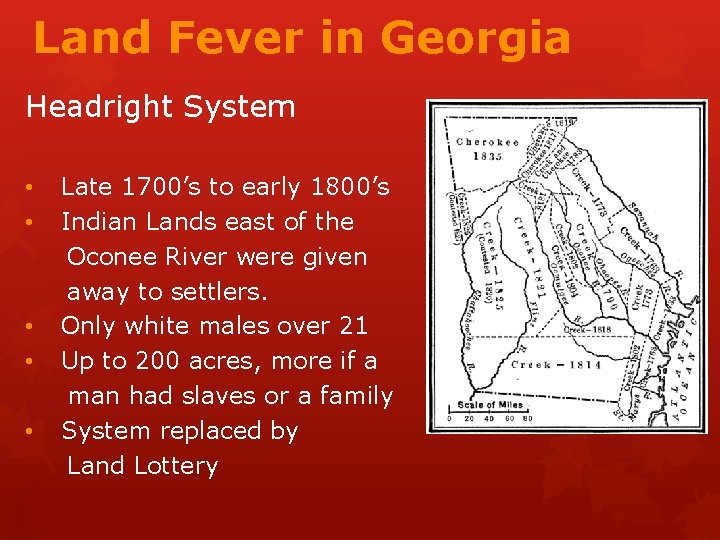
Land Fever in Georgia Headright System • • • Late 1700’s to early 1800’s Indian Lands east of the Oconee River were given away to settlers. Only white males over 21 Up to 200 acres, more if a man had slaves or a family System replaced by Land Lottery
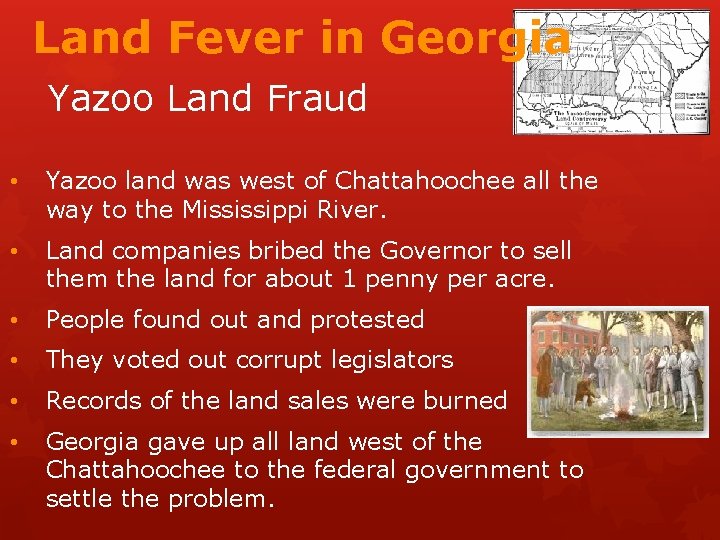
Land Fever in Georgia Yazoo Land Fraud • Yazoo land was west of Chattahoochee all the way to the Mississippi River. • Land companies bribed the Governor to sell them the land for about 1 penny per acre. • People found out and protested • They voted out corrupt legislators • Records of the land sales were burned • Georgia gave up all land west of the Chattahoochee to the federal government to settle the problem.
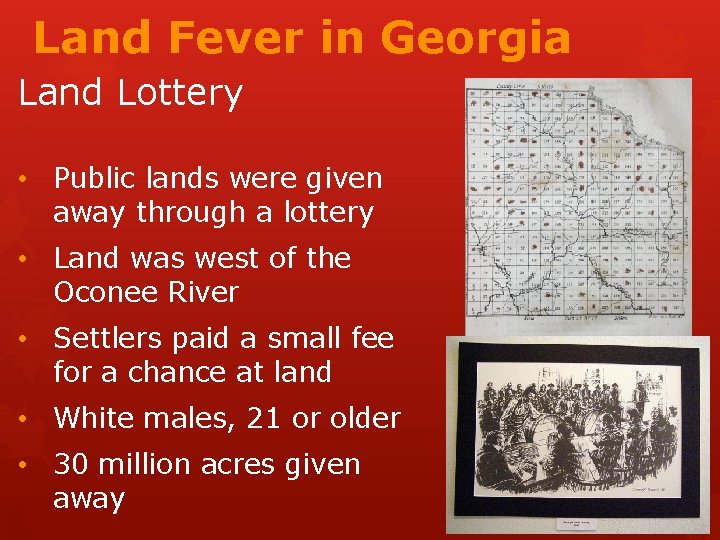
Land Fever in Georgia Land Lottery • Public lands were given away through a lottery • Land was west of the Oconee River • Settlers paid a small fee for a chance at land • White males, 21 or older • 30 million acres given away
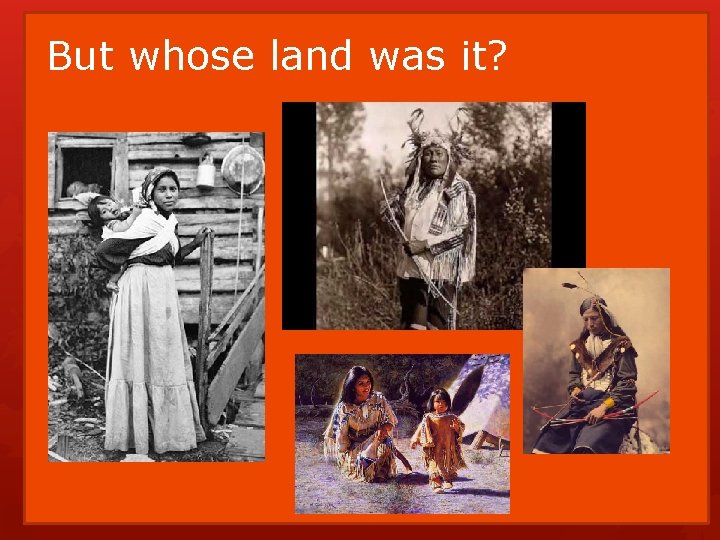
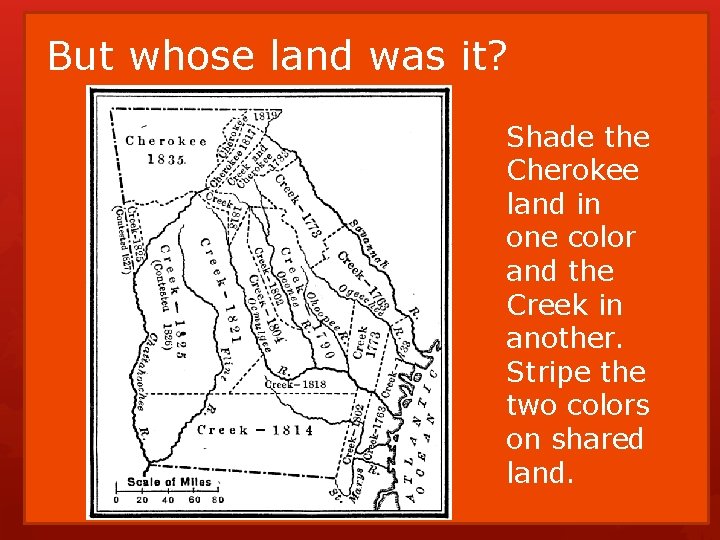
But whose land was it?
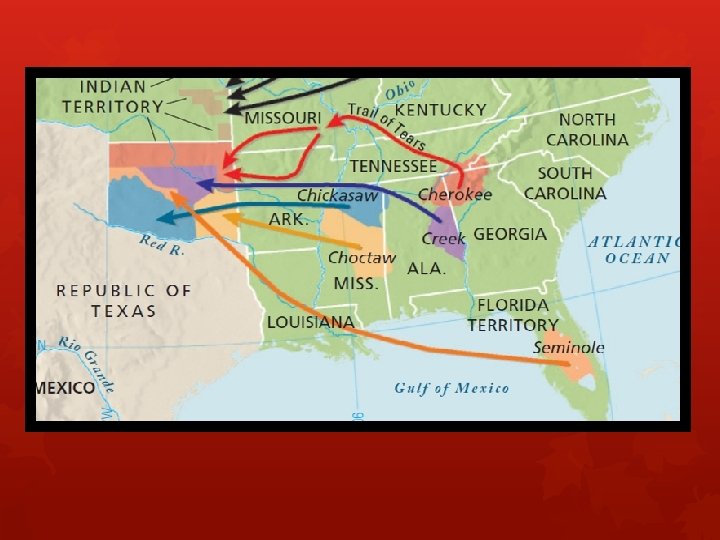
But whose land was it? Shade the Cherokee land in one color and the Creek in another. Stripe the two colors on shared land.
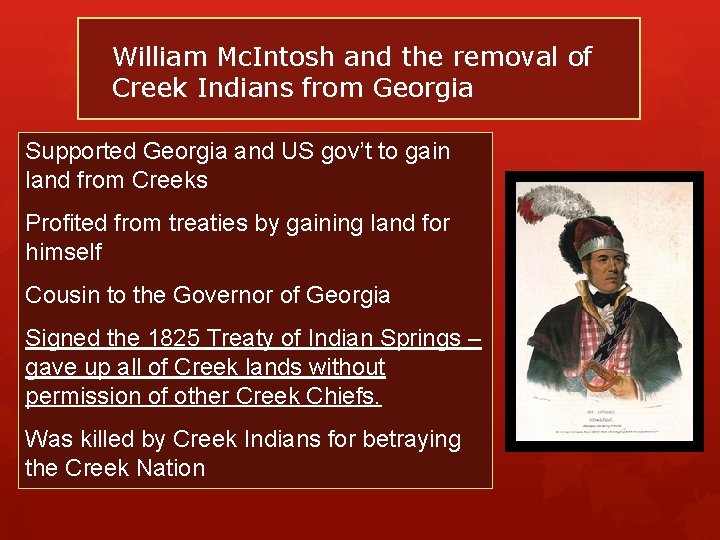
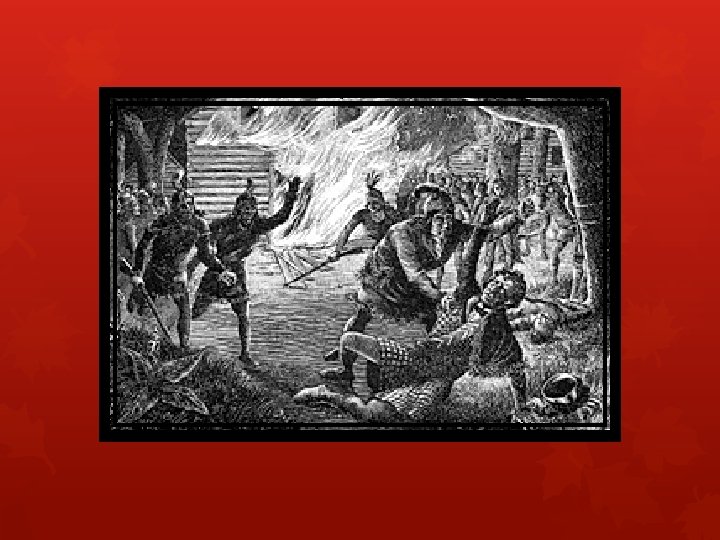
William Mc. Intosh and the removal of Creek Indians from Georgia Supported Georgia and US gov’t to gain land from Creeks Profited from treaties by gaining land for himself Cousin to the Governor of Georgia Signed the 1825 Treaty of Indian Springs – gave up all of Creek lands without permission of other Creek Chiefs. Was killed by Creek Indians for betraying the Creek Nation
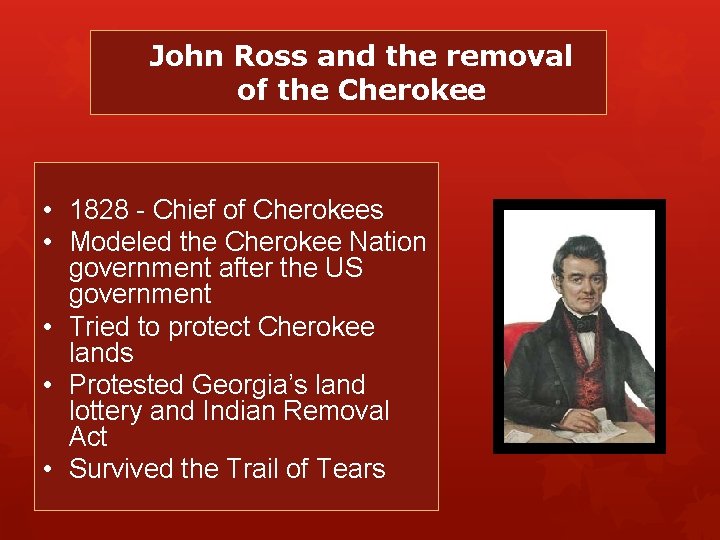
John Ross and the removal of the Cherokee • 1828 - Chief of Cherokees • Modeled the Cherokee Nation government after the US government • Tried to protect Cherokee lands • Protested Georgia’s land lottery and Indian Removal Act • Survived the Trail of Tears
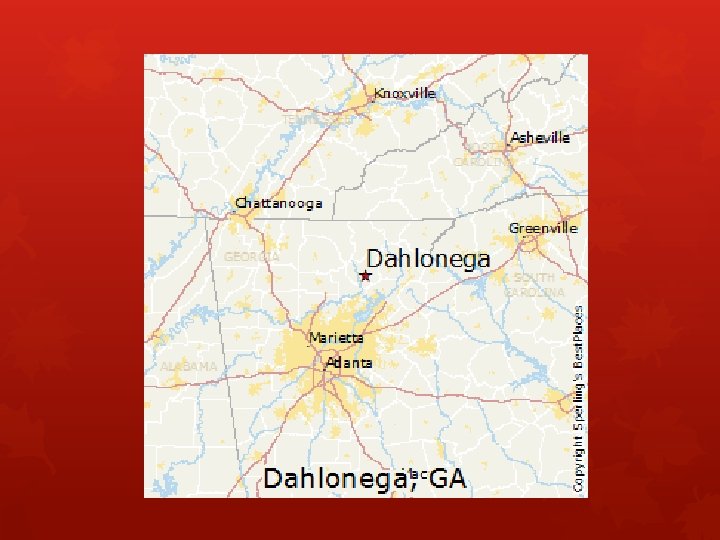
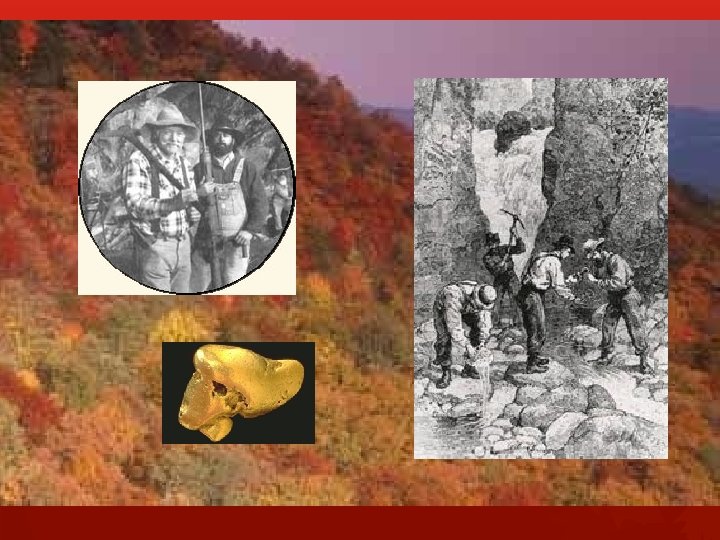
DAHLONEGA GOLD RUSH 1829 - Gold found on Cherokee land in Dahlonega, Ga. Thousands of white prospectors flooded in demanding rights to the land. The Georgia Legislature acted to take away almost all rights from the Indians.
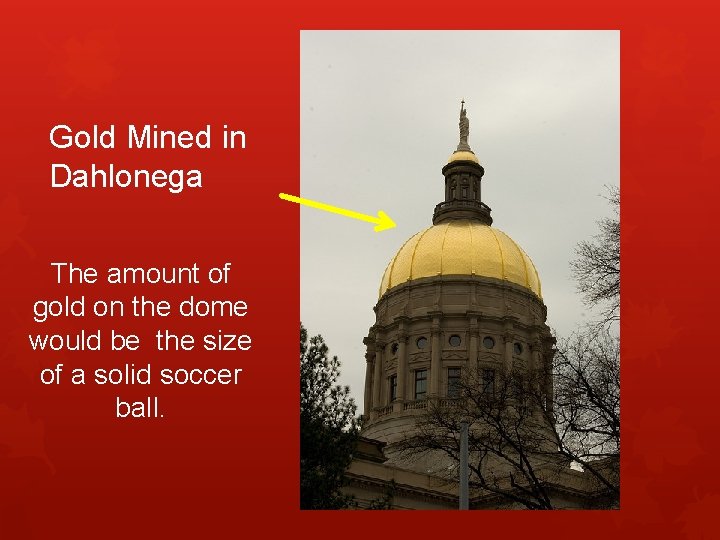
Gold Mined in Dahlonega The amount of gold on the dome would be the size of a solid soccer ball.
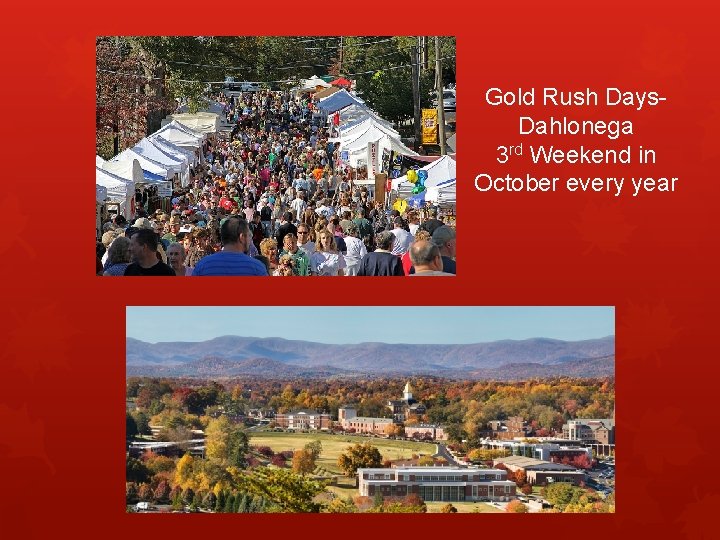
Gold Rush Days. Dahlonega 3 rd Weekend in October every year
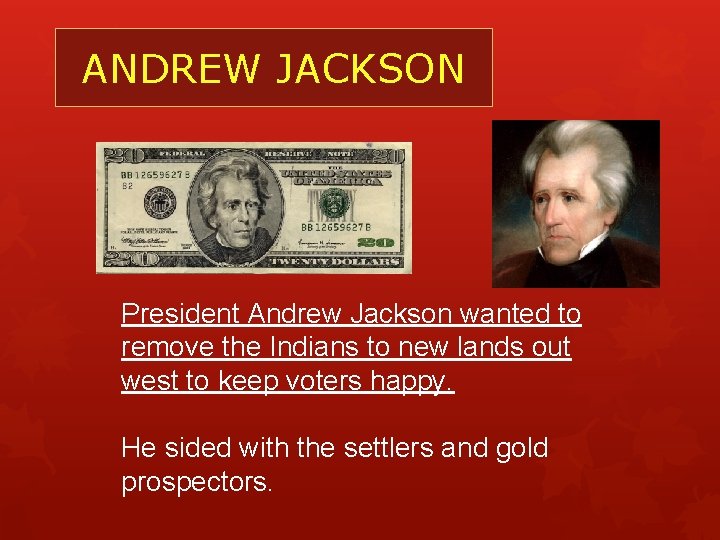
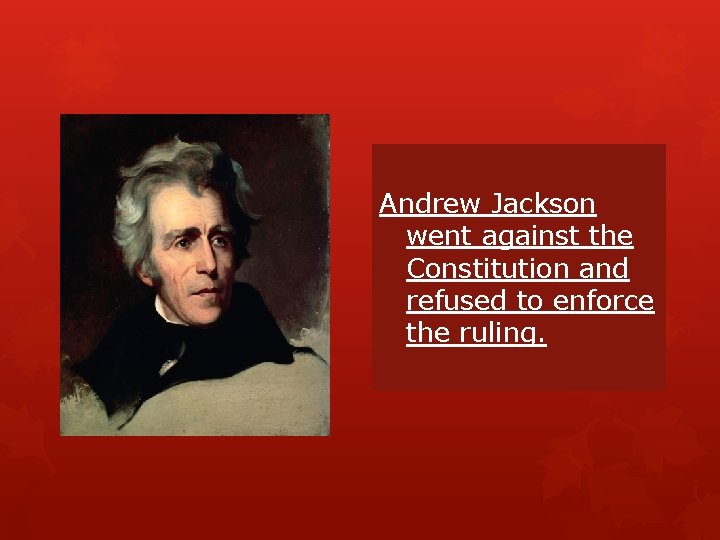
ANDREW JACKSON President Andrew Jackson wanted to remove the Indians to new lands out west to keep voters happy. He sided with the settlers and gold prospectors.
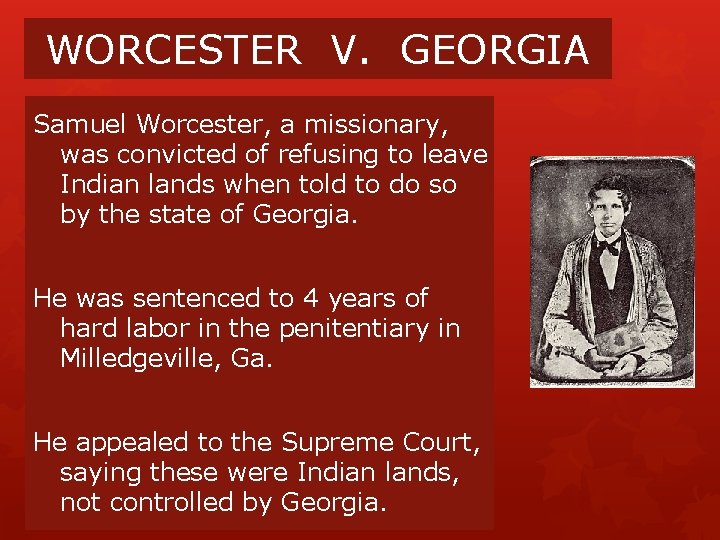
WORCESTER V. GEORGIA Samuel Worcester, a missionary, was convicted of refusing to leave Indian lands when told to do so by the state of Georgia. He was sentenced to 4 years of hard labor in the penitentiary in Milledgeville, Ga. He appealed to the Supreme Court, saying these were Indian lands, not controlled by Georgia.
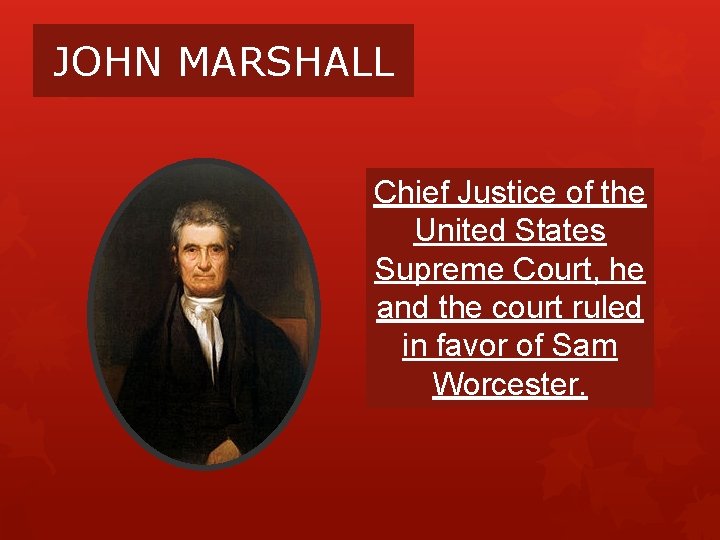
JOHN MARSHALL Chief Justice of the United States Supreme Court, he and the court ruled in favor of Sam Worcester.
Worcester V. Georgia The Supreme Court ruled that the Cherokee nation was a "distinct community" with selfgovernment "in which the laws of Georgia can have no force, " establishing the doctrine that the national government of the United States, and not individual states, had authority in Indian affairs.
Andrew Jackson went against the Constitution and refused to enforce the ruling.
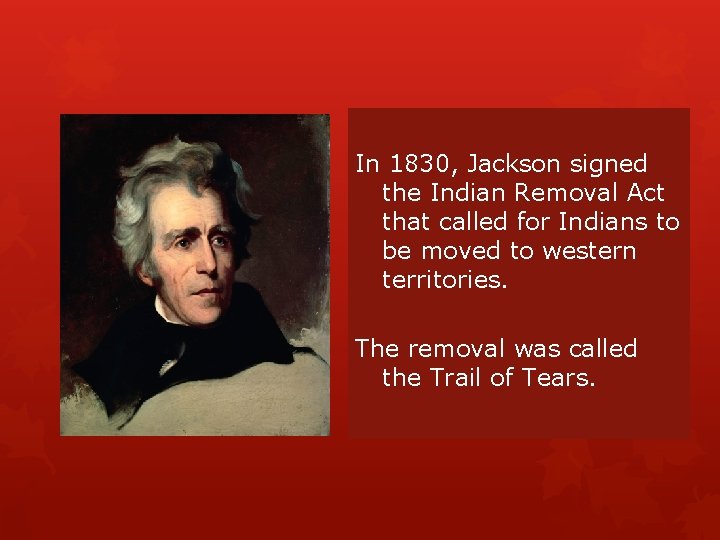
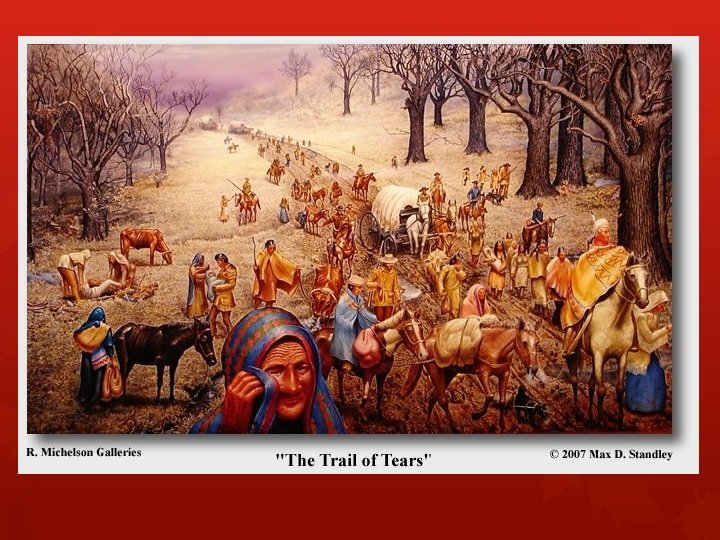
In 1830, Jackson signed the Indian Removal Act that called for Indians to be moved to western territories. The removal was called the Trail of Tears.
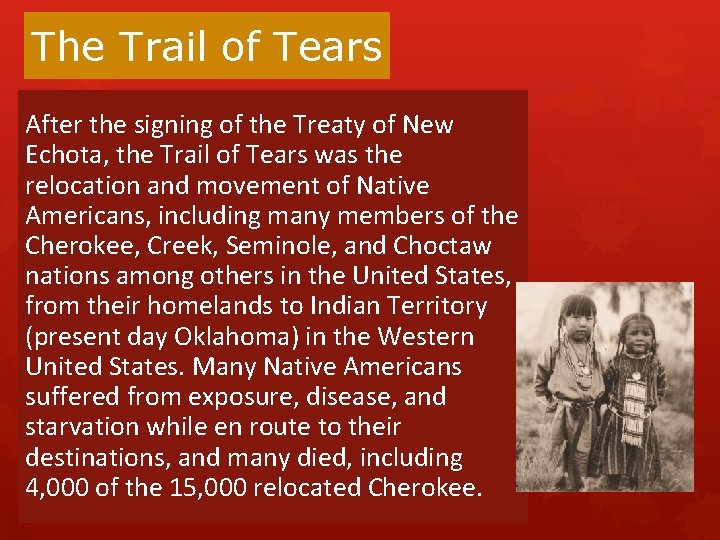
The Trail of Tears After the signing of the Treaty of New Echota, the Trail of Tears was the relocation and movement of Native Americans, including many members of the Cherokee, Creek, Seminole, and Choctaw nations among others in the United States, from their homelands to Indian Territory (present day Oklahoma) in the Western United States. Many Native Americans suffered from exposure, disease, and starvation while en route to their destinations, and many died, including 4, 000 of the 15, 000 relocated Cherokee.