
LAN vs WAN Networking Basics 8 th Grade
LAN vs. WAN Networking Basics 8 th Grade 1
Networks � Advantages: › Enable people to work together › Reduce costs from sharing networked hardware and software › Increase productivity by sharing data › Provide access to a wide range of services and specialized peripheral devices � Disadvantages: › Unavailable resources when network malfunctions › More vulnerable to unauthorized access than stand alone computers › Susceptible to an increased number of worms, Trojan horses, and blended threats 2
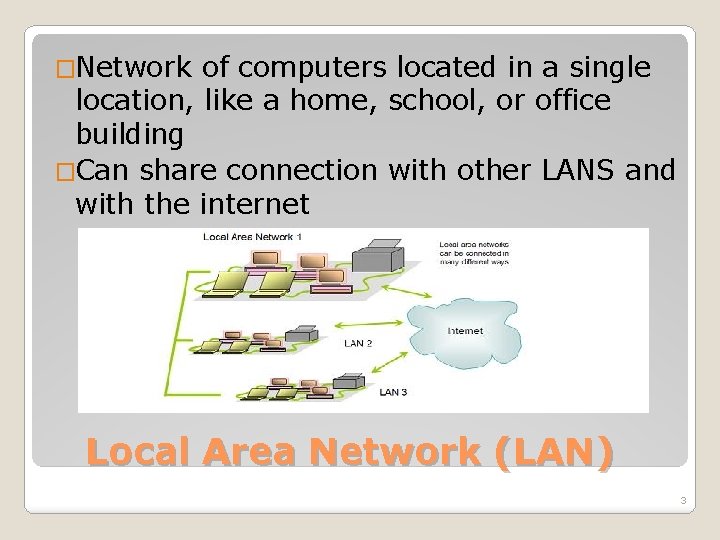
�Network of computers located in a single location, like a home, school, or office building �Can share connection with other LANS and with the internet Local Area Network (LAN) 3
�Local area network �Relatively limited in size �Computers connected in small areas �Same office �True peer-to-peer �Can support limited number of nodes Characteristics of a LAN? 4
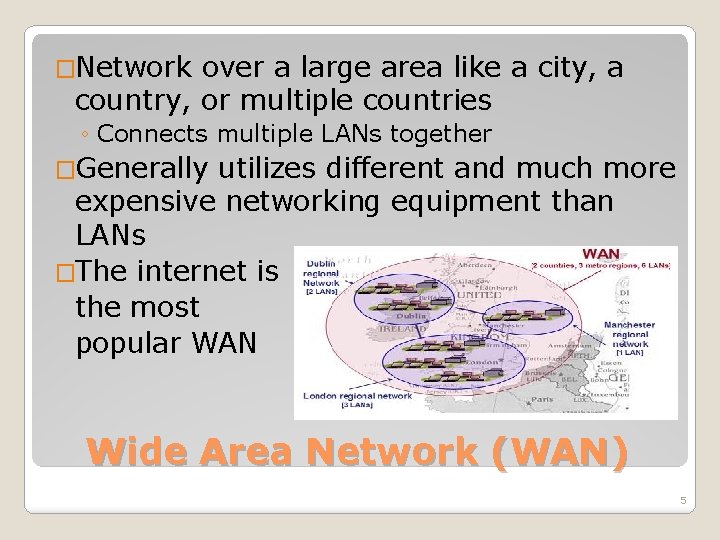
�Network over a large area like a city, a country, or multiple countries ◦ Connects multiple LANs together �Generally utilizes different and much more expensive networking equipment than LANs �The internet is the most popular WAN Wide Area Network (WAN) 5

�Campus Area Network – limited geographic area �Metropolitan Area Network – towns and cities �Home Area Network – home setups �Global Area Network – uses satellites to link networks �Storage Area Network – stores large amounts of data Types of WANs 6
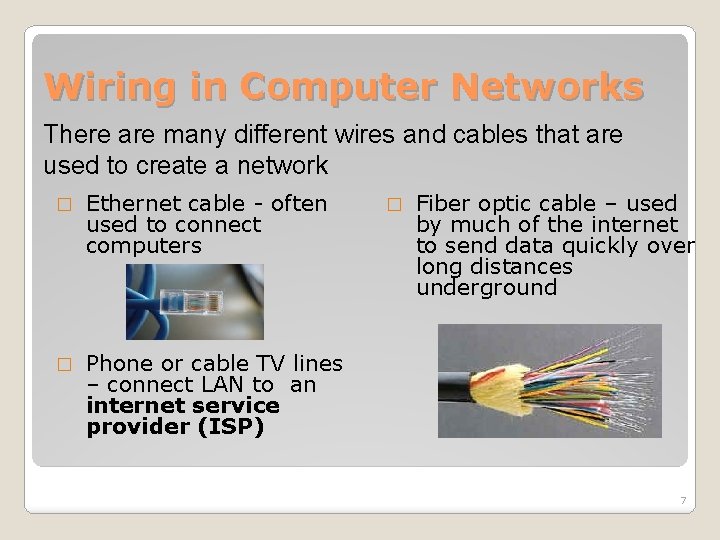
Wiring in Computer Networks There are many different wires and cables that are used to create a network � Ethernet cable - often used to connect computers � Phone or cable TV lines – connect LAN to an internet service provider (ISP) � Fiber optic cable – used by much of the internet to send data quickly over long distances underground 7
�A wired network uses cables to connect network devices �Wired networks are fast, secure, and simple to configure �Devices tethered to cables have limited mobility Wired Network 8
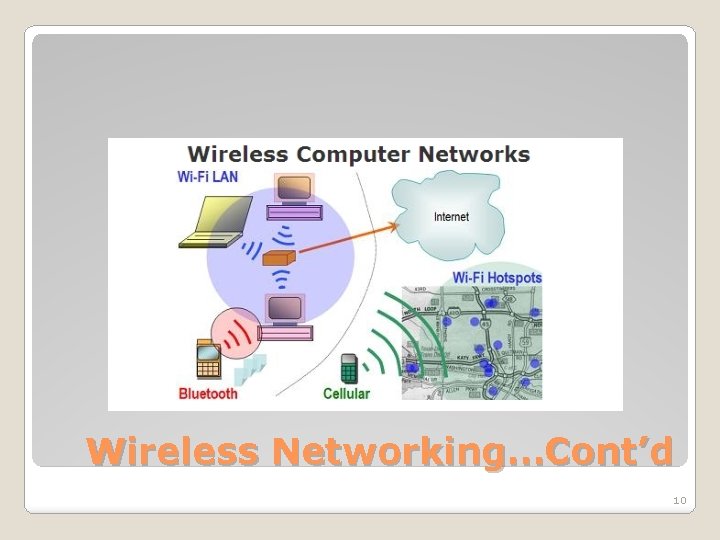
A network is considered wireless when data is transmitted from one device to another without cables or wires � Tend to be slower than wired networks � Have more security issues � Common wireless terms: � › Wi-Fi - common standard technology for building home networks and other LANs › Hotspots – many businesses use Wi-Fi technology to allow the public an access point to a wireless network › Bluetooth – allows handhelds, cell phones, and other peripherals to communicate over short ranges Wireless Networking 9
Wireless Networking…Cont’d 10
- Slides: 10