
LAM symptoms screening assessment and treatment Simon Johnson


- Slides: 25
LAM: symptoms, screening, assessment and treatment Simon Johnson Nottingham University Hospitals NHS Trust National Commissioning Group For Highly Specialised Services National Centre for Lymphangioleiomyomatosis
LAM basics • What is LAM • How LAM effects the lungs and lymphatics • Symptoms & screening • How LAM progresses / monitoring • What treatments are available • The UK LAM Centre
Why the long name? lymphangioleiomyomatosis • • a disease lymphatics vessels smooth muscle sporadic LAM TSC-LAM
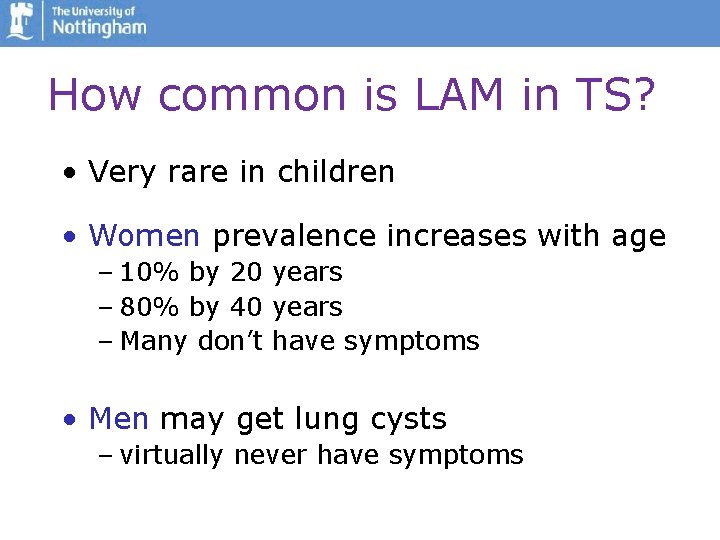
How common is LAM in TS? • Very rare in children • Women prevalence increases with age – 10% by 20 years – 80% by 40 years – Many don’t have symptoms • Men may get lung cysts – virtually never have symptoms
Why does LAM only affect women? • LAM cells respond to oestrogen – grow more quickly – spread around the body • Oestrogen is probably bad for LAM – oestrogen containing medicines – pregnancy – LAM slows down after the menopause
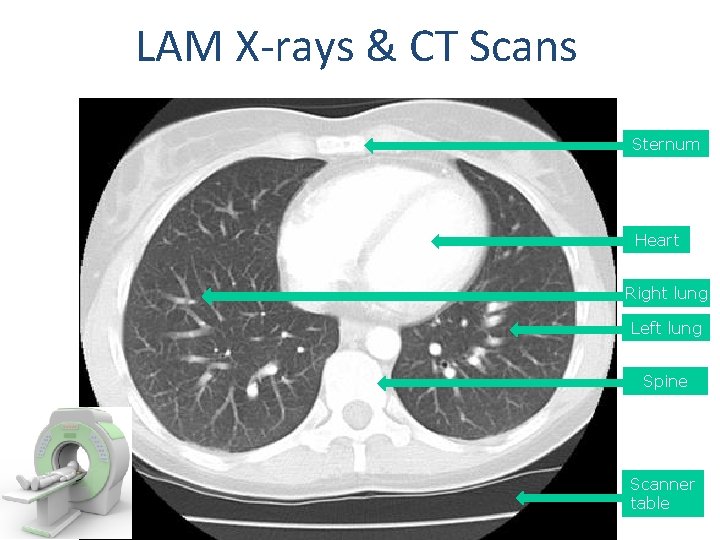
LAM X-rays & CT Scans Sternum Heart Right lung Left lung Spine Scanner table
LAM X-rays & CT Scans
LAM related problems
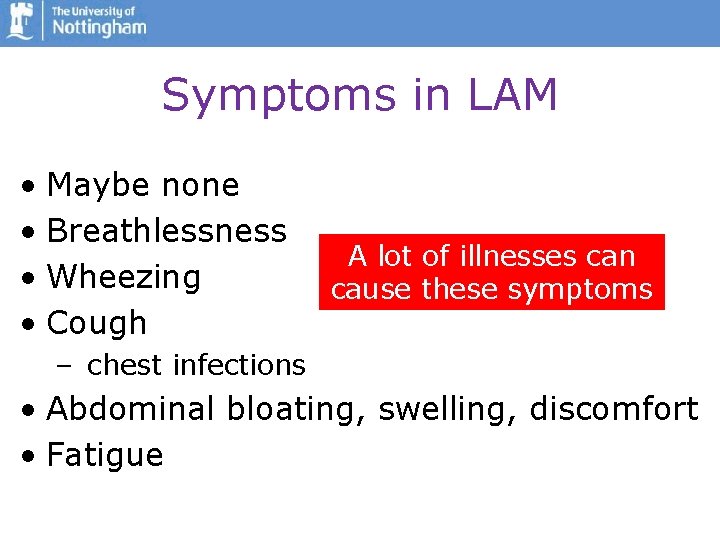
Symptoms in LAM • Maybe none • Breathlessness • Wheezing • Cough A lot of illnesses can cause these symptoms – chest infections • Abdominal bloating, swelling, discomfort • Fatigue
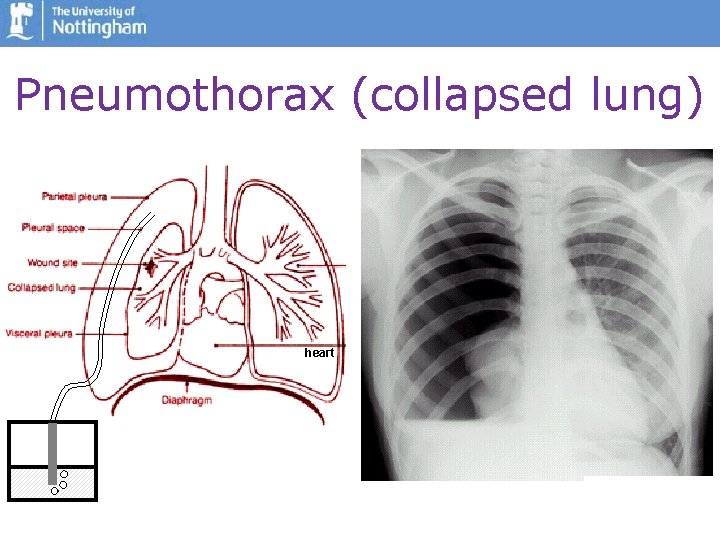
Pneumothorax (collapsed lung) • cysts can leak air causing pneumothorax • pneumothorax in LAM can be difficult heart to treat
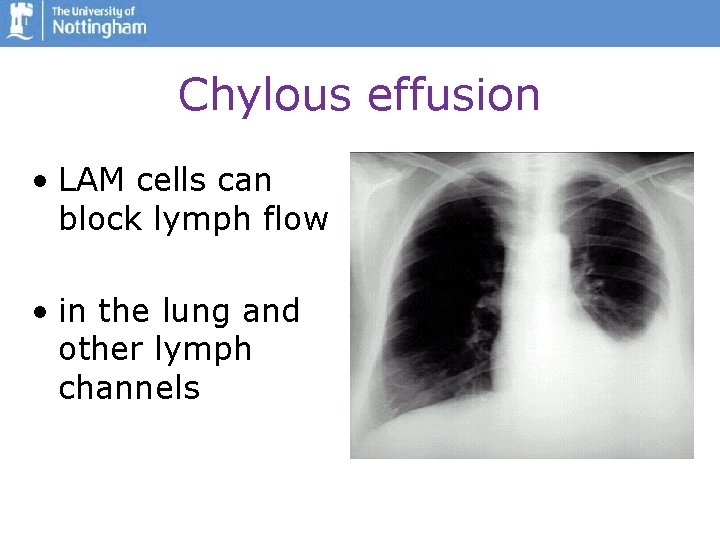
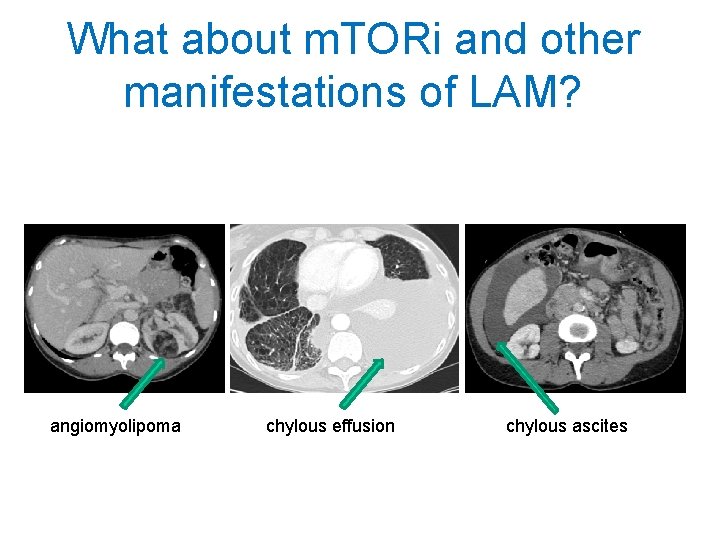
Chylous effusion • LAM cells can block lymph flow • in the lung and other lymph channels
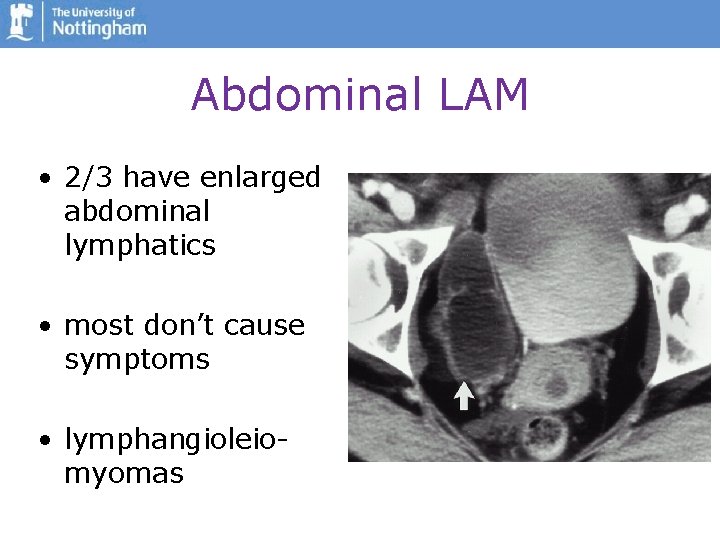
Abdominal LAM • 2/3 have enlarged abdominal lymphatics • most don’t cause symptoms • lymphangioleiomyomas
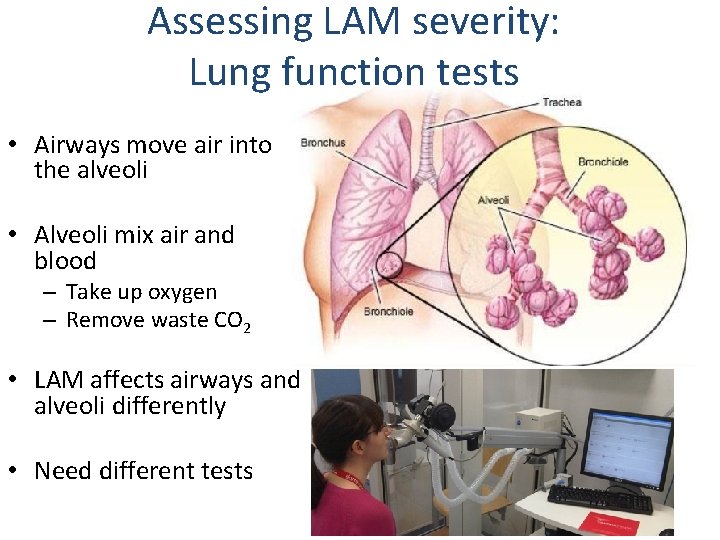
Assessing LAM severity: Lung function tests • Airways move air into the alveoli • Alveoli mix air and blood – Take up oxygen – Remove waste CO 2 • LAM affects airways and alveoli differently • Need different tests
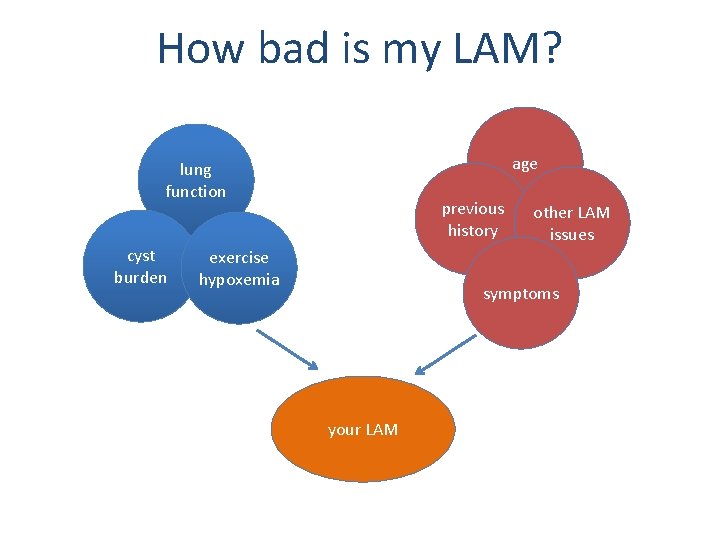
How bad is my LAM? age lung function cyst burden previous history exercise hypoxemia other LAM issues symptoms your LAM
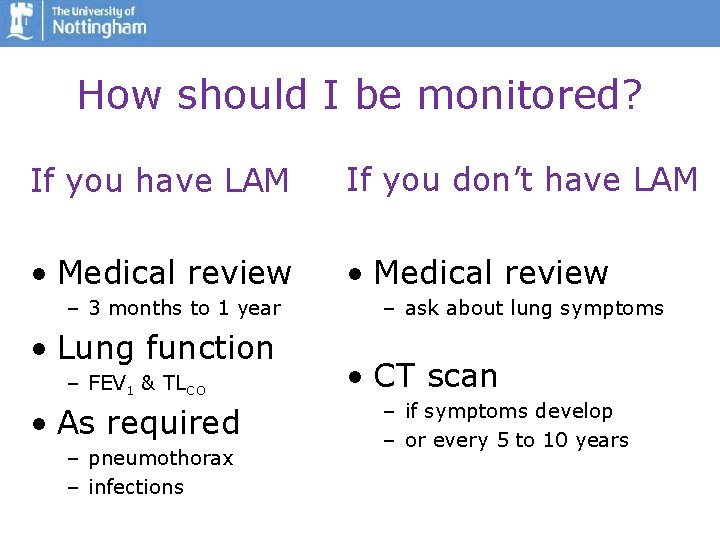
How should I be monitored? If you have LAM If you don’t have LAM • Medical review – 3 months to 1 year • Lung function – FEV 1 & TLCO • As required – pneumothorax – infections – ask about lung symptoms • CT scan – if symptoms develop – or every 5 to 10 years
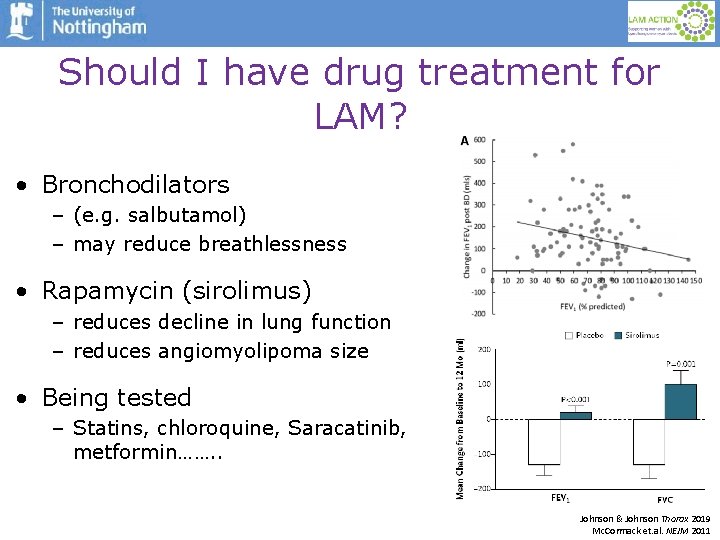
Should I have drug treatment for LAM? • Bronchodilators – (e. g. salbutamol) – may reduce breathlessness • Rapamycin (sirolimus) – reduces decline in lung function – reduces angiomyolipoma size • Being tested – Statins, chloroquine, Saracatinib, metformin……. . Johnson & Johnson Thorax 2019 Mc. Cormack et. al. NEJM 2011
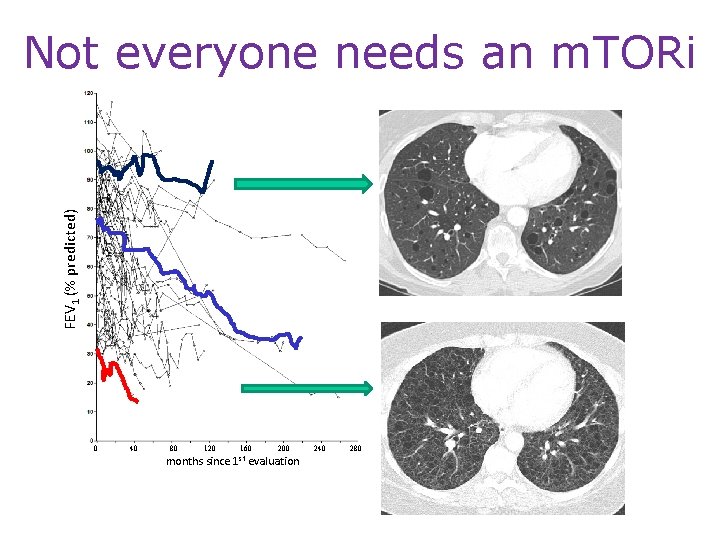
FEV 1 (% predicted) Not everyone needs an m. TORi 0 40 80 120 months since 160 200 st 1 evaluation 240 280
What about m. TORi and other manifestations of LAM? angiomyolipoma chylous effusion chylous ascites
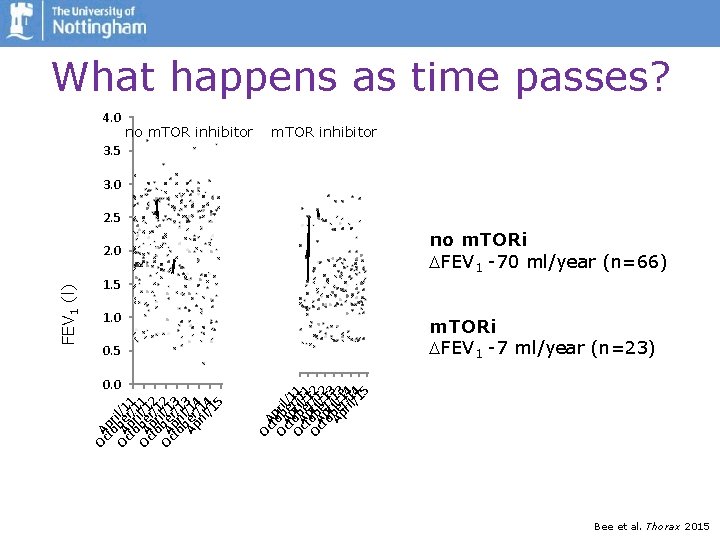
4. 0 0. 0 Oc A Oct. Aobpril e/ Oct. Aobprirl/111 e/ 1 Oct. Aobprirl/112 toper r//123 Abpeil/113 rirl/14 5 Oc A topr Oc Abeil/1 toprir/11 Oc Abe l/11 toprir/12 Oc Abe l/12 toprir/13 Abperl/134 ril/14 /1 5 FEV 1 (l) What happens as time passes? no m. TOR inhibitor 3. 5 3. 0 2. 5 2. 0 no m. TORi FEV 1 -70 ml/year (n=66) 1. 5 1. 0 0. 5 m. TORi FEV 1 -7 ml/year (n=23) Bee et al. Thorax 2015
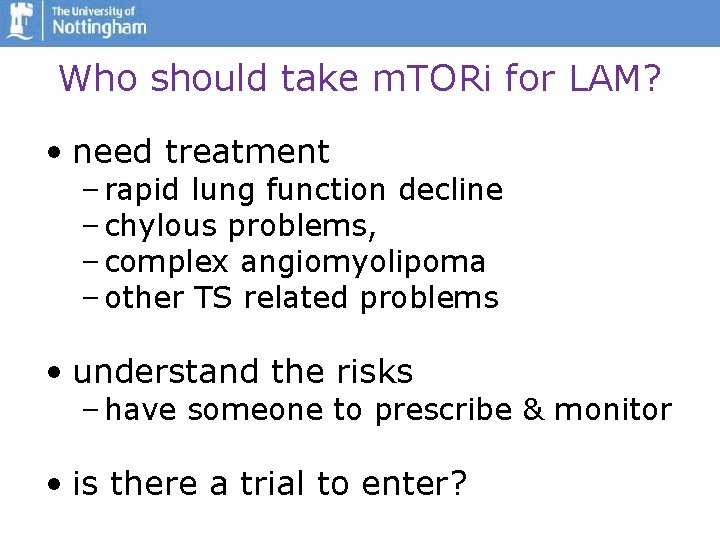
Who should take m. TORi for LAM? • need treatment – rapid lung function decline – chylous problems, – complex angiomyolipoma – other TS related problems • understand the risks – have someone to prescribe & monitor • is there a trial to enter?
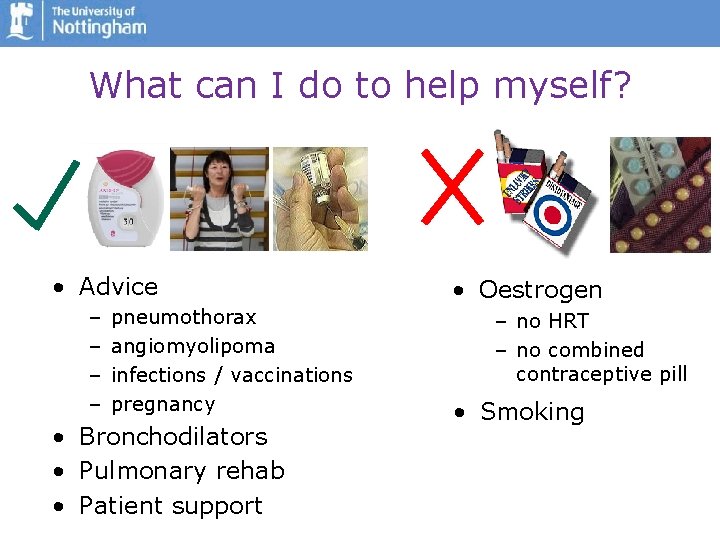
What can I do to help myself? • Advice – – pneumothorax angiomyolipoma infections / vaccinations pregnancy • Bronchodilators • Pulmonary rehab • Patient support • Oestrogen – no HRT – no combined contraceptive pill • Smoking
Other ‘dos and don’ts’ • Don’t let chest infections drag on • Do see your doctor urgently or go to A&E if you have significant chest or flank pain • Do discuss pregnancy with your physician before pregnancy
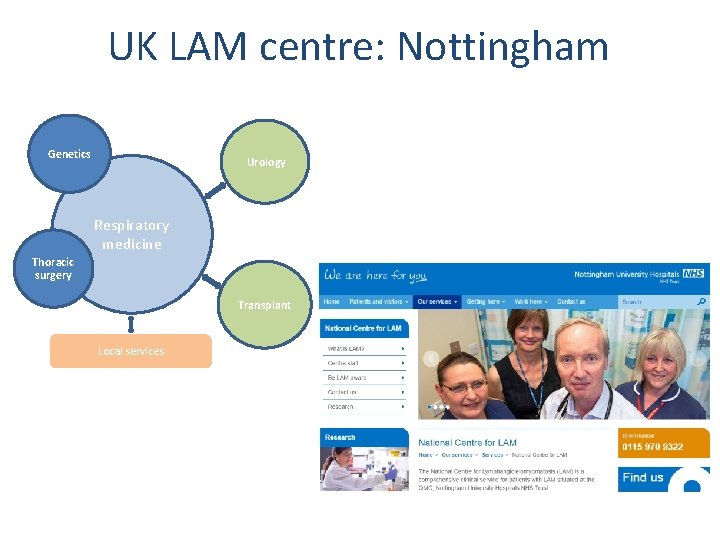
UK LAM centre: Nottingham Genetics Urology Respiratory medicine Thoracic surgery Transplant Local services
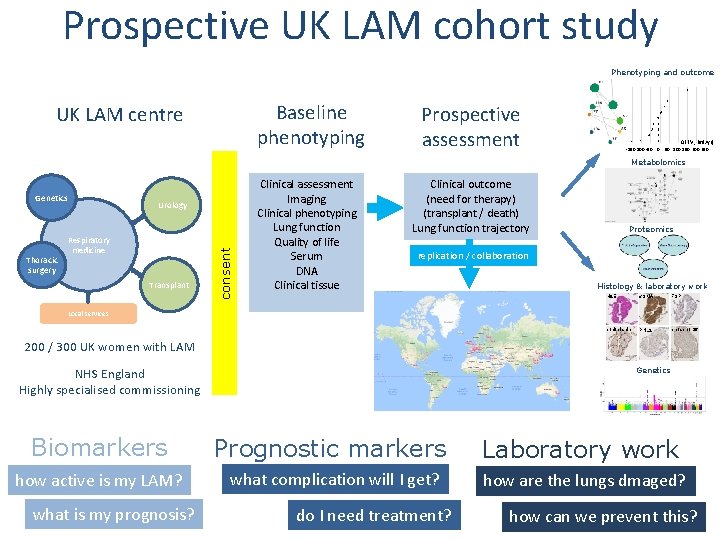
Prospective UK LAM cohort study Phenotyping and outcome Baseline phenotyping UK LAM centre Prospective assessment -150 -100 -50 0 ΔFEV 1 (ml/yr) 50 100 150 200 250 Metabolomics Genetics Respiratory medicine Transplant consent Thoracic surgery Urology Clinical assessment Imaging Clinical phenotyping Lung function Quality of life Serum DNA Clinical tissue Clinical outcome (need for therapy) (transplant / death) Lung function trajectory Proteomics replication / collaboration Histology & laboratory work H&E αSMA FSP podoplanin PNL 2 phospho S 6 Local services 200 / 300 UK women with LAM NHS England Highly specialised commissioning Genetics Biomarkers Prognostic markers Laboratory work how active is my LAM? what complication will I get? how are the lungs dmaged? what is my prognosis? do I need treatment? how can we prevent this?
Thankyou and any questions? Women with LAM research group LAM Centre Debbie Clements Suzanne Miller Roya Babaei-Jadidi Jan Johnson Sharon Fuller Hollie Gorensweigh Wendy Somerfield Lucy Davies LAMcentre@nuh. nhs. uk