
Lakelands Family Health Team COPD Screening Program LeighAnne
- Slides: 1
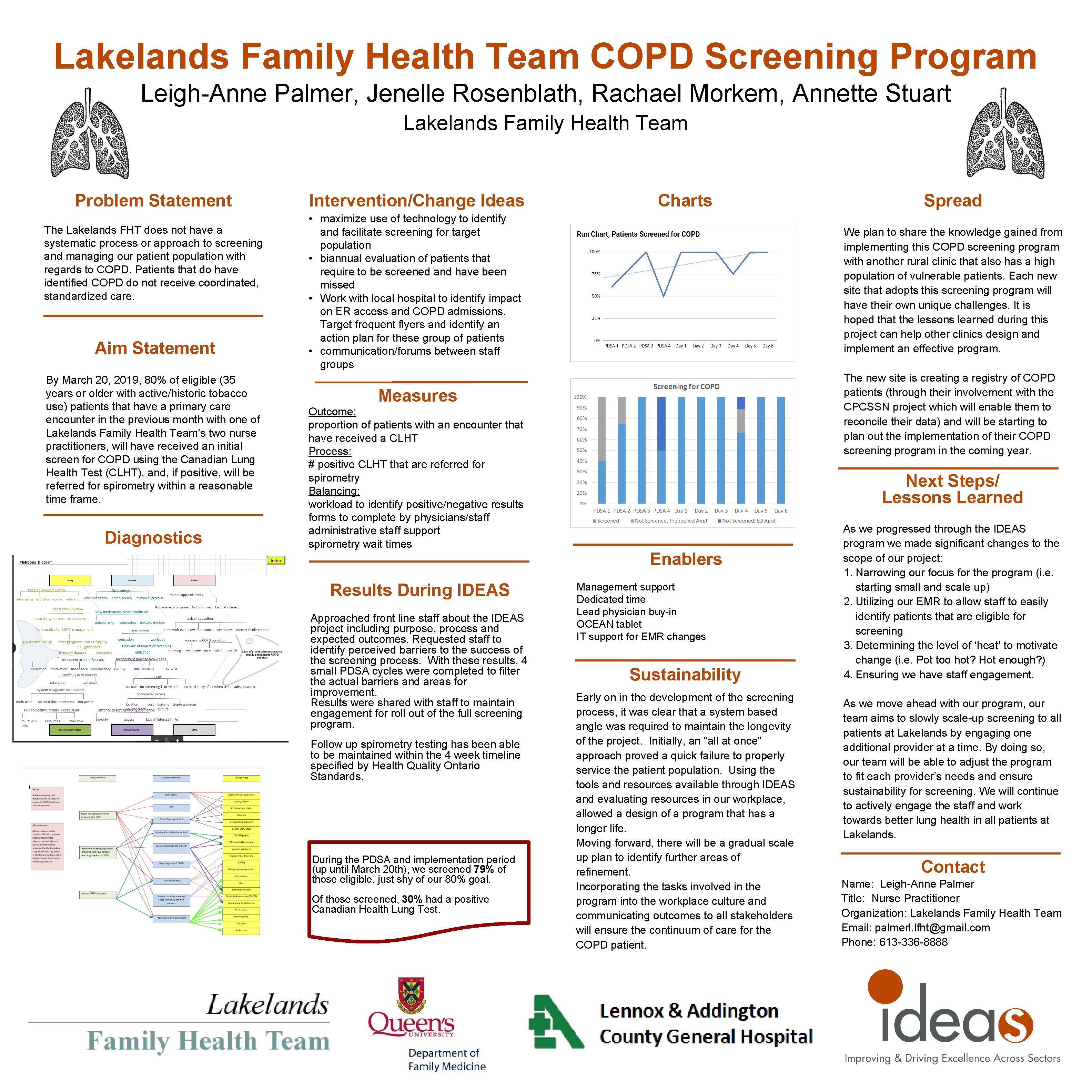
Lakelands Family Health Team COPD Screening Program Leigh-Anne Palmer, Jenelle Rosenblath, Rachael Morkem, Annette Stuart Lakelands Family Health Team Problem Statement The Lakelands FHT does not have a systematic process or approach to screening and managing our patient population with regards to COPD. Patients that do have identified COPD do not receive coordinated, standardized care. Aim Statement By March 20, 2019, 80% of eligible (35 years or older with active/historic tobacco use) patients that have a primary care encounter in the previous month with one of Lakelands Family Health Team’s two nurse practitioners, will have received an initial screen for COPD using the Canadian Lung Health Test (CLHT), and, if positive, will be referred for spirometry within a reasonable time frame. Diagnostics Intervention/Change Ideas Charts • maximize use of technology to identify and facilitate screening for target population • biannual evaluation of patients that require to be screened and have been missed • Work with local hospital to identify impact on ER access and COPD admissions. Target frequent flyers and identify an action plan for these group of patients • communication/forums between staff groups We plan to share the knowledge gained from implementing this COPD screening program with another rural clinic that also has a high population of vulnerable patients. Each new site that adopts this screening program will have their own unique challenges. It is hoped that the lessons learned during this project can help other clinics design and implement an effective program. The new site is creating a registry of COPD patients (through their involvement with the CPCSSN project which will enable them to reconcile their data) and will be starting to plan out the implementation of their COPD screening program in the coming year. Measures Outcome: proportion of patients with an encounter that have received a CLHT Process: # positive CLHT that are referred for spirometry Balancing: workload to identify positive/negative results forms to complete by physicians/staff administrative staff support spirometry wait times Results During IDEAS Approached front line staff about the IDEAS project including purpose, process and expected outcomes. Requested staff to identify perceived barriers to the success of the screening process. With these results, 4 small PDSA cycles were completed to filter the actual barriers and areas for improvement. Results were shared with staff to maintain engagement for roll out of the full screening program. Follow up spirometry testing has been able to be maintained within the 4 week timeline specified by Health Quality Ontario Standards. During the PDSA and implementation period (up until March 20 th), we screened 79% of those eligible, just shy of our 80% goal. Of those screened, 30% had a positive Canadian Health Lung Test. Spread Next Steps/ Lessons Learned Enablers Management support Dedicated time Lead physician buy-in OCEAN tablet IT support for EMR changes Sustainability Early on in the development of the screening process, it was clear that a system based angle was required to maintain the longevity of the project. Initially, an “all at once” approach proved a quick failure to properly service the patient population. Using the tools and resources available through IDEAS and evaluating resources in our workplace, allowed a design of a program that has a longer life. Moving forward, there will be a gradual scale up plan to identify further areas of refinement. Incorporating the tasks involved in the program into the workplace culture and communicating outcomes to all stakeholders will ensure the continuum of care for the COPD patient. As we progressed through the IDEAS program we made significant changes to the scope of our project: 1. Narrowing our focus for the program (i. e. starting small and scale up) 2. Utilizing our EMR to allow staff to easily identify patients that are eligible for screening 3. Determining the level of ‘heat’ to motivate change (i. e. Pot too hot? Hot enough? ) 4. Ensuring we have staff engagement. As we move ahead with our program, our team aims to slowly scale-up screening to all patients at Lakelands by engaging one additional provider at a time. By doing so, our team will be able to adjust the program to fit each provider’s needs and ensure sustainability for screening. We will continue to actively engage the staff and work towards better lung health in all patients at Lakelands. Contact Name: Leigh-Anne Palmer Title: Nurse Practitioner Organization: Lakelands Family Health Team Email: palmerl. lfht@gmail. com Phone: 613 -336 -8888