
Lake limnic ecosystems S Origins and classifications S


- Slides: 54
Lake (limnic) ecosystems S Origins and classifications S Lakes as open systems S Light and temperature S Lake chemistry S Primary productivity S Secondary productivity S Lake evolution S Perturbations
Lake classification: geological origin Lakes result from impoundment of water by: • tectonic downwarping (e. g. Lake Victoria) • tectonic faulting (e. g. Dead Sea) • volcanic eruption (e. g. Crater Lake) • landslide dams • ice dams • biotic dams (e. g. Beaver lake) • glacial erosion (e. g. Lake Peyto) • glacial deposition (e. g. Moraine Lake) • river channel abandonment (e. g. Hatzic Lake) • deflation
Lake classification: morphology • Lake morphology (size, surface area and depth) largely determined by origin. • Substrate (rocky, sandy, muddy, organic) initially determined by geological origin; thereafter by inputs.
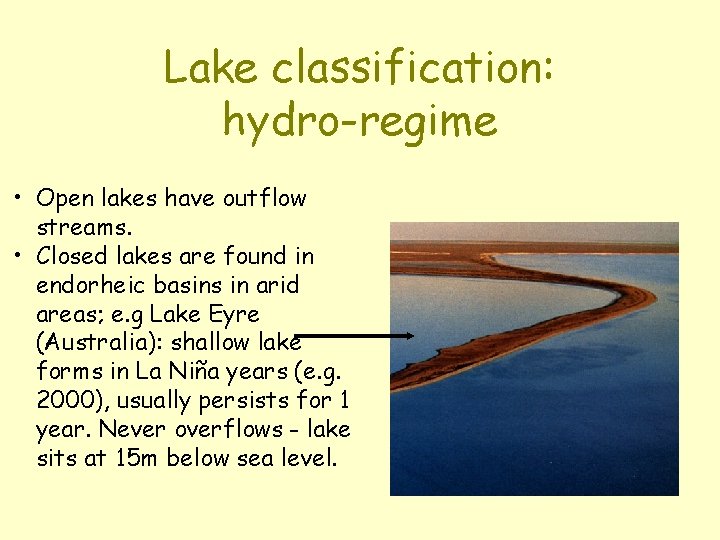
Lake classification: hydro-regime • Open lakes have outflow streams. • Closed lakes are found in endorheic basins in arid areas; e. g Lake Eyre (Australia): shallow lake forms in La Niña years (e. g. 2000), usually persists for 1 year. Never overflows - lake sits at 15 m below sea level.
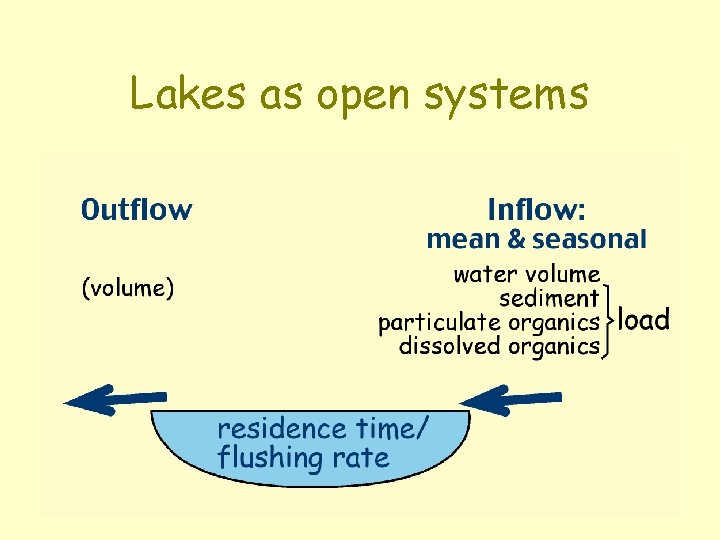
Lakes as open systems
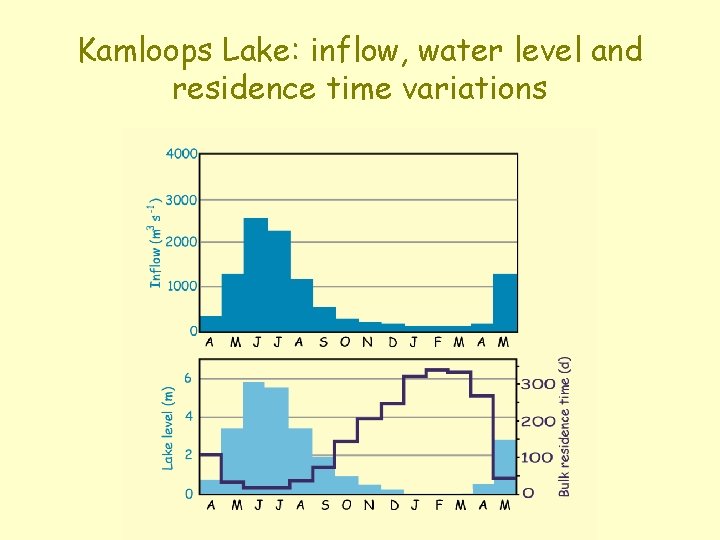
Kamloops Lake: inflow, water level and residence time variations
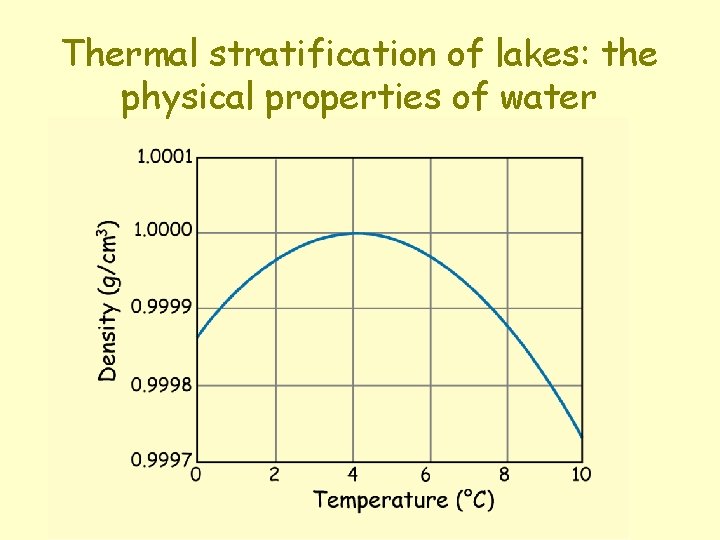
Thermal stratification of lakes: the physical properties of water
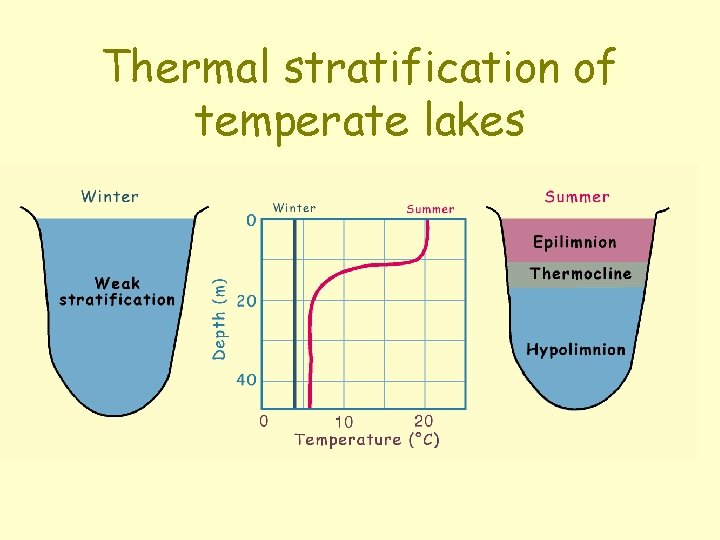
Thermal stratification of temperate lakes
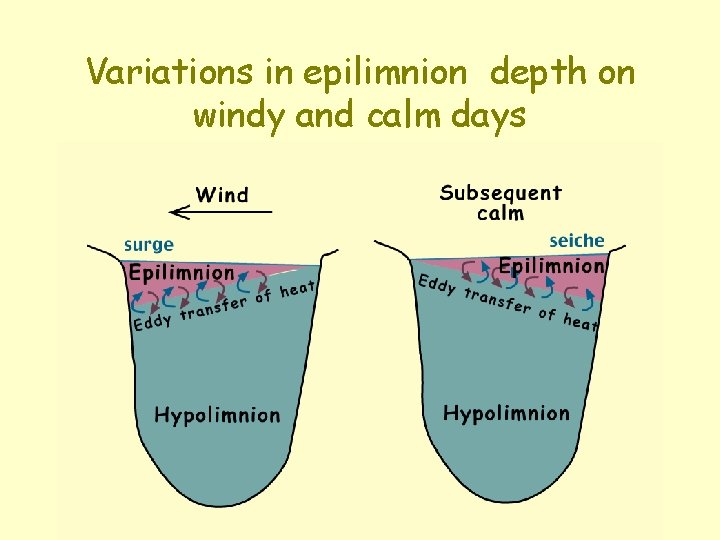
Variations in epilimnion depth on windy and calm days
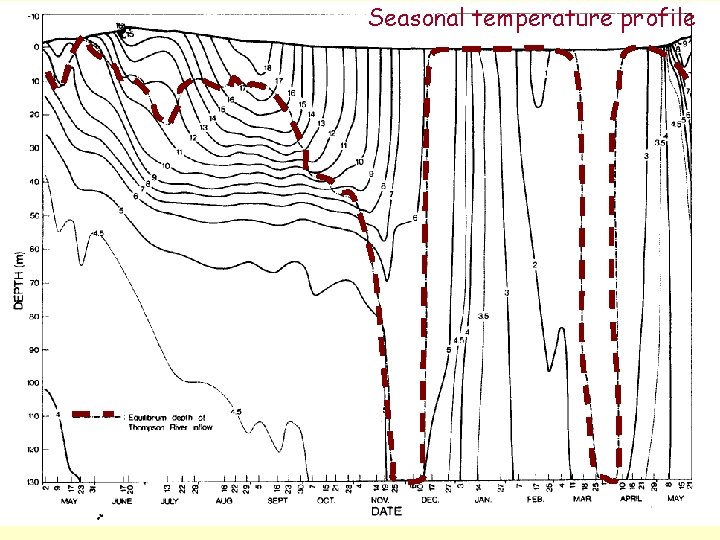
Seasonal temperature profile
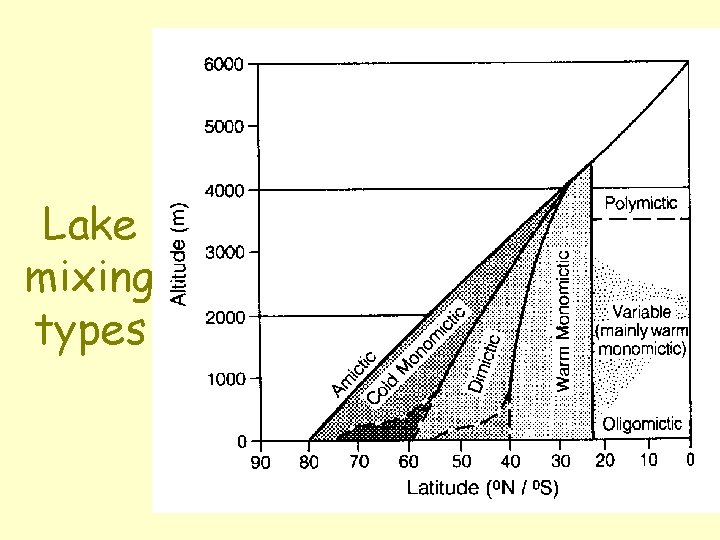
Lake mixing types
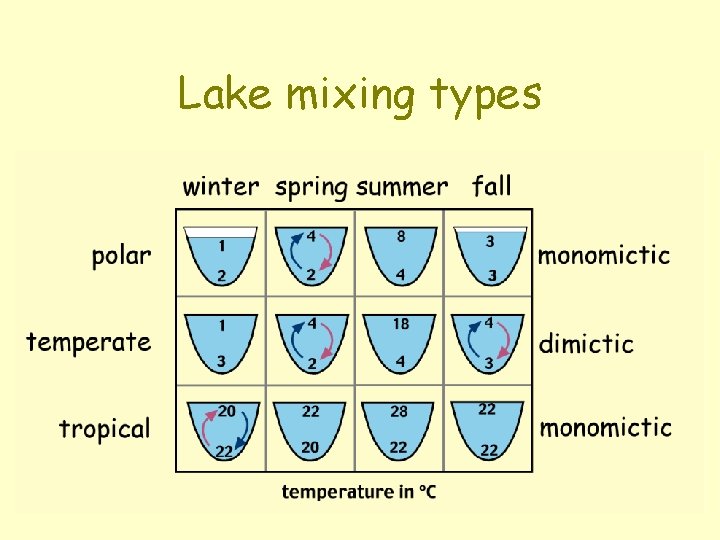
Lake mixing types
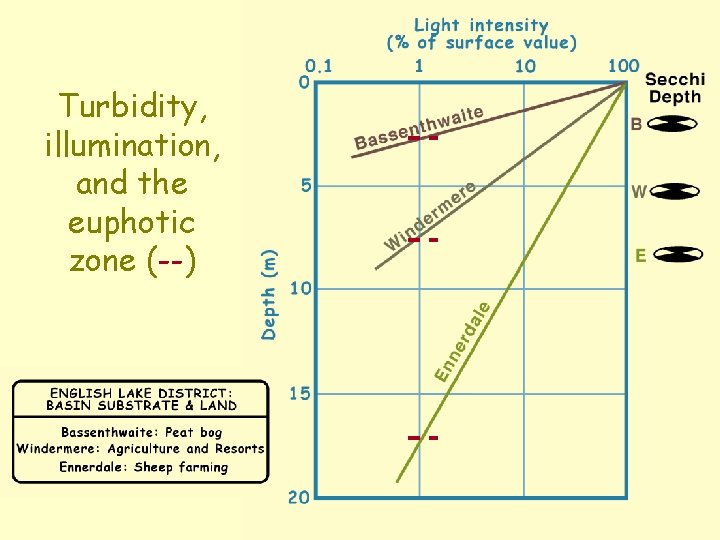
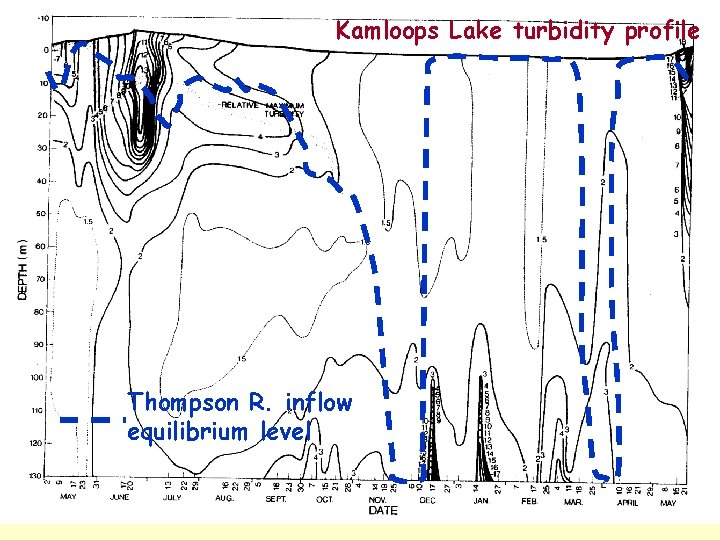
Turbidity, illumination, and the euphotic zone (--)
Kamloops Lake turbidity profile Thompson R. inflow equilibrium level
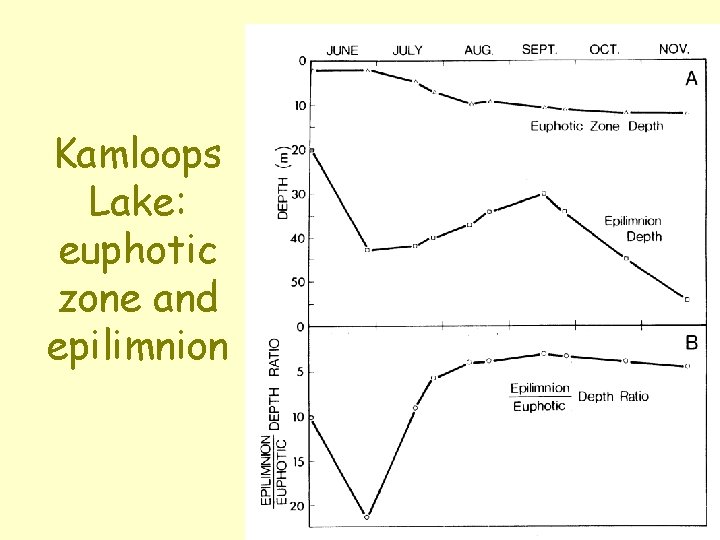
Kamloops Lake: euphotic zone and epilimnion
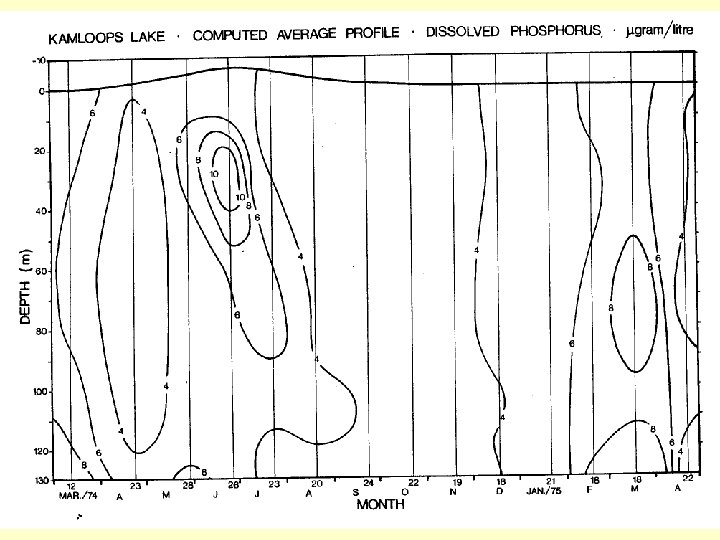
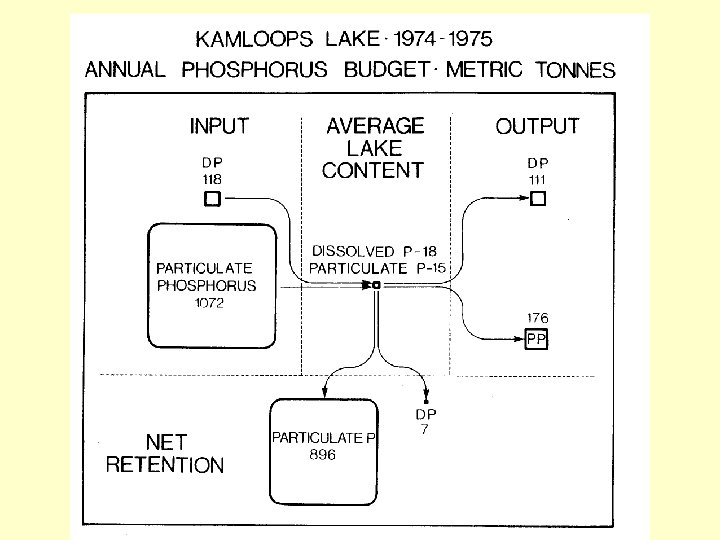
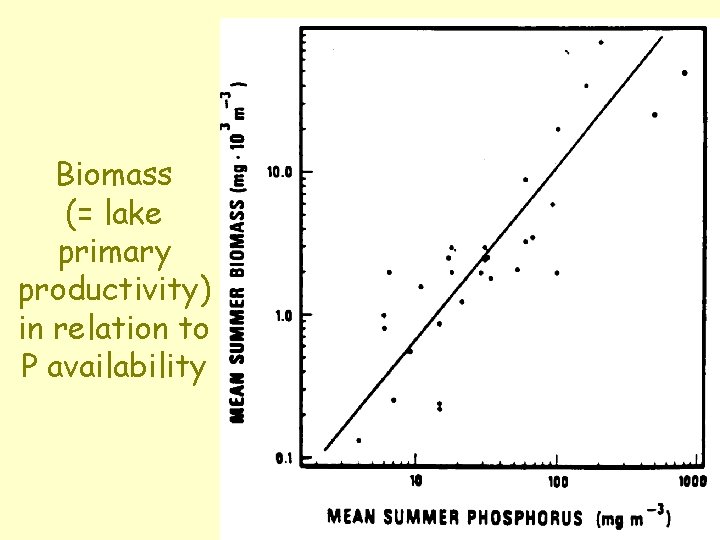
Biomass (= lake primary productivity) in relation to P availability
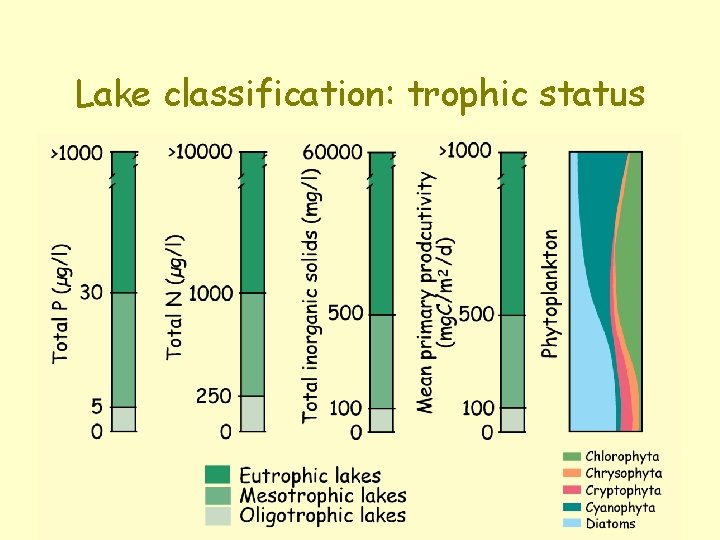
Lake classification: trophic status
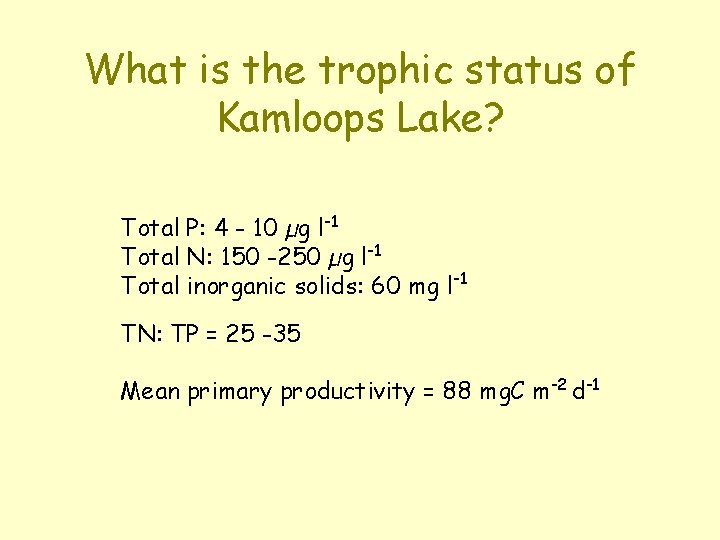
What is the trophic status of Kamloops Lake? Total P: 4 - 10 µg l-1 Total N: 150 -250 µg l-1 Total inorganic solids: 60 mg l-1 TN: TP = 25 -35 Mean primary productivity = 88 mg. C m-2 d-1
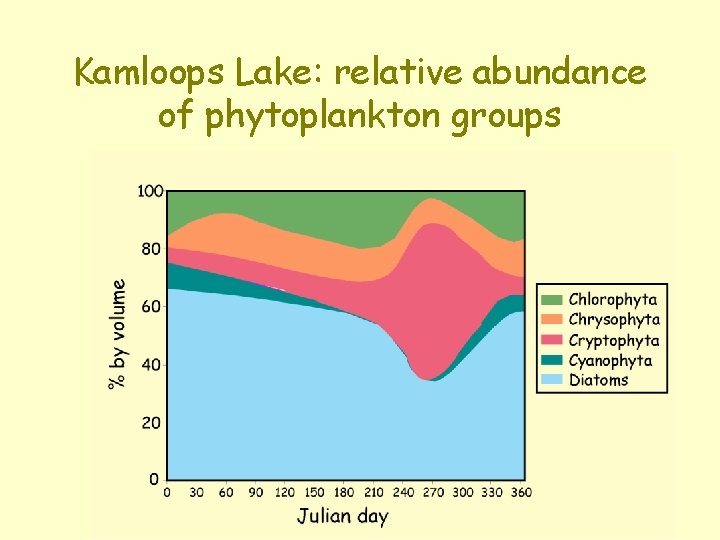
Kamloops Lake: relative abundance of phytoplankton groups
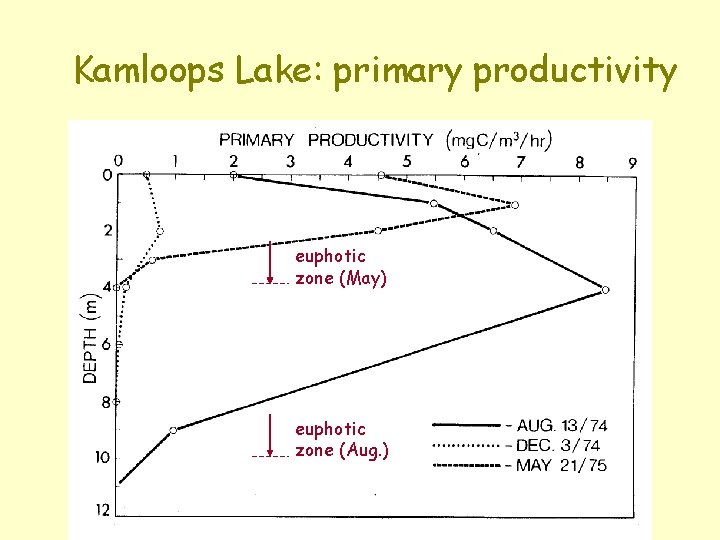
Kamloops Lake: primary productivity euphotic zone (May) euphotic zone (Aug. )
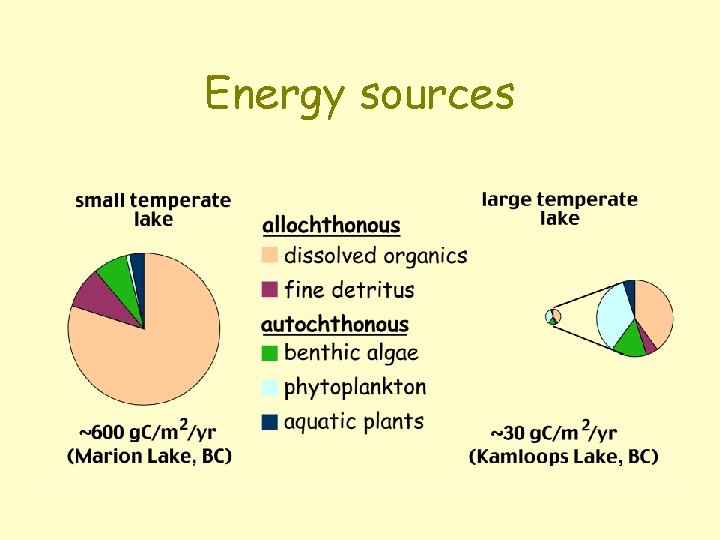
Energy sources
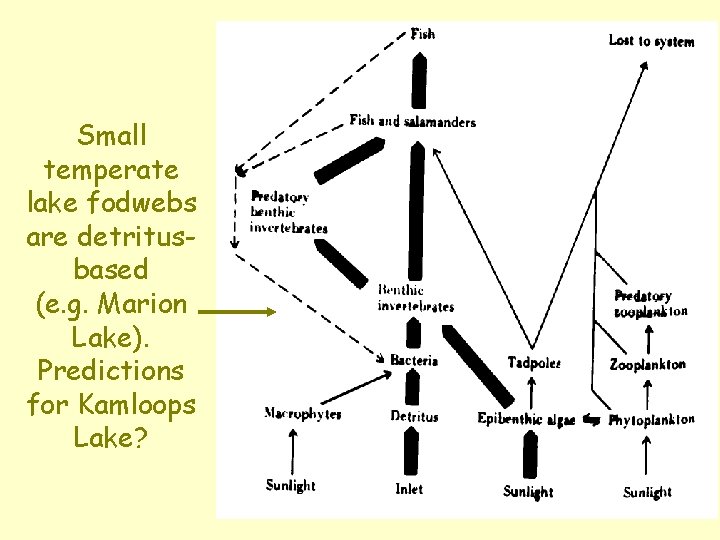
Small temperate lake fodwebs are detritusbased (e. g. Marion Lake). Predictions for Kamloops Lake?
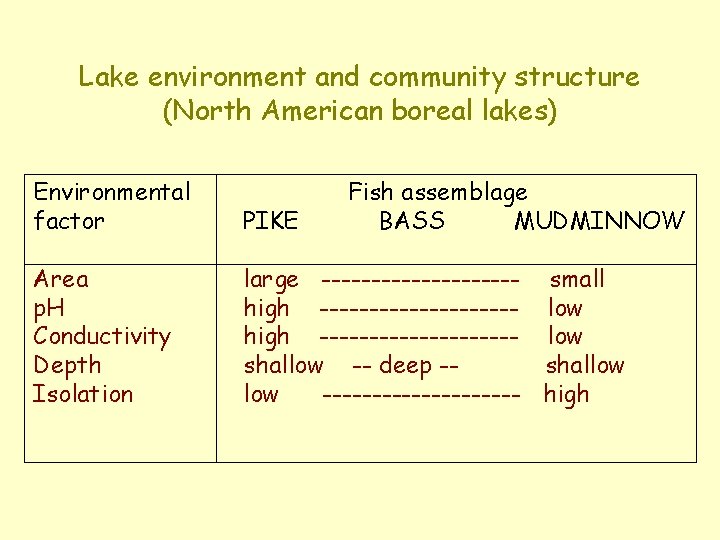
Lake environment and community structure (North American boreal lakes) Environmental factor Fish assemblage BASS MUDMINNOW PIKE Area p. H Conductivity Depth Isolation large ---------- small high -------------------- low shallow -- deep -shallow ---------- high
Lake evolution 1. All lakes are temporary features of the Erth’s landscape - eventually they fill with organic and inorganic sediments to become bogs or ‘playas’. 2. The pathway of lake evolution prior to infilling is a matter of debate. The classical European literature (1920’s -50’s) suggests that lakes progress from oligotrophic to eutrophic status. Pollution by agricultural fertilizers, etc. accelerates this process.
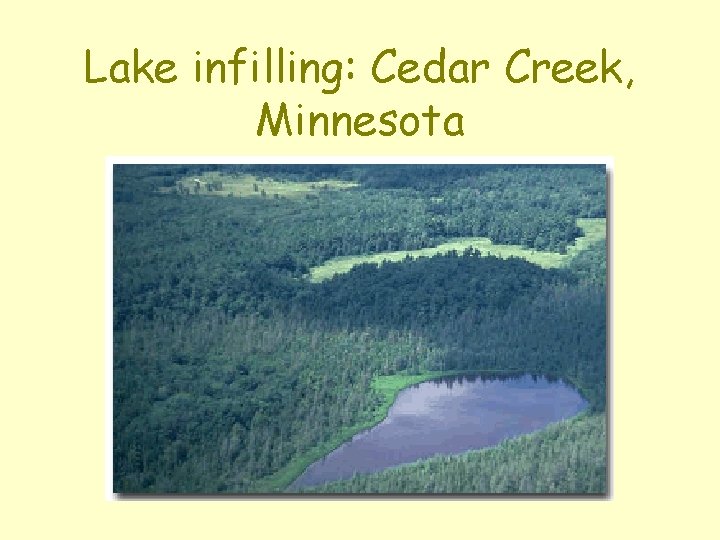
Lake infilling: Cedar Creek, Minnesota
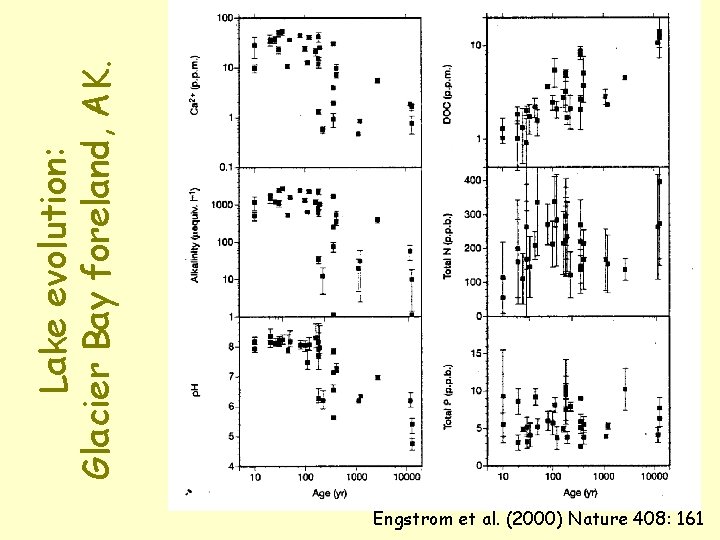
Engstrom et al. (2000) Nature 408: 161 Lake evolution: Glacier Bay foreland, AK.
Stream and lake evolution: Glacier Bay foreland, AK. Source: Milner et al. , 2007, Bioscience, 57, 237 -24
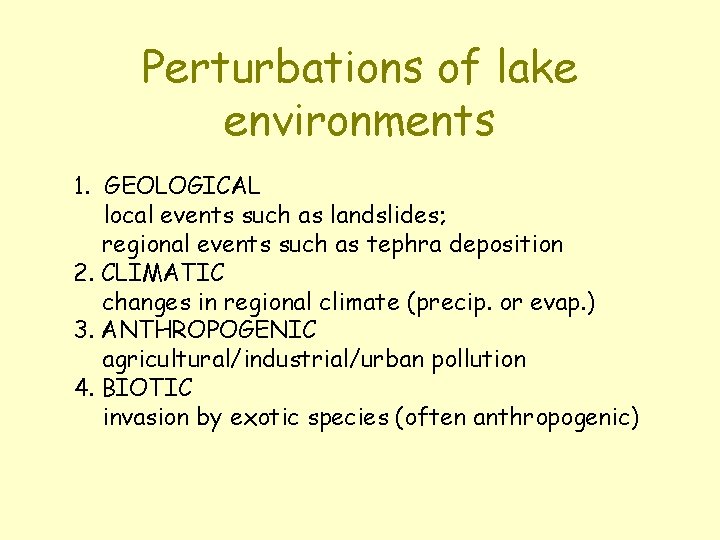
Perturbations of lake environments 1. GEOLOGICAL local events such as landslides; regional events such as tephra deposition 2. CLIMATIC changes in regional climate (precip. or evap. ) 3. ANTHROPOGENIC agricultural/industrial/urban pollution 4. BIOTIC invasion by exotic species (often anthropogenic)
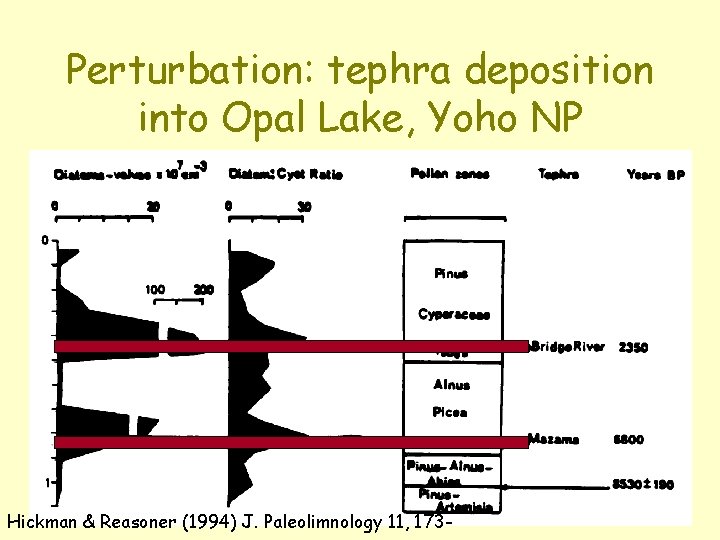
Perturbation: tephra deposition into Opal Lake, Yoho NP Hickman & Reasoner (1994) J. Paleolimnology 11, 173 -
Perturbations of coastal lakes on Vancouver Island
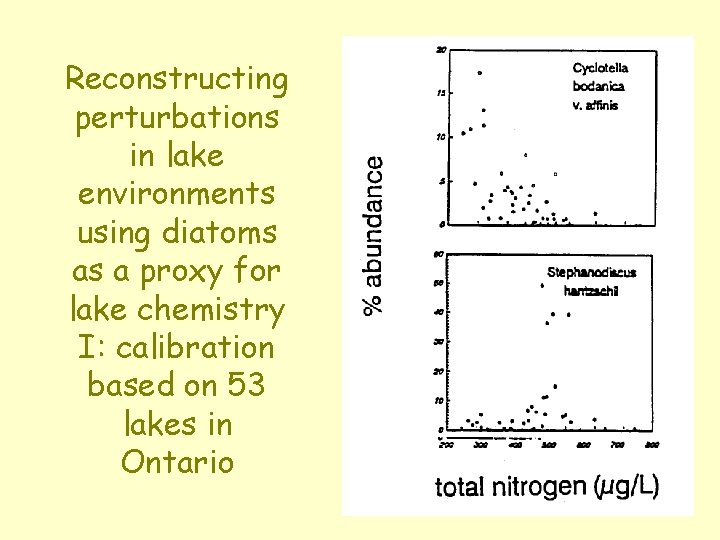
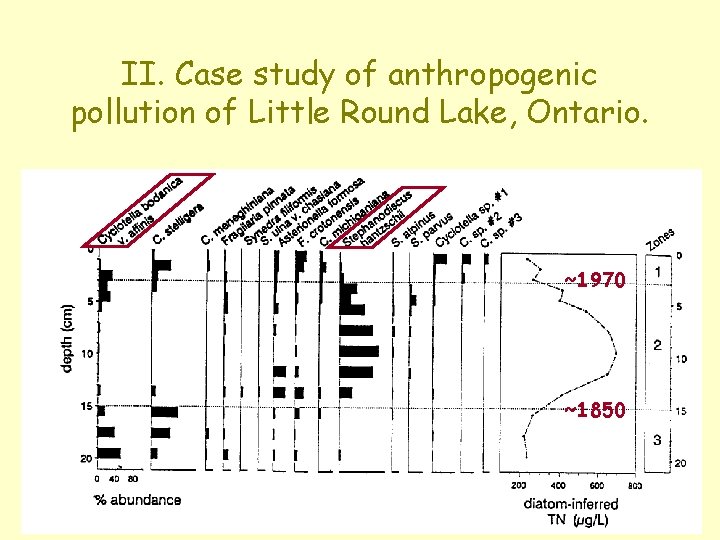
Reconstructing perturbations in lake environments using diatoms as a proxy for lake chemistry I: calibration based on 53 lakes in Ontario
II. Case study of anthropogenic pollution of Little Round Lake, Ontario. ~1970 ~1850
Stream (lotic) ecosystems S S S S Controls on stream ecosystems Discharge regimes and biotic activity Segment/reach analysis Stream foodwebs The river continuum concept Nutrient cycling Patch stability and dynamics
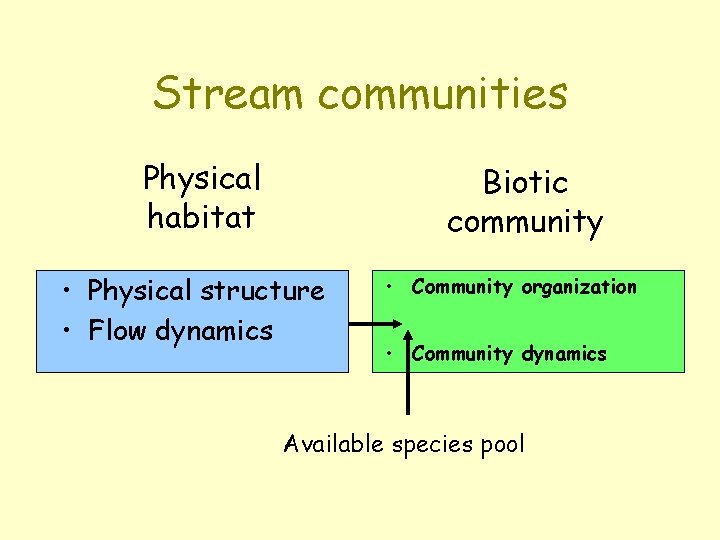
Stream communities Physical habitat Biotic community • Physical structure • Flow dynamics • Community organization • Community dynamics Available species pool
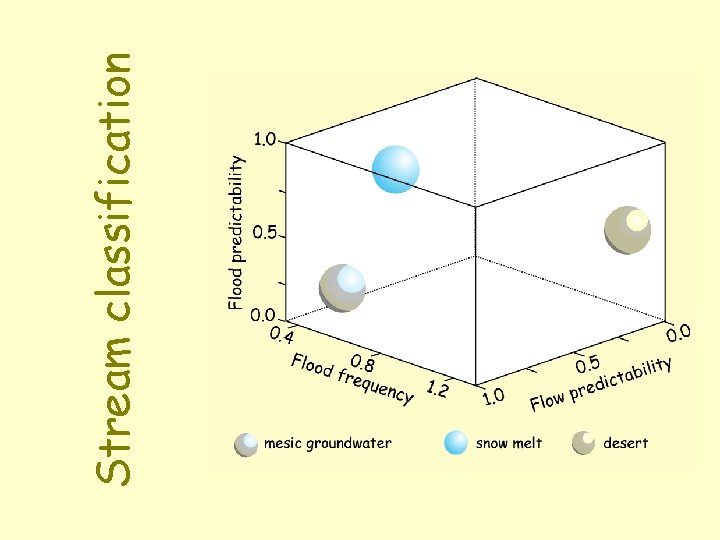
Stream classification
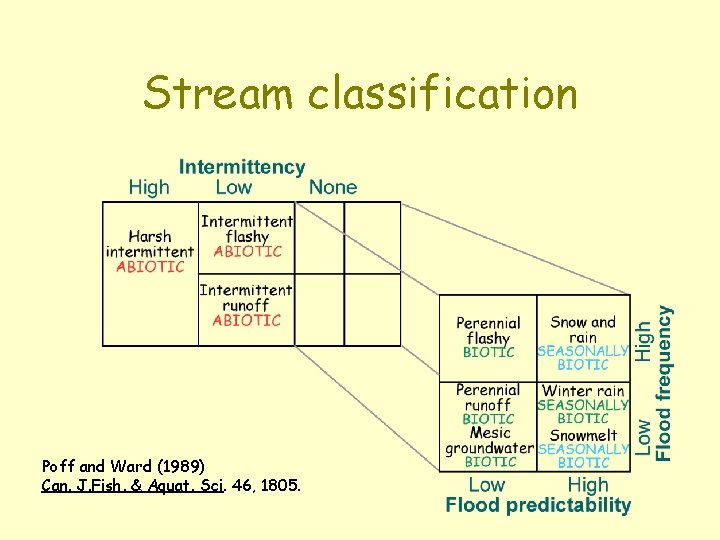
Stream classification Poff and Ward (1989) Can. J. Fish. & Aquat. Sci. 46, 1805.
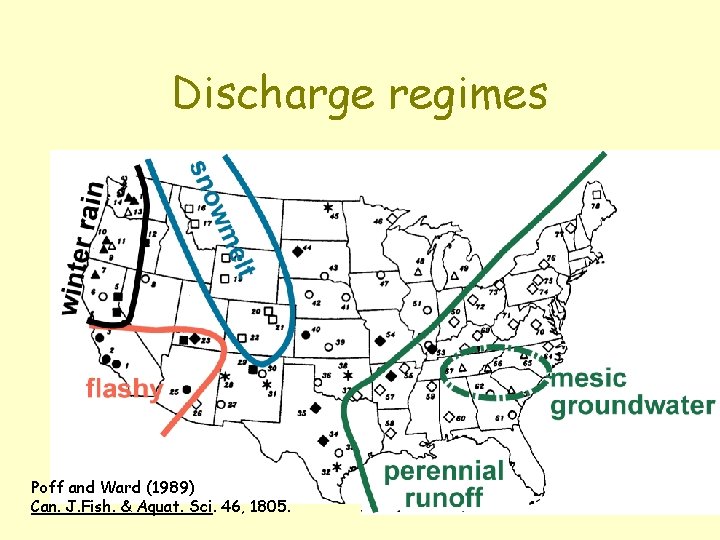
Discharge regimes Poff and Ward (1989) Can. J. Fish. & Aquat. Sci. 46, 1805.
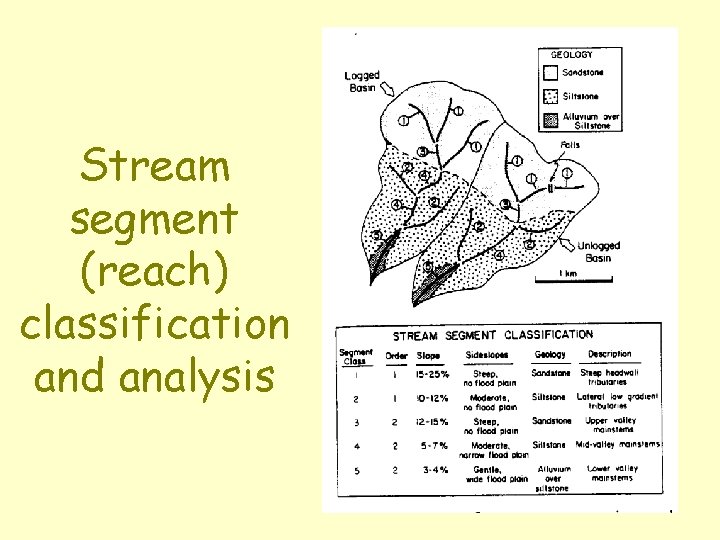
Stream segment (reach) classification and analysis
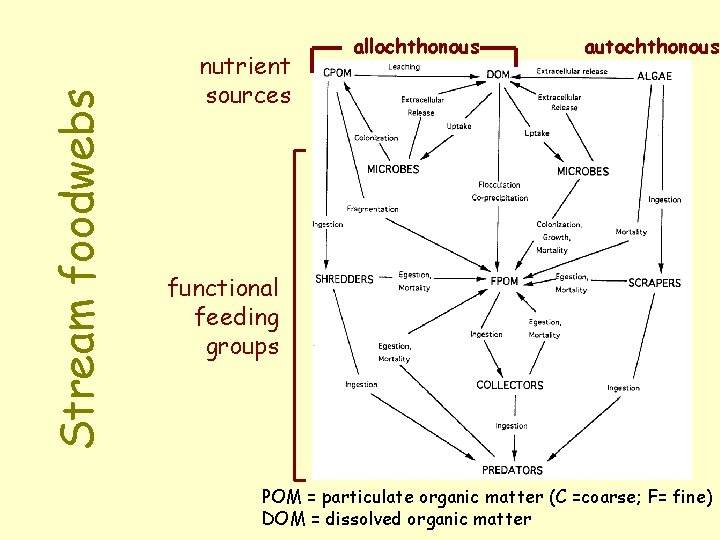
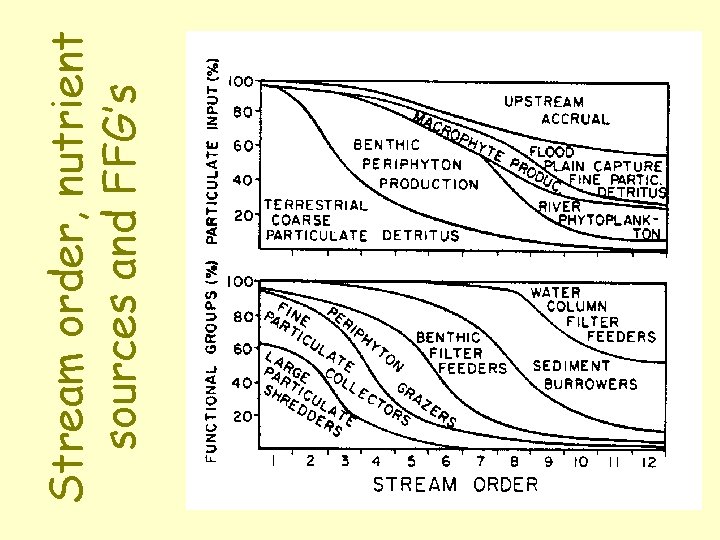
Stream foodwebs nutrient sources allochthonous autochthonous functional feeding groups POM = particulate organic matter (C =coarse; F= fine) DOM = dissolved organic matter
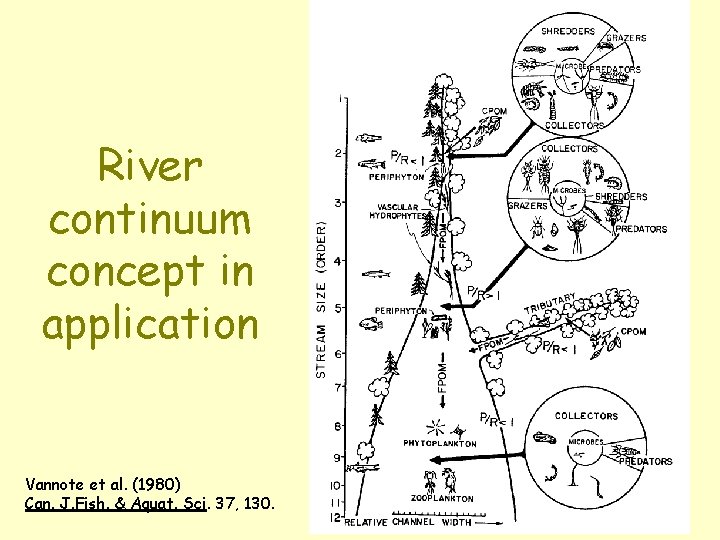
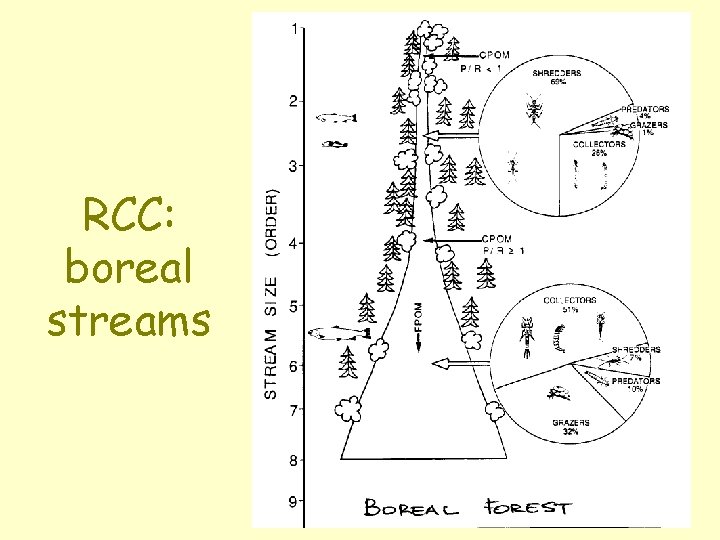
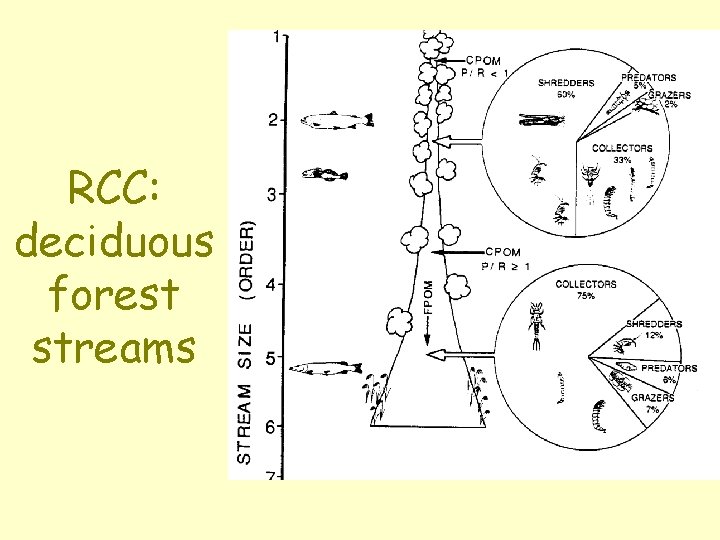
River continuum concept • Continuous physical gradient from headwaters to mouth. • Consistent biotic patterns of loading, storage and utilization of organic matter. • Stream communities conform to the mean (most probable) state of the physical system. • Biotic communities are graded downstream to accommodate leakage of organic matter from upstream. Vannote et al. (1980) Can. J. Fish. & Aquat. Sci. 37, 130.
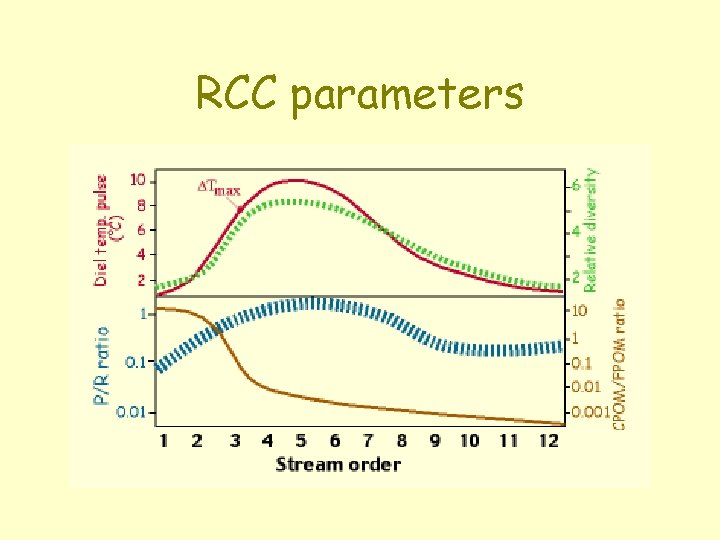
RCC parameters
River continuum concept in application Vannote et al. (1980) Can. J. Fish. & Aquat. Sci. 37, 130.
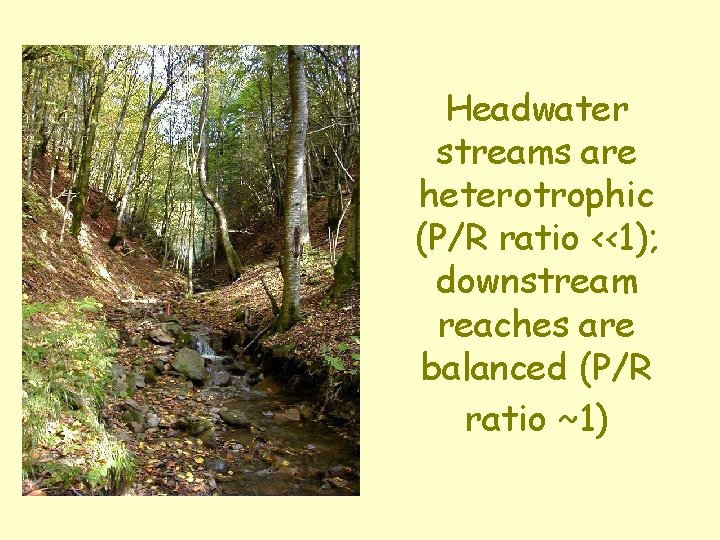
Headwater streams are heterotrophic (P/R ratio <<1); downstream reaches are balanced (P/R ratio ~1)
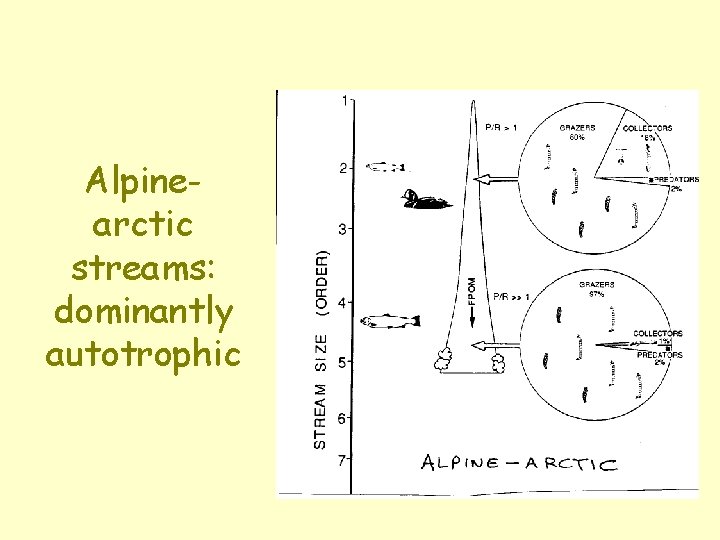
Alpinearctic streams: dominantly autotrophic
RCC: boreal streams
RCC: deciduous forest streams
Stream order, nutrient sources and FFG’s
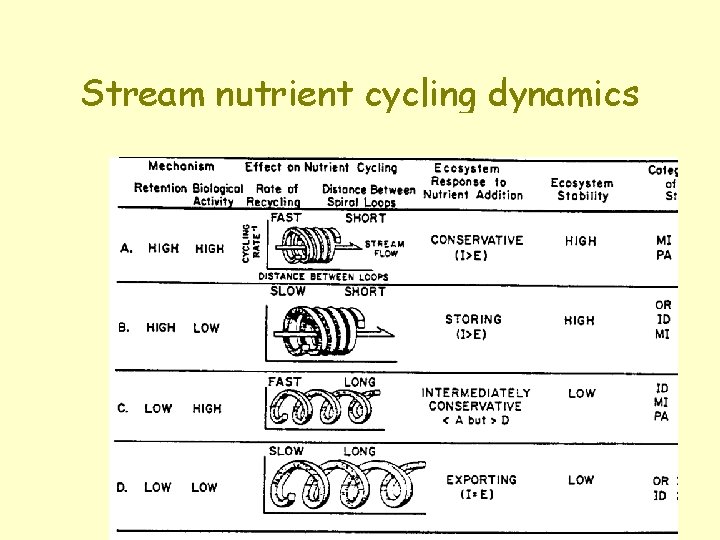
Stream nutrient cycling dynamics
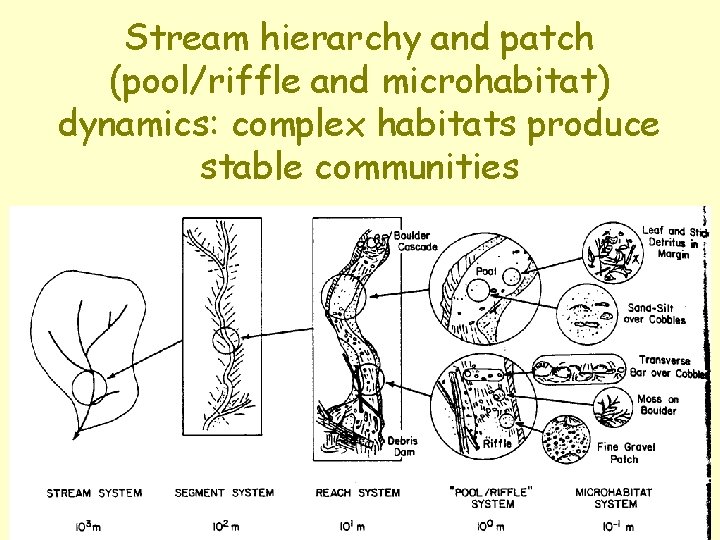
Stream hierarchy and patch (pool/riffle and microhabitat) dynamics: complex habitats produce stable communities
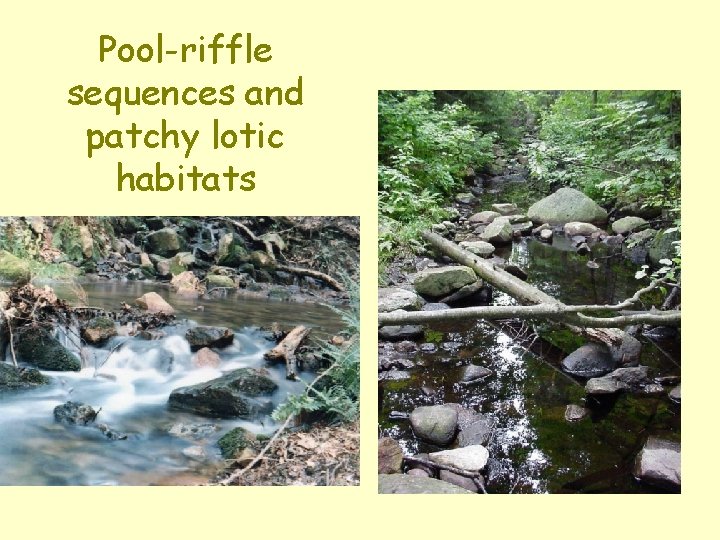
Pool-riffle sequences and patchy lotic habitats
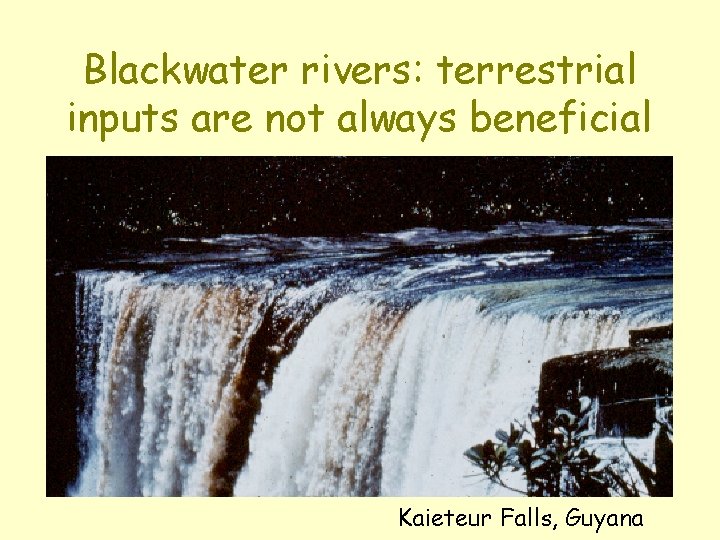
Blackwater rivers: terrestrial inputs are not always beneficial Kaieteur Falls, Guyana
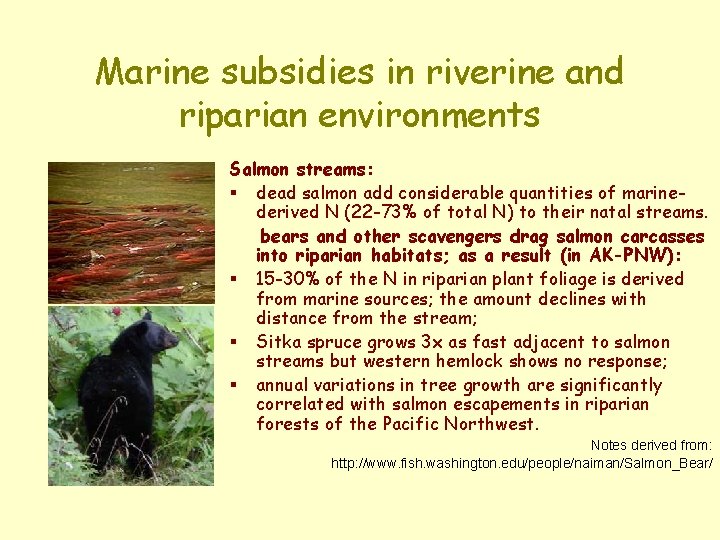
Marine subsidies in riverine and riparian environments Salmon streams: § dead salmon add considerable quantities of marinederived N (22 -73% of total N) to their natal streams. bears and other scavengers drag salmon carcasses into riparian habitats; as a result (in AK-PNW): § 15 -30% of the N in riparian plant foliage is derived from marine sources; the amount declines with distance from the stream; § Sitka spruce grows 3 x as fast adjacent to salmon streams but western hemlock shows no response; § annual variations in tree growth are significantly correlated with salmon escapements in riparian forests of the Pacific Northwest. Notes derived from: http: //www. fish. washington. edu/people/naiman/Salmon_Bear/